Maybe it’s just me, but has the world grown less appealing and far less interesting, almost overnight? It’s like everywhere I go, every place I visit, I’ve already seen before. In cities around the globe, I encounter the same stores.
Train stations and airports look similar. And even people seem to look alike in appearance and manner. Everything seems manufactured; originality and uniqueness are fading qualities, and many of the things we entertain ourselves with have become repetitive and overly abundant.
It’s as if our planet has lost its magic and life, its mystery. It's like the world has transformed from a giant enigma filled with riddles and secrets into a massive, interconnected shopping mall, where every little spot, every place of significance, is on full display, like shoes in a store window, and where true adventure and discovery are things of the past, and experiences have become commodified, sold like prepackaged meals in a 7-Eleven. And we ask ourselves: What’s left to wonder?
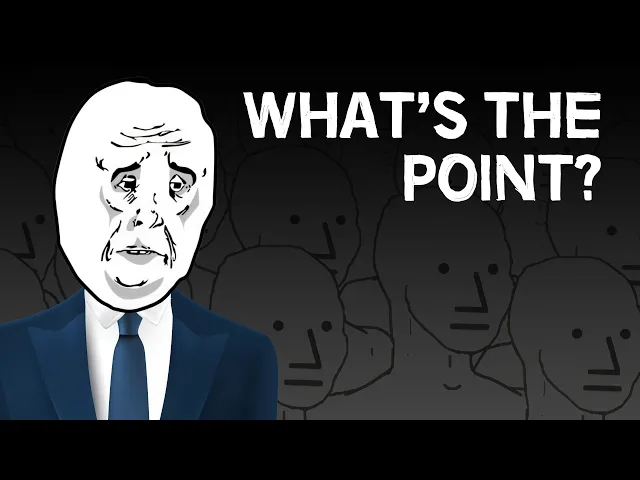
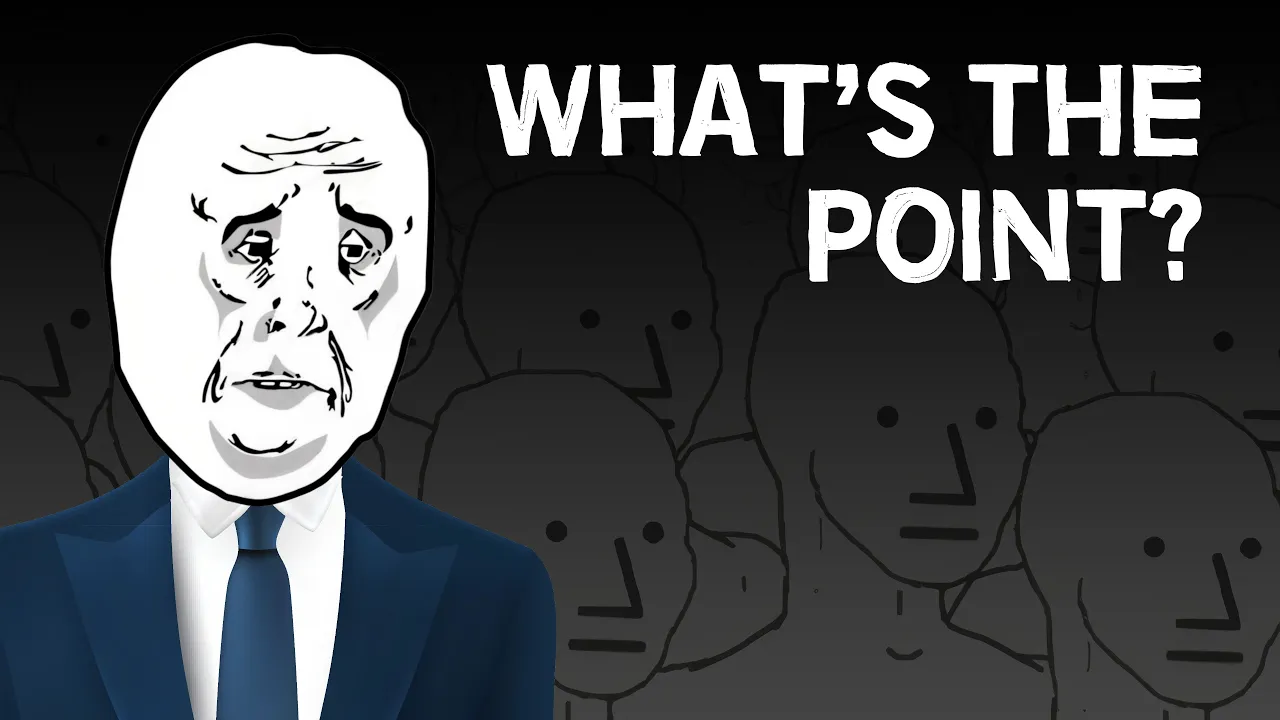
What’s left to explore? What experiences are truly worthwhile and touch the depths of our souls? In a world so heavily globalized, shrunk by technology and robbed of its mystique, what’s really the point?
This video explores why life feels so flat and much less exciting today. My name is Stefan. This is not an AI voice, I’m a real person.
Follow me on Substack for all my content, including my podcast, and consider supporting me on Patreon if you like my work. Thank you. And I hope you’ll enjoy this video.
I remember how the world was shrouded in mystery. And mind you, humanity already had its fair share of technology back in the nineties when I grew up. The Internet was just beginning, and mobile phones were still in their early stages of mainstream adoption.
As a child, I remember being awestruck by the vastness of everything around me: the universe, the Milky Way, the planets in our solar system, including our own. My city alone struck me as a vast place, and at the age of ten or so, with still a lot to discover. So, let alone planet Earth, strange countries, faraway continents, and giant oceans to cross.
I remember my father owned a book about North America, with beautiful photographs and the Twin Towers of New York on the cover. I used to stare at those Twin Towers for a long time, as well as the rest of Manhattan’s skyline that surrounded them. It was one of the few glimpses I had of that faraway city, and I was totally fascinated by it.
From a relatively young age, I used to scour encyclopedias to learn the details about cities all over the world. And I was obsessed with city maps (even drawing some myself as a hobby), as they revealed the shapes of the streets, railroads, and rivers of these unfamiliar places. I used to imagine what these places looked like in reality.
Take a city like Madrid, for example: all I had was a map and a tiny photo in an encyclopedia. For the most part, the Spanish capital was a mystery to me, and to most people who had never been there. Despite the world seeming so obscure, I yearned to see more of it.
The limited information was precisely what evoked that yearning. The little teasers of what’s out there: a mere name and location, and some peculiar facts about the culture, and the number of inhabitants, were the reasons why pondering over these unknown places was such an enchanting experience. The ‘not knowing’ made them appealing; it made them seem far away and mysterious.
It also made the world big, magical, and exciting. During the last twenty years, technology has undoubtedly changed things. To see any of the Spanish coasts in detail, you can go to Google Street View, and there you’ll find it.
You can even check any coastal town, check all the accommodations, restaurants, tourist spots, and see thousands of pictures, videos, and reviews. You don’t have to leave your house for faraway sights. Just go on YouTube and you’ll find hundreds of influencers who’ve already visited the place you had in mind to go to, which they show you in detail, possibly in a live stream.
Your dream of an expedition into a strange, unknown, faraway place? That dream is shattered. Whatever you’d encounter, it’s already there for the world to see, displayed as freshly baked cakes behind glass in a bakery.
So, what’s left to explore? What’s left to wonder about? Places that seemed so mysterious and remote have now become products we order on our smartphones.
We just tap and swipe, hop on a plane, to see exactly what we expect. Millions have gone before us, and millions will come after us. It’s not that traveling isn’t rewarding in any way.
There’s still a significant difference between being somewhere in person and experiencing the places, vibes, sounds, and smells, versus just watching a YouTube video about it. However, technology has reduced the overall experience of traveling and life in general to something rather commercialized and soulless. Technology has made things much easier, but it has also stripped specific events and experiences, such as traveling, dating, or simply being a citizen, of meaningful elements that used to be part of them.
The Norwegian pessimistic philosopher Peter Zapffe, born just before the 20th century, already observed the devastating effects of technology on people’s experience of life. He wrote of ‘spiritual unemployment’, as technology has robbed people of the ‘spiritual labor’ we perform to survive in an uncertain, unpredictable world full of challenges. He considered the use of flying machines to explore uncharted land ‘a crime’, as it destroys many opportunities for human experience.
I’m thinking of a journey I made not too long ago to Tokyo, which has currently become a hub for mass tourism. Even though, from the Dutch perspective, Tokyo is a faraway place, situated in the far east of Asia, it’s very easy to get there. You take your smartphone, book a ticket, book a hotel, and go.
It’s fast, it’s safe, it’s comfortable. What’s more to wish for? Now, imagine being an 18th-century person from Amsterdam traveling to 18th-century Tokyo, then known as Edo.
You must board a VOC ship, travel to the Dutch Indies, for a trip of around 6 to 9 months, and hope for a lifetime opportunity to embark on a trading mission to Japan, which was essentially closed off to foreigners. A journey from Amsterdam to Edo was long and dangerous. Storms, shipwrecks, malaria, dysentery, scurvy, pirates, tropical fevers, and the simple chance of never coming home were all part of the deal.
However, this was the “spiritual labor” Zapffe was referring to. A trip we now make in under twenty hours in cushy airplanes has become more of a ‘meaningless inconvenience’; we can’t wait to get out of the plane and rush toward our destination. But back then, such a trip was a life experience of a magnitude that only a few have today; the length, the obstacles, and the risks gave it depth and meaning, making it life-defining.
In the 18th century, a trip from Brussels to Amsterdam was much more challenging and adventurous than a trip from, let’s say, Berlin to Singapore today. Sure, traveling has become increasingly convenient thanks to technology, but we also miss out on many valuable experiences. We miss the depth and fulfillment that an experience like a journey once provided—a journey full of surprises and uncertainty, a collision with the unknown.
And can’t we say the same about other things in life? What about dating, for example? When I was seventeen years of age, we had MSN Messenger and email, but not much more advanced in terms of connecting socially online.
Dating apps like Tinder didn’t exist; meeting someone ‘online’ was something for weirdos. There was a place where people my age would go on Friday nights, hang out, and drink extremely cheap beer, 90 cents a pop. If you wanted to meet someone, that was the time and place.
So, stuff happened. Most of the boys and girls there seized the opportunity, as they didn’t have hundreds of Tinder matches in their pockets or handbags. The dating pool was limited; essentially, it consisted of my town and some surrounding villages, but it was enough.
The limitation of choice made us appreciate what we had and be more receptive to attention from the desired sex. Approaching a potential partner once felt somewhat magical: going out, noticing someone you found attractive, making eye contact, feeling that spark, and wondering who they were as you watched their gestures or their smiles, mustering the courage to say “hi”, and facing the risk of an in-your-face rejection. Flash forward to today.
Dating apps have undermined the natural experience of meeting people in real life. They turn potential partners into products. It’s almost like they pass before us on a never-ending assembly line, as we try to pick the best one while knowing that an even “better” one is already on its way.
No wonder so many experience the paradox of choice when these apps give access to a vast, global dating pool. In terms of spiritual employment, technology has made life easier and safer, but it has also stripped away many of the experiences that once gave our lives meaning. But it’s not only the loss of meaningful experiences that makes life less appealing; it’s that the new ones we’re offered all seem more of the same.
Have you noticed that every city you visit now feels… similar? Walking through a shopping street in Tokyo, it kind of dawned on me: even though Tokyo is on the other side of the world, I see the same brands I see in my own country, the Netherlands. There’s Zara, H&M, McDonald’s, Burger King, Starbucks, Apple, Nike… as if they’ve colonized the country, just like they’ve colonized mine.
And thus, people all over the world often walk around with the same clothes, the identical cups of coffee, and the same greasy hamburgers as they do here, which used to be quite different. I can still remember the city of Paris before the hyperglobalization of today, when it felt just a bit more… Paris, dominated by small French stores, bistros, and local bakeries. And how we would go on vacation to Spain and exchange our guilders for pesetas, the local currency back then, which was a hassle but, at the same time, really gave the feel of being in a different country and society, compared to today, where the euro has replaced guilders and pesetas.
Globalization came with standardization. Instead of embracing diversity, whether in cultures, currencies, fashion, food, or architecture, humanity tends to move toward ‘more of the same’. We prefer uniformity, efficiency, and familiarity over variety.
Sure, today’s world works a lot smoother because all of this, as everything is more predictable, less ‘strange’, and easier to understand. But doesn’t it also make traveling to another country less appealing, because everything looks so familiar, as if you’re part of a global monoculture? South Korean philosopher Byung-Chul Han refers to this phenomenon of standardization as the “terror of the same,” in which society violently destroys “the Other” and, thereby, also destroys itself.
We can also observe the ‘sameness’ in today’s algorithms, which feed us consumers more of the same, stuff that matches our interests. We want the same types of series, the same kinds of products, and the same kinds of people on dating apps, as well as political content that we agree with, created by people who think like we do, and thus we inadvertently indoctrinate ourselves. Han states: One travels everywhere, yet does not experience anything.
One catches sight of everything, yet reaches no insight. One accumulates information and data, yet does not attain knowledge. One lusts after adventures and stimulation, but always remains the same.
One accumulates online ‘friends’ and ‘followers’, yet never encounters another person. Social media constitutes an absolute zero grade of the social. End quote.
Because of the increasing ‘sameness’, and because we’re inclined to avoid the unfamiliar, and instead look for what we already know or people that resemble ourselves, our lives become more and more narrow. Our experiences shrink. No wonder everything starts to feel flat and grey—no wonder we grow more averse to strangeness.
Instead of truly encountering the world, we merely consume the same existential fast food as everyone else. Thank you for watching.