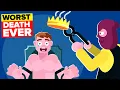
The crowd stood in shocked silence as György Dózsa, the leader of a bloody peasant revolt, was dragged to his place of execution. His deathbed loomed before him- a sadistic piece of apparatus that would test the limits of brutality. A procession of Dozsa’s men followed in his wake.
They were about to be forced to commit an act of savagery beyond their comprehension. In today’s episode of The Infographics Show, we’ll look at one of the most cruel deaths in history- this is the gruesome story of Gyorgy Dozsa and the Hot Iron Crown. Gyorgy Dozsa was born in 1470, in Transylvania, Romania, then part of the Kingdom of Hungary.
In later life, he’d become known as something of a soldier of fortune in a region fraught with rebellions during a time of political tyranny and unjustifiable high taxes on an angry peasantry. Violence came naturally to Dozsa. As a young man, he committed a robbery at a market place, killing a number of merchants.
His acumen for violence had gained him a fierce reputation by the time he was hired to fight against Ottoman forces, for which he was eventually knighted by the King of Hungary, and bestowed with property and gold. Following a successful campaign against the Ottomans, Dozsa became a household name with the Hungarian nobility. He was asked to put an army of crusaders together to fight the Muslim Turks.
Slowly but surely Dozsa enlisted peasants, yeomen, students, and religious men. He taught them the meaning of discipline. He taught them how to fight, how to kill.
But when the time came for the crusades to begin, the nobles refused to supply Dozsa’s men with food and clothing. The last straw for the growing gang of 40,000 peasants was the landlords calling them in for the harvest. When they refused, the landlords turned their wrath on the peasants' wives and children, who were already living in a state of near starvation.
Dozsa and the peasants soon turned against the landlords, burning down their houses, taking all the riches they could grab. This soon developed into a full-scale peasant rebellion. The bodies of thousands of dead nobles lay strewn across the countryside; manor houses burned bright in the night skies; blood stained the walls of the castles the peasants looted.
It turned out the peasants were actually very good at killing, partly in thanks to the training led by Gyorgy. The noble class was having nightmares. These rebels didn’t just kill you.
They often impaled or crucified the nobles, wiping out their families at the same time. To stop the revolution in its tracks, mercenaries were brought in from Venice and Bohemia. But Hungary continued to burn as Dozsa and his men demanded a redistribution of land from the nobles to the peasant class, their army moving closer and closer to the capital, Buda.
Dozsa warned the “treacherous lying nobility” who stood against him, threatening to “suspend and hang nobles on their own gates… destroy their property, tear down their houses, and kill their wives and children in the midst of the greatest possible torture. ” The nobles were already planning a torture for Dozsa that was so vile it would make impalement seem tame. But for now, his army expanded.
He enlisted not just Hungarians, but Romanians, Serbs, Slovaks, and Germans. Word spread across Eastern Europe. Fear spread among the wealthy.
The uprising had to be stopped! On July 15, the peasants’ run as victors crashed to a bloody end at Timișoara, Romania. An army of 20,000 men, hired by the nobles, crushed the rebellion.
At the time, one of Dozsa’s bands headed by his brother Gergely was just two miles away from their target of Buda. The payback against the rebels would be extreme. A warning had to be sent to the peasants of the empire: this is what you get when you try to mess with the established order.
They had watched their fellow nobility being bludgeoned, impaled, beheaded, and burned to death. So, the nobles set their minds to creating something so sadistic, the shock would reverberate around all of Europe. The punishment had to have a symbolic element.
Dozsa had pretensions of being a king, so his punishment should be fitting for a King. He’d wanted the land to be shared among the peasants, so his captors devised a punishment that would mockingly and brutally align with these wishes. Some of the people were still on his side.
The rebels who hadn’t been captured tried to regroup, but the nobles rounded up masses of peasants and tortured around 70,000 in what became a reign of terror in Hungary. The revolution was well and truly over. The day of Dozsa’s execution went something like this: The crowd jeered and screamed obscenities as a now naked Dozsa, as he was led out by men clutching daggers and swords.
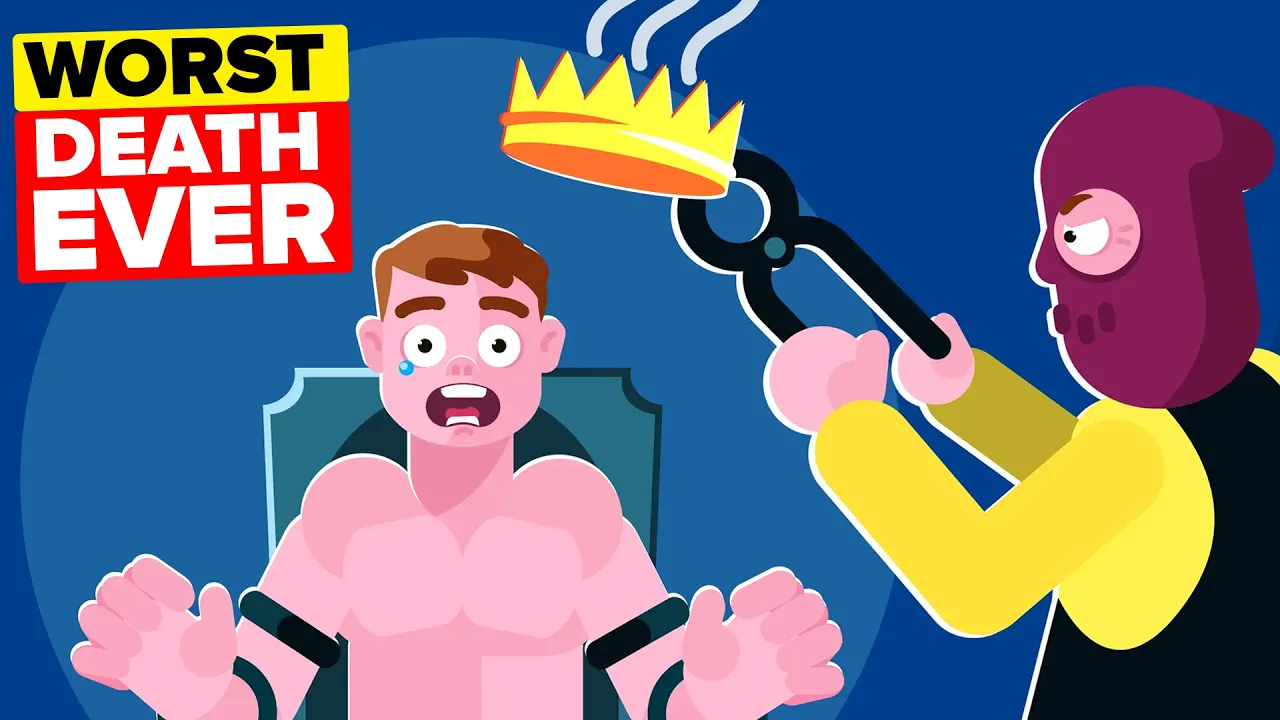
An iron throne sat on a platform above smoldering embers; the heat was so intense the throne glowed red. At its side, an iron crown and scepter were also being heated on hot coals. “So, you want to be the king of the peasants,” the nobility had told Dozsa during his torture, “Then we’ll make you king of the peasants.
” Dozsa remained silent as he was marched toward the throne. He’d already forgiven those who had testified against him. He understood that their statements had almost certainly been forced out of them as their feet were burned and their bones were crushed.
No words were necessary. He was about to become a martyr. John Zápolya, the man who’d led the defeat of the peasant army, lifted his arm in the air and the crowd quieted.
The judges who’d delivered Dozsa’s sentence looked on as, behind Zápolya, three rebels were impaled on spikes, their blood dripping down the poles. Someone in the crowd screamed words in support of Dozsa, who was now seemingly in deep contemplation. A soldier rushed in and grabbed the man by the arm, dragging him away.
The popping embers of the fire filled the stunned silence. “Let the coronation begin! ” Zápolya cried.
Pipes and violins started to play a mocking tune as men dragged Dozsa over to the heated throne. They threw his body onto the iron seat, his skin beginning to sear. He howled as his flesh cooked, squirming, with men at his back holding him down, but he didn’t speak, just as he’d promised.
The crowd was strangely silent and still as the sound of music and screams filled the air. Then suddenly, the screams died down. The hot iron had burned through Dozsa’s nerves, providing him with some relief.
On seeing this lapse, one of the executioners drove a spike into Dozsa’s back. He now just moaned, unable to move or react, his mind completely broken. But the coronation wasn’t over.
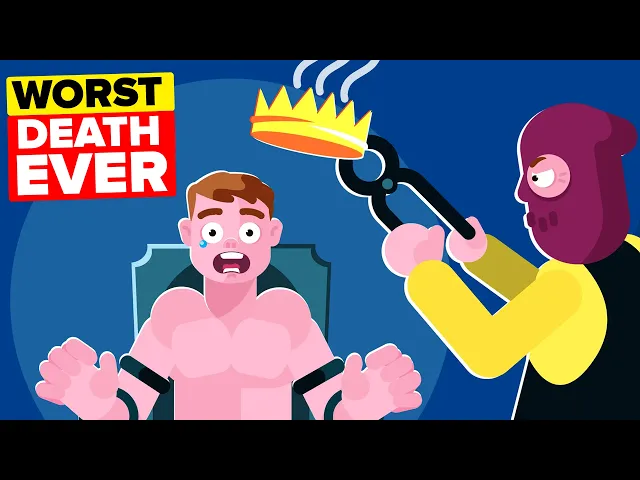
One of Dozsa’s tormentors took a pair of tongs and carefully picked the heated crown from the embers of the fire. The crowd gasped as he placed the crown on Dozsa’s head. As Dozsa collapsed on his throne, with the smell of his burned flesh wafting over the people, the scepter was put in his hands.
His life was fading away. One of the last things he saw before he fell unconscious was his own brother, Gergely, being slayed in front of him, his limbs hacked, his face mutilated. If Dosza had been promised his admission of guilt would mean his brother was spared.
It was another humiliation, another betrayal. The barbarity wasn’t over. It was time for the pièce de résistance.
One of the executioners held aloft a pair of pliers, tearing off a piece of Dozsa’s flesh. He plunged the pliers into Dozsa again and again, the melted flesh now coming off the bones with ease. A procession of captured rebels was led to the throne.
Each man, at the point of a sword, was ordered to bite into the mutilated and roasted flesh of their leader. They had been promised they’d be freed if they ate the flesh of their leader. With no option, some of the men bit into the cooked human flesh.
The crowd gasped in horror as three of Dozsa’s loyal followers gnawed at his body. When some of the rebels refused to eat, they were immediately cut down with swords. On seeing this, the remainder of them stepped over to Dozsa’s now lifeless body and reluctantly began to chew on his flesh.
The records show Dozsa’s body was sliced into pieces which were then “sent around Hungary for display” as a warning to peasants and educated men that this is what happens when you threaten the feudal order. If there’s a happy ending in this story, it’s that the men who cannibalized their boss were indeed set free. Now you need to watch “Most Brutal Punishments Handed Down by the Pope.
” Or, have a look at “Most BRUTAL Torture Methods by Mexican Cartel's.