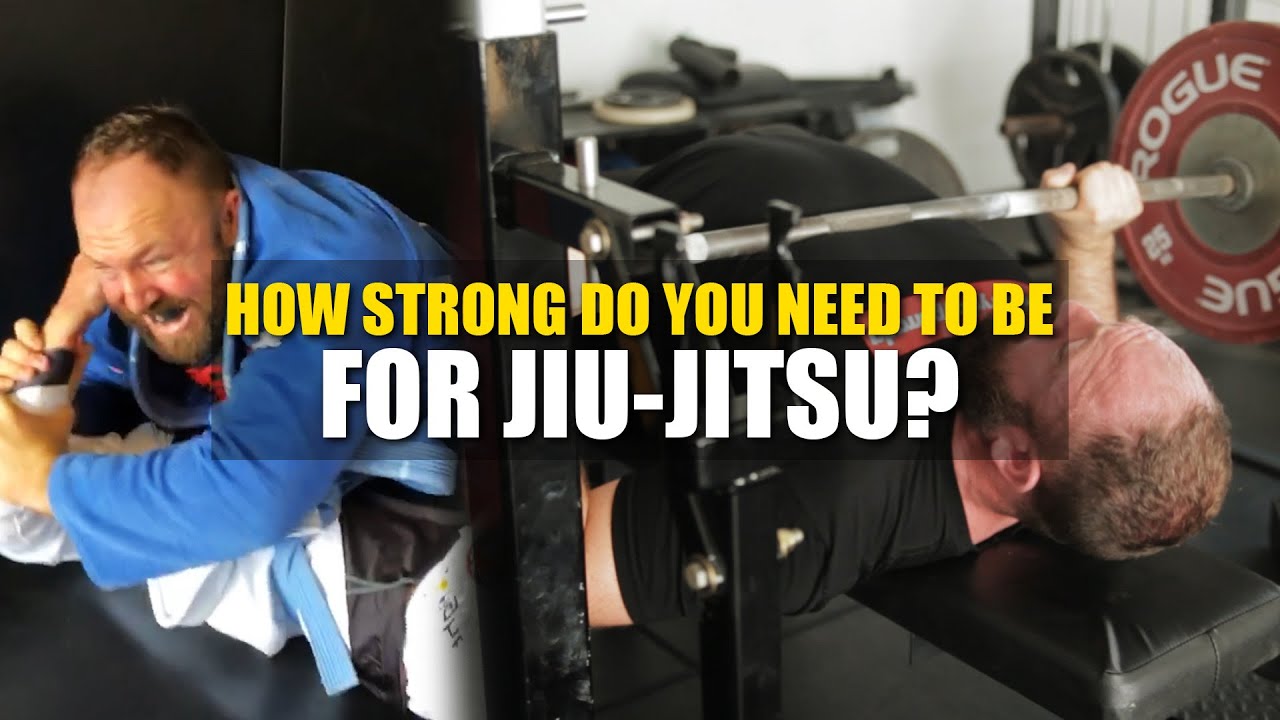
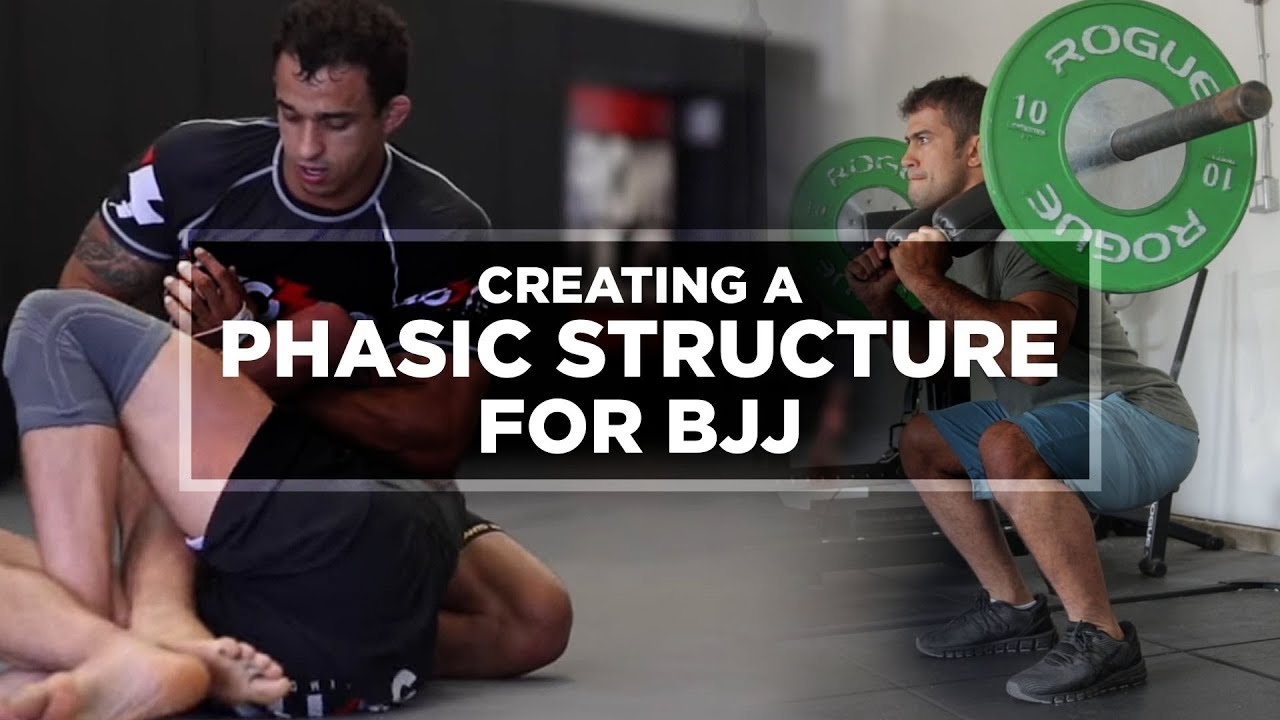
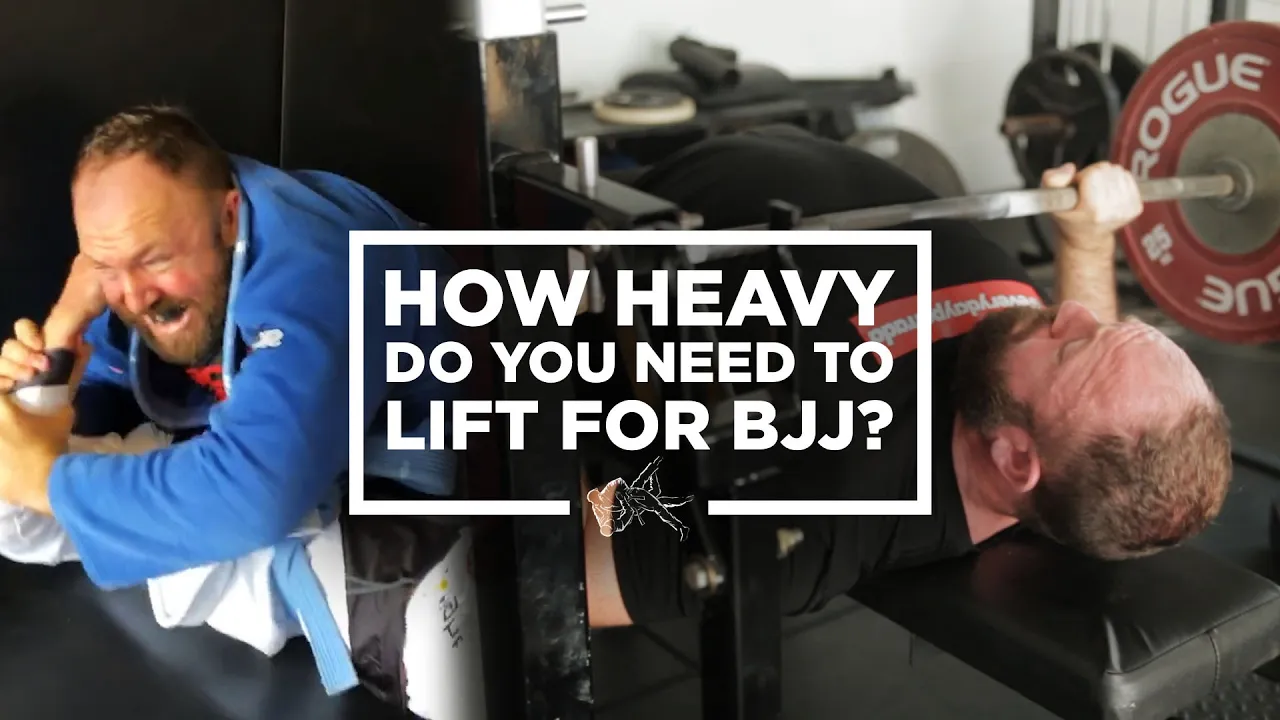
everybody what's up shad Wesley Smith here for juggernaut training systems bringing you some more information about strength and conditioning considerations for Brazilian jiu-jitsu competitors so today we're gonna be talking about you know what's really a philosophical question in in regards to training for jiu-jitsu is how heavy do you need to lift four dudes or how strong is strong enough and this goes to you know what's a really popular axiom in the in the jiu-jitsu community is that technique beats strength and yeah all things being equal technique does beat strength you know the person with better
technique wins but also all things being equal the if two people have the same amount of technique the stronger person will win and so often with those type of statements of all things being equal they're generally useless because almost there's almost never a situation where all things are equal where you're gonna have two athletes with you know relatively identical strength and technique and speed and endurance qualities and gamesmanship and psychology and everything that goes into it so you know same technique beats strength like okay that's that's a fun thing to say but if two people
did have equal technique you'd rather be the stronger one so what this gets at more is is understanding the different types of strength that go into being a successful jujitsu competitor how we can develop them when we should develop them how much attention they need in relation to the development of technique so strength is the ability to produce maximal force but it is only part of the way strength is expressed for Jitsu yes maximal strength plays a role you know just how heavy of a weight you can lift that's how we're gonna generally measure maximal
strength but again it is the ability to produce maximum force explosive strength how quickly you can produce that force is going to be significant isometric strength plays a huge role in Jitsu and that's not you know moving weights that's holding static positions and then strength endurance is going to be critical as well because you know you might have to hold those positions for a very long time and as you go through a five six you know 7 8 10 20 minute match depending on your belt level and and what competition you're in strength endurance is
gonna play a bigger and bigger role so all of those need to be present in a successful jiu-jitsu competitor so for someone like myself coming from a powerlifting background at a very high level maximal strength was really the only part of that it was significant so while I had a huge reserve there and and that does you know influence the other categories the most you know isometric strength is almost no part of is basically no part of powerlifting and strength endurance is a very insignificant part as well so while people would look at me and
think like oh you're the strongest you know jiu-jitsu competitor in in the you know narrow definition of can I produce the most force on a on a barbell you know on a piece of metal with other pieces of metal attached to it yes probably but that does not necessarily mean that I have the greatest strength for jiu-jitsu because of those other strength qualities and then you know some some special strength ideas we'll get into a bit later so the strongest jiu-jitsu competitors and I don't mean this in an insulting way just to you know kind
of matter-of-fact way are nowhere near the strength levels of their comparable level so think if there was a belt system in powerlifting weightlifting and strongman you know football this stuff are nowhere near the the the strength levels of comparable level power lifters so if there was a black belt in powerlifting I would have had a black belt in powerlifting and there's certainly there's no jiu-jitsu blackbelt who are comparably you know lifting comparable weights to me and if an NFL player is a black belt football player you know there's there's no jiu-jitsu competitors that are lifting
the same kind of weights that you see like a Miles Garrett or Tyrone Smith lifting nor would they they'd be comparable you know strength maximal or explosive strength as track-and-field athletes like sprinters and throwers and probably not even comparable maximal strength levels as gymnasts but if they got a ninjutsu match with any of those people they would kick their ass and this is because the role that that maximal strength plays and its importance in in jiu-jitsu it's probably not as significant as it is in those other sports and the other types of strength explosive strength
isometric strength strength endurance aren't necessarily present in what in those other sports that are are really associated you know with speed and power but they are very important in jiu-jitsu so the level of strength needed to excel in jiu-jitsu should be not necessarily the goal this high level strength should not necessarily be the goal of the training but almost more a byproduct of the training so you don't need to go on a powerlifting program to be a better jiu-jitsu competitor that would not be a Judas a judicious use of your energy and a smart efficient
way to train because you don't need to have like good powerlifting numbers good elite powerlifting strength levels to be a great jujitsu competitor because that maximal strength training comes with high neurological fatigue with a lot of joint stress it's not gonna be worth it to train that way when you're already getting a lot of neurological fatigue from a lot of neurological fatigue and joint stress from your regular jujitsu training so you're just chasing and doing that and trying to develop the best powerlifting numbers you're just chasing sort of a ancillary you know at best tangential
goal - to your what's gonna make you the most successful jiu-jitsu competitor because you can get strong enough for jiu-jitsu with a lot more submaximal training in the weight room but doing that with great intent so always moving the bar as forcefully as explosively as possible paired with other X of work like sprints jumps medicine ball throws with isometric training and with with some higher rep training which will give you the benefits of strength endurance as well as supporting hypertrophy and should have some some benefits to to joint health as well so all of that
kind of goes to the to the idea of constructing an effective training program so the other important part of this to understand you know because maximal strength is not the be-all end-all for for a jiu-jitsu competitor or field if it was you know we could just go to parallel team World Championships and pick out the the champions there and and put them on the mat and they would be successful right away that's because technique in any sport but specifically in this context you know technique of these jujitsu movements is what allows you to effectively and
efficiently express the strength that you do have and gets into the concept of of special strength or you know strength it is very specific to sporting movements and you know I I'm right now 290 pounds you know I've I can't at the moment but I have squatted over 900 pounds dead lifted over 800 benched in the mid 500s no jutsu competitor is is matching those those type of numbers and even you know pretty high strength endurance numbers like 500 422 squat 600 421 in the deadlift but I've rolled with with black belts you know people
like otávio Susa felipe de la Monica and I roll with them and these are guys who weigh you know 170 180 pounds but my god do they feel strong you know they feel to me strong stronger than I am and and so much of this is is because their technique allows them to so well Express and focus their strength through great frames and great positions but also you know because they've done so many of these sporting movements hundreds of you know or thousands tens of thousands of times so while there's no way you know to
really measure that strength in a traditional sense with like a barbell exercise if you did have you know force plates or are different you know more exotic kind of tools to to measure how hard they're there you know turning their hip with this certain grip and everything you would see this this great expression of force in these very specific movements so training sub maximally is gonna get you strong enough but not take away too much of your energy so that you can use it developing the this special strength through practicing your sport and there are
ways to overload some of those sport movements like there's some things that you can do wearing a weighted vest or even just something as simple as training with with partners who are heavier than you are that can help you you know develop that that special strength a little bit faster but you know as cliche as it is sometimes it's it's just more time on the mat is gonna give you more you know strength in those specific positions so I know what people you know when you when you saw the the title to this video how
heavy do you need to live for BJJ you you came wanting some numbers you know of what is strong enough or what would I consider to be elite strength for a jiu-jitsu competitor and these are our you know numbers that I've thought about for a while in it and if a jiu-jitsu competitor has these they are you know almost certainly maximally strong enough to be successful at any level of competition if they can pair the technique along with it and again this could be a bigger discussion as we get into special strengthen and transfer of
training and dynamic correspondence and all that's type of stuff but in more traditional weight room exercises the stuff that you know you might be doing now if you have a male jutsu athlete who could squat two times their body weight they are in the you know top 1% of jiu-jitsu strength probably 1.75 times their body weight for a female competitor if you have a jutsu competitor who could bench one-and-a-half times their body weight for males one time their body weight for females that is going to be elite strength in the jiu-jitsu community in the deadlift
and whether this is trap bar straight bar you know sumo conventional doesn't really matter and that's gonna be the topic of in other videos we get into exercise selection but if you could deadlift two and a half times your body weight for a male or two and a quarter times the body weight for the female that is going to be elite strength in jiu-jitsu and maybe the exercise of these that could have the highest correspondence is going to be the pulling strength so if you had someone who could load half of their body weight onto
a onto a weight belt dip belt a male competitor half their body weight and do three pull-ups with that or for a female athlete 0.2 times their body weight extra on a belt and do three pull-ups that would be great back strength or if the bent-over barbell row is more speed and this may be may be the case for you know super heavy and ultra heavy competitors as if you know if you're 275 pounds and you could are 280 pounds let's say and you could do 3 pull-ups with a hundred and forty pounds added to
you by a weight belt it would be enormous ly excessively strong and and I don't want to roll with you so maybe for those bigger athletes the barbell row is a better indication and if you could do three reps in in the bent-over barbell row with relatively strict technique that is equal to your bench press strength I would consider that to be pretty elite strength now while the while you may hear some of those numbers and some of you might think wow I need to get a lot stronger to achieve those some of you may
hear that and think wow I'm already stronger than that if you're in that second group you're already stronger than that you're probably at the point of diminishing returns when it comes to developing maximal strength to improve your jiu-jitsu so focusing on those other qualities of explosive strength isometric strength and strength endurance well and leaving more energy for you to do more you know drilling specific training and live training on the mats is gonna be beneficial to you if you're hearing that and saying well I can only swap one of the quarter times my body weight
and Chad said in this YouTube video to have elite strength I need to squat two times my body weight that does not mean that you've finished watching this video and you go and download you know small squat routine and and try and get your squat up to two times body weight you know in the next three months and think that that's gonna make you into an elite Jiu Jitsu competitor no they it's it's not about you know putting all this attention to one area or the other it's about balancing them for simultaneous development so you
know putting getting on a powerlifting program to squat two times your body weight right now is not in the next three months gonna make you into elite Jitsu competitor that's not what the hole in your game is getting stronger over time being able to produce more force in maximal strength being able to produce that force faster for explosive strength being able to hold static positions longer and stronger with isometric strength and you know having greater strength endurance especially specifically like in your in your grips and arms and and you know legs if you're playing a
lot of guard or open guard stuff that's what's gonna do it but it's all about balancing this the simultaneous development of technical skill and the physical qualities so the emphasis on that is gonna kind of ebb and flow throughout the year it's gonna be a bit different from one competitor to the other depending on what your athletic background is if you're coming into jiu-jitsu with a background like me in strength power sports like parallel team strongman and weightlifting track and field you may already be at or above those Elite BJJ strength numbers that I talked
about and you can really just focus on maintaining that you know staying healthy doing the prehab and Rehab exercises you need maybe developing some of that explosive strength or sorry isometric strength and strength endurance that you may have been lacking in if you were just doing a power lifting or weight lifting while you have a lot more and you know that's a good situation to be in because now you have a lot of energy that you can devote towards your your jutsu while just maintaining and making slight improvements in in the weight room if you're
on the other side of things and you have almost you know no background in lifting weights but you've been training a ton of jiu-jitsu for the last ten years yeah it may be beneficial to you to go from training ten you know ten times a week on the mats back to to five or six times for a couple months so you can put a little bit more energy towards you know lifting weights and getting stronger and being able to produce more force and then as you get closer to competition that balance is going to shift
and then after competition after your primary competition it's gonna shift back the other way to to more single in addition and a little bit less jiu-jitsu and that's gonna Evan flow throughout the year so you know keeping keep in mind that the the goal of your training for jiu-jitsu all of the components of training both on the mat and off is to become a better jutsu competitor it is not to become a better power lifter or a better weight lifter that you know in and of itself especially beyond like the white belt level and and
you know lower level competition isn't gonna make you successful like at white belt and and probably a lot at blue belt I am successful in a large part because I'm much stronger than than everyone else at I'm a better weight lifter than them but I know as I get to purple hell you know brown belt black belt that that's not going to be the case that that's not gonna really matter matter much any you know anymore it'll it'll always help to be strong but trying to increase those numbers for the sake of increasing the numbers
should not be the goal of your training or the first day that I trained with with Jacob Harmon who's who helps with some some wrestling and as coached you know all kinds of the best Jiu Jitsu compares in the world huh Mahalo Felipe Pena buchecha and I I trained with Jacob and I got back to my school the next day and and everyone's like you know Jake it was a big guys probably five nine 265 pounds and I said well you're probably still way stronger than him right now and I looked and I was like
mind you that the day before Jacob had gotten a collar grip on me that I tried to break you know a to hand grip break on it and I didn't feel like I was halfway to breakin his grip but talk to him about lifting weights and he doesn't really have much experience with that at all and I said you know to my friends at school like like yes I'm I'm better at lifting weights than he is but he is better at lifting people than I am and that's kind of what what you're getting at here
is you have to develop the special strength on the mat with with repetition with time and while the weight room can help benefit that it should not be you know the the overarching focus should not be how much can you squat how much can you bench how much can you deadlift snatch clean whatever that's not gonna instantaneously make you a better jiu-jitsu competitor it's finding that right balance for the time of the year like relative to competition and for you as an individual based on your current strengths and weaknesses that's gonna help you be successful
so how heavy do you need to lift for BJJ not that heavy you you know being stronger of course helps but you don't need to be the best parallel for the best weightlifter in the world to be the best jiu-jitsu competitor but I wouldn't go the other way either and say well I don't need to lift weights at all I can just train on the mat all the time it's gonna help but it shouldn't be the singular focus so hopefully that gave you a better understanding of this kind of philosophical concept of how heavy you
need to train or what is strong enough for jujitsu make sure go back and check out the other videos on jujitsu showing in addition that we've already done subscribe to the channel like this video be on the lookout for more up coming up videos on these topics as well as our AI coaching system for jujitsu a strength in auditioning you can find all of that at JT s strength calm thanks for watching we'll see you next time [Music] [Music] [Music] you