Ever wondered how apps launch massive events run smoothly or complex projects come to life the secret behind all is project management a skill that transform ideas into reality but it's more than just scking off task it's all about planning organizing resources managing risk and ensuring projects are completed on time within budget and with top quality no matter the industry Tech Healthcare construction or marketing Skill project managers are in high demand in this course you will learn how to plan schedule budget and also manage risk effectively we'll also dive into popular methodologies like agile and waterfall
explore stakeholder communication resource management and performance tracking as well you'll also learn how to handle project constraints adapt to changes and keep your team motivated Under Pressure but before we begin if you want to take your project Management skills to Next Level simply learns PMP certification training is your gateway to success as a globally recognized PMI partner we offer topnotch training designed to help you pass the PMP exam on your very first attempt our course includes exclusive master class in gen for project management helping stay ahead of the curve with the latest trends and Technologies
we also earn 35 pdus access 12 simulation assessment and get over 500 premium practice questions To sharpen your skills so you can find the course Link in the description box below and in the pin comments so let's get started project management now as defined in pmis PMB okay project management is application of knowledge skills tools and techniques to project activities to meet project requirements so every project will have an objective to accomplish similarly the objective of project management is to make the final deliverables in a finite time and budget This involves having clear understanding about
the deliverables of the project required resources for the project resource in terms of Human Resources Technical Resources Financial Resources Etc project manager should have a full picture of those aspects we can call it as constraints or aspects and manage those throughout the Project Life Cycle for which a project manager should have a full view about a project and what is that this project has to accomplish that Objective should be clear so as part of project management the six constraints which project manager should look at are scope time quality cost risk and resources so each of
these areas has very important role to play in project management the clarity in scope the clarity in terms of schedule within which the project has to be delivered the cost what it incurs to that particular project once it is finalized one cannot vary when cannot change Without any proper approvals similar to that we have quality management which has to ensure the scope the specifications what are defined project output will be accordingly achieved risk every project is taken up for a specific reason by organization so organization should assess the risk associated with the project and similarly
as project progresses various different risks has to be identified like Risk related to project management risk related to Technology area risk related to resources risk related to financial things so broadly risk management plays a very important role so there will be something called contingency reserve kept for a identified risk above the cost what is estimated for various deliverables from the project so every project require resources resources may be in terms of Human Resources Financial Resources technology resources environmental resources so all these Resources are used to produce the output of the project so these resources has
to be managed with the sufficient optimization and standardizations required now let us understand the definition of a project so what is a project PMI defines a project as a temporary Endeavor undertaken to create a unique product service or result the temporary nature of a project indicates that a project has a definite beginning and end so when I say product unique Product it means every output it may be similar products you are producing with the same features and functionality but the output of every project is unique because it is unique in terms of all the six
constraints what we just discussed now now when I say product it is very easy for us to visualize it may be a desktop it may be a laptop it may be a carard it may be a machine Etc but how do I visualize a service now project output is a service now it is it's about Building a capability a project by through a project a capability can be built to ensure Services can be provided that's what the output of project is service for example if I think about a taxi services for providing a taxi services
I need a mobile app I need taxi I need a server I need a data center so all these are various different products and services here service example can be internet service so combination of all the services and products builds the Capability for an organizations who can provide the taxes services so building that capability we say it is an output of a particular project which is called service similarly results can be Improvement of something Improvement in customer satisfaction increase in um some specific objectives or specific results need to be achieved in performance perspective so output
of every project will be unique product or a service or a result this we need to Clearly understand so when we say there is a definite beginning and end every project starts at certain point in time and ends at certain point in time so it has a definite beginning and end that is the reason it is temporary in nature it is not an ongoing business activity before we begin let's have a look at an incident where two project managers John and Ted are talking to each other John is a senior project manager while Ted is
a part of his team John finds Ted to be Upset so he asks him is there anything he can help him with to which Ted replies that his project failed johon further asks him what could be the possible reason for the project failure Ted tells him that it's because he was not able to manage the time and budget now John asks him if he is PMP certified to which Ted says he isn't then John suggested that he must take the PMP certification which will not only give his project better performance but also Help him upskill
in his career so today we will discuss about PMP certification in detail let's first have a look at all the topics we will cover we will begin with what is PMP then we will check top 10 reasons to get PMP certified followed by the basics of PMP then after we know the PMP basic concepts we will check who can get the certification and pattern for the PMP exam then we will learn about the pimbo guide which is an integral part to prepare for the PMP Exam finally we will see the cost and the validity of
the certification so without any further Ado let's begin with what is PMP PMP or project management professional is the world's most renowned project management certification for project managers this certification is provided by the project management Institute now when we know what is project management professional or PMP certification let's have a look at some reasons why you should get PMP Certified today I will give you top 10 reasons to take PMP certification PMP certification helps you become a better project manager the process that helps us acquire the certification goes to several phases like gaining project management
experience and passing the PMP exam which helps you in bringing sanity to the project manager the process helps project managers to learn different industry Trends have practical knowledge and several other project Management constraints the second reason that we have is project management certification makes a resume more valuable as we have discussed earlier that PMP certification is the most renowned project management certification so having it on the resume will definitely help the interviewer recognize our skills there are companies that only accept project managers who are PMP certified PMP certification not only helps in switching the job
or Finding a new one it helps in progressing in the current company as well the third reason that we have is it provides more job opportunities when one acquires the PMP certification it proves that one has expertise in completing the project effectively and efficiently so the certification increases the trust factor of the interviewer in you and increases your probability of getting that job the fourth reason that we have is salary hikes BM certified project Manager is one of the highest paid jobs around the globe and this trend will continue to grow the global survey by
the project management Institute shows that PMP certified project managers tend to get 20% more salary than the non-certified project managers the next reason that we have is PMP certification validates your dedication to the job the certification requires several months of training it requires several hours of project management experience and Exposure this experience and exposure explains the seriousness of a project man manager towards its career path then sixth we have is PMP certification is globally acknowledged PMP certification is the most renowned certification all over the world it helps project managers to be a part of different
types of Industries all over the globe PMP certification is the most renowned certification all over the world project managers who are PMP certified may get Jobs in different types of Industries all over the world PMP certification not only provides theoretical knowledge but also helps in gaining practical knowledge which further helps in increasing the confidence of a project manager the next reason that we have is better project performance PMP certified project managers tend to deliver better projects than the non- PMP certified project managers this is because PMP certified project managers are well Aware of five process
groups 10 knowledge areas and 49 processes which helps them have a clear picture of different aspects involved in a project the eighth reason that we have is it increases your networking opportunities there are several communities that one becomes a part of when they sign up as a PMI member these communities have meetings regarding new job opportunities and this helps in having a professional Network the ninth reason that we have is Job security job security is a major reason that a professional thinks of before opting for a particular profession today in the world of recession where
companies are drowning the demand for PMP certified project managers goes on increasing the last and the 10th reason we have is expertise in practical application when one appears for a PMP exam they need extensive preparation they need to have thorough knowledge of process groups and Knowledge areas which help them develop several essential skills and move ahead in their career now as we move further we will look into the PMP basic concepts the PMP basic concepts are the five project management steps these project management steps start from the day we begin our project to the day
we end our project they begin from initiation to closure the first step that we have is initiation planning execution monitoring and controlling and closure now let's Have a look at each of them in detail the first step we have is initiation initiation involves defining the project scope this is the step where we explain what our project will have for whom we are making that project it helps us to identify our stakeholders who all will be the part of that project and determine the project feasibility after the step of initiation when we have decided the scope
of a project the Second Step that comes is planning in The planning phase we Define a flow to all the activities of a project we Define this flow keeping in mind all the constraints of a project like time resources and risk after we have defined the flow of these processes it is time for us to look at the execution in the execution phase we evaluate the plan and the sequence of the task we have made we finally put the plan in action and the project tends to start after the project building has started and the
process of Execution has started it is time for the monitoring and the controlling phase in monitoring and controlling phase the progress of the project is tracked and important steps for quality assurance are taken in monitoring and controlling phase the work being done is compared with the work as defined in the project plan in this phase the progress of the project is tracked and important steps for quality assurance are taken finally we have the closure step in this step The deliverables are delivered to the client the documentation of all that took place during the Project Life
Cycle is done and project is fully evaluated now when we have seen reasons for getting PMP certified and we know the basic concepts of PMP it is time for us to know who can get pm certified for getting PMP certified there can be two cases the first case says You must have a secondary degree a secondary degree means high school diploma or an Associate degree or a degree that is globally equivalent to all of these then you need to have 7500 hours of leading and directing projects and 3500 hours of project management education there can
be two cases first case can be you must have a secondary degree that means a high school diploma associates degree or the global equivalent degree then you must have 7500 hours of project management experience and 35 hours of Education in project management the Second case can be you must have a 4-year degree along with 4,500 hours of project management experience and 35 hours of Education in project management now when we know who can get PMP certified we will see the PMP exam pattern the exam comprises of 200 questions out of which 175 questions are used
for evaluation one can answer these questions if they have thorough knowledge of five process groups and 10 knowledge areas the the time provided to Complete the exam is 4 hours the questions that are asked are of different types the most common type being formula based situation based and knowledge based now when we have discussed about the exam pattern discussing about the pinbo guide becomes very important so the next topic that we have is pinbo guide pimbo guide or project management body of knowledge is a book that comprises of several processes and different terminologies Needed to
crack the PMP exam the whole syllabus of PMP exam is covered in the pinbo guide by the project management and 10 knowledge areas apart from this there are 49 processes that are divided amongst five process groups 10 knowledge areas finally let's have a look at the cost and validity of the PMP certification when we talk about the cost of the certification there can be two cases the first case can be if we are not a member of project management Institute the exam fees is $555 the second case can be if we are a member of
project management Institute the exam fees is $45 if we talk about the validity of the certification the certificate is Val for a period of 3 years after every 3 years the certificate needs to be renewed to renew the certificate one needs to furnish a proof of 60 pdus of professional development units after so much information that thanks John for His time and Promises to take the PMP certification at the shortest notice now let's have a look at the salary trends of a PMP certified project manager and a sample resumer if we consider the salary of
a non PMP certified project manager it is approximately $91,000 while if we consider the salary of a PMP certified project manager it is approximately $111,000 which is approximately 20% higher than the non-certified project Manager salary now let's have a look at the resume of a PMP certified project manager if you're somebody with PMP certification and looking for a project manager or a senior project manager role your resume should look something like this the summary in the beginning would include how much experience you have and anything that supports your claim of being a project manager like
here James Brown has written he has more than 10 years of experience with generating and Building projects then when you talk about your experience you should put something that emphasizes on the responsibilities that you had your area of expertise put something that shows your skill set for the desired post and also something that you learned from your former job role this shows that you have command over your work and also the determination to skill and upskill yourself like here James Brown has 3 years of experience as an assistant Manager training new Associates and then more
than 3 years of experience as a project manager where he not only let projects but also learn new project management tools like Trello and Prima vera after this add relevant information regarding your education your resume must include skills that you have or you have gained in your years of experience like here James Brown has divided his skills into two parts where he has written his technical skills and Non-technical skills he has included a skill of agile and quality assurance software as well as he has his knowledge of different project management tools then putting your certifications
play a major role this proves that you up toate and updated with current market trend Friends James Brown has his certifications in C and Java and more importantly he has his project management certification project management professional here's Max an Assistant project manager who looks tensed and is pacing around the room then Jack a project manager who works with him walks into the room and asks him why does he seem so tensed to which Max replies he's facing difficulty in estimating the budget Jack responds it might be because he's not planning the project properly Jack reassures
Max and begins to tell him about project planning so without any further Ado let's begin with what is Project Planning project planning is the second step or phase of the Project Life Cycle Project Life Cycle has five different phases from initiation to closure today we will be learning about this phase that comes immediately after initiation in which the project plan is documented and further requirements are defined project planning includes the following things the first and the foremost thing is describing the objectives or outputs we are expecting the project to yield Second we have is the
elaboration of the scope to make sure what the project is all about and what all can be expected from the project the third step we have is forming a schedule this schedule is important to run or perform different tasks of a project each task having its own start date and end date this helps a project to finish in the schedule time and limit lastly we have making and generating progress reports in which all that win during the tenure of the Project is documented this helps in evaluating the project and helps in the forthcoming projects now
let's have a look at the project planning fundamentals the First Fundamental that we have is the determination of scope cost and resources their determination helps us in having a rough estimate about the time that is required to finish the project it helps us in determining the number of people required and what should be their skill Set we can divide the project into smaller manageable sections and this is made possible with the help of work breakdown structure the second fundamental refers to identifying the problem there are several techniques by which we can collect information and discover
issues there may be several problems in a project and in that case several risks or issues are prioritized and the risk that requires immediate attention is dealt with first then comes Identification of stakeholders when we can identify the stakeholders we can know who all will be affected and in what way which helps us having a better understanding of the project stakeholders may be anybody they may be the part of the project team or project managers or customers they help during the project and contribute to its success then the last fundamental we will discuss is defining
planning project objectives a project plan is Made keeping in mind the requirements of the project team and expectations of the stakeholders if the project team can meet the expectations of the stakeholders then only we can say that the project is successful now when we know about project planning and its fundamentals it's time to see why project planning is so important project planning reduces the cost and time of the project as every step is monitored and optimized in the best possible Manner project planning increases employee satisfaction as every employ employee who is a part is engaged
in the team for improved project performance project planning helps in the implementation of quality assurance as the output of every step is duly tested lastly project planning helps in reducing project risk as planning helps to analyze prioritize and deal with that risk moving on let's have a look at the tools for project planning the first Tool that we have is a gan chart today Gan charts are one of the most popular project management tools they help in tracking the status of the work at a particular time and their independencies on each other Gan charts help
in showing different phases and steps involved in a project the second tool we will talk about is critical path method or CPM critical path method helps in scheduling the project activities so that the project runs properly the critical path Method focuses on the longest stretch of dependent tasks and determines the time needed to complete them the next tool is Project evaluation and review technique or per chart per provides a graphical representation of the Project's timeline explaining the independencies of tasks this tool not only helps in making a schedule but also helps in coordinating with all
the team members the fourth tool we will check is work breakdown structure work breakdown structure is a Very common tool that makes it possible for the team to break its work into manageable sections work breakdown structure is a step toep process that helps in completing the project efficiently the last tool we will see is Project documentation project documentation is an integral part of the project life cycle project documentation helps in understanding understanding the mistakes done during the project and more importantly provides guidelines for The upcoming project now when we know about different tools for project
planning it becomes essential that we know the necessary steps of project planning there are seven steps in Project planning let's have a look at each of them in detail the first step is identification of stakeholders as we have discussed stakeholders could be anybody they could be a part of the team or a project manager or a customer when we identify stakeholders we can find out The expectations and requirements that are to be looked upon in this project this gives us a clearer picture of the project and helps in establishing the project scope so the next
step we have is defining the project scope this helps in determining a list of specific project goals and deliverables that are to be achieved during the course of the project after we have defined the project scope it is time to set project objectives and prioritize them the Initial ideas that were there before are now elaborated and final steps to complete the project are defined in the next step the deliverables are determined after all project deliverables are the only reason why the project is being created this step involves finding out what these deliverables will be and
the deadlines of their delivery then the step that comes into picture is creating a project schedule the project schedule refers to The guidelines when a particular task is to be started and when it is supposed to end this helps in monitoring the growth of the project and later helps in generating progress reports the next step is the step of risk analysis this step plays an extremely important role in the success of the overall project it helps in identifying the risk prioritizing them and taking steps to limit them the last step in Project planning is to
generate progress reports In this step we update the stakeholders about the project growth and it is done so that all the concerned team members can have a look at the progress of the project after all this information Max thanks Jack for the explanation and looks forward to plan projects within the budget and of better quality let's begin with discussing what exactly project management it is project management is the process of leading the work of a team to achieve all project Goals within the given constraints the information is usually described in Project documentation created at the
beginning of the development process the primary constraints are scope time and budget project management is the application of processes methods skills knowledge and experience to achieve specific project objectives according to the project acceptance criteria Within agre parameters now let's focus on the steps to becoming a project Manager and we will see the steps how to become a project manager and you could see the first step is understanding the role the second is getting certification third is you should have experience then skills and then you should expand your knowledge with time and you should build your
network and then demonstrate the leadership and you should have a good portfolio folio and your professional growth and then you should seek Employment and Ace the interview so we'll discuss each of the particular steps to becoming a project manager so becoming a project manager is an exciting and rewarding Journey that requires a combination of skills knowledge and experience whether you are starting from scratch or transitioning from a related role here a comprehensive guide on becoming a project manager starting with the first skill that is understand the role Begin by clearly Understanding what project management entails
project managers are responsible for planning organizing and overseeing projects from start to finish they coordinate resources manage budgets mitigate risks and ensure timely delivery of project objectives thesearch the key responsibilities industry standards and the best practices associated with project management and the next skill is acquire education and certifications while not always Mandatory obtaining a degree in a relevant field such as business administration or project management can provide a strong Foundation additionally consider pursuing certifications such as project management professional PMP or certified associate in project management capm that is offered by project management Institute PMI these
credentials demonstrate your commitment and competence in the field next skill we have is gain relevant experience to Build practical skills seek opportunities to work on projects in any capacity offer to assist project managers or volunteer for projects within your organization this hands-on experience will provide valuable insights into Project Dynamics team collaboration and problem solving document your project involvement and accomplishments to Showcase your experience to Future employers and next skill you need is develop key skills Project managers require diverse SKS skill set enhance your skills in areas such as communication leadership organization negotiation time management and
risk management effective communication is particularly crucial for collaborating with stakeholders managing conflicts and ensuring project goals are understood by the team next you should expand your knowledge continuously learn and stay updated on industry Trends methodologies And tools familiarize yourself with project management framework like agile scrum or waterfall and explore project management software and collaboration tools such as Microsoft Project jira or Trello attend workshops webinars or conferences to network with industry professionals and learn from their experiences next you should build a network networking is vital to Career Development connect with other project managers join professional associations
And participate in online communities engage in discussions share share knowledge and seek mentorship opportunities building a strong Professional Network can provide guidance job leads and opportunities for collaboration next is demonstrate leadership project managers are leaders who Inspire and motivate their teams showcase your leadership qualities by taking on additional responsibilities leading small projects or coordinating Cross functional teams seek opportunities to manage Team Dynamics resolve conflicts and Foster a positive work environment leadership experience will strengthen your project management credentials next is develop of portfolio create project management portfolio that highlights your achievements successful projects and the impact
you made include project plans timeline budgets and any metrics demonstrating your ability to deliver Results this tangible evidence will distinguish you from other candidates during job applications or interviews next is pursue professional growth Embrace continuous professional development by seeking learning opportunities attending workshops and obtaining Advanced certifications stay informed about emerging Trends and Technologies in project management and explore specialized areas such as risk management change management or Stakeholder engagement a commitment to ongoing growth will position you as a dedicated and knowledgeable project manager and the next we have is seek employment opportunities once you have acquired
the necessary skills knowledge and experience explore project management job openings tailor your resume and cover letter to highlight your project management expertise showcase relevant achievements and emphasize your ability to deliver Successful outcomes leverage your network and online job platforms to discover suitable opportunities and the last we have is is the interview prepare your project management interviews by familiarizing yourself with common interview questions and crafting wellth thought out response highlighting your experience problem solving skills and Leadership capabilities demonstrate your ability to handle having known about the steps and Processes of becoming a project manager let's proceed
with the most critical aspect of project management as a career that is salary of a project manager entry-level project managers in the USA can earn an annual salary ranging from $60,000 to $70,000 senior project managers or those in leadership position can earn salaries exceeding $120,000 and project managers even reach $150,000 or more entry-level project Managers in India can expect to earn an annual salary of around 8 to 12 lakhs perom senior or highly experienced project managers can earn salaries ranging from 12 to 28 lakhs perom now we'll see some of the top companies hiring Network
Engineers these companies are Amazon Google Microsoft Apple Facebook IBM Cisco Systems Intel and Deo and that calls for a app do you know friends that the average salary of project manager in India is around 19 lakhs per Anum and in United States it's around $90,000 these figures highlight the lucrative opportunities in the field of project management Welcome to our tutorial on the project management road map for beginners in this video we will guide you through the essential steps to Kickstart your career in project management from understanding the key Concepts to developing crucial skills to exploring
popular methodologies and Gaining practical experience we have got you all covered by the end of this tutorial you will have a clear path of becoming a successful project manager so let's dive in but before that I request you guys that do not forget to hit the Subscribe button and click the Bell icon for further updates on our latest videos so let's start guys first by understanding what exactly is project management so guys project management is essential practice of planning Organizing and oring a project to meet specific goals within a set time frame and budget it
involves defining the project scope setting clear objectives and coordinating all necessary resources like people tools and materials a project manager's job is to make sure all the tasks are completed on time within budget and up to the desired quality standards this requires effective communication solid risk management and quick problem solving Skills project management also means keeping an eye on the progress making necessary adjustments and ensuring all the stakeholders are informed on the same page with the project goals there are various methodologies like waterfall agile scrum which offers different ways to handle projects I hope so
you have got a brief idea regarding this now let's move on and discuss briefly regarding what are the key skills needed to become a project manager so guys to Be an Effective project manager you need to develop a diverse set of skills that will help you to navigate the complexities of managing projects here are some of the essential skills that project managers should have the first one is communication clear and concise communication is very very vital in this domain you need to convey ideas expectations and updates to your team and stakeholders effective communication helps to
avoid misunderstandings and Keeps everyone aligned with the project goals the second one is organization being organized is very very crucial for managing multiple tasks deadlines and resources an organized project manager can keep track of all the project components and ensures everything runs smoothly third one which we have is problem solving projects rarely go exactly as planned so strong problem solving skills are very very Essentials you need to quickly identify issues Analyze possible solutions and implement the best course of action to keep the project on track next one we have is leadership inspiring and motivating your
team is a key aspect of project management a good leader guides their team delegates task effectively and fosters a positive and productive work environment next one we have all over here that is time management so guys priority izing tasks and managing your time efficiently ensures that project Milestones are met good time management helps you to stay on schedule meet deadlines without compromising the quality next one we have is adaptability projects can be unpredictable sometimes so being adaptable and flexible is very very important you need to adjust plans strategies as necessary to accommodate changes and unforeseen
challenges and finally we have is solid risk management you know friends that identifying potential risk and developing strategies To mitigate them is very very crucial for project success effective risk management helps to minimize the impact of uncertainities on the project so by honing these skills you can become a more effective project manager capable of leading your team to success and delivering projects that meet or exceed expectations now we are going to move forward to understand the core project management Concepts so guys understanding core project management Concepts is very very Essentials for successfully managing the project
the first one that we have all over here is scope so guys scope defines what the project will deliver and work required to complete it clearly outlining the scope helps to prevent scope creep where uncontrolled changes or continuous growth can detail the project next one we have all over here is resources this involves identifying and allocating the necessary resources including team Members tools material and budget efficient Resource Management ensures that the project has everything it needs to proceed without delays the third one that we have all over here that is schedule so guys the project
schedule outlines the timeline for all task and Milestones creating a detailed schedule helps you to keep the project on track and ensures that deadlines are met the fourth one that we have all over here is budget so guys this is very very Important factor and managing the project budget involves estimating cost setting budget and controlling expenses to ensure the project remains financially viable effective budget management helps prevent cost overruns finally we have is risk management and quality let's first talk about risk management so guys identifying assessing and mitigating risk is very very crucial a proactive
approach to risk management can help anticipate potential issues and Develop contigency plans reducing the impact of the project if we talk about quality then ensuring that the project meets the required standards and specification it is very very required for it to be become a success so quality management also involves setting quality criteria continuously monitoring and evaluating the project deliverables now let's move on and discuss about project management methodologies so guys project management methodologies provide a Structured approaches to managing projects and ensuring efficiency and consistency the first one that we are going to discuss all over
here is called waterfall model it is a linear and sequential approach where each phase of the project must be complet completed before moving on to the next it's best suited for projects with well- defined requirements and minimal changes the next one that we have all over here is called agile actually agile is an Iterative and flexible approach that focuses on delivering small incremental improvements agile promotes adaptability and continuous feedback making it ideal for projects with evolving requirements the third one that we have all over here is called scrum scrum is basically a subset of agile
scrum breaks into the project for short time box iteration called Sprint which basically lasts for 2 to 4 weeks so in this there are regular meetings such as daily standups And Sprint reviews which ensures constant progress and feedback so guys choosing the right methodology depends upon the Project's nature requirement and Team Dynamics ensuring a tailored approach to project management is very very crucial now let us discuss about some of the tools that you should be aware of if you want to become a project manager if effective project management relies on the tools to organize track
and manage task efficiently some of the Popular project management are the first one that we have is Trello Trello is a visual tool that uses boards list and cards to organize tasks and projects it's highly intuitive and flexible making it ideal for teams that prefer straightforward visual approach to managing task and tracking progress next we have all over here is Asana Asana offers a comprehensive suit of features fees for task management project planning and team collaboration with its Ability to create projects assign tasks head deadlines and track progress Asana helps to ensure that everyone stays
on the same page the third one that we have all over here is called Microsoft Project this tool is a powerful project management software which is used for planning scheduling and managing projects it offers Advanced features like Gant charts Resource Management portfolio management making it suitable for complex projects next one that we Have all over here is called jira originally designed for software development teams jira is an excellent tool for managing agile projects it supports scrum and Canan methodologies which enables teams to plan Sprints track issues and monitor progress through detailed reporting next one that
we have all over here is called slack while primarily it is a communication tool but slack integrates with many project management tools to facilitate Seamless collaboration teams can communicate in real time share files integrate other tools to create a centralized hub for project activities so these were some of the tools that you should be aware of and by leveraging these tools project managers can enhance their productivity improve collaboration and ensure that projects are completed on time and within budget now let us move to our final part that is certification and education so guys Pursuing formal
education and certifications can significantly enhance your career in the project management here are some of the key educational parts and certifications you can consider if you want to become a project manager the first one is degree programs our bachelor's degree in Business Administration Management or a related field provides a strong foundation in essential business and management principles for those seeking Advanced Knowledge a master's degree in project management or an MBA with focus on project management can offer in depth expertise and improved career prospects the next one that we have all over here is called certified
associate in project management this entry level certification is from project management Institute and it is ideal for beginners it actually demonstrates your understanding of fundamental projects and management Concepts and prepares you For more advanced certification a third one that we have all over here is called project management professional it also offered by PMI Institute the PMP certification is one of the most recognized and respectable credentials in the field it requires significant project management experience and demonstrates your ability to manage and Lead projects effectively the next one that we have all over here is called scrum
Master certification for those Interested in agile project management the scrum Master certification validates your expertise and scrum practices it is suitable for project managers working in Dynamic and fast-paced environments next one that we have all over here is called Prince to certification it stands for projects and control environments this certification focuses on structured project management method suitable for managing projects with a defined framework it is widely used in the UK And internationally next one that we have all over here is called Six Sigma certifications the Six Sigma methodologies focus on improving processes and reducing defects
certifications like Six Sigma Green Belt and black belt are valuable for project managers aiming to enhance efficiency and quality in their project next one that we have all over here is called agile certified practitioner or PMI ACP certification this certification is from PMI and it validates your knowledge and skills in agile processes it covers various agile methodologies including scrum can ban lean and many more making it ideal for those who are working in agile project environments next one that we have all over here is called certified scrum product owner cspo certification this certification is for
those who want to focus on the product owner role within a scrum team it teaches you how to manage product Backlogs prioritize work and ensure that the team delivers high value products so so guys by pursuing these educational paths and certification you can build a strong knowledge base and gain practical skills and also enhance your credibility in the field of project management now let us learn about project management in Excel Microsoft Excel is one of the most common application these days it is used in both offices and at homes Microsoft Excel is an easy project
management tool That allows the team members to easily see the tasks in a project develop a plan and track its progress before we learn more about project management in Excel let's first have a look why do we use Excel Microsoft Excel is an easy tool to plan a project so it can be used by people who are beginers in terms of project management in Excel one can find several analytical tools like concatenate Len and counter so this makes data analysis easy and effective As the entry of data is easy same is tracking and controlling of
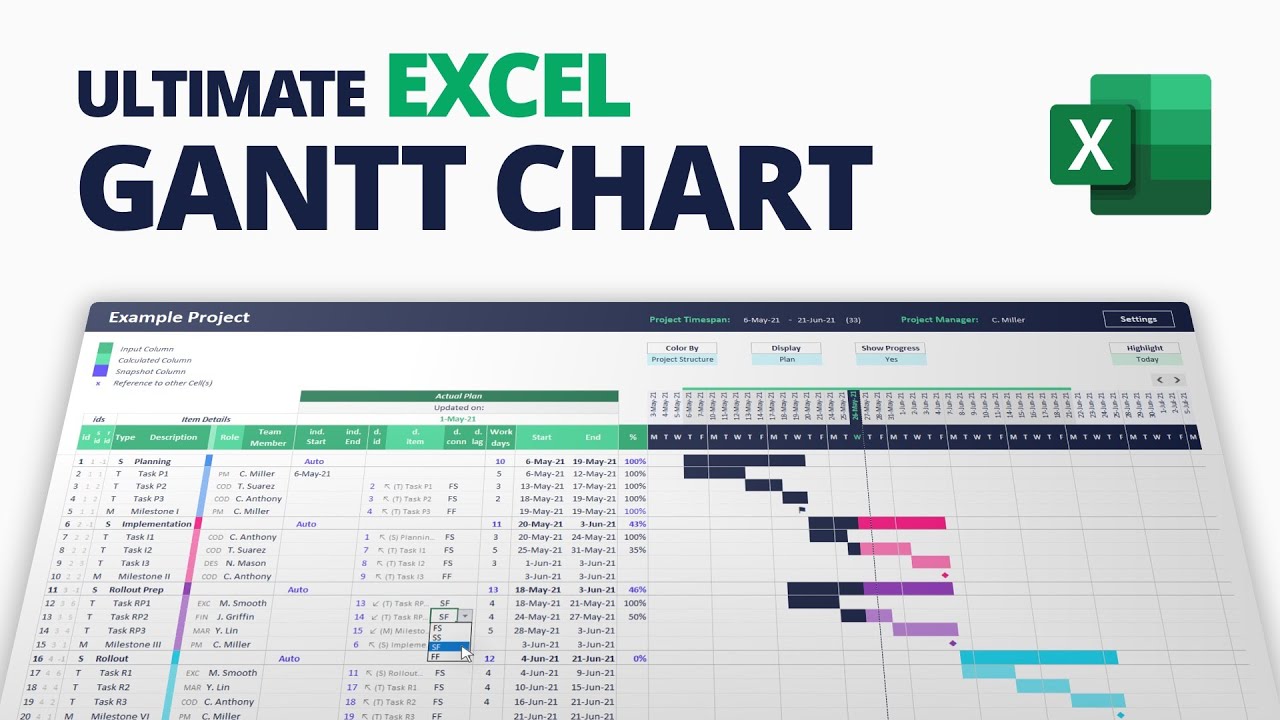
project status then there are several project management templates in Excel that help us to have an effective distribution of project data we will be checking several project management templates to towards the end of this video now let's have a look at the process of making a gan chart in Excel before we begin this it's important we know what is a Gant chart a gan chart is like an horizontal bar Chart that is used for project management with the help of a Gant chart we can check the status of the task the date the start the
date they end and the dependencies on each other Gant chart helps in coordinating and monitoring different tasks in a project now let's have a look at the steps that will help us in making a Gant chart first step we have is make a project table we have several rows and columns like here we have three columns in the First Column We have the tasks in the second we have a start date and in the third column we have the duration or tenure of the task the second step is to make a bar chart in Excel
for this we will select the entire second column then we will go on the insert Tab and click on the bar graph chart there we can select staged bar graph in 2D bar charts as a result we will have the entitled bar graph on the screen in the third step we will add the duration to the bar graph we will Right click on the chart and in the menu that appears we will select select data option a window that appears on the screen in that window we will select add option as shown we can also
see the start date is already in the entry section then in the dialog box that appears type tenure in the series name and click on the Range selection icon that's shown in the figure now select the relevant data from the tenure column and click on okay now we can see a bar Graph that has two colors on the screen this barag graph now has the duration of the tasks the fourth step we have is adding description to the Gand chart now we will open the box again and in that box we will select the edit
option as shown in the figure then we will select the tasks as we had selected the duration of the tasks before and click on okay we can now see the tasks have appeared towards the left side of the Gan chart the fifth and the remarkable Step will help us convert this bar graph into a Gant chart we will now click on the bars and select the format data series option from the menu that appears then in the format data series dialog box we will select no fill option we can find our Gan chart on the
screen now in accordance with the data that we had entered now we can see the tasks on the left side are in the reverse order so what we will do next is we will click on the task panel then go to the format Xess dialog box and select the categories in reverse order option now we can find our tasks in the right order one more thing we can notice is Gan chart is starting with some other date and not with the dates that we had entered so for this we will copy the first date in
some other cell then clicking on the copied cell we will go to the home menu to select the dialogue box as shown in the f then in that drop- down menu we will select the number Option we can now find a value displayed in the copied cell we will copy that value click on the dates on the chart and as the format access dialog box opens we will paste that value in the box that says minimum shown in the figure as a result we will have our final Gand chart on the screen in the last
step we can give several designs to a gan chart change colors and make it more presentable for us now when we know the basic steps of making a Gand chart I Will show that practically to you in Microsoft Excel our first step is to open Microsoft Excel and in Microsoft Excel we will make a project table in a project table we will have three columns the First Column will be task the second column will have the start date the third column will have tenure or the duration of the task so beginning with tasks we have
task one in task one we have 1.1 1.2 1.3 then comes task two in task two we have two 2.1 2.2 2.3 and 2.4 Then we have task three in task three we will have two subsections 3.1 and 3.2 then we will start with the starting dates in starting dates we'll put 1st January the Task 1 1.1 will be 1st of January then this will be 4th January let's say this is 5th January then we will put this as 11th of January and this will be again and 11th January only this will be 15th January
let's put this as 17th January let this be 19th January task 3 begins on 23rd January and it the 3.2 section begins at 26th of January now let's put the tenure or the duration of the task we will begin with task one it takes 12 days then 1.1 takes 7 days we say this takes 4 days and this takes 8 days then for task 2 it again takes 12 days it takes 5 days 5 days and let's say this takes 6 days and this takes 4 days then we come to task three this takes 8
days and let's say this takes 6 days and the 3.2 section takes 5 days so this is how our project table is ready In the second step we will select the entire second column after we have selected this column we will go to the insert tab in the insert tab we'll go to the bar columns and in this we will select 2D staged bar charts now we have the entitled bar chart in accordance to our data on the screen then comes the third step we will add the duration of the tasks to the bar graph
we will click on the chart and after we click on the chart we will select select data option In the select data source dialog box we find the start date is already there now we will click on ADD and after we click on add in the series name section we will put tenure then in the series value we will click on this icon and select the entire tenor series and click on okay so this is the bar graph that we have now this is now in two colors the orange color and the blue color this
bar graph now has the duration of all the tasks in our project table now in the Fourth step now it's time for us to add description to our Gand chart instead of this 1 2 3 4 five we will put task one task two and the subtasks so what we will do is we will again go to that box we will left click on the Gand chart select the select data option and then we'll go to the start date here we'll select the edit option in the edit option we will select all the tasks and
click on okay now we can see all the tasks are aligned towards the left of The bar chart as we can see this is a bar chart or a bar graph and not a gan chart the next step we have is converting this bar graph into a Gad chart so we will click on the bars and select the format data series option from the menu that appears here we have this format data series option now we can see the dialogue box on the screen here we'll go into the color section fill section and then we
will select no fill now we can see the blue lines have Disappeared so this looks like a gan chart so now when we have a gan chart on the screen we can notice that the task here are in the reverse order so what we will do is we will click on these tasks and select the format ACC as option here we'll select categories in reverse order we can see our Gan chart is now in order like we have our task one on the top and task three at the bottom the dates are starting from 11th
of December but the dates we have provided are from 1st of January now we will copy this cell then go on the dates box here we'll go to format access in the format access we can see minimum in this minimum we will paste this value and press enter as we press enter we can see our Gand chart starting from the date that we wanted to start and that to in the correct order starting from task one to task three now as a result we have our final Gand chart on the screen in the last step
what we can do is make our Gand chart more Representable we can change the color of These Bars we can give them shapes and we can do many other things to make it more presentable we will first select the bars like what we will do is we will select task one and let's say we give it the color blue then task two we will give it color green and in task three we'll give it give it the color black so here the subsections will give different colors to the subsections as well then we come to
task 2.1 this is how we can Change the color of these cells or apart from changing colors we can select a bar graph and do the gradient fill so this is how we can make a gan chart more presentable after changing the colors or changing the shapes we have our final g chart on the screen finally let's have a look at some Microsoft Excel templates for project management Microsoft Excel templates help in collecting data putting them into order and check their dependencies with each other with the Help of these templates we can monitor the status
of the tasks and we can also check the progress our project has made moving forth we will check some important Microsoft Excel templates the first template we have is Excel project review template this template helps us have an overview of the project we can have a clear understanding of all the tasks that are planned and that are completed this helps project managers to measure the progress of the project and Take further steps accordingly second template we will check is Excel budget template in this template we can monitor all the expenditures of our project it helps
us in managing the budget of a project and also helps in comparing the budget of a project at different phases let's have a look at the budget template in Excel ones we can download this template from Office timeline.com the Gant chart towards the right is in accordance with the dates toward towards The left if we fluctuate the date we can see the template working the start date for task one could be changed to 10th June if we change this date to 10 June we can see the fluctuation in the Gant chart so this is how
we can use this template directly let's have a look at the third template now third template we will see is Excel Sprint Project tracker template this template is used majorly in agile projects where the project is made in several Sprints or sessions this Template includes the start date the end date and the duration of each task we can also see the percentage completed of each task let's have a look at this Sprint Project tracker template as well we can see the Gan chart towards the right and the data towards the left so if we change
any data we can see the Gant chart changing for example we can change the data in Sprint 2 feature 3 let's change the start date to July 2nd we can see the Gant chart changing this Is how we can use this template directly to track our sessions let's have a look at the fourth Excel template this template is Excel project tracker in this template we have the data of all the tasks with the status and owners we can track the percentage of task completed and also compare the planed duration of the task to the actual
duration of the task after the critical part tracker let's check the Excel project schedule template this template Helps in effective management of the project as it helps in monitoring the time that each task of the project takes it provides a clear view of all the work associated with the project let's have a look at the this template in Excel on we can see the Gan chart in accordance to the data if we change the estimated as at two places let's say at the design review we make it 15 hours instead of 5 hours and at
the create Staffing plan we make it 2 hours instead of 20 hours we Can see the Gant chart fluctuating this is how we can use this template to manage the schedule in a project moving forward the next template we will see is Excel project status report template this template helps us having a list of project deliverables and the risks associated with that project this template helps the project managers about different crucial activities involved in a project after this we have Exel Milestone tracker the Milestone Tracker helps us in tracking or monitoring different tasks in a
project project managers use this template to monitor the project performance with respect to the timelines the last template we will see is Excel project planner Excel project planner includes a list of task with the respected owners along with the start date and the end date of that task this helps in monitoring each task and comparing the estimated task dat with the actual ones Let's have a look at this template in Excel we can see the Gan chart with respect to the data entered let's make changes at several places in the data we can make this
22 to 24 we will make this 23 go to 2 and we can make this 5th September go to 15th September and when we make the changes we can realize the Gand chart is fluctuating so this is how we can use this template to plan a project effectively and efficiently if you are looking to become a skilled Project manager have a look at the postgraduate program in project management by simply learn a project is a temporary Endeavor undertaken to create a unique product service or result for example developing a new product service or result constructing
a building industrial plant or infrastructure and implementing improving or enhancing existing business processes and procedures in the next screen we will focus on the Characteristic ICS of a project a project can be distinguished based on its characteristics the definition describes two characteristics of a project first it is temporary in nature temporary here does not mean short in duration a project can extend for long duration based on the requirements for example creating a new indigenous missile defense system for a country however there is always a definite plan start And ending for a project it cannot go
on indefinitely secondly the project is supposed to produce a unique output the output could be a product service or result there can be many common activities between two projects but the outcome of each project should be unique in some way or the other now let us look at what marks the end of a project a project ends when either the objectives are met or the project is terminated because the the objectives will not or Cannot be met the other reason to terminate the project can be that the need for the output of the project does
not exist anymore usually the sponsor of the project takes a call about the closure of the project it is important to differentiate Project work from regular operational work for example your office receptionist does the same work every day of picking any incoming call and directing the call to the right person in theice office this is an Ongoing repetitive work and can be classified as operation operations unlike projects are neither temporary nor unique creating a new software system to effectively track your customer complaint can be an example of a project when the software is successfully developed
the project objective is met which marks the end of the project when you start using this software to track customer complaints you are entering into the operations Phase in the next screen let us now look into project management as defined in the pmbok guide project management is the application of knowledge skills and tools and techniques applied to project activities to meet the project requirements project management is achieved by proper application and integration of the 47 processes project application and integration means these process is should be executed in the right manner as well as in the
right Order in the next screen let us discuss how to manage a project program management is defined as the application of knowledge skills tools and techniques to a program to meet the program requirements and to obtain benefits and control not available by managing projects individually as defined in pinbo guide a program is a group of related projects which when managed as a group in a coordinated fashion provides benefits And control that are not available while managing them individually these benefits could be from decreased risk economies of scale improved management of dependencies delivery of additional capabilities
optimal utilization of shared resources and so on let us now learn the various features of program management random projects cannot be grouped together as a program the projects in a program should be related in some way or the other and there Should be some value added in managing them together a project may not be a part of any program but a program will always have projects a project can also be executed as a standalone project a program is designed to deliver some strategic benefits value to the organization these benefits can be tangible or intangible examples
of tangible benefit could be increased profit margins or operational cost savings examples of intangible benefits Could be improved team morale or building up certain competencies while a project manager focuses relentlessly on the Fulfillment of the Project's requirements that is scope cost time quality a program manager needs to focus on ensuring that the organizational benefits are realized in the next screen let us understand what a portfolio is portfolio is yet another term used along with project and program a portfolio may Have multiple projects and programs that are managed as a group to achieve strategic objectives note
that all projects and programs in a portfolio may not be necessarily interdependent or directly related a portfolio can be created based on the business objectives for example an IT service company can have a portfol named Japanese projects which is formed with an aim to take over the Japanese Market by giving more attention to these Projects within this portfolio similar projects can be managed as a program and all banking projects from Japan can be managed as a banking program in the next screen let us discuss portfolio management portfolio management is the centralized management of one or
more portfolios this includes includes identifying prioritizing authorizing managing and controlling projects programs and other related work to achieve strategic business Objectives therefore whether the company should have Japanese projects as portfolio or not is decided by portfolio Management in the next screen let us understand the relationship between portfolios programs and projects the image on the screen will help you to understand the terms portfolios programs and projects a portfolio is part of an organization's overall strategy it represents a conscious decision by an organization to Invest in the portfolio the overall objectives of a portfolio are then cascaded
down to the lower level components the components could be sub portfolios programs or projects these components can further be broken down into smaller components for ease of manag agement although a project may not contain operations a program or a portfolio it can include other work this other work May comprise training and development customer support and Services Etc if the other work has Synergy with the overall objectives and adds to the capability to deliver the higher level benefits then it can be included in the program or portfolio as well in the next screen we will discuss
project management office project management office or pmo is a specific type of body or Department within an organization pmo performs several roles in the organization and these can Broadly be classified as primary roles and other roles typically the pmo may take up any one or a combination of the three primary roles it provides the policies methodologies and Tool tools and templates for managing projects within the organization it provides support and training in organization on how to manage projects and finally it provides project managers for different ongoing projects in the organization pmo may also help in
Managing interdependencies between the projects selecting managing and deploying shared or dedicated project resources if need be terminating a project and or organizing Lessons Learned sessions and maintaining the project management knowledge base for an organization in the next screen we will discuss how to manage the triple constraints any project can be done successfully if there is no constraint on time or there is unlimited budget Available unfortunately that is not true in real life a project is performed within some constraint and these constraints are usually competing therefore if you change one it would affect the other for
example if the project duration increases it would lead to increase in the project cost as well triple constraint is a term that originally referred to the three competing project constraints within which the projects are performed these Constraints are cost time and scope quality is a primary concern for a project manager therefore the project manager has to make tradeoffs to keep the scope cost time quality plane in Balance to achieve the balance the project manager also needs to manage other aspects of the project for instance the people stakeholders risks communication and procurements the project manager plays
the essential role of integrating all These different aspects of project management in the PMP examination you can expect business scenar based questions focusing on the triple constraints in the next screen let us understand who a stakeholder is a stakeholder can be defined as the one whose interests May positively or negatively be affected or perceived to be affected by the decision activity or outcome of the project as per the definition the project team project Manager project sponsor pmo Office customer Etc are the state stakeholders of the project a project sponsor is the one who gives a
go-ahead for a project and provides the necessary resources to execute the project therefore the head of projects in the organization who provides a green signal to start a project and allocates required resources to the project is the project sponsor a project sponsor is usually somebody placed high up in the organizational Hierarchy of the Performing organization that is the organization in which the work of the project is being carried out in the next screen let us look at stakeholder management one of the key responsibilities of a project manager is to manage stakeholders a project manager has
to involve the stakeholders from the beginning of the project until the end so they are aware of every step a project manager has to take up specific Activities for stakeholder management identifying both internal and external stakeholders missing out any stakeholder can be disastrous for a project a stakeholder who has identified towards the end of the project may come up with his own requirement at that stage and incorporating them can be risky determining stakeholder requirements after identifying all the stakeholders the project manager also needs to ensure that their requirements Are clearly identified sometimes stakeholders might themselves
not know of their requirement and it is the job of the project manager to get them right by doing a proper stakeholder requirement analysis determining stakeholder expectations stakeholders might also have some unstated expectations which need to be clarified to see if it can become a project requirement it is again the role of the Project manager to determine the stakeholder's expectation communicating with stakeholders ERS once all the stated and unstated stakeholder requirements are known the project manager as part of stakeholder analysis should focus on communicating them regularly to keep stakeholders involved in the project once you
understand the practices of stakeholder management it will be easier for you to answer scenario-based Questions in the examination in the next screen let us look at the various organization structure projects are performed in an organization ation and the functioning of the organization might affect the project the different organization structured types explained here are based on the level of authority that a project manager gets into in those organizations in a functional type of organization the organization is grouped By the area of specialization within different functional areas for instance marketing accounting engineering Etc are departments within the
organization each employee typically reports to a functional manager in such types of organization normally projects are undertaken within the department itself if a project requires any assistance from another department the request moves from the head of the requesting Department to the head of the concern Department the team members do their normal departmental work in addition to the project work the next type of organization is projectized organization inside organizations there are no departments the organization's resources mostly work on projects team members report to a project manager the project manager has complete control over the resources when
the project is completed either they move on to another project or they look for some job outside the Company they do not have a department for themselves the third type of organization is a matrix organization which is a blend of functional and projectized organizational structure a team member belongs to a department as well as they are part of a project team in such organization team members have two bosses one their department head and the second their project manager since there are two bosses here this type of organization is further classified into Three different types they
are weak strong and balanced Matrix organization so out of the two bosses that team members have in Matrix organization if the project manager has more authority over the team member such organizations are called strong Matrix where the functional manager has more Authority it's a weak Matrix organization if they both share equal Authority then it is a balanced organization there is another term that You might find in the exam called tight Matrix this generally refers to a collocated team that is a team that has been placed in the same location to enhance their performance in the
PMP exam if there is no mention of the organization type you can assume it to be a matrix organization let us look at each of these organization structures in detail in the next screen let us look at functional Organization in a functional organization the resources of the organization are grouped by functions sometimes called departments examples of functions could be sales Finance Administration manufacturing Etc each function plays a definite role in the organization and is headed by a functional head or supervisor all the resources in such an organization report directly into their functions therefore A salesperson
would report into the Sales organizational hierarchy a purchase executive would report into procurement and and so on you would notice that in a functional organization the project manager's role is not explicitly called out when a functional organization embarks on a project each of the functions that are involved May volunteer some resources to work on the project one of these resources may end up playing the project manager's role the resource assignments may not even be Fulltime and sometimes even the project manager is part-time since the the project manager has no authority over any of the resources
they are dependent on the functional heads this makes it more challenging for the project manager to coordinate in the team however functional organizations provide an opportunity for specialization for example if a purchase executive was reporting into the purchase Department that executive would have exposure to All the purchasing that happens within the organization and has a wellde defined career path in functional organizations project management happens at the functional head level next let us look at the projectized organization in the next screen the projectized organization has all the resources aligned around projects the project managers have complete
control over the resources working on their projects the biggest Advantage of the projectized organization is that the resources have loyalty to to their projects and project execution becomes easier this kind of structure is suitable for organizations whose work is in the nature of projects there are few disadvantages in this structure as well firstly the role of the resource is over once the project is completed secondly highly specialized roles within a project may not be fully occupied all the time for example a Purchase executive may have work for selected periods on a project while purchase activities
are going on however for the rest of the period their capability may not be optimally utilized there is less scope for functional specialization as the project boundaries limit the kind of work for the resources each project manager is in charge of a project and its resources next let us look at the Matrix organization in a matrix organization The resources report to the functional manager at and are managed by the project managers as well there might even be a function that represents all the project managers in the organization which provides project management expertise The Matrix structure
has three variants commonly referred to as weak balanced and strong in a weak Matrix the authority of the project manager is the weakest and strongest in a strong Matrix structure the titles given to project Managers and functional or weak Matrix organizations are project expediter or project coordinator they would be called project managers in a balanced or strong Matrix structure and have slightly more authority over the time of the team members the advantage of the Matrix structure is that resources can be optimally utilized while preserving the capacity of the project managers to get projects executed efficiently
resources can specialize in their functions and Have stability in their careers also contribute to the projects at the same time potentially the disadvantage of Matrix organization is that the communication overhead increases significantly this is because every resource in the organization belongs into a project and into a function leading to a dual reporting structure in a matrix organization project management happens at project resource level level in the next screen let us summarize the Advantages and disadvantages of different organizational structures each organization structure has its own set of advantages and disadvantages the advantage of functional organizations is
that resources may find clearly defined career paths and Achieve specialization and skill development in their respective Fields it will be a flexible Workforce since only one manager will be be responsible avoiding confusion the Disadvantage of such organization type is that project work is hampered Department work is always given higher priority than the project work in addition there is no career path in project management which leads to lower interest in projects in the case of the projectized organization one of the clear advantages is better communication within the projects since Project work is the only work team
members are doing it also leads to loyalty towards the Project goals the disadvantage of such organization type is the inefficient use of resources because every project team has their own support function therefore this might lead to the duplication of effort it also leads to the resources being left with no work since their roles are over once the project is completed it also hampers skill development because the project requirements dictate what what kind of work team members perform at different Stages on a project now let us look at the Matrix organization it also has the advantage
of better coordination and maximum utilization of resources however the disadvantage is the higher potential for conflict among the managers which might lead to communication complexity and overhead Management in the next screen let us focus on the comparison on Project Life Cycle and product life cycle Project Life Cycle spans the initiation of a Project until the closure of the project the product life cycle on the other hand also encompasses the operational and maintenance phases a typical product lifecycle starts with conception of the product and goes until its withdrawal from the market the withdrawal might be because
it becomes obsolete or there is no further need for the product in the market a product has a long life cycle a product can require or spawn many projects over its life for example a Project in product conception phase could be to determine customer needs whereas a project during product maturity phase could be used to perform competitive analysis typically a product life cycle is longer than the Project Life Cycle a project also has its own life cycle and this life cycle depends upon the industry and the organization within which the project is being executed sometimes
different organizations within the same industry Use different life cycles there can be questions in the exam based on the comparison of Project Life Cycle and product life cycle so understanding the differences will be useful in answering such questions in the next screen let us discuss more on Project Life Cycle a life cycle is composed of phases each phase represents a discrete unit of work required to be done on the project there are different ways of classifying project life cycles let us first discuss The sequential versus overlapping life cycle in sequential phases the subsequent phase starts
only after the previous phase has been completed whereas in overlapping phases two or more phases may run in parallel for some time this could help fast tracking and compressing the amount of time required the other way of classifying life cycles is how they go about the process of planning in predictive life cycles there is a large upfront planning phase where All the details of scope cost time are planned before beginning the subsequent phases these phases then are executed in either sequential or overlapping modes they are suitable for large projects where all the requirements are likely
to be known in advance and where upfront planning effort is required to get the necessary approvals another feature of predictive life cycles is that each phase May potentially be different in the nature of activities and may require People with different skill sets for example traditional software development life cycle has phases like requirements feasibility planning design construction testing and transition we will continue project life cycles in the next screen incremental and erive life cycles have a short upfront highlevel definition and planning phase the product is then developed through a series of iterations where iteration increments or
adds to The functionality by a little all the activities are intentionally repeated in iterations adaptive or agile life cycles are variants of incremental and iterative life cycles where iteration is very short typically 2 to 4 weeks agile methodologies are becoming very popular in the software development industry and in other Industries where the requirements are highly changeable and frequent feedback is beneficial let us now check your Understanding of the topics covered in this lesson a project manager is supposed to fulfill a Project's requirements that is to deliver a unique output in a timely manner it starts
in the form of an idea that is approved by a project initiator or sponsor answer the project manager and the project team then elaborate their understanding of the requirements and produce the final deliverable which can be a product a service or a result throughout the Project the project management team needs to ensure that the stakeholders are engaged in the project and their expectations are being managed the project management team also needs to ensure that there is good communication between the project team and the stakeholders in addition the team should make sure that the constraints of
scope cost time quality and others are balanced in addition to producing deliverables a project generates data Such historical data archives or records are important for planning future projects there are five major process groups in project management in the next screen we will discuss how these process groups are related to each other the five process groups in project management are initiating planning EX executing monitoring and controlling and closing processes the image shows how these process groups interact with each other the initiating processes occur Only once during a project or phase within a project at the beginning
whereas the closing processes occur only once towards the end however planning executing and monitoring and controlling processes are repeated several times during a project the planning processes take information from the initial ating processes and help to prepare an initial Baseline version of the plan as the team starts execution they understand the ground realities better the deliverables Produced and the data of the progress are fed into the monitoring and controlling process group in the monitoring and controlling process group the information generated during execution is processed and utilized in three different ways firstly it can be used
for revising the plan which is termed as replanning secondly it can be fed back into execution as defects or corrective and preventive actions or approved changes and thirdly the Information can result in the cancellation of the project or the successful completion of the project upon validation of the deliverables produced while discussing processes consider it from the perspective of project manager or as part of the project management team this implies that you are essentially functioning in the integration management knowledge area the initiating process includes two steps which include getting the project Charter approved and identifying stakeholders
click each tab to learn more a project manager is concerned about getting the charter for the project approved project Charter sets the beginning of the project where the management has decided in its favor and is ready to commit resources for it the other process in the initiating process group is identifying stakeholders the project manager and the project team should know the stakeholders and their Requirements which is the starting point for planning you may get concept-based questions in the PMP exam so study the initiating process to answer such questions easily planning accounts for most of the
processes in the project management framework as many as 24 out of the 47 project management processes belong to the planning process group the basic objective of the planning processes is to produce the project management plan collectively the Developed project management plan under integration management assimilates the output of all the planning processes under various knowledge areas the project management plan is the collection of all subsidiary plans that address different aspects of the project the project management team integrates all these plans and ensures that they are in harmony with one another the team also prepares a blueprint
of how the project needs to be executed controlled And closed the planning process starts with scope planning which is to understand exactly what you are trying to achieve this is translated into a project scope statement which can be decomposed into a work breakdown structure or WBS which forms the basis of other planning processes any change to the scope invariably has a bearing on other parameters that can affect the proc following the same logic it is easier to Understand how the planning processes in other knowledge areas such as quality cost and time can influence the time
that will be taken the cost that will be incurred and the way quality will be managed to satisfy the scope cost time and quality equilibrium the project team needs to manage Communications risk stakeholders procurements and Human Resources this is where the planning processes under these knowledge areas come in all these planning processes Interact with each other planning is an interactive activity that gets elaborated refined and adjusted as more and more information about the project is discovered planning without execution is feudal but execution without planning is fatal however in execution processes the project team spends a
lot of time putting the plan into action when you perform the executing processes you often blend the execution and controlling processes execution is all About performing the plan that is producing the deliverables and providing information on the progress processing of this information and the validation of the deliverables is a Control Function the executing process is the direct and managed Project work where the project manager essentially puts certain mechanisms in place to ensure that the work is being carried out the project manager primarily focuses on ensuring that the procurements are Conducted these procurements are deliverables or
services that the project needs to buy from external sources the project manager also needs to ensure smooth flow of communication within the project team and with the external stakeholders the manager should make sure that stakeholders are engaged in the project and that the processes for managing quality are being followed correctly it is important for the project manager to make sure that the Right team is being used they have the knowledge and competencies to do the job and they work together as a team the project manager should also manage the team to make sure they are
positioned for Success monitoring is observing and getting data about how things are going within the project whereas controlling is taking actions to bring things back on track monitoring and controlling apply to different aspects of project management the image shows the various Areas of project management where monitoring and control applies however the knowledge area that has a corresponding Control process is human resources because Human Resources should be managed not controlled an important aspect of controlling is having an elaborate mechanism to handle changes closing processes bring a project or a phase within the project to an orderly
conclusion only two knowledge areas include a closing process these are Integration manag agement and procurement management closing a project or a phase falls under integration management and applies to the overall project before the project is formally closed all the procurements or contracts that are entered into for the project must be formally closed as well study the closing processes in detail to answer concept-based questions in the PMP exam if you are looking to become a skilled project manager have a look at The post-graduate program in Project management by simply lar there are 47 processes in project
management grouped into 10 knowledge areas and mapped to five process groups in this lesson we will look at the first knowledge area that is Project integration management and its processes in the next screen let us understand the concept of project integration management project integration management involves unification Consolidation articulation and integrative actions that are crucial for successfully completing the project the project integration management is high level work that project manager does and it involves managing interdependencies among the other knowledge areas the other nine knowledge areas involve detailed work in a specific direction for example project cost
management Deals Only with how to manage cost in a project the project management process Processes do not happen independently for example a new resource added to the project may require changes in cost or schedule or both in dealing with such situations the project manager integrates the processes of project management the need for integration drives much of the communication and the work of the project manager let us discuss the key role of project manager sponsor and team in the next screen project manager team members and project Sponsors have different roles to play in a project the
project manager is supposed to play multiple roles in the project the key role is to perform integration the project manager puts all the pieces of the project together into a cohesive hole in doing so the project manager tries to ensure that the project is done faster cheaper and utilizes resources optimally while while meeting the project objectives as the project progresses the team members work on Completing the project activities the role of the project sponsor is to protect project from any unnecessary changes and to ensure that it has the required resources for completion the project sponsor
is the champion for the project within the Performing organization that is the organization in which the work is being performed in the next screen we will cover the project selection methods an organization can undertake a Project under contract with an external organization or take up a project driven by internal business needs there should be a formal process of selecting project in all organizations to ensure that it is making the best possible use of limited corporate resources for example if the organization has an option to take up any one out of the two projects both of
which use the same corporate resources the organization would naturally select The one which is more profitable there are two broad ways to select a project one way is the benefit measurement method where one project is compared with other competing projects another approach is based on mathematical models wherein you examine the most optimal selection of projects by trying to optimize a goal for example maximize operating profits such methods may be called constrained optimization methods there are different methods under both These categories and you should be familiar with the names of these methods broadly the benefit measurement
methods focus on ascertaining the costs and benefits of undertaking the project the methods under benefit measurement method include murder board where a panel of experts shoots down a new project idea per review scoring models economic models and benefit compared to cost the constrained optimization methods rely on mathematical modeling techniques to Determine the best selection of projects to achieve certain business objectives the methods of constrained optimization method include linear programming in reality you might not have seen these methods to be followed in Project selection often personal relationship ship with the sponsor may be more important than
anything else this is quite normal and any organization worldwide works this way however as a certified project manager it is Important for you to be familiar with more scientific methods of project selection a typical question on the capm exam could be what type of project selection technique is peer review and the right answer is benefit measurement method you need to understand the characteristics of various project selection methods to answer scenario based questions in the next screen we will focus on the project selection Methods an organization has limited resources they cannot execute all the projects that
come their way they can take only those projects for execution which are financially sound for the organization there are various parameters used in making such decisions some of these terms are present value Net Present Value internal rate of return payback period benefit cost ratio return on investment and opportunity costs click each tab to Learn about the parameters present value is today's value of future cash flows in order to reduce future cash flows to present values a discount Factor has to be applied what this essentially means is if a project can give a return of say
$100 per year $200 next year and $250 the third year what is the value of all these returns today $250 return in the third year will not be the same as $250 today due to Inflation or any other constraint click close to go to the process selection methods dashboard net present value npv is the present value of the total benefits income or Revenue less the costs over a Time therefore if multiple items are involved add the present value of all of them to arrive at the Net Present Value problems where a project has to be
selected over other projects on the basis of their Net Present Value can be Expected in the exam let us take an example of a typical question that we might encounter in the exam you have two projects to choose from Project X will take 2 years to complete and has an npv of $35,000 project y will take 5 years to complete and has an npv of $95,000 which one will you choose the answer is Project y because it has a higher npv do not get confused with longer duration of the project it is Important that npv
be more click close to go to the process selection methods dashboard another term used in evaluating a project is internal rate of return or irr irr is the rate of discounting at which the present value of costs matches the present value of benefits it is the rate inherent in the project let us look at an analogy to understand the concept of irr consider a project similar to depositing money in a bank account and Earning interest you will prefer the bank that gives maximum interest similar is the project choose from Project A and B where project
a has an irr of 25% or Project B has an irr of 15% the answer is Project a as the irr is better for project a it is obvious higher the irr the better click close to go to the process selection methods dashboard payback period is the number of time periods it takes to recover your investment in the project before you Start making profit on the investment made in the project you have two projects to choose from Project a with a payback period of 5 months or Project B with a payback period of 12 months
which one would you go for the answer would be project a it is evident that lesser the payback period the better click close to go to the process selection methods dashboard benefit cost ratio is the ratio of the present value of benefits to the present value of costs a benefit Cost ratio of more than one means that benefits are greater than the costs if the benefit cost ratio of project a is 2.5 and benefit cost ratio of pro Project B is 1.5 which project would you select the answer is Project a as the benefit cost
ratio is higher in Project a click close to go to the process selection methods dashboard return on investment or Roi is commonly used in financial parants to indicate how profitable a project is Return on investment is the average rate of return or benefits expected as compared to the initial investment if a project involves an initial investment of $100,000 and generates an average return of $20,000 per year it means the ROI is 20,000 by 100,000 or 20% higher the ROI the more profitable the project is click close to go to the process selection methods dashboard opportunity
cost is yet another term Used in evaluating competing projects that you might see in the exam it means the opportunity given up by selecting one project over another problems where a project has to be selected over other projects on the basis of their Net Present Value and opportunity cost can be expected in the exam for example you may come across a question such as what is the opportunity cost of selecting Project B if project a has an npv of $55,000 and Project B has an npv of $85,000 the answer is $555,000 this is the npv
of project a which was selected over Project B click close to go to the process selection methods dashboard in the next screen let us look at the there are are six project management processes which are part of project integration management knowledge area they are the develop project Charter done in the initiation process group develop project management plan Undertaken in the planning process group direct and manage work carried out in the executing process group Monitor and control project and perform integrated Change Control undertaken in the monitoring and controlling process group and close project or phase done
in the closing process group let us look at each of these processes in detail in the next screen let us understand how to read process related information as you can see in the Project management process diagram these elements within the knowledge area represent the inputs from the same knowledge area these elements represent the inputs from other knowledge areas these represent the tools and techniques used in the process these are outputs of the process these represent the output within the same knowledge area whereas these outputs are fed into the knowledge areas other than the one that
the process is a part of you can observe That the process in the image is colorcoded based on the process group initiating process group is in yellow planning process group is in blue and so on you can read the processes and their color codes in the legend box on the bottom left of the screen the process group affiliation is also indicated in the text of the description it is important to understand the process group context to appreciate what the process does in the next screen let us Look at the develop project Charter process develop projects
Charter is an initiating process a project Charter is essentially a document that authorizes a project once a project has received a charter it means that the project manager can start employing the organization's resources for the project activities let us look at the key inputs to be considered in preparing the project Charter the first input is the project statement of work this is Created by project sponsor or the customer describing their needs project scope and how the project fits into their strategic goal if the project is taken up under a contract the request for proposal that
is RFP can be considered as project statement of work the next input is the business case this document establishes whether the investment in a project is worth from a business point of view the business need for the project and the cost benefit Analysis it provides important information to the project manager about the goals of the project and the boundaries in terms of the desired results cost Etc if the project is being undertaken as part of a contract or agreement the agreement provides an important input for the project manager that establishes what must be done in
the project the next input to be considered for project Charter is Enterprise environmental factors any Project to be executed within the organization has to deal with the organization culture and existence existing systems you can consider this as an organization baggage that comes with the project this is the reason a project being executed in two different organizations may be done differently another factor to be considered is organizational process assets this is a broad term and includes all the organizational processes Procedures and policies corporate knowledge base and historical project information every organization develops a set of processes
procedures and policies that are based on the best practices learned by the organization over time the historical information includes past project management plans risks Lessons Learned Etc of similar projects executed now let us look at the tools and techniques used in this process the First technique is expert judgment expert judgment is is an invaluable input to the process of formally authorizing a project because an expert can provide insights into why a project makes business sense or why it does not from experience they may be able to shed light about the validity of the business drivers
feasibility assumptions and constraints that need to be considered for the project facilitation techniques is Another technique used the chartering process is often a collaborative activity involving many influential stakeholders in an organization facilitation techniques help bring all these stakeholders together and engage in fruitful discussions in order to arrive at an informed decision whether to go ahead with a project or not the only output of this project is the project Charter let us try to Understand what the project Charter might contain the project Charter usually contains the highlevel project requirement and it should be created by the
project sponsor and handed over to the project manager the project manager can do the groundwork to prepare the project Charter but it must be signed by the project sponsor or somebody in the Performing organization who is higher in Authority than the project manager it is important to point out that a project Charter is not a project management plan the detailed risk schedule cost analysis Etc is part of the project management plan and should be done during the project planning phase when there is more detail on the availability of the project to do so the charter
should be sufficiently high level to accommodate the minor changes that might arise in the project in the next screen let us discuss the second process under project integration management develop project Management plan this is the process of documenting the actions necessary to Define prepare integrate and coordinate the subsidiary plans examples of subsidiary plans are project time management plan project cost management plan project Human Resource Management plan Etc the project management plan does not just describe when the project would start what activity should be done and when the project would get over it is a detailed
Document and describes how the project would be executed monitored and controlled and closed many people think that project schedule developed using Microsoft Project is the project management plan however that is not true project management plan contains all the subsidiary plans and their Baseline value it also contains the allowed variance in the Baseline value performance measurement Baseline of Project's time is the total of project Baseline time and the agreed time variance for the project for example the time management plan section would have mentioned the time taken by a project the period mentioned in the project management
plan is 180 days this 180-day period is also called the Baseline time value therefore the Baseline value is the initial agreed value in the project management plan so if the time variance agreed in the plan is 10% the project should be executed in maximum 180 + 180 Multiplied 10% is 180 + 18 which is 198 days whether the Baseline time value should be 180 days or 300 days is decided by analyzing the project activities and it should not be decided arbitrarily in the next screen let us look at the various inputs outputs and tools and
techniques of this process let us look at the inputs considered in developing the project plan project Charter from the previous process is an important input the other Inputs include output of the other planning processes because the project management plan is supposed to integrate all of these plans the examples of other plans are time management Plan cost management plan and quality management plan Etc all of these plans are developed over a period as the project progresses these will be discussed in detail later in this tutorial in addition to these Enterprise environmental factors and organization Process assets
are also inputs to developing the project management plan in fact these two factors have more influence in developing project management plan than in developing project Charter it is recommended that you understand these inputs outputs and tools and techniques clearly as most of these will be repeated in other processes as well the two tools and techniques employed in this process are expert judgment and facilitation Techniques the very obvious output of this process is the project management plan in the next screen let us look at some of the key terms which are crucial in understanding these processes
let us look at a few key terms to understand project management processes the first is the work authorization system there should be a formal process of authorizing work within the project so be it internal team members Or project contractor there should be a formal process of giving go-ahead to start work on the project the next two related terms are corrective and preventive action you will come across these terms throughout this PMP tutorial corrective action is any action taken to bring expected future project performance in line with the project management plan for example if a project
Milestone is delayed as a corrective Action you include additional resources to ensure that the final project deadline is not delayed while corrective action involves implementing actions to deal with actual deviations from the performance baselines preventive action deals with anticipated or possible deviation from performance baselines for example to ensure that projects are not delayed you do a proper estimation of the work and assign enough resources to the project so that they are not Delayed a very important system that needs to be established early on in a project is the Change Control System since projects are executed
in a dynamic environment it is quite natural to expect changes in the project require re IRS the Change Control System is the formal documented procedures paperwork tracking systems for authorizing changes therefore the Change Control System analyzes each of the incoming change requests and decides whether to accept The change request or reject it a configurable item is any product service or result within the project whose characteristics need to be identified documented and placed under change control method mechanism examples of configurable items are project documents source code physical parts such as tools recommended settings for Machinery Etc
when a formal configuration management system is put in place it is essentially establishing a control system that can Preserve the characteristics of these items now let us look at the next process of the project integration management knowledge area which is direct and manage project Work Direct and manage Project work is the process of Performing the work defined in the project management plan to achieve the project objective this process marks the performance and completion of activities in a project the input to this process is obviously The project management plan since the project is executed as per
the project management plan the other inputs to this project process are any approved change requests that need to be implemented these could be in the form of corrective or preventive actions upon which the team has decided to work the other two inputs are Enterprise environmental factors and organizational process assets let us look at the tools and Techniques expert judgment is an Important tool used in this process as well another technique is the project management information system or pmis the pmis is a combination of documents dashboards software tools Etc where the data and information related to
the project gets collected as the work is being done during execution it is natural to expect that plenty of meetings will take place among the team members and among other stakeholders as well there are several outputs from this Process project deliverables are produced as the deliverables are being produced there would also be data related to the project performance that will be generated such as what was done how long did it take how much did it actually cost Etc along with these key outputs there are changes that new change requests May emerge this could be because
during the execution phase the team or the stakeholders May realize That what is being produced is not meeting the expectations or needs and that something else may need to be done in the process project documents and project management plan get updated let us look at Monitor and control project work in the next screen monitor and control project work is the process of tracking reviewing and regulating the progress to meet the performance objective or objectives defined in the project management plan Now the estimated time performance measurement Baseline is 180 days and 10% the Monitor and control
project work is the process area that tracks whether 180 days and 10% Time Performance Baseline is being met or not let us also look at the key inputs for the Monitor and control project work process project management plan is the key input as the performance measurement baselines are part of the project project management plan the other key Input to Monitor and control project work is work performance information it is the status of the project that is the status of the project deliverables the cost incurred the time elapsed in the project Etc along with the work
performance information forecasts related to the cost and time form important inputs upon which the project manager has to act validated changes confir confirms that the approved changes have been appropriately Incorporated Enterprise environmental factors and organization process assets are also inputs to this process expert judgment analytical techniques project management information system and meetings are the various tools and techniques one of the outputs of this process area is change requests change requests could be in the nature of corrective and preventive actions or defect repair if the performance measurement baselines are not being met This process ensures that
project manager takes appropriate corrective and preventive action to get close to the performance measurement baselines along with the recommended corrective and preventive action Monitor and control project work also results in identifying defects which must be taken care of during the defect repair process many report reports related to the performance of the work of the project will be produced project management plan And project documents are also updated in the next screen let us focus on perform integrated Change Control process perform integrated Change Control is the process of reviewing all change requests approving and managing changes to
the project deliverables organizational process assets project documents and the project management plan this is where all the recommendations for changes corrective actions preventive actions and defect Repairs are evaluated across all the knowledge areas and either approved or rejected the inputs to this process are similar to that of the Monitor and control project work process project management plan work performance reports Enterprise environmental factors and and organizational process assets the only additional input is the change requests since the perform integrated Change Control process is supposed to take care Of managing the incoming changes to make a judgment
about the change requests project management plan and the work performance reports are also referred to another important tool and technique used in this along with expert judgment and meetings is Change Control tool and most important among them is Change Control Board the team takes up the ownership of analyzing each of the incoming changes and also does the impact analysis for the changes and Finally approves or rejects a change the project manager project sponsor and a few of the important stakeholders and team members may be part of the Change Control Board the process should produce change
requests that are approved a log of change requests processed requests that were either approved or rejected and a few updates to the project plan and other documents change management and change control is the theme recurring in many questions in the Examination you can expect questions in the exam which test a project manager's response to a particular change in the project in the next screen let us take a closer look at functioning of this process now let us look at the process of change first the project manager should determine that a change has either already occurred
or if the change is necessary one of the important qualities of a good project manager is that they Will push back on unnecessary changes the next step is to evaluate its impact on the project in totality the team needs to understand what would be the impact on the time cost quality risk resource requ requirements and so on once the impact is known the project manager along with the team should look for various possible options to accommodate the change for instance in order to accommodate an increase in scope it may be necessary to extend Timeline add
resources increase budget or a combination of the above once the impact analysis and exploration of possible options are completed the project manager should present it to internal as well as external stakeholders for their approval it should be presented to internal stakeholders first because the management of an organization may decide to absorb the change within the Project's reserves without opting to Build the customer if the project will have an impact on the agreed baselines of time cost scope and quality one needs to get in touch with the external stakeholders and the customer these steps are an
important aspect effect of a project manager's job and the ability of a project manager to manage change will be tested in the capm examination in the next screen let us look into a business scenario to understand this concept Better after reading the problem statement click the solution button to look at a possible answer close project or phase is the last process of the project management integration knowledge area this process process ensures that the project or a phase is formally closed after completion remember that PMI expects a matour organization and a trained project manager to be
diligent in following closure Formalities without going through the formal closure formalities the project cannot abruptly be closed the project should be formally closed even if it is terminated due to some problem the key input to this process is the accepted deliverables the deliverables have to be brought into a state that they can be properly transitioned transition means they are handed over to the organization or group that will be responsible for operations maintenance and support the Other inputs are project management plan and organizational process assets expert judgment analytical techniques and meetings are the commonly used tools
and techniques the closure of a project or phase results in a product service or a transition in the process one of the important outputs is updates to the organizational process assets these include the actual performance against the plan the key lessons learned during the project the risks identified the Updates to the skills and experience of the team members Etc updating these assets is mandatory as it helps the organization gain matur and learn from the experience in the next screen let us look into a business scenario to understand this concept better after reading the problem statement
click the solution button to look at a possible answer here is a quick recap of what was covered in this lesson project Integration management involves unification consolidation articulation and integrative actions that are crucial for successfully completing the project integrating the project activities is the key role of a project manager the project team focuses on completing the project activities and the project sponsor warrants the team against unsolicited changes benefit measurement methods ascertain the costs and benefits of Undertaking the project while constrained optimism methods rely on mathematical modeling to select the best projects that achieve business objectives
various project integration management processes are develop project Charter develop project management plan direct and manage work Monitor and control project perform integrated change control and close project or phase hello and welcome to capm Certification course offered by simply learn in this lesson we will focus on Project scope management let us begin with with the objectives of this lesson after completing this lesson you will be able to Define project scope management differentiate between project scope and product scope identify the key terms used in Project scope management explain work breakdown structure describe the project scope management processes
in the next screen let us take A look at project management process map there are 47 processes in project management grouped into 10 knowledge areas and mapped to five process groups in this lesson we will look at the second knowledge area that is Project scope management and its processes let us begin with the first topic of this lesson that is Project scope management project scope management includes the process is required to ensure that a project comprises all and Only the work required to complete the project successfully the project scope management is concerned about the scope
what is not there in the scope is also clearly identified in the next screen let us look at the Key activities performed under project scope management let us look at a few of the typical activities that happen as part of the project scope management constant monitoring is essential to make sure that all the project work is being Completed the gradual uncontrolled increase in scope of the project is referred as scope creep it is necessary to define the project scope boundaries and not let people randomly add to the project scope gold plating is doing more than
what is required as part of the project scope this has to be avoided in projects as per the published statistics about projects done globally less than 40% of projects can be considered successful therefore the focus should be On what is required rather than squandering around with what is not required 40% might be considered less but a project is classified as successful only if it meets all its objectives and is done within time and cost budgets in the next screen let us understand the differences between product scope and project scope project scope management deals with managing
both the product scope as well as the project scope product scope Refers to the features and functions that characterize a product service or result the word product may also include creation of a service for example in the banking industry each of their services is called a product likewise a savings account account is one of their products mutual fund is another on the other hand project scope is the work that needs to be accomplished to deliver the output of the project which could be a product Service or result with the specific features and functions for instance
to deliver a product you may also need to produce a requirements document or a design document these are not part of the product scope but it may very well be part of the project scope in the next screen let us discuss a few key terms used in the project scope management WBS stands for work breakdown structure It means breaking the project deliverables into smaller and more manageable components called work packages the last level of work in such subdivision is called work packages and the whole structure is called WBS for example a typical software development project
would have various activities like finalizing requirements designing the new system coding testing and going live with the new system each of these translates into highlevel Deliverables which can be further subdivided into smaller activities which are more predictable WBS dictionary like any dictionary contains the explanation of the terms used in WBS a typical WBS dictionary has details like the control control account name of the work package description of the work package resource assigned if there are any assumptions or dependencies to complete the work package the due date To finish the work package Technical dependencies and so
on WBS dictionary is useful for the person or group working on the work packages as it further elaborates the decomposed work package control account is a level within WBS at which management wishes to exercise control for example perform earned value analysis Track Performance Etc in the next screen let us cover work breakdown structure in detail along with the scope statement And the WBS dictionary the work breakdown structure forms the scope Baseline of the project that is it should reflect the entire scope of the project any deliverables that are not reflected in WBS are not part
of the project the creation of the WBS should involve the whole team the creation of WBS creates common understanding about the scope and therefore leads to team buyin during decomposing the deliverables you must ensure that each Level is complete that is it includes all the work in the project before you start to decompose further decomposition continues until the lowest level deliverable cannot be logically subdivided further or they can be estimated with reasonable accuracy WBS is a deliverable oriented decomposition it should only contain deliverables and not activities while developing the schedule converting the deliverables into activities
is one of the problems As WBS does not contain activity level details concept-based questions on work breakdown structure can be expected in the exam so it is essential to have a clear understanding of the concept of WBS in the next screen let us look into an example which shows how WBS is derived work breakdown structure of a core banking software development project is given on the screen the scope of the project has been divided into WBS elements like requirements documentation Design and architecture Code test and go live further these elements are decomposed into work package
level to make it easier to manage the deliverables in terms of scope cost and time it also helps to estimate or assign the specific work packages to team members or groups the design and architecture has been decomposed to model and prototype similarly code is decomposed into work package 3.1 and 3.2 test into work package 4.1 and 4.2 To and go live into product installer and warranty sheet WP 3.1 can be represented as model 1 and WP 3.2 as model 2 similarly WP 4.1 may be test strategy document and WP 4.2 a test plan document the
number here indicates work breakdown code in the next screen let us discuss how project scope man management is actually accomplished there are six project management processes which are part of Project scope management knowledge area these processes are plan scope management collect requirements Define scope create WBS validate scope and control scope the first four processes that is plan scope management collect requirements Define scope and create WBS are part of the planning process group and the remaining two processes validate scope and control scope are executed as part of the monitoring and controlling process group in the next
few screens we Will look at each of these processes in detail let's begin with plan scope management plan scope management process creates a scope management plan that documents how the project scope will be defined validated and controlled it is usually the starting point of the planning processes on a project understanding the scope and how it will be managed is fundamental to planning the other aspects of the project let us review the list of inputs to this Process the project management plan provides other subsidiary plans and will help guide the scope planning activities on the project
the project Charter provides an overall context and the high level product and project description which may help determining the approach for the scope management Enterprise environmental factors provide the organizational context to the project including the culture of the organization the Infrastructure key personnel and so on organizational process assets provide inputs such as policies and procedures historical information and knowledge based now let us look at the tools and techniques employed in this process expert judgment refers to input received from knowledgeable and experienced resources meetings may be organized to determine the scope management plan everyone responsible for
The project scope management such as the project manager sponsor customer and other stakeholders must attend these meetings now let us look at the outputs of this process C the scope management plan describes how the Project's scope will be defined like who will be involved in the process whose inputs will be sought what techniques may be used to get these inputs Etc developed that is in what form will the scope be elaborated and documented monitored and Controlled and verified the plan may also describe how WBS will be created from the scope statement how Chang es to
the scope will be managed how deliverables will receive formal acceptance Etc the requirements management plan is a subsidiary of the project management plan that describes how requirements will be analyzed documented and managed a requirement is voiced by a customer or a stakeholder whereas scope represents What the project team will do or deliver in order to meet that need the requirement management plan may also describe how the configuration management of requirements will be carried out how they will be prioritized how the metrics will be used to rationalize these choices and how the traceability of the requirements
will be maintained throughout the project you may got questions in the capm exam based on the inputs tools and techniques and Outputs of plan scope management so understanding of these topics will help you to answer concept-based questions correctly in the next screen let let us look at the second process collect requirements collect requirements is the second of the six project scope management processes it is the process of defining and documenting stakeholders needs to meet the project objectives let us look at the inputs to this process scope management and the requirements Management plan provide Clarity on
how the team should go about collecting and documenting the requirements for the project the stakeholder management plan provides insights into the stakeholders communication requirements and the level of stakeholder engagement needed the stakeholder register May provide useful guidance about which of the stakeholders could provide the requirements for the project it is very important that all The stakeholders expectations are captured adequately and represented in the requirements document the project Charter provides highlevel requirements ments and expectations and may be used to detail out the requirements now let us look at the tools and techniques that can be employed
to collect the requirements it is important for the project team to use a combination of techniques that will give them maximum Clarity about the requirements some of the techniques may include direct interaction like interviewing forming focus groups conducting workshops and using group creativity techniques like brainstorming and group decisionmaking techniques it may also include some offline activities like conducting surveys via questionnaires Etc observation can be a very powerful way to capture requirements that may be difficult to state or Articulate prototyping is a powerful technique where the team comes up with a model or sample artifact that
helps the users visualize and gain more clarity about what is being being developed benchmarking is useful for understanding and learning from the industry and organizational benchmarks about the bare minimum expectations use of context diagrams and analyzing the documentation provided can also help in collecting Requirements requirements documentation is one of the most important output the second output of this process is requirements traceability Matrix this table helps TR whether the work has happened on the requirements whether all requirements are reflected in the final product of the project Etc in the next screen let us look into a
business scenario to understand this concept better after reading the problem statement click the solution button to Look at a possible answer plan scope management process creates a scope management plan that documents how the project scope will be defined validated and controll controlled it is usually the starting point of the planning processes on a project understanding the scope and how it will be managed is fundamental to planning the other aspects of the project let us review the list of inputs to this process the project management Plan provides other subsidiary plans and will help guide the scope
planning activities on the project the project Charter provides an overall context and the highlevel product and project description which may help determining the approach for the scope management Enterprise environmental factors provide the organizational context to the project including the culture of the organization the infrastructure key personnel and so on Organizational process assets provide inputs such as policies and procedures historical information and knowledge base now let us look at the tools and techniques employed in this process expert judgment refers to input received from knowledgeable and experienced resources meetings may be organized to determine the scope management
plan everyone responsible for the project scope management such as the project manager sponsor customer and Other stakeholders must attend these meetings now let us look at the outputs of this process the scope management plan describes how the the Project's scope will be defined like who will be involved in the process whose inputs will be sought what techniques may be used to get these inputs Etc developed that is in what form will the scope be elaborated and documented monitored and controlled and verified the plan may also describe how WBS will be created From the scope statement
how changes to the scope will be managed how deliverables will receive formal acceptance Etc the requirements management plan is a subsidiary of the project management plan that describes how requirements will be analyzed documented and managed a requirement is voiced by a customer or a stakeholder whereas scope represents what the project team will do or deliver in order to meet that need the Requirement management plan may also describe how the configuration management of requirements will be carried out how they will be prioritized how the metrics will be used to rationalize these choices and how the traceability
of the requirements will be maintained throughout the project you may got questions in the capm exam based on the inputs tools and techniques and outputs of plan scope management so understanding of these topics will help You to answer concept-based questions correctly in the next screen let us look at the second process collect requirements given on the screen is an example of the requirements traceability Matrix it lists all the requirements recorded in the requirements documentation in the first column in the subsequent columns it traces how the requirement is being met by specific sections or objects in
the subsequent Stages in case of a software development project the requirement about enabling multi-user access may require ire changes in multiple places these are specifically called out in the columns titled design coding testing Etc this ensures each requirement is specifically addressed through all the stages of the life cycle and also provides a backwards traceability by clarifying why a particular change is made at each stage that is which requirement is driving These changes a typical question in the capm exam can be one related to the creation of WBS so understanding the requirements traceability Matrix will help
you to answer concept-based questions in the next screen let us look at the third project scope management process Define scope given on the screen is an example of the requirements traceability Matrix it lists all the requirements recorded in the requirements documentation in the First column in the subsequent columns it traces how the requirement is being met by specific sections or objects in the subsequent stages in case of a software development project the requirement about enabling multi-user access may require changes in multiple places these are specifically called out in the columns titled design coding testing Etc
this ensures each requirement is specifically addressed through all the Stages of the life cycle and also provides a backwards traceability by clarifying why a particular change is made at each stage that is which requirement is driving these changes a typical question in the capm exam can be one related to the creation of WBS so understanding the requirements traceability Matrix will help you to answer concept-based questions in the next screen let us look at the third project scope management process Define Scope the next process in the project scope management is Define scope defined scope is the
process of developing a detailed description of the project and product collect requirements lists for all the different requirements or needs expressed by the stakeholders defined scope deals with the detailing these requirements and determining what will be in the scope of the project and what will not be it belongs to to the planning process group let us look at The inputs to this process the scope management plan provides the details about the process of capturing and documenting the scope of the project project Charter which describes the business need of the project and requirements documentation developed as
part of the collect requirement process also form inputs to this process organizational process assets are also a part of the defined scope process organization templates may be used to Write the project scope or refer to the lessons learned from previous similar projects for projects which have product instead of a service as an output product analysis is a commonly used technique this defines what is required in a Project's product Alternatives generation is a technique used to see if the project requirements can be completed in a different way similar to lateral thinking expert judgment is a technique
using an expert may be an External consultant to look at various requirements and come up with the project scope statement in order to define the scope you may also conduct specific workshops that are facilitated to generate ideas around the project scope the output of this process is the project scope statement which describes in detail the projects deliverables and the work required to create those deliverables therefore the project scope statement has Project's product scope Description product acceptance criteria project deliverables and project constraints this process also results in updating the requirements documentation and requirement traceability Matrix developed
earlier let us look at the next process create WBS the final planning process within scope management is create WBS create WBS is the process of subdividing project deliverables and project work into smaller more Manageable components it belongs to the planning process group The WBS is created with project scope statement and the requirements document as input the scope management plan provides the details about the process of capturing and documenting the scope of the project and how the deliverables should be decomposed in the form of a WBS and how it should be maintained the templates and standards
related to the industry and The Specific Enterprise may be Useful in creating WBS if there is an organization's template for writing down WBS that is also used the other two inputs are organizational process assets and Enterprise environmental factors decomposition is an important technique used in this process in decomposition the project deliverables are subdivided into smaller more manageable components until the work and deliverables are Defined at the work package level the work package level is the lowest level in the WBS and is the point at which the cost and activity duration of the work can be
reliably estimated and managed the level of detail for work packages vary as per the size and complexity of the project another technique used is expert judgment the output of this process is scope Baseline the project scope statement WBS and WBS dictionary are collectively Referred to as scope Baseline scope Baseline is part of project management plan this process also results in Project document updates implementing WBS may result in getting more clarity about the requirements itself the requirement document or the project scope statement developed earlier should be updated in the next screen let us look at the
validate scope process validate scope is the process of formalizing acceptance of the completed Project deliverables validating scope includes reviewing deliverables with a customer or sponsor to ensure they are completed satisfactorily and obtained formal acceptance validate scope is closely related to quality control as well however scope validation is primarily concerned with acceptance of the deliverables whereas quality control is primarily concerned with correctness of The deliverables and meeting the quality requirements specified for the deliverables quality control is generally performed before scope validation but these two processes can be performed in parallel as well let us look at
the inputs to this process the project management plan provides information about how the deliverables will be validated and accepted by the customer and other stakeholders the requirements Documentation acts as the basis on which the validation activity is to be carried out the requirements traceability Matrix documents how each of the requirements has been implemented and how it can be validated the fourth input is verified deliverables and implies that the verification activity is first carried out by the team under the control quality process and only then the deliverable enters the validation process work performance data gives more
Inputs on the deliverables that may be useful in validating and getting acceptance the technique used to validate scope is inspection and and group decision-making some of the typical activities that are done as part of inspection are measuring examining and validating to determine whether the work and deliverables meet requirements and product acceptance criteria group decision- making techniques may be employed if a team is Working on the process of validating the deliverables it helps in arriving at a decision by either consensus or majority or any other method the output of this process is the accepted deliverable sometimes
deliverable might be acceptable and that results in another output that is change request due to the validation process the information about the deliverables which have been accepted and any observations during the validation process may be Recorded some documents like report on status of the Project's product is updated as a result of this process and listed as one of the outputs in the next screen let us look at the control scope process control scope is the process of monitoring the status of the project and product scope and changes to the scope Baseline controlling the project scope
ensures all requested changes and recommended corrective or preventive actions are processed through the same Perform integrated Change Control process the inputs project management plan requirements documentation and work performance data are the same as the inputs for control scope and validate scope work performance data has information about progress of work on the different deliverables the other input is requirements traceability Matrix which lists the requirements included in the requirements document organization Process assets also influence control scope in a sense where an organization would have standard templates for monitoring and Reporting scope related updates scope control is performed
using variance analysis the variation is measured from the original scope Baseline which decides whether any corrective or preventive action is required the key output of the control scope is work performance information which is planned versus actual technical Scope performance if any part of the scope performance does not meet the acceptance criteria it may result in change requests which is the other major output of this process all of these may result in updates to the project plan as well as other project and organizational process documents business scenario based questions on scope control can be expected in
the capm exam so understanding the concept of scope Control is essential in the next screen let us look into a business scenario to understand this concept better if you are looking to become a skilled project manager have a look at the postgraduate program in project management by simply learn there are 47 processes in project management grouped into 10 knowledge areas and mapped to five process groups in this lesson we will look at the third knowledge area that is Project time management and its processes let us Begin with the first time topic of this lesson project
time management the purpose of project time management is to ensure that the projects get completed on time this knowledge area is primarily concerned with developing a project schedule and ensuring that project goes as per the agreed schedule if there is a need to change the project schedule the change should happen by following a proper change control procedure another term Used in the PM P examination is schedule management plan schedule management plan is part of the project management plan and has information on the planned project schedule and its management and control let us discuss the Key
activities of project time management in the next screen the Key activities that are part of the project time management include identifying activities estimating time and resources and sequencing activities Ities it is important to identify a list of activities that would be a part of the project next an estimation of time and resources required for completing the identified activities are done finally these activities need to be sequenced as per the dependencies in the next screen let us discuss project schedule project schedule represents the time dimension of the project plan and has information like when the project
would start When each of the project activities would happen in what order the project activities would happen when project would be completed Etc usually Software System is used to develop the project schedule the project team can enter the list of activities in the software as well as their dependencies and the software can produce the project schedule as the output Microsoft Project is the most popular tool used for project schedule development generally Project schedule is considered similar to project management plan project management plan is different from Project schedule project management plan not only has information about
the project schedule but also other important project related plans like Risk Management Plan cost management plan Etc let us focus on Gant chart in the next screen Gant chart is a type of bar chart that illustr rates a project schedule it Shows the dependencies between the project activities as well as their percent completion a sample Gant chart is shown on the screen two summary elements of the work breakdown structure are depicted to complete those elements there are a number of activities under them some of these activities have dependencies for example activity B and C have
a dependency activity C can start only when activity B is completed the chart gives you an idea about when Specific activities are planned to finish and when the overall WBS element will get delivered create tasks and work with the Gant chart this will make answering Gant chart-based questions easy and fun in the next screen let us understand the relationships that exist among project activities Network diagram is extensively used in the project time management knowledge area to plot the activity Dependencies this is a graphical representation of the project activities in the form of a network there
are two ways to draw a network diagram in precedence diagramming model PDM or activity on node AO n boxes represent activities and the arrows indicate the dependency this type of network can have all four types of relationships between the activities in Arrow diagramming model ADM or activity on Arrow AOA the arrows Represent activities the relationships and sequences can be inferred from the direction of the arrows and linkages between the activities in such types of network only finish to start relationships can be shown such diagrams may need to make use of dummy activities to indicate some
dependency between the activities there may be questions in the PMP exam based on the network diagram so create and work with the diagram this will make Answering Network diagram based questions easy and fun in the next screen let us look at a network diagram a sample Network diagram is shown on the screen activities A and C can happen in parallel B and D require both A and C to complete whereas e requires both B and D to complete activity on Aron Network diagram makes use of hammock activities they are used to show a comprehensive summary
activity combining several other activities Underneath for control and Reporting purposes in the next screen let us look at a few important terms in time management when a successor activity can start before the predecessor activity can complete it is considered lead for example you can start preparing the test environment 2 weeks before the development activity finishes when the successor activity has to wait for a few days after the predecessor activity has been completed it is considered lag for Example one needs to wait for 2 days for the foundation to settle before work on the pillars for
the next floor starts rolling wave planning is an iterative planning technique in which the work to be accomplished in the near- term is planned in detail while the work in the future is planned at a higher level it is a form of progressive elaboration in the context of estimating techniques analogous estimating is based on the previous project data therefore If the last five similar projects took 6 months to complete the next one will also take 6 months this technique employs expert judgment another estimating technique is parametric estimating this technique uses a mathematical model to calculate
projected time for an activity based on the historical records from previous projects and other information a few common parameters are identified based on the previous project Data and that parameter is used to predict the time required to complete the next activity or project for example you can normally complete 10 kmet of Highway construction Lanes a week effort is the total amount of work required to complete the activity duration is the amount of time it takes in terms of aaps store calendar days if you have an activity that requires 10 people to work for 5 days
the total effort is 50 person days but the duration is only 5 days in The next screen let us look at the project time management processes there are seven project time management processes they are plan schedule management define activities sequence activities estimate activity resources estimate activity durations develop schedule and control schedule the first six processes are executed during the planning process group the ultimate goal of these planning processes is to develop the project Schedule the seventh and the last process is a part of the monitoring and controlling process group in the next few screens let
us discuss these processes in detail we will begin with plan schedule management as defined in pinok guide plan schedule management is the process of establishing the policies procedures and documentation for planning developing managing executing and controlling the project schedule it Belongs to the planning process group let us look at the inputs to this process the project management plan plan provides other subsidiary plans and will guide the schedule planning activities on the project the project Charter provides an overall context and the highlevel product and project description which might help determine the approach for schedule management few
projects might have scheduling constraint for example projects of Olympics 2016 should be completed at the same time Enterprise environmental factors provide the organizational context to the project including the culture of the organization the infrastructure like scheduling systems available key personnel and so on organizational process assets provide inputs such as policies and procedures templates past performance data and estimates historical information and knowledge Base now let us look at the tools and techniques employed in this process expert judgment refers to input received from knowledgeable and experienced resources experts can draw from their previous experiences the proper approach
to govern the schedule on a project meetings may be organized to determine the schedule management plan anybody responsible for the project schedule management such as the project manager sponsor customer and other stakeholders Must attend these meetings several analytical techniques May be used to determine the schedule management plan these may include different planning approaches and philosophies such as rolling wave planning or different scheduling software that allow to build what if scenarios and study the effect of advanced scheduling techniques like leveling fast tracking and crashing now let us look at the outputs of this Process schedule management
plan is a component of the project management plan that describes the criteria and activities required to arrive at the project schedule as well as how the project may be baselined monitored and controlled in the next screen let us define activities process define activities is the process of identifying the specific actions to be performed to produce the project deliverables it belongs to the planning Process group the important input for the define activities process is the scope Baseline scope Baseline is a term used collectively to refer to project deliverables constraints and assumptions of the project in addition
to the scope Baseline the other inputs in this process are Enterprise environmental factors organizational process assets and schedule management plan a reason why Enterprise PR environmental factors Is an input to define activities is because the organization might be using project management software to define activities and that may influence the activity definition process the knowledge base containing historical information regarding activities lists used by previous similar projects is a good example of organization process assets applied to scheduling the tools and techniques used in defining activities are decomposition And rolling wave planning the last technique is expert judgment
where the experience of project team members is used in developing detailed activity lists the output of the process is activity list activity attributes and Milestone list activity list contains a list of identified activities activity attributes are the additional information about the activity itself a milestone is a significant point or event in the project a milestone list Identifies all the milestones and indicates whether the Milestone is mandatory or optional let us move on to the next process sequence activities sequence activities is the process of identifying and documenting relationships among the project activities and is also part
of the planning process group for for every activity and Milestone except the first and last one is connected to or at least one predecessor and one successor the Inputs to this process are activity lists activity attributes and Milestone list all these are the outputs of the defined activity process the other inputs are schedule management plan and project scope statement schedule management plan provides guidance in terms of methodology to be employed for many of the scheduling activities on the project organization process assets are also an input to sequencing activities because the organization might have some Kind
of knowledge base for scheduling project activities the Enterprise environmental factors relevant to this process may be scheduling Tools in use project management information systems work authorization systems Etc one of the important tools and techniques used in sequencing activities is the Precedence diagramming method in this method the activities are drawn on a network diagram and all the different kinds of Dependencies between the activities are determined while determining activity dependency it is important to identify the type of relationship or dependency between the activities the other technique is leads and lag which is widely used for sequencing activities
the output of the process is the project schedule Network diagram which is a graphical representation of the project activities in a form of network which also shows the activity Dependencies while designing the network diagram new activities might be identified and that would result in some of the project document updates especially the ones that list all the project activities in the next screen let us look at the estimate activity resources process after sequencing the activities the next step in Project time management is estimating the resources required to accomplish each of the identified Activities estimate activity resources
process also belongs to the planning process group here resources do not mean only the human resources but includes all other resources like equipment raw materials machine Etc schedule management plan is the first input schedule management plan provides guidance in terms of methodology to be employed for many of the scheduling activities on the project the other inputs to this process are an Activity list and activity attributes that are the outputs of the time management processes risk register is another input risks to the project May influence the decisions about the resources that need to be deployed hence
risk register becomes an input to this project in addition activity cost estimates are another input cost and resource estimates on a project are interrelated and influence each other for example the Cost might dictate the number and type of resources that can be employed or the time might dictate the cost that may need to be incurred along with this the resource calendar is also an important input because it has the information about the availability of each of the resources some of the Enterprise environmental factors that can influence estimating activity resources are availability of required resources within
the Organization the organizational process assets is also an important input as the organization might have standard policies for Staffing or for hiring contractors on the project with all these inputs available for estimating activity resources there are various techniques used for estimating the required resources the first technique is using expert judgment in this technique an expert in resource planning and estimating can Estimate each of the activities the next technique used is alternative analysis in this the activities are analyzed to identify different ways of of completing them this is to ensure only the required resources are assigned
to each of the activities this helps in resource optimization along with the two techniques many organizations routinely publish their estimating data and this could be used in activity resource estimation another technique that is Routinely used in activity estimation is bottomup estimating which is decomposing the activity further down to understanding in more detail and estimating at that level later all such estimates are added to arrive at the estimate of the activity in real projects one has to use all estimate each of the activities sometimes the project management software also helps in estimating the software estimates are
based on the Inputs provided to It software should only be considered as a supporting tool in estimation and never fully rely on its out output clearly the output of this process is the activity resource requirements along with this resource breakdown structure is also prepared the resource breakdown structure is the categorization of all the required resources in various categories that is human resources equipment raw materials Etc in the process of estimation several Other project documents may also be updated for example the resource estimates are directly correlated with cost estimates let us now move on to the
next process estimate activity durations the next process is to estimate the duration required to complete each of the activities the duration estimation should be done by someone who is familiar with the project for example the same activity if done by A high-skilled resource would take less time compared to a less skilled resource this may vary regardless of the resource used due to the project requirements in addition the activity duration estimation should be updated continuously as you move ahead with the project because as the project progresses there will be more clarity on the project the inputs
of this process are similar to the ones in sequence activities process schedule management Plan is the first input schedule management plan provides guidance in terms of methodology to be employed for many of the scheduling activities on the project for instance it may contain information about the estimation techniques to be employed and the people who need to be involved in the estimation process activity resource requirements is also an input to this process because resources assigned to an activity would Significantly affect the activity duration that is the lower skilled resources would take more time than the high
skilled resources the other inputs include activity list activity attributes and resource breakdown structure resource calendars are also an input to this process the type and skill set of resources available to the team may have an impact on the time it would take to complete the Activities risks to the project May influence the decisions about the time required to complete the activity hence risk register becomes an input to this process C the project scope statement defines the constraints and assumptions affecting the project duration an example of Enterprise environmental factor that can affect duration is organization's productivity
metrics which is collected based on the Experiences from multiple projects the last input in this process is organizational process Assets Now let us look at the tools and techniques used for estimating activ durations first is the expert judgment which means using previous project experiences in estimating the current project duration this can be used with other estimation techniques and used to reconcile differences if different techniques result in different Estimates three-point estimating is a method where three estimates are used instead of one it is part of a project management philosophy known as program evaluation and review techniques
teique per estimating activity durations is often done as a team exercise as each activity may require multiple skill sets to be applied therefore it is important to use group decisionmaking techniques to arrive at a consensus or at least an estimate that is acceptable to all the Team members Reserve analysis adds buffer into the project schedule to deal with any uncertainty the contingency reserve may be added as a percentage of the activity duration or fixed number of work periods the other tools and techniques are analogous estimating and parametric estimating the outputs of this process are the
activity duration estimates and project documents updates the activity Duration estimates is represented in terms of the range of possible results for example 10 days plus minus 2 days that is the activity would take minimum 8 days and maximum 12 days in the next screen let us look into a business scenario to understand this concept better after reading the problem statement click the solution button to look at a possible answer develop schedule is the process of analyzing activity sequences durations resource Requirements and schedule constraints to create the project schedule it belongs to the planning process group
generally scheduling software is used for developing the project schedule entering the activities durations and resources into a scheduling tool generates a schedule with planned dates for completing project activities developing a project schedule is an iterative process revising and maintaining a realistic schedule is a Task in itself and it continues throughout the project as the work progresses the most of the inputs of this process are the outputs of estimate activity durations process they are risk register project scope statement project staff assignments resources calendars organizational process assets Enterprise environmental factors schedule management plan activity list activity attributes
project schedule Network diagrams activity resource requirements Resource breakdown structure and activity duration estimates various tools and techniques are used to develop schedule process schedule network analysis is a technique that generates project schedule it employs various analytical techniques such as critical path method critical chain method modeling techniques and resource optimization techniques to create the project schedule the other tools and techniques include leads and lags Schedule compression and scheduling tool let us now look at the outputs of this process the project schedule consists of a minimum planned start date and planned finish date for each activity although
project schedule can be represented in tabular format it is more often represented graphically using either bar charts or network diagrams or a combination of the two the final schedule which is the output of the developed schedule process is also Called schedule Baseline once the schedule is baselined it can be changed only through formal approvals meeting the schedule Baseline is one of the measures of project success scheduled data produced may include number of resources key Milestones Etc project calendars specify the available working days and the number of shifts in each day it indicates how many hours
and days are available for the work of the project to Be completed project management plan updates are a result of the developed schedule process many of the other subsidiary plans of the project plan may get impacted which may include cost management plan scope management plan risk management plan Etc this may also result in other project documents being updated in the next few screens let us discuss schedule network analysis techniques It is essential to know if the required resources are available at that time along with the time estimate of each of the activities since schedule is
calendar-based it helps in estimating the same schedule network analysis technique generates project schedule there are various schedule Network techniques critical path method relies on determining the critical path on a project schedule critical chain method is a variant of the critical path method Wherein the critical chain is determined based on The Logical resource and other kinds of dependencies between the activities what if scenario analysis is about trying to vary a certain parameter to observe the impact on the schedule for instance you may want to check result if you put in more resources on a particular activity
to reduce its duration resource optimization techniques try to arrive at the optimal utilization of the resources used on a Project ideally you would want the resources to be fully utilized but you would also want to build in sufficient buffers in case a certain resource is not available due to various reasons in the next screen let us look at the program evaluation and review technique program evaluation and review technique is based on three-point estimates for an activity the pessimistic estimate refers to the worst case scenario whereas most likely Estimate is what you expect to happen in
a realistic scenario the optimistic estimate on the other hand represents the amount of time and activity would take in the best case scenario based on these three estimates the expected duration of the estimate is calculated as per the formula given on the screen the formula for calculating standard deviation of an activity and variance of an activity is also given there is no question asked on variance But the formula is important because if the standard deviation of the whole project is to be calculated the process is to calculate the variance of the whole project and then
take its square root to calculate the standard deviation of the project concept-based questions on per can be expected in the PMP exam so make a note of the formula while you prepare for the exam in the next screen let us understand per with an example let us now figure out how we can apply The three-point estimation that per uses in order to draw some useful conclusions assume that the optimistic pessimistic and most likely estimates are 20 70 and 30 respectively using these values you can determine the expected duration and the standard deviation as indicated now
if the causes of variation are random you can assume that the actual values would be evenly distributed about the mean and will follow the normal distribution sometimes Referred to as the bell curve further you can use the properties of the normal distribution there is a 68% probability of the actual value falling within first Sigma from the mean 95.4% probability for the second Sigma and 99.7% probability of the actual value falling within third Sigma extending this Logic the notion of Six Sigma is reaching a level of confidence that only 3.4 times out of a million Would
the actual value fall outside the stated range per allows you to plan based on the intended level of confidence in the outcome and determine buffers accordingly let us discuss the critical path method in the next screen critical path is defined as the longest duration path through a network diagram which determines the shortest time to complete the project float can be considered as a buffer time available to complete an activity float is calculated Once the network diagram is ready it is also called as slack there are three kinds of float the first being the total float
which is the amount of time an activity can be delayed without delaying the project end date or an intermediary Milestone the second type of float is free float which is the amount of time an activity can be delayed without delaying the early start date of its successor or successor's activities the last type is independent Float which is the amount of time an activity can be delayed if all the predecessors finish at their latest finish dates and you want to start all the immediate successors at their earliest start dates the slack of the activities on the
critical path is zero because there is no scope to delay activities on the critical path critical path actually represents the project duration delaying activities on the critical path is as good as delaying the Project duration concept-based questions on critical path can be expected in the exam so it is essential to have a clear understanding of the concept in the next screen let us learn how to calculate float float of an activity can be calculated by two methods however the first step in critical path method is to identify the critical path of the network once the
critical path is identified follow the forward path to find early start and early finish for Each activity the float of the activities on the critical path is zero so they represent the overall project duration use forward path or backward pass to calculate the total activity time calculate late finish and late start using backward pass method note the total float formula before you start for the exam in the next screen let us look at forward pass and backward pass methods in detail in forward pass you Can either go through the network starting with time zero and
keep calculating the time required to complete each of the activities until you reach the last activity of the project the starting time for each of the activity in this approach is called early start and the end time for each activity is called the early finish alternatively in backward pass you can travel through the network from the project and date and calculate the time Required to complete each activity the end date in this approach is called the late finish and the start date of the activity in this approach is called the late start the float of
the activity is either the difference between the late start and early start or the difference between the late finish and early finish both the differences work out to be the same before the start of the PMP exam please make a note of the total float formula let us understand the Critical path calculation with an example in the next screen let us look at an example for critical path there are five activities in this project and two paths in the network diagram start one 2 4 5 and is One path and start 1 3 5 and
is the second path since the duration of the path start 1 2 4 5 end is 18 days which is more than the duration of the path start 1 35 end the critical path of the project is start 1 2 4 5 end let us take Activ it 3 as an example first calculate the early start and early finish dates Activity 3 can start only after Activity 1 since the early finish of Activity 1 is three it becomes the early start of Activity 3 Activity 3 cannot start earlier than three because Activity one can be
completed only by then therefore early start of Activity 3 is three since the duration of the activity is 4 days the early finish of Activity 3 is 3 + 4 = 7 days now let us calculate the late Start and late finish of Activity 3 late start of Activity 5 is 14 days the Activity 3 happens just before Activity 5 so the late finish of Activity 3 is 14 days to calculate the late start you can subtract the duration from late finish therefore the late start of Activity 3 is 14 - 4 = 10 in
the next screen let us focus on schedule compression look at the four activities in the table the normal cost of executing each of the activities as well As how much each of the activities can be crashed is also provided which activity would you crash to reduce the project Time by one day activity a will be crashed if the dur of the project is reduced by one day as the per unit cost of crashing the activity a is the least all the activities are assumed to be on the critical path here while crashing if you end
up Saving Time on a path which is not the critical path you will not end up Saving Time on the project in the Next screen let us look into the impact of schedule compression different schedule compression techniques have different impact on the project the impact of Fast Track leads to risk additions and increase in management time for the project manager crash leads to cost addition and increase in management time for the project manager reduced scope on the other hand saves cost and resources but increases customer Dissatisfaction likewise cut quality saves cost and resources but increases
risk resource re allocation does not add cost or increase risk in the next screen let us look into the other techniques used in scheduling there are several techniques that are used in scheduling projects what if scenario analysis in this technique questions like what if a particular scenario changed on the project would that produce a shorter Schedule are put forth to understand the impact of specific changes on the schedule the goal is to produce a realistic schedule Monte Carlo analysis in this method a computer simulates the outcomes of a project making use of randomly generated values
that map the probability distribution of the input variables together these two techniques are called modeling techniques resource optimization techniques these are also used to Produce a resource Limited schedule resource optimiz ation results in more stable number of resources used in the project critical chain method this technique develops the project schedule that takes into account both the activity and resource dependencies in the next screen let us look at the last process and project time management control schedule control schedule is concerned with determining the status of the project schedule Determining that the project schedule has changed and
managing the actual changes as they occur the project schedule is an important input to this process it is the actual schedule that needs to be controlled scheduled data contains information related to the schedule that may need to be monitored in order to take actions to bring the project back on schedule project calendar describes the working hours and days for the project Work performance data has information like which activities have started their progress and which activities have finished the other inputs of this process are project management plan and organizational process assets the key tools and techniques
of this process are the performance reviews performance review is measuring comparing and analizing schedule performance such as actual start and finish dates percent complete and remaining duration for work In progress the other tools and techniques include resource optimization techniques modeling techniques schedule compression leads and lags scheduling tool and project management software in development schedule process these techniques are used for the first time to develop the project schedule whereas in control schedule process these techniques are used to update the project schedule the key output of the control schedule process is the work Performance information this is
represented in the form of schedule variants SV and schedule performance index SPI as a part of the control schedule process the project team will generate forecasts likely schedule for forthcoming activities and project as whole the other outputs include organizational process assets updates change requests project management plan updates and project document updates if You are looking to become a skilled project manager have a look at the postgraduate program in project management by simply learn there are 47 processes in project management grouped into 10 knowledge areas and mapped to five process groups in this lesson we will
look at the fourth knowledge area that is Project cost management and its processes in the next screen let us understand the concept of project cost management Project cost management involves activities like estimating the cost of each of the project activities adding the cost estimates of the related activities to arrive at the cost budget and controlling the cost to ensure that project activities are completed within within the defined budget in the next screen let us discuss cost management plan the cost management plan is a vital step in Project cost management it contains information like planning the
Project cost managing and controlling the project in relation to the cost Baseline and managing cost variances project cost management plan is a part of the project management plan the methods used in estimate the cost of each of the project activities are similar to the ones used in estimating project time for example time estimation methods like expert judgment analogous estimating bottom up estimating and Reserve analysis are few of the Techniques that are also used in estimating activity cost let us discuss control account in the next screen control account is an important Concept in the project cost
management project cost is generally estimated at individual activity level it becomes difficult to manage cost at the activity level in large projects therefore the cost is managed at a higher level this requires related activities to be clubbed and their cost being managed Together as one unit this unit is called control account while estimating the project time WBS is created to break down the project into smaller deliverables these deliverables are broken down into work packages and these work packages are in turn broken into activities control account is defined at a level higher than the work packages
for example if five work packages are part of the one control account the cost of all activities belonging to these Five work packages are managed as one unit in the next screen let us discuss the project cost management process project cost management has four processes they are plan cost management estimate costs determined budget and control costs the three processes Plan cost management estimate costs and determined budget are a part of planning process group and control cost process is a part of monitoring and controlling process Group let us look at each of these processes in detail
let us begin with the first process that is Plan cost Management in the next screen managing costs on a project is a critical exercise if the activities are planned well it becomes easier to achieve harmony with the overall cost and budget of the project Plan cost management is the process of establishing the policies procedures and documentation for planning managing Expending and controlling the project costs let us look at the inputs required for this process the project management plan provides other subsidiary plans and guides the cost planning activities on the project the project Charter provides an
overall context and highlevel product and project description which help determine the approach for cost management for example for some projects Budget could be a constraint whereas for others budget would not be a constraint but subject to the other objectives Enterprise environmental factors provide the organizational context to the project including the culture of the organization and the infrastructure for instance the scheduling systems available the key personnel and so on organizational process assets provide inputs such as policies and procedures templates past performance data and Estimates historical information and knowledge base now let us look at the tools
and techniques employed in this process expert judgment refers to input received from knowledgeable and experienced resources experts can devise an approach to govern the costs on a project by using their previous experiences meetings may be organized to determine the cost management plan everyone responsible for the project schedule management such as the project Manager representatives from the appropriate accounting or financial organization sponsor customer and other stakeholders must attend these meetings several analytical techniques may be used to determine the cost management plan these techniques help to map the impact of various decisions on cost for example how
do risk management processes impact cost Etc cost management plan is the primary output of this process it establishes The units of measure levels of precision organizational process links control accounts to be used rules for performance measurement and Reporting frequency and methodology of monitoring the costs and various other details that lay the overall framework for cost Management on a project in the next screen let us discuss the second process under project cost management estimate Cost estimate cost is the approximation of the monetary resources required to complete a project activity cost of a specific activity is estimated
based on the information available at that point of time as the project team gets more information about the project the activity cost estimation may change let us look at the inputs of this process scope Baseline is the most important input as it details out the project scope of work along with with That project schedule is also important this contains information like when and which resource is required for the project it is good to remember that the same kind of resources may have different costs at different points of time Human Resource Management plan is another important
input various elements like Personnel rates Rewards or recognition programs Etc are covered in the human resource management plan which is important in approximating the cost Estimate Human Resource Management plan will be discussed in detail in the human resource management knowledge area risk register is also an input because risk mitigation cost should be considered in cost planning more information on risk and its effect in the project will be looked at in detail in Risk Management knowledge area another input Enterprise environmental factors provide organizational context to the Project organization process asset is listed as an input as
organizations might have standard set of cost estimation policies or templates cost management plan is another important input the cost management plan lays the framework for the cost management processes in the project it provides guidelines such as the units of measure accuracy desired methodologies and tools to be used Etc ET let us now look at the tools and Techniques used in this process expert judgment Reserve analysis analogous estimating cost of quality parametric estimating project management software bottomup estimating three-point estimating vendor bid analysis and group decision- making are the various tools and techniques used in this process
most of the tools and techniques used here are similar to the ones used in the time management knowledge area vendor bid analysis is a technique Used to estimate project cost for example a project requires material procured externally through suppliers in order to get that you invite bids from three or four suppliers and assess their quotations based on their quotations you can get an idea of the cost that will be involved in getting the material for the project group decision- making technique is another important technique for project cost estimation cost estimation is an exercise which may
be carried out By a group or Committee in order to gather well-rounded input therefore group decision-making techniques may be used to arrive at a decision that team can work with the outputs of this process are quite straightforward estimates of each of the activities are arrived at basis of the estimate includes things like how the estimate was developed what were the assumptions made in estimating Etc project document updates is also one Of the outputs because the cost estimates may result in updates to other aspects of the project for example quality risk time Etc in the next
screen let us discuss the third process under project cost management determine budget once the estimate of each of the activities is arrived at the next project cost management process is to determine budget it is the process of aggregating the estimated cost of individual activities or work packages To establish an authorized cost Baseline this is where the control account concept comes into picture the estimated costs of the activities are aggregated to arrive at the cost budget at the control account level once approved this cost budget becomes the cost Baseline of the project project cost per performance
is measured against the cost Baseline that is how much more would the project cost be compared to the original cost Baseline the cost Baseline includes all Authorized budgets but excludes management reserves the inputs used in determining the project budget are the activity cost estimates and the basis of estimates which are the output of the previous cost management process the cost management plan lays the framework for the cost management processes in the project it provides guidelines such as the budgeting cycle tools and techniques used to prepare and approve the budget Etc in addition to these two
important inputs scope Baseline is also looked at project schedule provides aggregate cost in a particular calendar period to ensure how much money can be made available during that time similarly resource calendar provides information on the resource which is assigned to the project at a particular point of time this information is then used to indicate resource costs over the duration of the project risk register Gives an understanding of the overall level of risk on the project and therefore the level of contingency reserves that need to be built into the budget agreements entered into with the suppliers
are also required to finalize the budget again organizational process asset set is an input because organization may have few policies for reporting the cost budget or there might be some cost budgeting tools being used there are various tools and techniques Used in determining budgets cost aggregation technique involves adding up the cost and aggregating them at the control account level so that the cost can be managed in a better way in reserve analysis once the costs are estimated some extra amount is added to the testt as a management Reserve to take care of any unplanned activities
expert judgment is a technique in which an experts help is sought to estimate the activity cost Expert is someone who might have worked on a similar project in the past and has a good idea to estimate the activity cost involved historical relationships are used to predict the total project cost using mathematical model this is similar to analogous estimate or parametric estimate method funding limit reconciliation technique is used to ensure that cost on the project is budgeted or spent as per the availability of the fund for example if The project can get the funding of only
$50,000 a month the project budget should be planned accordingly the output of this process is the cost Baseline this is an authorized project budget over a period this is used to measure Monitor and control overall cost performance of the project in addition to this the Project funding requirements are also arrived at funding requirements means how much fund the project requires monthly quarterly Or yearly for the execution the last output of this process is Project document updates an understanding of determining budget may be useful when answering questions in the PMP exam so make a note of
the inputs tools and techniques and outputs of determining budget in the next screen let us discuss the last process of project cost management that is control cost control costs is the process of monitoring the status of the project to Update the project budget and managing changes to the cost Baseline updating the budget involves recording actual costs spent until date any increase to the authorized budget can only be approved through the perform integrated Change Control process some of the typical activities that happen as part of the control cost process are ensuring that cost expenditure does not
exceed the authorized funding monitor the cost performance to understand variance and Monitoring the work performance against the funds expended the inputs to the process are project management plan organizational process assets Project funding require requirements and work performance data work performance data contains the information about the project progress the important tools and techniques used in controlling costs are earned value analysis management forecasting to complete performance index other important aspects of Controlling costs are the review the performance analyze the reserves to make sure the project has enough budgetary reserves to meet the expenses and project management software
which helps in tracking and managing costs now let us look at the output of this process the key outputs of this process are work performance information in terms of cost variance CV schedule variance SV and earned value EV and forecasts about the cost performance This process may also result in change requests arising out of cost control measures as well as updates to project documents the project management plan and organizational process assets business scenario based questions on Project cost control can be expected in the exam so if you have questions on these Concepts get them cleared
as that will help you score higher in the next screen let us learn about earned value management and its related Terms earned value technique is an excellent way to track the project progress against the project plan it is a method of measuring the project performance objectively and comparing it against the project Baseline results from an earned value analysis indicate deviation of the project from cost and schedule baselines Baseline is the initial approved value along with approved changes therefore schedule Baseline is The first approved project schedule along with approved changes there are various terms used in
earned value technique planned value is the authorized budget assigned to the scheduled work earned value is the work performed in terms of budget authorized for that work actual cost is the cost incurred in work performed budget at completion is the budgeted amount for the total work estimate at completion is the expected total cost for the project Estimate to complete is the expected cost to finish all the remaining Project work variance at completion is the projected budget surplus or deficit at the end of the project all the parameters displayed on the screen are measured in terms
of cost you may come across business scenario based questions on earned value Management in the PMP exam so ensure that you develop a clear understanding of this topic let us look at an example of a planned value in the Next screen planned value is the estimated value of the work planned this value is measured in terms of currency say dollar if the plan value is $340 then the work plann is worth $340 how do you calculate earned value the solution is add the budget allocated to each of the activities that have been completed at the
point of time the resulting value is the earned value in the next screen let us look at the Formula used to calculate earned value in cost variance negative means the project is over budget positive means the project is under budget similarly in schedule variants negative means the project is behind schedule whereas positive means the project is ahead of schedule the value of the next two parameters cost performance index CPI and schedule performance index SPI values vary between 0er and one for example a CPI of 0.8 implies that 80 Cents of work is obtained for every
dollar spent in the project similarly if SPI is 0.9 it implies that project is progressing at only 90% of the speed originally planned the next parameter is estimate at completion or EAC there are different ways of calculating the EAC value the method used depends on how the cost and schedule variances are expected to play for the rest of the project BAC by CPI Is used if you expect that the current cost performance will continue until the end of the project AC plus BAC minus EV is used if you expect that the rest of the project
will be managed at the budgeted rate AC plus BAC minus EV by the product of CPI and SPI is used if you want to factor in the impact of the cost as well as schedule variances AC plus Etc is used if you want to re-evaluate the Project based on a forecast value for the estimated cost Of the remainder of the project the next parameter is estimate to complete or Etc which is the cost of project from this point to the end this is calculated by subtracting the actual cost from the estimate at completion in addition
variance at complete comption can be calculated by subtracting the estimate at completion from the budget at completion variance at completion is the cost estimation whether it is over or under budget another parameter is the to Complete performance index or tcpi this is the cost performance needed to achieve a desired outcome for example if the project needs to be managed to the original budget BAC then tcpi that is the c pii that must be maintained for the rest of the project is calculated as BAC minus EV by BAC minus AC similarly if it has to be
managed within a revised Target say EAC then tcpi is calculated as BAC minus EV by EAC minus AC before the start of the PMP exam please make a note of the formulas of earned value technique in the next screen let us look into a business scenario to understand this concept better after reading the problem statement click the solution button to look at a possible answer let us take the example of a software development project there are four phases and each phase takes a month to complete and is expected to cost $10,000 the phases are planned
to be completed one after the other the status of the project at the end of the month three is summarized in the table requirements definition is completed and actual spending on this is $110,000 architecture and design is done and actual spending on this is $112,000 development and unit testing is only 50% done though it was supposed to be completed by Third month it has cost $99,000 until date system testing and go Live has not yet started Note S indicates start time F indicates finish time and PF indicates that it is partly finished at the end
of the month based on the above information calculate the CV SV CPI and SPI of the project let us look at a solution in the next screen before we end this lesson let us also look at a few definitions that might be useful for your PMP examination law of diminishing return this means the more you put into Something the less you get out of it for example doubling the number of resources working on a project will not necessarily have the time working capital the amount of money the company has to invest on the project and
the day-to-day company operations funding limit reconciliation the process of comparing the planned expenditure in a given period with the available funding for that period large assets purchased by the company lose value over time this Is called depreciation there are two forms of depreciation straight line and accelerated same amount of depreciation is taken every year for instance a car with a price tag of $10,000 and useful life of 10 years is depreciated $1,000 per year at the end of the 10th year the value of the car is considered zero for all accounting purposes accelerated depreciation depreciates
faster than the straight line depreciation for instance A car with a price tag of $10,000 depreciates $3,000 the first year $1,500 the next year 1,000 the third year and so on there are 47 processes in project management grouped into 10 knowledge areas and mapped to five process groups in this lesson we will look at the fifth knowledge area that is Project quality management and its processes in the next screen let us understand understand what quality is the project manager is responsible for quality in a project However it is also the responsibility of each and every
one in the project to ensure that whatever they do meets project quality expectations quality is defined as the degree to which a set of inherent characteristics fulfills requirements a project is said to meet quality expectations when all the project requirements agreed in the beginning of the project are met and the resulting product is usable usable means that the intended users can use the Product without any problem in the next screen let us look at some quality related terms it is important to discuss a few terms to understand the concept of quality better customer satisfaction is
defined as conformance to requirements and fitness for use it is important to understand the subtle distinction between quality and grade grade is a classification based on technical characteristics low quality is always a problem but low grade may not be a Problem rather it would be a matter of choice similarly it is important to understand the distinction between precision and accuracy precision is the granularity of measurement that is how fine grained can you measure the outcome accuracy is how correct you are that is how close you are to the desired value in the next screen let
us understand the concept of optimal level of Quality quality comes at a cost more effort put in quality will give better Results however you cannot keep on investing on increasing the quality as there is no limit to how much a product can be improved investment in quality is determined by knowing the optimal level of quality optimal level of quality as shown in the diagram is said to be achieved at the point where the incremental revenue from Improvement equals the incremental cost to secure it suppose you are the manufacturer of toys But the toys are below
quality and the sales are low to improve the quality you invest in identifying the demands of children sharing few samples and recording their feedbacks once all these are captured and implemented in the products you lure the parents to buy them as the investment is increased to manufacture good quality toys the cost will therefore increase and it might become prohibitive for parents to buy optimal level of quality is reached at a Point where you get maximum number of buyers for the toys manufactured now that we are clear on the concept of quality in the next screen
let us discuss quality management quality management involves performing activities like creating standard policies and procedures and ensuring that those standard procedures are being followed properly in the project it aims to ensure that project meets all the initial agreed Requirements without any deviation and that the specified approach to Quality is implemented on the project three broad activities are done as part of quality management they are quality planning quality assurance and quality control quality planning is the first step when quality related activities of the project are planned quality assurance is the next stage of implementing those quality
plans and quality control is the last stage when Periodic checks are done to see if project quality is improving in the next screen let us look into the differences between the three aspects of quality management it is important to understand the different kinds of activities that come under quality planning quality assurance and quality control once the quality planning is done the quality manag AG ment plan is ready this quality management plan has standards templates Policies and procedures to be followed in the project it contains information on the level of quality being aimed and the plan
to achieve that level it is the aim of quality assurance activities to ensure that the activities planned under quality planning phase gets executed for the project it is the task of quality assurance to determine if the project is complying with the organizational as well as project policies and procedures this is ensured by conducting regular Process audits to identify deviation from what is planned in the quality management plan these audits are generally done by quality Department of the organizations quality assurance focuses on the process not on specific products the role of quality control is to measure
specific project data or results against standards to inspect and verify the Project's product defect repair and measure whether quality indicators are improving quality control Is about the product and data for example it was planned as part of quality management that project would get completed plus or minus 10% within the cost budget 3 months back when the measurement was done project was over budget by 20% when the measurement was done a day before it was only 15% over budget therefore the project has showed an Improvement of 5% in the last 3 months and it is quite
likely that over the Next 3 months project may get within the planned limit of 10% instead of showing Improvement if the data shows cost increase then corrective and preventative actions are required to get the project within the 10% limit this is quality control in the next screen let us discuss a few quality management Concepts let us look at some terms that are commonly used in quality management pars total quality management or tqm is a quality management philosophy that Involves holistic thinking about meeting the objectives of an organization it places the responsibility of quality squarely on
the management Kaizen is a Japanese term that stands for change for better Kaizen philosophy is one that should always be looking for small and continuous improvements in the process deeming cycle or pdca cycle that is plan du check Act is a process control and Improvement approach propagated by the famous quality Guru Edward deing it Means you plan for something execute it check the output and based on the lessons you act to bring the deviations under control kban is a pole-based management system that originated in Japan based on just in time jit Inventory management the idea
behind kban is to minimize the work in progress and achieve a smooth flow in the process from start to finish because building up inventory only to paper over the imperfections in the system tends to Hide the problems in the next screen let us focus on cost of quality cost of quality is the cost that needs to be incurred to make a quality product the sum of all the costs incurred is ensuring that project conforms to requirement is cost of quality cost of quality can be broken down into two major categories first is the cost of
conformance or the money spent during the project to avoid failures this can further be subdivided Into prevention costs which is the cost to prevent errors like training the team creating documents on equipment and in time to do it right the other subdivision is appraisal costs or the cost for assessing quality like testing destructive testing loss and inspections the second category is the cost of non-conformance it is the money spent during and after the project because of failures this is subdivided into internal failure costs it is the cost of Failures that occur before the product is
released to customers for example rework and scrap the second subdivision is is external failure costs it is cost incurred on failures that occur after it has been released by the team for example liabilities warranty work and lost business concept-based questions on cost of quality can be expected in the exam so please make a note of the categories of cost of quality let us look at the project quality management Processes in the next screen there are three project quality management processes of which the first process plan quality management is done as part of the planning process
group the next process perform quality assurance is done as part of the executing process group and the last process control quality is done as part of the monitoring and controlling process group in the next three screens let us look into each of these processes In detail the aim of the plan quality management process is to identify the relevant requirements or standards to execute the project effectively to achieve the desired quality level quality planning results in the creation of the quality management plan aim of the plan quality process is to identify the standards a standard is
an agreed upon process to work or achieve a result a standard can be set from within the organization or Government once all the standards for the project are identifi if IED the aim of the quality planning activities involves determining what work needs to be done to meet those standards before adhering to the standards you should question their relevance with the project implementing all possible standards applicable to the project in random will have cost and time implications let us look at the inputs to this Process the project management plan provides the scope schedule and cost Baseline
all of which have an implication on the quality management plan quality plan has a direct correlation with these it might also have an impact on and be impacted by other subsidiary management plans such as risk management the stakeholders of the project may have specific requirements and Views about the quality parameters of the project and these have To be considered the risk register gives an indication about the kind of risks that are inherent in the project and also those which must be considered while planning the activities to ensure quality the requirements for the project need to
be considered for planning quality related activities because quality is all about meeting the requirements in addition to these Enterprise environmental factors and organization process assets are also Listed as inputs because the standards can be either from within the organization or from government or other external bodies standards from within the organizations are usually the best practices learned over a period while executing numerous projects an example of government standards can be standards to control air pollution by the motor vehicles which vehicle manufacturers must adhere to to accomplish quality planning first analyze the benefits Versus the costs of
meeting quality requirements next identify the cost of quality and confirm if that kind of investment in quality is Justified in addition to these two benchmarking helps in analyzing the quality of activities of similar projects executed in the past this helps in identifying the particular quality of output of the previous project which in turn acts as a basis for the current Project's quality planning design of experiments can also Be used for Quality planning this is a statistical way to determine what variables will improve quality the most for example in case of manufacturing doors it can be
determined that increasing the quality of the wood can have Maximum Impact on improving the quality of the door in addition the seven basic quality tools also known as the 7 QC tools are used to determine the plan to achieve the desired level of quality statistical sampling as a tool Becomes relevant whenever the quality plan cannot be applied to all the artifacts produced for example if destructive testing is a requirement then it can be carried out only on a sample not on the entire population statistical sampling helps in arriving at a representative sample that can give
useful information other additional tools such as brainstorming force field analysis Etc may be used to determine the quality Management plan for the project conducting regular meetings is another important tool the quality management plan has to be determined in a collaborative manner by Consulting the team members and other stakeholders quality management plan is a key output of this process checklist is a list of items to inspect for example many of the office buildings have housekeeping checklists to ensure that all floors cabins Etc are cleaned Checklists are created during quality planning and used in quality control metrics
are Project Specific data that need to be measured to check the status of the project the simplest project metrics can be cost and schedule metrics are also decided during quality planning and used in quality control one of the roles of the project manager is to not only manage the project but also improve processes in the project to decrease the instances of defects which in turn saves Time and money such activities are listed in the process Improvement plan which eventually becomes part of project management plan as a result of the planning activities other project documents may
also get updated for example the quality management plan may result in updates to the cost or resource requirements there may be questions in the PMP exam based on the plan quality management process so please ensure you have a fair Understanding of the concept before you take the exam in the next screen let us discuss the second quality management process once the quality planning is over the next process and project quality management is quality assurance which involves determining whether the standards are being met and the processes are being followed therefore the input for this process is
the work that has been completed during the Quality planning stage they are project documents quality management plan process Improvement plan quality metrics and quality control measurements let us look at the tools and techniques used in this process quality audit is the process to check whether the project is complying with the organization policies standards and procedures and deter determine whether these policies standards and procedures used are efficient and effective so a good audit Not only looks at this compliance but also for the new Lessons Learned From the current project that can help make the future projects
better process analysis involves using the lessons learned from doing the initial few work to make the remaining work more efficient for example if the project involves installing a software package then the lesson learned from the first few installations can be used to improve the process on remaining Installations apart from these all the quality management and control tools such as the seven basic quality tools will be relevant to this process the key output of this process is Project documents updates to ensure that if there is any deviation from agreed standards it is corrected also if there
are any lessons learned that can help improve the future projects the organization process assets get updated this quality assurance may result in Improvement suggestions change requests may be generated and the project management plan may need to be updated understanding characteristics of quality assurance tools and techniques may be useful while answering the exam so prepare this topic well before you take the exam in the next screen let us discuss the last process of quality management the key focus of the quality control activities is on the correctness of the work quality control helps answer Questions like is
everything okay with the project does the project plan require changes to successfully execute the project will the project succeed Etc let us look at the inputs to this process the quality metrics measurements are done continuously to see whether the project quality is improved moving the project deliverables are inspected against the planned checklists quality control acts upon the deliverables and work performance data produced in Execution it also refers to the project management plan for understanding deviations from the plan it also considers the approved change requests information from other project documents and organizational process assets there are
seven popular tools and Tech techniques used in doing the quality control activities they are collectively known as seven basic tools of quality other relevant tools are statistical sampling inspection or testing and Review of the approved changes quality control activities result in quality control measurements the verified deliverables validated changes information about the work being performed recommended changes and updates to the organizational process assets project management plan and other project documents in the next screen let us look into a business scenario to understand this concept better after reading the Problem statement click the solution button to look
at a possible answer Six Sigma is a highly disciplined process that focuses on developing and delivering near-perfect products and services consistently if large volume of data is plotted over a period of time you would most probably have a bell-shaped graph such graphs are also called normal distribution graph it's called as normal distribution because any large volume of data is plotted with The intent to track variations would most probably be in a bell-shaped curve the line corresponding to the top of the bell curve is the median of the data sample standard deviation concept is used to
measure how far any data is from the mean standard deviation is also called Sigma one standard deviation from the mean covers 68% of the data Six Sigma means six standard deviations from the mean this would cover 99.999 66% of the Data we will look at an example of Six Sigma in the following screen to understand 6 Sigma let us look at an example a tire Manufacturing Company produces 100,000 tires a day it is not possible to verify each and every Tire manually to ensure it is defect free instead random sample of these manufactured tires are
taken and checked for defects assuming that the thickness of the tires is a parameter to measure defect any tire that has a Thickness more than or less than 10 mm is considered to be defective now if you measure the actual thickness of all 100,000 tires manufactured day daily and plot them on a graph you get normal distribution graph one standard deviation from the mean covers 68% of the data meaning if the thickness of the 100,000 tires are plotted 68,000 of them lie within one standard deviation above or below the mean now if a company operates
at Six Sigma level they would Ensure that all tires that are up to six standard deviations from the mean are defect fre fre therefore in such cases you can expect only three defective tires out of a million tires manufactured let us now check your understanding of the topics covered in this lesson here is a quick recap of what was covered in this lesson a project is said to meet quality expectations when all the project requirements agreed in the Beginning of the project are met and the resulting product is usable quality management includes creating and following
policies and procedures that meet the Project's defined quality needs quality planning defines the standards templates policies and procedures quality assurance determines if the project is complying with the policies and procedures quality control measures specific project results against standards plan quality management Perform quality assurance and control quality are the three project quality management processes seven basic quality tools are used to plan and achieve the desired levels of quality at Six Sigma level there would be only three defects out of a million units manufactured if you are looking to become a skilled project manager have a look
at the post-graduate program in project management by simply Lear project Human Resource Management Includes the processes that organize manage and lead the project team one of the key elements of human resource management is that each of the project team members should have clear assignment of their roles and responsibilities in addition even the team working on project management tasks should be a part of the project team and they are responsible for project management functions like initiating planning executing monitoring and Controlling and closing along with other leadership activities in the next screen let us understand the difference
between functional and project manager an organization may have both functional managers and project managers the difference functional manager is the one who handles a business function or department for instance the HR manager is responsible for the HR department in an organization therefore an HR Manager will be a functional manager generally a Functional manager is also a subject matter expert the roles and responsibilities of the functional manager depend upon the core business of the organization and overall organization structure functional managers normally own the resources and provide the projects with necessary resources they also negotiate with the
project manager regarding resources the project manager on the otherand is responsible and accountable For the success or failure of a project and the quality of the project they are not technical experts the project manager may not have authority over the resources depending upon the organizational structure they often have to negotiate with the functional manager for the resources and are responsible for the product quality a project manager will credit the team with the success of the project and accept the blame for the failure now let us look at An example to understand the roles played by
functional and project managers the CEO of an organization initiates a new project to secure an ISO 90128 certification for the company now this project would require team members from each of the company departments and whoever is the project manager of this project will have to request the functional manager to assign one of their team members to the project resources assigned to the project go Back to their respective departments when once the project is completed let us now discuss the project Human Resource Management processes in the next screen there are four project Human Resource Management processes
the first process plan human resource management is done as part of the planning process group the next three processes are part of the executing process group these processes are acquire project team develop project team and manage project Team let us now look into each of these processes in detail in the next screen let us begin with plan Human Resource Management plan human resource management is the process of identifying and documenting project roles responsibilities required skills reporting relationships and creating a staffing management plan this process is part of the planning process group in addition to that
finalizing the project h hierarchy of who reports to whom and Designing the Staffing management plan is also part of this process the first input to this process is the project management plan there could be a lot of information in the project management plan and subsidiary plans that may be relevant to the creation of the human resource management plan for example the Project Life Cycle processes the timelines how the work will be accomplished Etc the other key input for this process is the activity resource Requirement team members can be identified based on these requirements in addition
to this Enterprise environmental factors like current employment Outlook Etc are also important for example if the economy is booming and there are ample job opportunities for the team members the reward and recognition system can keep the project team interested in the project organizational process assets is also an input to this process an Example of the organization process assets can be templates or a form to request for a new resource let us now look at the tools and techniques used to develop human resource plan the roles and responsibilities are captured in the form of organization charts
and position descriptions there are various ways to draw this chart it can be either hierarchical chart which shows the reporting function or it can be text based the other technique used for Developing the human resource plan is networking this involves formal or informal interactions within the organization and outside by the project manager to identify the best team for the project depending upon various interpersonal factors organizational Theory helps to understand how individuals come together and function as an organization expert judgment and meetings are required to put the human resource plan Together the output of this process
is human resource management plan this plan contains documents like Staffing management plan project organization chart and roles and responsibilities Matrix the Staffing management plan is a comprehensive document that describes when and how team members would be added to and released from the project another component of the Staffing management plan is the recognition and reward system recognition and reward system Helps project managers motivate their team the Staffing management plan is relevant to the projects of a functional or Matrix organization where project team members are always caught in a dilemma about prioritizing Project work against regular departmental
work in the next screen let us discuss organization charts and role descriptions a project manager needs to make sure that there is an organization chart prepared specifically for the Project it should clearly identify the roles and the reporting relationships between them a sample organization chart is shown on the slide another way of clearly delineating responsibilities among team members is by using a responsibility assignment Matrix one form of responsibility assignment Matrix is the r C chart in the ra ACI chart R stands for responsible a for accountable C for concerned or consulted and I for informed
for each important activity or Deliverable on the project it needs to be clearly identified who is responsible or contributes to it who is ultimately accountable who is merely concerned about the success and who needs to be informed or kept in the loop an example of the r C chart is shown on the screen in this case project manager John is accountable for the project plan and the other team members Chris Sally and Ting are responsible for completing the plan similarly you can note the roles of each Resource in the other activities in the next screen
let us understand resource histogram resource histogram is a method of depicting how many resources are required for the life of a project If You observe the chart shown on the screen it indicates that the number of Staff hours required on the project increases to a peak in 2014 and then slowly tapers off especially for long running projects the level of Staffing needed may vary considerably over a Period This has implications for other parts of the plan as well for example the cost will vary as the number of resources change this piece of information helps a
project manager to understand at what what time they need to onboard and offboard resources on a project in the next screen let us look into the second human resource management process that is acquire project team acquir project team is the process Of confirming human resource availability and obtaining the team necessary to complete project activities this process belongs to the executing process group acquiring resources may not be required in the planning phase therefore it is done in execution phase though you may plan to acquire few in the planning phase major acquisition is done in execution phase
this may be true where large projects are run spanning over many years with Several detailed activities the key input is the human resource management plan Enterprise environmental factors help understand which team members will be available to work on the project how much they will cost Etc organizational process assets will help understand the hiring procedure of the company the policies that govern the use of team members on the project Etc the key technique for acquiring the project team is negotiation as a project manager you Have to negotiate with the company's Senior Management resource manager or with
prospective candidates to secure the most suitable resources on the project sometimes the the resources may be pre-assigned to a project this typically happens when they are the key resources without which the project cannot take off sometimes the project team is acquired by getting required resources through external vendors most of the bigger organizations have Approved list of vendors who provide resources on a contractual basis nowadays the concept of virtual team is also quite popular to get a project team so even though the project is being conceived in one country a big part of the team can
be in another country for example if the project is conceived in the USA majority of the team can be in Germany and both the teams can coordinate over the phone email chat Etc multicriteria decision analysis is also An important tool to achieve the objectives while acquiring the human resources for the project it is important to consider a number of factors such as aail ability cost skill set experience attitude relocation needs Etc these criteria have to be considered in totality and balanced out against the Project's requirements the output of this process is Project staff assignments resource
calendars and updates on project management plan let Us now discuss the next process develop project team once the project team is acquired the next step is developing the project team develop project team is the process of improving competencies team member interaction and overall team environment to enhance project performance this process belongs to the executing process group the inputs to this process include project staff assignments resource calendars and Human Resource Management Plan one of the techniques used in developing project team is enter personal skills it is more of an art than a science and this is
where individual characteristics of project managers matter a lot if the project manager genuinely commands trust and respects the team members developing the team becomes easy team members look up to the project manager not only for getting Project Specific Instructions but also for their career advancement as Well social activities like celebrating a team member's birthday going for parties outside the office office Etc helps in team building training is also an important tool for developing the project team as it helps in increasing the knowledge of competencies of the team members sometimes collocating the team members at a
single place also helps in developing team bonding this is especially important if team members work from different geographical Locations knowing a person face Toof face does help in reducing conflict project managers can also o encourage the team members by providing recognition and rewards Personnel assessment tools give the project manager insights into the strengths and opportunities for improvement in the team members these tools also help in understanding members aspirations so that the project manager can better align the project goals with the Individual aspirations finally the project manager should also set some ground rules in the project
to ensure that teen performs their work with without any problems some such rules can be everyone should reach office for daily meeting by 9:30 a.m. sharp if there is more than a 10% delay in completing any activity assigned it should immediately be escalated to project manager if there are any unforeseen circumstances it should be Immediately brought to the notice of the project manager Etc the output of this process is team performance assessments this is done by the project manager to evaluate and enhance the effectiveness of the team as a whole this is a document which
explains team Effectiveness as information about the team evolves the Enterprise environmental factors may also be updated questions that test a project manager's role in developing a project Team can be expected in the PMP exam so ensure that you have a fair understanding of the role before you take the exam in the next screen let us discuss the manage project team process managing the project team is different from developing the project team though it is also done during the execution process group it relates to measuring team members performance providing feedback resolving issues and managing changes to
optimize project performance To measure team members performance the manager should know the work assigned to them as well as their performance on the assigned work hence project staff assignments and team performance assessments are listed as in put to this process the human resource management plan serves as a guideline for managing project teams some organizations have template and procedures to do such assessment and that being the reason why organization process asset is also one Of the inputs to this process the work performance reports as well as issue logs will be inputs because the team management activities
have to be performed in this context observation and conversation is a technique where the project manager monitors and discusses the tasks done by the team this does not imply formal project status reports but having an informal interaction with the team before documenting the project status report Knowing about the issue early helps in resolving them early formal performance appraisals are helpful in evaluating the team members performance on the project the project manager creates these with the help of the team supervisors it is an established practice in most organizations to evaluate team members for their work this
may have a bearing on their future assignments salary promotions Etc since the power of appraising lies within the project Manager the project manager can use this as an effective tool for managing the team since multiple resources work on a single project it is quite natural to expect conflicts it is the responsibility of project manager to resolve conflicts Conflict Management has been discussed in detail later in the lesson you can expect questions on Conflict Management in the exam the other tool is interpersonal skills the output of managing a project team Includes corrective action recommendations like which
team members to be changed implementing some reward system to motivate the team Etc updating the project management plans documents organization process asset and Enterprise and environmental factors are the other outputs of this process there can be questions in the PMP exam that test a project manager skill in managing a project team so ensure that you are aware of the inputs tools and techniques And outputs of managing a project team let us discuss Team Dynamics in the next screen any team naturally goes through several stages as it gets together these stages are forming storming norming performing
forming and adjourning in forming stage a team formally comes together for the first time in storming stage disagreements start to surface this is followed by norming when the teams start working together and trusting each other in performing stage They are able to deliver results as a team finally the team is adjourned when the work of the project is completed or the project is terminated in the next screen let us discuss conflict management many organizations look for people with diverse background to get different perspectives about work if people with diverse backgrounds and culture work on a
project it is quite natural to expect conflict conflict often results in Opportunities for improvement the root causes of conflict can be scarce resources scheduling priorities and personal work Styles while the popular belief is that personality or ego can be the key reason for conflict it is the least possible reason for conflict as a project manager if you find yourself in between a conflict with a team member sit across the table and resolve it if not they should get their immediate managers involved and try to resolve it To avoid conflict a project manager should let everyone
involved have complete clarity about the project assign the roles and responsibilities to each of the team members clearly ensure that there are no overlapping responsibilities which could be a possible cause for conflict sometimes boredom at work can also lead to conflict so one of the responsibilities of project manager is to keep motivating the team members and Let them work on interesting and challenging assignments business scenarios based questions on Conflict Management can be expected in the PMP exam so it is essential to have a fair understanding of the topic in the next screen let us look
at conflict resolution techniques there are five techniques of resolving conflict they are withdraw or avoid smooth or accommodate compromise or reconcile force or direct collaborate Or problem solve in withdraw or avoid one Retreats from a potential conflict situation or defers the resolution to a later date this does not resolve the conflict but allows for more time in smooth or accommodate areas of agreement are emphasized to reduce the intensity of the conflict again this does not on its own result in a resolution but it may succeed in changing the perceptions about the situation in compromise or
reconcile there is some give and take in Order to bring some satisfaction to all parties depending on how the process went this may be perceived as a when- when or a lose lose situation because none of the parties really get what they want in force or direct a person in a position of authority directs how the matter should be resolved it may be necessary to do this when the matter has to be resolved immediately however this may result in upsetting one or more of the conflicting parties in Collaborate or problem solving the parties in the
conflict are asked to come together to collaborate and look for resolution to the problem this offers the greatest likelihood of a satisfactory and permanent resolution and should be resorted to whenever possible business scenario based problems where a resolution technique has to be selected can be expected in the PMP exam so understanding the conflict resolution techniques is Essential in the next screen let us look into a business scenario to understand this concept better after reading the problem statement click the solution button to look at a possible answer one of the key responsibilities of a project manager
is to get work done by the team there are certain powers that a project manager can use to get the work done a project manager has to use a combination of techniques to get this accomplished various powers of a project manager are Legitimate or formal reward penalty expert and referent in legitimate or formal project manager can formally assign a work to a team member that he or she has to do project manager can reward and recognize the team members the reward could be as simple as assigning challenging or sought-after work to a team member this
can motivate good performance performers on the project sometimes project manager can penalize the team members for poor Performance some project managers are able to command Authority because of their expertise in a certain field project manager can be considered as a reference of higher authority to get the work done sometimes referent Authority also arises from the personal charm or Charisma of the project manager legitimate reward and penalty are the powers derived from the project manager's position in the company expert power exists when the project manager is An expert on the subject matter reward and expert are
usually the best forms of authority to use penalty is the worst way of influencing and managing the team a project manager should resort to this only as a last option regardless of the project manager having formal reporting authority over the team they are naturally looked upon as the leaders for their projects project managers need to be familiar with the leadership Styles and be able to tailor their style According to the needs of the project and that of the team there are three leadership styles the first one is authoritarian or autocratic in this style the leader
sets clear expectations of the team and expects complete compliance in a participative or Democratic style the leader offers guidance but also involves the team in decisionmaking in a delegative or LZ Fair style the leader leaves the work to the team without offering much guidance In most circumstances you would want your leader to employ a participative style but there may be occasions when other styles might be appropriate in the next screen let us discuss McKenzie's 7s framework a popular framework in management science is the McKenzie 7s framework there are seven elements that are divided into two
categories an organization working on a project will have these elements already in place and hence these become the hard elements the First three elements of the 7s framework are the strategy structure and systems the leader or project manager is expected to step in and exhibit soft elements to earn the mantle of leadership the next four elements are shared values Skills style and staff there are 47 processes and project management grouped into 10 knowledge areas and mapped into five process groups in this l we will look at the seventh knowledge Area that is Project Communications management
and its processes in the next screen let us understand communication communication can be best defined as a two-way process of exchanging information between two entities as you can see on the screen if project is an entity the project needs to communicate with other entities in the organization like project managers senior manager agement of the organization and any other stakeholder Of the project similarly these entities may also have to communicate with the projects the communication between project and the stakeholders is always two-sided project manager is responsible for ensuring proper communication to and from the project in
fact a project manager spends almost 90% of his or her time on communication you can now understand how important it is for a project manager to plan this activity well in the next screen let us discuss Communication methods communication can be done in two ways it can be done written or verbal both written as well as verbal communication can either be formal or informal formal means communicating by following some basic rules whereas informal means taking a casual approach these two combinations result in four different communication methods they are formal written formal verbal informal written and
informal verbal formal Written method is used for project management plans project Charter and over longdistance communication formal verbal method is used during presentations whereas informal written method is applicable while writing notes or emails informal verbal on the other hand is applied during conversations you can expect questions in the PMP exam which require choosing a communication method for a given situation so a fair understanding of the Communication methods can help you score higher in the next screen let us look at the various communication Technologies communication technology refers to the different media used for communicating a few
such Technologies are listed on screen among which email fact and telephone are a few popular communication Technologies in the next screen let us understand the communication Channel with the help of an example communication takes place Between four people in a team the lines across the members represent there can be six unique channels of communication existing within the team now if the team comprises 10 members how many unique channels of communic ation will be calculated you can use the formula n multili with nus1 and the resulting sum divided by two n is the total number of
people involved in communication in this case n equals to 10 if this is put into the Formula you will get 45 as the result therefore 45 unique communication channels exist in a team of 10 people it is difficult to manage such a large number of communication channels therefore it is important to structure communication otherwise everyone starts communicating everything to everyone and it can become a real chaos in the project in the PMP exam you may be asked to calculate the number of communication channels in a scenario-based question so Please make a note of the formula
to answer the question correctly in the next screen let us discuss the basic communication model project Pro Communications management includes the processes required to ensure that information about timely and appropriate generation collection distribution storage and ultimate disposition of project is prepared and circulated to all project stakeholders it is the responsibility of a project manager to Ensure that the information requested by the stakeholder is communicated to them the frequency at which the information needs to be shared May also vary from stakeholder to stakeholder for example think about a simple process of sharing a project status report
with the customer and Senior Management this knowledge area explains how it should be done as per PMI in the next screen let us discuss the project Communications management Processes there are three project Communications management processes process is is carried during different process groups plan communication management is done during planning process group manage Communications is done during executing process group and control Communications is done during monitoring and controlling process group in the next few screens we will cover each of these processes in Detail plan Communications management is the process of developing an appropriate approach and plan
for project Communications based on stakeholders information needs and requirements and available organizational assets this belongs to the planning process group stakeholder register is an important input to this process it is a list of all the stakeholders the project management plan has information about a large number of the project requirements And the stakeholders who need to receive communication of various kinds are therefore a critical input to this process in addition to these two organization process assets and Enterprise environmental factors are also inputs to this process many organizations have standard templates to prepare communication management plan which
are part of the organizational process assets and Enterprise environmental factors the first Technique used in this process is the Comm communication requirements analysis where the communication requirements of each of the stakeholders are analyzed and categorized in this you try to find how many of the stakeholders need similar kind of information which can be grouped together if you send information through an email system all those stakeholders who need similar information can be marked in CC in the email next you can decide on the Communication technology these days email is the most widely used technology but in
few cases you might have to send information using some other technology like fax or registered post for example all government Communications are done using registered post to keep a written record finally you need to understand how communication really happens that is the communication models and the various communication methods used you may need to conduct meetings before agreeing on And finalizing the communications management plan the communications management plan is the primary output of this process which lays down the procedures around Communications in the organization communication management plan has information like which stakeholder needs what kind of
information at what frequency and how as a result of this process some other project documents may also get updated there may be questions in the PMP exam Based on the plan Communications management process so a fair understanding of the process will help you answer such questions correctly in the next screen let us look into a business scenario to understand this concept better after reading the problem statement click the solution button to look at a possible answer manage Communications is the process of creating collecting Distributing storing retrieving and the ultimate disposition Of project information in accordance
to the communications management plan it belongs to the executing process group manage Communications is done throughout the Project Life Cycle everything cannot be planned during communication planning so manage Communications takes care of responding to unexpected requests for information as well Communications management plan is an important input work performance reports have information regarding project Performance and Status information organizational process assets are the standard templates created for the status report by organizations in some organizations there are guidelines for communication distribution Enterprise environmental factors are the other inputs to this process various tools and techniques are used in
this process Communications technology represents the means of technology that is email instant messaging telephone conferencing Etc that are used to exchange information the use of communication models helps you determine the technique that is best suited for a particular situation communication methods are the various methods used to communicate for example whether it is interactive or offline whether information is being pushed by the provider or pulled by the recipient Etc information management systems help design a framework for managing the information within a Project that is how it is acquired where it is stored and how it is
distributed and destroyed in performance reporting all the information is synthesized in the form of performance reports that are later distributed to the appropriate stakeholders and forms an important part of the communications strategy on a project the first and primary output of this process is is the communications messages that are generated during the project the other outputs include Project management plan updates project document updates and organizational process assets updates in the next screen let us discuss control Communications process control Communications is the process of monitoring and controlling Communications throughout the entire Project Life Cycle to ensure
the information needs of the project project stakeholders are met it is part of the monitoring and controlling process group The inputs to this process are the project communications project management plan and issue log which has a list of issues that are raised by different project stakeholders data related to the work being performed on the project and various other project documents which may have to be communicated other inputs include work performance data and organiz AAL process assets let us look at the tools and techniques in detail the information Management systems provide tools to collect consolidate and
present the information in the form of cogent concise Communications expertise must be sought from different stakeholders on how you should go about this process several meetings may be needed to ensure the efficiency and efficacy of the communications the major outputs of this process is the work performance information which indicates that the work performance data has been analyzed Interpreted and presented in an easily comprehensible form this process may also give rise to change requests updates to the project management plan project documents and organizational process Assets in the next screen let us look into a business scenario
to understand this concept better after reading the problem statement click the solution button to look at a possible answer if you are looking to become a skilled project manager have a look at The postgraduate program in project management by simply Lear project risk management includes the processes of conducting risk management planning identification analysis response planning and controlling risk on a project it has been mentioned in practice standard for project risk management that project risk management aims to identify and prioritize risks in advance of their occurrence and provide action-oriented information to project Managers project risk management
is an integral part of the project management it provides an approach through which uncertainty can be understood assessed and managed within the projects effective project risk management is essential for the success of a project let us discuss the interdependencies between project risk management and project management in the following screen when you say risk Management is an integral part of project management it means that they are dependent on each other the output of many project management processes can be considered as an input for risk management and vice versa for example by getting the information about the
project progress in terms of schedule you realize that it is is not in line with the expected progress which can become a risk for the project so risk management plays an important role to Decide what response must be given or what actions are to be taken similarly based on the response of risk management the project management plan with respect to the deliverable will change as you already know all the projects have uncertainty project management can be seen as as an attempt to control this uncertain environment through the use of structured techniques like estimating planning cost
control activity allocation earned value analysis Monitoring and review meetings project risk management provides an approach by which uncertainty can be understood assessed and managed within projects so effective project management is a critical success factor for project success let us continue this discussion on Project risk management and project management in the next screen the management or project manager should not look at project risk management as an optional activity or overhead the Interface between project risk management and other processes of project management must be cleared to address the uncertainty the outputs of project risk management should be
considered within the project management processes they can impact various aspects like estimating resources cost or duration assessing the impact of scope changes resource allocation and project Progress reports to the stakeholders the effectiveness of project management process is increased by using the information and results from Project risk management on the other hand some of the outputs of other project management processes such as work breakdown structure WBS estimation of schedule and cost and assumptions are important prerequisites for project risk management let us first discuss how we can make risk management Process effective in the next screen you
make risk management more successful effective or consistent by using process processes methodologies or a set of activities however before using these processes you should keep some points in mind risk management process should be scalable to meet different elements like available resources methodology and processes used tools and techniques used supporting infrastructure review and update frequency and Reporting Requirements it is important to to have a clear understanding of the risk threshold that defines the views of key stakeholders on acceptable levels of risk it is equally important to identify the framework to manage the risk starting from the
initiation stage to its successful implementation project risk management activities resources and attention should be appropriated to the project since different projects warrant Different levels of risk management application some of the actions required for tailoring are defining objectives against which risks will be identified defining how the elements like resources methodologies tools infrastructure and communication are scalable for the project and defining risk thresholds tolerances and the assessment of framework the outputs should be documented communicated ated reviewed to Ensure common understanding of the scope and objectives for the project risk management processes in this screen we will look
into the highlevel activities carried out in the six project risk management processes the first process is plan risk management in this process you define the scope and objectives of the project risk management processes the key output put of this process is the project risk management Plan the second process is identify risks in this process you identify maximum possible known risks you will be focusing on the tools and techniques used in the process of identifying risks the key output is the risk register the third process is perform qualitative risk analysis this process process is about prioritizing
risks and ranking them as high medium and low for further action the focus will be on tools used To prioritize risks the fourth process is perform quantitative risk analysis in this process you evaluate the combined effect of risks on the overall project outcome the risks are Quantified numerically the fifth process is plan risk responses this process helps us determine appropriate response strategies and actions for each Individual risk and for overall project risk and integrates them into overall project management plan the sixth and last process is control risks this process focuses on implementing risk response plans
tracking identified risks monitoring in residual risks identifying new risks and evaluating risk process Effectiveness throughout the project in the next screen we will look into the flow of all these six processes and how it works Logically there are 47 processes in project management grouped into 10 knowledge areas and mapped to five process groups in this lesson we will look at the 10th knowledge area that is Project stakeholder management man agement and its processes in the next screen let us understand who stakeholders are a stakeholder is anybody who has a stake in the project a stakeholder
may be an individual a group or an organization who may affect or be Affected by or perceived to be affected by a decision activity or outcome of a project further the nature of the impact can be positive or negative thus giving rise to the notion of positive or negative stakeholders irrespective of whether a stakeholder is positive or negative it is important to engage with the stakeholders and get them involved in the project this can make a critical difference to the success or failure of the project a single disgruntled Stakeholder can bring the entire project to
its knees whereas an actively engaged and influential stakeholder can have the opposite effect let us understand who the common stakeholders of a project are there are several categorizations of stakeholders the project managers themselves are important stakeholders the project team members represent stakeholders in the project the Senior Management of the organization which is working on the Project has a stake in the project the sponsor that is the person or entity that provides the money and resources for the project and essentially Champions the project is an important stakeholder the customer which may be different from the sponsor
is a stakeholder as well for inance and many of the projects in the social sector the sponsor may be the government or a development agency whereas the customers would be the people who actually benefit From it the end users which may be different from the customers or the sponsors are stakeholders too the vendors or suppliers who provide goods or services to the project are important stakeholders people whose lives may be impacted by the output of the project are also stakeholders for example if a highway project requires possession of privately owned land people whose land is
being taken away are the stakeholders if the construction of a dam or water Reservoir benefits the downstream farming communities they are the stakeholders here competitors who provide alternative goods or services are stakeholders too sometimes environmentalists or other social groups may become stakeholders the government or political leadership may become stakeholders for projects in the public domain main it is sufficient to state that there could potentially be hundreds of stakeholders for a large project it Is in the interest of the project manager and the project team to clearly identify all such stakeholders UPF front and then actively
manage them throughout the project in the next screen let us discuss the classification models for stakeholder analysis not all the stakeholders have the same amount of influence or power over the project therefore the way to manage each St stakeholder needs to be calibrated based on a proper Classification of the stakeholders this is the role of the classification model you can come up with a grid that Maps the power of the stakeholders the interest they have the influence they may have or the impact that they can have on the project through the power interest power influence
or influence impact grids it can be represented by mapping stakeholders to a power or interest grid the diagram on the screen has xais which represents interest level And Y AIS which represents the power level based on the various combinations of power levels and interest levels the grid can be divided into four quadrants the stakeholders on the top right quadrant with high power and high interest need to be managed closely that is you have to monitor their involvement and engagement very closely the stakeholders on the bottom right quadrant with high interest but low power need to
be kept kept in the loop That is you should share information with them and keep them regularly informed the stakeholders on the top left quadrant with high power but low interest can be managed by keeping them happy for example by making sure that their interests and opinions are taken into consideration the stakeholders on the left bottom quadrant with low power and low interest may be managed less actively by simply monitoring how things are going with them the salience model Describes classes of St holders based on their power ability to impose their will urgency need for
immediate attention and legitimacy appropriateness of their involvement level this is a useful framework to guide the stakeholder management strategy on a project practice creating power grids for business scenarios this will help in understanding the level of Engagement a project manager needs to maintain with various Stakeholders in the next screen let us discuss the stakeholder engagement assessment Matrix the stakeholder engagement assessment Matrix allows visualizing the current and desired states of a stakeholder's involvement in the project the five levels of involvement are as unaware resistant neutral supportive and leading unaware is where the stakeholder is not aware
of the project or its impact resistant is where the stakeholder is aware of the Impacts and is resistant to change neutral is where the Stak holder is aware of the project and is neither supportive nor in opposition to the project supportive is where the stakeholder is aware of the project and its impact and is supportive of the change leading is where the stakeholder is aware of the project and impacts and is actively engaged to ensure that the project is successful let us now look at the Matrix The table has one row per stakeholder identified you
place C in the column which best indicates the current level of Engagement for that stakeholder then you place D in the column which best indicates the desired state of Engagement this table can be a quick visualization tool that helps understand where work has to be done in the stakeholder management activities in the next screen let us discuss the skills required for stakeholder Management stakeholder management is both an art and a science since it involves dealing with people and people are in inherently nonlinear and unpredictable there is no one size that fits all strategies or tools
that will work while managing them however a project manager may use a few traits and techniques while managing stakeholders which are classified as interpersonal skills and managerial skills a project manager must possess good interpersonal Skills that is must invest the time and energy to build trust this involves multiple things such as establishing a personal Rapport following through on commitments being punctual Etc once the trust is established it helps in smoothing many difficult bends conflict management is an important skill for a project manager while communicating with stakeholders the project manager must practice active listening they must
not assume that they have all the Answers instead they should spend some time to understand the issues and the stakeholders points of view this alone can go a long way in smoothing ruffled feathers and building constructive relationships resistance to change is natural a project manager must know how to convert that into a positive energy in its favor managerial skills that may help in accomplishing the project objectives a project manager must be able to build consensus among the group While absolute uniformity may not always be possible or desirable the project manager must use techniques to ensure
WI spread discussions and arrive at a path that the group can buy into the project manager must be able to influence people often without necessarily being in the position of authority the project manager must be skillful to negotiate agreements the project manager must be able to understand and modify organizational behavior in order to move The project in a certain direction earned value technique is an excellent way to track the project progress of against the project plan it is a method of measuring the project performance objectively and comparing it against the project Baseline results from an
earned value analysis indicate deviation of the project from cost and schedule baselines Baseline is the initial approved value along with approved changes therefore schedule Baseline is The first approved project schedule along with approved changes there are various terms used in earned value Val technique planned value is the authorized budget assigned to the scheduled work earned value is the work performed in terms of budget authorized for that work actual cost is the cost incurred in work performed budget at completion is the budgeted amount for the total work estimate at completion is the expected total cost for
the project Estimate to complete is the expected cost to finish all the remaining Project work variance at completion is the projected budget surplus or deficit at the end of the project all the parameters displayed on the screen are measured in terms of cost you may come across business scenario based questions on earned value Management in the PMP exam so ensure that you develop a clear understanding of this topic let us look at an example Of a planned value in the next screen planned value is the estimated value of the work planned this value is measured
in terms of currency say dollar if the plan value is $340 then the work plan is worth $340 how do you calculate earned value the solution is add the budget allocated to each of the activities that have been completed at the point of time the resulting value is the earned value in the next screen let us look at the Formula used to calculate earned value in cost variance negative means the project is over budget positive means the project is under budget similarly in schedule variance negative means the project is behind schedule whereas positive means the
project is ahead of schedule the value of the next two parameters cost performance index CPI and schedule performance index SPI values vary between 0 and one for example a CPI of 0 .8 implies that 80 Cents of work is obtained for every dollar spent in the project similarly if SPI is 0.9 it implies that project is progressing at only 90% of the speed originally planned the next parameter is estimate at completion or EAC there are different ways of calculating the EAC value the method used depends on how the cost and schedule variances are expected to
play for the rest of the project BAC by CPI Is used if you expect that the current cost performance will continue until the end of the project AC plus BAC minus EV is used if you expect that the rest of the project will be managed at the budgeted rate AC plus BAC minus EV by the product of CPI and SBI is used if you want to factor in the impact of the cost as well as schedule variances AC plus Etc is used if you want to re-evaluate the Project based on a forecast value for the
estimated cost of The remainder of the project the next parameter is estimate to complete or Etc which is the cost of project from this point to the end this is calculated by subtracting the actual cost from the estimate and completion in addition variance at completion can be calculated by subtracting the estim at completion from the budget at completion variance at completion is the cost estimation whether it is over or under budget another parameter is the to complete Performance index or tcpi this is the cost performance needed to achieve a desired outcome for example if the
project needs to be managed to the original budget BAC then tcpi that is the CPI that must be maintained for the rest of the project is calculated as BAC minus EV by BAC minus AC similarly if it has to be managed within a revised Target say EAC then tcpi is calculated as BAC minus EV by EAC minus AC before the start of the PMP exam please make a note of the formulas of earned value technique in the next screen let us look into a business scenario to understand this concept better after reading the problem statement
click the solution button to look at a possible answer let us take the example of a software development project there are four phases and each phase takes a month to complete and is expected to cost $10,000 the phases are planned to be completed one after the other the status of the project at the end of the month three is summarized in the table requirements definition is complete and actual spending on this is $10,000 architecture and design is done and actual spending on this is $112,000 development and unit testing is only 50% done though it was
supposed to be completed by Third month it has cost $99,000 until date system testing and go Live has not yet started Note S indicates start time F indicates finish time and PF indicates that it is partly finished at the end of the month based on the above information calculate the CV SV CPI and SPI of the project let us look at a solution in the next screen before we end this lesson let us also look at a few definitions that might be useful for your PMP examination law of diminishing return This means the more you
put into something the less you get out of it for example doubling the number of resources working on a project will not necessarily have the time working capital the amount of money the company has to invest on the project and the day-to-day company operations funding limit reconciliation the process of comparing the planned expenditure in a given period with the available funding for that period large assets purchased By the company lose value over time this is called depreciation there are two forms of depreciation straight line and accelerated same amount of depreciation is taken every year for
instance a car with a price tag of $10,000 and useful life of 10 years is depreciated $11,000 per year at the end of the 10th year the value of the car is considered zero for all accounting purposes accelerated depreciation depreciates faster than the Straight line depreciation for instance a car with a price tag of $10,000 dep appreciates $33,000 the first year 1,500 the next year 1,000 the third year and so on so first let's find out what exactly is CPN now the critical part method is an algorithm that's used in project management to schedule project
activities now one of the biggest advantages of CPM is that it gives you a model you create a model through which you can determine the different tasks That are required to complete the pro project the dependencies between these tasks and the duration required to complete a particular activity the critical path is the longest stretch of activities and a measure of them from start to finish now to understand the critical path method there are certain things that you need to know so let's have a look at a completed critical path method diagram or a network Diagram
so this is somewhat what a final version should look like so here you can see these circles with numbers in them we'll also need C so let's talk about what this is so the two major components in a diagram a network diagram are events and activities so as you can see here a circle the circle with number in between it represents a particular event this is present at the start and end end of an activity so Here A B CDE e f represent activities and each activity like I mentioned has a start and an end
node so for activity a this node node number one is called the tail node and event two or no two is known as the head node like each of these activities have a different tail and head node there are also other things that you need to know before you can start drawing your own network diagram the network that you create should have A unique starting node here you can see there's only one starting node one unique starting node which is node number one there's no multiple nodes starting off the network then the network should have
a unique completion node which is node number six here there's only a single node which completes the entire network no activity should be represented by more than one Arc in the network which means that this arrow that You see this represents an arc there's only one activity responding to an arc this means that no two activities can have the same starting node as well as ending node and finally there's this thing known as a dummy activity which is represented by dotted lines between two nodes say for example four and three so this dummy activity represents
a relationship between node 4 and node 3 but at the same time there's no duration or there's no activity and if there is That activity will have zero value unlike every other activity that you see in the network so this is the basics of the critical PA method let's understand this better with an example our objective here is to determine the critical path of this data represented here now here you can see let's have a look at each of these different columns we have activity immediate predecessor and duration now the duration let's assume is in
Months let's write that down all right so now let's have a look at activity and immediate predecessor because that's what's currently important so here we have activity a who does not have any immediate predecessor similarly activities B and C don't have immediate predecessors as well so first let's draw activity a so since it does not have an immediate predecessor it'll have a node of its own connecting to it so first let's draw node number One this is no number two connect here we write down the activity connecting them and the duration which is three likewise
let's have a look at activity B it also does not have an immediate predecessor let's see which other activities have b as its immediate predecessor we have activity d as well as activity G let's draw that too it's node 3 B 4 months duration next up we have activity c c also does not have an immediate predecessor but it also acts as an immediate predecessor for activities H and I let's draw a note for activity c number four let's write down the duration which is six now let's have a look at activity D now D
is preceded by activity B however a combination of c and b act as immediate predecessors for H and I which Means that C and D will have a common point of origin which is right here so let's connect node 3 and node 4 this represents the activity D which is B now let's have a look at activity e which is preceded by activity a so now let's have a look at activity e the immediate predecessor for activity e is a so we can directly draw that and as You can see here there's no combination of
different activities here so we can draw e directly so let's draw the node go next note five E which is n right then now let's go to f f is preceded by a but at the same time let's have a look at where f is used f is also an immediate predecessor of K which is a combination of f g h so let's come Back to F in a bit let's go to G so as of now we've completed a b c c d and e let's skip f for now and go to G G
is preceded by B at the same time it is used as a combination of fgh H which means G can come here is four so G is complete now there's only F left now H H is a combination of both CP which means its origin Point comes from here so whose origin point is the node Four both H and I originate from the node four so as we can notice here f g and H both act as immediate predecessors for K and L which means at some point they all need to unite this exactly here
at node number six so let's combine H and G it has a duration of five so let's now go back to F now F we can combine to node number six since we know that f g and H come together at Some point so let's combine F to this node there you go f with the duration of one now we're done with node number six or we're also done with h now for activity I Now activity I is preceded by CD I also acts as predecessor for m so it's an independent activity so let's add
that separately here this shading four Connect That I mean node 7 with I which is four right I complete let's go to J J is preceded by E right here and is is only used as combination for n in the nend so at some point J and K need to combine as you can see here l m and n don't act as immediate predecessors which means they represent final nodes or they connect to The final node as you found out earlier which is one of the rules when you're creating a network for yourself so let's
draw k k and l are both preceded by FG and H but we also know that for N J and K connect with each other which means we can draw J here J and since J and K together conect towards n we can also assume the K goes from here from note six to 8 right K which has a duration six now for l Now L is preceded by fgh but it is not an immediate predecessor for any other item which means that it connects to the final node right here that would be node 9
L which duration is three so now we have M and N left m is preceded by I so let's draw that n is preceded by J and K this is n n is 9 and M is six so now the network is complete and now let's find out how to create the critical path so to understand the critical path or to determine the critical path we need two paths the earliest start times and the latest complete comption times which are both represented by es s and LC now the earli start time refer to the earliest
starting times of each node likewise for latest completion time so each node has its own earliest start time and latest Completion time they're represented in a box so we create boxes for each of these notes there you go each of these boxes need to be divided so in these boxes the lower half represents the earliest start time and the upper half represents the latest completion time so so first off we'll find out the earliest start time so the process of finding the earliest start time is referred to as forward pass now The earliest start time
can be determined with the formula so the formula is the start time of the end mode to the max early starting time of the starting mod plus the distance between them so let's see what we mean here so one thing you need to know is that the early starting time of node one Is always zero so let's write that down in a different color it's always zero so let's have a look at the early start time for node number two so the early start time when it comes to the previous node which is node number
one is zero plus the distance which is three which means the early start time for node number two is 3 write that down let's have a look at node number Three here the earliest start time for node number three 0 is the ear start time of the previous node plus 4 which is the distance which equals 4 let's put that down here that's four so now let's have a look at node number four so here however there's a difference since there are two nodes coming towards it which is from 1 to 4 and from 3
to 4 we need to determine the maximum from both of these coming nodes So for the early starting time for node number four it's either 0 + 6 which is C here 6 or 4 + 3 which is B + d s so here considering that we taking the maximum of both we'll have to choose seven we write down here I hope you guys understood how we did that which is basically we took the maximum of both the values that are Coming towards the node number four likewise we'll have a look at some of the
other ones that are coming soon so let's have a look so here we have a similar issue for node number six so for node number six we have three points coming towards node there f g and H so which of the following is the least let's find out so here three + 1 is 4 so the E is 5 ear start time node number six would be it's either 3 + 1 4 or 4 + 4 8 or 7 + 5 12 so since we're taking the maximum let's take number 12 and write that down
so the earliest start time for the node 6 is 12 likewise let's have a look at node number five since there are no different nodes connected to it we'll just have to add the number from the previous starting node which is three and the distance which is N9 we combined to form 12 let's write that down now for node number8 so when you have a look at node number eight you can see that there are two nodes connected to it there's one from five and one from six so let's have a look which one we'll
select so it's either 12 + 3 which is 15 or 12 + 6 which is 18 so let's go ahead with number 18 so the earli starting time for this node is 18 so let's have a look at node number Seven so since there are no other different nodes connected to it we can directly go with seven which is the ear starting time of the previous node plus the distance which is four is totaling to 11 and finally we have node number nine so nine has three different points connecting to it which is 18 +
9 12 + 3 11 + 6 you can see here 18 + 9 12 + 3 11 + 6 as you can see the winner is the maximum which is from node 8 which is 27 and like that we've completed the forward pass which we've determined the earli starting time of each of these notes now let's have a look at the latest completion time for this we'll start from node number n and work our way back to node number one so for latest completion time of the last node is always equal to the earliest starting
time which means that here latest completion time of this mode is 27 Now the formula for latest completion time is latest completion time of previous node is equal minimum latest completion time of the head node minus minus the distance between them so let's see what we're talking about let's go to node number eight so basically when there are multiple connections shooting out of a particular node we need to decide a number of different options in this case node 8 is directly Connected to node 9 basically we can calculate the latest completion time for node 8
by using the formula directly which is 27 - 9 which will get 18 so let's put that here the latest completion time for node 8 is 18 let's have a look at number seven here again we have a direct connection between node 7 and node 9 so therefore we can find latest completion time for node 7 by directly applying it With the formula which is 27 - 6 which is 21 so let's write that down let's go node number six here there are two points extending out of node six which means we'll need to choose
from two here we have 27 - 3 which is 24 or 18 - 6 which is 12 now we need to choose the minimum of the both so let's go with 12 let's write that down so the latest completion time for node 6 is 12 now let's go to node Number five so for node number five for node number five the latest completion time will be since we're directly connected to node number 8 18 minus 3 which is 15 let's write that down let's go to node number four which has two points connecting out of
it h and I to to not six and 7 so let's choose among the two so for node number four it'll be either 12 - 5 which is 7 or 21 - 4 which is 17 so which one should we choose the Minimum which means the connection towards node 6 the correct answer which is 7 12 - 5 7 now for node number three so node number three has two points shooting out of it so we need to choose from either the connection to node 6 or node 4 for node 6 is 12 - 4
which is 8 or it's from node number four which is 7 - 3 which is 4 hence we'll take the connection from node number four so Let's take the latest completion time of node number three as four now for node number two so since there are two connections coming out of it we'll need to choose between the connection to node 5 or the connection to node 6 so for node 6 we can directly conclude that choosing the node number six would be a bad idea because the final answer would be 12 - 1 which is
11 or it could be 15 - 9 which is six clearly the answer is six since we Taking the minimum of the both and finally we've come to node number one so here the final answer it's either a b or c which is node 2 3 or four so for node 2 we have 6 - 3 which is three for node three we have 4 - 4 which is 0o and for node 4 we have 7 - 6 which is 1 clearly we have a winner which is RO number three let's right the latest completion
time at zero and there we go the backward path is now complete so how do we now find the Critical path the critical path can be determined with the help of satisfying certain conditions let's have a look at what they are so to determine the critical path we need to satisfy three conditions they are the earliest starting time and the latest completion time need to be equal similarly for the head node the earli starting time and the latest completion time also have to be same and finally Start the earliest start time of the second node
which is the head node minus the earliest starting time of the tail node should be equal to the latest completion time of the head node minus the latest completion time of the tail no they should also be equal to the distance between the two nodes so let's have a look at which of the following satisfy these condition as you can see clearly node number one node number three node number four node number six Node number 8 and node number n so all of these the nodes I mentioned satisfy these two criteria let's have a look
at if it satisfies the third criteria here we have 4 - 0 which is 4 4 - 0 which is 4 we have the correct answer 7 - 4 which is 3 similarly 7 - 4 which is 3 12 - 7 which is five likewise all of them connect which means we have just found out our critical path the critical path for this question Is b d h K and N critical path is b b h n and thanks to the help of the critical path we can also determine the maximum amount of time to
complete our project which we can determine by Combining the durations of each of the members of the critical path which is 4 + 3 is 5 + 6 + 9 is equal to 27 which means 27 months and there you go we've just solved a question with the critical PA method agile project management as a name suggests is a flexible approach to building a project in agile project management the project is broken down Into several stages or Sprints agile does not work on the principle of delivering the final product at the end of the project
it works on delivering sections of a project or mini projects the process of project management in the case of agile is agile based so there won't be any central control of project manager as it was there in the traditional way of working before we move forth let's have a look at the Agile development cycle agile Methodologies consist of several small Cycles or Sprints at the end of each stage we get a mini project there's a product backlog that explains new features changes in the existing features and several other improvements in the project then we have
a Sprint backlog which has a list of tasks that are to be completed during each Sprint the Sprint consists of planning designing execution testing and deployment stages and at the end of each Sprint a mini project is delivered with every Sprint new features are added to the product which plays a significant role in the overall project growth after all the Sprints and early validation in the development the final deliverable has a fewer chances of failure let's now have a look at some reasons why Industries have started moving towards agile project management the first reason is
high product quality when we talk about high product quality we refer To the build of the product as per stakeholders demand Dems testing is performed at Short intervals of time wherever needed to ensure high quality of the product then another reason is customer satisfaction whatever is done in the project is known by the customer the deliveries don't take longer durations as they used to take in the case of traditional ways the changes may be provided by the customer in the execution phase of the project third Reason is reduced risk since the project is divided into
Sprints so if the risk affects one Sprint it doesn't mean whole of the project will be at risk the process process of risk analysis continues to take place with all the other processes another significant reason for agile project management is better and faster return on investment the project is now developed in several Sprints and each Sprint has its own version therefore the project becomes Market ready after a few Sprints only since the projects can now be released with ease and in shorter duration this helps the organization to stay ahead in competition with respect to other
organizations which have still not moved to Agile methodology now we shall check the principles of agile project management there are 10 principles for successful agile project management the first principle is the satisfaction of the customer by delivering the project Fast and with least number of Errors the next principle refers to decreasing the amount of time between the phase of planning and delivery the third principle states that the team of managers and developers work together and increase the productivity of their work the next principle states that the changes requested by the stakeholders can be taken into
consideration and worked upon during the development phase as well the fifth principle pays Attention to the factor of coordination among the team members then the sixth principle refers to the process of monitoring and tracking the progress of the project at the end of each Sprint and making amendments wherever needed moving on the next principle states that there must be a feeling of trust and support towards the team to complete the Project's objectives the next principle emphasizes on face-to-face conversations with with the development team the Face-to-face conversation helps in both solving problems and easy knowledge sharing
then the ninth principle emphasizes on finding Solutions and maximizing the amount of work done with Simplicity this ensures timely completion of tasks by all the team members the last principle states that scrum tools like monday.com or Zoho Sprints must be used to simplify the complicated codes which further helps in Saving Time We Shall now see the steps In agile project management the goal of agile methodology is to produce shorter development life cycles and more frequent product releases than traditional waterfall project management so we will now check six steps in agile project methodology the first step
in the process is Project planning project planning includes feasibility study development of scope breaking the project into executable tasks or Sprints and then estimating the amount of time Needed to complete those Sprints the second step is the step of road map creation a road map is a plan of action that shows how a project shall evolve over time a list of all the features that the final product should have is created and the steps to achieve those features are taken the next important step is release planning since we are doing the project keeping in mind
the agile project methodology the project will complete in Sprints that means There will be the release of features at the end of each cycle and unlike the traditional waterfall model the development Cycles will be smaller the fourth step in agile project management is Sprint planning the Sprints are made keeping in mind what all is to be accomplished in that particular Step At the beginning of each Sprint the goal of that Sprint is decided and steps to achieve that goal are taken the next step in the process emphasizes on daily Meetings there are short meetings every
day to discuss if the team was able to finish the task for each Sprint and check if there are any amendments that are required each team member talks about what they achieved in the last Sprint and what are they going to work on in the next Sprint Sprint the last step is the step of Sprint review and retrospective there are two meetings after each Sprint first meeting is for the Sprint review this meeting is with The stakeholders to show them the finished product this helps both sides to build a relationship and discuss if there are
any issues in the end product the second meeting is for having a Sprint retrospective this meeting involves the stakeholders to discuss what went well and what went wrong during the Sprint Sprint retrospective takes place after the Sprint review and before the next print planning now when we know the steps needed for agile Project methodology we must understand some agile project management Frameworks there are several Frameworks available today here we will be discussing some of the most popular Frameworks the first framework we will discuss is the canbin framework Canan framework is a well-known framework for implementing
agile software development in the case of canbin framework work items are represented on the canbin board which helps all the team members to see the State of every piece of work at any time canman board not only helps in visualizing the work but also optimizing the workflow among the team the next framework we will discuss today is the scrum framework scrum framework is a popular framework for managing complex knowledge work like in the field of research and Advanced Technologies scrum is a simple framework that helps team work together and learn through their experiences gained while
working on a Problem the third framework we we will see today is the hybrid framework the hybrid framework is a combination of agile methodology and non-agile methodology in the case of a hybrid framework planning is done using the traditional way of project management while the execution and delivery is done using the agile methodology since the hybrid is a combination of the two it handles the requirement changes and delivers the product in different stages The fourth and the last framework we will see is the lean framework the lean framework works on the principle of providing maximum
customer value and creating zero waste it focuses on optimizing the flow of products all through the value stream this helps in eliminating waste all through the process and create processes that requires less human efforts this also simplifies the process of information management and makes it more accurate Finally let's have a look at some companies that have opted for agile project management today around 22% of the organizations worldwide have all their teams work working on the principle of agile project methodology let's have a look at some of the most prominent companies in the world that use
agile project management in the list we have IBM Cisco AT&T Microsoft Phillips and Samsung so what is project management tools why should we use Project management tools while doing project management so project management tools help to keep a streamlining flow in project management processes the tools help the team or an individual to carry out the steps of project management in an effective and efficient manner so project management tools features and functionalities so basically a project management tool should have minimum fulfilling these features and functionality they should Be simple to use customizable they should have API
for integration it should help in collaboration it should help in Risk analysis and realtime reporting when we say simple to use the project management tools need to be suitable for every project we do one needs to find a tool that will have a pleasant interface and increase work productivity the project management tool must be easy to configure according to the organization needs every project Management approach every project management templates every artifacts needs tailoring and adaption before adopting as part of the practice there are business patterns that change everyday so having customizable tool is an added
Advantage API or application programming interface enables the sharing of data and application between devices the tools with API integration allow seamless connectivity amongst the team the project management tools must Allow for collaboration so that whole team can work together collaboration not only makes the task easier but also increases the productivity of the project risk analysis helps to identify analyze and respond to the risk quickly and efficiently it needs to capture all the details of the risks their impacts the probability of occurrence of the risk and risk responses and tracking them throughout the Project Life Cycle
the realtime reporting enables the Access of data at different locations of the project management one can assess or Access Data at any time about the projects current status this will help in having a real-time update about the project status to the stakeholders of the project the top 10 project management tools what we have today in the market are monday.com Rick jira software tro ASA teamwork me task base camp oracles Prima and Microsoft project management tool so let us look at these One by one so monday.com was released during the year 2012 and it is known
for providing features to enable flexible planning and monitoring capabilities the website where you can find monday.com access the tool is www. monday.com so so this tool is used by more than 990,000 team across the globe monday.com features and functionality includes it is easy for collaboration highly customizable excellent for analytics integration with Dropbox Google Drive and pipe Drive is possible so pricing the basic version is $125 uh on monthly basis so which will provide you 5gb storage one board per dashboard and it is built annually the standard package includes five GB storage three boards per dashboard
and it is $39 per month which is built annually professional includes unlimited storage 10 boards per dashboard and it costs $159 per month and it is built annually monday.com is used by the Following customers organizations of monday.com that is carlsburg Discovery Channel Adidas Tom Philips Etc Rick is another project management tool which was released in 2006 so this application provides its user with robust features and allows them to collaborate with each other the website to access the tool is www.rei.com and this is used by over 18,000 organizations across the globe the features of Rick includes
it has collaborative editing flexible workflow Real-time reporting and efficient Work Management the pricing includes 0 to five users it has basic Integrations and which is free whereas professional includes1 9.8 per user per month which is which has a slabs of 5 10 and 15 users and rck proof free trial business version has 5 to 200 users and Rick proof free trial whereas 24.80 per user per month the companies which uses the ri tools are Airbnb Laurel team viewer Tiffany and Co Etc Now let us look at jira software jira software was released during year 2002
it is a software development tool used by agile teams famous for its bug tracking system the website to access this tool is www.an.com software jira used by over 65,000 customers the features of jira software includes agile reporting Rich toolkit for developers bug tracking mobile applications so the pricing of jir Software is as follows so for forever 2GB storage and Community Support which cost $10 but a standard is around $17 per user per month which includes 250 GB storage and 925 standard support premium is $114 per user per month unlimited storage and has 24x7 premium support
jir software is used by the organizations that is Itachi Visa Dropbox nestl Domino's Coca-Cola Samsung Etc now let us look at the tool trailer hello so this application was released in 2011 it Is known for providing flexibility in organizing and prioritizing the tasks with the help of its boards lists and cards website to access the tool is www.ra.com used by over 50 million people the features of Trello includes smooth editing easy file uploads from Dropbox or Google Drive high security standards and easy data searching techniques so the pricing includes it is free for uh 10
MV per attachment and 10 team boards business class includes 250 MV attachment unlimited team boards and it cost $19.99 per user per month annually Enterprise version provides 250 MB per attachment unlimited team boards and costs around $20.83 per 100 users per month the companies who use Trello are Google Adobe PayPal UNICEF the New York Times Etc now let us look at ASA the ASA tool was released during 2008 it is an high quality task management software that Makes the tracking of tasks easy across the project management the website to access this tool is www.as.com used
by over 140,000 companies the features includes incredible task management Gan charts privacy controls easy progress tracking the pricing includes the basic model ASA is provides 0 to 15 people beginners in the project management so premium includes custom Fields priority support where the pricing is $11.99 per user per month annually the business version includes Advanced integration priority support and it cost $24.99 per 100 users per month the companies which uses ASA are deoy vone Red Bull Uber Salesforce NASA Etc let us look at Teamwork tool teamwork was released during Year 2007 it is a cloud-based project
management solution that helps in managing group activities and establishing flexible communication the website to access this tool is Www. teamwork.com used by over 370,000 organizations the features of teamwork includes high quality CRM help Des software risk register and easy time tracking the pricing includes 0 to five users and 100 MB file space is provided free of cost whereas pro version includes 5 to 50 users 100 GB file spaces which cost $9 per user per month premium origin costs around $15 per user per month which includes 5 to 100 users and 250GB file space the organizations
Who use Teamworks are fobes eBay Microsoft Studios HP PayPal Disney Honda now let us look at the tool Meister task so this tool was released during year 2015 and it is known for providing automated and streamlined workflows to make the overall processes more productive the website to access this is www.ask.com used by our 2 million users the features of this tool includes it is simple to use seamless workflow Gan charts flexible project boards the Pricing it is $0 per month up to three projects and unlimited project members the pro version includes unlimited projects unlimited Integrations
which costs around $8.25 per user per month whereas business costs $20.75 per user per month which has security restrictions priority email and phone support the organization who use the tool are virgin Optics Consulting and datan sarts expert. D Etc base camp the base camp tool was released during The year 19 999 it is a realtime communication tool that allow users to keep track of priorities and actionable tasks the website to access this tool is www.b.com used by over 3 million users the features of Bas Camp includes easy to use various thirdparty Integrations daily backups and
comprehensive project calendar the personal version is free and 0 to 20 users and 1GB store space is provided in business version it is $99 per month for unlimited users having 500 GB storage space the companies who use Base Cam is topt Harvest wlb Groupon Etc Oracle Prima Vera so this tool was released during the year 1983 which is acquired by Oracle Corporation in the year 2008 Prima helps project manager to handle a vast number of tasks with the help of its unlimited resources and Target plans website to access this tool is www.pr aa.com which is
used by over 7,143 companies so features of primara Includes creation of WBS the work breakdown structure issues and risk recording supports large number of activities and easy collaboration with project users the Enterprise project portfolio management version costs around $275 per user which improves planning and execution professional project management version is usd2 00 per user handles large scale highly sophisticated projects so Oracle primara contract Management version module costs around USD 2,000 per user keeps construction projects on schedule and on budget so the companies which use Prima Vera are Burns MacDonald's Pond arcadis Etc Microsoft Project so
Microsoft project management tool was used during the year 1984 so this tool allows users to develop a schedule assign resources track progress and manage budgets all through the project the website to access this tool is www. Office.of.the simple to use effective monitoring easy communication enhanced decision making so this is a cloud-based solution and the pricing is Project plan one costs around $110 per user per month on an annual commitment man managing projects web web browser is the feature project Plan Three which costs around $130 per user per month with annual commitment which is fully updated
project desktop application project plan 5 which costs Around $55 per user per month with annual commitment evaluating project ideas from anywhere in the organization is possible through this project standard 2019 version costs around $620 per PC per user for those who don't need collaboration tools and advanced features project professional version 2019 costs around $1,030 per PC per user syncing with Project online and project server the organization which uses Microsoft projects are comptel Airbus Intel Olo Xerox Etc so Trello is a simple and easy to ous collaboration tool that can enable you to organize projects and
everything related to it into boards with Trello you can find all kinds of of information like what's being worked on who's working on what and what progress the project is making if you're interested in becoming a certified project manager then you are at the right place this tutorial will teach you everything you need to know About the project management professional certification we'll cover all the important stuff like how to start a project how to make sure it goes smoothly and how to finish it strong by the end of this video you'll have all the skills
and knowledge to lead projects like a pro and stand out in your career now before we move on let us discuss our agenda for today's session but before that I request you guys that do not forget to hit the Subscribe Button and click the Bell icon for future updates so we are going to start our session with an introduction to what is a PMP certification moving ahead we are going to discuss about advantages of PMP certification then we are going to discuss the job roles moving ahead we will also discuss about skills you'll develop then
we are going to Deep dive into the exam details and finally we are going to conclude our session with a discussion on cost of the certification So let's start with what is PMP certification PMP stands for project management professional the PMP certification is a globally recognized credential offered by the project management Institute PMI it demonstrates a professionals competency in project management processes techniques and methodologies to attain the PMP certification candidates typically need to meet certain educational and professional experience requirements Pass a rigorous exam and agree to adhere to Pei's code of ethics and professional conduct
the certification exam covers various aspects of project management including project initiation planning execution monitoring and controlling and closing having a PMP certification can enhance a project manager's credibility potentially leading to better job opportunities and higher salaries in the field of project management it's a valuable asset for anyone looking to Advance their career in project management I hope so you would be got brief idea regarding what is PMP certification now let's move on to PMP certification advantages the PMP certification cost is high because it is a globally recognized certificate a professional certified by PMI can land
a job anywhere in the world with an undoubted edge over other job candidates a PMP certification benefits Professionals in the following ways new Skills preparing for the certification forces you to brush off on previously learned project management skills while introducing you to the latest industry tools Concepts and skills that are in high demand professional development as a PMP certified professional you will get various opportunities to network with other PMI members who are industry experts and broaden your career prospects higher salary according to PMI statistics certified professionals are The first preference for any role and earn
20% more than their non-certified counterparts job commitment preparing for the PMP exam passing it and achieving the certificate demonstrates your dedication and commitment toward the job I hope so you would be got brief idea regarding certification advantages now let's move on to job roles having a PMP certification opens up various job opportunities across Industries and sectors here here are some common job Roles for individuals with a PMP certification one project manager the most obvious role PMP certified professionals often work as project managers leading teams to successfully execute projects from initiation to completion two program manager
program managers oversee multiple related projects and ensure they align with organizational goals and objectives PMP certification equips professional with the skills needed for this role three Portfolio manager portfolio managers are responsible for managing a collection of projects or programs to achieve strategic business objectives PMP certification provides the necessary knowledge to effectively manage portfolios four project coordinator project coordinators assist project managers in planning executing and monitoring project activities PMP certification demonstrates competent in project management principles and Practices five project consultant PMP certified professionals may work as consultants offering expertise in project management methodologies processes and best
practices to organizations seeking to improve their project management capabilities now let us discuss about the skills we are going to develop after completing PMP certification completing the PMP certification equips individuals with a comprehensive set of skills that are Essential for successful project management across various Industries here are some of the key skills one would developed one project planning PMP certification provides a thorough understanding of project planning processes including scope management scheduling resource allocation and risk management this skill ensures that projects are effectively planned to meet objectives within constraints two leadership PMP certified professionals Learn leadership
skills to motivate teams resolve conflicts and Foster collaboration among project stakeholders effective leadership is crucial for guiding teams toward project success three communication clear and effective communication is vital in project management PMP certification emphasizes communication skills for conveying project goals expectations and updates to team members clients and other stakeholders four risk management Identifying assessing and mitigating risks is a critical aspect of project management PMP certified professionals learn techniques for risk identification analysis and response planning to minimize project disruptions five time management PMP certification teaches time management skills to ensure projects are completed within schedule constraints
professionals learn to develop realistic project timelines prioritize tasks and and manage Deadlines effectively overall completing the PMP certification not only demonstrates Proficiency in project management processes and methodologies but also equips individuals with valuable skills that are essential for successfully leading and executing projects in today's Dynamic business environment now let us discuss about the PMP exam details the PMP exam is a rigorous assessment designed to evaluate a candidate's knowledge and Understanding of project management principles processes and best practices as outlined in the project management body of knowledge PMB guide published by the project management Institute PMI
here are the key details about the PMP exam one exam format the PMP exam is a computer-based test consisting of 180 multiple choice questions out of these 175 questions are scored while the remaining five are preest questions used for future exam development and do not Affect the candidate School two exam content the exam content is based on the PM board guide and other reference materials designated by PMI it covers five domains of project management initiating planning executing monitoring and controlling closing three exam duration the PMP exam has a duration of 230 minutes 3 hours and
50 minutes this includes the time for for completing the exam and a 10-minute break if desired five exam eligibility to be eligible to Take the PMP exam candidates must meet certain educational and professional experience requirements set by PMI as of my last update the general requirements include a four-year degree bachelor's or Global equivalent and at least three years of project management experience with four 500 hours leading and directing projects plus 35 hours of project management education for a secondary degree high school diploma associates degree or Global equivalent With at least 5 years of project management
experience with 7 500 hours leading and directing projects plus 35 hours of project management education it's essential for candidates to thoroughly review the exam handbook and familiarize themselves with pmis policies and procedures before scheduling and taking the PMP exam now let us disc discuss about the PMP certification cost PMP certification cost wondering what the cost of quality PMP is PMP cost incurred to earn 35 pasas varies from country to country from do 300 to do 5,000 reexamination fee structure for PMI members1 275 for non- PMI members do 375 a person choosing to become a PMI
member at the time of application will have to Shell out a PMP price of1 555 which will cover both the examination and the membership fees interestingly even if a person doesn't wish to become a PMI member Hesh will Anyway have to pay the same PMP exam fee hence we recommend you to apply for the PMI membership option so that paying your PMP course fee is more practical after going through the PMP certification cost let us next learn what exactly is its renewal welcome to Simply laun PMP 6th edition training tutorial I am CMR Chandra Mr
a certified project management professional printo practitioner itl expert itl 4 managing professional kit 5 and devops today we Are going to look at understanding what is the PMP certification what is PMB eligibility criteria to appear in PMP examination the project management framework the project management process groups knowledge areas and processes so now Imagining the world where you have a project being done so and you are the project manager and how best a project can be conducted so to make a project successful it is required to follow a best practice so if you have a Certification
just imagine having a certification that lets the world know that you know what you are doing in project management so PMP certificate gives you all so what is PMP certification so the PMP the project management professional certification is a certification of PMI the project management Institute which is at USA so is an internationally recognized credential for project managers see the certification indicates that the Certified professional has a sufficient experience education skills and competency reason being before going for PMP certification it asks for specific prerequisites which involves experience in project management as well as formal education
of project management and demonstrated skills so that being a prerequisites for project management professional certifications it is very essential that one need to understand what it takes to become eligible for PMP Examination so that we will go through in the subsequent slides so the moment one has the p PMP certification that itself indicates the prerequisites to take up a PMP certification is complished already before going for certification and then the individual will go for a certification and become certified professional so that way it concludes it also indicates that person who holds the PMP certification has
sufficient experience education skills And competency moreover there are more than 10 100,000 PMP certification holders across the globe so PMP certified individuals earn 25% more than non-certified individuals so now PMP certification also has the advantages which are given here like helps the project manager to practice the project management better create the results better demonstrate the project management capability better so this also helps project manager to show the Commitment towards the project management profession and having PMP certification provides the recognition across the globe which helps in getting better salary compared with people the professionals who are
not certified and also helps in increasing the network project management Network who actually practices project management the fellow practice project manages or practicing the project management so there are certain vocabularies jargons which are Used specifically Al while doing the project management PMP helps to understand those so now let us look at what does the official guide which is used in PMP that can help to become a project management professionals so that is PMB which is referred as project management body of knowledge or pmbb which is the collection of processes best practices terminologies and guidelines accepted
as stand within the industry so the latest edition of This is sixth edition which was released in 2017 the first edition of pmbb guide was published in 1996 and the sixth edition as I mentioned was released in 2017 and the exam format was re revised from 26th March 2018 so PMB guide will become the basic reference to appear in the PMP examination so one needs to go through the training based on on pmbb guidelines so that will help them to pass the examination easily so Eligibility criteria for appearing for PMB certification examinations so you can
have two types of eligibilities which PMI defines so option one includes someone who has secondary degree should have 7500 hours of leading and directing project that is an experience what it is asking as a prerequisite before uh the professional go for exam examination plus 35 hours of project management education formally from a registered education provider like simply learn Option two someone who has fouryear degree project management experience leading and directing project this experience will be 4500 hours whereas as we saw in option one in option two 35 hours of project management education is required and
that is from registered education provider like simply learn as I mentioned earlier so this training which is conducted by registered education provider will have their trainings aligned with PMB the latest Edition so simply learn enables people to learn what are the topics in PMP framework plus make the professionals ready to appear the examination and become successful the project management framework which is defined in pmbb includes five process groups 10 knowledge areas and 49 processes so when we say five process groups this indicates the way the project flows how each of these process groups are connected
while project happens in the Project Life Cycle whereas 10 knowledge areas are the one which needs to be looked up to demonstrated up to considered while doing the project management and the 49 processes distributed across five process groups and 10 knowledge areas has the activities the objectives the inputs outputs tools and techniques clearly defined so that those can be applied while doing the project management so those are aligned the way it is shown in The table so five process group that is initiating planning executing monitoring and control and closing these are the process groups whereas
10 knowledge areas includes project integration management project scope management project schedule management project cost management project quality management project Resource Management project communication management project risk management project procurement management and project stakeholder Management so each of these knowledge areas and process groups are aligned in such a way where the processes aligned with a specific process group and knowledge area can be demonstrated accordingly if you look at a process which goes from initiating to planning planning to executing and then monitoring and control while you do monitoring and control if there is anything found as a deviation
it may come back to planning or executing for Necessary Corrections once the necessary Corrections happens again it moves to monitoring and control to check whether it is completely done as expected or not if it is confirmed everything is done as per the requirements defined then it moves to closing this is how the project Flows In The Project Life Cycle whereas as all the 10 knowledge areas happens in parallel so now if you look at initiating process group you can see two processes that is develop project Charter and identify stakeholders so develop project Charter and identify
stakeholders basically defines project Charter required for the project as well as initial identified stakeholders who required to move forward in the project similarly if you look at planning process group you have 24 process which are distributed across all the 10 knowledge areas so these processes creates a plan for the project which involves scope based Line schedule based Line cost based line quality management approach then Resource Management approach means the plan I mean to say when I say approach I'm speaking about the plan similarly communication management plan risk management plan procurement management plan stakeholder management plan
and all of these will get Consolidated in into project management plan in the integration management knowledge area once this plan is done and approved then it moves for Execution all that project manager do during execution is directing and managing Project work and managing the project knowledge at the same time project manager would take responsibility of managing quality acquiring resources developing team managing team then Communications which are planned as per the communication management plan communication should happen during execution so similarly implementation of risk responses defined While doing the planning and conducting the procurements as plan and
then managing stakeholder engagement so actual execution of those work packages execution of those deliverables happens from the team now as those deliverables happens the delivered products are checked monitored and controlled you can see validate scope control scope likewise for each knowledge areas there is a Control process which checks is that happened in execution as it was Planned in plan planning process group so then that is Consolidated here for monitoring and controlling the project work in entirety integrated similarly performing integrated Change Control any deviations found in any of these checks which is being done in the
control now that deviations needs to be corrected so change will be raed so request for change will be raised and that will be approved and controlled and necessary directions are given approvals are given And that moves towards execution for implementation once it is implemented again validation happens once control checks if everything is okay then it moves to the closure now activities in closure a project or a phase involves just an activities of closure the products or services or results which are created from the project does not go to closure until those are validated checked confirmed
and signed off only then it goes to closing project or phase And necessary formalities which are required to be completed before conclusion will happen in closing project or phe this is how the project flows second point which should keep in mind is a project manager is also called as an integrator so main focus the umbrella view the bird of view project manager should have from Project integration man management so this layer project integration management where project manager should have an umbrella View total view about entire project what is happening so bigger picture only when project
manager has a bigger picture project manager can come to the lower levels and see is are they progressing the way it is supposed to so then go back look at the birds ey view again and see is it going in the right direction which is very essential so further I guess we will look at each of these process groups and what happens in each of the process groups similarly in Knowledge areas so let us move forward now project management process groups so these process groups details the necessary requirement that need to be satisfied to ensure
that project resources are used efficiently and these represents the chronological phases that all projects go through during the Project Life Cycle so starting from initiating stage it moves to planning once the plan is ready then it moves to ex execution as the execution happens Validation checks happens in monitoring and control and as you find some deviation in monitoring and control for correction of the deviation it comes back to execution or if any necessary changes needs to be done in planning also while doing these Corrections then it may move to plan then execution and then monitoring
and control so this Loop continues until the confirmation yes it is delivered as per the plan and then it moves to closure so that's how the Project flows and Project Life Cycle would be like that so initiating process group so initiating process group involves the processes activities and skills needed to define the beginning of the project as a mentioned earlier in initiating process group the creation of project Charter happens and identification of the basic stakeholders main stakeholders who are required to understand the further requirements in detail who needs to be engaged so those Are identified
so setting up permits authorization and initial work orders which should be in place and are important for Effective and logical progress of the project and success across all project phases so this clearly sets up the phases for the work to be completed initializing teams and having a well thought out budget which is very important so this gives that view in totality but it will not give you the full granular detail details but It sets the directions provides that insight and also one important thing we should keep in mind is in initiation stage appointment of project
manager happens the formal Declaration of appointment of project manager happens and project Charter will be formally handed over to project manager and that formal Declaration of assignment of project manager happens from then project manager takes over and first activity project manager does is Identification of stakeholders so next process group is planning process group where we have around 24 processes to define the project scope cost schedule quality resource risk then procurement stakeholder engagement so comprehensive plan if it is waterfall approach or basic skeleton plan which is required if it is agile approach so it also clarifies
the goals and expectations while putting in place the infrastructure to achieve the goals Keeping in timeline and budgetary constraints the end to endend view of the project is provided in planning so this acts as a basic reference while the execution and monitoring and control happens So based on the planning the way it is done execution will happen now next process group is executing process group where the role of project manager is to direct and manage Project work and manage the project knowledge main activities being an integrator of a Project secondly acquiring resources it may be
human resource or technology resource or any other resource required for the project then if it is human resource there needs to be necessary training development of the team and then managing them so a lot of Team Dynamics are involved that needs to be handled so this involves managing teams while handling time expectations and achieving Benchmark goals team members delivers those results team members does All the activities and then creates the results so team concerns needs to be addressed because as you see the people together the team members together it is quite obvious conflict may occur
so conflict resolution should happen the engagement with the team member should happen so demonstration of work which is done by the project team that needs to be monitored and controlled parall which happens during the execution monitoring and control is also happening so project Manager should look at both so concerns needs to be addressed exec ution is that happening as for the plan has to be checked as part of monitoring and control while execution is happening so birds of view an entirety which says how the execution should happen that needs to be directed and monitored whereas
coming on ground seeing is that happening the way it is required that is also very essential so next is monitoring and Control process group now As part of these process group as I mentioned while execution happens it is very essential to check validate and control so this process group involves processing change orders any deviations being found change requests AR raised and if that change request needs some modification or changes in planning then it goes to planning if no such planning requirements simple change that straight go to execution chain get executed and then again validation happens
so Integrated change management which is there in this particular process group so this also focuses on addressing ongoing budget considerations handling unexpected circumstances that could hamper the team's ability to meet the initial project expectations so it goes on throughout the Project Life Cycle so two process groups if you closely observe planning process groups and monitoring and Control process groups are the process groups where you see Processes in all the knowledge areas otherwise if you see an initiating process group it it is only two process one is an integration management other one is stakeholder management if
you look at uh execution you don't see in uh scope time cost and risk management similarly if you see closing process group only one process which is in initiating process group so these are the only two process groups planning process groups and monitoring and Control process group where you see the most of the processes so next process group is closing process group so closing process group closing project or phase is a process what we have in this process Group which basically focuses on addressing the culmination of project management skills shown throughout the other interconnected processes
that guided the projects so all the aspects of process are closed and all the necessary paperwork is submitted so it Can lead to great reviews and Word of Mouth referrals in the future so all the activities which need to be done for formal closure and conclusion which is done in the closing process group so this is about all the five process group defined in the PMP framework so now let us move towards understanding each of the knowledge areas and the different processes within it so how many processes in each of the knowledge areas aligning with
the process group we just Saw in the table but we we look at it understand what are those exactly so now knowledge areas are necessary for Effective project management which can take place during any of the explained process groups so there are 10 so those are project integration management project scope management project schedule management project cost management project quality management project Resource Management project communication management then project Risk management project procurement management project stakeholder management so many people ask me when I train the people they ask me how do we remember all of this so
remembering process group will be easy because it the flow which you can remember then remember remembering the process group will be easier but to remember the knowledge areas so one thing you should keep in mind is initially when PMB were defined mostly in until Third Edition or Fourth edition we used to focus on Triple constraints so when we say triple constraints we used to tell scope cost and time now later when as the best practices evolved as the PMB k w so it did not limit on Triple constraints it actually said six constraints what are
the six constraints scope cost time quality resources and risk so if you can able to remember the six constraints so each of associated with each of these constraints there is a knowledge area Like you have project scope management which is one of the area of constraints similarly schedule management linked to time cost management quality management resource management and risk management so out of 10 easily you can able to remember number six further there are four now integration management by default integrates all the nine knowledge areas so remembering that may not be difficult so to consolidate
this to conduct the project properly you need Stakeholders you need to procure something and you need to communicate so other three knowledge areas remebrance should happen by linking to this so firstly remember six constraints that is scope time cost quality resource and risk then you have communication which needs to happen to communicate there should be stakeholder and also there should be Supply which needs to happen to the project if you can link like this nine knowledge areas you can remember so All these nine knowledge areas you will integrate and manage in integration management so in
fact all the plans which are defined in rest of the nine knowledge areas except integration management so all those plans are called as subsidiary plans so all these nine subsidiary plans that is scope management plan schedule management Plan cost management plan quality management plan Resource Management plan communication management plan risk Management plan procurement management plan and stakeholder management plan so all these nine subsidiary plans are integrated together and Consolidated in project management plan so that happens in Project integration management so this we should keep in mind so project integration management what does it do so
project integration management basically includes plans to develop project Charter a document that sets up the project and assigns the project Manager created during the initiation phase so a project management plan is also created which is a road map for the entire project to become a success so the project plan once approved by stakeholders and sponsor is monitored and tracked through the change log it also directs and manages the project work this process is monitored analyzed and reported to identify and control any changes or problems that could be encountered so one thing we should keep In
mind when we say project integration management this is the only knowledge area where we see processes in all the process group so we have process in initiating process group we have processes in planning we have process in execution process group we have processes in monitoring and Control process group and also in closing process group so project integration management is only knowledge area where it has a process in all the process Groups which we don't see in any other knowledge area now next we'll look at the list of processes like develop project Charter is in initiation
process group develop project management plan which consolidates all the nine knowledge areas is in planning process group direct and manage Project work manage project knowledge these two processes are in uh executing process group Monitor and control project work perform integrated Change Control these Two processes are in monitoring and Control process group so close project or phase is in the closing process group so now we will move to project scope management so when we use the term scope the term scope refers to the boundary within which we need to do something so first thing we should
keep in mind when we say project scope two things one is the scope of that product service or results which we are creating which comes out as a product or a service or Result out of a project which comes out what is getting created so scoping that part of it so other scope part of it the processes the tools the resources what is being used during the project so that deliverables happen so two part of the scope we should look at so project scope management involves those areas deals with the work of the project and
involves plan scope management an important part of project management plan the collection of requirements of The product or service also takes place in this process group and also project scope management knowledge area deals with work of the project which involves plan scope management an important part of the project management plan so the collection of requirements of the product or service also takes place in this stage the scope of project is also defined in the scope statement this is expected to undergo change over the course of project the scope is validated During the project ensuring that
the deliverables are approved by sponsors or stakeholders so as I mentioned earlier it involves the scope of the results what is being created and also scope of those processes resources tools which are used during the project so processes in Project scope management knowledge area so plan scope management which is in planning process group collect requirements Define scope create wbas even these three processes are in Planning process group in total four processes in planning process group whereas validate scope and control scope these two processes are in monitoring and Control process group so when you says plan
scope management it's about defining how to collect the requirements how to manage those entire scope management planning and requirements management plan also has to be defined then requirements are collected from the stakeholders who are being identified And then scope will be defined now very important thing here is about work breakdown structure so we have a product or a surveys or a result which we are working on to create as a result of the project so how will you understand all the parts of it that needs breaking down that particular product or services or results which
we are going to create into multiple pieces in a structure which would look like a tree so that you will get a necessary Insight towards What is being Del deled so firstly product breakdown structure is made and for each of the layers of this product breakdown structure you will be assigning an activities assigning resources effort estimation cost estimation sequencing those all this will will be done later basic thing needed is work breakdown structure for that so to create WBS the technique called decomposition is used and this approach is top down approach next Validate scope and
control scope as WBS provides that structure of various things which needs to be delivered referring to that as the execution happens validation should happen whether it is delivered accordingly or not and is that scope management is being done according to the plan control scope will be checking that so next is the project schedule management when we say schedule it's quite obvious for us to understand when what needs to be done so what needs To be done is already told in scope and when are you going to do that for that you need to have a
specific schedule the timeline so the project will have various different activities tasks which is assigned to the particular WBS element so these activities will have a specific start date end date and this will have a specific output which is coming out as part of those actions which happens so the project is divided into task each with their own start Dates and deadlines and budgets so these are revised as the project moves forward depending on how the project is progressing a schedule for the project and determining who is responsible for that so helps us to understand
which resource is required at what point in time similarly the cash flow requirement can also be understood by having a defined schedule so the tasks are placed in a sensible order and the dependencies between each of them are noted once Sequenced the resources required for the tasks are estimated and assigned the time required for each of these tasks are also determined now when we say this we require to understand and visualize while doing a project the WBS structure is defined and in what sequence each of these elements are delivered and what timeline start time end
time and how each of these are connected to other WBS element in what sequence what activities required what resource required what Effort required what competency skill required so all these are put in so since we schedule and sequence it we know when is that required so this requires working with other knowledge area very closely when I say WBS element it's quite obvious it comes from scope management when I say allocation of resources obviously it has to work with Resource Management to create a resource calendars if it's a cost management to understand the flow money flow
cash flow So budget should be there for the project so cash flow when what amount is required to understand that it cost is linked to schedule so all these knowledge areas should work very closely with coordinating with each other interfacing with each other so project schedule management also uses an very important technique called network analysis technique where we speak about critical path then forward path backward path then identification of floats so When I say critical path critical path refers to the longest best path in the established Network diagram of a project and that will be
the minimum time required for project to complete so this critical path needs to be closely monitored as the execution of the project happens because any delay in this critical path will delay the project itself so that's about some summary about schedule management now let us look at the processes which are Involved in schedule management so plan schedule management define activities sequence activities estimate activity durations develop schedule so all these five processes are in planning process group so schedule management how it has to be done needs to be clearly planned as part of plan schedule management
then when to define activities it is quite obvious we need to know what needs to be delivered so WBS element helps us when the scope Baseline is provided as an Input here so taking that activities are defined then the sequencing happens then when we say estimate activity durations so we speak about two terms like effort and duration if I want to deliver something let me assume uh to deliver X for a person it requires one day or for a person it requires 10 days if we say so to create that working piece of a product
it takes 10 man days we will say that is an effort now if I have 100 pieces of such needs to be created how Many Mand days I need so so 10 into 100 piece 10 days into 100 piece so 1,000 M days now how many resources I have I may have around 25 resources now 1,000 divided by 25 it will be around I guess 400 400 mes no I think 1,000 divided by uh it's about 4 40 so 40 mandes of effort means that is duration whereas effort is 1,000 M days 40 days will
become duration so likewise looking at how many resources we have how many what is that effort is actually required is Involved and then uh what is the duration within which we need to complete it either you look at how many resource I have based on that I look at the duration or I will look at the Target date mainly Target date is given by customers as you discuss when the project needs to be completed accordingly required to acquire the resources so this itself is showing us these knowledge areas now work very closely now without scope
you cannot Define activities now without understanding the activities you don't know what is the effort so now once you understood the effort you know what resource what competency when so you need to work with Resource Management so to have those resources onboarded or acquired you need to have money cost so what cost it takes so likewise it goes one by one elaborating that's why you see 24 processes in the uh planning process Group distributed across all the in knowledge areas so this is about schedule management now I look at the cost management project cost management
so when we say cost it is quite obvious it's all about money what money the expenditure the outgoing money so project incurs cost if any individuals I keep getting these questions in lot of trainings so is checking the revenues the invoice raising and collection of payment is that a job of a project Manager now when we say the project management and look at it as a project management activities now it's all about delivering the results of the project so when we say I need to collect invoices and submit invoices collect payments when you say that
so that doesn't mean it is part of a project management role no now if in your organization if you have a designation of project manager or some manager or something and invoice submission and collection of payment is Also part of your job description you have to do you don't have any choice so designation is totally different when compared with the meaning of the role called project manager so any other things which are associated with your designation in the organization it may be project manager also designation possible depending on what job description what job activities are
associated with it accordingly you need to do but when you do a project Management activity specific when you involve in the project so all these aspects what we're defining that needs to be taken care 100% along with that raising an invoice collection of payment or coordinating with some other department to find out new opportunities in the existing customer those are all additional things which are given to you as an individual with that designation to justify many things so as a professionals I have a position in Organization with some designations and there is a CTC salary
which is given and that needs to be justified to justify that various different roles are attached to you for your designation so so that you need to look up to accordingly you to deal with now let us come back to project cost management so it's about expending money what we're speaking about which basically focuses on estimating and allocation of budget to the project that is first thing one Needs to estimate approximate what cost it takes for a project now what are those cost components so where is that cost incurred so cost is incurred to the
resources acquired cost is incurred to the tools cost is incurred in all that activity what we do right so everywhere the one we create a result for raw material what you acquire the people the technology resource what you occur the facility what you have so all this involves money the cost expenditure so Approximation of the cost needs to be done what it takes to complete this project and confirm budget it so this involves project budgeting so good estimation tools need to make sure that the funds are within the need of the project project and stakeholder
sponsors are kept informed so estimation and budgeting cannot happen in isolation project manager cannot do alone that requires to involve the experts the demine experts who can determine how the Budget can be established how it can change how it can be controlled what are The Regulators need to be kept in mind so it considers all those processes required to do that all the tasks which are inol like cost and combining them would determine project budget so firstly approximation would happen based on that approximation then the approximation of that will be submitted then the budget is
confirmed after allocation so this needs to be monitored And controlled throughout the Project Life Cycle so initially I also mentioned earlier about triple constraint scope time and cost so it is very important to monitor these three critically so for that there is a technique which is used which is very popular earned value management which speaks about or provides you the Insight towards how the project is progressing in terms of scope time and cost which are basically very important ones then comes rest of the Things quality resource risk which complement to this right so project cost
management involves four processes that is Plan cost management estimate cost determine budget which are part of planning process group and control cost is part of monitoring and Control process group group now next uh knowledge area is Project quality management so when we say quality it's all about ensuring that grades are set requirements are clearly defined and how Are you going to ensure that Hing characteristics what are defined are accomplished so you need to have a quality management approach quality management plan in place now what quality management I should follow there are lot of Standards lot
of uh best practices so that is based on the project environment in which organization are you doing in any given organization there will be quality management practices which are followed An approach that may require to get reflected in the projects which is being done in that environment or if project as a specific requirement that specific quality management standard or practice needs to be followed then that needs to be defined accordingly the quality management should happen so quality management is a part of entire project management plan which speaks speaks about quality specifications products or service the
artifacts which are used as Part of the project so when we say quality management approach we speak about many terms like acceptance criteria quality criteria customer quality expectations then quality assurance quality control so all these needs to be kept in mind and brought in place and this in execution if you look at there is a process called manage quality when when we looked at scope schedule and cost there was no processes defined in execution but since the Accountability of ensuring quality is with project manager there is a process now remember all these 49 processes defined
in PMP or project management processes these are not the processes which are for execution so these are all project management processes if any team member is configuring something creating something delivering something none of those activities are defined as part of these processes as plan when you make a clear plan like uh when I said create WBS where you have the elements which needs to be delivered or defined when you putting an activities into it adding activities into it that anyway you have a domain expert to do it accordingly execution happens by team members but as
a project manager you are not involved in that in entirety in execution I'm saying so project quality management will have the processes like plan quality management manage quality and control quality so plan quality Management is part of planning process group manage quality is part of executing process group whereas control quality is part of monitoring and controlling process group so the next knowledge area to look at is Project Resource Management so when we say resource by default we think about human resources so that's how the knowledge area was in the fifth edition so it was called
as project human resource management but as the discussions Happened has the realization happened it is not about just human resource many resources involves technology resources facility resources so the renaming of that knowledge area happened in sixth edition as project Resource Management so project Resource Management focuses on ensuring identification of those roles identification of those resources having a plan in place so that resources can be managed better so predominantly when we say resource it's quite obvious We think about human resources so which is very very unpredictable kind of resource whereas when it comes to technology resource
it is predictable the nature the behavior the configuration everything is predictable but only those human resource are the one which requires a special treatment a special approach to engage with them so this knowledge area helps to identify roles within the project team as per the project management team structure Defined so there should be project management team structure defined and what needs to be delivered from which of the roles which also include how they fit into overall structure of the project so these team members or resources need to be acquired if it is human resources those
needs to be educated and induction needs to be done about the project and they needs to become fit into the project so when I say people it's quite obvious conflict Occurs various different preferences they come across with they have their own experience backgrounds and Dynamics associated with them so close monitoring is required mentoring is required demonstration of leadership skills are required so generally we speak about uh three main uh ways of demonstrating leadership which involves authoritarian leadership then lazy Fair leadership and participative Leadership so authoritarian is also called as Autocratic which means the project manager
will become hold that Authority power with that power the project manager demonstrate this is how it should be makes the decision so such power demonstration may be required when something needs to be influenced strongly and Direction needs to be set and decisions needs to be made but when it comes to participative leadership when some problems needs to be resolved When people's involvement is required That needs to be encouraged that is very essential reviewing or creating solutions that approach leadership style is required but when it comes to Lazy Fair delegative approach so where there are specific
domain experts who will do it so assign to them and then monitor review with them that is delegative approach so these three leadership styles has to be demonstrated effectively while doing doing project Resource Management so team will have Their own Dynamics so that needs to be understood and accordingly dealt with so this knowledge area has around six process processes that is plan Resource Management estimate activity resources acquire resources develop team manage team and control resources so plan resource management and estimate activity resources are part of planning process group acquire resources develop team and manage team
are part of executing process group whereas control Resource is part of monitoring and Control process group so next knowledge area we are going to look at is Project communication management so when we say project communication firstly we need to understand what is this communication is all about so communication is used to convey something to someone so there should be two parties the communicator and the one who receives it means sender and receiver so very important here is when sender sends certain message at the Receiver's hand how it is received is the meaning what is actually
perceived by a receiver is same as what is meant by the communicator means sender so this will become a big gap if what I told versus what someone understood if there is a gap then the communication is not effective so it is very essential to understand this Dynamics communication should be very effective and based on that communication there is always a resultant action so always communication Will have two parties minimum one is sender and receiver and in the receiver's perspective one needs to understand who would be the receiver generally when I say project manager project
manager communicates with sponsor project manager communicates with team members project manager communicates with customers project manager communicates with other functions within organization suppliers who are external to the organization now Each of these communications will have a specific objective and intention so project manager should understand that and what sorts of vocabularies jargons which needs to be used while communicating the words the communication methods which needs to be used the communication channel the language the syntax understanding all of these will become very important while doing the communication in the project so project communication management is The area
that informs the team and stakeholders about the project so communication management system is determined along with how it is done and how often it is done how frequently the communication has to be made so managing communication should also involve reviewing how effective the communication is and how the regularly the modifications are being done to ensure the communication is actually fulfilling the requirements of Communication needs that needs to be discussed regularly and looked at is it helping so it is very essential as the stakeholders are identified their communication requirement should also identified and what communication why
is that communication how often how frequently the communication has to be made what channel what template which has to be used and what language so all these needs to be understood signed off so when you go and inform or sends a Message to the sponsor it will have specific objective of that communication similarly when you send it to team member specific objective here in this two aspect the frequency will change the language will change the stakeholders to whom the communication is made by changes and impact it has to create in that communication will also change
so that needs to be understood the project manager should be very sensitive about it so communication management plays Very important role whereas 90% of the time project manager will be spending his effort and time in communicating if that is not effective it is difficult to become successful in project management now let us look at the processes in Project communication management so there are three processes that is plan communication management manage Communications and monitor Communications so plan communication management is part of planning process Group manage communication is part of executing process group monitor communication is part
of monitoring and Control process groups the next knowledge area is Project risk management so when we use the term risk it's all about about an uncertainty what we're speaking about so every assignment we take up every initiative we do everything involves risk similarly project also involves risk so risk which is termed as an uncertainty of certain Occurrence are both positive as well as negative the positive risk we call it as opportunities whereas negative risk we call it as threats so each of these risk has to be treated certain way so before you treat or decide
on certain treatment of the risks identified risks needs to be analyzed so qualitative analysis quantitative analysis has to be done and risk responses has to be planned so the project risk management is the knowledge area which will identify how the risks Are itemized categorized and prioritized in the risk register similarly risks are prioritized and qualitatively and quantitatively analyzed So based on their impact on the project the necessary response plan will be defined so risk has to be controlled by reviewing the risk register regularly and removing the risk that no longer impact the project now the
risk once identified mainly risks are identified some set of risks are already identified Captured in Project Charter whereas in detail risks are identified during the planning associated with many different aspects of the project the risk related to scope schedule time cost quality resources maybe procurement stakeholders so risks are categorized accordingly and identified now this is not the list which is made it is not an exhaustive list which is made in one go so this acts acts as a basic list as the project progresses all these identified risks Needs to be evaluated on continual basis and
also new risks needs to be identified regularly so that what are the kinds of risk which comes up are understood and then response plans are accordingly taken so this helps in managing the risks effectively and efficiently the processes involved in Risk Management knowledge area are plan risk management identify risk perform qualitative risk analysis perform quantitative risk analysis and plan risk Response which are part of planning process group whereas Implement risk response will be part of executing process group and monitor risks this will be part of monitoring and Control process group so when we say identify
risk this is when you identify the risk here and captured in the risk register and as I mentioned earlier this is not a list which is exhaustive so at the moment whatever the risks are being identified so these risks are analyzed Now as part of this planning qualitatively as well as quantitatively but the analysis of the the risk assessing those risk should continue throughout the Project Life Cycle because the impact level of the risk would vary as it progresses throughout the Project Life site now as we have a risk response plans defined and for some
it is already implemented some you cannot Implement you need to make yourself ready to tackle the scenario of Issues when it occurs when risk occurs you need to handle those so have that capability built or having some contingency plans any of such actions are taken and project should be ready means when risk occurs the impact occurred and I'm just okay with it that will not work so project will get impacted it may escalate the cost it may delay the project closure many things it will happen so proper analysis and then actions in time right risk
response Plans can be implemented so for positive risk for opportunities generally acceptance or exploit or taking advantage of that would be the kind of response we will see for the negative risk the threats the kind of responses what we would see is like avoid or have a contingency plan or mitigate the risk in terms of having some measures implemented transfer risk is another thought which is done so if someone says avoid risk that behavior is called as Risk aage behavior someone who don't even take risk so if I take up this I have the risk
of so much so I will not even take up that so such behaviors so those are the kinds of risk responses may come across which needs to be implemented as part of executing process group then whatever the plan whatever the implementation which has happened that needs to be monitored as part of monitoring and control so next knowledge area for us is Project procurement Management so when we say procurement so every project involves procuring something so a main decision which happens here is make or buy decision so should I make it myself should I create myself
within within the organization or should I do something or purchase something so make or buy decision so when I decide I'm going to buy certain things from outside because we cannot make everything as part of our organization because the direction of The business is totally different if I'm a bank and I'm doing an IT project I need not go and sit and uh start configuring a server so I need not hire a people who configure and then they come and sit here and I start managing them so my entire focus of banking services which I
need to focus on we'll go for toss I should not do that so insured instead I'll give to an experts so procurement of an IT services from IT service provider I will do so to giving It to the experts rather than doing myself which helps me to have that expertise coming to me so procurement management involves in identifying those resources the products or Services which needs to be procured to use in my project so that I need not spend time on that so this involves identification of the suppliers having those subcontractors right so they will
have an engagement through a contract and monitoring and managing them and Establishing a relationship with them and engaging with them in appropriate way that is required it is very essential to be done in every project so that way project procurement management would guide in terms of handling all the procurements what we do from outside external to the organization so this knowledge area handles outside procurements like hiring subcontractors outside needs of projects are identified and how much they are determined this Involves a statement of work terms of reference request for proposal and choosing a vendor so
to do this bidder conference happens floating request for proposals can happen request for quotation can happen so many such actions are taken and the process proc es involved here are three mainly so plan procurement management which is part of planning process group conduct procurement which is part of executing process group and control procurement Which is part of monitoring and Control process group so the next knowled is Project stakeholder management so when we say stakeholder who is the stakeholder stakeholders are internal stakeholders are external stakeholders are the one who influence stakeholders impact they will get impacted
they are influenced so likewise for every project every initiative organization takes there are stakeholders for me for my project I need to identify all the Stakeholders so now identification of stakeholder engaging with stakeholder managing the stakeholders will become very essential so as part of this knowledge area after identification of stakeholders the need of stakeholders needs to be understood so not every stakeholders are identified will have very close to the project they are not in very close proximity to the project the distance of the stakeholder from the project may be far still they may have An
impacted because of this we need to understand that if I am building a flyover construction of flyover is happening obviously people living in that region will get impacted but they have no direct involvement in the project however their cooperation is required so likewise as as you identify the stakeholders we need to understand what kind of impact or infuence that stakeholder will have on them or on the project from them this needs to be Analyzed so stakeholders needs to be identified their concerns need to be identified and must be managed some stakeholders would come up with
certain powers authorities so we need to understand that as well so each of the stakeholders needs to be listed out their concerns prioritized based on their impact on the project then the stakeholders need to be engaged and determine if their needs are being addressed if if not what can be done to Rectify those if at all any issues exist so various stakeholder State also can exist there is a stakeholder who should be very supportive in the project actively involved in the project but the stakeholder may be in an unaware state so we may require to
engage with a stakeholder bring that uh Clarity explain and then ensure that stakeholder is supportive to the project some stakeholders may be resistive some stakeholder may be neutral some Stakeholder would be very supportive unaware so various different state of stakeholders would exist but one needs to analyze what kind of state that stakeholder should be in this project that needs to be discussed understood and then decide so accordingly engagement should happen so stakeholder engagement plan needs to be defined very clearly so now here we have four processes so one process in initiating process group that is
identify Stakeholder then plan stakeholder engagement which happens in planning manage stakeholder engagement which is executing process group and monitor stakeholder engagement is monitoring and Control process group as I mentioned in Risk Management in stakeholder management also identification of stakeholder analyzing the way stakeholder engagement should happen and deciding that engagement this is very Dynamic which has to happen throughout The Project Life Cycle and this is not one time register what we create like stakeholder register if we create it is not onetime register it is dynamic which gets updated throughout the life cycle of the project and
today we will learn about PMP certification before we begin let's have a look at an incident where two project managers JN and Ted are talking to each other JN is a senior project manager while Ted is a part of his team John finds Ted to be upset so He asks him is there anything he can help him with to which Ted replies that his project failed John further asks him what could be the possible reason for the project failure Ted tells him that it's because he was not able to manage the time and budget now
John asks him if he is PMP certified to which deed says he isn't then John suggested that he must take the PMP certification which will not only give his project better performance but also help him upskill in His career so today we will discuss about PMP certification in detail let's first have a look at all the topics we will cover we will begin with what is PMP then we will check top 10 reasons to get PMP certified followed by the basics of PMP then after we know the PMP basic concepts we will check who can
get the certification and pattern for the PMP exam then we will learn about the pinbo guide which is an integral part to prepare for the PMP exam finally we will See the cost and the validity of the certification so without any further Ado let's begin with what is PMP PMP or project management professional is the world's most renowned project management certification for project managers this certification is provided by the project management Institute now when we know what is project management professional or PMP certification let's have a look at some reasons why you should get PMP
certified today I will give you top 10 Reasons to take PMP certification PMP certification helps you become a better project manager the process that helps us acquire the certification goes to several phases like gaining project management experience and passing the PMP exam which helps you in bringing sanity to the project manager the process helps project managers to learn different industry Trends have practical knowledge and several other project management constraints the second reason That we have is project management certification makes a resume more valuable as we have discussed earlier that PMP certification is the most renowned
project management certification so having it on the resume will definitely help the interviewer recognize our skills there are companies that only accept project managers who are PMP certified PMP certification not only helps in switching the job or finding a new one it helps in Progressing in the current company as well the third reason that we have is it provides more job opportunities when one acquires the PMP certification it proves that one has expertise in completing the project effectively and efficiently so the certification increases the trust factor of the interviewer in you and increases your probability
of getting that job the fourth reason that we have is salary hikes PMP certified project manager is one of the highest paid jobs Around the globe and this trend will continue to grow the global survey by the project management Institute shows that PMP certified project managers tend to get 20% more salary than the non-certified project managers the next reason that we have is PMP certification validates your dedication to the job the certification requires several months of training it requires several hours of project management experience and exposure this experience and exposure Explains the seriousness of a
project manager towards its career path then sixth we have is PMP certification is globally acknowledged PMP certification is the most renowned certification all over the world it helps project managers to be a part of different types of Industries all over the globe PMP certification is the most renowned certification all over the world project managers who are PMP certified may get jobs in different types of Industries All over the world PMP certification not only provides theoretical knowledge but also helps in gaining practical knowledge which further helps in increasing the confidence of a project manager the next
reason that we have is better project performance PMP certified project managers tend to deliver better projects than the non PMP certified project managers this is because PMP certified project managers are well aware of five process groups 10 Knowledge areas and 49 processes which helps them have a clear picture of different aspects involved in a project the eighth reason that we have is it increases your networking opportunities there are several communities that one becomes a part of when they sign up as a PMI member these communities have meetings regarding new job opportunities and this helps in
having a professional Network the ninth reason that we have is job security job security is a major Reason that a professional thinks of before opting for a particular profession today in the world of recession where companies are drowning the demand for PMP certified project managers goes on increasing the last and the 10th reason we have is expertise in practical application when one appears for a PMP exam they need extensive preparation they need to have thorough knowledge of process groups and knowledge areas which help them develop Several essential skills and move ahead in their career now
as we move further we will look into the PMP basic concepts the PMP basic concept concepts are the five project management steps these project management steps start from the day we begin our project to the day we end our project they begin from initiation to closure the first step that we have is initiation planning execution monitoring and controlling and closure now let's have a look at each of Them in detail the first step we have is initiation initiation involves defining the project scope this is the step where we explain what our project will have for
whom we are making that project project it helps us to identify our stakeholders who all will be the part of that project and determine the project feasibility after the step of initiation when we have decided the scope of a project the Second Step that comes is planning in the planning phase we Define A flow to all the activities of a project we Define this flow keeping in mind all the constants of a project like time resources and risk after we have defined the flow of these processes it is time for us to look at the
execution in the execution phase we evaluate the plan and the sequence of the task we have made we finally put the plan in action and the project tends to start after the project building has started and the process of execution has started It is time for the monitoring and the controlling phase in monitoring and controlling phase the progress of the project is tracked and important steps for quality assurance are taken in monitoring and controlling phase the work being done is compared with the work as defined in the project plan in this phase the progress of
the project is tracked and important steps for quality assurance are taken finally we have the closure step in this step the Deliverables are delivered to the client the documentation of all that took place during the Project Life Cycle is done and project is fully evaluated now when we have seen reasons for getting PMP certified and we know the basic concepts of PMP it is time for us to know who can get PMP certified for getting PMP certified there can be two cases the first case says You must have a secondary degree a secondary degree means
high school diploma or an Associate degree or a degree that is globally equivalent to all of these then you need to have 7500 hours of leading and directing projects and 3500 hours of project management education there can be two cases first case can be you must have a secondary degree that means a high school diploma associates degree or the global equivalent degree then you must have 7500 hours of project management experience and 35 hours of Education in project management the Second case can be you must have a 4-year degree along with 4,500 hours of project
management experience and 35 hours part of Education in project management now when we know who can get PMP certified we will see the PMP exam pattern the exam comprises of 200 questions out of which 175 questions are used for evaluation one can answer these questions if they have thorough knowledge of five process groups and 10 knowledge areas the time provided to Complete the exam is 4 hours the questions that are asked are of different types the most common type being formula based situation based and knowledge based now when we have discussed about the exam pattern
discussing about the pinbo guide becomes very important so the next topic that we have is pinbo guide pimbo guide or project management body of knowledge is a book that comprises of several processes and different terminologies Needed to crack the PMP exam the whole syllabus of PMP exam is covered in the pinbo guide by the project management and 10 knowledge areas apart from this there are 49 processes that are divided amongst five process groups 10 knowledge areas finally let's have a look at the cost and validity of the PMP certification when we talk about the cost
of the certification there can be two cases the the first case can be if we are not a member of project Management Institute the exam fees is $555 the second case can be if we are a member of project management Institute the exam fees is $45 if we talk about the validity of the certification the certificate is valid for a period of 3 years after every 3 years the certificate needs to be renewed to renew the certificate one needs to furnish a proof of 60 pdus of professional development units after so much information that thanks
John for His time and Promises to take the PMP certification at the shortest notice now let's have a look at the salary trends of a PMP certified project manager and a sample resume if we consider the salary of a non- PMP certified project manager it is approximately $91,000 while if we consider the salary of a PMP certified project manager it is approximately $111,000 which is approximately 20% higher than the non-certified project Manager salary now let's have a look at the resume of a PMP certified project manager if you're somebody with PMP certification and looking for
a project manager or a senior project manager role your resume should look something like this the summary in the beginning would include how much experience you have and anything that supports your claim of being a project manager like here James Brown has written he has more than 10 years of experience with generating and Building projects then when you talk about your experience you should put something that emphasizes on the responsibilities that you had your area of expertise put something that shows your skill set for the desire post and also something that you learned from your
former job role this shows that you have command over your work and also the determination to skill and upskill yourself like here James Brown has 3 years of experience as an assistant Manager training new Associates and then more than three years of experience as a project manager where he not only let projects but also learn new project management tools like Trello and Prima vera after this add relevant information regarding your education your resume must include skills that you have or you have gained in your years of experience like here James Brown has divided his skills
into two parts where he has written his technical skills and Non-technical skills he has included a skill of agile and quality assurance software as well as he has his knowledge of different project management tools then putting your certifications play a major role this proves that you're up toate and updated with current market trends James Brown has his certifications in C and Java and more importantly he has his project management certification project management professional in this session We will discuss about project manager roles and responsibilities let's first have a look at all the topics we will
be covering today first we will see who is a project manager then we will check the roles and responsibilities of a project manager moving forth we will analyze the salary of a project manager and the steps that will help us become a project manager finally we will see a project manager's resume so without any further Ado let's get started with who is a Project manager project manager in simple words is a professional who manages the project project manager plays an integral role from the first phase of the Project Life Cycle to the last phase of
Project Life Cycle this individual is a part of all the activities that produce the final deliverables and strive towards the success of the project now let's consider some must have skills of a project manager first we have is strong Communication skills the communication skills help the project manager to communicate the organization's mission and vision to the team members in a clear concise manner these communication skills help project manager to explain their thoughts and requirements to to customers and stakeholders the next we have is effective leadership skills that helps in forming a team of skilled professionals
and lead them in the best possible manner the next skill that a Project manager must have is a team management skill as a project manager it is very important to know how to manage your team to achieve a common goal with complete Harmony a project manager must have strong negotiation skills as project managers have to negotiate at each and every step this negotiation might be with a customers stakeholders or team members these negotiation skills become of atmost importance when project members get into a fight or an argument Then we have critical thinking this is what
makes a project manager more effective and efficient in project management this thinking capability is needed to take difficult steps talk to stakeholders and resolve several issues throughout the course of the project the last skill that a project manager must have is risk management skill handling a project is an important step but what is equally important is risk management this is the process required to identify Analyze and respond to the risk factors throughout the Project Life Cycle now when we know who a project manager is we must have a look at the roles and responsibilities of
a project manager the first and the foremost role of a project manager is to set up a project scope check its feasibility and determine the resources that are needed to satisfy the project scope second role that a project manager has is that develop velopment of a project plan According to the project scope the plan is needed to encourage the team to hard work with all their dedication next a project manager is supposed to set deadlines for the project deliverables he or she is supposed to manage time as a priority and communicate with the team at
regular intervals next important role is to analyze track and control the budget of the project project manager has to make sure that the project does not run out of budget and is optimized As possible move moving forth effective communication is one of the most important skill of a project manager he she is supposed to maintain communication with all the stakeholders throughout the project then we have is the identification and evaluation of risk in a project project manager must take steps to minimize the effect of risk in a project the next role of a project manager
is to track and control the performance of the team this helps In yielding the best outputs with the least number of resources last role a project manager must have is to provide reports and documentation of all the steps involved in project management this helps in future projects and makes sure that the mistakes that happened in the project will not happen again in ongoing projects now it's time for us to check the salary of a project manager the data shows that an average salary of a project manager in India is Approximately 14 lakh rups per anom
while the average salary of a project manager in United States is $3,215 per year the next important thing we must learn is how can we get a project manager's job there are four important steps that one must fulfill to become a project manager the first step is to have a bachelor's degree it is important for a person to be a graduate one can hold a bachelor's degree in any area of Interest like marketing computer Science or even engineering this entirely depends on the type of project manager one wants to be the second important step is
gaining project management experience this means that a person must have experience in leading and directing projects project management experience helps in taking different project management certifications which further help in having a good paying job the third essential step is to learn project Management tools there are different project management tools for different area of Interest these tools help in quick and efficient management of work project management tools are used widely by organizations now learning these tools will increase the chances of getting selected in one of those organizations the fourth and the last step is getting project
management certified project management certifications help an individual to Increase the value of their certification and validates their dedication to the job nowadays several organizations have made it compulsory for a project manager to be project management certified there may be several project management certifications out of which project management professional certification or PMB certification is one one of the most common and widely accepted certifications the project management Institute or the PMI predicts that there will be 22 million new project management jobs by the year 2027 now it's time for us to know how a resume of an
aspiring project manager looks like if you are somebody looking for a project manager role or a senior project manager role then your resume should look something like this the summary in the beginning would include how much experience you have and anything that supports your claim of Being a project manager like here James Brown has written he has more than 10 years of experience with generating and building projects then when you talk about your experience you should put something that emphasizes on the responsibilities that you had in your area of expertise put something that shows your
skill set for the desired post and also something that you learn from your former job role this shows that you have command over your work and Also the determination to upskill yourself like here James Brown has 3 years of experience as an assistant manager where he trained new Associates and then 3 years of experience as a project manager where he not only leted projects but also learned new project management tools like Trello and Prima vera after this add relevant information regarding your education your resume must include skills that you have or you have gained in
your years of experience Like here James Brown has divided his skills in two parts where he has written his technical skills skills and non-technical skills he has included his skill of agile and quality assurance software as well as he has his knowledge of different project management tools like Trello and Prima Vera then putting your certifications play a major role this proves that you're up toate and updated with current market trends James Brown has his certifications in C and Java and more importantly he has his project management certification in project management professional or PMB here as
part of this video we are going to look at few plausible questions which one would face while going through an interview this will help them to prepare for interview and also help to understand what kind of questions would come across when they face the interview so the PMP certification acknowledges project managers who have demonstrated Their skills in managing people processes and business priorities in professional projects it's essentially a mark of excellence and leadership in Project management so before you can apply for the PMP exam you need to make sure you meet certain criteria so it's
like a check list to confirm that you have the right background to take on the exam so let's look at what you need to qualify so there are two main sets of Criteria based on your educational background let's break them down now if you have a four-year college or university degree you need to meet these requirements you need 36 months of experience leading projects in the past 8 years and 35 hours of project management education or training or you need to have a capm certification now if you only have a high school diploma a secondary
school diploma here's what you need 60 months Of experience leading projects in the past 8 years and 35 hours of project management education or training or a capm certification so first you'll need to gather information about your experience and training so here's what you'll need to document number one projects you have it like where did you work what was your role and what were your responsibilities and how long did the projects last and second training you have completed which must include Which institutes did you attend what courses did you complete how many qualifying hours of
project management training do you have and so on so make sure to have all these details ready to go for your application so once you have gathered all your information it's time to complete and submit your PMP application so here's a quick overview of the process process so start by setting up your PMI account you can do this now or wait Until you are ready to apply so take your time with the application because it's a save as you go process so you can take breaks if you need to now before you begin you must
make sure that you have registered for a PMI org user account so having known all that now let's move on to how the PMP exam will look like so you'll need to pass a rigorous exam consisting of 180 questions and you you'll have 230 minutes which is just a Little over 3 hours and 45 minutes to complete the entire test so that's a lot of questions so managing your time effectively is key now this isn't just any test though it's designed by experienced project leaders to reflect real life scenarios you'll phas on the job now
the exam is also available in multiple languages including Arabic Chinese English French German herbo Etc so this ensures that project Managers from around the world can take The exam in their preferred language now what does a PMP certification actually validate let's break that down now so number one motivating people and teams you'll learn how to inspire and guide your team through every phase of a project ensuring everyone stays on track and motivated number two using various approaches you'll be skilled in productive agile and hybrid methodologies this means you'll know how to choose the best way
to work for each Unique project number three highlighting project success you'll be able to demonstrate the success of your projects and show how they contribute to the Strategic goals of your organization so now having known all this where do you actually study for the PMP exam so some of the resources you can consider is Andrew ramel's YouTube channel so as you can see on his channel you'll find a treasure Trove of content including PM Exam tips detailed explanations of key Concepts and live Q&A sessions his videos are engaging and packed with valuable information that can
help you prepare effectively for your PMP exam now next pmog guide so the project management body of knowledge or pmog guide is the official handbook for the PMP exam published by the project management Institute so it's packed with all the Essential Knowledge you need about project management processes and Practices now next are PMP exam prep books so some of the books that you can refer is PMP exam prep by R the PMP exam how to pass on your first Try by Andy Crow head first PMP by Jennifer green and Andrew stelman now next is online
courses so online courses are another great way to prepare for the PMP exam these courses offer video lectures practice exams and interactive content so you can check out Simply learns PMP certification training designed for Project managers across Industries this comprehensive program equips you with the skills and knowledge required to excellent project management so dive into key Concepts methodologies and best practices and you can get hands-on experience with real World projects and our expert instructors will guide you through the PM Boog guide preparing you to a a PMP exam and Achieve certification so join thousands of
professionals who have transformed their Careers with simply learn you can enroll today and take the first step towards becoming a certified project management professional now the next is practice exams now practice exams are crucial for getting a field for the actual exam they help you identify your strengths and weaknesses and get used to the exam format so you can try with pmi's official practice exam so the PMI website offers an official practice exam that's a great way to experience the Test environment and question types now you can also consider simply learns free practice exam so
the simply learns practice test is free and based on pmog guide it includes around 200 multiple choice questions so that was a complete overview of the PMP exam now let's see some of the tips that you can keep in mind while preparing and writing the exam so understand the exam content outline so first make sure your familiar with the PMP exam content outline this Document breaks down the exam into domains tasks and enablers so understanding this outline helps you focus on what's really important for the exam focus on the five domains like people process business
environment make sure you know the tasks and enablers for each domain now practice practice and practice one of the most important tips is to practice as much as you can taking practice exams helps you get familiar with a question format and identify weak Areas use flashcards for key terms so flashcards are a fantastic tool for memorizing key terms and Concepts then focus on the most common Concepts so some Concepts appear more frequently on the exam than others so focus on these high impact topics so key Concepts include the five process groups 49 processes knowledge areas
and formulas so make sure you're comfortable with these areas and then understand the agile and traditional Frameworks so the PMP exam tests both agile and traditional project Pro Management approaches so understand the principles of agile as well as the traditional PM methodologies review the agile Manifesto scrum framework and how agile practices integrate with traditional PMP processes now while writing the exam read questions carefully so during the exam read each question carefully make sure you understand what's being asked before you jump to an answer now manage your Time wisely so time management is crucial for such
exams you have 230 minutes for 180 questions with which means you should aim for around 1.5 minutes per question and then eliminate wrong answers so if you're unsure about a question what you can do is use a process of elimination to narrow down your choices so that's a wrap on our tips for passing the PMP certification exam I really hope you found these insights helpful and that they boost Your confidence as you prepare in today's video we will dive into something incredibly useful G charts for project management we will start by understanding what G charts
are with a relatable example explore their benefits and then create a g chart from SC to manage a projects effectively sound exciting right let's not waste any time and get started imagine having a crystal clear road map for your project where every task deadline and dependency is Perfectly laid out sounds relaxing right this is exactly what a Gand chart offers a g chart is a project management tool that visually represent a project schedule using horizontal bars to show task their duration dependencies and progress over on a timeline it helps team track Milestone deadlines and overall
progress while managing resources and ensuring task are completed in the correct sequence for example you leading a project to launch A mobile app for an e-commerce brand before the holiday season you need to manage task like designing the app developing features testing and deploying it all on a tight timeline again helps by showing each task their deadlines and how they connect like finishing design before development begins it keeps your team on track avoid delays and ensure the app is ready for the busiest shopping season so as now we have a basic understanding of Gant Charts
let's see how to make it from scratch in Excel so welcome to this demo part of this video so this is text uh I have added so this is a random text it's not any data and all so I have just puted random task okay planning stage execution stage just the name of project leaders and the start dat end it and what are the days so if you will check here so this is nothing but D9 - 69 means end date minus start days okay for task one how many Days is needed you can say
or in progress okay this is the planning stage and progress is 90% this is also random okay nothing else okay so while just putting date and uh all the things just uh see this it should be date okay long date mean January it will write or 01 it will write okay and for the progress one it should be percentage okay otherwise it will show you the error so days are random yeah now it's visible I guess okay so here You can see uh so this is all the part of text formatting okay the the colors
and the styles and these are the execution stage and the review stage so project name I just uh put it here project management XYZ company okay and the project started I put it 1st January because here I have wrote 1st January 20125 and the current date is you can just type equals to today uh these brackets and the current date will come so today is 10th of January and the week In progress week two so how I've WR it we2 first I have round round up B3 minus B2 means current date minus project start date
then I had converted into the week format okay it will give me days when I will uh just subtract it okay from B3 minus B2 divided by 7 means it will give me weak so how I have added this WK WK means weak so just select the cell and press control 1 then you will see this so I've writed here WK and this hashtag okay then Hashtag will take this two so here if I will write let's say PP so it will show me pp2 see here pp2 it will convert okay so I want we
here so I will write w k or you can write like your choice okay you're taking days or whatever so I have took week in progress so that's why I have chose WK so moving forward uh let's set the timeline like first week second week so here I will write one okay then here I will write equals to this + One will show me two then again same process I will select this control one it will show me like this and I will go to custom and I will go to here this this thing it
will show me week one week two then I will go till okay week 59 here what you can do equals to you can put and you can select this okay just enter it so first gen will come okay so here you will do equals to this you will select H6 then + 7 it's the same method but what Will happen I will show you but what will happen Okay so so if you will change this to Let's suppose 21 okay so automatically every date will change so now let's do the chart filling process let's go
ahead and work here essentially highlight the areas that are in between these two dates okay these two date okay so they should be dynamic and that's where something like Conditional formatting can come handly so we will first select the whole area like this okay okay till yeah till June we can select and row yeah correct and just go to conditional formatting and here you can select the new rule here use a formula to determine which cells to form it and here you will write uh the you know formula yeah so just Select this area yeah
and here I will write equals to and okay then bracket then I will select this okay starting then it should be greater equals to this start date got it comma then again I will start this select this and I will write it's less than equals to the end date okay so now I will remove this dollar why because because I want to go through all these end rates because I'm setting for all the uh you know task not just for the First task so same here I will remove this because H one is this so
I want to go all to the right wayas okay then again here for the start date same thing okay then for the start same thing cool then I will bracket here then I will go to format you can select the color of your choice okay then you will press okay done yes okay so here what you will see from 1 to 28th of Feb so first first from first January it's going till 28th okay Here somewhere here so it's like this okay why it is blank because this this is the execution state so there is
no value here cool so yeah so what I will do I will go again here I will just select I will addit the rule manage rules yeah so now color is changed so here you can see the progress so what I want if uh here is 90% progressor it will show You so the dark green color Okay first but first we have to set the progress bar it should so okay I will select this I will go to conditional formatting data bars let's select uh this color so now what I want according to this progress
so let's suppose it is just 30% not 300 it is just 30% okay so what I want the 30% should be in dark green rest should be in light green okay so for This it's a little bit a complex formula so just uh look it carefully so here I write and first I will select at6 okay then I want it to go like this so I will add here okay dollar okay so it should be greater than and equals to the starting date okay again I will add dollar Here okay comma then again I will
select this at6 then here I will write again dollar sign equals to same formula like that I will select the starting date okay then here I will add dollar then I will add here plus I will start with one bracket then I will write okay then I will write multiplication then I will select this then here I will add dollar and here I will add dollar enter so it's true means This part is you know our progress is fine so I will drag it to the last so now you will see true and false okay
see true true true because 30% only done false false false what if I will change it to 70% it will change automatically true true true true false false false false so first what I will do I will give the color here whatever the color is to differentiate because I can't see Properly yeah it's fine so here I will select this and I will because I need I don't need uh this true and false I need the color value okay so for that same we'll go to conditional formatting then same new rule then okay before that
before that okay first I will show you something okay what if I will select here zero okay so everything is showing false but Here it is showing true but I don't want I want it show false here okay so here go to formula bar just type minus one okay okay my bad just type minus one okay press enter it will show you false now in 0% because 0 is zero it's not started yet right and 40% now it will show you like this okay now select this all because I don't want any True Values I
want the color okay go to conditional formatting Then go to new rule okay then use a formula okay here just copy paste that right format and I need the dark color okay yeah so now what you can do you can do this okay now see if you will just I deleted this those true false values so now if I will write here 25% it will come automatically like this okay so this part is done this part is Not done okay you can create a legend here and you can write dark green equals to done okay
just for the reference light green pending okay this is how you can create okay you can give the same color like this later on right so yeah so this part is done so here if you will change to here just go here just type 100% it will show you 100% okay for that part so now it's not looking good so we can what we can do we can select all This okay we can select all this and we can go [Music] to insert basically I want to give some borders and all yeah all borders so
now it's looking much better right here I will remove the borders for this two cool now it's looking good so now what I want is that if I'm in week two so it should show you are in week two with some boxes or some there should be Something so again I will select this all my chart okay then same process go to conditional formatting go to new rule then select use a formula to determine here I will write manually okay H dollar 7 this week one equals to this okay dollar B doll4 right and I
will go to format then I will go to border fill option border option is there so I will take some border okay I want full one box so Yeah color it should be red okay this side color should be that I want full basically outline okay then I will press okay okay select two because week 2 we two why is coming like this H7 + 7 okay why it's duplicated yeah let me fix this yeah okay now it's fine Maybe by mistake so see we are in week two so it's showing week two selecting week
two okay so now if I will write here basically I want to change date okay here we can write the date here we will write let's suppose 25 01225 okay it would automatically week four will come here and it will show select the week four okay so this is how You can do 50% it will come to 50% okay so this is how you can create Gant chart for any project okay for x y z company or for your test or for your reference for your progress okay and if you want this sheet I can
put it in uh description box just let us know in the comment section below introduction to Agile Manifesto the agile Manifesto is a seminal document in The field of software development created in 2001 by 17 software developers who sought to outline a more flexible and efficient approach to project management and development it emphasizes individuals and interactions working software customer collaboration and responding to change over traditional processes documentation contract negotiation and plan following this Manifesto has since become the foundation for agile methodologies Promoting a flexible team oriented approach that values adaptability and customer satisfaction above rigid
adherence to plans with the manifesto in mind let's start exploring the the four core values of agile the four core values of agile focus on people and results rather than rigid processes individuals and interactions over processes and tools prioritizing teamwork and communication above strict adherence to tools and processes imagine A team deciding to get how to solve a problem instead of just following a manual it's like choosing a group discussion over filling out formones working software over comprehensive documentation valuing functional softwares that meets user needs over detailed paperwork think of it as cooking a meal
that tastes good and serves its purpose rather than writing a detailed recipe book before the meal is even made customer collaboration over Contract negotiation emphasizing ongoing engagement with customers rather than sticking strictly to initial agreements it's like working with a home builder who listens and adapts to your changing needs during construction instead of sticking strictly to the original plan responding to change over following a plan being open to change and adapting plans as needed instead of rigidly following a set path picture a road trip where you're open to taking a more Scenic route based on
new information rather than sticking to the fastest route Google Maps suggested initially these values guide the aent methodology to towards flexibility efficiency and customer satisfaction the 12 principles of agile software development the 12 principles of agile software development as outlined in the agile Manifesto advocate for customer satisfaction through early and continuous software delivery prioritizes getting a Functional product to the customer as soon as possible then updating it regularly example A Team releases a basic version of an app to meet initial user needs then adds new features based on feedback welcoming changing requirements even late in
development it is time consuming to handle large and complicated work when managing project activities therefore a better strategy is to break the task into manageable sizable chunks in addition it would be Simpler for the team members to see possible bottlenecks and deal with delays if the clients were always kept informed for example if users need a new feature because their needs have changed the development team Works to incorporate it even if if it wasn't in the original plan frequent delivery of working software according to the agile methodology working software is frequently delivered in a shorter
amount of time team members must consistently Raise their performance standards as a result of this iterative process for example delivering updates every two weeks to continuously improve and adjust the software based on user input business people and developers must work together daily throughout the project in order to ensure that the business and develop sides of the project can communicate effectively and more importantly collaborate a bridge between them must be built to facilitate an Intellectual exchange that both parties can agree on make use of the same tools you would have used in managing remote teams for
example regular meetings between the client and the team to discuss the Project's Direction and adapt as necessary build projects around motivated individuals give them the environment and support they need and trust them to get the job done the project manager must establish a supportive and stimulating environment Where team members are free to express their ideas and make recommendations for enhancing the output of the group this results in a massive Improvement in their General performance eventually aiding the project for example allowing a developer to choose their tools or method of working to solve the problem can
lead to more Innovative and effective Solutions the most efficient and effective method of conveying information to and within a development Team is faced tof face conversation efficient communication among the parties concerned is stressed strongly in the agile Manifesto thanks to improvements in communication Technologies it's now simpler instead of having a quick conference in the office all participants can now meet via video conferencing for example solving misunderstandings or clarifying requirements through direct discussion rather than through emails or reports Working software is the primary measure of progress delivering a functional product that pleas as the consumer is
the single determinant that can guarantee success before agile numerous success metrics decreased the quality of the finished product for example a team focuses on delivering a basic but operational piece of software first rather than ensuring every document is perfect agel processes promote sustainable development the sponsors Developers and users should be able to maintain a constant Pace indefinitely burnout will occur if you work on a project for a long time it's inevitable avoid placing too much of a workload on your employees the value of your project will be affected so assemble the best team for the
job that will work hard but refrain from overworking themselves and endangering the Project's quality for example instead of pushing for long hours to meet an unrealistic deadline The team sets a realistic timeline that allows for steady progress without overtime continuous attention to technical excellence and good design enhances agility any agile team's main goal should be to provide value to the client therefore a multikill team that can manage all the Project's technical components and offers the chance for continual Improvement is crucial for example regularly refactoring code to improve its structure without changing Its external Behavior Simplicity
the art of maximizing the amount of work not done is essential you should avoid adding extraneous complexity to a project if you want to complete it swiftly you can accomplish this in various ways including by using agile tools which eliminate busy work and offer you more significant influence over all project related decisions for example developers decide not to add a feature that only a few users would use Keeping the system more straightforward and easier to maintain the best architectures requirements and Designs emerge from self-organizing teams simply said a self-organized Workforce with decisionmaking autonomy would function
better since each team member would be responsible for meeting client expectations rather than a loan project manager for example a team decides who will work on what tasks based on each member strengths and current workload Rather than having a manager assigned tasks at regular intervals the team reflects on how to become more effective then tunes and adjust Its Behavior accordingly agile techniques are constructed on the notion of iteration where teams consistently enhance their game by learning from their previous wrongdoings project managers should INSP fire team meetings where everyone evaluates their work and discusses how to
develop their management and Technical skills for example at the end of each development cycle the team needs to discuss what they can change to work more efficiently in the next cycle with core values at principles in mind let's have a look at implications of agile values and principles the implications of agile values and principles revolve around fostering a culture of flexibility collaboration and continuous Improvement they lead two enhanced adaptability to change allowing teams And businesses to respond swiftly to Market shifts and customer needs increased customer satisfaction by prioritizing customer feedback and delivering value early and
often improved product quality through iterative development and a focus on technical Excellence more efficient and motivated teams due to empowerment and a focus on individuals and interactions these points underline how adopting agile can transform organizational Workflows and outcomes now let's see some real world applications of aile innovation in tech companies like Spotify utilize agile to Foster Innovation rapidly testing and deploying new features adapting to Market changes Netflix applies agile principles to quickly adapt to user preferences and technological advancements maintaining its market leader position banking sector agility banks have adopted agile to improve their Digital Services
making Customer transactions smoother and more secure Healthcare efficiency agile methodologies help Healthcare Providers streamline operations and improve patient care through faster more responsive Services manufacturing flexibility even in manufacturing agile enables companies to respond swiftly to Market demands and supply chain challenges and there you have it folks picture this there's a team working hard on a cool new tech product they are Excited but when they launch it something's off people aren't connecting with it like they hoped that's where user personas come in by really understanding who the users are the team turned things around suddenly the
product wasn't just liked it was loved here's the kicker studies show that using these user personas can make designing stuff way easier like over 130% easier but get this most companies aren't using them it's like having a Secret weapon and not even knowing it our story inspired by real events shows just how important it is to understand the people using your Tech crafting these user personas isn't just about being creative it's about making sure your product speaks directly to the folks who will use it it's a journey that can turn a dud into a hit
so as we dive into the world of user Persona creation remember it's all about putting a human touch on technology one Persona At a time have you ever been curious about how Tech giants like Spotify Amazon or Netflix seem to intuitively know your preferences offering up songs products or TV shows that perfectly match your taste the secret behind this almost psychic ability isn't a result of mystical foresight it's the Strategic use of user personas if you want to know what user Persona is so user Persona are semif fictional characters that businesses create based on real
data and Insights from the actual or potential customers these personas are crafted to represent key segments of a product's audience including detailed profiles that Encompass not just basic demographic information but also behaviors goals needs and pain points for instance consider Fitness Fiona now we'll see a persona for a health and wellness app that is Fiona age 30 is an outdoor activity Enthusiast who seeks motivation and tools to track her Fitness progress so the creation of such Persona is driven by a desire for empathy and a deep understanding of users needs allowing designers to create products
services and experience that truly resonate so you could see the example of a Persona here and this is for the fitness Fiona that's a quick overview we have it so first we have the age and occupation so the age is 30 and the occupation is digital marketing specialist and then we have the Lifestyle and interest so the lifestyle is it leads or she leads an active lifestyle with a keen interest in outdoor activities like running and hiking and Value Health Community and personal growth growth and then the goals she seeks to maintain a healthy balanced
lifestyle despite a busy schedule and aims to stay fit and participate in community Fitness events and the challenges she was facing was struggles to find time for regular Workouts and to stay motivated and overwhelmed by the vast amounts of Fitness information available and if we talk about her app usage so she prefers using Fitness tracking apps and engaging with health and wellness content online looks for apps that provide personalized workout plans nutritional guidance and community support and the tech sess that is high integrates technology seamlessly into her fitness journey Fiona represents the target user for
a health And wellness app guiding the development towards features that addresses her specific needs and challenges so this was about a user Persona of a lady that is Fitness Fiona now moving to the role of user Persona in the company or any role you want so user Persona play a pivotal role in guiding the development and marketing of products and services their impact is far-reaching influencing decisions across various stages of project development and execution so Let's see the points the number one is enhances user centered design so user personas keep the focus on the users
need preferences and behaviors ensuring that product design and functionality are tailored to meet the actual requirements of the target audience the next is improved product development efficiency by understanding the specific needs and challenges of the personas teams can prioritize features and functionalities that offer the most Value thereby streamlining the development processes then we have facilitate better marketing strategies knowing the personas help in crafting targeted marketing campaigns that speak directly to the interest needs and pain points of potential users improving engagement and conversation rates then we have Aids in content creation and personalization content can be
designed to resonate with the personas whether it's blog post social media content or Email marketing ensuring higher relevance and engagement then the point is enhance user experience with insights into the persona's preferences and behaviors ux designers can create more intuitive interfaces and interactions that enhance satisfaction and usability and then the point is guide product customization and Innovation understanding the evolving needs of your personas can lead to Innovations or customizations that keep your product or Service competitive and aligned with user expectations and then we have supports decision making when faced with decisions about feature inclusion design
changes on Market positioning user personas provide a preference point that reflects the users based Collective needs and desires so these are the role of user personas and the creation and utilization of user personas are foundational elements in crafting products and experiences that truly meet And exceed user expectations driving satisfaction loyalty and ultimately business success now we'll see the process of creating user personas so creating user Persona is a structured process that combines research analysis and creative synthesis the goal is to generate actionable insights that guide product development design and marketing strategies so we'll have an
overview of the steps involved in creating effective user personas so the number one step is Conduct research start by gathering data about your potential or existing users this can include qualitative methods like interviews focus groups and anthor graphic observation as well as quantitative methods such as surveys and Analysis of user Behavior data from analytics platforms so let's understand this with an example so let's consider a scenario the development team for the ecostay app starts by collecting data they conduct online surveys targeting Travelers interested in sustainable living they also analyze Forum discussion on ecotourism websites and
interview frequent travelers to understand their preferences and concerns so the next step or the process would be analyze the data look for patterns and commonalities in the data collected this might involve segmenting users based on demographics behaviors preferences or goals the aim is to identify meaningful groups of users who Share specific characteristics or needs and the findings we have from here is from the research the team notices like we are again back to the example so from the research that was done that was the conducting the research so the team notices patterns many respondents priortize
sustainability but also Express concerns about cost and the authenticity of eco-friendly claims they identify three main segments budget EC Travelers luxury ecotourist and Eco Conscious families so these were the findings analyzing the data and then we have create draft personas The Next Step So based on your analysis start drafting your personas each Persona should represent a significant segment of your audience include demographic details behaviors needs goals challenges and any other relevant information that defines the Persona so you would start drafting the Persona that could be for the budget Eco traveler and any name be then
you Can have her age occupation goals what challenges she is facing and then the next step that would be refine and validate personas refine your personas by getting feedback from stakeholders and comparing the personas against ual user data when available so this step may involve revisiting your research to fill in gaps or clarify aspects of the personas and for example the team that was the app team that shares BS Persona with ecotourism experts and real Travelers fitting bets profile for feedback adjustments are made based on suggestions such as emphasizing the importance of community reviews in
bets decision making process so this was about the refine and validate personas now moving to the next step that is develop scenarios and goals for each Persona outline key scenario or task they need to accomplish with your product or service this helps in understanding the context in which your Personas will interact with your offerings so let's consider scenario with an example only so Beth for which the Persona was created so Beth is planning a two we backpacking trip across Costa Rica so she uses ecostate that app person was making so she uses ecostate to find
budget friendly verified ecologist and hostals so key features she looks for include sustainability certifications user reviews and easy booking options so this Was about her so now moving to the next step that is apply personas so use the Persona to guide decision- making in product development design and content strategy and marketing personas should inform features user interface design and the overall user experience as well as targeting and messaging in marketing campaign and we talk about the example so the eost app so that development focuses on features like a verification batch for accommodations with authentic Eco
certifications a budget filter with a sustainability rating and a community review section so this was about apply personas now moving to the next one or the marketing campaign highlights stories from budget Travelers like bet showcasing the app's ability to combine affordability with sustainability now moving to the next that is review and itate so user Persona should not be static as your product evolves and you gather more data about your user revisit And update your persona to ensure they remain accurate and relevant and about the iteration so after the apps Notch user feedback and usage data
are analyzed the team finds that Eco conscious families are also using features designed for Budget Travelers so the personas are updated to reflect their crossover leading to the development of familyfriendly features and content so throughout this process it's a crucial to remember that personas Are tools for empathy and understanding designed to keep the user at the heart of product development decisions while the exact details and depth of each Persona can vary depending on people's scope and the available data the fundamental goal Remains the Same to create a product that resonates with and meets the needs
of your target users so now moving to the next topic that is applying Persona to product development and marketing certainly applying user Personas effectively streamline both product development and marketing ensuring efforts are closely aligned with user needs so now we'll see a condensed overview so starting with the product development number one point would be feature Focus use personas to pinpoint essential features that truly matter to your target users enhancing the products value and then design decision tailor Design Elements to match the preferences and Tech proficiency of A Persona improving usability and user satisfaction and then
we have personalized experience leverage insights from personas to customize user experience meeting diverse needs within your user base now coming to the marketing team so the points are tailored messaging craft messages that resonate deeply with each Persona addressing their specific interest and paino for more effective communication and then we have content strategy Developed content that speaks directly to the concerns and goals of your personas ensuring greater engagement then we have channel selection choose marketing channels based on your persona preferences optimizing reach and impact so let's see a simplified application example for a fitness app aimed
at users like Fitness funa the development team might focus on personalized workout plans and social sharing features while marketing efforts would highlight Success stories and tips for busy Lifestyles directly catering to F owner's interest and needs so by focusing on these streamline points both product development and marketing can more effectively align with user expectations driving engagement and satisfaction so this was about the process of creating user personas and now moving to the real world success stories so real world success stories serve as powerful illustrations of the Tangible impact user personas can have on product development
and marketing strategies so we'll see two examples showcasing how companies have leveraged personas to achieving significant results so the number one example would be spotify's personalized recommendation so the challenge Spotify fa was Spotify s to enhance user engagement by delivering personalized music recommendations tailored to individual taste and preferences and the solution They got was by analyzing user data and behavior patterns Spotify created user personas representing different music preferences listening habits and Discovery preferences these personas inform the development of algorithms that power personalized playlist such as discover weekly and daily mix providing users with a customized
Music Experience and the outcome it generated was spotify's use of personas and personalized recommendations led to a Significant increase in user engagement and satisfaction discover weekly a loan restor 40 million users within its first year driving longer listening sessions and boosting user retention rates now moving to the next example that is airbnb's host and guest personas so the challenge was Airbnb aim to enhance the experience for both host and guest by understanding their distinct needs and pain points and the solution they like output or the outcome was detailed Personas for both host and guest encompassing
demographic information motivations and behaviors so these personas guided product development decisions informing the design of features such as host profiles guest reviews and search filters tailored to specific preferences and the outcome that go was by aligning product features with the needs of their user Persona Airbnb achieved significant growth and improved user satisfaction host felt More empowered to Showcase their properties effectively while guest enjoyed a more personalized and seamless booking experience resulting in increased bookings and positive reviews so these real world success stories highlight the transformative impact that user personas can have on product development and
marketing strategies so by understanding their users on a deeper level and tailoring their offerings accordingly companies can drive Engagement retention and ultimately business success now talking about the common pitfalls and tips so navigating the creation and application of user Persona comes with its share of challenges so here we will see some common pitfalls to avoid and tips to ensure effective use of persona so the common pitfalls are overgeneralization creating personas that are two broad or stereotypical that can lead to inaccurate representations Of your user base resulting in ineffective strategies and then comes the point lack
of data validation relying solely on assumptions or anecdotal evidence without validating personas with real user data can lead to misleading insights and misguided decisions and then comes the static personas treating personas as static representations of users can result in outdated or irrelevant profiles user needs and behaviors evolve over time Personas should be regularly reviewed and updated ignoring negative personas focusing only on positive personas can lead to neglecting important segments of your user base with different needs or pain points so these were the common pitfalls now the tips for Success so the number one is conduct
thorough research invest time and resources into collecting both qualitative and quantitative data to ensure your personas are based on accurate and Comprehensive insights then comes the point validate Persona with real users you surveys interviews and user testing to validate personas and ensure they accurately represent your target audience then comes the it trate and update regularly continuous revisit and refine your personas based on new data and insights to keep them relevant and align with evolving user needs then comes the point focus on key personas priortize personas that represent the Most significant segments of your user base
focusing your efforts on addressing their needs and preferences and then comes involve gross functional teams collaborate with stakeholders from different departments including marketing design and product management to ensure alignment and buying for Persona driven strategies and then comes user personas as decision-making tools integrate personas into your decision processes for product development Marketing and content strategy to ensure user Centric outcomes so by avoiding common pitfalls and following these tips you can harness the power of user personas to drive inform decision making improve user experiences and ultimately achieve greater success with your products and services and in
summary user personas are invaluable tool for understanding and empathizing with your target audience by creating detailed profiles based on real data you can Inform product development design and marketing strategies effectively avoid cor pitfalls like or generalization and static personas by continuously validating and updating them with user personas you can prioritize features make informed decisions and tailor experiences that resonate with users ultimately driving engagement and business success so guys before we move on let us discuss our agenda for today's session so we are going to begin our Session with understanding the project management moving ahead we
are going to discuss about project management activities in software development then we're going to have a deep discussion on five variables in project control moving ahead we are also going to discuss about phases or tasks involved in software engineering projects and at the end we are going to conclude our session with discussion on benefits of using phases in project so guys let us start with Understanding the project management so guys project management is a discipline of defining and achieving targets while optimizing the use of resources like time money people materials energy space Etc over the
course of project which means a set of activities of finite duration that's the actual definition of project management and with that I hope so you have got a brief idea regarding what exactly is project management now we going to move forward And try to understand what are the project management activities involved in software engineering so guys project management activities encompasses wide range of tasks aimed at ensuring that software projects are completed successfully these activities are generally grubbed into the following phases the first one is initiation in this phase it includes project Charter development where you
have to create a formal document that outlines the Project objectives stakeholders and initial scope then it includes the stakeholders identification where you have to recognize all the parties affected by the project and understand their needs and expectations aftermath we have the next phase which is the planning it includes scope where you have to clearly Define what is and what is not included in the project under its umbrella next comes the scheduling part where you have to create a detailed Project timeline including milestones and deliverable moving ahead we have the resource planning in this domain where
you have to determine what resources means the people tools materials are needed and it also includes the budgeting where you have to estimate the cost of project and planning for the budget next comes the risk management so under the planning we have the risk management planning where you have to Identify potential risk and developing mitigation strategies and finally have under its umbrella the communication planning where you have to establish how information will be communicated among the stakeholders the third phase that we are going to study about is known as execution so guys it includes team
formation developments which mean assembling the project team and fostering team development then comes Task assignment where you have to assign tasks to team members based on their skills and project requirements next come under it is a quality assurance where you have to implement the processes to ensure that software me meets the required standards next comes under it is stakeholder engagement where you have to keep stakeholders informed and involved throughout the project moving ahead we have the fourth phase that is monitoring And controlling so guys progress tracking where you have to regularly monitor Project's progress against
the plan under it we have the performance reporting where you have to provide updates on the project status including any issues or under it we have the next that is change management where you have to manage the changes in the project scope schedule and resources then we have the quality Control under this and it includes conducting regular checks and testing to ensure deliverables meet the required quality standards and finally we have the monitoring part where it means keeping an eye on the identified risk and looking out for new risk and finally we move to our
last phase that is the closure so guys closure includes the final deliverables where you have to complete and deliver the final product to the client moving ahead we have the Project documentation under its part where you have to compile all the project documents for future reference then you have to do the post project review where you have to conduct a review to identify Lessons Learned and areas or Improvement then we have the stakeholder satisfaction where you have to ensure all the stakeholders are satisfied with the project outcomes and finally you have release under this umbrella
where you have to release Project team members to their next assignments so Guys these activities help structure the work of project managers and teams ensuring that software projects are completed efficiently and effectively with clear documentation and communication at every stage now let us move on and discuss about five variables of project control in software engineering project control in software engineering revolves around monitoring and managing key variables to Ensure that the project stays on tracks these variable include the five variables of project control in software engineering ftic project control in software engineering involves monitoring and managing
key variables to ensure project stays on track and meets its objective so let us delve into these five crucial variable the first one that we have is scope so guys a scope encompasses all the work required to deliver a product service or Result with the specified features and functions it's essentially the project boundaries and deliverables it includes two parameters that is controls and tools if we talk about control it means that to maintain control over the scope it's vital to ensure that the project remains within the agreed upon boundaries this involves managing any changes through
a formal Change Control process to prevent scope creep which can derail the project by introducing Unplanned task next we have on this umbrella the tools used so the common tools for scope control includes the work breakdown structure which breaks the project into manageable sections and requirements documentation to outline what needs to be done and change request from to manage and approve any alterations to the project scope next we have all over here is time time refers to the project schedule which includes the start and the end Dates key milestones and deadlines it's about when things
need to happen if we talk about control guys it means keeping the project on schedule it requires regular monitoring of progress against timeline adjustments to the schedule might be necessary to address delays or to accelerate certain tasks if needed here tools used are such as scan charts provide a visual timeline of project activities project schedule lays out the sequence and timing of task critical Path analysis identifies the longest sequence of tasks that must be completed on time for the project to finish on schedule and project management softwares used are like jira Microsoft Project which helps
in planning executing monitoring and scheduling now let us move to the third part that is cost cost involves the budget allocated for the project covering all the expenses such as labor material equipments and overhead if you talk About the control parameter in this it includes tracking project expenditures against budget and making adjustments as necessary this might involve implementing the cost saving measures or managing changes to the budget here tools used are cost estimation models which helps to predict expenses budget tracking spreadsheets and provide a way to monitor cost and earn value management which also integrates
project scope cost and scheduled measures to Help assess the project performance and progress the fourth one that we are going to talk about is Quality quality refers to the degree to which the project deliverables meet the required standards and satisfy the customer needs it's about delivering a product that performs as expected as the meets of stakeholders and expectations it involves adhering to the established quality standards through systematic testing reviews and Inspections we have to also address any defects or issues promptly which is very crucial for maintaining the quality tools used are such as quality assurance
plans which outlines the activities required to ensure quality testing Frameworks which provide a structure for systematic testing inspection checklist which helps in verifying that all the quality requirements are met and quality control charts also monitor quality performance And finally we move to our last that is the risk risk encompasses the potential events or conditions that could negatively impact the project this could range from technical failures to Resource shortages effective risk controls involves identifying analyzing and prioritizing risk developing and implementing mitigation strategies is very very crucial to manage these risk proactively if we talk about tools
for risk control it includes risk registers To document and track risk risk assessment matrices helps to evaluate the S variety and likelihood of risk we also do the SWAT analysis to identify strengths weaknesses and opportunities and also threats and contingency plans to outline steps to take if risk materializes so guys by keeping a firm grip on these five variables like scope time cost quality and risk project managers can navigate the complexities of software engineering projects and Drive them to successful completion now since we have got a brief idea regarding what are the VAR tabls in
project control let us move to our next task where we are going to discuss the phases or tasks which are involved in software engineering projects in software engineering managing project often involves breaking down into manageable phases or tasks this structured approach ensures Clarity organization and control throughout the Project Life Cycle each Phase is characterized by specific criteria and deliverables which play a crucial role in project success the first one that we are going to discuss is about entry criteria entry criteria are the conditions that must be met before a phase or task can begin in
software engineering entry criteria ensures that all necessary preparation and prerequisites are completed before the starting phase this can include the required resources approvals and Documentations in place next one that we have all over here is exit criteria exit criteria ensures that a phase has met its objectives and produce the expected deliverables before moving on to the next phase in software development exit criteria for the coding phase might include the completed code pass unit test and code reviews this helps to prevent incomplete or substandard work from being passed along to the subsequent Phases next we have
all over here is deliverables deliverables are the tangible or intangible outputs produced at the end of a phase deliverable serves as a milestone and indicates a progress within project in software engineering common deliverables include requirement specification design documents Source codes test plans and user manuals clear deliverables help in measuring progress and quality ensuring that each phase contributes to the overall project Goals next one we have all over here is called reports reports are the documents that provide information on the status progress and outcomes of phase or task regular reporting keeps state holders informed and allows
for tracking and assessing project performance in software engineering reports might include status updates risk assessment issue logs and performance mattresses effective reporting helps in identifying and addressing issues early ensuring Transparency and accountability throughout the project now let us discuss what are the benefits of these phases so guys in context of software engineering breaking a project into phases or task with defined criteria and deliverables offers several benefits the first one that we get is structured approach it provides a clear and structured approach to project management ensuring that each phase has clear objectives and outputs next we
Have the risk management here the entry and exit criteria helps in identifying and mitigating risk early by ensuring that prerequisites are met and quality standards are maintain and finally we have all over here is quality assurance where a clear exit criteria ensures that each phase produces high quality outputs contributing to the overall quality of the final product so guys by breaking a software engineering project into these well-defined phases with clear entry and Exit criteria resource allocation deliverables and Reporting mechanisms the project managers can effectively guide their teams to deliver high quality software on time and
within budget hey there fellow entrepreneurs so picture this you have got the Skiller product idea right and naturally you want it to be like totally Flawless before you launch it out into the world but here's the thing no matter how much you sweat over it this always going to Be some hiccup or snag along the way it's just the way the cookie crumbles you know but fear not my friend because there's a game changer known as MVP but what exactly is MVP and why does it matter well let's start with numbers did you know that
42% of startups fail because there's no Market need for their product shocking right that's where MVP soups in as a game changer by focusing on the core features and functionalities MVP allows companies to bring a product To the market quickly and test its viability with real users and get this companies that prioritize MVP development are three times more likely to experience success with their product launches in fact 78% of businesses say that mvp helped them learn what customer really wanted leading to more successful iterations down on the road so whether you're brainstorming your next big
idea or fine-tuning an existing project stick around as we unravel the mysteries of MVP also if you are interested in advancing your career consider SP James professional product management course led by industry experts this comprehensive program equips you with essential skills and insights to excel as a product manager dive deep into the latest industry Trends and advancements through life sessions from strategic planning to product development and marketing gain a thorough understanding of the field receive practical guidance And certification to stand out in the competitive market take the next step towards success and enroll now to
unlock endless opportunities in the dynamic world of product management so without further Ado let's start so what is MVP a minimal viable product or MVP is a strategy used in product development where a new product is launched with basic features enough to attract consumers attention it's the simplest version of the product a company aims to Bring to the market whether it's a car website TV or laptop by offering the basic version companies can gather feedback from the potential user to improve the final product before its full release and MVP typically includes three key elements firstly
it offers enough features for consumers to consider purchasing it making it easier for the company to Market secondly it includes a feedback mechanism allowing users to provide input on the product Lastly it provides future benefits to early adopters encouraging them to try out the product ahead of others some of the fine examples of MVP is Amazon Believe It or Not Amazon began by selling used college textbooks their first version of the product was basic website for delivering books to students As Time passed they grew their business to become the huge online store we see today
similarly another fine example is arbnb arbnb Journey began with a bold Idea renting out air mattresses Yes you heard it right they kicked off with a simple website connecting Travelers with host offering makeshift accommodations this quirky start was their MVP that is minimal viable product slowly but surely they listen to user feedback fine-tune the problem and expanded their Horizons it's a tale of humble beginnings turned into a global phenomena who knew an air mattress could spark a revolution in travel and there are many more examples Like that but implementing the minimal viable product approach requires
more than just having an idea doing the basics and launching it it involves strategic planning to ensure its Effectiveness and value now let's understand the benefits that come companies get from MVPs creating a minimal viable product can assist you in avoiding many potential mistakes that you might Overlook when deeply passionate about your product understand The preferences of your target audience when a company builds a minimal viable product they make a basic version of their product to see what people like by doing this they can learn what features or things their consumers prefer it's like trying
out different flavors of ice cream to see which one people like the most helps create a better product yes making an MVP lets companies test their ideas quickly and see what works and what does not this helps them make Improvements and build a better final product it's similar to making a rough sketch of a drawing before making the final detailed version next is it helps to analyze the demand with an MVP companies can see how many people are interested in their product if lots of people like it they know there's a big demand if not
many people are interested they might need to change their plans it's a bit like testing the water to see if people want what you're offering next Is ensures quick release instead of spending a long time making a perfect product and MVP lets companies release something quickly this means they can start getting feedback and making Improvement sooner it's like serving a simple version of a dish at a restaurant first and then making it fancier based on the customer s so this was about the benefits now let's talk about how to develop a minimal viable product so
first is understand your goals before Starting to develop your minimal viable product it's important to know what you want to achieve think about what problem your product will solve or what benefit it will provide to the people understanding your goals helps you stay focused and build a product that meets your objectives the next is study your Market take some time to reach and understand the market where your product will compete look at similar products already available and see what makes Them successful or what could be improved by studying the market you can identify opportunities and
challenges helping you tail your MVP to better meet the needs of your target audience next is consider the product features think about essential features your product needs to have in order to address the problem or provide the benefit you identifi keep the features simple focused on solving the core problem or delivering the main benefit avoid adding Too many features at this stage as the goal of an MVP is to create something basic that you can test and iterate upon based on the user feedback the next is gather feedback early and often once you have developed
your MVP don't wait to long before sharing it with the potential customers gather feedback as early as possible by letting people try out your product and asking for their thoughts this feedback will help you understand the aspects of your MVP and Of working well what areas need Improvement allowing you to make adjustments and iterate quickly the next is iterate based on feedback use the feedback you receive to make improvements to your MVP this might involve adding new features refining existing ones or even pivoting in a different direction based on what you learn from the user
the key is to be flexible and open to making changes based on the feedback you Receive as this will help you create a better finer product that meets the needs of your target audience by following these steps you can develop a minimal viable product that efficiently addresses a specific problem or need in the market while also allowing you to gather valuable feedback and itate towards a more refined and more successful product over time it's a pleasure to welcome you to our new video discussing the top 10 tools for product Management agement in this video we
will discuss what considerations should be taken before choosing a tool for product management and then we will look out at the top tools for product management but before we start let's brush up on your knowledge so here's a question for you all what does a tool stand for do let us know in the comments below software for product management is an administrative tool used to produce and enhance a company's Goods rapidly And effectively along Ong with successfully enhancing business profits these tools allow product managers and their teams to gather fresh Concepts and develop detailed strategies
to turn them into actual products although these Technologies are typically utilized by product managers and product teams they also give other departments such as marketing and sales additional Clarity and insight into product development product management is used for product Analysis development tracking and Road mapping whenever we concern tools for product managers we often mean the basic handful of tools that the majority of us use daily these product management tools typically consist of software for product analytics development tracking and Road mapping however a product manager's duties go beyond simply Gathering product perspicuity surveying the backlog and
evaluating the product plan whether you are a beginner or an Experienced product manager you should utilize the right tool to ensure you are not overlooking a crucial ass aspect of your job product managers are frequently in charge of organizing the examination choice and purchase of product Management Solutions for usage inside their company it might be challenging to choose the best product management solution though now let's move ahead in our session and know what considerations should be taken before choosing tools For product management depending on the requirements of the business each product firm will have a
unique collection of tools in its accumulation the set of tools tools that the product team employs to manage their operations is known as product management tool accumulation these tools are frequently integrated where they perform well together and complement one another the product development efforts May succeed or fail greatly depending on the choice Of product management tools so to have a successful product there should be some considerations to follow up on before choosing a management tool so let's take a look at the concerns one must heed before choosing product management tool the very first consideration that
should be taken is to recognize the demands of your product management staff making a charter with a list of questions for your new product management tool is an intelligent method to assess the Requirements of your product management team the charter will Aid in outlining particular demands and may be used as a benchmark for assessing items the next consideration that should be considered is to do some product research it's time to research the various product possibilities after you have a clearer idea of your demands and criteria for a product reading product reviews and seeing product demonstrations
are the most significant ways to accomplish this You will have a deeper grasp of the features and how each product functions by doing the research for the product moving on we have to consider items depending on product needs following your research it's time to analyze the items in light of your unique needs start by grading each item according to how effectively it satisfies your needs to rank the various items you may add a column to each need to rank the various items this stage will enable you to Evaluate and contrast several Solutions and decide which
product management Suite is best for your team the next consideration is to aim to stay within your budget when looking at product Management Solutions budget is always an important consideration but if you work for a startup or a smaller firm it's much more crucial keep in mind that some of the top Goods could have steep asking prices as well as ongoing costs the simplest method to achieve this is to Set a predetermined budget for your product tool and use it as a guide when weighing various possibilities then we have to make sure that the tool
is with effortless use make sure the tool you use is simple to use before you buy it although it should be obvious certain techn techologies are quite complex and need users to undergo many days of training the technology that works best for you and your team will be the one that you find simple to Use many tools allow you to try them out for free so you may decide whether to buy them before you use them the next consideration is reporting in real time find a product tool that offers real-time reporting to save time creating
reports that reflect the product's current condition will gather data from many parts of the product Management Systems moving on we have a reputable interface although there are a lot of tools available some of them Appear somewhat dated expandability needs to be your main Criterion When selecting a tool opting for something attractive looking doesn't hurt either the last consideration that should be taken is security scalability is great but if your data isn't secure neither is the Integrity of your product examine the security features that your desired tool supplier offers to keep your client data private and
isolated from everyone else's choose a different dedicated Hosting platform let's proceed in our session and know what top tools are used for product management how do you assess and determine which tools are best for your team consider your firm and product size and development stage as a starting point a tiny firm with one product manager for instance probably won't require or have the funds for numerous tools you could pick a few applications that provide a wide range of Integrations and features a huge Organization on the other hand would require specific tools created for complex workstreams
and several teams the very first functioning of product management is user tracking and Analysis user tracking enables you to follow online visitors while they browse your website anonymously and Via a variety of methods a product manager's research creation process includes user tracking in terms of analysis a wide range of tools is accessible for Tracking and Gathering data about the demands of the user for the product these tools may be quite useful for gathering information and understanding how users of your software or visitors to your website interact with your offerings and content platforms for product analytics
collect and assist you in analyzing what those customers do but merely what they say and think you'll want a product management platform such as dun dun that provides distinct Analytics and insight into how customers utilize your product user tracking in analytics can be done using pendo the tool used for user tracking and analytics is pendo pendo assists businesses in determining who is using the features and products they are developing you can find out which features people like and don't like as well as how they move across your product range with the help of our product
analytics tools Additionally you May examine how product option differs depending on an account a user's job or their attitude their objective is to provide product teams with the knowledge they need to do their duties more effectively and make daily decisions with less difficulty although inapp messaging provides our customers a method to quickly and simply put these insights into action product analytics are fascinating and Powerful in the end Your Capacity to experiment and Influence behavior change within your product is what will help you grow your company and give your consumers better experiences apart from pendo the
other tools that can be used for user tracking and analytics are amplitude gain sight and Google analytics the next functionality for product management is product strategy and Road mapping so product strategy and Road mapping is a basic exercise in product management even though PMS are renowned for their Adaptability mapping out your course reveals the type of stakeholder negotiating abilities and datadriven planning that make product management so successful our knowledge of PM's experiences indicates that product board goes toward the making things easier side aha is also practical and founded on reliable theoretical understandings of how product
managers operate when choosing your road mapping tool remember that product managers are reportedly Trusted by air table air focus and Road monk the tool used for product strategy and Road mapping is product board product board is used to prioritize features create road maps collect customer input and validate Concepts all the tools required to create a user centered product the road mapping capabilities of product board are noteworthy depending on how you operate you can organize product features into release Sprint period or now next later Buckets and you may customize road maps for different audiences for instance
you may develop road maps that are customer centered or that are expressly geared for leadership the other tools used for product strategy and road map development are product plan Road Monk and air Focus moving on to the next functionality of product management is flowcharting even while not all product managers utilize flowchart and diagram Software it is still an excellent approach to do a task that many PMS ignore but really shouldn't you and your organization will benefit from having a greater understanding of the whole client experience with your business after creating a customer Journey map a
correctly made Journey map will display every interaction a person has with your business from their initial visit to your website or their first phone Contact from a sales representative through their eventual purchase and use of your product the tool used for flowcharting is Microsoft Vio VI's flow charting and diagramming capabilities can be useful for outlining any particular elements of a user's workflow or experience with your product the flowcharts you generate using these tools may help you get insights into how to strategically prioritize your product road map since they provide a visual Representation of that workflow
or experience rather than just a list of the stages your client will take apart from Microsoft physio omnigraffle is the other good tool that can be used for flow charting in product management now let's move ahead and know the other functionalities and tools for product management the other functionality of product management is presentation a key communication skill for a product manager is the ability to Present it is a component of conveying the product strategy to the company and the team developing the product additionally it is a component of consumer communication we frequently draw attention to
the poor performance of roadmap presentation tools however this does not imply that keynote or PowerPoint shouldn't occupy a significant position in your toolbox for product management for Distributing your highlevel goals ideas and plans within Your company and to external audiences like clients presentation decks may be quite helpful for instance vision boards may be a potent tool for selling a group of executive stakeholders the vision of your product additionally using presentations to teach salespeople or educate industry analysts about your product may be quite successful the best tool for presentation is Microsoft PowerPoint one of the most
often use tools for presentations is Powerpoint it Is a component of the Microsoft Office package and is usable for domestic commercial and academic uses PowerPoint dominated the presentation industry and was most well known for its templates and usability this program enables anybody from amateurs to experts to create presentations utilizing text Graphics video audio and data tables you may deliver the presentation as you like by using a range of animations and transitions Other than PowerPoint keynote Google slide and SlideShare are tools that can also be used for presentations moving on to the next functionality of product
management it's prototyping and wireframing design teams experiment by turning their ideas into physical prototypes which might range from paper to digital to capture Design Concepts and user testing teams create prototypes with varying levels of realism you may improve and evaluate Your ideas using prototypes allowing your company to release the proper items you must put a lot of effort into demonstrating that your product concept can be realized before bringing it to fruition more Technologies are emerging as a result of the growing significance of user design and easy consumer Journeys they also employ techniques to minimize discomfort
and streamline the delivery process the number of web-based apps available has increased due to this Popularity some nevertheless are a little questionable in terms of useful most people are using multi-purpose applications that may be used for prototyping designing and whiteboarding if you're searching for a versatile tool that is also great for prototyping we may suggest figma the best tool used for prototyping in wireframing is balsamic balsamic wireframes is a quick low Fidelity UI wireframing tool that Simulates sketching on a whiteboard or notepad while using a computer it effectively pushes you to put your attention on
structure and substance rather than wasting time on early debates about colors and details with wireframes you may quickly produce new ideas discard the subpar ones and identify the best Solutions the Alternatives of balsamic for prototyping and wireframing are sketch Envision and Adobe XD the next function of product management is product development product development involves bringing a new thing or item to Market or enhancing already available Goods to boost sales a product is initially merely a sample for a firm to become something that can be sold on the market a lot of time and money must
be invested the idea design development and marketing of newly developed or freshly renamed goods or services are all phases in the process Known as product development sometimes known as new product management the entire process of creating a product from conception through Market launch is referred to as product development product research makes the difference between a product success and failure both at launch and throughout the product life cycle by helping you understand the requirements and desires of your consumers and keeping an eye on the competitive landscape and Environment of your product the best tool used for
product development is Rally the foundation of value stream management is Rally by enabling Business Leaders to address challenging issues like how to Prior prioritize capabilities related to development how capabilities relate to development outcomes how to track capabilities progress from planning to delivery and how to find Opportunities to optimize flow Rally's Insight contributes to Value stream management rally is used by value streams to make complicated processes transparent and Ena Swift business pivots based on datadriven choices the alternative to rally for product development is azure moving on we have project management as the next functionality of product
management a project manager oversees several projects that are necessary to achieve the various goals that a product manager sets for it in terms of vision goals and Business trajectory the project manager is therefore more of a man of action whereas the product manager is more of a master strategist making a distinction between projects and products might be helpful though product management and project management are two different Jobs still there would be some interactive work no product manager can operate without zero work support of a project manager the tool used for project management is jira jira
brings Teams together for everything from agile software development and customer service to startups and companies jira assists teams in planning assigning tracking reporting and managing work jira software the top solution for agile teams helps software teams develop better a workflow is the first step in managing projects and tasks in project management software workflows outline your procedure and make task tracking possible for your team visualize your Process so that your team is aware of the status of tasks and projects projects frequently contain checkpoints or Milestones that must be met to maintain the overall projects Direction versions
are milestones in Juro Work Management after creating versions you may group work into several versions other than jira pivotal monday.com and diagrams. net are the tools that are used for project management so moving on from project management collaboration is The next functionality of product management working in the product sector offers some of the most intriguing opportunities for cross functional collaboration although there are difficulties which we'll discuss momentarily it exposes everyone engaged to every step of the product development and launch process you ux designers have the chance to learn more about marketing and Engineers have the
chance to learn more about ux design the tool used for Collaboration for product management is Trello Trello is one of the more powerful project management applications that aims to improve teamwork inside and between departments Trello allows you to manage several projects and arrange various activities by allowing you to create boards lists and cards to get a clear picture of everything that is happening you may also set up calendars make checklists and assign productivity indicators Trello has built-in Automation for the best processes and the least amount of manual effort like many other top products today Trello
is an essential component of your product management stack since the job of the product manager involves coordinating a lot of various moving elements the alternatives for Trello for collaboration are goto meeting Dropbox and zoom the next functionality of product management is is user experience and testing in the field of product Management the phrase user testing is frequently used usability testing is frequently used interchangeably with user testing during the user testing phase of the design process you analyze your product or service using actual customers to develop user centered designs through this technique you may learn how
your target market behaves when using your product giving you useful information for the development process The best tool used for user experience in testing is Adobe Target Adobe Target is a rule-based testing and targeting tool that can be integrated with analytics and provide reports for marketing offers customization and ux testing this feature enables marketers to determine which offers experiences and messages are engaging customers it has a user interface integrated best practices and Powerful features for tracking site traffic it allows for more Conversion and properly filters results according to its self-learning algorithmic methodology the tailoring of
consumer interactions across all marketing channels and business contact points may also be automated other tools that can be used for user experience and testing are Helio hot jar and ux cam in the end the last functionality of product management is customer feedback and Survey getting feedback from customers involves talking to them and Asking them what they think of a good or service to properly comprehend their behavior and demands it is crucial to pay attention to their thoughts and feelings it is crucial for product managers because before you can offer a helpful solution you must embrace
your people and understand the suffering caused by their issues it's helpful to have a defined goal before pursuing a certain feedback technique outlining your learning objectives can help you Concentrate on your study and choose which potential or current clients you should contact this is particularly important if your product or service appeals to a wide range of demographics and this is because various client segments may experience your product in drastically different ways therefore it's crucial to be specific about who you want to talk to and what you hope to discover about their needs and expectations the
tool used for customer Feedback and Survey is Survey Monkey following are the features of Survey Monkey that may help product man managers with customer feedbacks and surveys obtain viewpoints and get insightful wisdom for every audience it is simple to build polls quizzes and surveys obtain comments using a web link email mobile chat social media and other channels get sophisticated analytic tools and automatically examine your data your data may be exported or Integrated with your preferred apps make smarter decisions based on facts by utilizing your sites and Alternatives type form Google forms and formstack other than
Survey Monkey the tools that can be used for customer feedback and surveys are type forms Google forms and form stack with this we have come to the end of this session but before winding up let's take a look at the bonus tools for you that serves multiple purposes in terms of product Management the very first tool is slack to strengthen product organization slack has emerged as the most crucial tool slack is utilized to cut down on pointless meetings facilitate teamwork make information widely available and involve our consumers in the creation of new products by acting
as a central Communication reporting and file Center the software boost efficiency for both small and big teams slack connect streamlines communication by bringing Everyone into your virtual headquarters to complete tasks breaking down organizational walls from debating the finer points of a contract to analyzing the most recent drawings from your creative agency slack connect enables realtime collaboration moving on we have canva branding image creation is as easy as dragging and dropping using canva it will just take a few minutes to do what used to take a lot of work whether you Decide to utilize your logo
social media accounts or a hashtag the transparency option in canva also makes branding your products seems slick and unobtrusive to the viewer you can maintain brand management with canva for teams while enabling anybody on your team to generate on brand visuals even without design skills your team may quickly create and distribute branded designs using the thousands of professionally created templates at your disposal even If you have little to no experience with graphic design canva enables you to generate that content fast and effortlessly but before winding up here's a question for you all which of these
tools have you used before do let us know in the comments section below and if you have any queries regarding tools for product management hello everyone and welcome to today's session on top 15 commonly asked product manager interview questions at Simply learn do you know friends that product managers play a key role in setting up strategy and road map of the product development they Define the feature requirements and interact with the stakeholders to meet the customer requirements if you're an aspiring candidate who wants to become a product manager or you have an upcoming interview for
this role then you should definitely watch this video to increase your Chances of getting hired as a product manager so guys let's start with the first question that is how do you determine which features to incorporate into a product so guys this is a very amazing question and think about it before answering so guys you would answer something like this in determining which features to incorporate into a product say that you ize aligning with user needs and business objectives you gather an Extensive user feedback through surveys interviews to understand what features are most desired market
research also helps to identify Trends and benchmarks against competitors to prioritize effectively say I use Moscow method categorizing features into must have should have could have and won't have this structured approach ensures that we focus on delivering features that provide maximum value to our users and support our business goals strategically So by maintaining a Clear Vision of what's essential we enhance our product's relevance and competitiveness in the market so guys this forms the answer of this question so you can answer something like this now let us move on to our next question that is how
do you strike a balance between qualitative and quantitative metrics so guys the solution is say like striking a balance between qualitative and quantitative metrics is a crucial for Comprehensive understanding of the products impact qualitative data gathered through user interviews and feedback sessions offers insights into user experiences and satisfaction level quantitative data collected via analytical tools provides hard numbers on the usage patterns engagement rates and conversion metrics say that you employ AB testing to compare different user experiences quantitatively while also incorporating qualitative insights To understand why certain features perform better this dual approach also ensures that
your decisions are not only data driven but also deeply informed by actual user sentiments leading to more user Centric product developments so guys this is the answer of this question now let us move to our third question the third question is can you explain your process of leading a product development team from initial concept to the launch so guys this is a Experience-based question question so you can answer something like this say that leading a product development team from concept to launch involves several structured phases initially say that you start with a concept validation phase
where you brainstorm ideas conduct market research and GA the initial feedback then you move into the design and prototyping phase where you develop mockups and prototypes that are tested both internally and with a selected Group of users development follows with an agile methodology allowing for iterative testing and refinement based on ongoing feedback say that before launch the product under goes rigorous QA testing to ensure functionality and reliability and post launch you monitor user feedback and performance metrics closely to prepare for the next iteration throughout this process regular communication stakeholder updates and adaptive planning are key
to Navigating challenges and ensuring alignment with the project goals now let us move on to our next question that is how do you balance user feedback with business objectives during product development so you can answer something like this that balancing user feedback with business objective involves a careful assessment of how features align with our strategic goals while fulfilling user needs during development process say that you conduct a frequent User testing sessions to together actionable insights this feedback is analyzed in the context of of our business objectives to determine feature prioritization then regular alignment meetings with
stakeholders also ensures that there is a clear understanding and agreement on the direction you are taking say that this process help you to create a product that not only Delights the users but also drives the business forward ensuring sustainability and Growth so guys this is the answer for this question I hope so you would have got a brief idea regarding this now let us move on to our fifth question so guys our fifth question is interviewer can ask you about their product something like this that what knowledge do you have about our products and how
can you summarize the current state of our market so say that based on my research your product stands out due to their Innovative approach in the Specific industry like healthcare Finance XY Z you can add it then you can say about the current market that is experiencing describe its strengths with significant shifts that are driven by you can mention any relevant technology or any consumer Behavior changes talk about competitor analysis say about competitor a and competitor B like how they are adapting and which keeps the market Dynamic tell also that your products unique features like
mention Unique features providing a Competitive Edge so guys understanding these Dynamics would make a perfect answer of this question now let us move on to our next question that is a behavioral question question and it is something like this so if your interviewer asks it that have you ever encountered difficulties in securing Buy in from a stakeholder so guys this is also a scenario based question you can answer something like this say yes securing Stakeholder in Buy in can be pretty challenging especially when proposals involve significant investment or change just say one particular instance involved
in persuading a stakeholder to approve a costly feature integration say that you address their concerns by representing a detailed ROI analysis projecting long-term benefits against the initial cost so by aligning the feature benefits with the Strategic business goals and demonstrating the Potential Market expansion say that you are able to secure their approval so guys in this way you can answer this question now let us move on to our seventh question that is what strategies and tools do you use to prioritize features during product development and how do you handle Tech technical depth so guys you
can answer this question something like this say that prioritizing features during product development is crucial for meeting Delivery timelines and maximizing the product impact say that you employ the Moscow method to prioritize feature-based in their necessary and impact tools like you use jira that helps to manage priorities effectively ensuring transparency across the team and in the technical depth say that it is managed by dedicating a portion of each development Sprint to refactoring and addressing the Legacy issues so this proactive approach prevents the Accumulation of technical depth and in this way you can answer this question
now let us move on to our next question that is how do you manage a conflicting technical requirement or priorities from different stakeholders say that managing conflicting technical requirement involves a balanced approach where communication and prioritization are the key say that in the stakeholder meetings you encourage open discussions to understand each perspective fully talk About use a weighted scoring model to assess the impact and necessity of each requirement say that it helps in making informed decisions that align with the Project's strategic goals while accommodating stakeholders concerns as much as possible talk about that regular updates
and clear communication ensures stakeholders remain informed about the reason behind certain decision and also fostering trust and collaboration so this makes a perfect answer for this Question now let us move on to our ninth question so guys our ninth question is like can you provide an example of a product that didn't meet initial performance expectations and how you optimized this so guys this is also a scenario based question if you have encountered anything like this so you can talk about your experience so here's a model answer for this question talk about that once you launch
a product that didn't meet the expected Performance metrics initial user feedback indicated issues with the user interface and overall responsiveness say that you quickly gathered a task force team to address these issues using performance profiling tools to identify and Resolve bottlenecks say that you also reevaluated the user interface based on specific feedback making it more intuitive so after optimizations you conducted a relaunch campaign with significantly improved user engagement And satisfaction so guys this experience basically highlighted the importance of agility and responsiveness in product management and it makes a perfect answer to this question now let
us move on to our next question that is how do you ensure that your product development team remains Innovative while adhering to Agile methodologies and meeting deadlines so guys answer to this question is that fostering Innovation within agile framework involves Encouraging creative thinking and providing opportunities for experimentation say that you organize regular hackathons and dedicate Sprints for exploring new ideas so in this way it motivates the team but also leads to Innovative solution so guys this marks the perfect answer to this question now let us move on to our next question that is what specific
tools or Frameworks do you find most effective for tracking and managing product development progress Such as jira or Trello so guys the answer to this question is you can say that for for managing product development you prefer using jira due to its comprehensive suit of agile project management tools then you can talk about its Effectiveness for tracking Sprint progress managing backlogs and distributing task across teams for Less complex project when working say that you use Trello which provides a visually intuitive platform that simplifies task Management so guys in this way it marks the perfect answer
to this question now let us move on to our next question that is can you discuss a time when you had to Pivot a product strategy based on technical limitations or Market feedback so guys you can talk about something like this that during one project you initially plan to integrate an advanced AI feature however technical assessments and early user feedback highlighted performance issues and steep learning Curve for our target audience realizing these challenges said that you decided to Pivot the strategy instead of complex AI solution you implemented a more userfriendly rule-based automation feature that achieved
similar result but with greater acceptance and less technical risk so this strategic pivot not only addressed the technical limitation but also aligned better with the market needs that ultimately enhance the product success and user Satisfaction so you can tell your answer something like this now let us move on to our 13th question so guys our 13th question is what methods do you use to validate product idea from technical perspective before the development begins like such as prototyping or user testing so guys you can answer this question something like this that validating a product idea technically
start with prototyping which allows us to visualize and test functionality of The core features say that you often employ tools like sketch or figma for uiu prototypes and then use platforms like Invision for interactive simulation following prototyp typing you conduct feasibility studies and proof of concept test to ensure the technical viability of the proposed solution then you do user testing utilize both focus groups and AB testing setups which provides feedback on the user experience and interface it is also very crucial for Making iterative improvements before full scale development begins so guys you can answer this
question something like this now let us move on to our 14th question that is how do you me maintain effective communication and collaboration with cross functional teams including developers and designers during product development so guys this is also experience-based question so if you have worked in an industry where you have came across these scenarios so guys You can answer this question something like this say that effective communication and collaborations are maintained by establishing clear communication channels and regular interaction routines say that you use agile methodologies which facilitate in Daily standups Sprint planning reviews and retrospectives
that ensures continuous dialogue and timely updates across all teams say that you also use jira and Confluence for tracking task And sharing documentation also you say that you use joint design and development Sprints to encourage a collaborative environment where developers and designers can align their work closely which also Fosters a holistic approach to product development now let us move to our final question that is what is your approach for managing technical risk and ensure code quality in product development it is also very very important question so Guys you can pause this video and think about
it you can answer this question something like this say that managing technical risks start with a proactive approach to identifying potential issues in the early development process say that you implement robots testing strategies including unit test integration test and endtoend test which facilitates automated testing Frameworks like selenium and just then say that you do regular code reviews and pair Programming sessions which you can say that are part to your routine to maintain High code standards and Foster knowledge sharing within the team to ensure that ongoing code quality you use continuous integration and continuous deployment pipelines
which automates the testing and deployment processes it also allows you to detect and resolve issues swiftly say that you do regular Audits and adopt the latest security practices that are kind of integral to your Product strategy you also ensure the product is not only functional but is also secure and reliable so guys that was all for today's video I hope so you would have enjoyed our today's video on commonly asked product interview questions at simply so that's wrap on a full course guys if you have any doubts or question you can ask them in the
comment section below our team of experts will reply you as soon as possible thank you and keep living with Simp staying ahead in your career requires continuous learning and upskilling whether you're a student aiming to learn today's top skills or a working professional looking to advance your career we've got you covered explore our impressive catalog of certification programs in cuttingedge domains including data science cloud computing cyber security AI machine learning or digital marketing designed in collaboration with leading Universities and top corporations and delivered by industry experts choose any of our programs and set yourself on
the path to Career Success click the link in the description to know more hi there if you like this video subscribe to the simply learn YouTube channel and click here to watch similar videos to nerd up and get certified click here