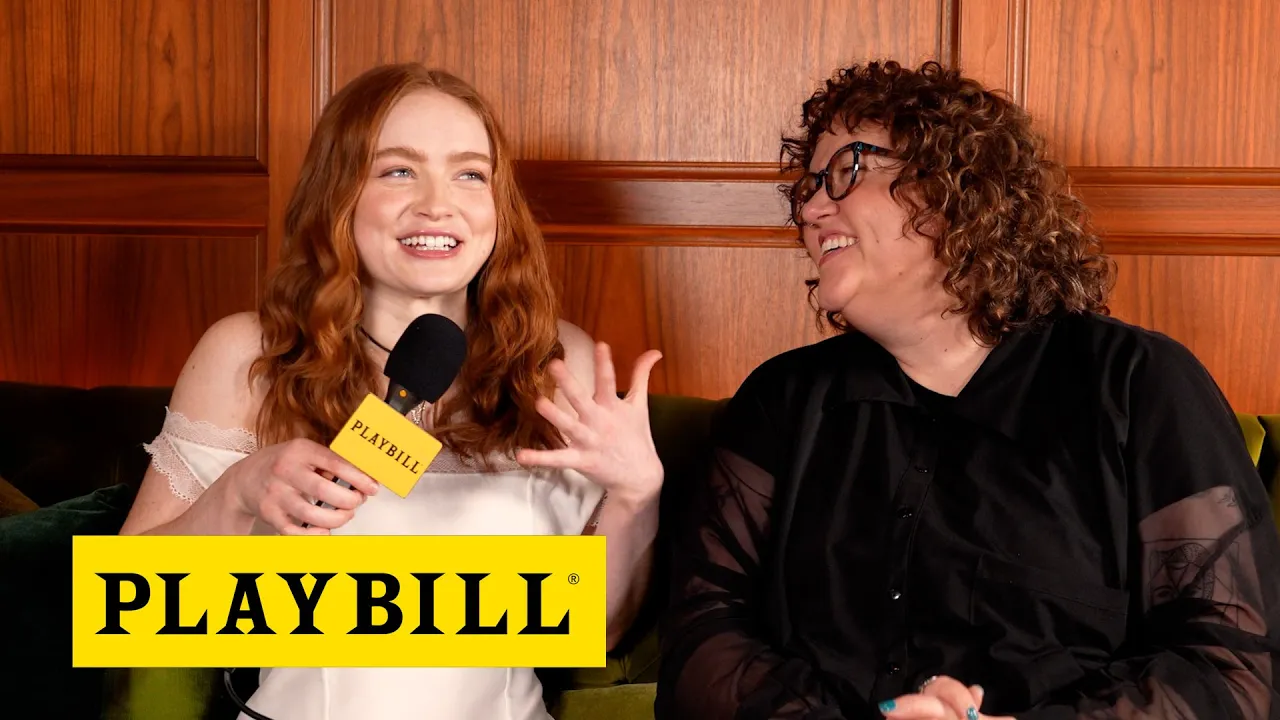
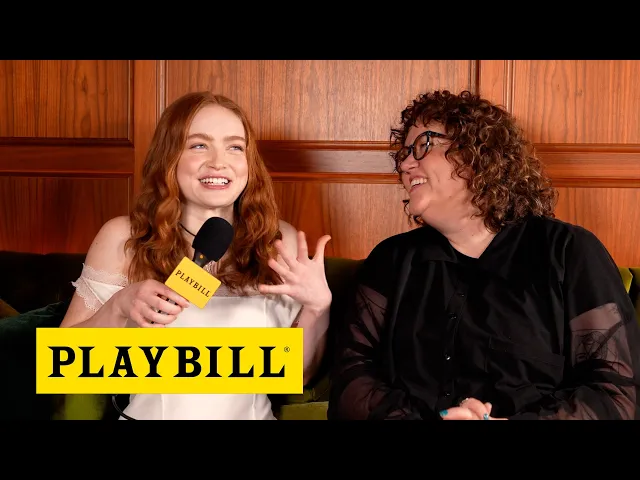
Hey everybody, I'm Jeffrey with Play Bill and one of the most anticipated plays of the season is of course John Proctor is a villain. And today I have with me the playwright who was making her Broadway debut this season, Kimberly Billflower. And then of course she is back on Broadway this season, Sadie Singh.
Thank you ladies for both being here today. Of course. Thank you for Thank you for having us.
My everyone in my at the office of playable knows that I'm constantly by accident calling it John Proctor must die because I grew up with the show or the movie uh what is it? John Tucker Must Die. So, but I feel like the sentiment is maybe like very close there either way.
But let's start off this. Kimberly, I'm so interested to hear about the origins of this and then I've been hearing a lot and I'm interested to hear your take, but that you hate The Crucible, which I don't think is true, but I wanted to hear it from you. Tell me more.
I don't hate The Crucible. I think it would be pretty miserable to spend like at this point almost seven years of my life making a play about something I hated. Um, but yeah, no, this play came about in a lot of different ways.
I read this amazing non-fiction book called The Witches by Stacy Schiff. She's this feminist historian. She's amazing.
Um, and it really recontextualized what I felt like I understood about the Salem witch trials and go went into like the context surrounding a lot of the girls' lives. And then that fall after I read the book is when the Harvey Weinstein allegations broke and the title wave of me too hit. Um, and I was back on my family's farm in the rural south.
Um, and found myself thinking back a lot about things that happened to me, things that happened to my friends and my adolescence. um and thinking about what it would be like to come of age in the moment when it felt like all of the rules um and how we talk about power and gender and um were changing and um and then Woody Allen called me to a witch hunt in an interview and I reread The Crucible with that in mind and rereading The Crucible with the lens of me too um very affixed on my eyes really changed the way I thought I understood it. Um yeah, and I I don't hate The Crucible.
No, of course not. Of course not. And then Satie, tell me, like we obviously the world has come to know you and love you from Stranger Things, but I mean you did shows on Broadway before any of that.
So what was it for you personally the want to get back to performing on a stage again? Yeah, it was always on my mind anticipating the end of Stranger Things. Um, and yeah, I thought it'd be cool to just have kind of like perfect bookends of like I don't know, before I started Stranger Things, I was on Broadway and then to finish it and go back to it, um, was a dream of mine.
But it was all about just finding the right project. And then I read Kimberly's play two years ago, a little over two years ago, and I just kind of I knew I wanted to do it. I didn't know if it was going to be on Broadway or anything, but I just we wanted to do a workshop of it and see where it could go.
Um, and then it brought us here. Um, yeah. When you first heard, Kimberly, that Satie was interested in being a part of the production and help bring it to Broadway, what was that reaction like for you?
Because as we know, Satie is like one of the biggest young stars right now. What was that like for you to hear that news? Yeah, it was crazy.
It was like, what do you mean? Um, I've been such a massive fan of Sadi's work as I think everyone is who sees it. And it I it just felt and I didn't even know then that you were from Texas or anything.
And obviously Texas is different from Georgia, but I was just like there was just like a sensibility about hers that I felt like, oh, that would be a really good fit for the things I write about and the way I write. And um yeah, and then I mean I was like, well, she's so in demand like it's never going to work out. workshop and it really felt like there was some some magic in the air.
Um it was just like a thing and um I was just like, "Oh man, if this works out, it could be really great cuz Yeah, she's amazing. " Yeah. Obviously.
Well, what I've love also um the relationship that you two have as well with DA, your director, that at one point you guys all together toured theaters together when you decided Broadway. Tell me about what that relationship was like even early on with this production. Well, I wasn't at that tour because I got COVID and was stuck at artist housing in Boston where I was working.
I know. But they were facetiming me in and I was alternating between crying and pinching myself. Um, so you can talk about that that tour.
Yeah. I don't know. Yeah.
I mean, that was just like a a part of the process that like I've just felt so lucky to be a fly on the wall for like touring Broadway theaters. It's like every theater nerd's dream. Um, but yeah, we looked at a couple and the booth was always our favorite.
Like it was just it was so perfect that like corner marquee and just everything about it. It's so intimate. Um, but I think we thought it was going to be a long shot that it would be available by the time we were ready to start production.
Um, and it all just kind of worked out. It was meant to be. Yeah.
Now tell me, what was that conversation like the first time you met or and you discussed the play? What was that conversation like between the two of you discussing the show? It was on Zoom.
Yeah. Yeah. And I mean like what you just said of like everything kind of working out is like exactly true because Yeah.
We we had a conversation on Zoom just kind of talking about the play. Didn't really get into like a lot of logistics. Sadi and her team had DA in mind and DA and I had actually talked about the play back in 2019.
I've known Da since I was in grad school. We have a lot of friends in common. um been at a lot of the same weddings like and I and it was like kind of a heartbreak for both me and Da that like it didn't work out originally and so then when like Sady's team brought her up and our producers brought her up and I was like oh my god and so then the first time the three of us talked about the play too.
Yeah. It just it just felt like such an organic right fit and I think we from the beginning have all really been on the same page about what the play which what the play is which isn't always true. you know, sometimes you're like, "Oh, no, actually that's interesting, but I think over here, but it's like, no, it's always felt very, very aligned and what we want to do and what we think is special about kind of collaboration and theater and everything.
" Yeah. Satie, tell me about this character that you're playing in the show. What was it when you read her on the page, you were like, "Oh, I want to bring this character to the stage.
" Yeah. To me, Shelby was the obvious choice. It was I just really gravitated towards her.
Um, but the thing about this play is it's an ensemble piece and every character is so well-developed and you feel like you know them and yeah, they're all just very well-rounded. But Shelby, I think I was like, okay, that that seems to be my my track, I guess. um just cuz I think she has a maturity about her and I don't know I was really I love the way her brain worked and how you know she carries the trauma that's happened to her.
I think there's just some complexities there that lured me in and I've just had yeah a really amazing time discovering more and more about her every day especially through the preview process. It's been so helpful. Yeah.
And what I love about the journey of this play is that it has been done across so many colleges. I think maybe even some high schools across the country. Hundreds of performances.
What has that been like for you to see it performed there and then now see its journey now onto the biggest stage in America? It's unreal. Um yeah, I started writing this play before I had an agent.
Um and it was commissioned by this college program um where multiple colleges and universities co-commission an early career playwright. I had worked primarily in the educational theater space um prior to that as well and was very much like this is what this play will do and that's great and I love college students. I teach college students um and then for it then to kind of and then you know it was originally supposed to premiere in the 2020 season and we know what happened to that season and so it's been like this very winding circuitous path.
Um, and I I never thought this was in the cards for it. And just to see not only it happen, but the audiences really show up and be incredibly vocally supportive and um to and I wrote this play very much about like where I'm from and a lot of it and writing it was like this will only be funny to me and you know and so it's it's it blows my mind. I kind of like can't comprehend it.
Yeah. Now for both of you, tell me what has the preview process been like? What has it been like developing it, the work, the changes?
I I do not remember previous from when I was younger. Um and the memories that I do have were very different than this. Um yeah, but that's kind of the reason I wanted to do this in the first place is just like having that challenge of being an adult on Broadway.
And yeah, it's been previews are hard. They're really tough. It's a really demanding schedule.
Um it's also like so embarrassing at times, too. Well, in a good way, though. But like thinking back to like our first preview, I'm like people saw that like even though it was amazing, you know, but like just in my own head, I'm like, "Oh, I feel like I've grown so much in like selfishly just like in my own performance.
" But then also thinking about the play as a whole, too. We've really found our rhythm over the past couple of weeks. But doing that in front of an audience is the only way you're able to find that.
So yeah, it's been super educational. I love that. One thing that I know from what I've seen online is that this story and this uh play has seemed to really connect with a lot of Gen Z audience members and even older uh Gen alphas as well.
And what is it do you think about the story and its message that connects to that audience in particular? Oh, I mean it's I always feel like the worst talking about this because I'm not of I'm a millennial and so I'm like this is why my work. But um but no, I mean like I think that I think several things.
So I think first of all like even though a lot has changed and a lot about Gen Z and Alpha are very different than my own teenage years. I think like the fundamental coming of age experience like there's a core like emotional truth to it that is always true and that's why these types of stories resonate again and again. I think also that this play is about how cycles of power perpetuate themselves over time and how patriarchy is so ingrained in our culture.
And so that is also true of of every generation. But also like I mean yeah I going back to like the origin of the play like I specifically wrote it kind of being like what would it be like to come of age in this moment that I like at the time as a 30-year-old was like I feel like I don't recognize my own life right now. And so like what would it be like to be 16 and kind of figuring out who I want to become while I watch the world like rewrite its rules.
And um and then you know like I started writing the play in the first Trump administration and now we're back. So it Yeah. Yeah.
So, I think that Gen Z and Gen Alpha um have have seen a lot of maybe hope and potential and then revert and like kind of progress and then regression and and so I I think that like that is fundamental to what the play is exploring and that has been so much of what those generations have grown up witnessing. Um which is awful and we should do better. Sie anything to add on that.
Well, you I guess like I mean Kimberly just has such an she captures my generation and our voices in such an authentic light which is very rare to come across in film, TV plays, what have you these days. Um so that was something that struck me immediately when I read it. But then also, yeah, just like echoing your thoughts on that feeling of hope and how that was all that we had then and we still have to hang on to it now.
Um, and I think the play ends on a hopeful note, but it's not necessarily like a happy note. Um, but yeah, I guess just the power within that and how these girls are able to take that hope that they have and change the world around them, even if it's just for a second, even if it's just in their heads. But yeah, now what I'm really interested to know that I've seen video I've seen the photos of what your stage door looks like every night, the crowds and it's I mean what has that been like for you?
I mean I'm sure you're no stranger to fandom and that stuff like that, but it seems like a lot of kids have been trying to reach out and tell you about how this show has connected with them. Are there any any memorable things have happened so far? I mean like to be completely honest, I was really nervous that no like I didn't know how many people were going to show up.
like genu genuinely I was like are people gonna like I don't know I really don't know. Um but that first preview I think was so special because they did show up and they and it was raining and they were still out there and yeah just to see so many young people come to the theater every single night. Um that's been really really special because it's obviously resonating with them a lot.
I think it's also special fans of the show or like past work of mine who maybe just kind of came in blind to see this be so moved by it and become fans of the show through it. Um but yeah, that's been like such a such a nice cherry on top of everything just to kind of see that um those reactions afterwards. Totally.
Uh, I know for I always like to ask this question, especially at um interviews like this is that what I love when someone like you comes and does Broadway or someone like you who has created something that connects to a lot of younger audience members is that when you do that and it comes to Broadway, it sometimes then becomes their first Broadway play, their first play or theater in general. What is that? Because what I usually say is that it starts a spark for some kids and it ignites something and it could be being an actor, it could be being a playright, it could be just wanting to be a part of this industry that we love so much.
What is it like to know that this play could be that spark for so many young people? I mean, I really felt that at the student matinea that we had, we had, I think, 750 high school students come and see the show. And I we were not sure how that was going to go.
We were really scared. We're like, are they going to like it? what are the reactions going to be?
And for a lot of them, it was their first Broadway show. Um, so to have them be that engaged and just with us and seeing like um this depiction of high school play out in front of them and be so locked in um and reactive, that was amazing. And the stage door after that was also pretty insane.
Yeah. I mean, I did not go to the stage after that, but I was in the building and could hear it. Yeah.
Deep within the building. It was insane. Um Yeah.
Yeah. And no, just just echoing what Satie said like that student matinea like I I don't know how to explain what I felt in my body during it. It was um yeah to not know how they were going to react and obviously like some of the reactions were like big ones and crazy ones, but then I was really most struck by the things that a lot of adult audiences laugh at and the students were just so with it and quiet and it was like oh this is this is real.
they don't have the distance to laugh at it yet. And um and that just Yeah. And I mean, you know, I I went to public school.
I grew up in rural Georgia. Like the theater um that I saw like as a student um that I did as a student is is what sparked that for me. So it Yeah.
I I've said several times now like I can hardly think about it without wanting to cry. So yeah, it's tremendously moving and exciting for me. Yeah.
Very last question I have for the two of you or for maybe Satie, maybe you have a better idea, but I haven't seen the show yet. I'm seeing it on Thursday. I'm very excited.
But I'm told that there's a big dance um thing at the end of this. Um let me ask you this question. What is harder, that dancing at the end or going up against VCNA on Stranger Things?
What's What's harder for you? The dance. The dance.
The dance is so fun though. I have so much fun every night. Um but yeah, you only have to defeat Beckna once.
Truth. Truth. I love that.
Ladies, thank you so much. Everyone watching now playing at the Booth Theater, get on down there, too. And the proper name is John Proctor is the villain.
Thank you so much for speaking with me today. Thank you. Thank you.
Thank you.


![Eminem - Lose Yourself [HD]](https://i.ytimg.com/vi/_Yhyp-_hX2s/mqdefault.jpg)


![Eminem - Temporary (feat. Skylar Grey) [Official Music Video]](https://i.ytimg.com/vi/ZaK9Wi5ho0o/mqdefault.jpg)