La Niña Strikes the Polar Vortex: What Awaits Us? I get it. .
. you're telling me you couldn't care less about what the climate will be like on Earth in ten or twenty thousand years. And you're even less interested in whether global warming or the next ice age will prevail in the end.
. . You - being undoubtedly practical people - only want to know if the extraordinary minds of our meteorologists, aided by incredibly powerful computers, are managing to produce even a modest forecast of what next winter will be like!
Fair enough! It's a completely reasonable request, but I must warn you that even for medium-term forecasts, we'll need to review the basic concepts of meteorology. .
. starting with the main players in the weather changes for 2025, namely La Niña and the Polar Vortex. Are you ready to make this sacrifice?
While global warming slowly continues its work, it's becoming increasingly evident that another serious problem is looming on the horizon. Almost as if to confirm our fears, as we prepare this video, Hurricane Milton is hitting the Florida coast with unprecedented force. It's no longer possible to deny that there are more and more major environmental devastations caused by abnormal weather events, such as periods of drought followed by severe floods, or sudden and out-of-season temperature fluctuations.
These unpredictable oscillations, which in certain regions of the globe swing from one extreme climate to another, are symptomatic of a phenomenon known as "Sudden Stratospheric Warming. " According to experts, this will become more pronounced as temperatures rise. So much so that for some time now, people prefer to talk about "climate change" rather than global warming.
For several years now, seemingly in contrast to the predictions of global warming advocates, the United States and generally the entire Northern Hemisphere have experienced sudden drops in temperature during the winter season. You might remember that in December 2022, the United States was hit by an exceptionally cold period, with snowstorms and temperatures that caused the deaths of at least 63 people. The same thing happened in February 2021, when Texas recorded some of the lowest temperatures in the previous 30 years, resulting in at least 250 deaths.
These are not isolated cases. According to the National Centers for Environmental Information, the frequency of extreme snowstorms has increased in two-thirds of the Eastern United States; and despite the rise in average temperatures, there has also been a marked increase in intense cold waves! These data are specific to the United States, but researchers say similar effects are being observed in other parts of the world.
But why? What could be causing this apparent climatic contradiction, where an increasingly warm planet also produces sudden ice storms? Answering this is not easy.
. . Only recently have atmospheric physicists thought they might have identified the true culprits behind such a chaotic succession of often opposing phenomena.
It seems the blame lies with the disintegration of the structure known today as the Polar Vortex, under the blows also dealt by El Niño and La Niña, the two ocean currents that influence ocean temperatures. We've talked about this trio in other videos in the past, but before giving the final forecasts for 2025, I think it's best to do a little review. El Niño and La Niña influence atmospheric circulation and precipitation, causing different climatic effects in various parts of the world.
In general, El Niño leads to drier and warmer conditions in some areas, such as Australia, Indonesia, and South America, and wetter and cooler conditions in other areas, such as North America and Europe. La Niña brings opposite conditions, with more rain and cold in some areas, and more drought and heat in others. The polar vortex is an extensive area of low pressure that semi-permanently hovers over the North Pole.
It is present almost continuously, especially during the cold season, and is much larger than any other low-pressure area. While typical low-pressure zones can have diameters of 1,000-2,000 kilometers or more, the polar vortex covers the entire Arctic Circle with a center roughly over the North Pole, sometimes extending to mid-latitudes. This gives it a significantly larger diameter, exceeding 5,000 kilometers.
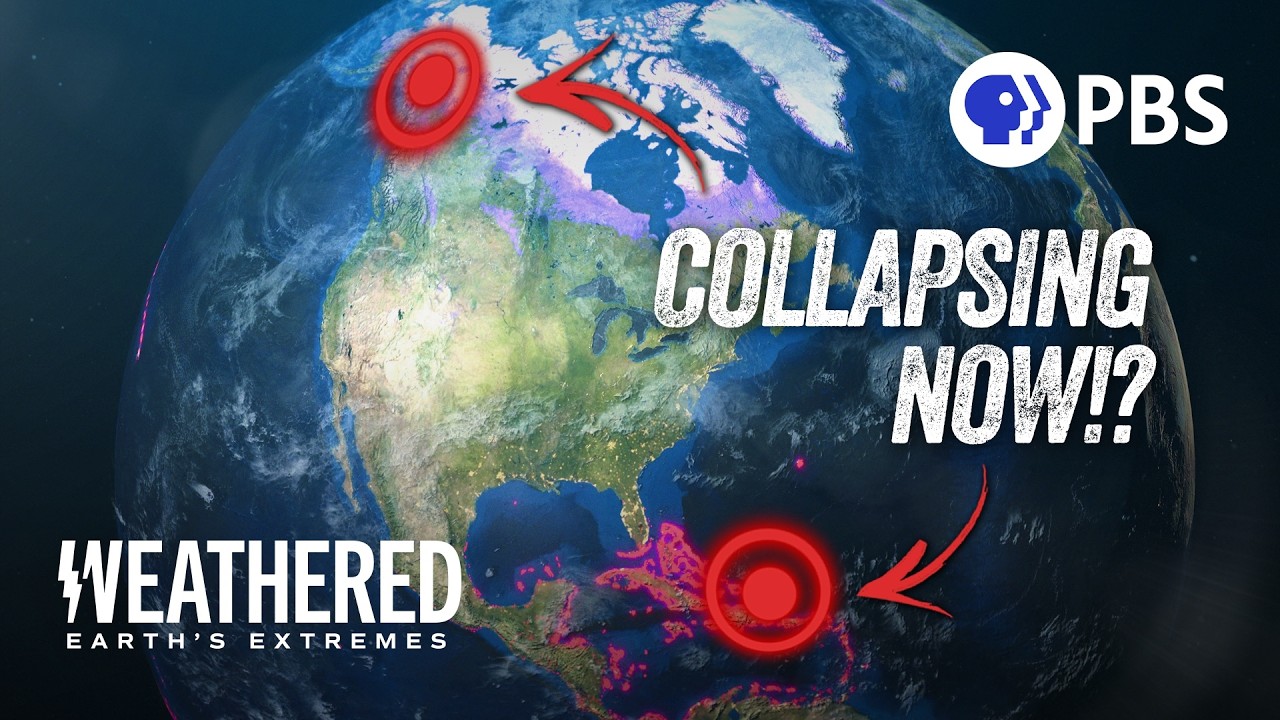
Until the 1970s, the concept of the polar vortex was replaced by the simpler and more generic idea of the polar front, defined as the ideal surface separating Arctic air from the more temperate air of the mid-latitudes. In the Northern Hemisphere, the vortex has two centers: one near Baffin Island in Canada and another in northeastern Siberia. The Southern Hemisphere vortex is usually centered around the South Pole.
The vortex is a structure that primarily develops in the stratosphere, typically between 12 and 50 kilometers in altitude, above the troposphere (and the tropopause) where most atmospheric processes occur. However, the higher-altitude vortex often affects the lower layers of the troposphere, especially when it is intense, creating a tropospheric polar vortex. In meteorology, there is a distinction between the stratospheric vortex and the tropospheric vortex, which mainly affects air masses near the ground.
"Hey, guys, just a moment before we continue. . .
BE sure to join the Insane Curiosity Channel. . .
Click on the bell, you will help us to make products of ever-higher quality! " Unlike the tropospheric vortex, which is more or less present year-round, the stratospheric vortex generally forms in September, peaks in intensity in January and February, and dissipates by April to early May. We can think of this circulation as a large spinning top filled with icy air, stationed over the North Pole, with a two-story structure similar to a house.
In this case, the ground floor is the "troposphere," extending from sea level to about 10 kilometers in height, where meteorological phenomena occur. The upper floor is the "stratosphere," extending up to about 50 kilometers and separated from the troposphere by a ceiling called the "tropopause. " If we could observe all this from a point in space above the North Pole, we would see an approximately circular cyclonic region with air masses moving counterclockwise, with a fringed edge due to more or less pronounced undulations.
It's important to note that the polar vortex is NOT a storm but rather a current of cold air moving at speeds of 170 kilometers per hour. But what prevents this vortex from moving or expanding indefinitely? Generally, the Arctic vortex is "confined" above the Pole by a so-called warmer Jet Stream: a fast-moving air current that acts as a barrier to the Arctic vortex, like the edge of a bowl.
The cold air in the center is heavier, so it's trapped by this bowl of warm air. It doesn't usually cross the edge. Or at least, it doesn't usually.
When Arctic temperatures rise, some of the cold air inside can spill over the edge of the "bowl," surpassing the usual limits of the jet stream and reaching continental areas, bringing frigid temperatures, sometimes below -18°C (0°F), even as far south as Florida. The vortex tends to strengthen with the arrival of polar darkness, becoming a dominant feature of the winter stratosphere. However, its strength and stability can vary from year to year, directly impacting weather in mid-latitudes, influencing, for example, the intensity and position of the jet stream.
Recently, meteorologists have noticed that the vortex does not maintain its characteristics over the years, and one of the causes of this long-term variability is the action of the other two main players in this intricate story: El Niño and La Niña. In particular, it seems that in years when El Niño prevails, its effects tend to strengthen the vortex's structure, while when La Niña prevails, the vortex tends to weaken. OK, at this point, I imagine you're sighing, wondering: "So.
. . what are the ultimate consequences of all this?
Will the winter be warm or cold? " Well, it's quite simple. .
. The forecasts for the winter of 2024/2025 currently indicate a strengthening of La Niña, which will increase the likelihood of a Sudden Stratospheric Warming, a phenomenon that, as we've already mentioned, can destabilize the Polar Vortex, sometimes causing its collapse. .
. In this case, the jet streams that confine the vortex would no longer be able to prevent the cold air from the vortex from escaping and expanding southward. To put it simply, the edges of the bowl containing the cold air over the pole are first weakened and then frayed by the distant action of La Niña.
. . and eventually dissolve, allowing a large amount of icy air to flow towards lower latitudes.
This - to reach a conclusion, albeit a hasty one - frequently leads to colder and snowier winters in Europe and North America. But if I say hasty, there's a reason. .
. Historically, there is only a probability between 60% and 75% (and not a certainty) that a Sudden Stratospheric Warming induced by La Niña could lead to severe cold waves. So, will it likely be a memorable, icy, and stormy winter?
Well. . .
if you want a promise, I'll be upfront and say that although early indications suggest a weaker Polar Vortex for the upcoming winter, it's important to remember that this phenomenon's behavior is highly variable. Atmospheric dynamics can change rapidly, and a initially weak vortex could suddenly strengthen, or vice versa. Additionally, the interaction between the Polar Vortex and other climatic systems, such as the Azores High or the jet streams, makes winter weather even harder to predict accurately.
If you're okay with my personal opinion. . .
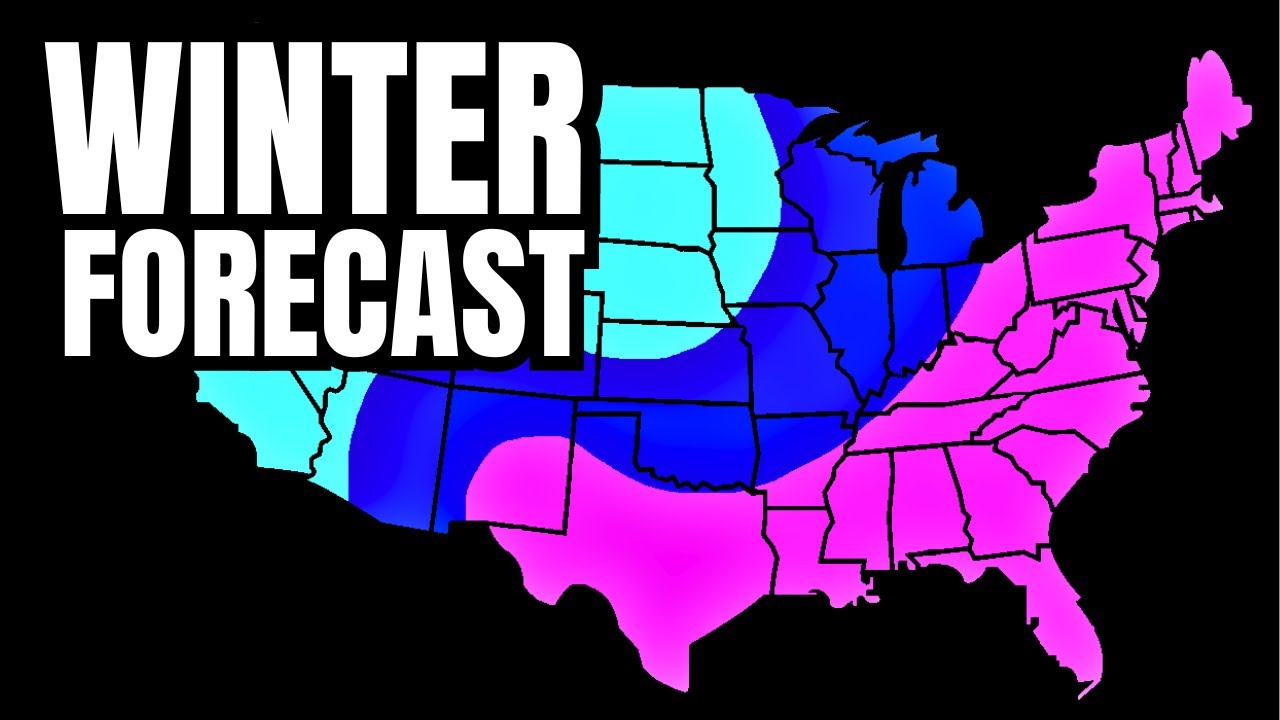
then yes, I believe the next winter will be much colder and snowier than usual in North America. In Europe, however, the effects of La Niña might have less impact on the Siberian core of the Polar Vortex, potentially leading to a wetter but generally mild winter. This is what I can tell you for this winter season.
. . but I must warn you that it will be the summer months that will determine whether 2025 will be an unforgettable year.
According to hundreds of experts, 2025 could witness an unprecedented climatic event with potentially catastrophic consequences for the climate and life on Earth. According to the latest forecasts, 2025 might see a very strong El Niño event, which could set a record for average global heat and bring the planet closer than ever to a warming threshold that scientists and politicians warn could be potentially harmful. Some estimates suggest that 2025 could be the first year when global temperatures exceed 1.
5°C above pre-industrial levels, a threshold considered critical to avoid the most severe impacts of climate change. And all this after the summer of 2024, which has already gone down in history as the hottest summer ever. .
.