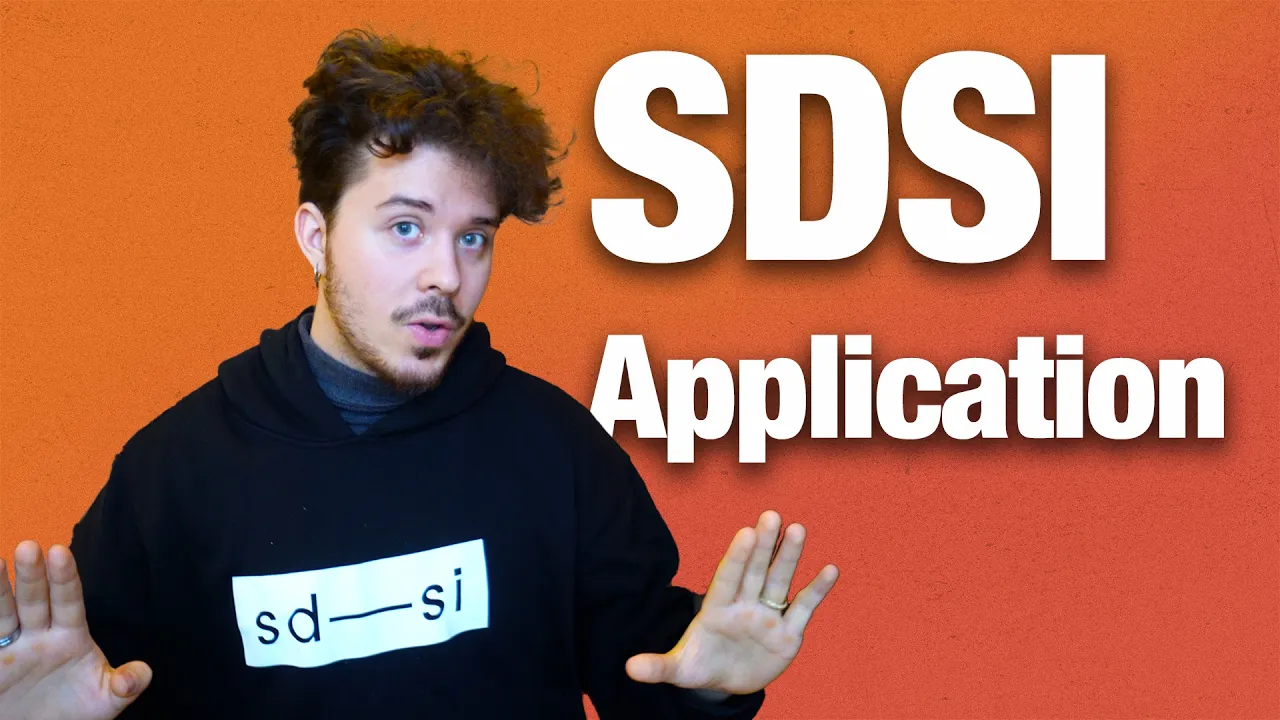
my name is Nikolai and this year I was lucky enough to win the sdsi Serv s strategies and Innovations Rasmus Munda scholarship that not only pays for your tuition for the sdsi master's program but also gives you a monthly stipend of 1,400 to pay for all your living expenses travel costs Etc and focus fully on your studies so right now there's so many people reaching out to me asking so many questions all the questions I had previously as well and on the side of our main project I don't know if we can really answer everyone
and give everyone the time they deserve so I'm doing this video to answer all the main questions to really go over how exactly I did it all I know about the process and if there's any kind of question that has not been answered in this video just look into the comments and I will try to answer all the other questions there so that people can also find answers down there and then if you need some personal feedback obviously just hit me up again or one of my classmates as always the time stamps are down below
so use this guide as a resource just bookmark it and then come back to it in every stage you need advice on or if you need any kind of question answered and with the time stamps you can just jump back to the part that you really need right now all right but now let's get started what is sdsi sdsi is a service design Masters program that is part of the Erasmus Mundus programs those programs happen not only in one University but two or more in case of sdsi it is three universities in Finland Estonia and
lvia I'm in a class of around 30 people and the first entire year is spent in lvia a small country in the baltics not in Ria the capital but the small town of kiga which is a UNESCO heritage site with the biggest you should more so say the longest broadest waterfall in Europe which is still very impressive very nice but it's definitely not the tallest here in the first semester I was taught the basics of service design by the Art Academy of lva and then the second semester is more business and Leadership focused not taught
by the Art Academy of laa per say but through a collaboration with the Stockholm School of economics in not Stockholm but Ria and then after that second semester you can decide where to go for your third semester so either you first go to laand or to Talan in Estonia and then for the fourth semester you switch again so if you learn to laand you go to Estonia do do your thesis there or the other way around this is a big question that many people were very confused about and it's quite simple simple but maybe not
that well explained on the otherwise amazing website every year about 30 people get accepted to SSI and the top 20 applications get scholarships it is not like there's a separate application process to get the scholarship or not you just apply normally and then the top 20 people get the scholarship that means that if you just normally apply and in the first round get into the top spots you have a chance to get the scholarship how I understand from there the process goes like this after getting into the top spots of the first round the top
60 people or so get invited for the first interview round that first interview round is like the second application round and will be graded as well and then when the interviews are done your grades from the first round and the interview round get combined and then there will be a ranking based on those thingses and then the top 20 people get offered these scholarships 15 just the normal arasmus Mund scholarship and then five more to support certain regions people that got the top spots below the ones that got offered the scholarship will get the option
to study self-paid and then there's a short period of them waiting for people to accept or to not accept and then based out of that they invite for a second round of interviews the people that didn't make it into the first round to give them a chance to study self paate this is at least how I understand this entire process but it's explained and documented on the website as well but now finally to my application process for me it was a tiny tactic because it just so happened that it overlapped with my thesis and so
I had not that much time to actually work on it even though I thought about it a whole lot first off let's go over the timing the application timing frame opens up in November and closes in February the exact dates are on the website because of that overlap with my thesis I really needed time to finish it up in the end so I finished my application basically on the last day on the last couple of hours and I still got the scholarship so I have two pieces of advice here first off if you're thinking that
applying early will give you some kind of a bonus I don't think it will I think it's much more beneficial to just put enough time into the application or at least as much time as possible the second part is to not do it like I did it and don't apply too late because what they told us is that if you apply let's say a week or two weeks before the end or even further in front of it they can just review your application and tell you if anything is missing and if you do it like
I did it you don't have that freedom if you really messed up something in your application process something is missing they will just deny that application and yeah I don't think you want that to happen especially if you put in a lot of time at work into your assignment or something so yeah those are just my two cents on the timing but now let's go over how to actually apply you just go onto the sdsi website and there is the admission part there is one of the best guides I've ever seen for any kind of
application process there where they explain basically every single step next steps Etc so in that guide you see the dream apply that is just the application portal they using where you upload all of your data I think in general it just works very good I was just a little confused because there's I think two parts that say the same thing so I was a little bit confused at the beginning but I think it works great don't worry about that part but now let's go over all the stuff you need to apply with depending on when
you watch this video some things might have changed so definitely double check on the website educational documents educational documents obviously just because it is a master's program and so you need to prove that you have a bachelor degree so they asking for I think a transcript of records and your official diploma obviously there's the carat depending on your situation if you did your degree a long time ago then it's all great and you have your diploma but in my case I had the situation going where I was ending my bachelor degree in February as well
so I didn't know if I would have my diploma and my transcript ready for the application luckily I did but only very last minute but I imagine if you for example know that you will graduate in March that might might be an issue for you but I heard that there's a small fix for this which is that you just need to provide some kind of document from your University stating that you will achieve your degree before the sdsi study starts and the details of that are all on the website if I remember correctly but yeah
definitely look into that or maybe write sdsi and email or something secondly there's the entire English proficiency topic which is yeah a big one makes a lot of sense because well the program is in English and so it makes sense that they ask you to certify a certain level of English they accept a lot of different tests and need a certain level of the results or a certain Mark hit in those standardized tests when I applied I used the Dual lingual English test because it seemed to be the cheapest and most convenient and it worked
perfectly but there is one small thing that didn't work that well with that test because when I tried to apply for a different University as well well that didn't accept that one because it's not one of those normal standardized tests but that was also when I realized a big mistake I made so if you are from a European country like Germany for example most likely your high school diploma already certifies you to have that level of Eng already which means I could have just handed in my high school diploma to SSI like I did then
with the other university so if that applies for you just save your money and for the people that it doesn't apply to I realize that this part can be super frustrating especially if you are from a country like Pakistan or India where well you have a certain English level but it doesn't apply the same way but I guess it just is how it is and we can't change anything about this process resume or CV this part I just try to stick as closely as possible to the brief they gave so I just tried to make
a very simple CV with all the information they gave personal contact information overview of Education work experience language skills computer and software skills other activities hobbies and interest because how I understand it this part is just a you have provided it or you haven't so it's not really evaluated in any kind of way you just have to provide the things they asked for and then all the scans of your personal documents your passport Etc we I just try to take a good picture slash good scan and that basically was it the only thing there is
maybe that your passport has to be valid throughout the entire period so maybe you have to look into getting a renewed passport and doing things like that so that might be a hurdle there but if your passport is all valid for the entire period then it's just a scan and you're done with it but now off to the big things in the room the assignment details you find in the assignment PDF which right now I found here on the website video letter of motivation this thing is worth 20% of your final score of the first
round which is quite a lot and one of the two hurdles you have to overcome to get to that scholarship it is like a regular letter of motivation but well in video form which honestly was super nice for me because I really like video production but it was also very intimidating because to just put down push down condense all of your personality and interest in this program and history and what else in those 3 minutes was very stressful but honestly I believe that having it in video form is much better than for example doing a
3 minute live presentation because in a video form you can cut things you can make things intentional you can make several takes of things so it gives you a lot of room to really Define it there are three parts they want to see first personal introduction insights about your personality values your outlook on life describe where you currently stand in your academic Andor professional Journey highlight your relevant professional experiences skills and accomplishments explain why you're interested in studying service design explain how the acquisition of service skills will benefit your future professional and personal development explain
your expectations of sdsi first off in a little bit of a paranoid way because like with the CV I was very conscious of having all of those parts in there answering all the questions that they post in the PDF what I also wanted to do is to tell some kind of a story to have a coherent experience or narrative running from the beginning to the end which would serve like two or three purposes just getting them easier in and through the entire video then also having them be invested and giving them the feeling that part
of my journey has to be SSI so they have to accept me and then thirdly just remembering it because telling it in a story format I think makes it much easier to also remember a story I also really tried my best to not only talk about things but then also show them on screen because it is a video you have the opportunity to do that to just put in videos or photos of the events you're talking about and I really felt like this is not only adding to the watching experience of the video making it
nicer but also actively helping you to establish your case to provide more credibility because just like in a theory paper or article where you are quoting things here you're giving yourself credibility when you say you did something you also show it and they see you really did that thing so even unconsciously they can't believe that oh maybe that person is just talking about it basically whenever saying something you can also provide evidence collecting those photos and videos might take a little bit of time for example I had to get some of the photos from my
family but I believe that this is really worth it something else obviously because I like to produce videos I already had a lot of equipment for it so like a camera microphone tripod lights at that point right now there's a window here but you might not be in that position but if you have the opportunity and have a friend that has all those things and you can just land it from them obviously that is a little bit of a bonus not really big because you don't really get evaluated on the quality of the video but
you want to reach a certain base quality level to not get minus points for it because this is what I'm thinking here the quality of the video doesn't really get evaluated but if the quality of the video and that means also the experience is too low it might drag down all the other scores they give you the main thing here in my opinion is the microphone because if your audio is bad people really don't like to watch a video so try somehow to get your audio to be as good as possible if you're using your
webcam or your phone to film there's super cheap microphones you can just plug in and then use them to have much much better audio also if somehow possible try to film in a room that is a little bit more quiet without a loud I or a lot of traffic to just have a as clean as possible Audio Level how having some kind of microphone really helps with that as well because for example if you have like a small microphone you can just hold to your face then it won't catch up on that much noise from
the outside and then lastly if all of this didn't work then there is AI tools to improve your audio out there which might create a little bit of a cleaner audio out of your a little bit noisy or crappy audio and just as a small bonus here the camera quality doesn't really matter it can be on a webcam it can be on a camera it can be on a phone but the more important part is light if you have enough light and good quality light just from a window or something that is more much more
than having a good camera or anything when it comes to editing the video I don't have any experience just editing on my phone so there might be videos on that out there I edited mine on a computer or laptop and if you have no video cutting experience I can really recommend to just download denture resolve denture resolve is one of the best video cutting programs out there and the normal version is also free so there's a lot of tutorials out there and it just works perfectly for everything you need for this basic video I personally
used Premiere Pro which is part of that Adobe Cloud which also has all of those features like the AI noise reduction or the tools to clean out your audio which is very nice but I don't think you need it but if you want to use the Adobe Cloud I think sometimes they have these trial runs to just test the software and because you just need to produce two videos you should be able to do that in those try around 30 days or so then after all that process there's still the question of where to upload
it there's a lot of platforms out there where you can just upload it they even recommend some on the room apply side and then you can decide if you want to have it unlisted or listed unlisted meaning that only the people from sdsi that have the link can see it and public obviously means it's on the internet and everyone can see it which can be nice for other people applying but you maybe don't want your video out there I personally did my thing unlisted but before uploading also ask a lot of fans of mine for
feedback for the video and how it went oh yes the admission assignment in my opinion the hardest part of this entire process because it is 80% of your grade but also is a little bit hard to understand maybe just as a heads up I can only talk about how it went for me and my experience with that project but I can also say that at least how I understand it I got the perfect Mark for the admission assignment which ultimately was the thing that leted me win the scholarship sh so just something to know I
have no idea if all of the things I did were really that beneficial or if it was just a couple of things so just take a look at what I did and pick out the things that make sense for you it is a small scale service s project where they give you a brief and you have to deliver a solution in three parts first off the research a 130w essay where you condense all your findings and Research into that then there's the challenge a 1,000w essay and continuing from the first one defining the challenge further
and outlining all the problems and things you found out about it in the admission assignment PDF there will be the parts that have to be in there for the assignment this year for example there is cast a light on the ecosystem identifying key stakeholders such as Learners Educators institutions policy makers and Technology providers discuss how current trends such as digital transformation remote learning or AI integration or other impact the future of education and propose informed hypothesis about the root cause of educational challenges for example access curriculum design digital literacy Etc then provide additional insights that
contribute to broader understanding on how education needs to evolve to meet future demands and the final deliverable is again a 3 minute video where then you have to show a solution to the challenge you identified and basically present your small scale service L project first off how I went about all of this I don't really believe that you can just go through each deliverable and finish it up and then move to the next part because for me at least I needed to finish up my solution to then finalize the challenge and research part because I
wanted to to obviously like flow well into each other that the research flows well into the challenge and the challenge flows well into well solution but obviously I started off with the research so this is the process how I went through the assignment first reading the brief this might be very obvious but it is the most important part you really need to understand the brief of what it's asking I feel like the briefs are not that well formulated so they are on the one side very open but also open to misinterpretations what helped me then
was the live streams of sdsi that kind of clarified what they meant by that so but generally what I just did was read through the brief then Mark down the things I found interesting and maybe rephrase or Rite the brief myself again to really understand it myself and give it to friends of mine to ask them how they understand the brief how I understand the brief is that they want to provide a kind of broish brief to give you a lot of options to pick from when I applied our topic was digital waste which can
mean a lot of things like the hardware waste that is going on with all the digital devices and software and servers we are using but also things like all the energy that consumed or all the dead data that's created all those kind of things basically anything and everything so after reading the brief where did I go from there honestly I just jumped on Google Scholar and searched for digital waste or in this case it would be education and the future of learning and for D so just looked at things that give me a general idea
of this topic what I know now is that from there I should have just picked something and went with it but at that time I was very conscious if any of my decision the initial topic would be evaluated if for example I work on a AI or crypto topic like for example the Water waste of that if that is like a super popular thing would that influence my score because it is a more or less unoriginal topic I was thinking about that way too much right now I believe it doesn't really matter the initial topic
is not interesting but the subtopic that you then pick from it so what I would really recommend is just after looking at the general idea of for example the future of learning you will have some kind of idea of what kind of topics are out there what are the major topics there for example AI or remote education and I believe that as soon as you see that there's enough existing research in that area just pick whatever you feel best with and then just move on to the next part because I believe the next part is
just way more important than just picking out the general topic because after you picked your just general topic now starts the actual research from the major topic of digital waste I focused myself down to right to repair which is this idea that there should be a right to be able to repair hardware and then what I did was really just immerse myself into this topic read a lot of Articles what YouTube videos documentaries scientific papers basically anything and everything I could find about rer repair what I tried to find is a interesting sub problem something
small enough and defined enough to work on it in my case about rer repair I found that the EU was currently basically just couple of weeks after submission working on legislation about right to repair and because those EU papers were public I was able to read through them and go through the proposed Solutions there I just tried to find a small Golden Nugget which in my case was that the proposed solution might work super well and looked exciting but also might not work that well in rural areas because just because they have other systemic issues
that are not really addressed in those papers I feel like it was a good idea to make it time relevant so in that case the legislation that would be voted on very soon and also think it was a very good idea to then Niche down even more and put it all into your own local context so in my case it was about the r repair bill in rural areas in Germany making it very small and local really helps to have a more defined and more quality solution for that very specific context but also helps with
something I did then that was a little bit of a gamble because the brief it only talks about working with existing research which I didn't do because then I added firsthand research which I did in the way of interviewing people which I did then with people from rural Germany about R to repair even though this was not asked for I think personally that this really really really helped my application because during those interviews really helped me to get quality insights that I could then base my solution on so to be honest I would really recommend
it if you don't have any experience with user interviews or extreme user interviews then there's a lot of videos and blog articles online I might also do a video about that because it's one of the best and coolest tools out there but definitely a big recommendation from me is while doing those interviews to record them obviously ask for permission but then you can put your phone on the table just recording the audio of the meeting and then that audio can be transcribed into text and after having that transcribed text you can make so many cool
things with it from the transcript you can get the most important insights or finding the most important topics they are talking about and then you also have quotes for everything which is exciting because those you can later show in your presentation to really emphasize your point I for example was also showing videos of the meetings and then was able to show parts of the videos during my video solution presentation to just drive home the point and the Insight I've gotten which is what I really tried to get from all of this research some kind of
small very interesting finding I could create a solution for mine for example was that edly people in rural Germany that are living alone because their Partners died for example really face issues with try to repair they are already quite vulnerable because they are not that adapt with technology usually but on the other side are also quite reliant on it especially when their Mobility is impaired in some kind of way because there's way fewer places to repair your electronics in those rural areas and they are Mobility impaired they just can't go there and it loses them
a lot of their freedom a lot of their self-expression and can create a cycle where they just get isolated more and more from that research I also found out that some elderly people then won't reach out to their family for help because they want to do it by themselves or there is some kind of reaction where asking them for help will make them feel bad and like they're not able to do anything anymore so then with all of this research I worked on creating a solution what I feel helps a lot in creating solution solution
is to look at existing services that solve similar challenges in this case for example there was repair cafes in rural areas but also this bread bus Which a little bit like an ice cream truck was driving into the more rural areas and setting bread there and then my solution became this concept of a repair truck driving into rural areas trying out where there's demand and then providing repair services there on site or if there's a bigger issue take the device and bring it back the next time all of this was just a very very simple
concept but what I feel like it really helped me here was that I realized that and address that so I really try to communicate that this is a concept how this could be implemented what the limitations of that are how this is a iterative process that for example it's also not a real fix for the entire issue but a step to get there one part that I also felt like it was quite successful is this notion of empowering people empowering the users in this case the elderly and Rule German areas for their right to repair
empowering is a bit of a buz word in service design but what it tries to say I think is very valid because in most most cases we really want to give people a lot of their power back or help them and support them to feel and have actual power somehow but I feel like also really helped me to create the solution and then present it was a user Journey map and to create a service blueprint these are two service design methods just ways to visualize a journey of the user throughout the service or or a
experience and then the service blueprint basically showing the how the entire service works on several levels both of these you can just find online explained very very well and I feel like and I feel like creating them really helps you to understand how your service has to work and what is missing what you can add what you can get out of there and then also when presenting it showing how it works but also that you thought about all of those things now after you created your fantastic solution did all the research did all the defining
of the challenge you only have to create the deliverables how I created my deliverables was again very paranoid because I decided to really go all the points they set I structured it in the way that they said what they wanted to see I also just tried to use the rule thumb for academic writing that whenever I had a statement or said anything that I tried to give a quote for that for this kind of essay for me at least it was also very okay to quote for example YouTube videos I just had to look up
the proper format of how to do that and then for the solution video I did something that doesn't really make sense maybe it was maybe very overly complicated but what I did was to prepare a presentation and also write a script and then present it like a video in front of the camera and then just talk it into the camera like this kind of video then I didn't for example skip through the slides live but cut them in later to match the video and then I also used a lot of b-roll zooming into Parts Etc
and for me at least that was way easier to do than for example preparing the entire presentation and then presenting it in what one go because again it was a video so I was able to cut it and make it fit and yet again I was super paranoid so I really tried to go over all the points they outlined and when reviewing the video I really wanted to be able to say to all the evaluation criteria yes that is in there that is set there I can get the maximum score and after you finished all
of these things congratulations you finished the first stage and after after submitting it's waiting and praying obviously I wish you the best of luck because I also believe that there's a certain degree of luck involved in all of this but then after a couple of days I was very excited because I got a reply email saying I'm invited for the second stage the interviews and about the interviews I really really felt like I messed it up there because the interviews were these 20 minute Zoom calls with two evaluators and on the day of the interview
I already had scheduled a train ride meaning that during my interview I was on a train with super instable internet meaning that my evaluators probably didn't understand me most of the time or me them which I feel like a really really messed up my chances and sir just as a big big big tip when you get your slot for the interview you get asked if that slot is okay if there's any kind of reason why it might not be okay just tell them and they will reschedule slot with you don't do what I did it
was the most risky play ever it paid off but it was not worth it it was really not worth it if you don't make bad life decisions like I did you are just in that interview for 20 minutes and have the small conversation with the evaluators they are two random teachers from the sdsi program and they will just ask you questions give you space to also ask them questions and I think this stage serves basically two reasons one of them is a general Vibe check do they believe that you are person that would fit into
the program secondly just getting to know you and also if your expectations for the program match and if you might be a good fit because of that the questions I got were super basic so first off just asking who I am giving like a very short self introduction which I did for way too long and then other normal questions like for example why I applied for sdsi what I I'm expecting from it some that might be a little bit more tricky for you for me they asked me a lot of times if I'm feeling confident
in doing teamwork possibly because in the cohort before us there might have been some problems doing teamwork and because most of the projects and most of the courses are only group work so I think they just want to make sure that you know that and that you are a good match for that and then there are those other basic questions that are very relevant for a program like sdsi one very important question especially from people from the global South because some of the program is for example in Lapland how you think you can handle the
winter the cold the all day dark or all day brightness which I believe is a super valid question something that can deter a lot of people from the program and then after those 20 minutes you say goodbye thank you what I try to do was to say okay see you later or see you see you soon basically implying and planting the seed in their mind that we will see soon like a self-fulfilling prophecy but that basically was it and then it's just waiting and waiting and w waiting and waiting and they give a date when
they will send out confirmations but it was super anxious after I really messed up with that train ride interview I really thought okay no no way I'm going to be able to do this and I was debating a lot about if I was able to afford the tuition and how to do it if they gave me the option to study PID but then on a random evening when I expected it the least I got a mail and I read it and had to reread it and reread it and reread it because I couldn't believe it
it said I got the scholarship got accepted and got the scholarship and I think that is a core memory I think that is a core memory I was incredibly excited incredibly happy couldn't believe it and just was laughing for for minutes and I really really hope that the same can and will happen for you that is all I know about this application process this was my journey and if you have any more question questions about any of this just write them down into the comments and I will do my best to answer them I will
also ask my classmates from different countries to also chime in and answer any questions you might have all right see you soon