hey folks dr mike back again video number three in this series we finished hypertrophy we're enormously jacked and pretty fucking strong but we can get stronger let's design a powerlifting strength program together oh oh my god you guys it's our first time designing program together instagram if i can document everything stories live is that how dating works nowadays i i dated back in you know 1865 or whatever we didn't have digital devices but i'm sure like you know like if you're a girl and you tell your girlfriends that you're going out on a date and
they like expect like live stream updates like oh my god he's in the bathroom guys kind of taking a long time right right the fuck are we even talking about i probably swore a little too early the algorithms are going to punish us for that anyway what are we talking about today what's the purpose of a powerlifting strength program okay like isn't it just a powerlifting program it's kind of redundant what do we have to do before we start training session assignment exercise selection loading range relative effort initial volume and next video i'm going to
go a little bit faster here in this video then maybe is ideal standalone because i really want you guys to go back and watch at least the first video of hypertrophy plan design and that's going to give you such an awesome base of understanding that video is a little slower that when you get to this one you're going to be like oh this makes a shit a lot of sense so i'm going to try to go in meticulous enough to make sure we cover all the bases but some of the stuff we were like well
he didn't really explain a ton of that if you watch the aperture video which you should to get a full understanding of a problematic cycle that's going to fill in a ton of the blanks for you all right so what is the purpose of a power lifting strength program is to train your muscles and nervous system to produce more force and thus build a great base of general strength that really produces your powerlifting total this means you have to build strength in the movements that transfer most to the three lifts which can be the three
lifts themselves now you can get stronger just doing the lifts themselves with singles and doubles you can but not at optimal rates because a lot of times you need a little bit more volume to get as strong as possible then singles and doubles can get you at the expense of their fatigue so it's not the most optimal thing to just do singles and doubles because you need so much work you have to do a lot of sets and it really fries you out if you do sets of like three to six reps which is what
a basic strength phase that we're talking about here is it works out much better for overall long-term strength progress now of course when you want to actually do me you have to do a peek-in program which is dominated by singles and doubles right once you've notably gained that strength and you're ready to transition and actually compete then you can do a peeking program to show that strength off we'll talk about that in later videos all right what do we have to know before we start well how many days a week we can train which we
covered on a hypertrophy video earlier in the series what movements and lifts you want to bring up it can be all of them or it can be some you can bring up your bench in your squat your squat or deadlift or all three so on and so forth and of course the best exercises for each muscle slash movement group and the movement's really what we want you want exercises that improve strength in the movements the best relative to how much fatigue they cost and you want them to transfer well to competition exercises it's not just
about increasing your ability to push really well but you're doing tons of incline work that might not transfer so much to flat benching you're like man my ink cleanse taken off like sweet if you're a bodybuilder or somebody who competed in incline benching that'd be cool but ideally you want lyft very similar to the actual lifts and of course you can use incline in context but maybe it's not the only thing you should use and a question of course comes up can you use the competition lifts themselves in a strength phase absolute fucking literally you
can it's not the only thing you can use but you can definitely use them as well all right training session assignment i'm going to breeze through this because it's really straightforward and because we covered the hypertrophy video early in the series if you want a serious attempt at strength enhancement i highly recommend four sessions a week at least you can do up to six if you can recover for them if you've done four for a while and you don't know if you want to try six don't try five okay and a five works out really
well after a couple of mesocycles then you can try six but if you have an important meat coming up stick with five what you know you can do or four and then maybe next uh macrocycle after your meat in the next hypertrophy phase then you can try six and then we'll see if you survive the high frequency can really work super well but can really beat you up so be very careful with it and if stuff is on the line err on the side of caution err on the side of less sessions should address movement
categories two to four times per week so two to four times a week of pushing of pulling of squat patterns super cool of course you want enough time between each one to heal so have enough uh productive energy to do a next good workout deadlifts are the exception as covered in hypertrophy they can only be done one time a week if needed because a lot of times they have too big of a fatigue cost they cost too much accumulated fatigue but but some kind of posterior chain work to support those muscles and their strength and
their size should be done uh probably at least two times a week so you don't have to deadlift twice a week but the other day maybe the other leg day you have or some other way you structure it you should have like good mornings or glute ham raises or stiff like a deadlift something like that you can even do deadlifts but lighter and for sort of technique work totally fine but it's got to be some other kind of posterior stuff you don't want to do like deadlifts once a week and then quads twice a week
and then just your hamstrings and your erectors and your glutes just really left alone for an entire week not ideal not ideal and of course really important for strength sessions need to be split up as far apart as possible so the fatigue dips down before you do your next one you don't want to do the crazy ass heavy bench on tuesday and then wednesday go deadlift with a sore back you got from arching stupid idea if you bench heavy on monday if you want a deadlift heavy maybe do it on wednesday or do it on
a friday squat between them you can figure it out if you're super fucked up from another lift going into this one maybe it's not the best strategy in the world so sample read it pause on your own time it's almost identical to our hypertrophy phase the question is do you have to structure your strength phase similarly or identically to your hypertrophy phase with sessions and days and stuff no absolutely not but but here's our little gem of wisdom if you already know that you respond really well to a certain hypertrophy structure you've figured out your
volumes you know what gets sore when it heals how it adjusts it's probably good to keep a good thing going and just stick with that paradigm so do you have to stick with the same paradigm no but you might not want to change too much between hypertrophy phase and a strength phase so that you know you can roll into a strength phase and it just goes really fucking well because if you do a hypertrophy phase and you're like oh i got this fucking einstein shit planned for the strength phase due to all these weird undulating
this and that super trippy program it could be that you're onto something and you just have a phenomenal result could be that you're like fuck i'm not healing nearly as well as i thought and fuck when i'm supposed to be doing bench again my triceps are still sore weirdly from deadlifts or something what the hell is going on if you have a template that works change it a little bit before you change it a lot so status quo kind of wins out on this one in most cases not all but most all right how do
you pick your exercises exercises for strength should have a couple of checklists very similar to the ones for hypertrophy you want to be having exercises that are strength stimulating have a raw stimulus magnitude that's really high that means that like they create a high level of tension can let you produce a fuck load of force for example is a bosu ball squat a really good strength exercise fuck no because it's so unstable it doesn't allow you to produce a ton of force now here's the real kicker that critique extends a little bit to some other
movements a lot of times dips dips with extra weight attached they're a little unstable and they don't allow you to produce maximum force because you're not that stable and it's not the best strength exercise close grip benching or jm presses are a better way to get stronger triceps stronger triceps not bigger usually than dips are because of that instability what about dumbbell work can you do dumbbell bench press like to get stronger for sets of three to six i mean theoretically you can you know on rack and do three six with dumbbells but because of
that instability dumbbells do not allow as much force production as a barbell a barbell super fucking stable compared to dumbbells so here's where barbell movements really really really went out and you want to have them as stable as possible and this is where some movements like dips dumbbells uh and actually a funny one front squat like a front squat is a little bit unstable unless you're a real ball or front squat or where you're just like a duck in water and super stable front squats are pretty good for hypertrophy work especially in like five to
six seven rep range it's not choking yet you're not out of breath but as far as strength movement man you can usually produce much more force because you're more stable and more aligned in like a high bar squat and it's almost all the same muscles producing it versus a front squat so consider that whatever your most stable variants are it's a good chance that they're your highest raw stimulus magnitude and of course conducive to heavier loading sets of three to six again assistance work which you will do here i'll show you an example of can
be done on the five to ten rep range even as many as 12 reps but generally speaking you want to conducive to heavy loading and that's another one where if you can't load something a lot it's not going to be a great strength choice let's say you have dumbbells to go up to 100 pounds and you can do you know the hundreds for sets of like five to ten are you going to choose the dumbbells for sets of three to six the fuck would okay but now your rpe is like four right so it has
to be a movement you can load scale and be stable enough with those are huge considerations you have to be able to produce tons of force and if you can't do that and you can't push yourself hard it's probably not the right movement for you next should be a high transfer to power lifting movements if you get really strong in a leg press sweet but if you get really strong on a high bar squat better if you get really strong in a low bar squat probably even better right so there's a scaling factor there and
you have to apply that compounds went out over isolation similar movement patterns as far as uh powerlifting moves are concerned here's another one if you have a choice between like a deficit deadlift or just like a one-inch deficit deadlift for strength enhancement or a stiff leg a deadlift unless you really need to specifically strengthen that stiff-legged deadlift movement pattern um the one-inch deficit probably wins out because it is more similar and probably transfers to deadlifting better right for hypertrophy to get bigger hamstrings yeah stephanie godella wins that one but for strength maybe the deficit wins
a little bit more right the powerlifting moves themselves absolutely can be used surely can i get stronger by deadlifting in the three to six rep range in my competition style absolutely if you have too much fatigue if you can't deadlift for more than eight eight or twelve weeks before your body starts falling apart save it for the peak but generally speaking of strength phase it's a very very good average idea to include at least some of the days having the competition lifts themselves next up you have to target the movements used in powerlifting specifically limiting
factors so here's an example if you're rounding over in the squat what do you use as far as a strength movement well a good morning is a really good movement to use because it keeps you super upright and it works precisely those muscles the spinal rectors hamstrings so on and so forth that keep you from rounding over so if you need more anti-rounding strength it's going to say erection strength but gee whiz that has a whole other meaning doesn't it gee where's mister our directions are i read about him in dad's magazines you know 1950s
kid looking through old playboys that was my childhood in any case you want to use sometimes you have to have some specificity your strength here's another one if you need lockout strength you know a board bench or a rack bench or something starts to become a pretty good movement and someone could say like well you know what's the transfer of that to the lift itself wouldn't you be better off doing the lift itself like you would unless the lift itself is really just turns into a grinder at the top every time and it bounces off
the chest like crazy you might actually make yourself stronger on average by limiting how much fatigue you generate here keeping your muscles fresher starting here locking out it's better overall it doesn't have to be all you do so one day of the week if you really need help with lockouts one day of the week you do a bunch of partial lockout stuff and a little bit of full pressing and the other day of the week in which you press you do only full pressing that means it brings up your lockout slowly but you still get
that general work and that general practice that makes you good at the lift itself really really cool combo to try high stimulus to fatigue ratio so if you have exercises that really just beat you up and you don't even feel like you're producing a ton of tension in them stop doing them a good example is some people try to experiment with like ultra wide sumo and they just feel pain in their hips and the load is really low and they don't feel a ton of tension anywhere this fucking sucks if you can't produce a ton
of force or if it beats up your joints way too much more than an alternative don't do it like some people actually high bar squat most of the year because low bar squats are really specific but have a crazy low stimulus fatigue ratio because they fucking beat up all of your joints if that's the case just put them in sparingly towards the peak that's probably a better idea lastly as far as movement diversity in the hypertrophy lecture we talked about having movement diversity not just doing the same stuff all the time but you know one
of the days having more close grip stuff one other day's more wide grip in strength you want a little bit of diversity but you want most of that diversity to start coming from repetition ranges rather than coming from movement variations so you may actually just pick one benching variation or a dominant one that you do both days same exercise but on monday you might do sets of three or four and on friday or on thursday or whatever next time you bench you might do sets of five to six still variations still dup bro but it's
now uh the exercise variation is lower you can consolidate the actual stimuli to get you good at that very one thing you say what about all the variation stuff that's for hypertrophy variation reduces as you get closer to peaking when you're peaking shit you'll have almost no variation at all so in strength we start to constrict things can you still do different exercises sure just make sure you're not doing so much that you're not getting a very good at any one specific thing and what specific thing is that it's whatever transfers really well to the
competition lift including the competition lift itself good place to start super easy is the competition lifts themselves right so if you're like fuck what exercise do i pick that meets all these low bar squat competition bench whatever your deadlift setup is for competition start there super simple as you become more advanced you may find better alternatives but if you don't know but if you're more advanced you probably know the answer to all these questions by now so if you're a beginner if you're an immediate you're trying this stuff for the first time just start with
lift themselves keep it simple and you'll notice like man when i do highbrow squats shit just goes way better than what i do low bar then it's not lifts themselves for you in the answer maybe in strength phase one of two strength phases you could do high bar squats and then only do low bar squats and strength phase two so on and so forth example some pauses in there some competition stuff you guys can check that out uh pause the video if you like what about loading range well basic strength is usually best engineered in
the three to six rep range okay you can in your assistance work and you guys see some assistance exercises in there to support the the muscles that aren't getting a ton of work from the core lifts you can get up to 10 repetitions that's totally fine even 12 on occasion but don't do that shit with the main moves the main move should be in the three to six rep range because your number one goal is increasing strength right and this is especially true you go into high rep ranges if your stimulus to fatigue ratio is
that much better so if you're doing upright rows for shoulders sets of three to six you're like this is stupid my shoulders hurt if you do sets of eight they feel way better and everything is groovy then you're good to go right of course always or almost always never say never justin bieber you want to do your main moves first your main competition moves the ones that really make you strong in that 360 rep range assistance moves that are lighter go later right standard standard protocol example with rep range just filled in you'll notice a
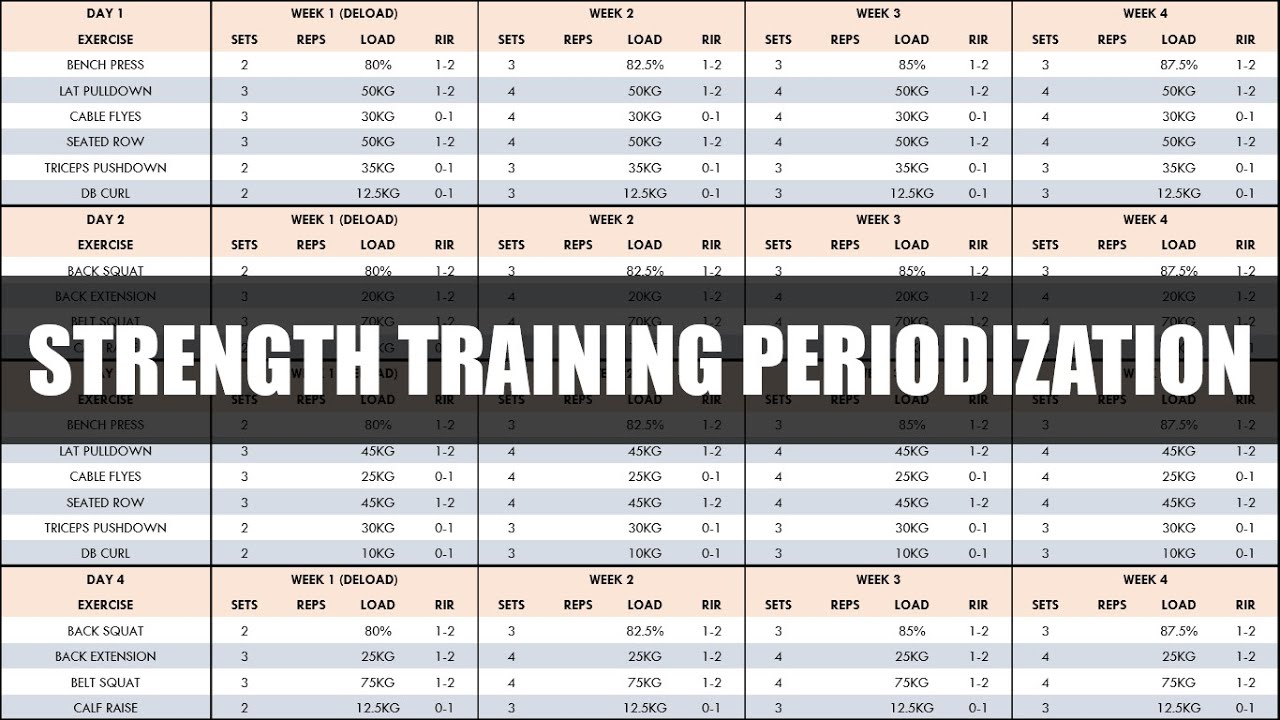
little bit of dup going on in there if you really pay attention so go ahead and pause and figure that out relative effort rpe is dominant in strength training because rar doesn't really make any goddamn sense okay if you hit your three a set of three reps at three rir is that what is that how the fuck is that really possible like that means you could have hit six or something like that and then it really gets quite confusing so you know the low disparities get really crazy and you know a hard triple and an
easy triple might be the same reps in reserve but the weight is really different between the two rpe really is critical at this point to start using it's an rp scale of one to ten seven eight nine is where you mostly train you know four to six is where you deload again you want to start on that lower end that gives you the easy gains builds momentum reduces injury risk you don't want to start a strength program a fucking rp 9.5 rp7 week one it's not exactly our p7 but around that and seven is a
really good guess and then of course you choose loads that are your best guess of what rpe seven looks like in week one and because you just finished a hypertrophy program that had sets of five to ten an intelligent hypertrophy program will actually in the second part of itself will have more like sets of five to eight usually if you've just done hard sets of five to eight in similar exercises man you know figuring out sets of three to six isn't that hard figuring out the load is not that hard but there's a little guess
and check and that's totally fine you can always adjust later sets if you're really off examples with sample weights if you do this program please don't do the weights for beta unless you're exactly this strong right all right initial volume selection so you want to do enough volume in the first week to feel a considerable drop in strength for the target muscle and movement okay you want to feel like you had a pretty decent workout that's how we know overload is being applied if you have to reduce the load to continue to hit your target
reps at your target rpe by more than about five to ten percent then you're done okay and that between five and ten percent it depends on the individual depends on much other stuff uh but you know if it's over ten percent you probably for sure done probably not for all people but for some people even approaching any load reductions like if they do you know three hundred pounds for five three four hundred for five and then they do 300 and they're like uh this is getting to be an rp8 and not a seven they might
need to shut it down but generally speaking you don't want to take like a bunch of drop sets end up doing 200 for fives when you start at 300 and be like oh i still haven't reduced you know my my performance is still good it's only down by you know 50 percent fi anything beyond five to ten percent is way way overkill in especially uh in the first week when you start and that's very easy to figure out now on them that's on the sort of minimum side on the top side you don't want to
get super super sore so that you're still sore when you're training next time and you don't want to get so fatigued that your performance deteriorates when you can't have another good workout so if monday you squat and then thursday you squat again what you don't want is monday to be so much shit that thursday you're either still sore on the quads or your quads aren't sore but you're weak and you don't feel like you can squat heavy you don't hit these little mini pr's on which all of training is based so my biggest recommendation is
start on the lower end of volume start here not there so that if you know you really push it you know not hard enough and you're like that workout was too easy you can always make the next workouts harder what you can't do is once you have a workout that's too hard the extra fatigue is there right the extra fatigue it's like um pouring milk into a bowl or into a glass if you pour just not enough milk you can always pour more milk in but if you pour too much milk the shit goes everywhere
your cat comes in and it's like wow and you're like you can't have any milk kitty and he's like wow he scratches your eye out you have to wear a patch for the rest of your life crazy shit in any case if you're in the real world and you're doing like sets of five and your last set of five that you did you're not really sure you could target rpe is seven but you're like oh was that set like a fucking seven or an eight that last one was a little tough i think it was
a seven maybe it wasn't eight shut it down shut it down first week shut it down in your last week you could be like fuck it let's do another one in your first week be easy that's absolutely the best idea right you can always move up later if it's not enough example of initial volume selection is this example only don't try this verbatim you can try this verbatim just don't be stupid and follow all the landmarks we talked about folks that's it you can can now you have all the tools to design your own strength
program for powerlifting next week we focus on executing or i pronounce that weird executing that program and progressing through it to make sure that you're adding load every week and actually going through the process of getting stronger that is why the next week is going to be powerlifting progression we'll see you for that next video and a reminder we have two videos left after that peaking program design peaking progression at the end of that process you'll know everything there is to know about powerlifting you'll be edcone guaranteed after this next video see you then