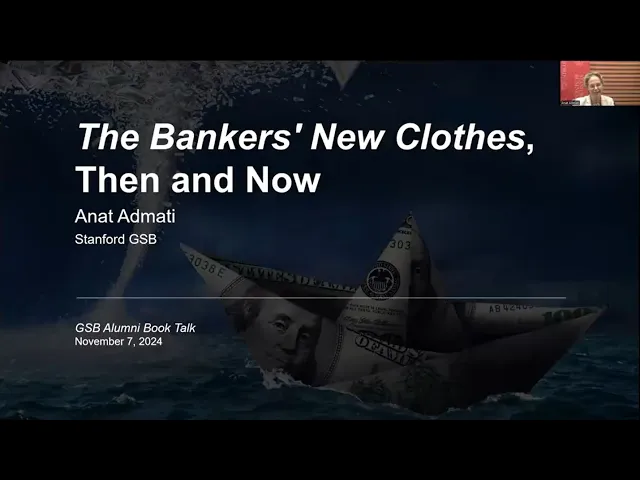
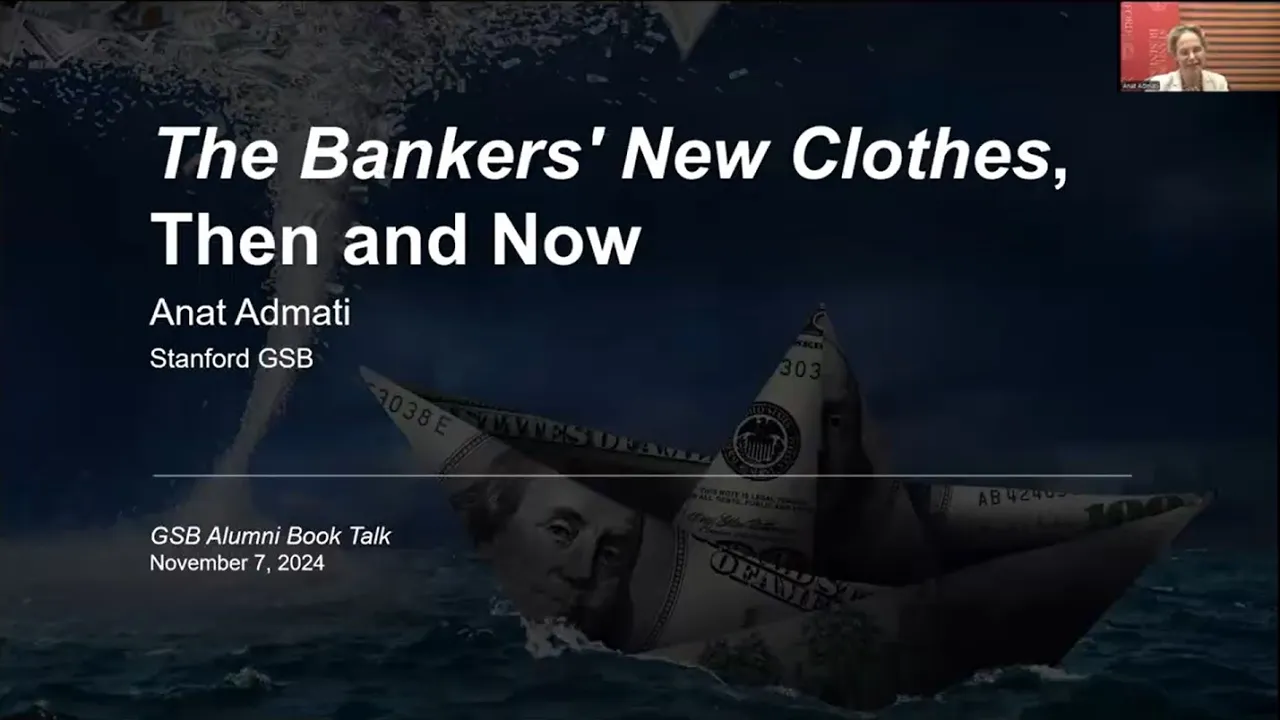
[Music] thank you and uh welcome to all of you from all over I travel all over I had a visit in Amsterdam and various other places recently so and uh the banking is everywhere so the uh issues are relevant we focus more on uh Europe and the US where two of us reside but um the issues are everywhere so here we go uh then and now so the start of this whole adventure of my career uh is the financial crisis of 2007 to 2009 which you know my advancing age means that uh students I teach
sometimes you know were kind of in grade school or something if depending on their age so it was a long time ago uh 15 16 years ago whatever and um but it was a a mark of a change in my career from just a sort of your run of the male Corporate Finance uh person um to kind of realizing something kind of wrong with the system and asking a lot of questions there were a lot of bailouts I have slides with headlines about you know Leeman brothers and all of that but the lasting effect was
a housing crisis and and a recession um and here we are and after a crisis like this a lot of people have narratives about the crisis and there was be a little bit of a theme in this uh in my 15 years and and in this talk of Jamie diamon uh and and and really with the with a maybe the the quip that you know I may be influential but I don't have as much power as Jamie Diamond so that's a bit of a theme here uh in terms of who has you know uh Power
whatever they say even if it's wrong uh and I have exchanged views with Jamie Diamond himself so Jamie Diamond's narrative about the crisis essentially is stuff happens he told his daughter that a crisis just happens every few years and it matters what narrative you tell because the issue is you know is it Like An Earthquake and you just send the ambulances is it like a natural disaster or is it preventable uh and that was the question a lot of people asked because if it's preventable how should we prevent it because it wasn't that much fun
uh and recently we had a little flare up so occasionally this stuff kind of comes into the front like Silicon Valley Bank First Republic Bank credit Swiss in Spring 2023 which is why by the way Al the book was intended to be in 2023 but it only came out in 2024 uh because of these events because we had to include them in the book instead of warning that they will happen they actually happened so we took more time until last summer to to write and then it only appeared in early 2024 so the other narrative
in banking is often time includes the word liquidity or panics and runs so liquidity is like in the plumbing I'll talk a little bit about what that means and runs is like from the movies so we'll talk a little bit about that you know so often time you know the the academics and the people involved are just really liking the word liquidity in banking so it's always in the plumbing in the plumbing now uh even before you know they finished with their reforms or they finished even with the investigation of the narratives and why we
had a crisis in the US there was a dodf Frank act which was a massive big law and in the signing of that law Barack Obama the president promised here's a signing s signature with Nancy Pelosi is still around uh da and Frank were uh from the house and and Senate and he said no more bailouts in fact he said no more bailouts period and there was nearly two minute Applause if you watch that scene it people didn't like the bailouts and he promised no more six months after the signing of Dodd Frank there was
an inquiry Commission and the majority report of this commission essentially analyzed the causes of the crisis no policy recommendation unlike you know the Vicor Commission in the UK um and it basically said that the financial crisis was avoidable that it basically reflected um failures of government and governance uh and governance is basically the theme of everything I'm interested in I was interested in corporate governance before and that was all about Boards of directors and shareholder managers and all of that but I now view the governance as much more of a broad issue about all institutions
public and private sector alike and governance is fundamentally about the power people have the constraints on that power the information they have and the incentives they have and then how the system deals with the fact that some people have more power than others some people have more information than others and some people have incentives that might include harming others in a book about the crisis again in a narrative Michael Lewis who wrote a book about the um culture in banking called liars poker back in the 80s um wrote this in the epilogue so his reflecting
back on liar poker he wrote other books about sports and whatever he said from the moment in 81 when goodr took Solomon Brothers from a private partnership into Wall Street first public corporation the Wall Street firm became a black box so he's complaining about the opacity of the risk the shareholders who financed the risk taking had no real understanding of what the Risk Takers were doing as risk-taking grew ever more complex their understanding diminished and then he gives the following analysis towards the end the problem wasn't that lemon Brothers had been allowed to fail some
people said it should have been bailed out the problem was that it had been allowed to succeed so he's agreeing with the narrative that it was prevented that Leman Brothers shouldn't have gotten to the the point where we had the Stark choice of bailing it out uh or letting it fail and the consequences of that I'm skipping over three years in which I got into this debate and I wrote this book you'll find many many you know phases of this book um here's one by Jean f um a Noel laurate famous Professor in Chicago still
still around must read for concerned citizens the bankers new Clause should be studied and memorized by lawmakers and Regulators so they won't be duped by false claims in the future I'm going to get back to the false claims the naked Emperors and all of that later on first I'm going to do some actual teaching of the economics of it uh here's Martin wol review of the book saying banks are not special this was basically we were trying to teach about corporate finance and banking in the book completely accessibly no jargon you can be a reporter
a politician a policy maker these are the people I saw didn't understand didn't take an MBA got confused or maybe people who got an MBA also got confused banks are not special except for what they're allowed to get away with in other words they always tell you banks are so special special in this very way is really what's going on here the model is intellectually brandr he said and he was a member of the Vicor commission all of that and still writes the reason uh that this is not more widely accepted so why I have
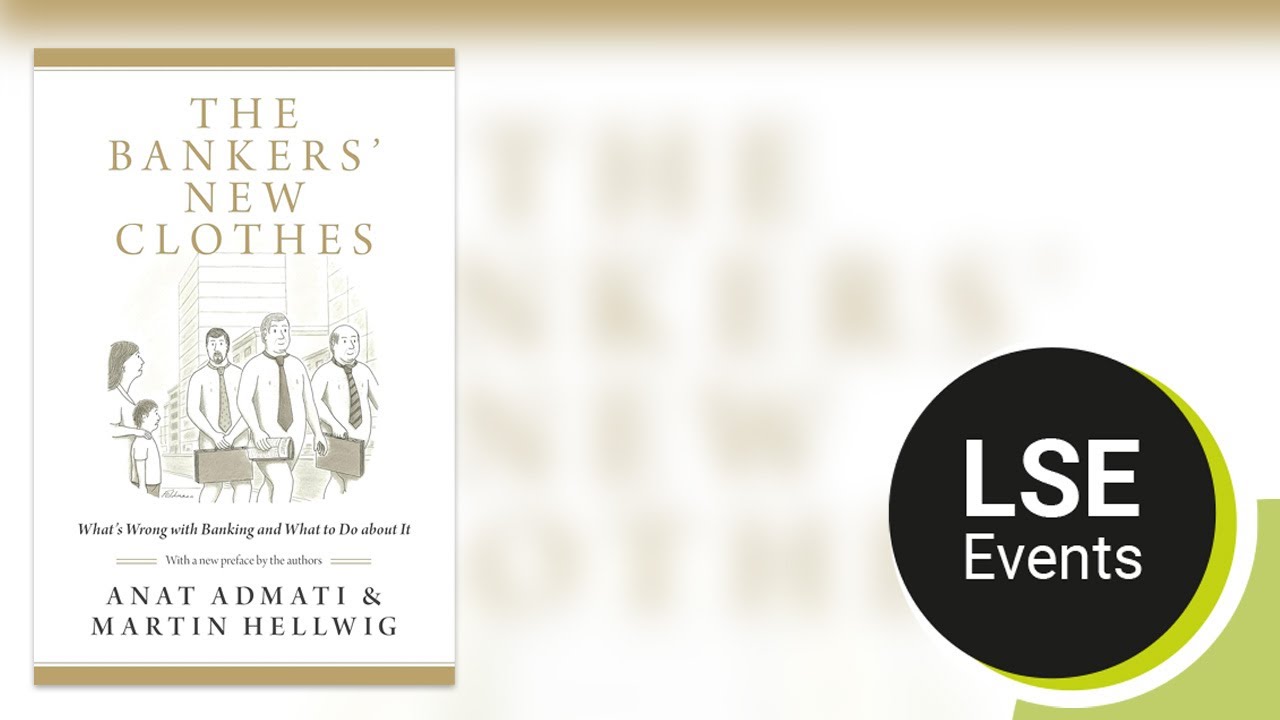
no power no influence or not enough anyway okay I have influence maybe I'm hoping uh is and he gives two reasons here Bankers are so influential so it's about power and the economics are so widely misunderstood so I'm going to try to clarify the economics of it and then we're going to get to the politics of it and the power of it and other things so this is the book in 2024 which is basically the the old book uh with the table of content on the right and uh or with the left whatever whever you
see it left actually and then next to it is the added four chapters uh with the title undermining democracy and the rule of law so I'm going to end with that and it explained why the system is still too fragile it explains a lot more than we did in the old well it explains uh how central banks work uh so bailouts central banks and the role of different institutions I'll give you a hint of that in a bit and then it talks about why we why we they keep being bailed out and then it goes
to the law so I'm going to give you a flavor all all these issues in the old book in the original book and which is still intact and the new edition um so this is how they look one next to one another I actually brought in so I have them one is thin and one is fat 200 Pages extra in the new edition relative to the paperback of 2014 so the book came in 2013 paperback 2014 one of the uh things we focus on here and explain the economics of of is debt and especially corporate
debt but there's debt at all level there's household debt there's corporate debt there's government debt uh there are some commonalities and some differences between debts of Corporations of Banks and of others households governments let's talk about mortgages just to get into the topic in the book we were told we couldn't get into the topic of corporate debt before we explain a little bit about uh personal indebtedness and here's Kate a ficti fictitional um borrower buying a house with a mortgage and she puts 5% in we have slightly different numbers in the book um 5% out
of of a $400,000 house you can't buy anything for that in the Bay Area um anyway so the rest is Bor money is and we're going to ignore interest right now and time lapsing and a lot of things just to show The Following the magnification of risk form borrowing The Leverage what's called okay so if the houseal goes up by 5% because she gets all the gains and she just returns it so we're doing it kind of instantaneously she returns the money and she keeps twice she keeps another 20,000 which is a 100% return on
the original 20,000 so because it sort of gets magnified uh from 5% to 100% on the upside and if the house goes up by 10% she triples her money from 20 to 60% and that's a 200% return on her investment now it doesn't look so pretty on the downside because if the house goes down by 5% then she lost all her $20,000 already and if the house goes uh down by 10% she's what you can call underwater so underwater is the analogy of sort of insolvent institution um meaning if she sold the house she couldn't
pay the mortgage now it depends on the terms of the mortgage whether she can walk away like corporations can limited liability and can leave the house to the lender or she still uh you know uh must pay it out of her other assets uh but um but in any case the house itself will not cover uh the mortgage because it's worth 360 and she owes 380 so that's the underwater situation okay now if she defaults meaning she promised an payment and she's not paying then uh it could be for different reasons and that's where we
get into the word liquidity you might not pay or debts because you have some Assets in some Far Away country and in order to pay your debt in cash you know write a check make a transfer you you need to have access to that cash and maybe your asset is a liquid it's a piece of land or something like that so you might have just a temporary liquidity problem because you have to convert your assets to cash and so if you can't do that then you might default but uh that's sort of one type of
problems but you might actually have a most serious problem which is a solvency problem which is you you sort of can't pay now you might go to Las Vegas if the dead is not do yet and gamble everything away and maybe you will be able to pay but you know today under normal circumstances you're kind of unable to pay that's like Kate being underwater she can't pay with the house anyway uh so if she just uh you know didn't come up with the money she will default now it's important why there is default so they
always like to say that Banks get in trouble because of liquidity problem when in fact they may very well have solvency problems solvency problems are very challenging because an insolvent borrower if they don't default are very unhealthy that's where we're going to get to the concept of zombies Etc and because they still have control of the of some assets and they can harm the creditors or Society so solvency problems are serious and they may themselves create liquidity problems as they do in banking when the depositors run so Banks start with you noted the color coding
of my house uh I didn't want to present balance sheets because the lay audience doesn't understand balance sheet but we did present balance sheets in the book that equity and the houses an assets so uh for corporations we know what balance she are you're all MBA students so you've learned accounting um and then for banks deposits are on the liability side so they are debt colored red and I colored equity yellow H green okay so the interesting thing about deposits is there are a few special things about deposits in particular that people can get their
money out any time on an ATM or in a bank transfer they can use them for payment so but they to the bank there are debt that they have to be ready to pay uh you in cash uh when you want now Bank runs are an extreme case of liquidity problem when everybody wants their money at the same time and why might that be well either they really suddenly need it but that usually is predictable or they might be worried that the bank can't pay them or that other people will get the money before them
now if the bank is really solvent it's very rare that just suddenly you know they everybody wants their money and then the bank's assets are liquid and they can't fulfill it which is what you might say um but you know that's very unlikely that happens in the movies okay uh in mered Poppins or in It's a Wonderful Life I'll give your wonderful life in a second um that there was a sudden run over a healthy Banks usually it comes from solvency problems but the history of banking had a lot of runs and you know we
can delve into why banks are always fragile because they kind of want to be and they get away with it um but over the years we gave more and more safety nets to the banks so people don't have to worry about their money we gave Deposit Insurance we added central bank so I'm going to talk about all the safety nets in a second and they kind of you know they were good until they are a bit excessive uh as they are in banking and now we kind of took care of it we told depositors not
to worry here's from the movie It's a Wonderful Life here is George Bailey you know who who was you know this is a movie from the 1940s uh saying you know your deposit are invested in the mortgage of your neighbor what am I going to do for clothes on them in other words it's IL liquid and then in the movie he reaches into his pocket then he pays them that's as if Jamie Diamond was going to pay the depositors of JP Morgan Chase not going to happen today but in the movies there was a hero
and he didn't want to liquidate the houses and he or foreclose on the houses somehow and he paid out of his own money and everything was great in the end we created Deposit Insurance in after there were a lot of Bank RS in the Great Depression and the there was a bank holiday all kinds of problems happen in the US we create Deposit Insurance in some countries um Deposit Insurance is just in the government uh or implicit where people believe that the government will cover their deposits up to a limit uh right now officially the
limit in the US is $250,000 but well in svb they bailed everybody out and they do so I'm I'm going to mention that in a second fdac is also instead of a bankruptcy which is a legal process for people who can't pay their debt um FDIC resolved failed Banks and they keep talking about resolution and bailin and all this which is what happens in bankruptcy to corporations they just restructure uh in banking they basically also kind of settle sell the assets whatever else uh and FDC kind of supervises its a regulator now this thing that
the deposits are debt in one of the most ridiculous claims in terms of nonsense I'll bring what up a something that John stump the CEO of w Fargo where my money was at the time in 2013 right after the book came out said to a a journalist because we have a lot of self-funding with consumer deposits we don't have a lot of debt I had deposits with him so he seemed to have forgotten that he owes me the money and the ridiculous thing about this is that you know they have a lot of debt including
in deposits but the deposit Deb in particular doesn't feel to them like debt so they can be very heavily indebted but unlike other board it doesn't feel like they're indebted because depositors are so passive as creditors they leave it to The Regulators to take care of the risk and of how much Equity there is and all of that so in the book right now we explain about central banks central banks create money but Banks do not create money the balance sheet of central banks is really a bizarre thing because they say that the bank notes
we explain all of this in the book uh that the bank notes the the cash is is like their liabilities but in fact they can print them so in banking what ends up happening between the deposits and other debt they are indebted to the guilt no Corporation lives like this they can have you know and it's allowed they're allowed to be to have single digit amounts of equity depends how you count and off balance sheet beyond belief so you know most corporations don't choose with no regulation to have so much debt so a lot of
high-tech companies just fund with Venture Capital Equity uh but Bank just permanently live like that I can go through the whole economics of funding but I'll just show you that historically Banks had a lot more equity and certainly before the safety nets 25% Equity uh whatever mid 19 century Banks were private Li were Partnerships with 50% equity and unlimited liability meaning the owners had to pay depositors if the bank couldn't and after the 1940s they became limited liability corporations sometimes they had double and triple liabilities so they were the last uh kind of organizations to
become limited liability and as the safety nets expanded after you know in the last decades uh they wanted to and got away with having much less Equity so for example Barkley's Bank 92 to 2007 had this deposit funding this much money market fund funding which are just kind of Institutions that came in between we gave our money to money market funding and they lend it shortterm to the bank and other debt so all of this is various shades of red and you can see the balance sheet growing of Barkley is a UK bank and if
you strain your eyes you see a little bit of equity so you can see that Barkley is entering the crisis of 2007 to9 was very fragile and so were the other Banks uh the system became incredibly complicated so to see through it you will need a magnifying glass and you will not understand all the money slashing around I won't go through it this is just from an IMF but there are many many pictures of how complicated the system is and what can happen in this kind of system is you have a fragile institutions very connected
through contractual uh links and other ways to many other institutions like money market funds like the you know derivative markets all kinds of other things like that and then if they lose their Equity then you have a contagion mechanisms we call them banking dominoes that take down the system and here you have Uncle Sam bailing out the banks so why don't they have more Equity well they have a mantra that Equity is expensive but they keep sort of forgetting expensive to whom so if they are subsidized so that Equity is expensive for them who's providing
those subsidies and who is the Equity that that they hate so much expensive for um so and then why is it not expensive for other corporations that you know don't have 5% equity on a regular basis they could lever more they could you know do a buyback uh you know and and and and pay themselves dividends U Etc here is the extreme example what if our B Claire had a very wealthy Aunt Claire and Aunt CLA said Kate go to the bank and and ask them to uh lend you money to buy a house and
tell them that I'll pay if you can't now Claire can go to the K Kate can go to the bank and say look my aunt is guaranteeing she's very rich so I will pay you for sure the bank gives her a cheap loan because it's riskless debt to the bank there's no chance she will default it doesn't even need down down payment from her so she buys it with all red all debt no Equity Mortgage and why should she buy a small house she wants to buy a big house now she doesn't need any cash
of her own and the bank will give her money as long as her aunti is good for it and she gets the upside we call it Arbitrage in the rest of Finance uh she puts no money in and she takes the upside and walks away from the downside now she tells her aunt that Equity is expensive she can take the money and and put it in treasuries or you know something safe and get a sure return and not expose it to any risk of the house going down um so um she prefers to put zero
equity in the house now the banks have Uncle Sam so this is our cute transition in the book from Aunt CLA to the guarantees of the banks the safety net and the safety net comes in many form if you have Deposit Insurance all of a sudden in a crisis they you know they set up to 100 and all of a sudden it became Infinity everybody got insured they start giving guarantees to non- deposit debt I'll tell you an example in a second they enter loss sharing agreements with the buyers of the banks and so Deposit
Insurance can act as a way to prevent theault uh more in more than the way it was intended or is supposed to now the treasures these are taxpayer money can get involved to invest in the banks or to take over the banks so in the US they called it tarp it was a bailout or you bail out you know the Greek government and the Greek government pids the banks you know in the Greek crisis so there are all kinds of indirect ways to bail out the banks uh in covid they bailed out you know all
kinds of people and the banks set in the middle they B The Government Can nationalize they don't like to do it in the US but they did it in a number of European countries in UK or the government can tell the s Central Bank to make certain loans risky loans and they'll back them up they did this in covid and they did it again after svb the central banks are there as kind of the Banks Banks and they can give liquidity support so they are what's called lender FL Resort but the loans that they give
can become subsidized and low interest loans like that happened in Europe they'll give them 1% loans uh or they go in and buy assets and the reason they do this is because they can and want to so they can grow their balance sheets from you know under a trillion in the US to 4 trillion after you know the financial crisis to 9 trillion after covid the Federal Reserve our Central Bank ECB same they can lower the interest rate what's called Greenspan put or banka put or Janet Yellen put or whatever um so all of a
sudden they make things they're boring cheaper and then in the US we have all kinds of other lenders of Last Resorts all kind of other guarantees that step into the system to kind of you know prefer certain things or guarantee certain things here's just one example in the financial crisis the FDIC started a program that just like Aunt CLA told all the banks including banks that didn't have deposits that just became Bank holding companies what's called in the US Goldman Sachs Morgan Stanley and of course JP Morgan Chase all of them told them go raise
money in markets we'll guarantee it with the FDIC this was Raising Bonds in markets and then what happened they went and of course they could raise bonds with the guarantee of the FDIC and then they paid back the treasury for all the bailout money that they received from Treasury and everybody said oh how wonderful why did they want to do this because the treasury program that gave them money put a little bit of restriction on on dividends that they could pay out or on salaries of Bankers they didn't like that they wanted to go back
to paying dividends and depleting their equity and so they paid it back with a program that had no strings attached and then they paid back and everybody said look at how the bailouts work they paid back so here's this concept of zombies it's a box that says don't open that inside I don't want you to overt your eyes seeing a zombie uh but zombie are insolvent uh corporations or in so you know underwater basically they don't default so we don't NE necessarily know that they are insolvent but in banking they can persist most zombie corporations
that become insolvent can't last long because their creditors will worry but in banking the creditors can stay passive and not do anything if The Regulators don't do anything then they can live and this happened in the Savings and Loan in the US and this is potentially happening right now because you support sick Banks this happened in Europe which is why the banking system was so dysfunctional for many years after the crisis never actually you know making them healthy and they can do this while pretending on balance sheets to be safe or to be solvent this
is cartoon that says don't worry it's done under the Gap you know accounting standards that we teach in our accounting courses here different accounting system in Europe so KPMG the audit company didn't raise any Flags about all the banks that failed here didn't say anything was wrong with them even though as we show in the book and many people showed you know Silicon Valley Banks signature Banks First Republic Banks were completely insolvent for months before and it was in front of you especially for first for Silicon Valley Banks they had bonds that lost in value
and they didn't have assets to pay their debts until people realized this and started running these are two clever smart Savvy investors one of them was the FED government who basically say Banks disclosures are no good I was in Davos with Paul singer from Elliot management and he said I can't understand the risk you read their disclosures you don't understand anything so just whatever numbers you see you're not getting into it because there's so much off balance sheet and so much hidden in derivative in the book we analyze the balance sheet of JP Morgan Chase
and you know I won't go through all the details but you know there are a few noteworthy things this is by two accounting systems one in in us and one in Europe uh in you know we're talking balance sheets in the trillions if people say you know apple is the largest or you know whatever Nvidia is the largest the banks are the largest if you include the debt not by market value where they have so little Equity but by asset value and even without depending on how you do the asset accounting anyway uh the bank
is 4 tril was 4 trillion this 2011 20 two4 trillion in you in in the Europe if it reported in Europe and two and a quarter in the US out of this the loans it made were less than the deposits it took in so a lot of it was trading assets like a hedge fund with a little deposit taking so they present themselves like these quaint you know Savings Banks but what they are big huge trading operations with a little Bank too uh so the Fortress of of JP Morgan Chase at the time in 2011
was sitting on this much Equity he called it the Fortress balance sheet Jamie Diamond this is now comparing Gap 2011 to 2021 so in the decade since we wrote the book and even till 2024 right now JP Morgan Chase grew a lot so when they say no more too big to fail nonsense the bank kept growing and kept growing and kept growing and even now it bought First Republic Bank and by now it's about $4 trillion $2 and5 trillion dollar of deposits a trillion dollars of loans and lots and lots of trading operations and off
balance sheets more than before the crisis you don't even see all the commitments off balance sheet now a trillion is a lot of money these are a, bills tacked up 68 miles high it was 680 miles high if it was a $100 bill stacked up to make a trillion just so you understand how much money that is on the asset side of JP Morgan Chase uh so this is now JP Morgan Chase two and a half trillion dollars four trillions of assets except for off balance sheet so we had a crisis and uh this first
this was March 10th uh where all the Run happened in Silicon Valley and on the 12th which was a Sunday there was a joint statement by treasury Federal Reserve and FDIC saying I'll highlight secretary treasury approved actions by the FDIC to ensure all depositors average deposit size in Silicon Valley Banks was $4 million no haircut no loss from these depositors and they said that no losses will be born by taxpayers it's magic magic everybody will get paid and no losses now the FDIC lost $2 billion on this what's that not taxpayer money well the FDIC
is going to charge the other Banks that's somebody who didn't take that debt so in addition the Federal Reserve announced that it will make loans to all banks overvaluing their collateral pretending that they didn't lose as much as they did lose so there were new programs and I don't go into it here but we explained it in the book and this is what they call no more bailouts they don't like the word bailouts because they're promise not to bail out so you know a a a a blogger you might follow said svb couldn't ignore it
losses but the FED can the FED is going to pretend that they that the banks didn't lose and lend them money so that's like you somebody has a house worth 800,000 and you lend them a bill a million JP Morgan Chas doing great after it bought First Republic awesome to be Jamie Diamond I gave I I teach various courses in the business school and this is a course I called power in finance just before uh all this crisis happened and we gave an assignment on credit Swiss a month before it collapsed and we said in
the assignment you're going to read some stuff about credit switch which is the current zombie and you're going to let's see if they let it fail or not sure enough they didn't let it fail in Switzerland they bail them out in a combination of of their SNB and all of that and I can go into that we go a little bit into it in the book and this investigation talked about how it became a zombie dead Bank walking depends how you do the accounting whether it's balance you Sovereign or whatever so a little bit of
nonsense okay I gave you the nonsense from uh stamp uh but this is what I really fell into this the stamp nonsense was after the book and it's in the new edition uh I really fell in a rabbit hole in 2010 when I started looking into banking as a corporate finance Professor I just wouldn't believe it they were talking about the word capital is a lingo that they use in banking to denote sort of equity they call it a rainy day fund which is like cash Reserve this is just false you know they're confusing two
sides of a balance sheet but this is like they say hold capital and they're confusing cash reserves with and so we explain all this this is so so Insidious it continues to today capital is a rainy de fund which is false but the lobbyists love it because the lobbyist is going to say every dollar in capital is less dollars in the economy the American dream will be over if you ask them to have more Equity funding if you stop their dividends to so much nonsense you know the lobby is coming in 2015 same Playbook rule
will keep billions out of the economy Kate's Equity is invested in the house equities invested in things that's not a cash Reserve in a drawer this is Akerman saying Equity will will have a negative effect for all and here is the honest guy Paul vuler said and we only learned about it after the book was done and now we quote it and I quoted it in Davos including the word just about whatever anybody proposed the banks will claim it will restrict credit and harm the economy it's all and he confirmed that he said that to
a senator okay in a book so now we enter the politics so all how will credit be stopped if you just paid a dividend you could have made a loan with it by now we have a collection published online available to all as ACC company the book 44 different flaw claims and a short debunking okay public you know recently updated we've collected it from 23 up to 44 over the last uh 11 years since the book was written cuz it doesn't matter that you say the Emperors are naked they keep marching down the street they
keep getting away with it why they're the most powerful Lobby in in Capitol Hill and they own the place this is a senator after the crisis right after the crisis this was in the first edition of the book if you want to understand the politics power this is what a lobbyist said after the Dodd Frank Act was passed this was the halftime he said they have time why because they do the lobbying for the law and then they continue the lobbying to you know undo parts of the law to go to the reg to the
say that you know here's just one example okay I mean what I say to my students it's not halftime it's a never- Ending game you know they'll always try to you know reduce it this was one little thing that happened in 2014 after the first edition of the book there was a piece of the law that they didn't like and the piece was basically saying that they couldn't do all the derivative trading on the same balance sheet as the bank City Bank inside City Group group you know the subsidiary that's the bank the deposit taking
institution they like to put the derivatives on the same balance sheet because the derivative counterparties love being ahead of depositors because they'll never lose and City group wrote a piece of a of a sort of basically dropping a part of DOD Frank that was hidden in a m past bill that nobody there was no discussion of this or nothing and Jamie Diamond himself called policy makers to just vote for it with no discussion just as part of a spending bill that would have been a government shutdown if they didn't sign a package deal so they
snuck it in basically so it was just tricks and tricks and tricks to get what they want okay so in the politics of Bankers you know the law the robber said why did you rob a bank because it's what the money is it's I thought it was a lame joke but it's a deep job joke okay the banks are with the Mone is that's what you want to Rob and that's who you want to use guarantees appear free to policy makers Banks seem like a source of funding for what you want not risk so you
ignore the risk uh their national champions when they compete with other Banks central banks hide bail out everybody governments Banks sit in the middle everybody's confused or willfully ignorant so they get away with things I started this in 2010 my battle when I realized what was going on and I was asked by some policy makers to get involved and fortunately I have 10y at Stanford and I put aside everything else and I did it full-time for five years and uh i i b g gave up taking on my previous colleague Ben Beren in an oped
saying where is the courage you had the courage to save but not the courage to stop a dividend in uh Bloomberg posted all my op ads are available PDF on my website uh the nonsense continues this is after the book uh or after we the book was in printing in a hearing in Congress and I wrote a little bit about that again and this is virtually my sign off 44 flood claims nonsense and bad rules persist in banking I have other interests right now in banking they always Kick the Can down the road it's a
you it's a hopeless battle and it's they have many enablers it takes a village comes from the movie Spotlight about all the enablers of sexual harassment in the church there are many people who stand by who benefit who wouldn't speak up including academics it's really been very sobering experience here's RJ Miller saying making money is easy part making the world a better place is a hard part so RJ Miller for you Alam is my hero he understood uh the role of government the role of business in the world and I have I wrote to this
capitalism laws and the need for trustworthy institutions and I have an initiative at the business school called Cassie cooperation Society initiative that was mentioned in my intro we have a lot of events that are not quite view from the top but view from the media from policy makers from uh insightful people and I started uh a program a sister program in a center for democracy development the rule of law on capitalism and democracy anyway I flew through the slides but you know in the debate about capitalism and you know big Mar big government or small
government and all the nonsense that were presented with some false choices about you know socialism totalitarianism versus market capitalism all of that what's really going on is again a lot of confusion there's no markets without rules and the rules have to come from somewhere they might come from you know contracts the but the contracts need enforcement they might come from government they have to come from someplace or we don't have markets no rules no markets the forces of capitalism have basically undermined and overwhelmed our Democratic institutions today so you can have you know the government
controlling speech like in Russia or China and you can go to jail for the truth or you can have free speech like we have here and you know there's still propaganda from the private sector or from government both uh so there's a lot of confusion that can filter into the discourse in in an expanded version of it and in the book we talk about a book called amusing ourselves to death and it's about the public discourse becoming nonsense and so what I say in this diagnosis asked what's gone wrong with capitalism and what to how
to fix it uh in 2021 is that we need to get at truth in the book we end by saying truth needs more power not speaking power to truth but we need to empower truth somehow so that we have the democracy in a system that does not have as much deception in the private sector and in government that distorts our markets and distorts our politics so um that's what I'm searching for uh Alec go ahead and unmute yourself feel free to ask your question oh thanks I I might be cutting the line I meant to
just do the Clapping because I loved it but I'll try to be quick you know one of your points is about the opacity of financial practices uh what do you think are the right ways to combat that is it more regulation or is it more education or both that's a great great question uh I've been going around actually I met yesterday some a visitor to uh uh to our accounting uh seminar who's a PhD in accounting from here because I've been begging accounting people to come to terms with how difficult it is to capture a
derivative risk especially um in financial disclosures somebody wrote a paper a somebody who was actually a chief Economist in the SEC uh called too a law professor too big to depict and he just meant the in incomprehension that Paul Elliot was referring to Paul singer from Elliot management was referring to that it the there's so much risk in derivatives so those of you uh who who studied in the GSB some of the years that I taught here we did teach more on derivatives um they are basically you know these side bets these contracts that for
example think of a a forward contract we promise to transact in the future at a fixed price today on a balance sheet there's no money transferring hands today so it's zero market value it won't enter a balance sheet at all but there's risk to one side or another so it's very hard to comp to capture certainly in balance sheet but even in income statements and other Financial disclosures uh the risk uh of an entity that that has H you know trillions and trillions in notional values of derivatives so derivative this you know the aggregation of
the derivative is done by um the OCC in the US so there's quarterly disclosures and I talked recently to in Swiss National Bank in a recent visit I no sorry in the Dutch National Bank in Amsterdam I talked recently to somebody who told me that there is data on that my answer to you is we we need to find a way to to capture that risk at least The Regulators must do that when they do all this stress testing and all that they cannot possibly it's such noted thing I once asked the FDIC uh officials
because I was involved in some advisory committee to the FDIC and I got to talk to them and I asked them how do you understand your own exposure to JP Morgan ch's derivative trading in principle you're bearing the risk of $2 and A5 trillion dollars of deposit now the reason they FD I who is in no position to ensure $8 trillion the reason they sleep at night is because the FD the FED is not going to let F JP Morgan ch's default on anything so that's how it really works but um it's a not they
told me the following fact at a given snapshot JP Morgan Chase has a million and this was a few years back maybe six or seven years back a million contracts open a million just get your head around that a million contracts against different counterparties all of them either cancel risk or magnify risk depending so it's really a a very difficult thing uh to figure out especially when it comes to derivative how to capture uh the fragility of an individual bank or the system as a whole uh and I think good Minds need to pay attention
to that and it's just it's just uh unsolved we have the data it just that risk keeps moving in derivative it's a that's a whole thing that it's Dynamic leverage uh UT I'm wondering if you would like to ask about um moving risks or yeah yeah thank you thank you very much uh for your presentation it's very interesting and helpful my question is if we I I hear I often hear the argument that if we Reg Banks then the risk taking will move just move to the non-bank sector that is more difficult more shadow shadower
kind of things so how we can like reduce the risk of regular Arbitrage without like so in my slides there was a was a slide saying these new rules will completely change a cartoon uh these new rules will change the way we get around them so uh so and I was asking in that what's the source of profit is it you know beneficial Innovation I'm skeptical that all Innovations are good you know some say the the like button and social media was not a great Innovation but anyway um or regulatory Arbitrage is just ways to
get around the rules uh or uh or misconduct now to your question when uh when I went to DC to talk about the new edition of the book you know earlier in 20124 this question kept coming up even when I met policy makers in in Washington Shadow Bank Shadow Banks it's it's one of the 44 flood claims activities will run to the Shadows I have two two answers to that one answer is let the Thousand Shadow Banks Bloom you know you can make loans out of any money I can have an all Equity you know
Venture fund and make loans we now have a lot of private credit and is that good or bad it turns out that a lot of institutions in the shadow lending and there's a study by one of my colleagues that when you have mortgage lenders that are not Banks they have a lot more Equity like 20 25% and they're funded in markets not with deposits and they're not regulated like Banks so maybe they're less fragile maybe fine the problem remains that the big Banks if they don't make loans they're just gambling and they have this cheap
funding so they that remains a problem the're too big to fail institutions so when people come to me and say I'm going to start such an ethical good bank I said Jamie Dam's going to eat you for bre break you know that's the problem is they're so privileged and we all like our money safe and it's safe in JP Morgan Chas because it's too big to fail so on the shadow banking I think that you know we need to tailor the regulation to what's risky if banks are taking deposits and depositors are are passive then
we must regulate deposit taking institution we're giving them enormous privilege and access to central banks and that is something that you know we must do they must be respons when they're so privileged and they're not they're just not um so the shadow Banks some of them don't bother me as much uh some of them and this is my second part of my answer and that's important too if you trace Shadow Banks you find the Banks so what ends up happening is that in the way they're layered in the regulatory Arbitrage of the banks they are
funding the shadow Banks and often time I'll give you an example from the crisis so in the old securitizations that happened securitization meaning that they took a bunch of mortgages and they put them off balance sheet in a special purpose vehicle in another entity and then that entity issued Securities that were trenched triaa double a etc and they sold these Securities to pension investors and others often time fraudulently presenting them as good that when they were really not and the issuing the the organiz the bank that was organizing it that was doing the securitization they
gave sometimes implicit guarantees to the special purpose vehicle and that meant and so for example newly released evidence from City Group showed and I didn't know this actually until recently that City Bank had $40 billion doar City Bank this is this the insured Bank City Bank had uh $40 billion of commitments off balance sheets to these securitization vehicles that would have gone to the FDIC and made an enormous hole in the FDIC Deposit Insurance Fund should they let City Group fail which Sheila bear the head of FDIC wanted to do City group and Bank of
America were zombies well-known fact during the financial crisis and then the years after their market value was half their Book value they were pretending to be healthy and City Group got bailed out three distinct times including bailout just special for City because Tim gner was completely committed to bailing City out and there's a book of just on city called borrowed time you know boom buston crisis in City Group 200 years of that and so it's a symbol of bailout in the US city group okay and City Group ended up I didn't didn't know this I
thought that it was the Investment Bank that was really insolvent but it was the bank too once you take into account their of balance sheet commitments so uh in other words the shadow banks in the special purpose vehicle the credit default swap the money market funds that were also bailed out they were often connected in various ways to the banking system itself so if you're going to solve this problem you need to regulate the banks first and foremost and follow the money into the shadow banking system and then regulate or not as needed thank you
there's a question here about how students who are going into Finance are uh taking all of this I'm curious as to what reaction you get from JSP students who are pursuing careers in finance um if any remain who are not interested in going into becoming entrepreneurs that's such a great question so I I have friends from within the financial sectors I have friends all over the place the students who go to finance I love them uh they'll go be a little Cog in this machine um you know I my main complaints are to the regulators
and to the academics and to the people who enable it because people will say what they get away with saying so that kind of triggers me less than I mean it triggers me when it interrupts my podcast with stupid ads but and I complain to Jamie Diamond myself on this but uh I my courses are now not listed in finance I teach courses that are very interdisciplinary and they're listed this GSB gen um you know I have people who go in and out of Finance as Cassie leaders my initiative is very much student powered because
I don't have many resources and the student guarantees are the the student volunteers are the ones that fill the events with actual people thoughtful people and I've become much more attached to the students and feel that the faculty are the ones not engaging um I say this to their face so whatever anyway um that a troublemaker so they they know it they if they take my Cass they understand more of it they don't always get it in the finance uh courses if I nudge my colleagues in some courses they do get some perspective like that
or you know even in a real estate course which includes politics so I encourage all my colleagues to include uh issues around Society issues around politics uh and not be afraid perfect and with that we are at time thank you so much not for joining us always a pleasure to have you and thank you everybody for joining us hope to see thank you all feel free to write to me I'm adti at stanf for.edu [Music]