- "Jurassic Park" is probably one of my biggest memories of improvisation. He loves it, you know, and he. .
. I mean, he loves the specific. He's the most prepared person.
He's already cut his movie in his head and gives you all the room. - How does he do both things? - I don't know.
- It's so true. He's already cut the movie in his head, but you don't feel like that. - Yeah.
- You feel like there's just- - Yeah, yeah. - Space, freedom, play, invention, anything goes. (upbeat jazzy music) Hi, I'm so happy to talk to you.
I wanna pull the chair closer. - I know, I know! We need to get closer.
You already gave me the chills. - Because I'm making you be my friend (laughs) and you have to have dinner with me. - That's what gave me the chills.
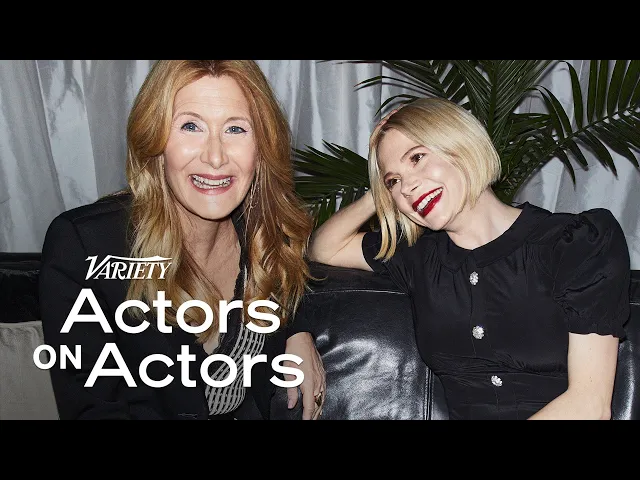
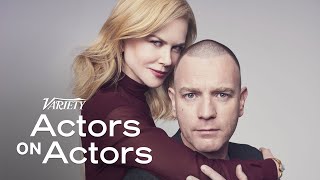
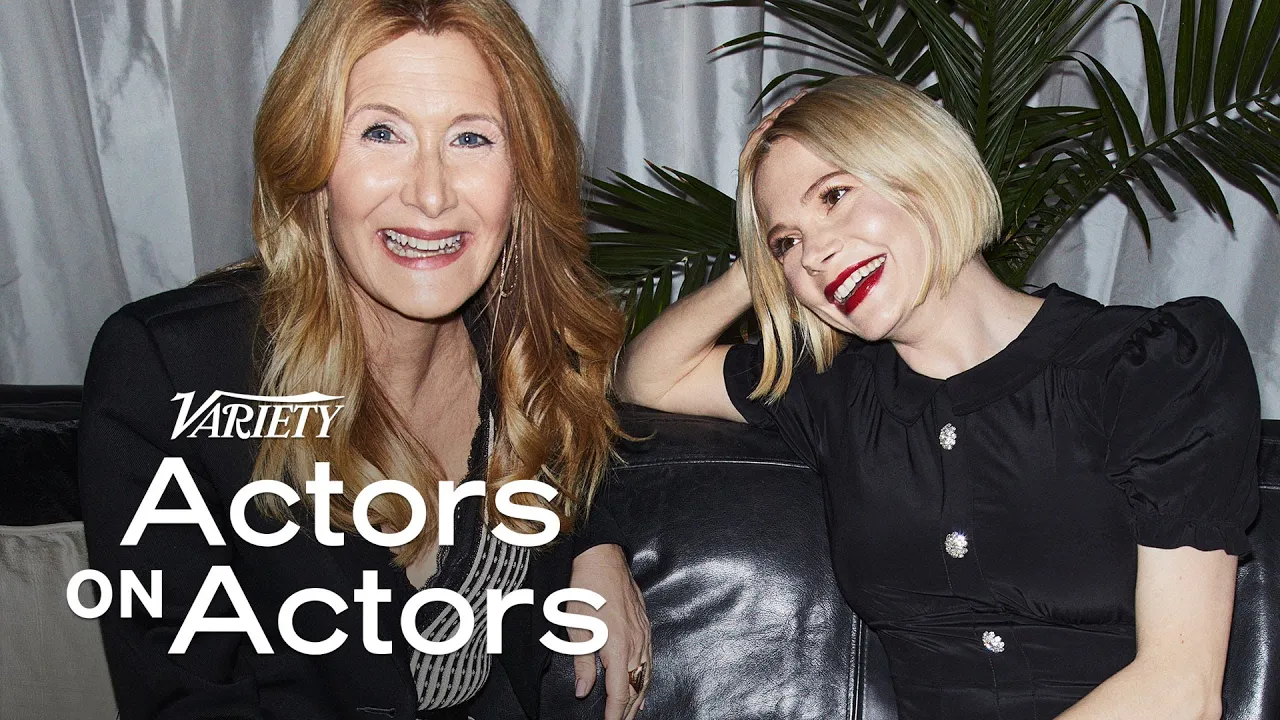
- And I know we share a lot in common, which we'll get into, hopefully, but I just have so many questions about "Fablemans" and I wanna hear from you what it was like, not only working with Steven Spielberg, who we both get to share and love him so much, but playing Steven's mother, Mitski, in the film and just every aspect of it. - It came as such a shock (laughs) to me, really, and when we first Zoomed, I didn't know what was happening. I didn't know why he wanted to speak to me, I didn't know that there was a project, I didn't know anything, and so it was all sort of happening in real time on this Zoom.
He's explaining his life, his life story who his mother was, what she meant to him, and then it dawned on me what he was asking and I said, "If I'm hearing you correctly, (Laura laughs) you want me to play your mom? " And he said, "Oh, yeah, yes, yes. That's exactly what I'm asking.
" And I said, "Okay," and I kept listening and I thought- - Amazing. - -you know, I have worked my whole life to feel able to say yes and ready and capable when that request is made, to say, "I can, and I will, and let's go. " - That's so incredible.
- It was a very emotional day in the household for me, for my husband, for my daughter. Everybody, we were just all so excited. - And I mean, the fact that you allow it to carry the weight that it does, not only as an actor, but as a human, and I'm sure why he would come to you, because I had the privilege, I mentioned to you, of knowing his mom, and she was such an incredible person, and the light- - What a light.
- -that she carried, the way she entered every room and the way she championed everyone in the room at all times is held so profoundly by you in your performance, but you carry that as a person. You can feel it. I get to feel that from you whenever I'm in any space or just watching your work.
So I just love that he found someone that felt so safe to take on his soul-healer mama person, you know? Like what an intimate thing. - One more thing, Dolly.
Let's not tell your father. It'll be our secret movie, just yours and mine. Every woman that you get handed, you have this soul contract with, you know, this responsibility too, right?
- Yeah. - Like every person that you're entrusted with and the way that they get to live in you and the way that you sort of speak for them or they speak through you, whatever that is, but to be handed somebody's beloved mother and to be close to that kind of. .
. I mean, when we finished that and like she left me and I left her, I felt bereft. There was so much to learn from her about how to live your one wild and precious.
There's just so much to learn, because everybody who knew her says what you say. - One thing that Steven and I always shared, my mom being an actress and larger than life, and he's known my mother for years, is how lucky we are to have these kind of enormous mothers who also love so fiercely, and sometimes the perception of that energy is also. .
. It's a lot, or they're crazy, or they're. .
. But the fine line between brokenness and broken open- - Oh. - -which you do so beautifully in this movie, also speaks to living that kind of life.
- In telling the story truthfully, he never wanted to expose the person that he loved to judgment, to expose her most sensitive place, the thing that really haunted her her whole life, this act, but when you're trying to reveal who this person was to you without exposing them to it, to judgment or to criticism in their very vulnerable place, how do you do that? Like how do you hold something carefully enough? And I know for me when I read it, I never judged her.
I didn't see the possibility for that. I just saw, wow, they've really let this person breathe, which you're so familiar with from your own upbringing, from the way that you live. When you live a liberated life, you give that to your children passively.
It's not even a lesson that you have to teach them, it's just a gift that you hand them, I think. - That's so beautiful. - Right?
(inspirational music) - She should've been a concert piano player. What she got in her heart is what you got. - [Burt] You can't just love something.
You also have to take care of it. - Did you feel passionately about acting when you were young? ' Cause we both started- - Yeah.
- -so incredibly young. - You were 13, 14? - 12.
- 12, I was 11. - [Michelle] You were 11. - Isn't that cr.
. . I mean, that's crazy.
- It's crazy. It's crazy when you think about your own children. - Yeah.
- You think about them being in these environments and you think, "Well, no. " - No, never. - Never, never.
Not in a million years. - I don't know if you've had the conversation yet, but Jaya's interested, and I'm like, "We can talk about it when you're 18," which I remember my mother saying to me. - And then, what did you do?
(both laughing) - If you're going with the guy, you can use diaphragm, 'cause you got an idea when you're doing it, but on your own? Better stick to the pill. How was working with Gabe, who is playing young Steven Spielberg?
Had he made films before? - It's so wild. I had said this has taken me my entire life to be prepared for, and he was 18 and he walked on that set with no insecurity.
He was so confident, and Spielberg's giving him direction and he's challenging it at times. - Yeah. - And I'm like, "Just say yes.
Just say, 'Yes, sir. '" Just say you're gonna go in and give it a. .
. " He was like, "Well, I don't know if I woulda. .
. " I said, wow, that is a, that is a bold. .
. And Steven loved it, too. He was like, "Oh, okay, yeah, now that you make me think.
" And the first day that I saw him on screen, I just saw all these choices and this really bold performance. He was just laying down these big strokes and I was like, that's so impressive. - We got like 40 guys coming to be in the movie.
I'll work on all the camera stuff on Monday. - I'm asking you to do this now for your mom, she's- - Yeah, and I said that I will, just not tomorrow. - How do you feel when you work with young performers and knowing that you were there and you've been in their shoes?
What do you feel like your responsibility is to them or how do you feel? - I do feel responsible, don't you? I mean, if a bit maternal, probably, because we were there at that age.
If they're feeling like they have to steer the ship a bit in a film, you know, which he had a massive undertaking to kind of guide it. This boy, Zen McGrath, also 18, had never made a movie. Our director, Florian Zeller, found him on Zoom.
He had seen a tape of his and just knew he was right. But he's playing a boy in a severe mental health crisis and had to be completely broken. What really moved me is that he didn't know the difference that the way he worked was just having to feel it and have it be truthful for him.
It is a journey of kind of transparency and healing and hopefully the undoing of what would feel performative. - Exactly. - But I kind of, when working with a young actor, hope they have enough training that they know how it doesn't just wound them deeply, to be in the pain of a thing.
- Right, right. - And I feel so lucky that I figured out a way to feel grateful for the pain that comes up and watch myself have a new understanding of it instead of just be swallowed by it, but I worried, particularly in the case of "The Son," I worried for him, because he was having to go there and expose, I think, the unspoken, which is mental health, be it anxiety or depression. He was looking at that for himself and for all of us, so I felt so protective.
- How do you take care of your own mental health while taking care of others on the set? In this case a young boy, an 18-year-old boy. How do you take care of your character, yourself, the story, the other people on set?
How do you manage all of that? - Yeah. (chuckles) For my first experience ever, our production hired counseling on set to be available to any crew or cast member.
You go in thinking you're making a movie and you find your connection to it and the other actors do, but it's not often you're part of something where everyone that worked on that film had their own story, because everyone in the world has their own experience with mental health crises, more than ever in the last few years, and it's the shame space that we don't talk about. And so I think because of that, they created an environment where we were all talking all the time in ways I never have on a movie. You know, Zen is doing this for the first time, we're in the middle of COVID.
It was the height of COVID in London where we were primarily filming. Hugh Jackman, who's the kindest person ever. - Yeah.
- I think ever. - Yeah. - I think he's the nicest man any of us will ever meet.
- Truly, truly. - Like, oh my god. And he lost his father in the middle of a film and had to work the next day.
We were in the middle of a film that is about him as a father to his son, but also about him, the son, and all about the dynamic with his father. So every day was about healing, and there I was in lockdown during COVID and my children were in L. A.
, so for me how it manifested was I just put all my worry and how I didn't know to take care of myself sort of onto, ugh, and I can't parent right now the way I want to, which I think is an ongoing battle, journey in being actors and having this great luxury, but also the time that it takes from our kids is so painful. - Sorry, Kate's just here to talk to me about Nicholas. We just found out he hasn't been going to school for almost a month.
- It's not only that, Peter. He's not well. - And all without rehearsal too, right?
Is that right? That- - Yeah. - Yeah, completely unrehearsed, and that's what creates this like, kinetic energetic response between all of you in this eviscerating story about mental illness.
Do you feel like not rehearsing is what sets the space for that, for everybody to be that vulnerable with each other? - I mean, I do love that, and I mean, I've loved both, and it depends on the filmmaker or what's at hand and you know, if it's a huge shot and it has to be done just right. I mean, even the mechanics of it.
Rehearsal feels so comforting. But in the rawness of something, I mean, I love seeing what happens and continuing to explore it on camera. Florian Zeller is a playwright and Hugh Jackman has done so much theater, and they've kept saying how much they always love rehearsing, but how it, to Florian, felt so right for this film.
- [Michelle] Mm-hmm, certainly was. - And I think it was particularly great for the boy, too, that it was all happening in real time. I'd never thought about a scene where, even if you rehearse the entire movie, where discovering something new, take after take, will be so profound at scene that you should definitely not rehearse.
And there's one scene in our movie, which is Hugh Jackman and I are divorced and we meet at a restaurant, and he didn't wanna rehearse that, and it was a 10-page scene and such an incredibly written scene. - Incredible scene. - Oh my god, the writing is so beautiful.
And I really felt so grateful that nothing was rehearsed, just allowing him to even find me in the restaurant and figure out how to sit and the discomfort of ordering drinks, because it's your ex, and how certain lines would be said. And it's such a moving thing to discover later when you just come in with your own emotional life. I was so moved that the character I was playing is such a generous character, but also filled with blame, and I think it's her way of controlling the uncontrollable, which is, if it's my fault, I'm in control of your mental health crisis- - Mm-hmm, mm-hmm.
- -because I did it, which means it's not something I can't fix in you, which was such a education as a parent, but also in hindsight, she was so generous that when we did the scene, I just felt her generosity of wanting to let her ex-husband, who'd hurt her more than anyone, how much she loves him and loved him. - Right. - Which is not something I think comes to mind.
- Nothing comes, yeah. (both laughing) Yes, yeah, yeah, right. Exactly, exactly.
- And so- - You couldn't have planned for it. - Yeah, and the way Hugh heard it and everything. So I was really excited by that.
When you think about it, there was so much joy in our family back then. Did you all rehearse a lot? I mean, I know he does both.
- We didn't do anything. So that first day that you show up, you just sort of cross your fingers and you hope that your preparation has led you down the right path and that you're gonna hold hands and walk through it together, but you just don't know. But it's also exciting, that feeling, and I think that that's probably what keeps it exciting after how many years have we been doing this is is the ability to be surprised and the ability to.
. . Gosh, this phrase comes to my mind, something like, "The rhyme is smarter than the poet.
" So this ability to be to let your unconscious interpretation of the material to guide you in an unforeseen way, that's really what keeps it surprising. - How elated he gets when he has what he needs, Steven. - [Michelle] Has he always been like that?
- Always. Working with Steven on Jurassic Park, I mean, he was inventing with ILM new technology and there was so much to oversee and discover, and yet there was never a moment that wouldn't make him giddy. - Right.
- From a prop working- - Yeah. (both laugh) - -to some wonderful opportunity that an actor offered, and always improvising. (dramatic orchestral music) (dinosaur roars) - When did you discover that our work could be that?
- I did a movie at 15 called "Smooth Talk" that's a very complicated film about a young girl's sexuality. There's ultimately an assault in the film. It was very emotional.
She is emotional throughout the film. It was my first lead in a movie, and I was very unhappy. It just felt like torment.
And it was the first time away from my family and everything on my own on a movie. And the next year I met Sandra Seacat and started working with her at 17. I met her not at all through acting and had this profound experience being around her, 'cause she's so amazing, and then went to do "Blue Velvet" and Isabella Rossellini was working with her, and she luckily let me learn from her and start taking class with her.
Even her daughter, Greta, and I were also in class together, and so it became my family in me learning from them, but also learning together how is there a path to empathy for ourselves and everybody else going through the journey of story and also finding it healing and incredible and a gift, versus torment-based? - Mm-hmm. - And having grown up with young actors my age who had to be tortured to prove they understood torture, it just was perilous and terrifying, and so they changed my life And all of a sudden, thousands of robins were set free and they flew down and brought this blinding light of love.
- And how did you convince somebody to say yes? - To, yeah, get a call saying, "I want David Lynch to play John Ford," I was like, "Oh, he's not gonna wanna (laughs) be in a movie, I don't think. " But he's so determined and asked if I would help with an invitation of a conversation.
It's so wild, because when I worked with Steven, I said to him, "You remind me of David Lynch," and he was like, "Okay, that is crazy. " - Wow. - "How is that possible?
" They're such geniuses in completely different ways, but the way Steven has always, every time David's made something, he's always screened it with so much love, and we made a very radical and inventive movie, this movie "Inland Empire," and Steven was literally the first person to see that movie, and the way he pays tribute to other filmmakers- - [Michelle] Yeah, right. - -and worships their work is unparalleled, as we know. But then, yeah, he so longed to have David play the part, and they spoke.
Then I luckily became a bit of a mediator of promising David he could do it and even got to read the scenes with him and- - No. - -talk about his wardrobe and just listen to the process once he agreed to do it. He goes, "It's so funny.
Steven and I, we realized we were born the same year. " They just realized this as they were working together. I said, "You guys, I've always wanted you to be friends.
You remind me of each other in such completely different ways. " And he said, "It's true. We have a vision, and we have to make our vision, and we make it.
You know, Steven goes out there and he has an idea and he makes it and a million people have that same love of that vision. " And he goes, "It's the same with me. I have a vision and I make it.
" And he goes, "And hundreds of people have that same vision. " (both laughing) But I mean, he worships John Ford like Steven does, so it was really about how to pay tribute to him. But I think now they have a beautiful friendship, which makes me so happy.
- Oh, wow, wow. What a marriage you made! - Oh my god.
- What a marriage for cinema and for their lives. What a Mitzvah. - In making the film, did you think through your own childhood as you were reliving his?
- I've always thought of childhood as being this really fertile time, that if it's done correctly, you can keep drawing from it your whole life. There's a very short period in my childhood that I feel that way about that feels like this is the place that I've returned to. It's evergreen, and it's my childhood in Montana, and the feeling of freedom.
And that's a place that I actually really, truly, what I always want when I work is that freedom. I want to feel like what I felt like when I was a kid, and that's the thing I'm always looking for in between action and cut is just like, how free can I be in this space? How free can I be in this space?
Before you know about life and death, before you know about bullies, before you know about rejection, there's just that kidhood. And I'm always talking to my kids about it and saying like, "This is what I'm here to protect, this part. " - And were you just in wild country there?
- We were in totally wild country. I said to my mom, I said, "I have this memory of riding bareback on a horse and I'm eight and I'm galloping, but that can't be true. " And she said, "Oh no, it is, because your grandfather felt that saddles were dangerous.
He had seen too many people get fall off a horse and get dragged behind the horse because their feet were still stuck in the stirrup, so you were all taught to ride bareback. " - Oh! - I thought, okay.
- That's incredible. - Okay, yeah, I want that feeling again. (laughs) How do you relive your childhood and where does your childhood live in you?
- Well, one place it does live, which for those of us who fell in love with this, the idea of getting to tell stories, is it lived through the love of film. - Uh-huh. - And for me, it was so moving because I saw the artist raising the artist and helping him, guiding him to find that in himself shame-free was so powerful, and so I love that idea, the reliving of how we find our passions, how we find our vocations in childhood, 'cause it's amazing.
And also we all come in contact with the bully or the one who shames or our own insecurities and how we got through it, I think none of us know. - Yeah, yeah. - I don't wanna relive those things, except now I have a few of the one liners I fantasized to say to, well, I won't say her name.
- Do you wanna say them to me? (both laughing) - But to a certain seventh-grade girl, (laughs) I would like to go back now as me and maybe respond differently. - Well, I just wanna say, sitting in a chair and watching you, that is my experience, that is our experience, is being allowed to walk the healing journey with you and to feel that vibration transmitted through the screen, so I just have to say thank you for- - Oh, I feel the same way.
- Yeah. - My god, I feel the same way.