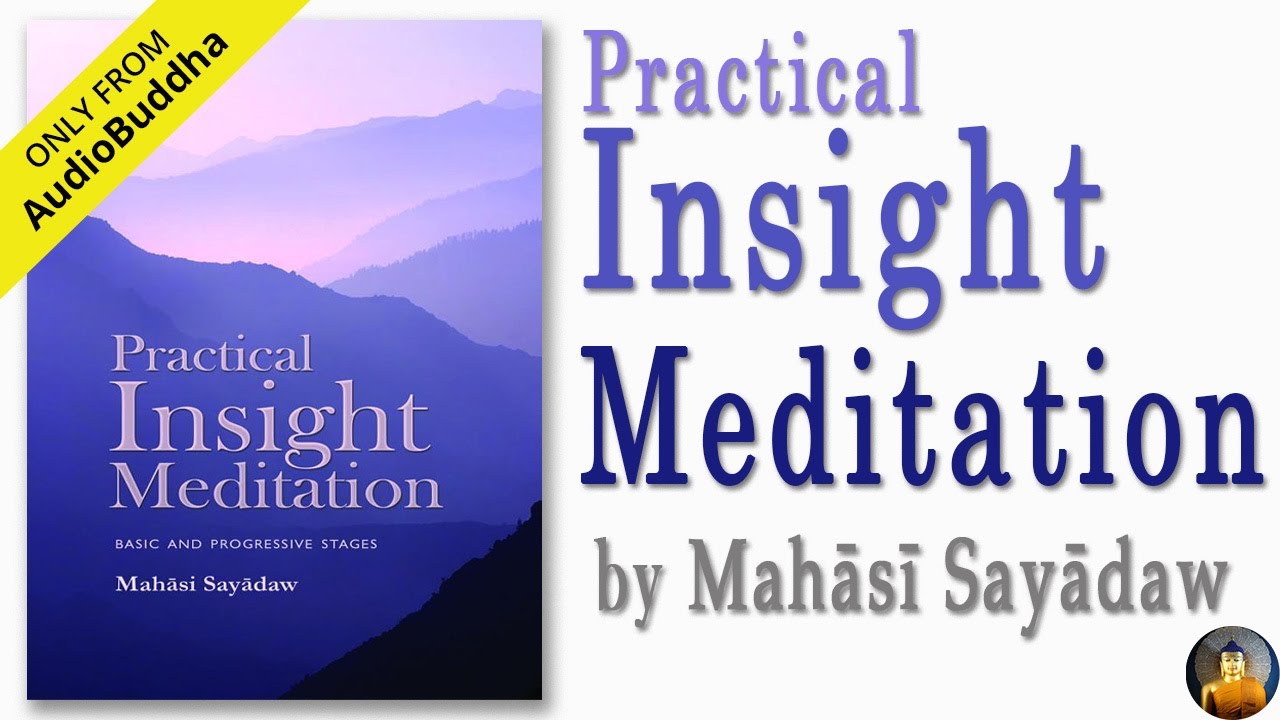
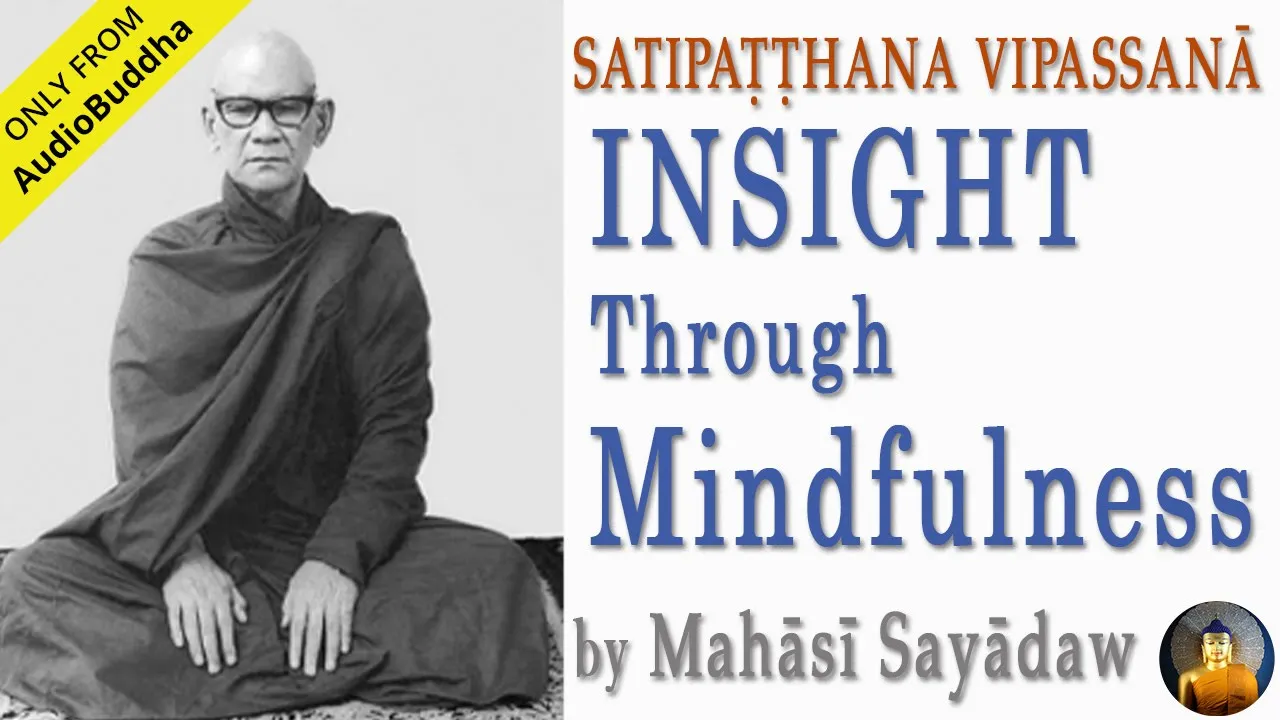
[Music] this is audio buddha audio buddha presents satyapathan vipassana insight through mindfulness by mahasi sayadaw the wheel publication number 370 371 buddhist publication society introduction on the personal request of the honorable you knew prime minister and that other Thundema sir youth win president of the buddhist sasana nagaha association the venerable mahasi sayadaw bhadanta sabana mahathera came down from shwebo to rangoon on november 10 1949. the meditation center at the that hannah yaiktha hermitage road rangoon was formally opened on december 4th 1949 when the mahasi sayadaw began to give to 15 devotees a methodical training in
the right system of satapathenovipasana from the first day of the opening of the Center a discourse on the exposition of satyapath navipasana its purpose the method of practice the benefits derived there from etc has been given daily to each batch of devotees arriving at the center almost every day to undertake the intensive course of training the discourse lasts usually for one hour and 30 minutes and the task of talking almost daily in this manner inevitably caused a strain fortunately the buddhist sasana nagaha Association came forward to relieve the situation with an offer of the donation
of a tape recorder and the discourse given on july 27 1951 to a group of 15 devotees undertaking the training was taped thereafter this tape discourse has been in constant daily use preceded by a few preliminary remarks spoken by the mahasi sayadaw then owing to the great demand of many branch meditation centers of the mahasi Satyapathan of ipasana as well as of the public this discourse was published in book form in 1954. the book has now run into its sixth edition as there is also a keen interest and eager demand among many devotees of other
nationalities who are unacquainted with burmese the discourse is now translated into english up thin translator mahasi yogi december 1957 Namo badassa honor to the fully enlightened one on coming across the teaching of the buddha it is most important for everyone to cultivate the virtues of moral conduct concentration and wisdom one should undoubtedly possess these three virtues for lay people the minimal measure of moral conduct is the observance of the five precepts for bhikkhus it is the observance of the Code of monastic discipline anyone who is well disciplined in moral conduct will be reborn in a
happy realm of existence as a human being or a god however this ordinary form of mundane morality will not be a safeguard against relapse into the lower states of miserable existence such as hell the animal realm or the realm of ghosts it is therefore desirable to cultivate the higher form of super mundane morality When one has fully acquired the virtue of this morality one will be secure from relapse into the lower states and will always live a happy life by being reborn as a human being or a deva everyone should therefore make it his duty
to work for super mundane morality there is every hope of success for anyone who strives sincerely and in real earnestness it would indeed be a pity if anyone were to fail to take advantage of this fine Opportunity of being endowed with higher qualities for such a person will undoubtedly be a victim sooner or later of his own bad karma which will pull him down to the lower states of miserable existence in hell the animal realm or the sphere of peters where the span of life lasts for many hundreds thousands or millions of years it is
therefore emphasized here that coming across the teaching of the buddha is the unique opportunity to work for Path morality and fruition morality it is not however advisable to work for moral conduct alone it is also necessary to practice concentration samadhi is the fixed or tranquil state of mind the ordinary or undisciplined mind is in the habit of wandering to other places it cannot be kept under control but follows any idea thought or imagination etc In order to prevent this wandering the mind should be made to attend repeatedly to a selected object of concentration on gaining
practice the mind gradually abandons its distractions and remains fixed on the object to which it is directed this is samadhi there are two kinds of concentration mundane concentration and super mundane concentration of these two the former consists in the Mundane absorptions such as the four rupa jhanas the absorptions pertaining to the world of form and the four rupa jhanas the absorptions pertaining to the formless world these can be attained by the practice of tranquility meditation with such methods as mindfulness of breathing loving kindness casino meditation etc by virtue of these attainments one will be reborn
in the plane of the brahmas the lifespan of a brahma is very long And lasts for one world cycle two four or 8 world cycles up to a limit of 84 000 world cycles as the case may be but at the end of his lifespan a brahma will die and be reborn as a human being or a deva if one leads a virtuous life all the time one may lead a happy life in a higher existence but as one is not free from the defilements of attachment aversion and delusion one may commit to meritorious deeds
on many occasions One will then be a victim of his bad comma and be reborn in hell or in other lower states of miserable existence thus mundane concentration also is not a definite security it is desirable to work for supramundane concentration the concentration of the path and the fruit to acquire this concentration it is essential to cultivate wisdom there are two forms of wisdom mundane and super mundane Nowadays knowledge of literature art science or other worldly affairs is usually regarded as a kind of wisdom but this form of wisdom has nothing to do with any
kind of mental development nor can it be regarded as of real merit because many weapons of destruction are invented through these kinds of knowledge which are always under the influence of attachment aversion and other evil motives the real spirit of mundane wisdom on the Other hand has only merits and no demerits of any kind true mundane wisdom includes the knowledge used in welfare and relief work which causes no harm learning to acquire the knowledge of the true meaning or sense of the scriptures and the three classes of knowledge of development for insight such as knowledge
born of learning knowledge born of reflection and wisdom born of meditative development The virtue of possessing mundane wisdom will lead to a happy life in higher states of existence but it still cannot prevent the risk of being reborn in hell or in other states of miserable existence only the development of super mundane wisdom can decidedly remove this risk super mundane wisdom is the wisdom of the path and fruit to develop this wisdom it is necessary to carry on the practice of insight Meditation out of the three disciplines of morality concentration and wisdom when the virtue
of wisdom is duly developed the necessary qualities of morality and concentration will also be acquired the development of wisdom the method of developing this wisdom is to observe materiality and mentality the two soul elements existing in a living being with a view to knowing them in their true nature At present experiments in the analytical observation of materiality are usually carried out in laboratories with the aid of various kinds of instruments yet these methods cannot deal with the mind the method of the buddha does not require any kind of instruments or outside aid it can successfully
deal with both materiality and mentality it makes use of one's own mind for analytical purposes by fixing their Attention on the activities of materiality and mentality as they occur within oneself by continually repeating this form of exercise the necessary concentration can be gained and when concentration is keen enough the ceaseless course of arising and passing away of materiality and mentality will be vividly perceptible the living being consists solely of the two distinct groups of materiality and mentality The solid substance of body as it is now found belongs to the group of materiality according to the
usual enumeration of material phenomena there are altogether 28 kinds in this group but in short it may be noted that body is a mass of materiality for example it is the same as a doll made of clay or wheat which is nothing but a collection of particles of clay or flower Materiality changes its form under physical conditions of heat cold etc and because of this changeableness under contrary physical conditions it is called rupa in pali it does not possess any faculty of knowing an object in the abidama higher doctrine the elements of mentality in materiality
are classified as states with object and states without object respectively the element of mentality has an object Holds an object knows an object while that of materiality does not have an object does not hold an object and does not know an object it will thus be seen that the abidama has directly stated that materiality has no faculty of knowing an object a yogi also perceives in like manner that materiality has no faculty of knowing logs and pillars bricks and stones and lumps of earth are a mass of materiality They do not possess any faculty of
knowing it is the same with the materiality which makes up a living body it has no faculty of knowing the materiality in a dead body is the same as that of a living body it does not possess any faculty of knowing people however have a common idea that the materiality of a living body possesses the faculty of knowing an object and that it loses this faculty Only at death this is not really so in actual fact materiality does not possess the faculty of knowing an object in either a dead or a living body what is
it then that knows objects now it is mentality which comes into being depending on materiality it is called nama in pali because it inclines towards an object mentality is also spoken of as thought or consciousness Mentality arises depending on materiality depending on the eye eye consciousness seeing arises depending on the ear ear consciousness hearing arises depending on the nose knows consciousness smelling arises depending on the tongue tongue consciousness tasting arises depending on the body body consciousness sense of touch arises there are many kinds of sense of touch either good or bad while touch has a
wide field of action In running throughout the whole length of the body inside and outside the senses of seeing hearing smelling and tasting come into being in their own particular spheres the eye ear nose and tongue each of which occupies a very small and limited area of the body these senses of touch sight etc are nothing but the elements of mind there also comes into being mind consciousness thoughts ideas imaginings etc depending on the mind base All of these are elements of mind mind knows an object while materiality does not know an object seeing people
generally believe that in the case of seeing it is the i which actually sees they think that seeing and the i are one and the same thing they also think seeing is i i see things the i seeing and i are one and the same person In reality this is not so the i is one thing and seeing is another and there is no separate entity such as i or ego there is only the reality of seeing coming into being depending on the eye to give an example it is like the case of a person
who sits in a house the house and the person are two separate things the house is not the person nor is the person the house similarly it is so at the time of seeing The eye and seeing are two separate things the eye is not seeing nor is seeing the eye to give another example it is just like the case of a person in a room who sees many things when he opens the window and looks through it if it is asked who is it that sees is it the window or the person that actually
sees the answer is the window does not possess the ability to see it is only The person who sees if it is again asked will the person be able to see things on the outside without the window the answer will be it is not possible to see things through the wall without the window one can only see through the window similarly in the case of seeing there are two separate realities of the eye and seeing the eye is not seeing nor is seeing the eye yet there cannot be an act of seeing Without the eye
in reality seeing comes into being depending on the eye it is now evident that in the body there are only two distinct elements of materiality i and mentality seeing at every moment of seeing in addition there is also a third element of materiality the visual object at times the visual object is noticeable in the body and at times it is Noticeable outside the body with the addition of the visual object there will then be three elements two of which the eye and the visual object are materiality and the third of which scene is mentality the
i and the visual object being materiality do not possess the ability to know an object while seeing being mentality can know the visual object and what it looks like now it is clear that there exists only The two separate elements of materiality and mentality at the moment of seeing and the arising of this pair of separate elements is known as seeing people who are without the training in and knowledge of insight meditation hold the view that seeing belongs to or is self ego living entity or person they believe that seeing is i or i am
seeing or i am knowing this kind of view or belief is called sakaya dithy in pali Sakaya means the group of materiality and mentality as they exist distinctively dithy means a wrong view or belief the compound word sakaya dithy means a wrong view or belief in self with regard to nama and rupa which exist in reality for greater clarity we will explain further the manner of holding the wrong view or belief at the moment of seeing the things which actually exist are the i the visual Object both materiality and seeing mentality nama and rupa are
reality yet people hold the view that this group of elements is self or ego or a living entity they consider that seeing is i or that which is seen as i or i see my own body thus this mistaken view is taking the simple act of seeing to be self which is sakaya dithy the wrong view of self as long as one is not free from the Wrong view of self one cannot expect to escape from the risk of falling into the miserable realms of the hells the animals or the petas though one may be
leading a happy life in the human or deva world by virtue of one's merits yet one is liable to fall back into the miserable states of existence at any time when one's demerits operate for this reason the buddha pointed out that it is essential to work for the Total removal of the wrong view of self let a monk go forth mindfully to abandon view of self to explain though it is the wish of everyone to avoid old age disease and death no one can prevent their inevitable arrival after death rebirth follows rebirth in any state
of existence does not depend on one's own wish it is not possible to avoid rebirth in the hell realm the animal realm or the Realm of the petas by merely wishing for an escape rebirth takes place in any state of existence as the consequence of one's own deeds there is no choice at all for these reasons the round of birth and death samsara is very dreadful every effort should therefore be made to acquaint oneself with the miserable conditions of samsara and then to work for an escape from samsara for the attainment of nibana If an
escape from samsara as a whole is not possible for the present an attempt should be made for an escape at least from the round of rebirth in the hell realms the animal realm and the peter realm in this case it is necessary to work for the total removal within oneself of sakaya dithy which is the root cause of rebirth in the miserable states of existence sakaya dithy can only be destroyed Completely by the noble path and fruit the three supramundane virtues of morality concentration and wisdom it is therefore imperative to work for the development of
these virtues how should one do the work by means of noting or observing one must go out from the jurisdiction of defilements one should practice by constantly noting or observing every act of seeing hearing etc which are the constituent physical And mental processes till one is freed from sakai dithy the wrong view of self for these reasons advice is always given here to take up the practice of vipassana meditation now yogis have come here for the purpose of practicing vipassana meditation who may be able to complete the course of training and attain the noble path
in no long time the view of self will then be totally removed and security will be finally Gained against the danger of rebirth in the realms of the hells animals and ghosts in this respect the exercise is simply to note or observe the existing elements in every act of seeing it should be noted as seeing seeing on every occasion of seeing by the terms note or observe or contemplate is meant the act of keeping the mind fixedly on the object with a view to knowing it clearly When this is done and the active scene is
noted as seeing seeing at times the visual object is noticed at times consciousness of seeing is noticed at times the i base the place from which one sees is noticed it will serve the purpose if one can notice distinctly any one of the three if not based on this act of seeing there will arise sakaya dithy which will view it in the form of a person or as belonging to a person and as being Permanent pleasurable and self this will arouse the defilements of craving and attachment which will in turn prompt deeds and the deeds
will bring forth rebirth in a new existence thus the process of dependent origination operates and the vicious circle of samsara revolves incessantly in order to prevent the revolving of sasra from this source of seeing it is necessary to note seeing seeing on every occasion of seeing Hearing etc similarly in the case of hearing there are only two distinct elements materiality and mentality the sense of hearing arises depending on the ear while the ear and sound are two elements of materiality the sense of hearing is the element of mentality in order to know clearly any one
of these two kinds of materiality and mentality every occasion of hearing Should be noted as hearing hearing so also smelling smelling should be noted on every occasion of smelling and tasting tasting on every occasion of tasting the sensation of touch in the body should be noted in the very same way there is a kind of material element known as bodily sensitivity throughout the body which receives every impression of touch every kind of touch either agreeable or Disagreeable usually comes in contact with bodily sensitivity and from this there arises body consciousness which feels or knows the
touch on each occasion it will now be seen that at every moment of touching there are two elements of materiality the bodily sensitivity and the tangible object and one element of mentality knowing of touch in order to know these things distinctly at every moment of touching the practice Of noting as touching touching has to be carried out this merely refers to the common form of sensation of touch there are special forms which accompany painful or disagreeable sensations such as feeling stiffness or tiredness in the body or limbs feeling hot pain numb aches etc because feeling
predominates in these cases it should be noted as feeling hot feeling tired feeling painful etc as the Case may be it may also be mentioned that there occur many sensations of touch in the hands the legs and so on on each occasion of bending stretching or moving because of mentality wanting to move stretch or bend the material activities of moving stretching or bending etc occur in series it may not be possible to notice these incidents at the outset they can only be noticed after some time On gaining experience by practice it is mentioned here for
the sake of general information all activities in movements and in changing etc are done by mentality when mentality wills to bend there arises a series of inward movements of the hand or the leg when mentality wills to stretch or move there arises a series of outward movements or movements to and from they fall away soon after they occur and at The very point of occurrence as one will notice later in every case of bending stretching or other activities there arises first a series of intentions moments of mentality inducing or causing in the hands and legs
a series of material activities such as stiffening bending stretching or moving to and fro these activities come up against other material elements the bodily sensitivity and on every occasion of contact between Material activities and sensitive qualities there arises body consciousness which feels or knows the sensation of touch it is therefore clear that material activities are predominating factors in these cases it is necessary to notice the predominating factors if not there will surely arise the wrong view which regards these activities as the doings of an i i am bending i am Stretching my hands or my
legs this practice of noting as bending stretching moving is carried out for the purpose of remove ing such wrong views mind depending on the mind base there arises a series of mental activities such as thinking imagining etc or generally speaking a series of mental activities arises depending on the body in reality each case is a composition of mentality in materiality mind based Being materiality and thinking imagining and so forth being mentality in order to be able to notice materiality in mentality clearly thinking imagining and so forth should be noted in each case after having carried
out the practice in the manner indicated above for some time there may be an improvement in concentration one will notice that the mind no longer wanders about but remains fixed on the Object to which it is directed at the same time the power of noticing has considerably developed on every occasion of noting one notices only two processes of materiality and mentality a dual set of object materiality and mental state mentality which makes note of the object arising together again on proceeding further with the practice of contemplation after some time one notices that nothing remains Permanent
but that everything is in a state of flux new things arise each time each of them is noted as it arises whatever arises then passes away immediately and immediately another arises which is again noted and which then passes away thus the process of arising and passing away goes on which clearly shows that nothing is permanent one therefore realizes that things are Not permanent because one sees that they arise and pass away immediately this is insight into impermanence then one also realizes that arising and passing are not desirable this is insight into suffering besides one usually
experiences many painful sensations in the body such as tiredness heat aching and at the time of noting these sensations one generally feels that this body is a collection of sufferings This is also insight into suffering then at every time of noting it is found that elements of materiality and mentality occur according to their respective nature and conditioning and not according to one's wishes one therefore realizes that they are elements they are not governable they are not a person or living entity this is insight into non-self on having fully acquired these insights into impermanence suffering and
non-self The maturity of knowledge of the path and knowledge of fruition takes place and realization of nibana is one by winning the realization of nibana in the first stage one is freed from the round of rebirth in the realms of miserable existence everyone should therefore endeavor to reach the first stage the path and fruit of stream entry as a minimum measure of protection against an unfortunate rebirth The beginners exercise it has already been explained that the actual method of practice in vipassana meditation is to note or to observe or to contemplate the successive occurrences of
seeing hearing and so on at the sixth sense doors however it will not be possible for a beginner to follow these on all successive incidents as they occur because his mindfulness concentration and knowledge are still very weak The moments of seeing hearing smelling tasting touching and thinking occur very swiftly it seems that seeing occurs at the same time as hearing that hearing occurs at the same time as seeing that seeing and hearing occur simultaneously that's seeing hearing thinking and imagining always occur simultaneously because they occur so swiftly it is not possible to distinguish which occurs
first and which second In reality seeing does not occur at the same time as hearing nor does hearing occur at the same time as seeing such incidents can occur only one at a time a yogi who has just begun the practice and who has not sufficiently developed his mindfulness concentration and knowledge will not however be in a position to observe all these moments singly as they occur in serial order a beginner need not therefore follow up On many things he needs to begin with only a few things seeing or hearing occurs only when do attention
is given to their objects if one does not pay heed to any sight or sound one may pass the time without any moments of seeing or hearing taking place smelling rarely occurs the experience of tasting can only occur while one is eating in the case of seeing hearing smelling And tasting the yogi can note them when they occur body impressions however are ever present they usually exist distinctly all the time during the time that one is sitting the body impression of stiffness or the sensation of hardness in this position is distinctly felt attention should therefore
be fixed on the sitting posture and a note made as Sitting sitting sitting sitting sitting is an erect posture of the body consisting of a series of physical activities induced by consciousness consisting of a series of mental activities it is just like the case of an inflated rubber ball which maintains its round shape through the resistance of the air inside it the posture of sitting is similar in That the body is kept in an erect posture through the continuous process of physical activities a good deal of energy is required to pull up and keep in
an erect position such a heavy load as this body people generally assume that the body is lifted and kept in an upright position by means of sinews this assumption is correct in a sense because sinews blood flesh and bones are nothing but materiality The element of stiffening which keeps the body in an erect posture belongs to the group of materiality and arises in the sinews flesh blood etc throughout the body like the air in a rubber ball the element of stiffening is the air element the body is kept in an erect position by the air
element in the form of stiffening which is continually coming into existence at the time of sleepiness or drowsiness One may drop flat because the supply of new materials in the form of stiffening is cut off the state of mind in heavy drowsiness or sleep is bavaga the life continuum or passive subconscious flow during the course of bavanga mental activities are absent and for this reason the body lies flat during sleep or heavy drowsiness during waking hours strong and alert mental activities are continually Arising and because of these the air element arises serially in the form
of stiffening in order to know these facts it is essential to note the bodily posture attentively as sitting sitting sitting this does not necessarily mean that the body impression of stiffening should particularly be searched for and noted attention need only be fixed on the whole form of the sitting posture that is the lower portion of the body in a Bent circular form and the upper portion held erect it may be found that the exercise of observing the mere sitting posture is too easy and does not require much effort in these circumstances energy is less and
concentration is in excess one will generally feel lazy and will not want to carry on the noting as sitting sitting sitting repeatedly for a considerable length of time Laziness generally occurs and there is an excess of concentration and not enough energy it is nothing but a state of sloth and torpor more energy should be developed and for this purpose the number of objects for noting should be increased after noting as sitting the attention should be directed to a spot in the body where the sense of touch is felt and a note made as touching Any
spot in the leg or hand or hip where a sense of touch is distinctly felt will serve the purpose for example after noting the sitting posture of the body as sitting the spot where the sense of touch is felt should be noted as touching the noting should thus be repeated using these two objects of the sitting posture and the place of touching alternately as sitting touching sitting touching sitting touching The terms noting observing and contemplating are used here to indicate the fixing of attention on an object the exercise is simply to note or observe or
contemplate as sitting touching those who already have experience in the practice of meditation may find this exercise easy to begin with but those without any previous experience may at first find it rather difficult Rising falling a simpler and easier form of the exercise for a beginner is this with every breath there occurs in the abdomen or rising falling movement a beginner should start with the exercise of noting this movement this rising falling movement is easy to observe because it is coarse and therefore more suitable for the beginner as in schools where simple lessons are easy
to learn so also is the practice of Vipassana meditation a beginner will find it easier to develop concentration and knowledge with a simple and easy exercise again the purpose of vipassana meditation is to begin the exercise by contemplating prominent factors in the body of the two factors of mentality in materiality the former is subtle and less prominent while the latter is coarse and more prominent At the outset therefore the usual procedure for an insight meditator is to begin the exercise by contemplating the material elements with regard to materiality it may be mentioned here that derived
materiality is subtle and less prominent while the four primary physical elements earth water fire and air are coarse and more prominent the latter should therefore have priority in the order of objects for Contemplation in the case of rising falling the outstanding factor is the air element the process of stiffening and the movements of the abdomen noticed during the contemplation are nothing but the functions of the air element thus it will be seen that the air element is perceptible at the beginning according to the instructions of the satopath nasuta one should be mindful of the activities
of walking while walking Of those of standing sitting and lying down while standing sitting and lying down respectively one should also be mindful of other bodily activities as each of them occurs in this connection it is stated in the commentaries that one should be mindful primarily of the air element in preference to the other three elements as a matter of fact all four primary elements are dominant in every action of the body and it is essential to perceive Any one of them at the time of sitting either of the two movements of rising falling occurs
conspicuously with every breath and the beginning should be made by noting these movements some fundamental features in the system of vipassana meditation have been explained for general information the general outline of basic exercises will now be dealt with outline of basic exercises When contemplating rising and falling the disciple should keep his mind on the abdomen he will then come to know the upward movement or expansion of the abdomen on breathing in and the downward movement or contraction on breathing out a mental note should be made as rising for the upward movement and falling for the
downward movement if these movements are not clearly noticed by simply fixing the mind on Them one or both hands should be placed on the abdomen the disciple should not try to change the manner of his natural breathing he should neither attempt slow breathing by the retention of his breath nor quick breathing or deep breathing if he does change the natural flow of his breathing he will soon tire himself he must therefore keep to the natural rate of his breathing and proceed with the contemplation of rising and falling On the occurrence of the upward movement of
the abdomen the mental note of rising should be made and on the downward movement of the abdomen the mental note of falling should be made the mental notation of these terms should not be vocalized in vipassana meditation it is more important to know the object than to know it by term or name it is therefore necessary for the disciple to make every effort to be Mindful of the movement of rising from its beginning to its end and that of falling from its beginning to its end as if these movements are actually seen with the eyes
as soon as rising occurs there should be the knowing mind close to the movement as in the case of a stone hitting a wall the movement of rising as it occurs and the mind knowing it must come together on every occasion similarly the movement of falling as it Occurs and the mind knowing it must come together on every occasion when there is no other conspicuous object the disciple should carry on the exercise of noting these two movements as rising falling rising falling rising falling while thus being occupied with this exercise there may be occasions when
the mind wanders about when concentration is weak it is very difficult to control the mind Though it is directed to the movements of rising and falling the mind will not stay with them but will wander to other places this wandering mind should not be let alone it should be noted as wandering wandering wandering as soon as it is noticed that it is wandering on noting once or twice the mind usually stops wandering then the exercise of noting rising falling should be Continued when it is again found that the mind has reached a place it should
be noted as reaching reaching reaching then the exercise of noting rising falling should be reverted to as soon as these movements are clear on meeting with a person in the imagination it should be noted as meeting meeting after which the usual exercise should be reverted to sometimes the fact that it is mere Imagination is discovered when one speaks with that imaginary person and it should then be noted as speaking speaking the real purport is to note every mental activity as it occurs for instance it should be noted as thinking at the moment of thinking and
as reflecting planning knowing attending rejoicing feeling lazy feeling happy disgusted etc as the case may be on the occurrence of each activity The contemplation of mental activities and noticing them is called sidney pasana contemplation of mind because people have no practical knowledge in vipassana meditation they are generally not in a position to know the real state of the mind this naturally leads them to the wrong view of holding mind to be person self living entity they usually believe that imagination is i i am thinking i am planning i am Knowing and so forth they hold
that there exists a living entity or self which grows up from childhood to adulthood in reality such a living entity does not exist but there does exist a continuous process of elements of mind which occur singly one at a time in succession the practice of contemplation is therefore being carried out with the aim of discovering the true nature of this mind-body complex As regards the mind and the manner of its arising the buddhist stated in the dhammapida v.37 faring far wandering alone formless and lying in a cave those who do restrain the mind are sure
released from mara's bonds faring far mind usually wanders far and wide while the yogi is trying to carry on with the practice of contemplation in his meditation room he often finds that His mind has wandered to many far-off places towns etc he also finds that his mind can wander to any of the far-off places which he has previously known at the very moment of thinking or imagining this fact is discovered with the help of contemplation alone mind occurs singly moment to moment in succession those who do not perceive the reality of This believe that one
mind exists in the course of life or existence they do not know that new minds are always arising at every moment they think that the seeing hearing smelling tasting touching and thinking of the past and of the present belong to one and the same mind and that three or four acts of seeing hearing touching knowing usually occur simultaneously these are wrong views in reality single moments of mind arise And pass away continuously one after another this can be perceived on gaining considerable practice the cases of imagination and planning are clearly perceptible imagination passes away as
soon as it is noted as imagining imagining and planning also passes away as soon as it is noted as planning planning these instances of arising noting and passing away appear like a string of Beads the preceding mind is not the following mind each is separate these characteristics of reality are personally perceptible and for this purpose one must proceed with the practice of contemplation formless mind has no substance no form it is not easy to distinguish as is the case with materiality in the case of materiality the body head Hands and legs are very prominent and
are easily noticed if it is asked what matter is matter can be handled and shown mind however is not easy to describe because it has no substance or form for this reason it is not possible to carry out analytical laboratory experiments on the mind one can however fully understand the mind if it is explained as that which knows an object To understand the mind it is necessary to contemplate the mind at every moment of its occurrence when contemplation is fairly advanced the mind's approach to its object is clearly comprehended it appears as if each moment
of mind is making a direct leap towards its object in order to know the true nature of the mind contemplation is thus prescribed lying in a cave because the mind comes into being Depending on the mind base and the other sense doors situated in the body it is said that it rests in a cave those who do restrain the mind are sure released from mars bonds it is said that the mind should be contemplated at each moment of its occurrence the mind can thus be controlled by means of contemplation on his successful controlling of the
mind the yogi will win freedom from the Bondage of mara the king of death it will now be seen that it is important to note the mind at every moment of its occurrence as soon as it is noted the mind passes away for instance by noting once or twice as intending intending it is found that intention passes away at once then the usual exercise of noting as rising falling rising falling should be reverted to While one is proceeding with the usual exercise one may feel that one wants to swallow saliva it should be noted as
wanting and on gathering saliva as gathering and on swallowing as swallowing in the serial order of occurrence the reason for contemplation in this case is because there may be a persisting personal view as wanting to swallow is i swallowing is also i in Reality wanting to swallow is mentality and not i and swallowing is materiality and not i there exist only mentality and materiality at that moment by means of contemplating in this manner one will understand clearly the process of reality so too in the case of spitting it should be noted as wanting when one
wants to spit as bending on bending the neck which should be done slowly as looking Seeing on looking and as spitting on spitting afterwards the usual exercise of noting rising falling should be continued because of sitting for a long time there will arise in the body unpleasant feelings of being stiff being hot and so forth these sensations should be noted as they occur the mind should be fixed on that spot in a note made as stiff stiff on feeling Stiff as hot hot on feeling hot as painful painful on feeling painful as prickly prickly on
feeling prickly sensations and as tired tired on feeling tired these unpleasant feelings are duck of edana and the contemplation of these feelings is vedana pesana contemplation of feeling owing to the absence of knowledge in respect of these feelings there persists the wrong view of holding them as one's Own personality or self that is to say i am feeling stiff i am feeling painful i was feeling well formally but i now feel uncomfortable in the manner of a single self in reality unpleasant feelings arise owing to disagreeable impressions in the body like the light of an
electric bulb which can continue to burn on a continuous supply of energy so it is in the case of feelings which arise anew on every Occasion of coming in contact with disagreeable impressions it is essential to understand these feelings clearly at the beginning of noting as stiff stiff hot hot painful painful one may feel that such disagreeable feelings grow stronger and then one will notice that a mind wanting to change the posture arises this mind should be noted as wanting wanting Then a return should be made to the feeling and it should be noted as
stiff stiff or hot hot and so forth if one proceeds in this manner of contemplation with great patience unpleasant feelings will pass away there is a saying that patience leads to nibbana evidently this saying is more applicable in the case of contemplation than in any other plenty of patience is needed in Contemplation if a yogi cannot bear unpleasant feelings with patience but frequently changes his posture during contemplation he cannot expect to gain concentration without concentration there is no chance of acquiring insight knowledge and without insight knowledge the attainment of the path fruition and nibana cannot
be won patience is of great importance in contemplation Patience is needed mostly to bear unpleasant bodily feelings there is hardly any case of outside disturbances or it is necessary to exercise patients this means the observance of restraint by patience the posture should not be immediately changed when unpleasant sensations arise but contemplation should be continued by noting them as stiff stiff hot hot and so on Such painful sensations are normal and will pass away in the case of strong concentration it will be found that great pains will pass away and they are noted with patients on
the fading away of suffering or pain the usual exercise of noting rising falling should be continued on the other hand it may be found that pains or unpleasant feelings do not immediately pass away even when one notes them with great patience In such a case one has no alternative but to change posture one must of course submit to superior forces when concentration is not strong enough strong pains will not pass away quickly in these circumstances there will often arise a mind wanting to change posture and this mind should be noted as wanting wanting after this
one should note lifting lifting on lifting the hand and moving Moving on moving it forward these bodily actions should be carried out slowly and these slow movements should be followed up and noted as lifting lifting moving moving touching touching in the successive order of the process again on moving one should note moving moving and on putting down note putting putting if when this process of changing posture has been completed there is nothing more to be noted the usual Exercise of noting rising falling should be continued there should be no stop or break in between the
preceding act of noting and the one which follows should be contiguous similarly the preceding concentration and the one which follows should be contiguous and the preceding act of knowing and the one which follows should be contiguous in this way the gradual development by Stages of mindfulness concentration and knowledge takes place and depending on their full development the final stage of path knowledge is attained in the practice of vipassana meditation it is important to follow the example of a person who tries to make fire to make a fire in the days before matches a person had
to constantly rub two sticks together without the slightest break in motion as the sticks became hotter and hotter More effort was needed and the rubbing had to be carried out incessantly only when the fire had been produced was the person at liberty to take a rest similarly a yogi should work hard so that there is no break between the preceding noting and the one which follows and the preceding concentration and the one which follows he should revert to his usual exercise of noting rising falling after he has noted painful sensations While being thus occupied with
his usual exercise he may again feel itching sensations somewhere in the body he should then fix his mind on the spot and make a note as itching itching itching is an unpleasant sensation as soon as it is felt there arises a mind which wants to rub or scratch this mind should be noted as wanting wanting after which no rubbing or scratching must be done as yet but a return should be made to the itching and A note made as itching itching while one is occupied with contemplation in this manner itching in most cases passes away
and the usual exercise of noting rising falling should then be reverted to if on the other hand it is found that itching does not pass away but that it is necessary to rub or scratch the contemplation of the successive stages should be carried out by noting the mind as wanting wanting it should then be continued by noting Raising raising on raising the hand touching touching when the hand touches the spot rubbing rubbing or scratching scratch ng when the hand rubs or scratches withdrawing withdrawing on withdrawing the hand touching touching when the hand touches the body
and then the usual contemplation of rising falling should be continued in every case of changing postures contemplation of the successive stages should be carried out similarly and Carefully while thus carefully proceeding with the contemplation one may find that painful feelings or unpleasant sensations arise in the body of their own accord ordinarily people change their posture as soon as they feel even the slightest unpleasant sensation of tiredness or heat without taking heat of these incidents the change of posture is carried out quite heedlessly just while the seat of Pain is beginning to grow thus painful feelings
fail to take place in a distinctive manner for this reason it is said that as a rule the postures hide painful feelings from view people generally think that they are feeling well for days and nights on end they think that painful feelings occur only at the time of an attack of a dangerous disease reality is just the opposite of what People think let anyone try to see how long he can keep himself in a sitting posture without moving or changing it one will find it uncomfortable after a short while say 5 or 10 minutes and
then one will begin to find it unbearable after 15 or 20 minutes one will then be compelled to move or change one's posture by either raising or lowering the head moving the hands or legs or by swaying The body either forward or backward many movements usually take place during a short time and the number would be very large if they were to be counted for the length of just one day however no one appears to be aware of this fact because no one takes any heed such is the order in every case while in the
case of a yogi who is always mindful of his actions and who is proceeding with contemplation body impressions in their own respective nature are Therefore distinctly noticed they cannot help but reveal themselves fully in their own nature because he is watching until they come to full view though a painful sensation arises he keeps on noting it he does not ordinarily attempt to change his posture or move then on the arising of mind wanting to change he at once makes a note of it as wanting wanting and afterwards he returns again to the painful sensation And
continues his noting of it he changes his posture or moves only when he finds the painful feeling unbearable in this case he also begins by noting the wanting mind and proceeds if noting carefully each stage in the process of moving this is why the postures can no longer hide painful sensations often a yogi finds painful sensations creeping from here and there or he may Feel hot sensations aching sensations itching or the whole body as a mass of painful sensations that is how painful sensations are found to be predominant because the postures cannot cover them if
he intends to change his posture from sitting to standing he should first make a note of the intending mind as intending intending and proceed with the arranging of the hands and legs in the successive stages by noting as raising Moving stretching touching pressing and so forth when the body sways forward it should be noted as swaying swaying while in the course of standing up there occurs in the body a feeling of lightness as well as the act of rising attention should be fixed on these factors and a note made as rising rising the act of
rising should be carried out slowly during the course of practice it is most Appropriate if a yogi acts feebly and slowly in all activities just like a weak sick person perhaps the case of a person suffering from lumbago would be a more fitting example here the patient must always be cautious and move slowly just to avoid pains in the same manner a yogi should always try to keep to slow movements in all actions slow motion is necessary to enable Mindfulness concentration and knowledge to catch up one has lived all the time in a careless manner
and one just begins seriously to train oneself in keeping the mind within the body it is only the beginning and one's mindfulness concentration and knowledge have not yet been properly geared up while the physical and mental processes are moving at top speed it is thus imperative to bring the top Level speed of these processes to the lowest gear so as to make it possible for mindfulness and knowledge to keep pace with them it is therefore desirable that slow motion exercises be carried out at all times further it is advisable for a yogi to behave like
a blind person throughout the course of training a person without any restraint will not look dignified because he usually looks at things and persons wantonly He also cannot obtain a steady and calm state of mind the blind person on the other hand behaves in a composed manner by sitting sedately with downcast eyes he never turns in any direction to look at things or persons because he is blind and cannot see them even if a person comes near him and speaks to him he never turns around and looks at that person this composed manner is worthy
of Imitation a yogi should act in the same manner while carrying out the practice of contemplation he should not look anywhere his mind should be solely intent on the object of contemplation while in the sitting posture he must be intently noting rising falling even if strange things occur nearby he should not look at them he must simply make a note as seeing Seeing and then continue with the usual exercise of noting rising falling a yogi should have a high regard for this exercise and carry it out with due respect so much so as to be
mistaken for a blind person in this respect certain girl yogi's were found to be in perfect form they carefully carried out the exercise with all due respect in accordance with the instructions their manner was very composed and they Were always intent on their objects of contemplation they never looked round when they walked they were always intent on the steps their steps were light smooth and slow every yogi should follow their example it is necessary for a yogi to behave like a deaf person also ordinarily as soon as a person hears a sound he turns around
and looks in the direction from which the sound came or He turns towards the person who spoke to him and makes a reply he does not behave in a sedate manner a deaf person on the other hand behaves in a composed manner he does not take heed of any sound or talk because he never hears them similarly a yogi should conduct himself in like manner without taking heat of any unimportant talk nor should he deliberately listen to any talk or speech If he happens to hear any sound or speech he should at once make a
note as hearing hearing and then return to the usual practice of noting rising falling he should proceed with his contemplation intently so much so as to be mistaken for a deaf person it should be remembered that the only concern of a yogi is the carrying out intently of contemplation other things seen or heard are not his concern Even though they may appear to be strange or interesting he should not take heed of them when he sees any sights he must ignore them as if he does not see so too he must ignore voices or sounds
as if he does not hear in the case of bodily actions he must act slowly and feebly as if he were sick and very weak other exercises walking It is therefore to be emphasized that the act of pulling up the body to the standing posture should be carried out slowly on coming to an erect position a note should be made as standing standing if one happens to look around a note should be made as looking seeing and on walking each step should be noted as right step left step or walking walking at each step attention
should be fixed on the sole of the foot as it moves from The point of lifting the leg to the point of placing it down while walking in quick steps or taking a long walk a note on one section of each step as right step left step or walking walking will do in the case of walking slowly each step may be divided into three sections lifting moving forward and placing down in the beginning of the exercise a note should be made of the two parts of each step as lifting by fixing the attention On the
upward movement of the foot from the beginning to the end and as placing by fixing on the downward movement from the beginning to the end thus the exercise which starts with the first step by noting as lifting placing now ends normally when the foot is put down and is being noted as placing the other leg begins lifting to begin the next step this should not be allowed to happen the next step should begin only after The first step has been completed such as lifting placing for the first step and lifting placing for the second step
after two or three days this exercise will be easy and then the yogi should carry out the exercise of noting each step in three sections as lifting moving placing for the present a yogi should start the exercise by noting as right step left step or walking walking while walking quickly and by noting as lifting placing While walking slowly sitting while one is walking one may feel the desire to sit down one should then make a note as wanting if one then happens to look up noted as looking seeing looking seeing on going to the seat
as lifting placing on stopping as stopping stopping on turning as turning turning when one feels a desire to sit noted as wanting wanting In the act of sitting there occur in the body heaviness and also a downward pull attention should be fixed on these factors and a note made as sitting sitting sitting after having sat down there will be movements of bringing the hands and legs into position they should be noted as moving bending stretching and so forth if there is nothing to do and if one is sitting quietly one should then revert To the
usual exercise of noting as rising falling lying down if in the course of contemplation one feels painful retired or hot one should make a note of these and then revert to the usual exercise of noting rising falling if one feels sleepy one should make a note of it as sleepy sleepy and proceed with the noting of all acts in preparation to lie down note the Bringing into position of the hands and legs as raising pressing moving supporting when the body sways as swaying swaying when the legs stretch as stretching stretching and when the body drops
and lies flat as lying lying lying these trifling acts in lying down are also important and they should not be neglected there is every possibility of attaining enlightenment during this short time on the full development of concentration And knowledge enlightenment is attainable during the present moment of bending or stretching in this way the venerable ananda attained arahatship at the very moment of lying down about the beginning of the fourth month after the buddha's complete passing away arrangements were made to hold the first council of bikkus to collectively classify examine confirm and recite all the teachings
of the buddha At that time 500 baku's were chosen for this work of these bakus 499 were era hats while the venerable ananda alone was a stream enter in order to attend the council as an arahat on the same level with the others he made his utmost effort to carry on with his meditation on the day prior to the opening of the council that was on the fourth of the waning moon of the month of august He proceeded with mindfulness of the body and continued his walking meditation throughout the night it might have been in
the same manner as noting right step left step or walking walking he was thus occupied with intense contemplation of the processes of mentality and materiality in each step until dawn of the following day but he still had not yet attained to arahatship then the venerable ananda thought i have Done my utmost lord buddha has said ananda you possess full perfections do proceed with the practice of meditation you will surely attain arahatship one day i have tried my best so much so that i can be counted as one of those who have done their best in
meditation what may be the reason for my failure then he remembered ah I have been overzealous in keeping solely to the practice of walking throughout the night there is an excess of energy and not enough concentration which indeed is responsible for this state of restlessness it is now necessary to stop walking practice so as to bring energy in balance with concentration and to proceed with the contemplation in a lying position The venerable ananda then entered his room sat down on his bed and began to lie down it is said that he attained arahatship at the
very moment of lying down or rather at the moment of contemplating as lying lying this manner of attaining error hatship has been recorded as a strange event in the commentaries because it is outside the four regular postures of standing sitting lying and walking At the moment of his enlightenment the venerable ananda could not be regarded as strictly in a standing posture because his feet were off the floor nor could he be regarded as sitting because his body was already at an angle being quite close to the pillow nor could he be regarded as lying down
since his head had not yet touched the pillow and his body was not yet flat the venerable ananda was a stream mentor and he thus had to develop the three other Higher stages the path and fruit of once returning the path and fruit of non-returning and the path and fruit of arahatship in his final attainment this took only a moment extreme care is therefore needed to carry on the practice of contemplation without relaxation or omission in the act of lying down contemplation should therefore be carried out with due care when a yogi feels sleepy and
wants to Lie down a note should be made as sleepy sleepy wanting wanting on raising the hand as raising raising on stretching as stretching stretching on touching as touching touching on pressing as pressing pressing after swaying the body and dropping it down as lying lying the act of lying down itself should be carried out very slowly on touching the pillow it should be noted as touching touching there are many places of touch all over The body but each spot need be noted only one at a time in the lying posture there are also many movements
of the body in bringing one's arms and legs into position these actions should be noted carefully as raising stretching bending moving and so forth on turning the body and note should be made as turning turning and when there is nothing in particular to be noted the yogi should proceed with the usual Practice of noting rising falling while one is lying on one's back or side there is usually nothing in particular to be noted and the usual exercise of rising falling should be carried out there may be many times when the mind wanders while one is
in the lying posture this wandering mind should be noted as going going when it goes out as arriving arriving when it reaches a place as planning reflecting and so forth for Each state in the same manner as in the contemplation while in the sitting posture mental states pass away on being noted once or twice the usual exercise of noting rising falling should be continued there may also be instances of swallowing or spitting saliva painful sensations hot sensations itching sensations etc or of bodily actions in changing positions or in moving the Limbs they should be contemplated
as each occurs when sufficient strength in concentration is gained it will be possible to carry on with the contemplation of each act of opening and closing the eyelids and blinking afterwards one should then return to the usual exercise when there is nothing else to be noted sleep Though it is late at night and time for sleep it is not advisable to give up the contemplation and go to sleep anyone who has a keen interest in contemplation must be prepared to face the risk of spending many nights without sleep the scriptures are emphatic on the necessity
of developing the qualities of four factored energy in the practice of meditation in the hard struggle one may be reduced to a mere skeleton of skin bones and sinews when one's flesh and Blood wither and dry up but one should not give up one's efforts so long as one has not attained whatever is attainable by manly perseverance energy and endeavor these instructions should be followed with a strong determination it may be possible to keep awake if there is strong enough concentration to beat off sleep but one will fall asleep if sleep gets the upper hand
when one feels sleepy one should make a Note of it as sleepy sleepy when the eyelids are heavy as heavy heavy when the eyes are felt to be dazzled as dazzled dazzled after contemplating in the manner indicated one may be able to shake off sleepiness and feel fresh again this feeling should be noted as feeling fresh feeling fresh after which the usual exercise of noting rising falling should be continued however in spite of this determination One may feel unable to keep awake if one is very sleepy in a lying posture it is easier to fall
asleep a beginner should therefore try to keep mostly to the postures of sitting and walking when the night is advanced however a yogi may be compelled to lie down and proceed with the contemplation of rising and falling in this position he may perhaps fall Asleep while one is asleep it is not possible to carry on with the work of contemplation it is an interval for a yogi to relax an hour's sleep will give him an hour's relaxation and if he continues to sleep for two three or four hours he will be relaxed for that much
longer but it is not advisable for a yogi to sleep for more than four hours which is ample enough for a normal sleep Waking a yogi should begin his contemplation from the moment of awakening to be fully occupied with intense contemplation throughout his waking hours is the routine of a yogi who works hard with true aspiration for the attainment of the path and fruit if it is not possible to catch the moment of awakening he should begin with the usual exercise of noting rising falling If he first becomes aware of the fact of reflecting he
should begin his contemplation by noting reflecting reflecting and then revert to the usual exercise of noting rising falling if he first becomes aware of hearing a voice or some other sound he should begin by noting hearing gearing and then revert to the usual exercise on awakening there may be bodily movement in turning to this side or that moving the hands or legs and so forth These actions should be contemplated in successive order if he first becomes aware of the mental states leading to the various actions of body he should begin his contemplation by noting the
mind if he first becomes aware of painful sensations he should begin with the noting of these painful sensations and then proceed with the noting of bodily actions if he remains quiet without moving the usual exercise of noting rising falling Should be continued if he intends to get up he should note this as intending intending and then proceed with the noting of all actions in serial order in bringing the hands and legs into position one should note raising raising on raising the body sitting sitting when the body is erect and in a sitting posture and one
should also note any other actions of bringing the legs and hands into position If there is then nothing in particular to be noted the usual exercise of noting rising falling should be reverted to thus far we have mentioned things relating to the objects of contemplation in connection with the four postures and changing from one posture to another this is merely a description of the general outline of major objects of contemplation to be carried out in the course of practice yet in the beginning of the practice it Is difficult to follow up on all of them
in the course of contemplation many things will be omitted but on gaining sufficient strength in concentration it is easy to follow up in the course of contemplation not only those objects already enumerated but many many more with the gradual development of mindfulness and concentration the pace of knowledge quickens and thus many more objects can be perceived It is necessary to work up to this high level washing and eating contemplation should be carried out in washing the face in the morning or when taking a bath as it is necessary to act quickly in such instances due
to the nature of the action itself contemplation should be carried out as far as these circumstances will allow on stretching the hand to catch hold of The dipper it should be noted as stretching stretching on catching hold of the dipper as holding holding on immersing the dipper as dipping dipping on bringing the dipper towards the body as bringing bringing on pouring the water over the body or on the face as pouring pouring on feeling cold as cold cold on rubbing as rubbing rubbing and so forth there are also many different bodily actions in changing or
arranging one's Clothing in arranging the bed or bed sheets in opening the door and so on these actions should be contemplated in detail serially as much as possible at the time of taking a meal contemplation should begin from the moment of looking at the table and noted as looking seeing looking seeing when stretching the hand to the plate as stretching stretching when the hand touches the food as touching hot hot when gathering the food as gathering Gathering when catching hold of the food as catching catching after lifting when the hand is being brought up as
bringing bringing when the neck is being bent down as bending bending when the food is being placed in the mouth as placing placing when withdrawing the hand as withdrawing withdrawing when the hand touches the plate as touching touching when the neck is being straightened as straightening straightening when chewing the food as Chewing chewing while tasting the food as tasting tasting when one likes the taste as liking liking when one finds it pleasant as pleasant pleasant when swallowing as swallowing swallowing this is an illustration of the routine of contemplation on partaking of each morsel of food
until the meal is finished in this case too it is difficult to follow up on all actions at the beginning of the practice There will be many omissions yogis should not hesitate however but must try to follow up as much as they can with the gradual advancement of the practice it will be easier to note many more objects than are mentioned here the instructions for the practical exercise of contemplation are now almost complete as they have been explained in detail and at some length it will not be easy To remember all of them for the
sake of easy remembrance a short summary of the important and essential points will be given summary of essential points in walking a yogi should contemplate the movements of each step while one is walking briskly each step should be noted as right step left step respectively the mind should be fixed intently on the sole of the foot in the movements of Each step while one is in the course of walking slowly each step should be noted in two parts as lifting placing while one is in a sitting posture the usual exercise of contemplation should be carried
out by noting the movements of the abdomen as rising falling rising falling the same manner of contemplation by noting the movements as rising falling rising falling should be carried out While one is also in the lying posture if it is found that the mind wanders during the course of noting rising falling it should not be allowed to continue to wander but should be noted immediately on imagining it should be noted as imagining imagining on thinking as thinking thinking on the mind going out as going going on the mind arriving at a place as arriving arriving
and so forth at every occurrence and then the usual Exercise of noting rising falling should be continued when there are curve feelings of tiredness in the hands legs or other limbs or hot prickly aching or itching sensations they should be immediately followed up and noted as tired hot prickly aching itching and so on as the case may be a return should then be made to the usual exercise of noting rising falling when there are acts of bending or Stretching the hands or legs or moving the neck or limbs or swaying the body to and fro
they should be followed up and noted in serial order as they occur the usual exercise of noting as rising falling should then be reverted to this is only a summary any other objects to be contemplated in the course of training will be mentioned by the meditation teachers when giving instructions during the daily interview with the disciples If one proceeds with the practice in the manner indicated the number of objects will gradually increase in the course of time at first there will be many omissions because the mind is used to wandering without any restraint whatsoever however
a yogi should not lose heart on this account this difficulty is usually encountered in the beginning of practice after some time the mind can no longer Play truant because it is always found out every time it wanders it therefore remains fixed on the object to which it is directed as rising occurs the mind makes a note of it and thus the object and the mind coincide as falling occurs the mind makes a note of it and thus the object and the mind coincide there is always a pair the object and the mind which knows the
object at each Time of noting these two elements of the material object and the knowing mind always arise in pairs and apart from these two there does not exist any other thing in the form of a person or self this reality will be personally realized in due course the fact that materiality and mentality are too distinct separate things will be clearly perceived during the time of noting rising falling The two elements of materiality and mentality are linked up in pairs and their arising coincides that is the process of materiality in rising arises with the process
of mentality which knows it the process of materiality in falling falls away together with the process of mentality which knows it it is the same for lifting moving and placing these are processes of materiality arising falling away Together with the processes of mentality which know them this knowledge in respect of matter and mind rising separately is known as the discriminating knowledge of mentality materiality it is the preliminary stage in the whole course of insight knowledge it is important to have this preliminary stage developed in a proper manner on continuing the practice of contemplation for some
time there will Be considerable progress in mindfulness and concentration at this high level will be perceptible that on every occasion of noting each process arises and passes away at that very moment but on the other hand uninstructed people generally consider that the body and mind remain in a permanent state throughout life that the same body of childhood has grown up into adulthood that the same young mind has grown up Into maturity and that both body and mind are one and the same person in reality this is not so nothing is permanent everything comes into existence
for a moment and then passes away nothing can remain even for the blink of an eye changes are taking place very swiftly and they will be perceived in due course while carrying on the contemplation by noting rising falling and so forth one Will perceive that these processes arise and pass away one after another in quick succession on perceiving that everything passes away at the very point of noting a yogi knows that nothing is permanent this knowledge regarding the impermanent nature of things is the contemplative knowledge of impermanence a yogi then knows that this ever changing
state of things is distressing and is not to be desired This is the contemplative knowledge of suffering on suffering many painful feelings this body and mind complex is regarded as a mere heap of suffering this is also contemplative knowledge of suffering it is then perceived that the elements of materiality and mentality never follow one's wish but arise according to their own nature and conditioning while being engaged in the act of noting These processes a yogi understands that these processes are not controllable and that they are neither a person or a living entity in yourself this
is the contemplative knowledge of non-self when a yogi has fully developed the knowledge of impermanence suffering and non-self he will realize nibana from time immemorial buddhas arahats and noble ones have realized nibana by this method of vipassana It is the highway leading to nibana vipassana consists of the four satyapathana applications of mindfulness and it is satyapathana which is really the highway to nibana yogis who take up this course of training should bear in mind that they are on the highway which has been taken by buddhas arahats and aryas this opportunity is afforded them apparently because
of their perfection that is their previous endeavors in Seeking and wishing for it and also because of their present mature conditions they should rejoice at heart for having this opportunity they should also feel assured that by walking on this highway without wavering they will gain personal experience of highly developed concentration and wisdom as has already been known by buddhist arahats and arya's they will develop such a pure state of Concentration as has never been known before in the course of their lives and thus enjoy many innocent pleasures as a result of advanced concentration impermanence suffering
and non-self will be realized through direct personal experience and with the full development of these knowledges nibana will be realized it will not take long to achieve the objective possibly one month or 20 days or 15 days or on rare occasions even in Seven days for those select few with extraordinary perfection yogis should therefore proceed with the practice of contemplation in great earnestness and with full confidence trusting that it will surely lead to the development of the noble path and fruit and to the realization of nibana they will then be free from the wrong view
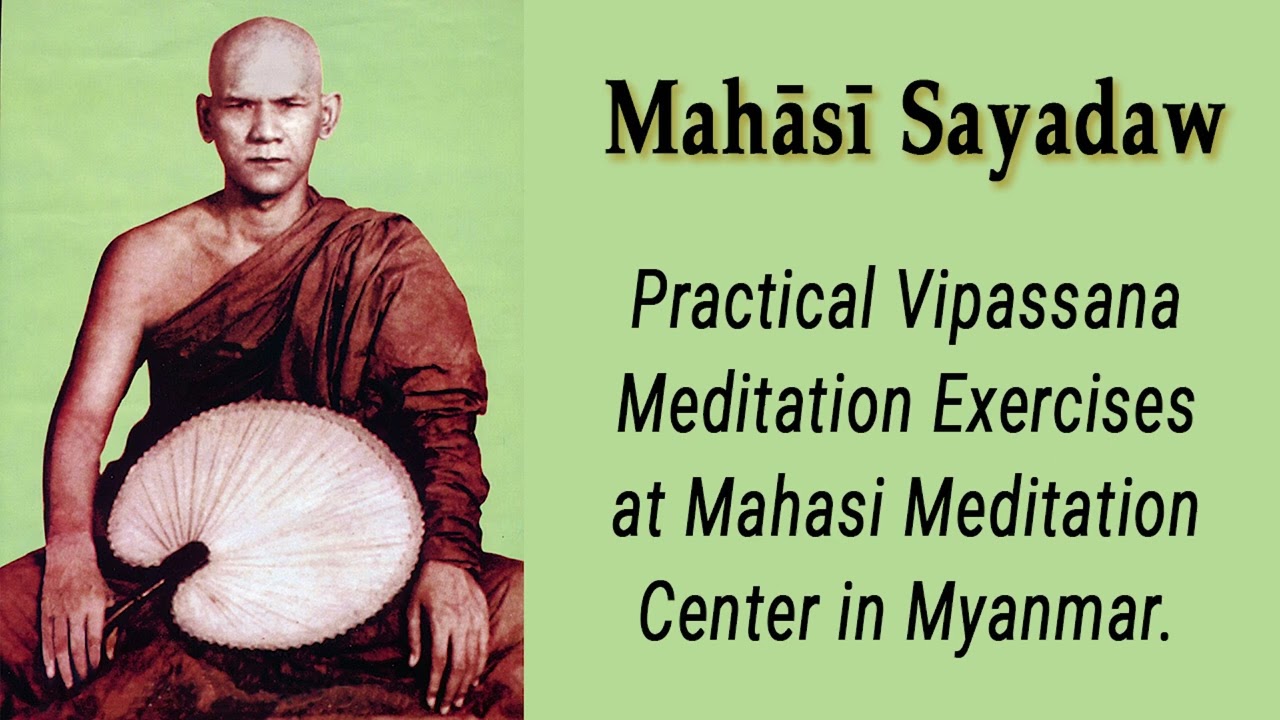
of self and from spiritual doubt and they will no longer be subject to the round of rebirths in the miserable Realms of the hells the animal world and the sphere of ghosts may yogis meet with every success in their noble endeavor about the author the venerable mahasi sayadaw yusabana mahathera was one of the most eminent meditation masters of modern times and a leader in the contemporary resurgence of vipassana meditation born near shwebo town in burma in 1904 he was ordained a novice monk at the age Of 12 and received full ordination as a big coup
at the age of 20. he quickly distinguished himself as a scholar of the buddhist scriptures and by his fifth year after full ordination was himself teaching the scriptures to monastery in mulman in the eighth year after ordination he left mull main seeking a clear and effective method in the practice of meditation at the time he met the well-known Meditation instructor the venerable unarata also known as the mingun jethawan sayadaw he then placed himself under the guidance of the sayadaw and underwent intensive training in vipassana meditation in 1941 he returned to his native village and introduced
the systematic practice of vipassana meditation to the area many people monks as well as laymen took Up the practice and greatly benefited by his careful instructions in 1949 the then prime minister of burma you knew and sir youth win executive members of the buddhist asana nagaha association invited venerable mahasi sayadaw to come to rangoon to give training in meditation practice he acceded to their request and took up residence at the that hanay the meditation center where he continued to conduct intensive courses in vipassana Meditation until his death in 1982 under his guidance thousands of people
have been trained at this center and many more have benefited from his clear-cut approach to meditation practice through his writings and the teachings of his disciples more than a hundred branch centers of the that hanayika center have been established in burma and his method has spread widely to other countries east and west Venerable mahasi sayadaw also holds burma's highest scholastic honor the title of agamahapandira awarded to him in 1952. during the sixth buddhist council held in rangoon from 1954 to 1956 he performed the duties of questioner a role performed at the first buddhist council by
the venerable mahakasapa venerable mahasi sayadaw was also a member of the executive committee that was responsible as the final authority For the codification of all the texts edited at the council venerable mahasi sayadaw is the author of numerous works on both meditation and the buddhist scriptures in his native burmese his discourses on buddhist sadas have been translated into english and are published by the buddhist asana nagaha association rangoon burma you