Welcome back to social media management for beginners. If you want to catch up on other episodes, be sure to open up the description box. There'll also be some free resources, but for today, I wanted to talk to you about the skills that you need if you want to become a social media manager.
Now, the social media management world has changed a lot over the years. And I think we can say that as a social media. Skill number one is the ability to adapt and not get too comfortable, let's say.
When I first started, the social media world was mostly like posting quotes or posting photos or sometimes not posting graphics or, you know, images at all, just posting words on a page. Twitter was really big. Facebook was really big and obviously there were social media managers that started back then who failed to adapt to the world that we're in today and are no longer doing this job.
Those of us who were able to see opportunity and things like video and other content types were able to keep it moving and stay successful. So really, I think that is Number one skill is knowing that you will forever be a student, no matter how old you are, no matter how experienced you are, there are going to be times when you need to reach out for help. You need to seek out help.
You need to learn a new skill or a new tool. And also just not getting too stubborn, if you will, in your old ways, being willing to try new things. I know I was personally very stubborn about short form video, still not my favorite thing, but if I would have kept stubborn about that.
I would not have a job. Right? Now let's talk about which hard skills I think are most important, especially in today's social media landscape.
So first, I think the evergreen hard skill is the art of storytelling. As a social media manager, it's your job to talk to your client or your manager and have them say, Hey, we need to sell this. more purses this month using social media.
And your job is to then translate that goal into a social media goal. So maybe you need to drive more traffic back to the website using social media. Maybe you need to test out using ads on social media, get more engagement from your existing followers or whatever that might be.
And then you need to learn how to connect This purse to your ideal client's actual needs and make them actually want to work with you. And it's typically not just by saying, Hey, we need to sell more purses. It's typically by getting into their mindset a little bit by understanding your target audience by following them by saying, studying what they're paying attention to, studying trends, studying things that are going on in the world to connect that purse with your ideal client and, and show them that that is the product for them.
And storytelling is kind of a broad term, right? But really it's going to involve visual storytelling. So being able to curate a certain look and feel and pay attention to the creative direction of a social media feed, for example, but it's also writing.
Copywriting is. It's such an important hard skill for social media managers. And even in the era of AI, it is very important to be able to use the written word to convey emotion, to talk about products or services and reach the right people.
Now, I talked a little bit about visual storytelling, which leads us into the second hard skill that I think is so, so important today, and that's content creation. Now, again, when I first started being a social media manager didn't necessarily mean that you were also a content creator. I wasn't a photographer.
I would get batches of photos and videos. From a photographer to then post on our Facebook page. But I would say it's pretty 50 50 nowadays where sometimes you will have a client or a job that does have a photo team, a video team, a content creation team that supplies you with content.
And I would say the other half of the time. It's kind of on you. And that's kind of a whole other conversation for another time, whether you are willing to do that, able to do that, interested in doing that.
But no matter what the situation is, I think it is important if you want to do well in this career to have at least a working knowledge of video editing tools. A free one, a simple one like iMovie, for example, is fine, but knowing how to cut down a video for social media or reposition it so that maybe you have a YouTube video and you need to stretch it and change the dimensions of it so you can post it on Instagram or Facebook Reels or something like that. Having the ability to create a simple graphic using a tool like Canva, for example, and we're actually going to talk about tools in the next episode.
So be sure to subscribe and stay tuned for that one. But Canva is one that I think every social media manager should probably have just a working knowledge of. You don't need to be a pro level designer.
I certainly am not. But if a client says, Hey, we need a quick graphic that says we're hiring, I can slap that together without needing to call in a designer, and designers, I love you, in case any of you are watching. I am by no means saying that graphic designers are not necessary or that a social media manager would replace one.
But there are some things, like a logo, or like a big brand asset, that needs a professional level designer. And there are some things, like a quick we're hiring post. That could probably just be done in house by you and will really help you up level and show your value even more.
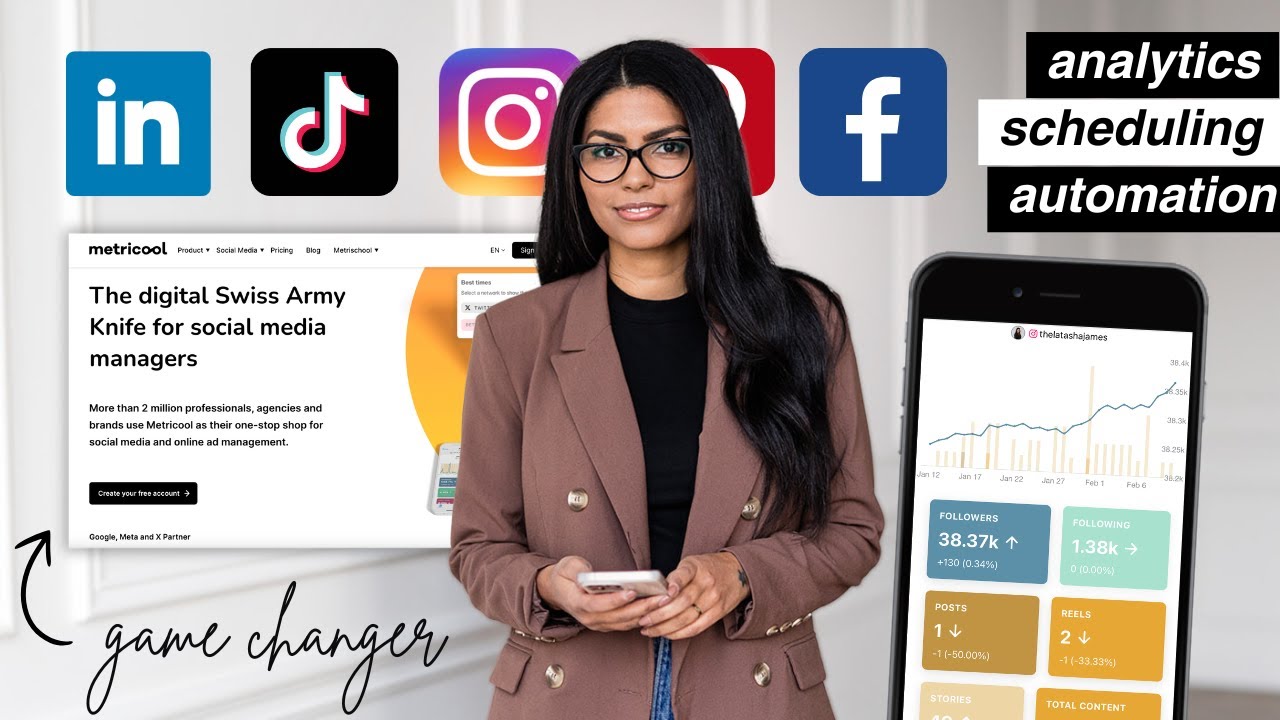
And another thing that helps you prove your value or prove ROI or return on investment for your client or your company that you work for is having the ability to read and understand and communicate. analytics. Analytics scare a lot of social media managers.
I think we often look at analytics as punishment. It's like, Oh no, I'm going to get in trouble if it doesn't look good. But analytics are very, very important tools.
There are ways to show what's working and what isn't. That's not so that you can readjust your strategy, not get in trouble for your strategy, but know which ways to pivot and know what's working so you can do more of that. And so having a clear understanding of where to find analytics.
What to look for in your analytics and again, how to communicate those analytics in human terms for your clients or your company is so important. And what I mean by that is if I go to the doctor and a doctor tells me that my blood pressure is blah, blah, blah over blah, blah, blah, well, I didn't go to med school and I don't know if that's good or bad. So if they just tell me that number and say, There you go.
I might be concerned. I might be happy. I might not know that's an important thing to pay attention to.
The doctor needs to actually say, hey, that's a good blood pressure, you know, for, for your age and whatever, you know, or hey, your blood pressure is a little bit elevated. Maybe you need to try making these lifestyle changes so you don't get yourself in long term trouble. You need to be able to provide your client or your job with context so that they know how things are going.
If they don't have context, you run the risk of them saying, Well, we've had this social media manager for a month. We're not really seeing our numbers go up. Let's cut them loose.
Let's end this contract. You want to keep them updated on your progress. You want to have an open, you know, dialogue with them, which is really leading us to our first essential soft skill, which is communication.
This is one that I don't hear talked about a lot, especially in the freelance world. I think a lot of people are drawn to becoming freelancers because they like working independently, maybe because they're more introverted like I am, and they. If you are attracted to the idea of working for themselves and not really having a boss to report to, per se.
But I will say, while working as a freelancer does give you a lot of independence, a lot of alone time, a lot of, you know, introvert friendly time. it is important to be able to show up and speak to your clients and be able to one, explain those things that I just talked about, explain metrics, communicate with them, keep them updated, but also take time. feedback, take direction within reason.
You know, you will of course get some of those wacky requests from clients that you're like, no, I can't just snap my fingers and make us go viral, like pet peeve of the world when that is a request. But you will also sometimes get requests that make a lot of sense. People saying, Hey, we have this, thing that did well a couple years ago, can we try to, you know, do a new version of it?
Or, hey, here's who our ideal client is. We need to be speaking their language. I'm a subject matter expertise in my business, but not in social media.
So here's what you need to know about the subject matter in question, right? So being able to have that two way communication is going to serve you so well and make sure that you are looked at as a valuable member of a team. Another soft skill that I think is really important is having attention to detail.
We've all seen it. We've all seen a brand post something with a typo, you know, a Spelling error, a weird graphic design mishap. And most of the time they're funny and harmless, but sometimes they can really get you in trouble.
Sometimes they can really offend people or look very, very bad for a company. So it is very important that you understand the level of responsibility that goes along with being a social media manager. It's always so funny to me when people are like, Oh, got a, you know, got to talk to the intern about this post.
You know, everybody assumes that like the social media person is an intern, you know, a fresh out of college or in college type person. And really nowadays social media has grown in popularity and importance so much that I truly believe a social media manager should be a more serious person. Senior level role today, and I think we're seeing that more and more.
We're seeing more emphasis and respect put on these roles because it is, you're the last touch point between the brand and the consumer and the world seeing your content. So making sure that you can revise things if you're getting it from a team or from an AI tool, if that's your choice to use those, being able to really make them your own, spot mistakes. Fact check things, pay attention to the calendar, pay attention to what's going on in the world.
For example, if you post a really snarky, meme y type of post on, let's say, a really dark day, like 9 11 or, you know, on a day when And lastly, I think you also need a sense of urgency. Social media, it moves really, really quickly. Things change really fast.
And, you know, this is, you know, is, I would say, one of the cons to becoming a social media manager, in my opinion, because I like to be cozy. I like consistency and stability. And really, social media is not necessarily great for that.
We see platforms change more than ever nowadays. They're very volatile. One day it's, you know, hey, we got to go all in on TikTok.
And the next day it's, hey, TikTok is shutting down. We need to completely pivot. We also see, to my last point about, You know, things that happen in the world, good or bad, we sometimes need to suddenly come up with a social post kind of out of nowhere in response to something or take down social posts or pause our planning of social posts depending on what's going on.
So I think it is very important to Understand again the responsibility that goes along with being a social media manager. I also think a sense of urgency is important, especially if you're working as a freelancer or working at an agency where you have clients to be on time with what you're doing. delivering.
And as I always like to say under promise over deliver, Hey, I'll get you that social plan by Friday. My goal is actually to get it to them by Wednesday. You know, you don't want to get too comfortable with being late, missing deadlines because they can really impact your credibility and your relationship with your client or your company that you work for.
So, do you think you have what it takes to be a social media manager? If you do, be sure to check out the resources linked down below. I've got a social media manager glossary for you that will help you learn the essential words and terms that you need to know if you want to work in this space.
And be sure to subscribe to this channel. I hope you'll join me and I will talk to you soon. Bye.