[Music] in the past ten years I've been both a captain in the Marine Corps and a manager in corporate America and in both cases I believe the best way to lead and be successful in complex environments is by empowering other people and as we move toward a more automated and machine driven future this kind of leadership is gonna become more important and I believe the best model for doing this is found in a surprising connection between the way Marines do things and the way machines learn things so back in 2012 I had the privilege of
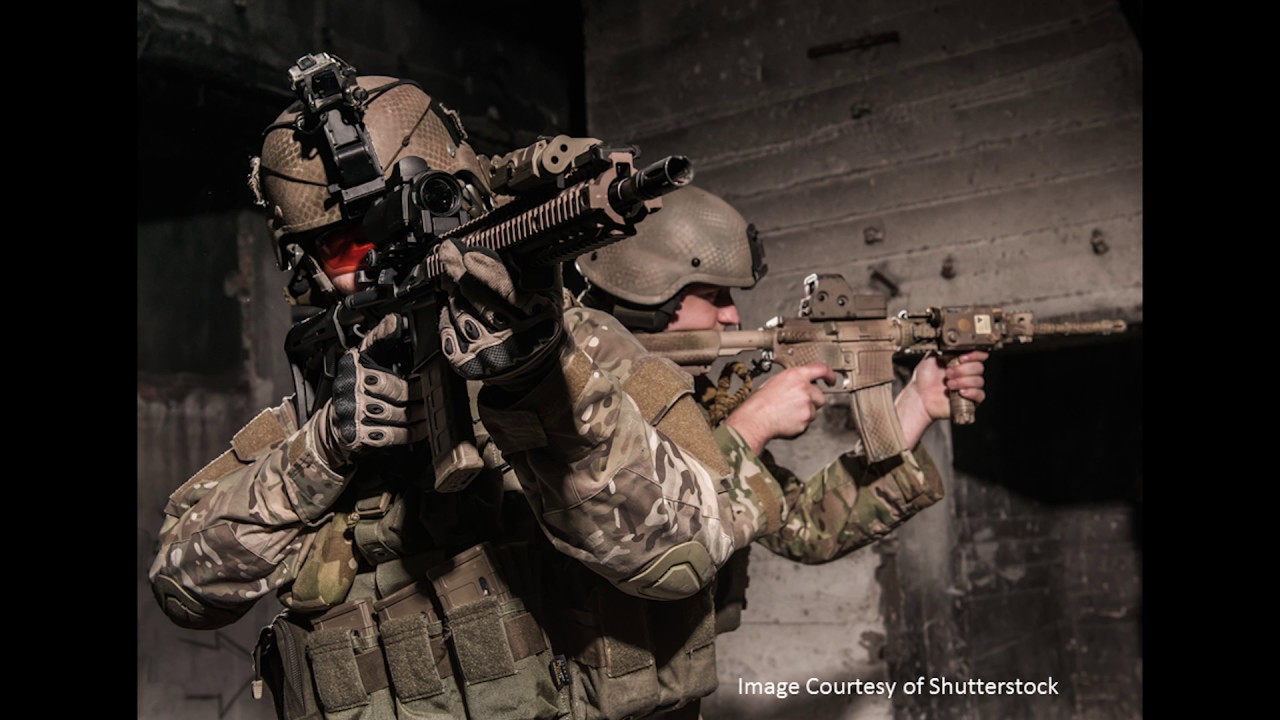
being a platoon commander with 1st battalion 8th Marines and Helmand province Afghanistan I was 27 years old and I had 36 fantastic Marines working for me and our job was to keep the infantry supplied with everything they needed to fight the Taliban it was pretty straight forward four to five days a week we would run convoys which are these long lines of armored cargo vehicles and gun trucks we carry ammunition food fuel water you name it and we delivered an outpost spread along a 40 kilometer stretch of rugged and unpaved Road that sat just east
of the Helmand River and for the first few months of that deployment I commanded every convoy and I did this for two reasons I wanted to give the Marines confidence that I knew what I was doing but also because in my mind that's what a leader should do be hyper involved present commanding controlling but about five months in the situation changed and the Marine Corps was going to start pulling troops and equipment out of Afghanistan and so for my Marines and I that meant we suddenly had two missions we still had to support the infantry
but we also had to move a ton of excess equipment back across Helmand province so that it can be sent home to the states and these two missions were separated by about a hundred and sixty kilometers of Afghan desert now obviously I can't be in two places at once or control two convoys at the same time so I had to rethink my role I had to divide the platoon and I had to let go with some of that control that I thought I had in essence I suddenly became more coach than commander and I had
to reach back to a core principle for my officer training called commander's intent it's when the leader clearly defines what success looks like but gives others the flexibility to be creative and how they get there but that's what needed to happen and I was humbled by what happened next because when I got out of the way I unlocked human potential that I didn't know existed the Marines exceeded every timeline and goal that was given to them they moved all the equipment ahead of schedule they found innovative solutions to complex obstacles they encountered along the way
and they did it safely my initial leadership instincts about control were wrong and what I learned was that I didn't need better equipment or more control I needed well trained Marines capable of acting as leaders themselves and my experience was just part of a broader trend toward more decentralized leadership in the Marine Corps driven by the speed and complexity of the modern battlefield and I know that business isn't a battlefield but having been in it a few years I know we can agree that business is challenged by its own version of speed and complexity and
so in that sense I think everyone from frontline managers to chief executives could benefit from some of these same leadership themes and try to produce what general mattis would call motivated innovative in agile warriors qualities that are so relevant in business today but we don't have to look to the military for answers and how to do this because many of the same principles we use to empower men and women on the battlefield are being used to empower machines in business in places like Silicon Valley so ironically it's machine learning that can give us three lessons
for how to more effectively empower our people and I'll show you what I mean so one of the great insights with machine learning is that you can actually get a lot more out of an algorithm by not explicitly telling it how to do something instead you give it a goal a way to learn and let it make decisions without a lot of intervention this sounds incredibly human to me and as leaders I think we need to foster this same kind of freedom for our people because when we micromanage a process we limit what's possible and
we limit the spark of talented people to give us new ideas so instead we should clarify the commander's intent and focus people on purpose instead of process purpose for me is the big difference between leadership and management because when people understand the big picture it increases the intrinsic motivation of the work and it helps people be more creative but as you probably guessed from the Afghanistan example this kind of hands-off empowerment only works if people have the right skills to effectively execute that purpose but these skills can't be static and with machine learning the algorithm
is only relevant if you feed it data and keep feeding it often so that it can learn and adjust and so if we want to build teams of great human algorithms that we can trust we need to give employees opportunities for early and lifelong learning because learning is how we adapt and in a high change environment where people are the ultimate competitive advantage the organization whose people can learn and adapt the fastest will win the military solves for this by creating learning journeys professional education that starts early and spans an entire career and this way
they don't have to settle for this fine why an approach to people development where talent ages on a shelf for years waiting for the the right opportunity they challenge them early so they can fail quickly and adjust through feedback but right now this kind of education isn't happening in most places in a recent study from MIT and Deloitte 90 percent of workers reported needing to update their skills at least every year but only 1/3 were satisfied with the kind of support they were getting from their company we can do better but speed is important too
and at some point we've got to take all this learning and all this creativity and actually do something with it and so our third lesson for machine learning is that we need to have a bias for action and this means getting comfortable making the decision that's probably right instead of waiting for that elusive perfect answer because one of the great ironies of the Information Age is that even though we have all this data there's still a lot of uncertainty there's just too many variables and so we can analyze things to death and never have a
clear picture of what to do next programmers know this and they're using probabilistic techniques to build algorithms that can learn from really small amounts of data and the inspiration for this is human adult learning you and I are already programmed to think like this but too often we get stuck in this mindset of having to have perfect information before we can execute and by the way it's not lost on me that I'm telling you not to focus on process and then giving you a three-step process for how to do it but this model isn't just
about solving for a fast-paced or complex business environment it's about filling a skills gap in a global survey from PwC over thirteen hundred CEOs were asked what employee skills are most important and hardest to find the answer leadership problem-solving adaptability creativity and innovation soft skills it's because CEOs realized that these skills bring uniquely human qualities that can't be replaced by technology and so that's what I like most about these lessons of purpose lifelong learning and empowered decision-making is that they give people the ability to do the things machines can't because we will never win a
race against the computer to solve simple tasks or answer complex computational questions but we can help people be better leaders be more creative be more innovative and figure out which questions we should be asking in the first place because I don't know of an algorithm that can replicate the spark of human imagination at least not yet but whether or not you see this as a viable blueprint for leadership I do believe that artificial intelligence is going to force us to have a fundamentally different relationship with uncertainty and control and I've seen firsthand how letting go
of some of that control can bring out the best qualities in people and so I'd invite all of you to join me in thinking differently about leadership and start empowering our people the way we empower machines thank you [Applause]