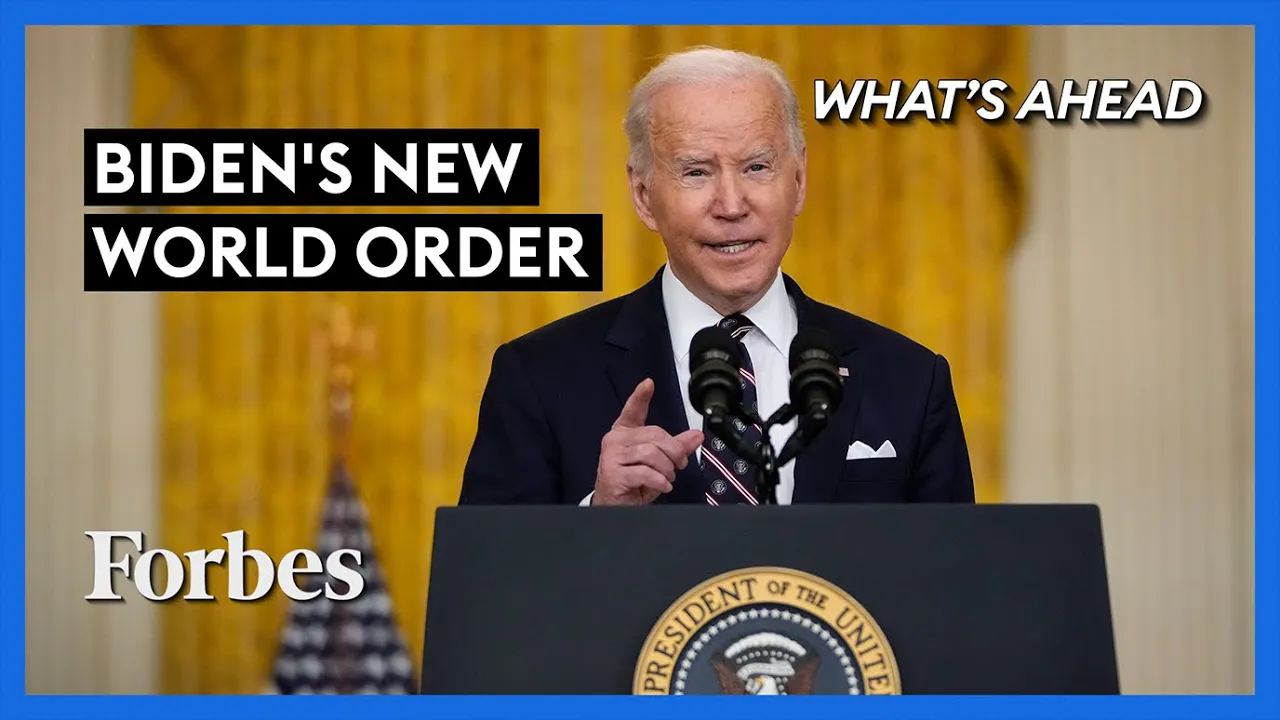
president biden talks of a new world order if he's serious he will need a strong dollar [Music] hello i'm steve forbes and this is what's ahead where you get the insights you need to better navigate these turbulent times and off the cuff remarks at a meeting of the business roundtable this week president biden said quote there's going to be new world order out there we've got to lead it we've got to unite the rest of the free world and doing it end quote he said that the institutions that predominate today grew out of the two world wars of the last century if the president is serious here about the u. s leading positively for a better world there is one crucial area where the u. s has been negligent international monetary policy the president and others should start by taking a hard look at one very crucial arrangement that rose from the second world war and the reasons for it only then can new and productive policies and approaches emerge the great depression of the 1930s was prolonged by trade wars and competitive devaluations of currencies by numerous countries britain took the pound off the gold standard in 1931 and let it drop sharply in value thinking this would pull its economy out of the economic slump and help it export more to other countries the cheaper pound effectively lowered the price of british exports other countries concluded this was cheating and so they devalued their currencies the competitive devaluations ended up impoverishing everyone so as world war ii was ending allied nations met in britain woods new hampshire and hammered out a new international monetary system that would encourage growth rather than undermined it a gold standard would be restored the dollar would be fixed to gold at 35 dollars an ounce and other countries to tie their currency to the dollar at a fixed rate only in serious circumstances would a country change its value against the dollar no floating rates like we have today the bretton woods system worked along with agreements that gradually reduce trade barriers the stability wrought by bretton woods saw the u.
s western europe and japan prosper mightily growing impressively even after they exceeded pre-war levels of production unfortunately bad economic thinking emerged that posited you didn't need a bretton woods type of system the u. s ended up destroying it in the early 1970s the result is that u. s average growth rates have dropped by over one-third from the late 1940s to the end of the 1960s the u.
s economy expanded by an average rate of 4. 2 percent a year after bretton woods was torpedoed the rate went down to 2. 7 percent if the bretton woods average had continued average u.