PROFESSOR BRIAN BUTTERWORTH: These are the famous dots. So you just have to say how many dots there are. BRADY HARAN: Two.
PROFESSOR BRIAN BUTTERWORTH: Two. That's very good. And you're quite quick.
Now the next one. BRADY HARAN: Six. PROFESSOR BRIAN BUTTERWORTH: OK, you're accurate there, but you're a bit slower.
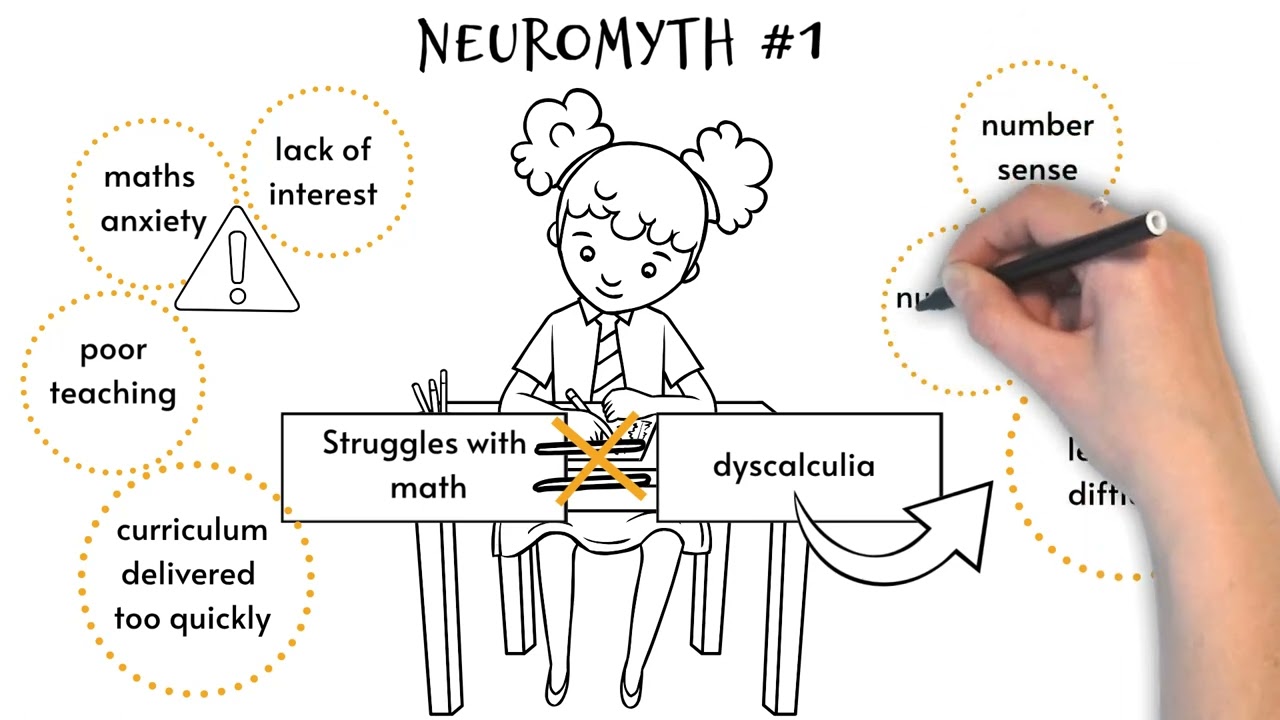
Well, I've been particularly interested in the last few years in dyscalculia, which is a congenital condition that affects somewhere between 3 and 6% of the population. And what it means is that they're very, very bad at learning arithmetic, at least learning it in the normal way. And this seems to be a lifelong condition.
We've met a lot of adults who have this condition, adults who are very successful in other branches-- other walks of life. Walks of life that don't depend very much on being good with numbers. I mean, they could be filmmakers, TV producers.
They could even be science journalists. They're not going to be terribly good at doing the maths for physics. Well, it's like dyslexia in the following way, that it's something that you're meant to learn at school, and that unless you have special help, you're not going to learn it at school.
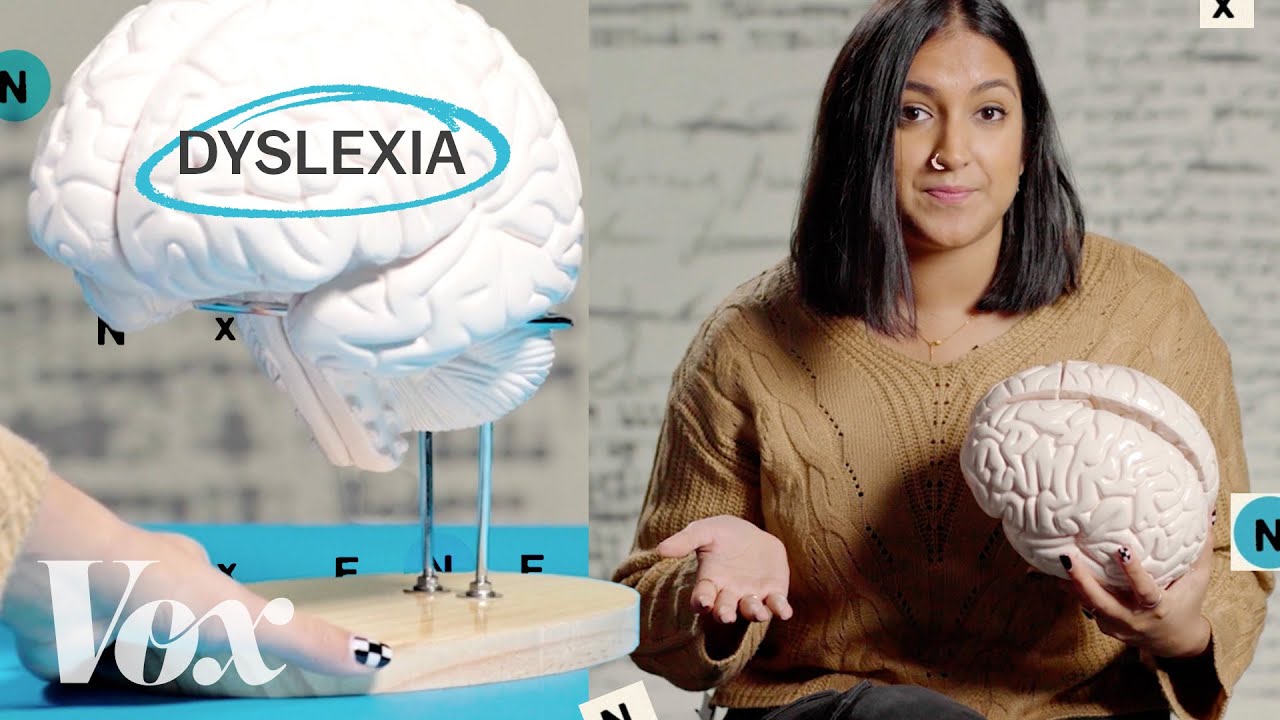
It's not exactly the same as dyslexia, though it's often called dyslexia for numbers, because dyslexia is a problem in reading. But in fact, it's really a problem of language, dyslexia. So you have a particular problem with analyzing the sounds of language.
And that's really what prevents you from linking letters with sounds, particularly for an orthography like English orthography, where the relationship between letters and sounds is not particularly consistent. BRADY HARAN: What's the difference between someone who has dyscalculia and someone who's just a bit rubbish at math? PROFESSOR BRIAN BUTTERWORTH: The difference between dyscalculia and just being rubbish at maths is that lots of reasons for being rubbish at maths.
My own excuse is that I didn't have a very good math teacher at school. And I didn't like him. I didn't get on with him.
I've had to try desperately to make up for that since. For example, you might miss a lot of lessons. And since math is a kind of cumulative subject, unlike history, then if you miss a lot of stuff, it's very hard to catch up.
Dyscalculia can occur in people with high intelligence, good memories, who go to school every day, have really supportive backgrounds. And yet they're unable to do what everybody else in their class can do-- do simple arithmetic. So there is a difference.
You can often spot a dyscalculic-- though these aren't formal tests-- in lots of different ways. For example, they have great difficulty in remembering telephone numbers. They have difficulty in remembering any numbers.
So they often are going to use the same PIN, when they shouldn't, for lots of different activities. They're very bad at shopping. So actually, one of the first developmental dyscalculics we came across was in prison.
And he was in prison for shoplifting. Why did he shoplift? Well, because he was too embarrassed to go to the counter, because he didn't know how much money to give.
He didn't know whether he was getting the right change. So shopping is an area which is really difficult for dyscalculics. They also have trouble with time.
It's not that they can't estimate intervals. It's just that they're not very good at the numerical side of it-- working out, for example, what time they have to leave home in order to get to somewhere at a particular time. We know that there's a particular part of the brain that seems to be involved in very simple number tasks.
So for example, here in the parietal lobes of the brain--- this is the back of the brain. This is the left parietal and that's the right parietal. We know that these areas are critical for just enumerating the number of objects in a set.
One of the things that we now know-- this is a very recent discovery-- is that dyscalculics have abnormalities particularly in both of these areas, and maybe particularly in the left in older dyscalculics. So they have abnormal structure. And also, the brain activates in a different way when they're doing number tasks.
Now, why should they have abnormal structure or abnormal activations? Well, there are a number of possible reasons. We don't know all of them.
One of them is these abnormalities seem to be, in some cases, inherited. One of things we do know is that there are particular genetic abnormalities that seem to affect numbers more than other cognitive abilities. So abnormalities in the X chromosome seem to have an effect on parietal lobe development and also on numerical abilities.
So individuals with a number of different X chromosome conditions-- like Turner syndrome, where you have only one complete X chromosome, or Fragile X syndrome-- they seem to have a big effect on your ability to do even very simple number tasks. BRADY HARAN: How do you diagnosis this? How do you make the decision, yep, that person's got the problem?
PROFESSOR BRIAN BUTTERWORTH: Well, in the study that we just published, we used two criteria. One is you've got to be bad at arithmetic. And it's important to note that it's got to be-- it's timed arithmetic that's critical here.
Because there's a difference between somebody who answers the question, what's 5 plus 3, with 8, and the individual who goes, 5 plus 3-- 8. So time is a very good diagnostic here. And we also looked at the ability to just enumerate sets.
So how many dots are there on the screen? Now, how good you are at this, even in kindergarten in one of our studies, is a very good predictor of how much difficulty you're going to have in learning arithmetic. BRADY HARAN: What is it about counting dots?
Counting dots seems to-- is it just because it's a good, easy, dependable test? Or is there something more to it that I'm missing? PROFESSOR BRIAN BUTTERWORTH: It's a very dependable test.
So if you're bad at it at five, you're bad at it at six, you're bad at it at seven, you're bad at it-- well, up until 11. In our longitudinal study, that's as far we've gone so far. So it's a very stable indicator, so that's one reason.
The other reason is because it links to the kinds of things that might be inherited, the kinds of things that other species are able to do. BRADY HARAN: What do we do with someone who's got it, then? Are there drugs they can take?
Is there something that can be done? Or are they a basket case? PROFESSOR BRIAN BUTTERWORTH: No, they're not basket cases.
But like dyslexia, what you need is special kinds of intervention. So if they're not very good at enumerating sets, it means they don't have a very good sense of the number of objects in the set. So if it's a set of five, not very good at enumerating it means they don't have a very good sense of what fiveness is.
So what you have to do is you have to have interventions that target that particular weakness. So you're given lots of practice at enumerating sets, linking that enumeration with the symbols that we use for sets, like the word five and the digit 5. And in fact, you can relate the number of dots to how long it takes you.
So unsurprisingly, you might say the more dots there are, the longer it takes you to give the right answer. But there's a very reliable result, which we've known for at least 50 years, which is that up to about four dots, you're very accurate and you're pretty fast. And thereafter, it takes you about an extra quarter of a second for each additional dot.
And this is sometimes called the subitizing range. And that's called the counting or estimating range. And there's a point at which you go from one range to the other range.
And that suggests there are actually two processes at work here. And we know, actually, from some recent mirror-imaging studies that we've done, that there are in fact-- there's a separate part of the brain that does the subitizing range from the estimating range. BRADY HARAN: At how many dots does it become reasonable for someone to make a mistake?
Because I feel a lot of pressure with the dots. And if you put up 30 or so, that would take me a long time to count. PROFESSOR BRIAN BUTTERWORTH: Right.
This is a very fair point. If you give people unlimited time and you tell them they have to be accurate, they'll just count them. And they'll be pretty good at counting them.
If you give them limited amount of time, then they can count them up to a point. So for example, this is from children. So it's taking them seven seconds to get to eight dots.
But if you gave them less time to do it, then of course they'd have to estimate. And it looks as though for big numbers, you use a somewhat different process than when you're doing an exact enumeration. BRADY HARAN: What do I do for big numbers?
PROFESSOR BRIAN BUTTERWORTH: Well, you make an estimate which is based on extracting various visual properties from the stimulus. And there's now some brilliant work done by Marco Zorzi's lab in Italy, where they've modeled how this might work. But for numbers up to about 9 or 10-- for some people, it might be a bit more-- there's a way in which you kind of can enumerate even if you're not actually verbally counting.
BRADY HARAN: I feel like when I'm doing it, like when you showed me the six, I counted three. And then I kind of made a little split and counted another three and added them together. Is that a normal thing?
Is everyone doing that? Or are some people counting them one by one? PROFESSOR BRIAN BUTTERWORTH: Dyscalculics will count one by one.
This is one of the interesting things about dyscalculics. They're very bad at doing the estimating, using the estimating strategy. You can do it with three and three-- we've done some work on this-- but you won't do it on three and four.
So you won't say, well, there's a group of three and there's a group of four. It doesn't give you any advantage. For reasons we don't fully understand, having two visually separable groups of the same number is an advantage.
But having two visually separable groups of different numbers, for reasons I don't understand, doesn't give you any advantage. BRADY HARAN: Well, you know more than me. I feel like with seven, I would count three and four.
Or maybe I would do three and twos. I don't know. PROFESSOR BRIAN BUTTERWORTH: Well, come into the lab for some tests and we'll see what you really do.
BRADY HARAN: There's two there. PROFESSOR BRIAN BUTTERWORTH: Yes. Correct.