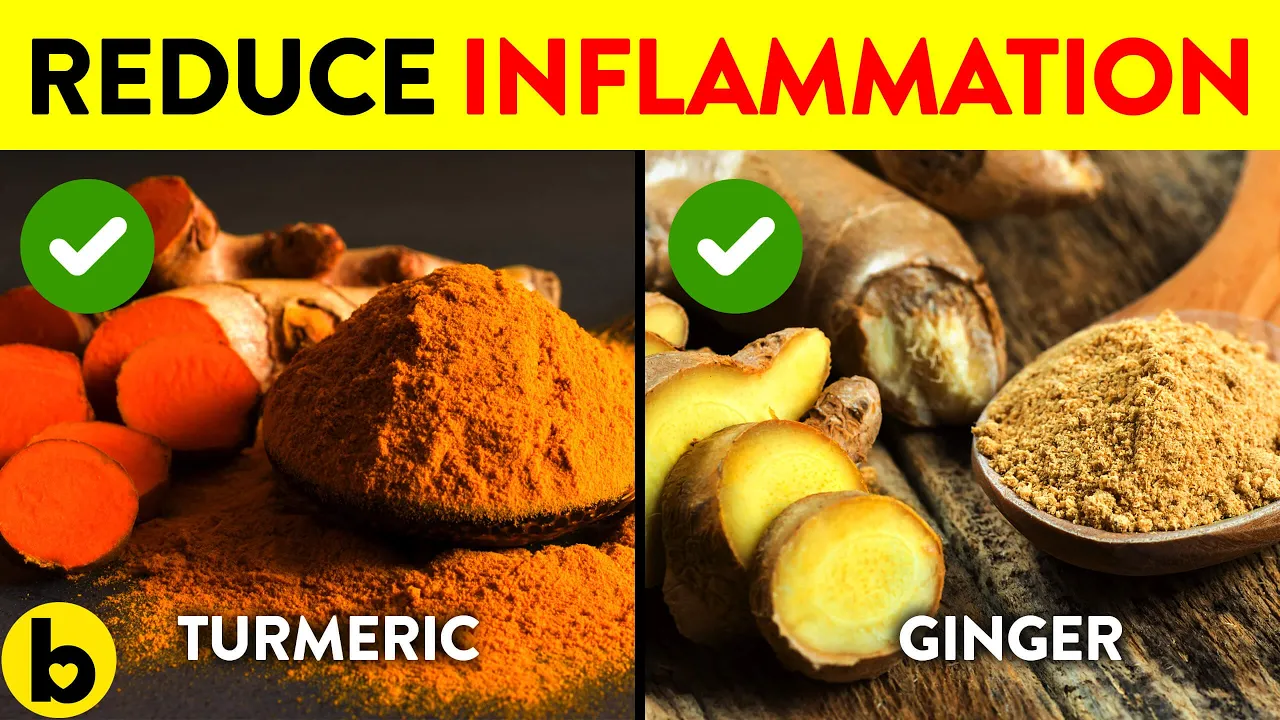
Did you know that inflammation is your body's natural self protection response to potentially harmful stimuli? When a part of your body becomes irritated or damaged, the body responds to protect it from further injury. Inflammation can be beneficial when, for instance, you sustain a broken knee and the tissues surrounding the area need extra protection and care.
In other cases, it can lead to further inflammation and get in the way of other normal processes of the body. It can cause issues such as headaches and pain. It is also at the root of many chronic diseases, including diabetes, cancer and heart disease to name a few.
But there are ways you can fight inflammation. One of the best ways to do it is by including the correct herbs and spices in your diet. And in today’s video, we will tell you what they are.
From ginger, cinnamon, cat’s claw, garlic to white willow bark and more, watch till the end to learn about all of them. Turmeric: Is it any surprise that turmeric is the first one on the list? It's so buzzy because it works.
Turmeric is a root native to India and has been used for thousands of years as a spice and medicinal herb. It contains curcumin, a powerful anti-inflammatory, which is why it's known for its anti-inflammatory and antioxidant effects. It is still used today to relieve a variety of afflictions like rheumatoid arthritis, headaches, and inflammatory bowel disease.
There are a myriad of ways to include turmeric in your diet. It can be as simple as sprinkling some of the bright-orange powder into a smoothie or grain bowl. Or you could drink it in the form of golden milk, otherwise referred to as a golden latte.
One of our favorite ways, it’s a hot drink made with milk, maple syrup, vanilla, turmeric, and black pepper. How often do you eat turmeric in a week? What’s your favourite way to incorporate it in your diet?
Tell us quickly down below in the comments section. Thyme: A fragrant herb that has high antioxidant capabilities, thyme has a rich history as a food flavoring. And it’s been found to have anti-inflammatory and anti-microbial properties that could be therapeutic for rheumatoid arthritis, according to research.
In fact, thyme was found to be the most commonly used herbal medicine among people with this problem. A sprig of fresh thyme or the fresh leaves can be flavorful additions to meat, poultry, bean, tomato, or egg dishes, as well as soups and stews. Long used in Italian, French, Mediterranean, and Middle Eastern cuisines, thyme’s pungency is one of its greatest benefits.
But it can be a drawback if it is used incorrectly. So don’t go overboard with it. Cinnamon: A delicious spice, cinnamon has powerful antioxidant properties that help inhibit cell damage from free radicals.
But that’s only part of what’s behind it’s health halo. It also helps reduce blood sugar and cholesterol levels. And it appears to protect cognitive function as people get older.
What’s more, a study found that when women with rheumatoid arthritis ate four capsules of 500 milligrams of cinnamon powder daily for eight weeks, they had a significant decrease in blood levels of inflammation markers. They also had reduced disease activity, including tender and swollen joints. Dred cinnamon can be added to oatmeal, smoothies, soups, stews, or even oranges for a delicious and healthy dessert.
Cinnamon sticks can be added to teas or ciders for an extra flavor infusion. Just don’t overdo it. Although it’s fine on your cinnamon bun, if it’s overdosed, it might not be safe for pregnant women.
Large doses of the spice also could interfere with blood clotting and blood thinner medication. White Willow Bark: White willow tree bark has been used as a treatment for pain and inflammation since ancient Egyptian and Roman times. Many studies have shown that it has a comparable effect to aspirin, but with fewer side effects than the medicine.
The usual dose of white willow bark is 240 milligrams per day for ongoing conditions. There are also herbal blends that contain white willow bark which can be used for an acute event, such as a headache. Frankincense: Boswellia is a tree variety native to India, Somalia, Ethiopia and the Arabian Peninsula.
Frankincense is a resin extracted from the trees. It has anti-inflammatory, anti-arthritic and pain-controlling properties. Boswellia resin is currently used to treat degenerative and inflammatory joint disorders.
One study showed that a combination of Boswellia and curcumin was more effective for treating osteoarthritis than a commonly used synthetic drug. It's recommended to take 300-500 milligrams of Boswellia extract two or three times a day for ongoing inflammatory conditions. Black Pepper: It’s a staple on most dining tables and widely used to add a dash of flavor to everyday dishes.
But did you know that black pepper, including piperine, the active compound it contains, has bona fide health benefits? Research has found that this spice has antioxidant, antimicrobial, anti-inflammatory, and gastro-protective effects. A study suggested that the administration of piperic acid inhibited the swelling and production of cytokines in animals.
You already know what to do with black pepper: Use it to season any dish you’d like—salads, soups, eggs, and more. Parsley: Native to the Mediterranean, parsley’s history dates back to the ancient Greeks as a sacred and mythological herb. Since then it has been used in medicine and cultural ceremonies like Hebrew’s Passover.
Nowadays, it is often added as a flavouring or dish garnish, but it has much more to offer. Parsley packs an impressive list of vitamins and nutrients. Half a cup of chopped parsley contains 108% of vitamin A, 53% of vitamin C, 11% of vitamin B9 and a whopping 547% of vitamin K.
It is rich in antioxidants which reduce oxidative stress by neutralizing free radicals and lowering inflammation causing proteins. These benefits extend protection against digestive conditions, neuro-degeneration, diabetes, cardiovascular disease and cancers. They also improve immunity, absorption of nutrients, bone density, eye health and blood sugar levels.
It is also a strong antibacterial herb that is able to stop harmful food poisoning bacteria. Whether dry or fresh, parsley can be easily added to many recipes increasing the taste and wellness. Cat's Claw: This herb is derived from a woody vine native to Peru.
The bark of cat's claw has traditionally been used to treat arthritis, bursitis and intestinal disorders. Studies have shown that it can reduce inflammatory responses in the body and it has a protective effect against gastrointestinal inflammation. You can make tea from it by adding 1000 milligrams of the bark to 8 ounces of water.
It is also available as a dry extract in a capsule. It's recommended to take 20 to 60 milligrams daily. Ginger: Research has shown that ginger has a better therapeutic effect than non-steroidal anti-inflammatory drugs to treat pain and inflammation.
Ginger may also help prevent or treat nausea and vomiting from motion sickness, pregnancy and chemotherapy. It can also be used to reduce osteoarthritis pain and heart disease. It is delicious in many savory dishes, as well as in teas, juices and desserts.
It has a very long history of use in various forms of traditional medicine. It has been used to help digestion, reduce nausea and help fight the flu and common cold, to name a few. Although ginger has a lot of health benefits, there are certain times when you should avoid it.
To know what we are talking about, watch this video titled “Avoid Ginger If You Have These Health Problems” Now, back to herbs and spices that fight inflammation. Cayenne Pepper: Cayenne is a type of chili pepper that you’ll find in Southwestern American cuisine as well as Mexican dishes. Cayenne peppers contain a substance called capsaicin.
It’s what makes them spicy and also what can provide pain relief. Capsaicin reduces the number of pain signals sent to your brain. The result?
You don’t register as much discomfort. It works on pain caused by arthritis and diabetes-related nerve damage. You can apply creams with capsaicin directly on joints and muscles.
Studies suggest that eating it can also help with something that causes a lot of internal pain: ulcers. Although people often associate spicy foods with stomach upset, capsaicin aids in helping reduce ulcers by restricting the growth of ulcer-causing bacteria, reducing excess stomach acid and increasing blood flow. Use this spice anytime you want to add heat to your food.
It’s great in chili, soups, stews and meat. Cloves: Native to Indonesia, cloves have been used for over 2000 years. They were used to treat a variety of alignments from fever, digestion, respiratory and physical discomforts.
When it comes to antioxidant capacity, cloves are an absolute powerhouse. This fragrant flower contains an abundance of anti-inflammatory compounds, like flavonoids, vitamins (A and C), minerals and many others. Its main active ingredient is eugenol which is shown to be 5 times more effective in destroying free radicals than vitamin E, which is another powerful antioxidant.
This spice also boosts immunity, fights bacteria and tooth decay, enhances organ function and circulation while inhibiting cancers and mutations. Devil’s Claw: A plant used for centuries in Africa to treat pain and many other medical conditions, devil's claw has considerable anti-inflammatory effects. One study found that when people with rheumatic disorders took daily tablets of devil’s claw for eight weeks, they experienced significant improvements in pain, stiffness, and function.
Especially in the hand, wrist, elbow, shoulder, hip, knee, and back. Garlic: Sliced, minced, or chopped, fresh garlic can liven up any dish and may help ease rheumatoid arthritis pain. A study found that the administration of garlic had anti-arthritic activity.
It prevented cartilage destruction and reduced inflammation, in arthritis-induced rats. You can add it to many foods, including pasta dishes, roasted chicken or vegetables, stir-fries, and sandwich spreads. While these herbs and spices can reduce inflammation, it is very important for you to avoid this problem from happening in the first place.
You can do so by: Avoiding Foods That Cause Inflammation Or Eating more of the Best Anti Inflammatory Foods These 2 videos will definitely help you make better choices in terms of eating anti inflammatory foods. What is your favourite herb and spice from today’s video that you use regularly? Let us know in the comments section below!