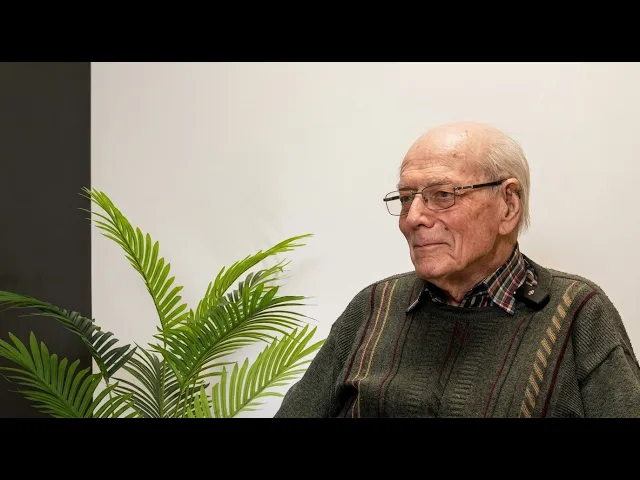
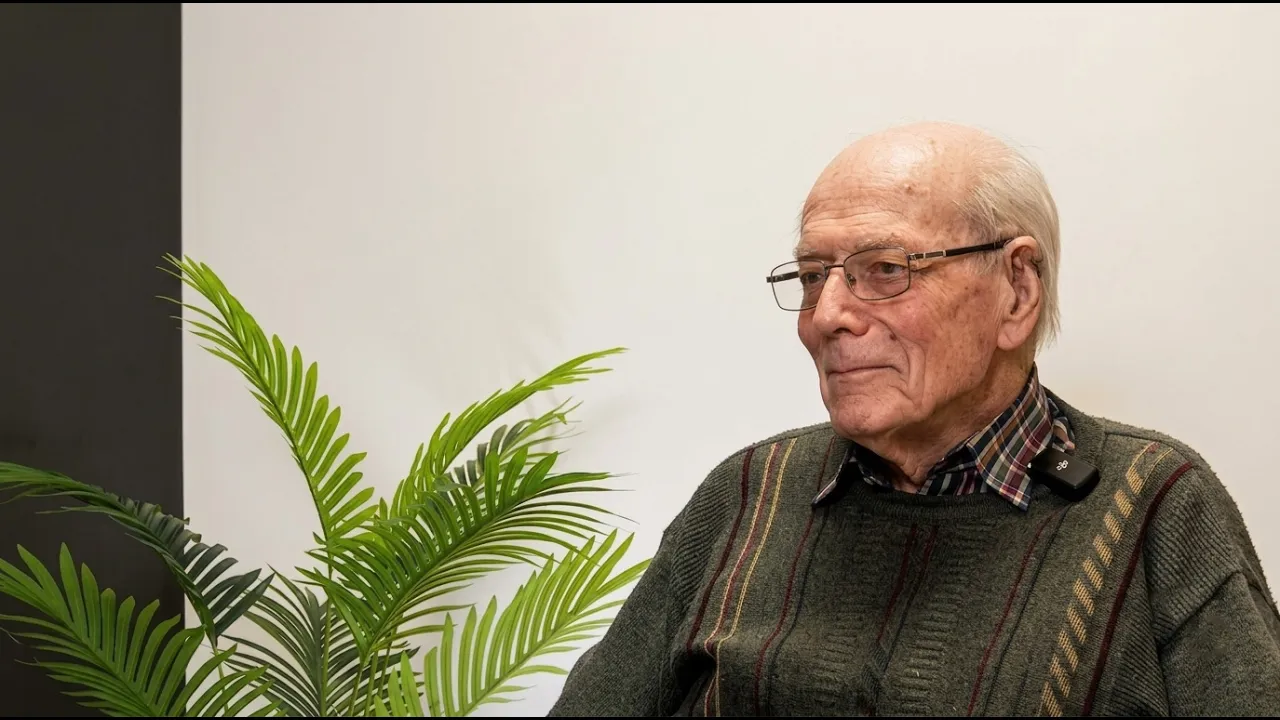
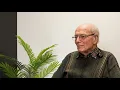
So could you tell us a little bit about yourself and what your connection is with the generator building? Well, I might perhaps begin by saying that when I came to work in it was just after the original Lurra College had divided up into four separate entities. One of these was Lurra College of Further Education and it was later to change its name to Lurra Technical College.
Right. And it taught mainly apprentices who had uh left school and were employed by local firms and I taught them engineering subjects of various kinds. Oh.
Do you know what firms might have employed them? Yes. Well, the principal employer of apprentices was the Brush Company and at that time I joined their staff.
The we were told that brush had taken on that year an additional 70 apprentices on top of what it was already training. So they really expanded the scope of their training program. And so our department of the college of further education had to expand its staff considerably to cope with this sort of thing.
There were other firms in that provided a fair number. One of them was the crane makers Herbert Morris. Yes.
And also the textile um knitting machines I think they made called cotton they employed. Oh yes. Yes.
I've heard of cotton. So that meant that the staff in the college of further education expanded uh by about 30 members and I was fortunate to be one of them. Oh.
So what could you tell me approximately what year that might have been? I think it was 1963. Aha.
The other entities into which the old college had divided included the present Lur University then called the LRA college of advanced technology. Ah um and it was all university level work that they did and also there was training college for training teachers. Mhm.
And the other one was Lurra School of Art which I think had been called the art college. Yes, that's right. So were you teaching in in the building on Frederick Street, the corner of Frederick Street and Pack Street?
Some of the time I was. Right. Uh the rest of the time was mostly spent in the building on Green Close Lane on the right hand side as you go away from the town center.
Ah so because we're really interested in the Frederick Street pack street um property. Yes. which is part the generator and now public.
Um, but was the art school that I went to because I did my foundation there in 1986 and your son did his foundation there or you did your degree in that building, right? So, um, were you in the front part of the building that faces onto Frederick Street or the back part of the building that faces onto Pack Street? Um, the entrance I used was the one on Pack Street and there was a staircase that took me to the very top of the building where I taught engineering drawing to first year apprentices who hadn't really done very much in that direction.
Was that on like a mezzanine that was, you know, like a No, it was a floor with separate classrooms in it. Ah, and was I'm just trying to pinpoint the Was it the big double doors? The main block the main the main block had a side entrance.
I seem to remember. Yes. Yes.
There was another entrance on Frederick Street. Yeah. uh where there was a lift to all floors, but we were not encouraged to use that because it meant cutting through other people's classrooms to get to the place where I taught.
I see. So, did you say you taught on the top floor? Some of the time.
Yeah. Yeah. And um what sort of things were you teaching?
Well, in that particular room, I taught the basic principles of engineering drawing. Ah. And that was to support people who were doing apprenticeships.
Yes. Yeah. It was to more to encourage their or improve their ability to read drawings that they were given rather than to actually make them.
Although some of them uh had ambitions to become engineering draftsmen. Ah I was taught technical drawing but probably far more basic than what you were teaching. We had to use very fine measurements.
Yeah. Um, so what kind of memories do you have of of being there? Um, well, uh, it's a bit remote now, but as far as I can remember, the students were always a bit distracted by what they could see from the windows at this top of a very tall building.
And one of them was a view into art college buildings on William Street which included the room where one of the models prepared for a life class. Oh. Which is a big distraction to my student.
Very distracting. So that was in 63. Yes.
Oh. Um and um has being part of the generator building influenced your life in any way? Um for example, your working life?
Not really. Uh I was just uh eventually the college of further education which became known as the technical college uh acquired premises in the new buildings erected uh on Radmore Road. Yes.
And uh we nearly all moved to that site and life was a bit more uh coherent then. I see. Did you have an awareness of the actual physical generators in the space or had they been moved by then?
The engines had been removed as far as I can remember, but some of the switch gear were still in position and control gear for the electrical system. They were rather unusual because of their origins as Uboat engines that had been dismantled as a one of the prizes of the First World War. Yes.
Um I believe the engines were made by a firm called Man, which is quite well known in Germany. Oh, really? Even now?
Yes. Oh, that's interesting. You've been to the factory?
Have you been to the factory? Yes, I've been to the in Germany. In Germany.
Oh, as a private visitor. Yeah. Right.
And what's their specialism? Excuse me. What's their specialism?
They make principal very large diesel engines of this caliber or even bigger and uh ships. They're firing ships. Yes.
A lot of ships use very big what we would call o oil engines rather than diesel engines but that's the principle on which they operated and uh they had two factories one in uh one in aber in Germany one in Nuremberg and man is machine and fabricsburg nure meaning engineering factories in Agsburg or Oh, I see. I see. But so these engines would have been built in that firm's operation.
They were instrumental in providing facilities for Dr diesel to experiment with his uh invention when it first uh emerged. Before then, there hadn't been any these diesel engines and Dr Diesel was given facilities by this firm. So, it's been quite interesting to follow the fortunes and to know that some of them ended up in Lurra.
Amazing. Um, I was going to ask you, I think your son might have mentioned to me that you have students that you've taught that have gone to different parts of the world. Is that correct?
Yes, I I had the um one one of the groups that I taught was uh Arab students who were sponsored by one of the oil companies. I think it was Shell. Mhm.
And uh they lived in what is now known as the West Bank on in Israel. So there'd been a bit of uh interest to me. Um they were very industrious and uh insisted on at one point having their photograph taken with me so they could show it to people back in Israel.
And uh I do remember one of them their leading light really uh had a surname um which occurred when there was some recent disturbance in the West Bank and I recognized the surname as being his surname although I think it was a relative of his. I hope he's not suffering as a result of it. That's amazing.
So, what what how did they cope linguistically? Did they all speak English? They all spoke English.
Yes. Adequately. In fact, I I think it was a requirement to start on the course.
Yes. Um I'm afraid I couldn't speak their language. Um what was the teaching methodology at the time?
Uh very much chalk and talk. Yeah. Um but a lot of uh the the course they were on uh I taught them physics actually and there was a physics laboratory.
So a lot of practical work was done there and the uh students that came from these uh Middle Eastern countries and were not very capable in the laboratory. They'd not done very much practical work even though they'd got up to virtually what we'd call low level to enter the course and we were often having to connect up electric circuits for them because they didn't know how to go about it. Oh and uh gradually they got used to it but uh so were they about 16 17 when they came here something like that.
Yes it varied a good deal. Yeah, depended on the oil company's selection system for them. And the apprentices that were working for Brush and the Crane Morris is it Morrises?
Yes. Um, how old would they have been? They would have just left school at uh after would that be 16 as well?
About 16. Yes. Yes.
And with it being a technical college, was that related to the old grammar school system? Uh, not really. No, no, no.
It was a The system was one called further education, meaning people who had continued their education after leaving school, formal formal school training. Oh, I see. And were they then guaranteed a job?
uh if they were apprentices it was almost guaranteed yes but I didn't always teach teach apprentices like these Arab students and uh no doubt they would be entering uh into jobs that the oil company had prepared for them. So did you meet any of the art school tutors? Was there any um relationship or connection between the different schools?
Uh not really. No, I mean we met them socially one or once or twice. I used to dine in a refactory where I was often at the same table with some art staff and uh we were always on very good terms.
Uh but apart from that uh there was no academic interchange. No, except in the family way. So tell us a little bit about the garage.
Yes, the garage we inherited from the old automobile engineering department that was had gone to the university and uh our head of department and Mr Jeffcot uh had been in touch with representatives of the garage trade and a lot of them were anxious that they should pass on the eventual management and ownership of their prosperous business uh to their sons who were they would wanted to follow in their footsteps. So Mr Jeff got proposed that we should run a course under the opaces of a industrial body called the institute of the motor industry the imi they prepared syllabuses and he laid on a course for these young men who worked fulltime on their courses they weren't part-time like the apprentices and I taught them for a long while uh in introducing them to basic engineering science principles. Oh, and that continued even after we'd moved to the Radmore Road premises.
But they used this um garage workshop in the building at the corner of Pack Street um to do their practical work on various vehicles including vehicles of members of staff if they were brave enough to bring them in to trust them. We often took our car in and had the oil changed or whatever else, routine maintenance. They they needed they've got one or two vehicles of their own, but they were always ready to do it for members of staff at their own risk, of course.
But the students were very well organized and uh would do this routine maintenance. They'd perhaps change tires for you and things like that. Do you remember when that ceized to be a garage?
No, I'm afraid not. Uh, no. Possibly when we moved to the Radmore Road accommodation because it that had got the same kind of equipment but much larger spaced out uh work and uh and still continued with this maintenance for anybody that was able to utilize it.
Um, tell us a little bit about this computer that arrived. Uh, this was not housed in this building. Um, it was housed in the building on Green Close Lane.
Mhm. And it was redundant. It was I think it was called an ACE computer.
Uh, and I don't know who designed, built it, or even owned it, but it was considered scrap. because better ones were now being used. And because it was going spare, Mr Jeff Cot, I believe it was, put in a bid for it and had it installed in this space.
It occupied a room bigger even than this room in which we're sitting now. Gosh. And that was one single computer.
One single computer and not a very good one at that. Not many members of staff learned how to handle it. and it was considered obsolete quite soon.
I might say that at the buildings we took over in the Radmore site um we installed this other computer that was redundant in somebody's works and we called it the kitchen units because they look like so many kitchen units with the works all out of sight inside. And uh they filled a room about as big as this one. Uh so much more compact than the the old computer.
Oh wow. So we had to start from small beginnings. Um are there any other points of interest you'd like to share with us about about specifically about the building on the corner of Pat Street and Frederick Street?
I'm just trying to think. I did attend uh we occasionally had to take an well every week we had to take an evening class for which we got time off during the day and uh for one year I had to take a group of the apprentices uh for this evening class um in and on the first floor of this building. Yes.
in just an ordinary classroom and not one I was familiar with. And the subject I had to pursue was um a background study uh of a television broadcast uh that was or yes I think it was a television broadcast on that evening and remember when the students arrived for it rather grumpily having to be there in the evening one of them said why can't we have on top of the pops so I explained that it was to enhance they're learning and we did the other work instead. And uh so that was a whole year's evening, one one evening a week.
I wonder if it was the same night that Top of the Pops would have been on. Oh, it was indeed. Yes.
Oh, no. They must have hated. They were having to miss it, you see, and very resentful and not very attentive to the work that I was trying to pursue.
That's uh that from memory that might have been a Thursday night. I think that was Top of the Pops. I can't remember now.
Yeah. Oh, no. That that they would have hated that, wouldn't they?
I'm sure. We used to wait all week for Top of the Pops to see who was number one. Oh, dear.
Um, so you were saying what else I did ask you what else was being taught as far as you knew in that building? Yeah, in that building. Uh, I do believe the electrical engine.
We had an electrical engineering department as well as mechanical engineering which I belong to and uh I believe they had some of the accommodation on the first and possibly the second floor but I I don't really know very much about it. So what year was it that you would have moved from there to either Green Close Lane or um Radmore Road roughly? Um well I taught in green close lane right from the beginning of my work with the uh technical college um where I also taught engineering drawing.
There was some room especially prepared with the proper draftsman's benches and uh uh much better than the one at the top of this building. Yes. Um, now I'm sorry I've lost the thread of what I was doing.
Oh, if you know what else. No, I asked you when um when you moved to Radmore Road. Uh, we did a a little bit of double-ended work.
We got we took over part of the building at Radmore while we were still using buildings at uh the town center and uh gradu and we used to jokingly refer to teaching staff who'd got classes in both rather distantly separated areas and uh always had to trot rather to get from one uh accommodation to the other. What did you used to call them? Did you say you used to have a name?
We did. And I'm trying to think what it was. There something brigade.
I think it was a a joking rather disparaging because they always running from one lesson to another at the other side of town. But gradually we got everybody up to the new premises and uh I don't know quite what happened to this building then. I have no idea.
The art college got a a grip on it. I think it became the art college. Um would you have been aware of that happening or not necessarily?
You were just very focused on what you were doing at Radmore Road. One of my sons went into the art college and uh I began to get a bit of feedback from it but I forget which parts of the buildings he was using. Tell you that on another day.
So, how did you feel about your son studying art with you having been an engineer? Oh, I didn't mind at all. He became very good at it, I might say.
Brilliant. Was it quite unusual in in in that era for somebody to choose the path of art or was it quite Well, the art college was quite a thriving body. So uh a lot it had very uh um it it had a first of all it was very popular with the local director of education who was rather proud of the fact he got a thriving art school in uh Lurra and so he would give it a lot of support of which some of us were rather envious.
Uh it was as one of my colleagues said the apple of his eye. Ah what was his name do you remember? I think his name was Stuart Mason in those days, right?
But they uh there were various people held the office in turn, but I think at that time it was. Ah, that's interesting, isn't it? Yeah, especially in light of there being such a strong move away from the arts currently.
Um, possibly. I guess in the 60s what I know about the 60s art would have been incredibly popular and and respected. Yes.
In Britain. Yeah. The art college in um was very well um staffed and uh had a larger proportion of senior lecturers than the uh other colleges than than our our college of further education stroke technical college.
And in those days were the tutors mainly male? Were there any female tutors? Yes, there were female staff.
Uh uh depended at which point in the development you considered. Um when we were based in the town center and such as there there were um I think there was a department attached to our college but a little bit independent of it called the school of librarianship and that had quite a lot of female students in it. Oh that's really interesting.
Um it was counted as a department to our college like we had one of mechanical engineering, electrical engineering, science and so on. And then there was the uh the school of librarianship but that always had a a rather free hand in how it organized itself because librarianship was a rather specialized occupation. That's really interesting because um the library now houses the heritage um group that kind of like investigate all the different heritage stories around Oh yeah.
And they have like a really amazing archive. They'd love to hear that. I don't know if they're aware of that.
That's really interesting. Yeah. No.
uh the uh art college with which had a preponderance I should say of female students was always very popular with the university students uh who like to uh make friends with them shall we say yes there's um there was always when I was there in the 80s there was a higher proportion of of females studying art than males was that the same in the 60s or Was it about 50/50? I I couldn't really say. No.
No. But in the more technical subjects uh like mine, it was I don't I think we had a a female apprentice. Okay.
Very occasionally uh with an intention of perhaps uh becoming a a tracer and the drawing office at one of the engineering firms. A tracer would produce copies of uh engineers drawings by actually tracing them in uh through on in transparent paper a bit like greaseroof paper and uh and they were nearly always women who did this. And what were the drawings kind of like A1?
Were they the drawings? The drawings were they what sort of size were they? Oh, they all they were well the ex the ones we did for training purposes were u just trying to think they're about uh 2T by 2T 6.
Oh, okay. On a big drawing board, right? And uh these re reproduced views of the components being assembled or manufactured.
uh with every detail shown as they appeared to scale in effect. And what were the drawing implements? Uh well, of course, a pencil was the principle.
Yeah. Um but uh the uh the guiding was done with the aid of usually a T-square. Yeah.
which produced a horizontal base and then uh lines at right angle to that by means of set squares. Yeah. Triangular plastic ones.
And uh you could have 30° set sorry yes 30° and 30 set squares for producing angles. And I can remember my first class in engineering drawing was how to use that to this is when I was myself a student to draw a picture of a a nut really with six sides as in a nut and bolt nut right not a walnut um so when I did technical drawing we had to use pens called rotor rings which were they were called a road training and they had a a fine ink nib. Really fine.
Oh yes. For producing ink drawing. Yes.
Oh yes. That was uh eventually if you mastered the ability to compose a drawing using pencil. You could uh work in a drawing office where ink drawings were produced with the aid of most uh draftsmen would have a complex collection of special uh pens and uh other devices for I had one myself when when I was working in the gas business.