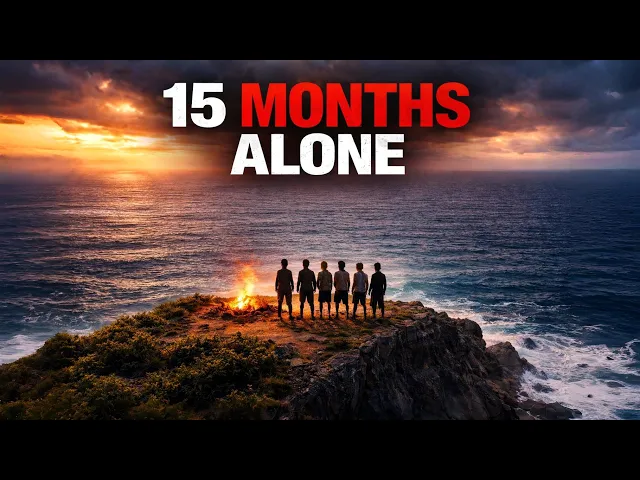
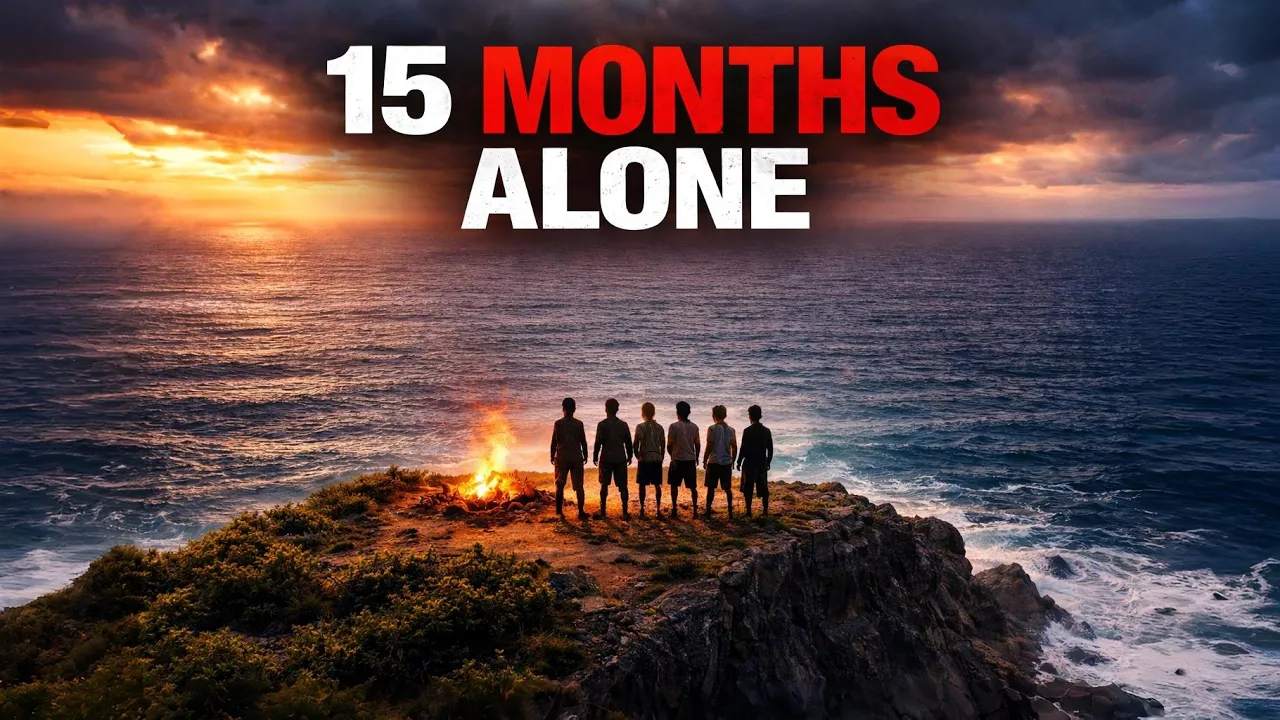
In June 1965, six teenage boys slipped away from a strict boarding school in Tonga. Stealing a small fishing boat and chasing a reckless dream of freedom at sea. They had almost no supplies, no map, and no real plan.
Just confidence and curiosity. Within days, the Pacific stripped both away, leaving them shipwrecked on a remote, uninhabited island called Ata Island. What followed wasn't chaos or savagery, but an extraordinary experiment in cooperation, discipline, and survival that would last more than a year.
In June of 1965, the boys were students at St. Andrews College, a Catholic boarding school on Tongatapu, not far from the capital, Nuku Aloofa. They were teenagers, the kind of boys whose bodies are growing faster than their judgment, whose minds ricochet between boredom and grandiosity, whose sense of consequence is still more theory than fact.
The oldest, Sion Fataua, was 16. With him were Steven Fatai Latu, Kolo Feckitoa, Sion Filipe Tottowo, Mano Tottowo, and the youngest, David Tvittita Sola, only 13. They were all from Hava, a windswept island where salt air and hard work are familiar.
But school had pressed them into a different shape. schedules, discipline, silence, the endless grind of lessons that felt like a punishment for being alive. Teenage resentment is a volatile fuel.
All it needs is a spark. The spark, in this case, was a shared fantasy to slip out of the school's grip, steal away across the sea, and land somewhere that sounded like freedom. Fiji, maybe or even New Zealand if the wind was generous and the ocean decided to play along.
It was not an especially well-planned escape. That was part of its appeal. The boys did not set out to be tragic heroes.
They set out to be briefly, irresponsibly ungoverned. They knew whose boat they would take. There was a local fisherman, Tananiela Uhila, known for his sour mood and the kind of authority that children instinctively resist.
The boys disliked him with the uncomplicated certainty of youth. In the early evening, on the day their plan solidified into action, they borrowed his whailing boat and eased it out of the harbor. No one raised an alarm.
No one noticed the small craft slipping into the open water with six boys aboard and a cargo of naive confidence. They brought two sacks of bananas, a few coconuts, and a gas burner. Provisions that made sense only if you believed the ocean was a pond and the voyage a long weekend.
They carried no chart, no compass, no map. Their navigation plan, such as it was, relied on luck, stars, and the unexamined assumption that the Pacific would cooperate. At first, it did.
The sky was clear, the sea manageable. They sailed into the dark with the electric sensation of doing something forbidden and irreversible. The night air cooled their skin.
The boat's motion had a hypnotic rhythm. One by one, they fell asleep. That decision, small, ordinary, human, nearly killed them.
A squall came hard. The ocean rose and slapped the boat with violent indifference. The boys woke to seaater crashing over their faces, to wind that sounded like something angry and alive.
David, the youngest, later joked that the older boys had brought him along because he was the only one who knew how to sail. But in that moment, knowledge wasn't enough. He hauled at the sail, and the wind shredded it as if it were paper.
Then the rudder broke. Direction vanished. The boat became debris with passengers.
For 8 days, they drifted. There is a special kind of terror in being thirsty on the ocean. Water everywhere, nothing to drink.
Their food ran out quickly. Their mouths turned dry and raw. They learned to watch the sky with the devotion of the desperate.
When rain came, it came stingily. They split coconuts and used the shells as crude cups, catching what they could, they rationed the water with a discipline that would have impressed the priests back at school. One sip in the morning, one sip in the evening.
Fishing, the obvious solution, proved less obvious in practice. The gear they had was inadequate. The sea refused to offer easy gifts.
Hunger and thirst stripped them down to pure sensation. Salt, sun, nausea, the dull ache of muscles clenched too long. On the eighth day, a shape appeared on the horizon.
Ata. In the distance, it looked like salvation. Up close, it was an obstacle course of rock and cliff and sharpedged shoreline.
Ata is mostly mountainous, its sides falling away into steep, unforgiving faces. Landing there is not a gentle arrival, but an argument with geology. The boys drove the wreck of their boat onto the rocks and paid for it in bruises and cuts.
The craft smashed apart. They were battered and bleeding, but alive. It took them roughly a day and a half to get fully ashore.
The ocean does not release people quickly, even when it's done with them. When they finally crawled onto the island and collapsed, they were too exhausted to feel anything but relief. They dug into a cave for shelter and slept.
Ata was not entirely unknown. It carried a history like a scar. Long before these boys arrived, people had lived there.
families, gardens, chickens, a village life shaped by waves and seasons. Then violence arrived from the sea. Slave raids tore the population away and the island was eventually abandoned.
Ruins remained. So did a kind of haunted silence. The boys, however, were not thinking about history.
They were thinking about the immediate problem of not dying. Sione and Steven, the two eldest, slid naturally into leadership. Though leadership on a deserted island is less about charisma than about competence and steadiness.
One leaned toward instruction, what to do next, where to search, how to organize the day. The other anchored the group emotionally, steering them toward prayer, reminding them that despair was a luxury they could not afford. They prayed together, not because prayer builds shelters or finds water, but because it gives shape to fear.
They knew almost nothing about wilderness survival. They had grown up in the modern orbit of Tonga's most populated island, surrounded by people, shops, routine. On a old life felt like a rumor.
The island did not care that they were students. It cared only whether they could adapt. They found a small overhang of rock and arranged makeshift bedding beneath it.
It wasn't comfortable, but it was protection. Water remained the urgent problem. They hollowed out trees so they could slowly collect rainwater in their cavities.
An improvised sistern that took days to yield anything worth drinking. Coconuts helped, but not enough. Desperation pushes people into choices they never imagined.
The boys climbed the cliffs to seize seabirds, not only for food, but for fluid, drinking blood when water was scarce. Without fire, they ate raw meat. It is difficult to romanticize this.
It was grim, primal, and necessary. Fire became their obsession. Every day they tried to make it.
The method was brutally simple. friction, wood against wood, a ritual of effort and disappointment. They scraped and dragged and rubbed until their hands blistered, until smoke teased them, until hope flared and died.
Then they did it again the next day. Fire was more than warmth and cooked food. Fire was a signal, a promise to any ship that might pass.
Fire was proof they were not yet ghosts. As weeks turned into months, another reality asserted itself. Survival is easier when you are not constantly at war with the people beside you.
They argued, of course. Six boys in confinement will always argue. But what they did next is what separates this story from the famous novel.
Each time tempers rose, they imposed consequences on themselves. They agreed on timeouts hours apart to cool down. They would walk alone in the jungle, cry if they had to, let the anger drain off into leaves and wind, and then return.
The rule was blunt. The group mattered more than pride. Harmony wasn't a sentimental ideal.
It was a tool. Colo the musician found scraps of wire in the wreckage of the boat and combined them with wood and a coconut shell to fashion a crude guitar. In the evenings, when the day's work was done and the light bled out of the sky, they sang.
They wrote a song about the island's harsh cliffs and the loneliness that nawed at them. About the sense that time had become unmed. Music didn't solve their problems, but it kept them human.
It gave them a language for grief. After roughly six months, fire finally arrived. The first flame must have seemed impossible, like conjuring life out of dead matter.
One moment there was only wood dust and exhaustion. The next, there was heat, light, the bright animal movement of flame licking upward. The boys erupted in a happiness so sharp it bordered on hysteria.
They understood instantly that the fire was now their most valuable possession. They guarded it constantly, fed it, shielded it from wind and rain. They built a small shelter of leaves and branches around it and moved it carefully inside like carrying a newborn.
For the rest of their time on Ada, they never let it die. Food became a structured task. To keep their bodies working, they needed a steady supply of seabirds, at least two per boy per day to provide enough meat and fluid.
Hunting on Ata is dangerous work. The cliffs are steep and cruel. A wrong step can be final.
One day, Steven slipped. He fell and landed on a thin ledge, his leg broken. In a story that ends in savagery, this is where the injured become burdens, where the strong turn away from the weak.
On Ata, the boys did the opposite. They searched until they found him. They carried him back to camp with the careful desperation of people who know they cannot spare anyone.
They set the bone as best they could and splined it with branches, binding it into place. Then they absorbed his workload without complaint. For months, Steven rested and healed while the others hunted, tended fire, carried water, did the grinding labor of staying alive.
When he finally stood again, it was a victory the whole group owned. The island, meanwhile, held surprises. As they explored farther, they reached the summit of one of flat topped mountains and discovered ruins.
The remains of the old settlement abandoned long ago. There they found plants that could be turned into food, yucka and other vegetables, and most astonishingly, chickens. Descendants of birds left behind by the vanished villagers.
They had multiplied into a feral population. The boys began catching them at night, turning it into a game to keep their spirits from collapsing under routine. Eventually, they penned about 200 chickens.
The birds gave them eggs, a reliable source of protein that didn't require risking a life on the cliffs. They tried to preserve the flock, killing and eating a chicken only when the weather made seabird hunting too dangerous. They learned to think in terms of systems, not just what fed them today, but what would feed them next month.
At some point, they built a raft and attempted escape. The plan made sense in the thin logic of longing. Anything would be better than waiting.
But they still had no compass, no map, no true understanding of currents. The raft fell apart roughly a mile offshore. They swam back, exhausted, chasened.
It may have saved them. The ocean that had nearly killed them once was still waiting. By the time a year had passed, hope had changed texture.
It was no longer bright and urgent. It was quieter, more resigned. They began to act like people who might be on at uta for the rest of their lives.
They built more permanent shelters. They revived the old gardens they found near the ruins. They divided chores in pairs, always in pairs, so no one was isolated for long, and no one carried a burden alone.
They kept schedules. They exercised daily, aware that laziness is a slow surrender. They carved out a bad mitten court and held tournaments as if the rules of a game could impose order on a world that had become largely ruleless.
During one exploration, they found human bones, remains of an old man, perhaps one of the last to linger on Ata after everyone else had been taken or fled. The boys gathered the bones and gave the man a burial and a funeral service. They prayed for him and for themselves.
Even in exile, they insisted on dignity. Meanwhile, beyond Ata's cliffs, life continued. Ships passed indifferent.
Families mourned. On Tongatapu, the boys were presumed dead. Funerals were held.
Grief is what communities do when there's nothing left to do. In September of 1966, a man named Peter Warner was at sea aboard a vessel called the Just David. Warner was young, ambitious, and determined to make a life that did not fit neatly into his family's expectations.
He was returning from Tonga when the just David approached Ota. One of his crew thought he heard a human voice. Warner dismissed it as seabirds, but agreed to take a closer look.
As the ship moved nearer, Warner noticed scorch marks, evidence of fire. In these islands, fires do not often start by accident. The marks suggested intention.
They suggested people. Warner kept his distance at first. He had heard rumors of escaped convicts marooned on islands.
Stories designed to keep sailors cautious. Then suddenly six figures appeared, plunging into the water and swimming toward the ship with frantic purpose. Their hair was long.
Their clothes were gone, worn away by time and salt, and the sheer impracticality of fabric in that environment. They must have looked wild, but there was nothing feral in their behavior, only urgency. They reached the ship and spoke to Warner in clear English.
They told him they had been missing for more than a year. They weren't sure exactly how long. They had been counting days on a slate back at their camp.
Later, it would be determined they were off by only two days. The precision after such chaos is almost unbelievable. Warner radioed Tonga with the news that he had found six boys on Ada, claiming they had run away from school.
On the other end of the line, there was silence, then emotion. The operator's voice reportedly broke. The boys had been given up for dead.
Funerals had been held. If this was true, it was a miracle. Warner brought them back to Tongatapu.
Relief should have been the end of it. It wasn't. Tananiela Uhila, the fisherman whose boat they had taken, had not forgotten.
The law is often less interested in context than in categories, and theft was theft. The boys were arrested and imprisoned. Warner, confronted with the absurdity of punishing boys who had survived 15 months on an uninhabited island, decided to intervene.
He devised a plan. He would help make a documentary about their story and use the proceeds to pay for the stolen boat. He paid.
The boys were released. Families were reunited. Parents held sons they had already mourned.
Doctors examined the boys and were astonished not only that they were alive, but that Steven's leg, set on a cliffbound island with branches and faith, had healed with little more than a scar and full function. It was a small medical miracle produced not by technology, but by care and patience. Only weeks after their rescue, the boys returned to Ata with Warner to film the documentary.
The island that had nearly killed them had also, in a strange way, raised them. In 1966, the documentary aired on Australian television. Warner was celebrated as a hero, and he received fishing rights in Tongan waters from King Talfa Tupo IV, an official reward for an act that began with curiosity over scorch marks.
Years scattered the boys across the map. Colo Feckitoa died in 2017 at 71. Others built lives overseas in Australia, the United States, New Zealand, carrying with them a story that sounds like myth, but has the stubborn texture of fact.
Colo kept the coconut guitar. The song they wrote on Ata did not vanish. It endured like a footprint in stone.
Ata itself remains uninhabited. The island's earlier residents were torn away by violence and the land never fully recovered its people. The Castaways in their documentary expressed a hope that one day Tonggins might return and repopulate Ata, not as stranded boys drinking seabird blood, but as a community choosing to live there again.
For now, that hope has not become reality. The cliffs still stand, the ruins still weather, the island waits, indifferent and patient, the way islands do. And that is the uncomfortable truth at the center of this story.
The boys were not saved by becoming beasts. They were saved by refusing to. They made rules when no one forced them to.
They tended the injured. They separated when angry rather than escalating. They worked in pairs.
They exercised, they sang, they kept a fire alive for months and months. Not because it was romantic, but because they understood that survival is rarely a single heroic act. Survival is the decision repeated daily to do the unglamorous thing.
Gather water, feed the flame, check on your friend, keep your hands busy so your mind doesn't turn against you. If you want a moral, the obvious one is that humans are better than we fear. But the deeper lesson may be harder to swallow.
We are not doomed to savagery, nor are we guaranteed decency. What we become under pressure depends on what we choose to build when no one is watching. What rules we invent, what responsibilities we accept, what stories we tell ourselves in the dark when the ocean is still roaring beyond the rocks.
On Ata, six boys chose again and again to build a small civilization out of almost nothing. And that more than any fictional island bloodbath is what should make us stop and stare. If you found this story as powerful as we did, take a moment to like the video.
It really helps the channel reach more people. And if you enjoy true stories that challenge what we think we know about survival, human behavior, and the edge between order and chaos, subscribe to the channel. There are many more stories like this waiting to be told.