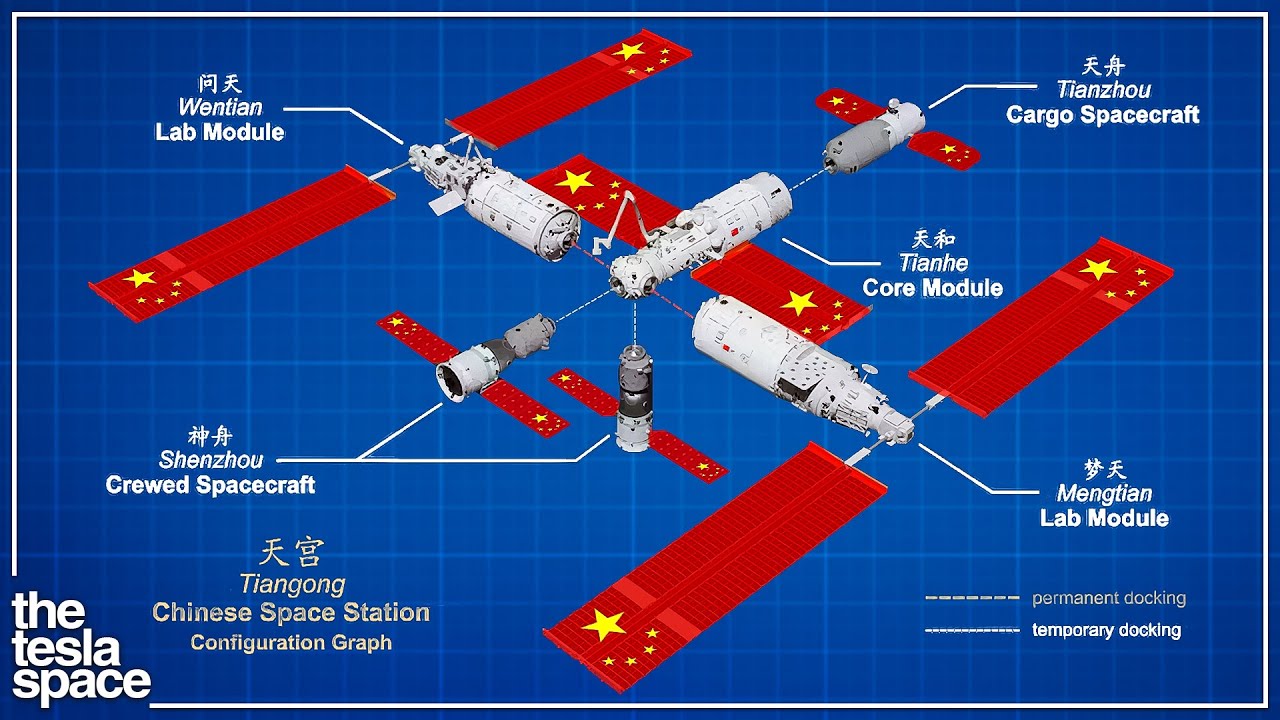
China successfully launched its largest carrier Market on Tuesday carrying a new generation spacecraft for years China has been making rapid advancements in technology pushing the limits of what we thought was possible but now they've just revealed something so powerful so Advanced that it could change everything we know about the world from artificial intelligence to space exploration China has been competing fiercely with Global superpowers but this latest breakthrough is unlike anything we've seen before what is this mysterious new technology how will it affect industries economies and even Global power stay with us as we uncover the shocking details of China's latest Innovation and how it could shape the future of humanity China's latest rocket launch a new Chinese carrier rocket designed to send up bigger batches of satellites in one launch was reported to have made its first flight on February 11th 2025 at 1134 a. m. eastern standard time this was revealed by scientists who claimed that the rocket is meant to boost beijing's strategy of countering us billionaire Elon musk's oversized presence in Earth's lower orbits via space X the roots of the Chinese space program could reportedly be traced back to the 1950s when with the help of the newly Allied Soviet Union China began the development of its first ballistic missile and Rocket programs in response to the perceived American and later Soviet threats driven by the successes of Soviet Sputnik 1 and American Explorer one satellite launches in 1957 and 1958 respectively China launched its first satellite dongfang Hong one in April 1970 aboard a long march one rocket which made it the fifth Nation to place a satellite in orbit China is now known to have one of the most active space programs in the world with space launch capability provided by the Long March rocket family and four space ports jukan taian XI Chang Wen Chang within its border China is believed to have conducted either the highest or the second highest number of or launches each year the scope of their activities has expanded from low earth orbit to the moon and Mars which makes China one of the three countries alongside the United States and Russia with independent human space flight capability now let's take a look at China's 10 recent space programs it promises to change everything the tiangong space station the tiangong is a permanently crude space station constructed by China and operated by China man space agency tiangong is a modular design with modules docked together while in low earth orbit between 340 and 450 km which is approximately 210 and 280 Mi above the surface it is regarded as China's first long-term space station part of the tiangong program and the core of the third step of the China manned space program it is reported to have a pressurized volume of 340 cubic M and approximately 12,000 ft slightly over 1/3 the size of the International Space Station the space station was designed to provide opportunities for space-based experiments and a platform for building capacity for scientific and technological innovation according to China's Mann space agency which operates the space station the purpose and mission of tiangong is one believed will help to develop and gain experience in spacecraft Summit Technology permanent human operations in orbit long-term autonomous space flight of the space station regenerative life support technology autonomous cargo and fuel supply technology it was also designed to serve the platform for the Next Generation orbit transportation and scientific vehicles which included practical applications at Large Scale in orbit and technology for future deep space exploration cmsa was reported to have encouraged commercial activities led by the private sector and hoped their involvement could bring cost-effective Aerospace Innovations an era of X-ray telescopic micro satellites in June 2017 China's first astronomical satellite the hard x-ray modulation telescope was launched from the 603 Launchpad of the LC 43 launch complex of the jquan satellite launch Center in Northwest China it was reported to have been developed by China Academy of space technology the satellite was intended to observe the Milky Way and develop ideas about black holes gamma ray bursts and the Interiors of Pulsar the design and construction of the hard x-ray modul telescope was carried out by The Institute of high energy physics of the Chinese Academy of Sciences this stability and resolution this duration of the measurements this makes the system unique The Institute was also reported to have developed payloads and the scientific ground segments for the satellite the telescope is one of China's modern innovations that uses the direct demodulation image reconstruction method proposed osed by ihep scientists Le Bay and W the satellite is known to be based on the z12 and Phoenix I2 satellite bus platform developed by the Chinese Academy of space technology with a launch mass of 2500 kg the satellite was designed for a 4-year mission life the hxm was reported to have been officially approved in August 2011 as the satellite design and produ ction launch commenced in December 2016 following acceptance of its Proto flight model the details of the spacecraft's first round of core scientific observation tasks were unveiled in June 2016 which included a total of 90 core observation proposals that were also gathered from six Cas institutes as well as 10 colleges and universities the HX Mt satellite is known to have three main payloads including high medium and low energy x-ray telescopes it can obtain high quality x-ray images of the regions using direct demodulation method and scanning observations the telescope is reportedly helpful in detecting large areas using pointed observations with high statistics and high signal to noise ratio the HX MTS main objectives include scanning the galactic plane to to find new transient sources monitoring the known variable sources and search for x-ray binaries to assess the Dynamics and emission mechanism in strong gravitational or magnetic fields it will also find and study grbs using a CSI detector Chinese lunar exploration program the change for the change for is a robotic spacecraft mission in the Chinese lunar exploration program of the CN sa it was reported to have made a soft landing on The Far Side of the Moon the first spacecraft to do so on 3 January 2019 this spacecraft was believed to have been originally built as a backup for Chang a 3 and became available after Chang a 3 landed successfully in 2013 the configuration of Chang A4 was reportedly adjusted to meet new scientific and performance objectives like its predecessors the mission was named after Chang the Chinese Moon Goddess a communication relay satellite qu Yao was first launched to a Halo orbit near the Earth moono 2o in May 2018 the robotic Lander and u22 were also reported to have been launched on 7 December 2018 and entered Luna Orbit on 12 December 2018 before landing on the moon's Far Side on 15th January it was announced that seeds had sprouted in the Luna Landers biological experiment the first plants to sprout on the moon the mission is the followup to Chang 3 the first Chinese landing on the moon in November 2019 Changi 4 Mission team was reportedly awarded a gold medal by the Royal aeronautical Society in October 2020 the mission was also awarded the world space award by the International astronautical Federation both were the first time for any Chinese mission to receive such Awards the change for's Mass was about 3,780 kg and is expected to last for 12 months stick around for far more exciting Revelations about the Chinese space program sheno 19 in one of China's most recent space programs a team of two men and one woman was part of those build to replace the astronauts who have lived on the tiangong space station for the last 6 months conducting a variety of experiments and maintaining the structure the sheno 19 spaceship which carried the trio was reported to have blasted off from the jukan satellite launch Center in Northwest China on October 29th 2024 at 4:27 a.
m. local time a top a long march 2f rocket which happens to be the backbone of China's crude space missions they are expected to stay until April or May of this year 2025 the new Mission Commander Kai Shu went to space in the sheno 14 mission in 2022 while the other two song lingong and Miss Wang hay were reported to be firsttime space Travelers Mrsng and Miss Wang were reportedly born born in the 1990s and they are reported to be graduates of the third wave of Chinese astronaut recruitment having undergone a rigorous testing and training process taking years early Wednesday on October 30th 2024 morning China reportedly declared the launch and entry into outer space a complete success the state broadcaster of China's Central television said that the crews condition was good and the launch was successful China is now known to have built its own space station after being excluded from the International Space Station mainly because of us concerns over the people's Liberation Army this is believed to be a part of a growing rivalry with the US and others which included Japan and India Landing of the zurong Rover on Mars besides putting a space station into orbit the Chinese space agency is reported to have landed an Explorer on Mars China's Space Program took a major leap in 2021 when it successfully landed the jurong Rover on Mars marking the country's first landing on another planet the touchdown makes China the second country in history to deposit a Rover on the surface of Mars after months in orbit around the red planet the tianwen one spacecraft released the girang Rover for a landing in ut I Opia pentia a vast plane that may once have been covered by an ancient Martian ocean the 529b Rover is reported to have survived a perilous descent to the surface which included an atmospheric entry slowing from supersonic speeds with a parachute and finally using retro Rockets to safely alight on the ground teams are now believed to be prepared to roll the Rover off its Landing platform and onto the dusty Martian surface to begin a mission to search for evidence of water and hints of past life the Chinese space agency also aims to put a person on the moon before 2030 which would make China the second Nation after the United States to do so plans are also reported to be ongoing to build a research station on the moon and is reported to have already transferred Rock and soil samples from the Moon in a first first for any nation in decades and placed a Rover on the little explored Far Side of the Moon in a global first Michelle Blanc at the research institute in astrophysics and planetology in France said Mars is significantly harder to land on than the moon but claimed China has had a series of successful Luna missions that prepared it for a Mars Landing Blanc added that change 4 which happened to be history's First Landing on the Luna Far Side in 2019 required High technological capacity in artificial intelligence and autonomous Hazard avoidance the rocket engines on Jang are reportedly similar to those China used to safely land three spacecraft on the moon launch of the change five and change six Luna sample return Mission China reportedly made another historic stride in its deep space Endeavors in May 2024 as the Long March 5y8 carrier rocket blasted off at 527 p. m.
from the wenchang space launch site in South China's tropical island of hyan sending the change six lunar probe onto its Odyssey in the world's first ever attempt to bring back lunar samples from The Far Side of the Moon the China National Space Administration cnsa confirmed the success of the launch after two two pairs of solar panels of the spacecraft opened smoothly the media reported that the round trip of Chang 6 to the moon and back reportedly took about 53 days more than double the duration of its predecessor change 5 which returned samples from the near Side of the Moon in some 23 days the media added that the longer duration indicated more complex flight stages researchers have designed 11 stages for change six which included launch and orbit insertion Luna transfer among others the amount of moon samples to be returned is also expected to be larger than the change 5 Mission it is expected to retrieve around 2,000 G of lunar dust and rocks an increase of some 270 G than the last time the chang6 mission is aimed at breaking new ground in lunar retrograde orbit design and control intelligent sampling on the moon's far side and Ascent from the lunar surface according to the cnsa the agency further revealed that it will conduct an automated sample return from the moon's Far Side along with scientific exploration of the landing area and international collaboration it was designed that after flying into orbit it will head toward the moon a research fellow revealed that upon reaching its vicinity the probe is expected to break into the lunar orbit and then fly around the orbit during which time the Lander and Ascender combination will land on The Far Side of the Moon launch of the Long March 5B on May 5th 2020 China's new large carrier rocket Long March 5B made its Maiden flight the trial version of China's new generation man SPAC ship and A Cargo return capsule for test into space was reported to have been sent the China manned space agency said the successful flight inaugurated represents the Third Step of China's manned space program which is to construct a space station the white large rocket reportedly blasted off from the wenchang space launch Center on the coast of Southern China's Island province of hyan at 6:00 p. m. Beijing time according to cmsa the experimental man spacecraft with no crew together with the test version of the carg return capsule was separated from the rocket and entered the planned orbit about 488 seconds later specially developed for China's manned space program Long March 5B will be mainly used to launch the modules of the space station Wang Xiao Jun who happened to be the head of China Academy of launch vehicle technology under the China Aerospace Science and Technology Corporation Cas said the Long March 5B carrier rocket will help expand China's Aerospace activities modified on the basis of Long March 5 the new large rocket has a total length of about 53.
7 M which is as tall as an 18f floor building and has a 5 m diameter core stage 4 3. 35 M diameter boosters as well as a 20. 5 M long and 5.
2 M diameter fairing the rocket uses environment friendly propellants in including liquid oxygen liquid hydrogen and kerosene it has a takeoff mass of about 849 tons and is able to send over 22 tons of payloads equivalent to the weight of more than 10 cars to low earth orbit which is currently the largest low earth orbit carrying capacity among China's Rockets the successful Maiden flight is reported to have verified the design of the rocket a series of technological breakthroughs have also been achieved such as the separation of the large fairing the payloads in space and the precise control of the rocket to enter orbit directly with high thrust cmsa said this has laid the foundation for constructing China's space station the new man spacecraft is designed to adapt to multiple tasks including low earth orbit missions and deep space Explorations the spacecraft comprises a service capsule and a return capsule The Academy of space technology under KES said the mission will test the key Technologies of the new spaceship such as the control of its re-entry into the atmosphere heat shielding and Recovery technology some space science experiments including space 3D printing will be conducted on the experimental spacecraft but that's not all launch of the shijian 21 satellite on 24th October 2021 China launched the debris mitigation technology Satellite shijian 21 on a longar 3B vehicle from xlc Chiang satellite launch Center in Southwest China's Sichuan province into a geosynchronous orbit the US military tracking data indicated the launcher placed the shijian 21 spacecraft into an elliptical geostationary transfer orbit ranging as high as 22253 Mi which is approximately 35,8 km above the Earth with an inclination of about 28. 5 de to the Equator the orbit suggests shijian 21 will use its own propulsion to circularize its orbit more than 22,000 miles over the equator at that altitude in a geostationary orbit the space craft will reportedly move around earth once every 24 hours traveling at the same rate of the planet's rotation in a release statement the China Aerospace and science technology corporation confirmed the launch was a success KSC said the shijian 21 satellite was built by the Shanghai Academy of space flight technology part of the government-owned space industry the shijian 21 spacecraft was developed by the Shanghai Academy of space flight technology s s in September unveiled a supplemental service spacecraft concept at the jew high air show the US space forces 18th space control Squadron spcs is reported to have cataloged a new object alongside shijian 21 with the international designator 2021 d0 94c the object is noted as a rocket body and more precisely an apex kick motor used in some launches for a satellite to circularize and lower the inclination of its transfer orbit and enter geostationary orbit launch of the tianwen 1 Mars Orbiter Lander and Rover the list would not be complete if we didn't mention the launch of tn1 the interplanetary mission by the China National Space Administration cnsa is reported to have sent a robotic spacecraft to m cars this consists of six spacecraft an Orbiter two Deployable cameras Lander remote camera and the zurong Rover the spacecraft with a total mass of nearly 5 tons is believed to be one of the heaviest probes launched to Mars and Carries 14 scientific instruments it is the first in a series of planned missions undertaken by cnsa as part of its Planetary Exploration of China program the missions scientific objectives include investigation of Martian surface geology and internal structure search for indications of current and past presence of water and characterization of the space environment and the atmosphere of Mars the mission was reported to have been launched from the wenchang spacecraft launch site on 23rd July 2020 on a Long March 5 heavy lift launch vehicle after 7 months of Transit through the inner solar system the spacecraft entered Martian Orbit on the 10th of February 2021 for the next 3 months the probe studied the target Landing sites from a reconnaissance Orbit on April 14th 2021 the Lander and Rover portion of the mission successfully touched down on Mars making China the third Nation to make a soft landing on and establish communication from the Martian surface after the Soviet IET Union and the United States on 22nd May 2021 the girang Rover drove onto the Martian surface through The Descent ramps on its Landing platform with the successful deployment of the Rover China became the second Nation to accomplish this feat after the United States China is regarded as the second Nation to orbit and the first one to carry out landing and rovering missions on Mars successfully on its Maiden attempt tianen 1 is also the second mission to capture audio recordings on the Martian surface after the United States perseverance Rover the small set deployed by the jurong Rover on the Martian surface consists of a drop camera which photographed both the Rover itself as well as the tianen one Lander with a mass of less than 1 kg the tianen one remote camera is believed to be the lightest artificial object on Mars as as of May 2021 the tianen one mission was also the second of three Martian exploration missions launched during the July 2020 window after the United Arab Emirates space agency's hope Orbiter and before NASA's Mars 2020 Mission which landed the perseverance Rover with the attached Ingenuity helicopter drone the jurong Rover is reported to have lost contact in 2023 after after failing to awake from a scheduled hibernation launch of the sheno 13 crude Mission China on October 16th 2021 reportedly launched the crude spaceship sheno 13 sending three astronauts to its space station core module Tian for a six-month Mission according to the China manned space agency cmsa the spacecraft which is on top of a long march 2f carrier rocket was launched from the jukan satellite launch Center in Northwest China's GOI desert at 12:23 a. m.
Beijing time about 582 seconds after the launch sheno 13 separated from the rocket and entered its designated orbit the cmsa declared that the crew members were in good shape and the launch was regarded as a complete success the sheno 13 is known as the 21st flight Mission since the country's man space program was approved and initiated for China's space station project the three astronauts aigang the commander and China's first space walker Wang yaping the first Chinese female astronaut to visit China's space station and Carry Out extra vehicular activities and yuang Fu a newcomer to space they are expected to set a new record for China's manned space mission duration exceeding the 3 months kept by the sheno 12 crew from June to September the previous year it was reported that once it enters orbit the sheno 13 spaceship will conduct a fast automated meeting and connection with the inorbit combination composed of the space station core module Tian and the cargo Craft tianu 2 and tianu 3 the astronauts will reportedly be stationed in the core module it was announced that the astronauts will have assignments which includes operating mechanical arms performing extra vehicular activities and having module transfer tests they will also continue to verify key Technologies concerning astronauts long-term stay in orbit as well as recycle and life support tanzu 3 carrying supplies for the sheno 13 crude mission was launched and docked at the rear meeting Port of Tian on September 20th currently the complex formed by Tian and the two cargo craft has entered an orbit for connection and meeting with the sheno 13 spacecraft and boarding of the three astronauts five launch missions were reported to have been planned for that year namely the launch of the Tian core module tianju 2 cargo ship sheno 12 crude Mission tanjo 3 cargo ship and sheno 13 crude Mission now let's take a a look at the latest Space Program launched by China that threatens to change everything buckle up because things are about to get wild the heavy lift long march at a launch China's space program is reported to have hit New Heights with its most recent rocket launch in years on February 11th 2025 the heavy lift Long March 8A blasted off for its Maiden flight at 5:30 p. m.