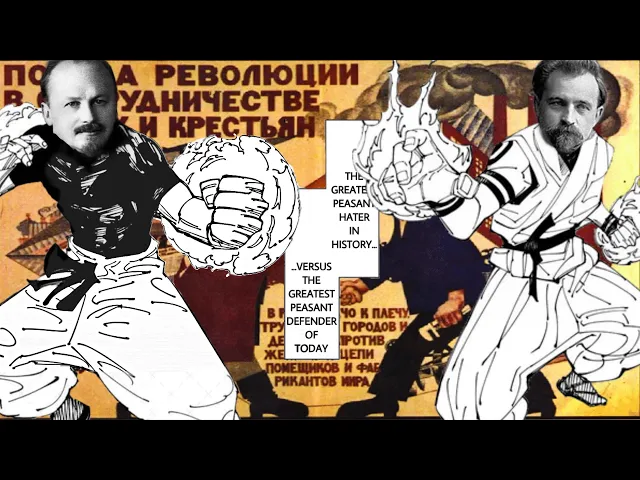
in 1918 bukharan and pinski were United as left Communists in opposition to the bris lovk treaty and the next year in 1919 they collaborated and created the ABCs of Communism which educated aspiring communist militants around the world for years to come when the bolik proad vka was initiated in 1918 it was welcomed by both and in 1920 bukar would provide a theoretical justification and eulogized practice in his book the economics of the transition period but when linen introduced the New Economic Policy in 1921 bukharan who had by that point left the left became the foremost
Advocate and theorist of this policy while on the other hand PR brazinski was hostile to its implementation the two economists once United and anti- peasant Ultra revolutionary attitudes now stood on opposite ends on the industrialization debate and clashed constantly on what was to be the proper policy which the Communist dictatorship should take in regards to the peasantry industrialization and the construction of socialism in the USSR when the bolik transitioned from revolutionary party to ruling party they also were forced to transition from dreamers into active Builders rather than just speaking of modernization they were now the
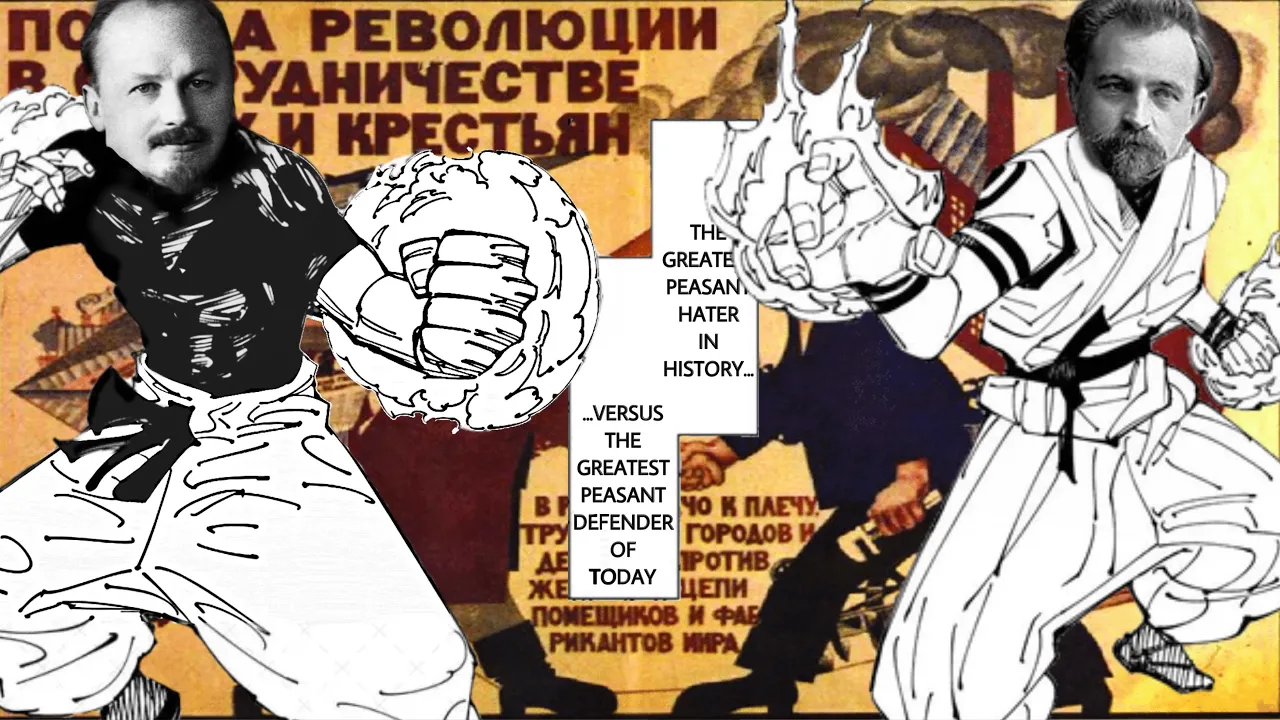
ones forced to create that new Society with their own hands thus bolik ideology itself was forced to undergo a transformation because the standard bolik Orthodoxy did not provide the necessary tools for this new evolutionary modernist role thrust upon the bulvik party according to Cohen the bolik party was quote bifurcated by two conflicting ideological and emotional Traditions the party it scene was split into two The Romantics versus the pragmatist the left versus the right y have jinny alexovich pinski versus Nikolai Ivanovic bukharan between 1921 and 1923 bukharan began to rethink his positions according to Cohen he
published noticeably less during this period the onetime leader of the left communist had upon the introduction of the New Economic Policy come to moderate his views by 1923 he had come around to a New Vision a new understanding of the bik's role in the Revolutionary process Cohen quotes bararan saying in the fire of this self-criticism the illusions of the childhood period are consumed and disappear Without a Trace real relations appear in all their sober nakedness and proletarian policy acquires an appearance sometimes a less emotional but therefore a more assured character a solid one adhering closely
to reality and therefore much more truly changing this reality from this point of view the transition to the New Economic policies represented the collapse of our Illusions for buaran the illusion was war communism but what was Corporal what existed and made itself real was the New Economic Policy according to buaran the introduction of the NEP outdated the party program introduced just 2 years earlier in 1919 as well as his and PR brain's own ABC of Communism which had become a bull Bible in a world revolutionary hand guide in bukharin's revised thinking he began to create
his theory of equilibrium in the construction of socialism via the NEP Cohen states that larin's new Concepts was the idea that civil peace should replace civil conflict but this did not mean the cessation of the class struggle instead it meant that the class war would take up a form of an economic struggle a peaceful competition that took place on the market from this he would formulate the concept of The evolutionary path of socialism the idea that the process of establishing socialism would be a prolonged period of development of the ussr's industrial and Economic Institutions he
began to present Russia as a two-class society with the proletar and the driver seat and the peasantry and the shotgun the relationship between the proletary and the peasantry featured heavily in bukharin's new understanding of Marxism in the 1920s in 1925 he spoke of the peasant as the quote great liberating force of our time he began to view the world itself as a global City encapsulated by a global Countryside where the majority of the world's population resided the masses of the peasants being a majority and the prolar being a minority the smitka will not just be
a Russian phenomenon but a worldwide one a global smitka between the Soviet state and all the peasants of the world needed to be created and sustained domestically he also began to move away from the standard peasant stratification into various High middle and low segments that have been characteristic of bolwig thinking for so long now instead he he spoke of the peasantry as a wider Mass whose economic Alliance would ensure the victory of the dictatorship of the proletariat and subsequently socialism bukharin's Theory culminated thus in an increasing justification of the concept of socialism in one country
which he helped promote with Stalin in 1924 in 1925 but while bukharan accepted adopted and defended the provisions of the NEP from day one p brazinski stood against it initially K brazinski like bukharan was greatly in favor of War communist policies in 1920 he wrote a pamphlet titled paper money in the age of proletarian dictatorship where he upheld the death of the Russian currency as a Prelude to the Future abolition of money in communist Society even when PR brazinski came around to accepting the necessity of the NP he was still skeptical of it he feared
that within the provisions of the NP was a potential back door for petty bua counterrevolution immediately after its introduction P binski would write a book titled from NEP to socialism which is written in the form of quote a series of lectures proport ly given in 1970 which described the course of development of the Soviet economy and the decade after the book's publication within the fifth lecture the prediction proo pinski has for how Russia would develop is laid out where in the past the economic situation of Europe was one based upon an economic link between socialist
Russia and capitalist Europe and prio brain's vision of the future or rather his description of the past from the future Soviet industry was able to quickly subordinate agriculture to itself he determines that nationalized farming and State Industries will expand greatly as a result of the tax in kind and the state industries would play a greater part in the role of developing the national economy he imagined that over the course of some years with the recovery of Industrial Enterprises to their pre-war outputs various Industries such as aircraft chemical production and machine production will grow to such
an extent that they will produce for the domestic market and they would export their products leading also to Greater economic ties of the countryside and a subsequent fall in industrial prices although in PR in's Vision the NP was to be limited and yearby year as the situation improved socialist Enterprises would eventually overcome capitalist relations in the countryside he still imagined the NEP to last longer than it actually did in his text he speaks of the first decade of the ne during the course of which money was increasingly phased out of production Estate Planning and distribution
took over but all of this represented a vision during the actual course of development he bukar began to draw plans based on the existing experiences the NP agriculture as we know assumed a primary role in the early Soviet economy it was to be the lynchpin of Soviet industrialization on this aspect the party leadership took up the position that industrial prices should be reduced so that demand for manufactured goods would increase amongst the peasantry in 1923 and more so 1924 the first challenge to the prevailing Theory and economic practices of the party leadership came following the
scissors crisis here PR brazinski in the left challenged the quote ideology of the restoration period coming out against the party line and with a strongly worded letter to the Central Committee in October 1923 but even before then KW binski was at the Forefront of the left minority opposition to the party's policies to paraphrase Cohen in the appeal of the 46 the bolik left accused the party leadership of not having a long-term industrial plan then they demanded an energetic and planned development of Industry that operated independently of the rural Market they accused the party leadership of
prantis and representing a kulak deviation they attacked Ban's ideas which would in time represent bolik Orthodoxy as quote middle peasant bolism for p brazinski the entire fate of socialism in the USSR hinged on its rapid industrialization the question then was how to achieve this in pinsky's Vision the way to achieve this was through a large investment in the industrial sector that would enable both expansion and Technical reconstruction of the Soviet industrial base where is this investment to come from The Peasant economy to quote Cohen he called for a quote massive preliminary transference of surplus value
from The Peasant sector to the state industrial sector while the right-wing party leadership favored giving increasing concessions to The Peasant so that he might produce more the plan advocated by P binski advocated for increasing pressure on well-to-do peasants the kulaks that is this acquisition of resources from the countryside the preliminary transfer of surplus value PR pinski thus termed primitive socialist accumulation a term which he borrowed from Vladimir shirov but for pinski he used this term in an analogous manner to the primary accumulation that occurred during the formation of capitalism during the process of the creation
of the original capitalist system the resources needed for the accumulation of capital were acquired in a particularly violent and hostile manner this was something that Marx termed primitive accumulation the capitalist system presupposes the complete separation of the laborers from all property and the means by which they can realize their labor as soon as capitalist production is once on its own legs it not only maintains the separation but reproduces it on a continually extending scale the process therefore that clears the way for the capitalist system can be none other than the process which takes away from
the labor the possessions of his means of production a process that transforms on the one hand the social means of subsistence and of production in the capital on the other the immediate producers into wage laborers the so-called primitive accumulation therefore is nothing else than the historical process of divorcing the producer from the means of production it appears as primitive because it forms the prehistoric stage of capital and of the mode of production corresponding with it the economic structure of capitalist Society has grown out of the economic structure of fetal Society the dissolution of the latter
set free the elements of the former this was the analogy P binski was making when describing how the USSR would accumulate its resources for industrialization however in pinsky's mind that sort of violent exprop cation of resources that occurred under the capitalist variant of primitive accumulation was both unnecessary and quote on principle not an option the socialist economy needed to Devour the capitalist one but it would do so apparently without repeating the compulsary violence that occurred under capitalist primary accumulation the law of primitive socialist accumulation for PR brainsky was instead actually to quote Alexander elich a
quote dramatic illustration for his idea the law of value had to be suppressed as far as possible the concept of the law of value featured primin impr brazinski understanding of the world economy and the Soviet economy's position within that economy for marks the law of value was that unseen but evident rule which governed the general function of capitalist economy every commodity's value was determined by socially necessary labor time the exchange value of these Commodities represented in money Capital was then regulated by the law value as those prices fluctuated this General law applied just as much
to the world economy as it did to the practices of that individual capitalist whenever he made his investment decisions P binski believed that in the new phase of capitalism Monopoly capitalism that is that the law of value no longer operated on the world stage because of trustifi and cartelization each segment of the world economy operated in closed worlds economic Thoms if you would PRI binski believed however that all of the world's value relations had come to be dominated by American Capital and that the United States represented a hegemonic entity which the whole world economy revolved
around the only way to escape this hemony then was to fall back into a form of socialist protectionism which meant maintaining the trade Monopoly and baring the influx of foreign Goods through this protective shield socialist state-owned Enterprises would not have to worry about competition will not have to operate on the law of value but instead Beyond it the goods produced by the those Enterprises would be sold above their value as a measure to increas Surplus peacefully but forcefully but as you can probably tell I've contradicted myself here that is because P barinsky failed to see
the contradiction in his own views but it defined his view of the path of socialism regardless that of the isolated economic unit free from the vacillations of the market PR brainsky was accused by his adversaries of treating the peasantry as a sort of internal colony from which the imperialist Socialist industry would extract resources much like the colonial Nations did in their overseas possessions but pinski envisioned a peaceful economic struggle over blatant robbery his vision called for the artificial inflation of the prices of Industrial Products and the depression in the prices of agricultural Goods so that
the peasantry would be compelled to invest in the development of Industry with this formula of non-ac equiment exchange KW brazinski basically endorsed the price scissors as a method for accumulation the left as a whole called for a dictatorship of Industry when faced with these attacks from the left it was bukharan the only Economist in the party's top leadership who was forced to defend the party's Economic Policy he argued that pinsky's program was politically and economically dangerous because it would inev alien the peasantry as Cohen writes any policy that risked a conflict with the peasantry no
matter how compelling its economic reasoning was unacceptable to bukharin he was certain that the party would be the loser in such a confrontation the indispensability of the peasantry support the inviability of the schm mitchka he now saw as the Cardinal lesson of Russia's revolutionary history the revolution of 1905 was a failure because there was not a smitka between the urban movement and The Agrarian peasant movement that was the Supreme lesson for us all underlining the whole importance of the Union of workers and peasants bukharan denounced pinsky's method the law of primitive socialist accumulation as a
monstrous analogy a frightful dream and a gang KH plan to which P brazinski charged bukar with an outburst of moral indignation the party managed to undermine pinsky's ideas by associating them with trky who had speed similar rhetoric on industrialization and had himself become a member of the left opposition after the appeal of the 46 but the konel of that Alaric system that came to Define Soviet industrialization was always present in pinsky's writings he was not as Keen as trosy to tie the faith socialism in the USSR to world reevolu ution within both pinski and BK's
writings despite the former's lip service to the necessity of the proletarian revolution in the west existed the justification for socialism in one country both bukharan and P brazinski agreed that Soviet industrialization would primarily occur on the basis of internal resources but where they disagreed was on practice and Tempo according to bararan the difference between the party leadership and the opposition was that the opposition stood for an excessive transfer of resources while while the party leadership quote calculate much more soberly the proletarian state was to develop as fast as the peasant allowed him to the Communists
were to as bukar put it quote ride into socialism on a peasant nag slow but stable bukharan developed a concept of socialist industrialization that was distinct from the historic capitalist examples according to bukharan capitalist industrialization was based on quote parasitism of the city in relation to the countryside the parasitism of a metropolis in relation to colonies the hypertrophic bloated development of Industry serving the ruling classes along with the extreme comparative backwardness of agricultural economics especially peasant agricultural economics in contrast socialist industrialization was based on the rule of the proletariat it was an industrialization carried out
by the proletariat for the proletariat for bukharan socialist industrialization was not parasitic in relation to the countryside but transformative and uplifting therefore the new task of the Soviet state was not to exploit the peasantry the countryside for its own benefit but to develop the rural regions economically and culturally industry thus was to turn its face to the countryside another aspect of bukar vision of industrialization was the necessity of the consumer market and consumer goods he believed that production was directly tied to consumption the Zar State collapsed because of the laps in consumer goods if the
Soviet state were to allow a price scissors it would suffer a similar fate accumulation for socialist industry therefore could not outpace peasant demand they could not move in a manner that antagonized their primary Market according to bukharan the economy existed for the consumer not the consumer for the economy this view on consumer goods also tied back to his critique of the foreign trade Monopoly which P brazinski wished to maintain bukar argued that a flow of cheap foreign Goods will boost peasant productivity and thereby also stimulate the domestic econ which sold Goods that complemented those foreign
products bukharin would then describe the rural and urban economies as a single economic conglomerate and one which determined the temple for industrialization Cohen summarizes BK's ideas as such the reciprocity of the two sectors was expressed for bukar and mutual demand and Supply rural demand was twofold the peasant desired first of all consumer goods and simple agricultural implements but as accumulation in The Peasant economy progressed he would also require complex producer Goods such as tractors peasant demand therefore served to stimulate all branches of Industry light and heavy the left viewed planning as a way to promote
immediate and extensive investment in heavy Industry bukharin's Program envisaged a different pattern of industrial growth looking to mass consumption as the spur and to the capacity of the internal Market to determine proportions within industry made necessary the adaptation of Industry to The Peasant Market imit beginning with a development of Industries producing for personal consumption textiles for example and allowing heavy industry to grow as a result of the chain process this was how bukar and Justified the economic concessions given to the peasants in the netman in 1925 when he famously proclaimed we must say to the
whole peasantry to allet strata enrich yourselves accumulate develop your economy a slogan which would eventually bite him in the ass later down the line but from Ban's economic point of view the removal of barriers in the increased development of trade was the fastest measure to economic growth and thus the best means at increasing the tempo of industrialization he argued that with the current restrictions The Peasant was afraid to accumulate under fear of being labeled a kulok if the peasant economy was to develop and consequently also the rate of growth in the industrial sector was to
increase then those measures which restricted the growth of the peasant needed to be discarded from bukharin's understanding accumulation by the peasantry the enriching of the peasantry as a whole would lead to the eventual destruction of the kulacs El describes his views as such the growth of cooperation would raise the economic level of the peasantry as a whole and thus sap the foundations of the kulak's power true the kulaks could also Avail themselves of this Superior technique of organization either by setting up cooperatives of their own or by infiltrating those created by others but the gain
secured by poor and medium peasants who had been previously to a varying extent dependent on the village Rich would be much greater particularly since they would have on their side the allout Port of the state the sharply progressive taxation would narrow the income differential still further moreover part of the disposable income of the kulok will be saved and drawn into the Nexus of the socialized sector of the economy and contribute to its expansion through the channels of a nationalized credit system the end result of this gradual leveling and increasing dependence on state controlled commanding Heights
will be a youth en Asia of the kulok after he had very much against his will rendered a Yaman service to the socialist economy a classical piece of hiel although bukharan spoke of taking the snails pce to socialism this was not based off a doctrinal vision he didn't explicitly desire slow industrialization in fact he even argued that his own program would lead to the fastest pace of industrialization not the lefts what bukar had actually advocated for was for the state to not go beyond its means that it did not try to outpace The Peasant the
tempo of accumulation could not be independent from the productive forces of agriculture if the situation improved to such an extent that the state could move faster with its program then it must do so but if the current situation called for a slow pace then it must oblige in bukharin's eyes he was a realist while his opponents the third revolutionist were madmen and lunatic utopians bukar felt that his sober practical calculations stood staunchly against the voluntarists who thought that they could subject the economy to their will in pinsky's eyes on the other hand the expanded tempo
of production was necessary for the survival and flourishing of the Agricultural sector of the economy an Arrested Development of Industry that relied on peasant demand would not sufficiently encourage the peasants to intensify their own production as the 1923 scissors crisis influenced bukar the 1925 Goods famine defined pinsky's views buar solution and justification for the latter commodity Imports did not fly of P binski who argued that such a policy would in fact undermine the domestic Industries rather than help stimulate them stating that an inflow of foreign Goods will kill 2/3 or 34s of Soviet industry with
this he argued for the continued maintenance of the trade Monopoly in 1926 the dispute would reemerge and once more bukar and P brazinski Squared off as bukar began to revise his thinking once more PR brazinski expanded on his socialist accumulation thesis in the book titled the new economics which he also released that year by then bukar had also started to take the goods famine more seriously and started to advocate for more investment in the industrial sector coupled with this was War scare which caused bararan to frustratingly declare that the Soviet Union was moving far too
slowly in its Journey towards industrialization the fear of War had been a great influence on the rights domestic and foreign policy domestically it influenced a reconsideration on industrialization and pushed them in favor of a faster than previously advocated Tempo in 1927 p binski and the rest of the super industrializers would be expelled from the party bukharan it seems had Consolidated the party's position and they'll be moving forward with his revise industrial program but just as it seemed that the lunatic madman had been removed bukar and's urwal comrade in arms in the war against the super
industrializers began to speak of a right danger a deviation that was Paving the way for the restoration of capitalism though not explicitly mentioning bukar or his allies by Name Behind the Scenes Stalin was undermining bukar and over the course of 1928 to 1929 he sidelined then completely removed bukar from leadership Stalin now driving the Soviet boat began to speak of rapid industrialization and collectivization within Stalin bukharan saw the Spectre of PRI brazinski he saw the ghost of trism which he believed that he had vanquished bukharan even went as far as to call Stalin a neot
trite in bukharin's eyes Stalin was enacting pinsky's genas Khan plan which industrialized the Soviet Union via what bukar described as the military fudal exploitation of the peasantry what a shock it must have been to bukharin when he traded one set of lunatic indust izes for another whose lunacy it seemed to him was 10 times worse than what he previously struggled against the only difference then was that this time the lunatics won and now their program he can only criticize in Asian language rather than openly and Through official party organs