all right so I know what you're thinking this guy is an idiot how on Earth could impostor syndrome be an advantage but hear me out if you stick with me for less than 15 minutes I'm going to explain to you the good side of impostor syndrome and I'll also address how you can deal with the negative aspects as well if you're new to the channel my name is Matt I'm currently a strategy and operations associate at Google before that I was a Management Consultant at BCG and I made these videos because I enjoy it but
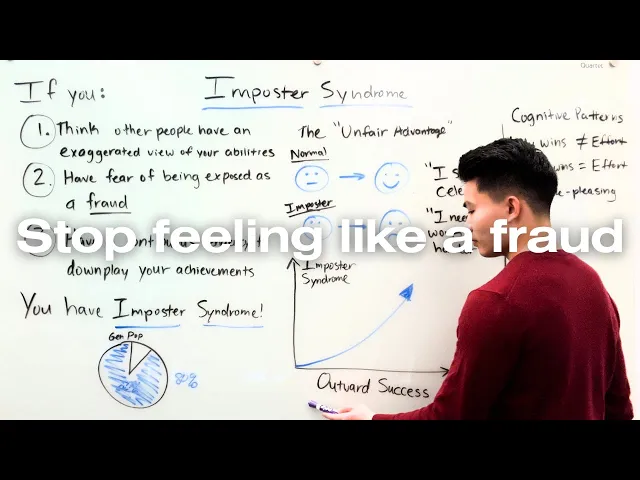
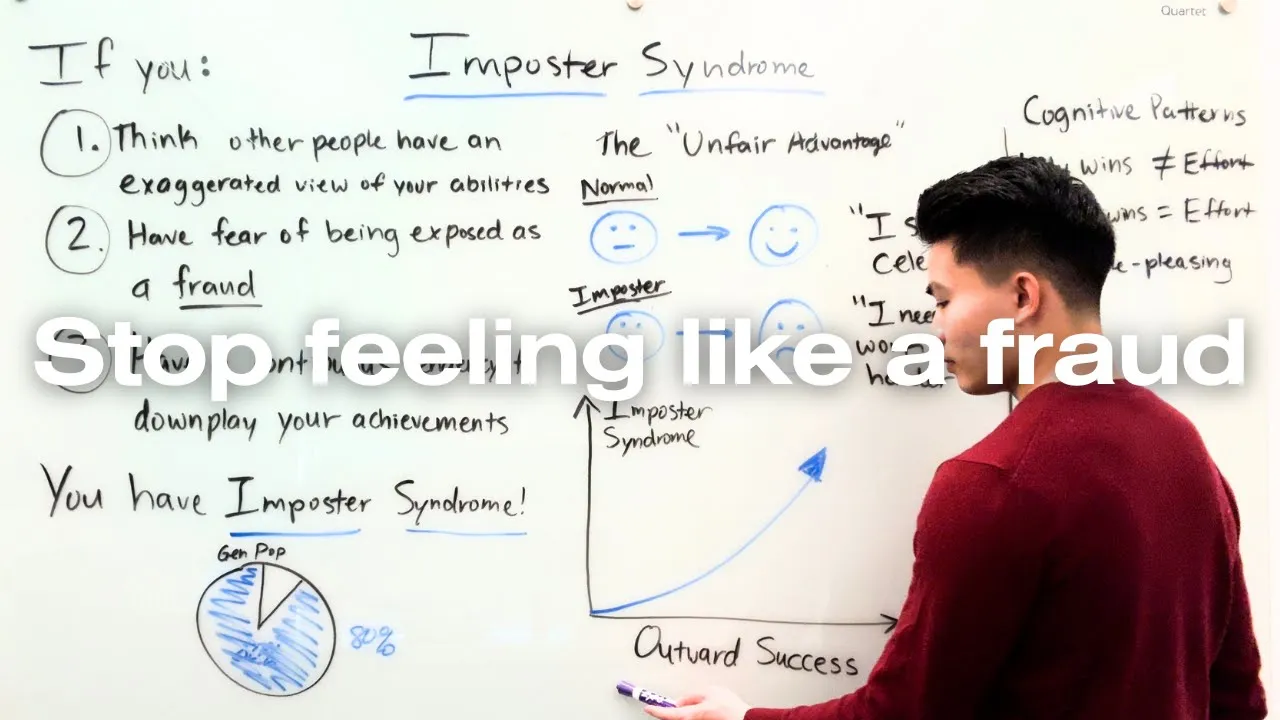
without further Ado let's get right into it so if you are someone who finds yourself running through any of the following three thought patterns then you have at some point or another probably experienced impostor syndrome now the first thought pattern is you think other people have an exaggerated view of your abilities and so whenever you achieve something or whenever you accomplish something you have the nagging voice in your head that says oh I'm not actually as skilled or I'm not actually as deserving of what I just accomplished and I'm scared that other people might find
out which leads to the second thought pattern which is that you have a fear of being exposed as a fraud and like I said this is that little voice in your head that nags at you and says oh you better not slip up you better be careful the next time because your parents or your professor or your co-workers your boss might find out that you're not actually as smart or as hardworking or as intelligent as they think you are and then what are you going to do right now the third thought pattern is that you
have a continuous tendency to downplay your achievements and I find myself to be guilty of this one a lot of the time where no matter how much I achieve or no matter what successes come into my life all of which I'm super grateful for by the way but no matter what comes to me and no matter what I do well in I feel almost bad about talking about it with people or when other people congratulate me I feel almost weird I get this embarrassed feeling and I don't want them to think that I'm so impressive
I downplay my achievements and I think part of this is from the experiences that we have growing up for example if you're like me and you grew up in an Asian household maybe you were taught or it was internalized from from a young age that being humble is a positive quality and so even though you work really hard for your achievements you feel bad about bragging about them and you don't want to be that guy who's super loud and telling everyone how great he is I mean let's be real this isn't just a cultural thing
I think most people if you're someone who's self-aware and knows your own limitations you kind of feel weird about bragging to other people and it's not really seen as a positive quality but if you find yourself doing this to an unnecessary degree and even to an irrational extent then you may be suffering from imposter syndrome and it's highly likely that you watching this video right now you have impostor syndrome at least at some point in your life you've experienced it because Studies have shown that around 80% of the general population has experienced impostor syndrome at
one point in time or another throughout their life and so you're not alone but this leads to the next question which is how on Earth would this be an advantage mat because if I feel like a fraud and I feel like people are going to find out that I'm not actually as successful as I am how on Earth would this be beneficial to me now I'll explain to you why so the quote unquote unfair ad Advantage actually comes from the automatic thoughts and the response that your brain has whenever you succeed at something and so
under normal circumstances with someone who doesn't have imposter syndrome your initial reaction when you achieve something is you're happy and you think to yourself I should celebrate and maybe you do go out and you celebrate and you have a nice dinner with your family or you do something fun with your friends and that's what you should do right you should celebrate these successes but if you're someone who suffers from impostor syndrome what actually happens in your head is that success it doesn't actually lead to you being happy even though maybe in the moment you feel
kind of good immediately afterwards your first thought is oh shoot I now need to work twice as hard to keep up the appearance because otherwise if you slip up now your professor who right now thinks that you're so smart or the best student in the class he's going to find out that when you bomb the next test that you're not actually the good student that he thought you were or your parents are going to find out that you're not actually that amazing son that they thought they had or your boss is going to find out
that he hired the wrong employee ooh now I know I'm sort of making fun of this right now but personally I experienc this a lot and some of you watching this might be surprised to hear but there's been many instances even recently where I feel like I suck at my job and I feel like I don't deserve to have the roles that I've landed over the course of my career and I feel like the next mistake is going to result in my boss or my co-workers finding out that I'm not actually the person that they
thought I was and so why am I telling you this well whoops somebody just walked in on me recording this so where was I so why am I telling you this I'm telling you this because I want you to know that even someone who may look outwardly successful may suffer from impostor syndrome and it's actually been shown that outward success is correlated with impostor syndrome and so you'll find as you talk to more and more people who are very very successful regardless of what field they're in whether it's in the corporate world or in Academia
there will be more and more people these high achieving individuals who actually suffer from impostor syndrome now correlation is not necessarily causation but I think it's a really important point that a lot of successful people suffer from impostor syndrome and this automatic adaptive response that they have where they think to themselves I need to work twice as hard after they achieve something is actually something that is a bit of an unfair Advantage because it causes them to continue working super hard to achieve the next goal and the next goal and then this kind of compounds
over time but this is not a great thing when it comes to your mental health even if it results in you being very successful outwardly and so there's three things that are critically important to understand when it comes to dealing with the negative effects of imposter syndrome so we need to understand the three cognitive patterns that result in impostor syndrome so the first pattern that people have is they don't attribute their own successes to their own effort or they underweight the impact of their own effort on their successes I clearly remember when I landed my
Investment Banking role out of college I thought to myself oh I got lucky oh it just happened that that person that I reached out to that person that I networked with just happened that they were in a great mood that day and then they forwarded my resume to HR and this is that friend that every time they succeed and you congratulate them they say oh no no no I didn't actually work that hard I got lucky I don't even know how I ended up getting the interview it just happened somehow sound familiar now the second
pattern is that tied to that you attribute other people's successes 100% to effort and you forget the fact that there's other factors at play that contribute to other people's successes and I find that the best way to make this worse is to go on LinkedIn and to search up a bunch of people that look very impressive and to just assume that their efforts led to all of these successes their hard work was 100% the reason that led to this nothing else and the last thing is that you have a tendency to be a people pleaser
and I am guilty of this I always want to make sure that everyone's happy whether it be my friends my family my bosses even if it's at the expense of my own own mental health I want to do whatever it takes to make everyone proud of me and to make everyone happy and that's a problem for a lot of high Achievers because you're willing to basically sacrifice your own well-being at the expense of what other people think of you which is something that you have limited control over and so how do we deal with these
three thought patterns well with the first one you need to remind yourself about what you did to actually achieve this goal I think it's very easy sometimes to overlook the effort that we actually put in and all the little things that we did to stick with that goal and ultimately lead to that success so if you can just stop for a second every time you feel yourself thinking oh I just got lucky just stop yourself and think okay what did I actually do oh yeah I networked with 100 people oh yeah I applied to 50
roles oh yeah I got rejected in a bunch of interviews but I made it to the final round with this interview because I prepped super hard that day before and oh yeah I did put a lot of effort into this goal and I do deserve this goal even that simple reframing can go a long way with the second one you need to remind yourself that other people's successes are not always 100% attributed to Pure effort now I'm not saying that when your friend succeeds and get an internship at Goldman Sachs that you should downplay their
efforts you should be very happy for them but what I'm saying is you should remind yourself think about what other advantages maybe that they had and remember that LinkedIn is a highlight re and finally with the third thing people pleasing I know it's easier said than done but you need to try and stop placing so much emphasis on what other people think of you instead find Value and joy in the actual achievement itself and the accomplishment of that achievement and all the work that you put be happy about the fact that you committed to something
and you achieved that goal that alone should be enough not just thinking oh I I'm not going to be happy until my professor congratulates me or I can't be happy until my parents say good job we're proud of you son as much as I want that now all of these seem like small things but if you can just consciously stop yourself every time you feel that impostor syndrome those Tendencies and those thoughts coming through and remind yourself of all the work that you've put into it then you're already one step closer to reducing those feelings
of imposter syndrome because honestly being even aware of the thought patterns behind impostor syndrome that are leading you to feel like a fraud and to feel scared that people are going to somehow find out that you don't deserve to be there is the first step to taking care of this problem that's all I got for you guys I hope you found it helpful and I'll see you in the next one peace