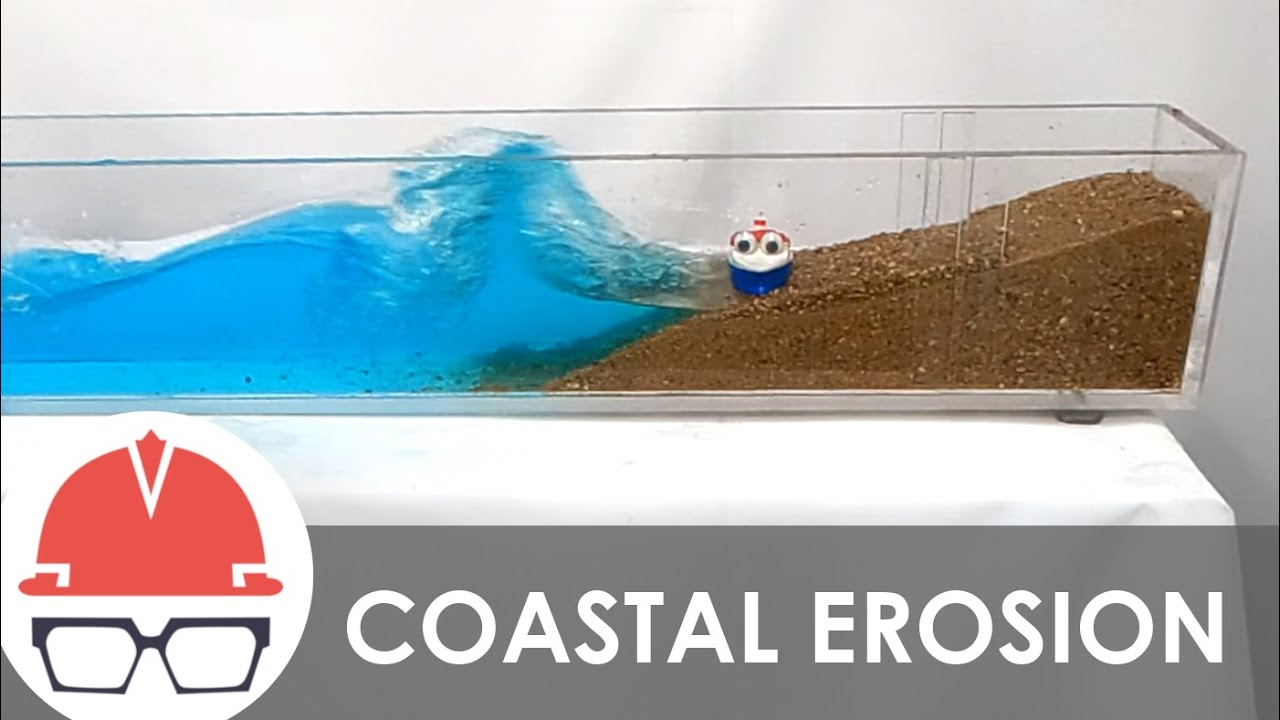
foreign executive editor of nejm evidence and this is stat you're hard at work conducting a study that examines the rates of flood damage based on how far people live from the ocean you decide to compare the rates of insurance claims from a Seaside neighborhood with those from a neighborhood a little farther from the shore you track the insurance claims that are filed for almost three years and you're shocked by your results people living farther away from the coast were actually more likely to file an insurance claim for flood damage how could this have happened is
everything you thought you knew about the risk of flooding wrong of course not there were just some real problems with how you set up your study one major issue you didn't count for an important competing risk in this case the chance that during the study period homeowners fortified their houses to protect against flood damage why would that matter what do we mean by competing risk let's take a closer look suppose that like you many participants in the study population recognized that climate change has increased the chance of flooding by the coast so many people who
lived by the water decided to do major construction and erect stilts for their home in fact of the 50 households in the by the Sea group when you started or then three quarters of them converted to Stills during the study period when a big storm came this made all the difference and just seven of 50 by the Sea households had flood damage and filed a claim by comparison of the 50 households in the away from the sea group just one erected stilts and after the big storm nine homeowners filed claims for flood damage in this
case whether people converted their homes to stilts dramatically changed the risk of flooding no analogy is perfect but this same issue that the occurrence of one event can prevent or change the likelihood of the occurrence of another comes up in research all the time when events compete with each other to produce the outcome of Interest they're known as competing events the probability of one of these events occurring among the other potential competing events is known as a competing risk let's look at a couple examples of competing events in clinical trials a patient can die from
cancer or from a heart attack but cannot die from both therefore a clinical trial of a cancer treatment in which the primary outcome is death from cancer needs to account for the competing risk of death from other causes or consider whether people with osteoarthritis of the knee have pain is of course affected by whether they've undergone a knee replacement therefore a clinical trial evaluating a medication for knee pain from osteoarthritis in which the primary outcome is a pain score at one year needs to account for the competing risk that participants in the trial underwent a
knee replacement during the study period you can imagine that in these examples accounting for competing events is crucial in fact not accounting for competing risks typically leads to an overestimation of the probability of the outcome so how do we account for these competing events competing risk analysis typically uses a mathematical model such as the cumulative incidence function to estimate the probability of one event say death from cancer while accounting for the probability of other events say death from other causes that preclude the possibility of that first event we won't get into more details now but
the key message is to be on the lookout for competing events when you're evaluating a clinical trial or study and as far as your study of floods is concerned it's time to get back to the drawing board before the next big storm