hey everyone God bless you and thanks a lot for tuning in what you're about to listen to and watch is a reflection that I made on the subject of the filioque doctrine that took place in a larger discussion in our Global catechism Zoom I hope you enjoy it and that it will be edifying for your soul God be with you it says father Josiah would you please elaborate on the heresy of the filioque and how it diminishes the Providence and power of the Holy Spirit it's a very important question I'm looking for our questionnaire Rachel
is are you I think I see a Rachel that's you so the Philly Oakway uh it's called that that Western heresy is called filioque from the Latin Philadelphia and that those words together were added to the Creed definitively in the early 11th century uh by the pope at the time this it happened in 1009 it had first shown itself uh credily uh in the 5th Century in what is now Spain as an attempt by the Spanish Bishops to put push back against a uh re-emergence of the Aryan heresy which taught that Jesus is the highest
of All Creatures but not the co-eternal Son of God a terrible blasphemy against the deity of Christ of course the Aryans were put down at the first ecumenical council and then again definitively in the second Council uh but there was because of the incursion of The Barbarians after the fall of Rome into what is now Western what we call Western Europe uh many of these barbarians separated themselves from the the Christianity of the Empire by embracing a form of arianism and some of the uh the Spanish or Iberian Bishops there were trying to uh push
back against that heresy they thought that by taking Saint Augustine's uh thoughts about the in his work on the Holy Trinity in which he made an affirmation uh that of the procession of the Holy Spirit from the father and the son though obviously it wasn't in discreet and he knew it wasn't creedal it was his kind of contemplation he had a lot of contemplations remember it was a complex philosopher loved universally by the fathers but not for his experimental theology uh most of uh the great fathers loved Saint Augustine especially because of his piety especially
because of his confessions his most famous of all books and his government of the church but uh that that Dogma that was contemplated by Augusta was picked up by these Bishops they were heavily criticized by the pope two centuries later the Franks did the same thing uh promoting the filial quest and again were around 800 were chastised by not just the Eastern Patriarchs but by the pope and he had the original Creed of nicaea in Greek and its original Latin translation affixed to the doors of the Vatican to Saint Peter's as a matter of fact
those plates still exist they're not on the doors of Saint Peter anymore but if you walk through the doors into Saint Peter Church in Rome they're in the narthex on the south side of the Northeast you can still see the original when uh the popes changed their mind uh about the filioque in the 11th century and they actually inserted into the Creed there was a cessation of commemoration of the Pope uh by the Eastern Patriarchs because that Not only was he affirming a heresy the Philadelphia heresy which was articulated as such in great detail by
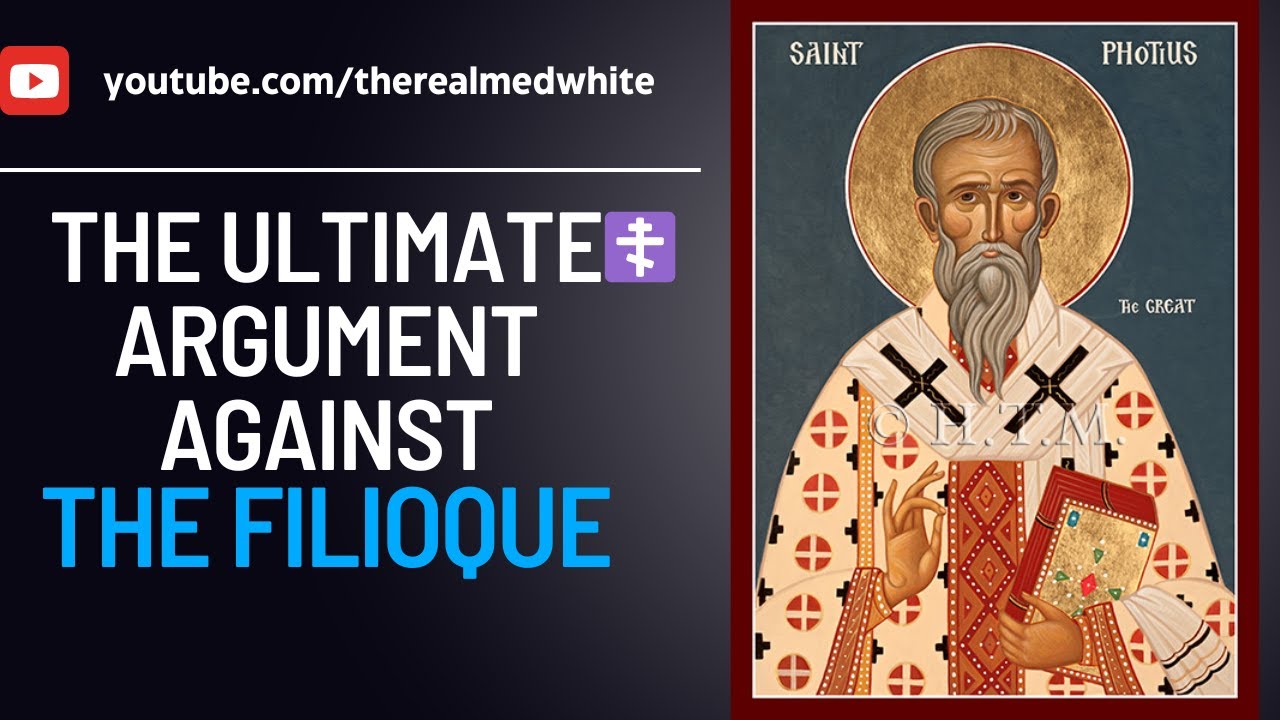
Saint fortius the great in the 9th century in his mystagogy of the Holy Spirit and then picked up later by uh other fathers like Saint Gregory Palomas in great detail this is 14th century Saint Mark of Ephesus in the 15th century we have a lot of material on the era of the field of the filioque but that uh that heresy has been embraced and held since the 11th century in the west not only is it a heresy I mean I'll explain what's so dastardly about it in a second but it's also uh inserting it into
the Creed was an act of immense Pride on the part of the Pope as though the pope had authority over The ecumenical Creeds of the church up until the poll the reign of a very uh arrogant Pope named Nicholas the first uh in the middle of the 9th century this was the opponent of Saint fortius the Great up until that time of Nicholas the canon law collection in the east as well as in the west began with the apostolic cannons the 85 Apostolic cannons was followed by the Cannons of The ecumenical councils then by the
local councils then by the holy fathers and by and particular Patriarchs in the west that's where you would find papal decrees at the end of that canonical collection after the 9th century after Pope Nicholas the first and remember this is also the time of the Hideous Catholic lies known as the isidorean decretos and the Donation of Constantine these were forged documents to support this concept of the Pope as being the universal head of the Church of being possessing spiritual as well as temporal power complete forgeries but Pope Nicholas promoted them like they were authentic decrees
given by the great equal of the Apostles and God Crown King Constantine supposedly these these document it's had were preserved the preservation of documents from Constantine's reign in which he gave his Tiara his crown to the pope and declared that he had Universal Authority even over the temporal realm complete garbage completely made up but used for six and a half Centuries by a succession of popes who wanted power to is to to redefine the government of the church and so after this period after Nicholas's use of these these these documents they redesigned the Western canonical
collection and instead of being Apostolic Canon's ecumenical councils local councils Etc well guess what's at the top papal decrees as though they are the most important and most authoritative uh collection what's so terrible about the Philadelphia heresy what's so terrible about the filioco heresy is that uh it attacks the unique persons of the Father Son and Holy Spirit In This Way the theological principle of the church is that whatever is not shared by Common Essence that which makes God God is unique to the person so what uh the Father the Son of the Holy Spirit
all share a common nature a divine nature things constituted like a by omnipus omnipotence the fact that God is all-powerful omniscience the fact that God is all-knowing uh wisdom Etc uncircumscribability all of those things are simply qualities that make God God and they're shared equally by the father by his co-eternal son and by the Holy Spirit whatever is unique to the father Son and Holy Spirit that is not part of that common Essence belongs only to the person so the father for instance is the origin or the monarch of the Trinity the thus his son
is begotten of him outside of time and the Holy Spirit spy rates are his gender or is proceeding from him the son is the son and this is the unique qualities of the person of the Sun what sets him apart from his father is that he's not the father he's not the origin he's the only begotten he's the Beloved son who has always rested in the father's bosom he is the Father's word and the Holy Spirit proceeds from the father so what's unique about the Holy Spirit is not that he's on all-powerful or all knowing
those are qualities of divinity that he shares with the father and the son what's unique about the Holy Spirit is that he is the spirit who proceeds from the father and he rests upon the son as soon as you take one of the qualities which is the quality of the Holy Spirit uh to be proceeding from the father and you apply it to another person so you say now that the Holy Spirit proceeds from the father and the son you have immediately attacked that principle that theological principle of how to know God which is that
what's common to the deity is common to all three persons and whatever else is unique to the particular person that is no more because now the father and the son share something that is not a quality of divinity it's a quality of the person that the Holy Spirit does not share the father is no longer just a monarch and the son just the only begotten but they together are the source from which the Holy Spirit processes so now the father and the son have something together that is not divinity or else the Holy Spirit would
have it too and is not unique to their person because they're sharing something that the Holy Spirit does not share there is some aspect of the Divine relationship unique to the person that the Holy Spirit has nothing to do with and it's this demotion of the Holy Spirit and this violation of the of the theological principles of the church that whatever does not belong to the common nature is unique to the person that we find so offensive in the affirmation of the filioque and we think that's why the Catholics have the the Latins in general
have once they've demoted the holy spirit in the relationship of the persons of the Trinity make excluding him from some sort of relationship that the father and the son share that he doesn't share as a result the very glue of the church which is the holy spirit he who binds the church together in its the anthropic life has been demoted and therefore they've tried to hold themselves together by the creation of an external worldly apparatus which hasn't worked they've created all of these things since the uh Embrace of the filioco heresy the College of Cardinals
and um the inventing papal infallibility and all of these ideas about how powerful the pope is in order supposedly to hold the church together and Governor but what do we see uh great theological chaos that makes the the small disagreements that Orthodox hierarchs have between each other look like Child's Play compared to what's going on in the Catholic world uh theologically speaking so we think it has tremendous results negative results [Music] patristic nectar Publications is pleased to present a new six-part lecture series by father Josiah trenham entitled demonology understanding and winning the spiritual battle the
study of the church's demonology is a part of basic catechism and Christian instruction the scriptures are replete with teaching on the dark Powers additionally it is impossible to appreciate the magnitude of the saving Deeds of our savior the Lord Jesus Christ without understanding how he and he alone has conquered Satan and destroyed his Works lastly Christians are called to fight and win in the spiritual war and for this reason it is essential that Believers understand their enemies and their tactics toward this end father Josiah presents in these lectures in-depth studies of the scriptures Divine services
and pedagogy of great Saints and teachers on the subject of Satan and spiritual battle for these and other available titles please visit our website at patristicnectar.org [Music]