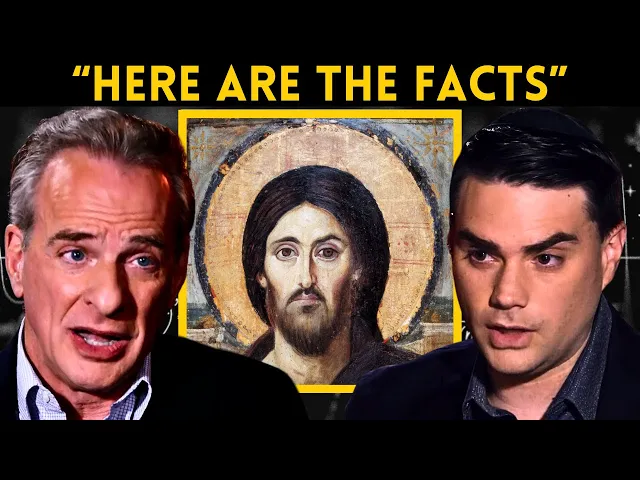
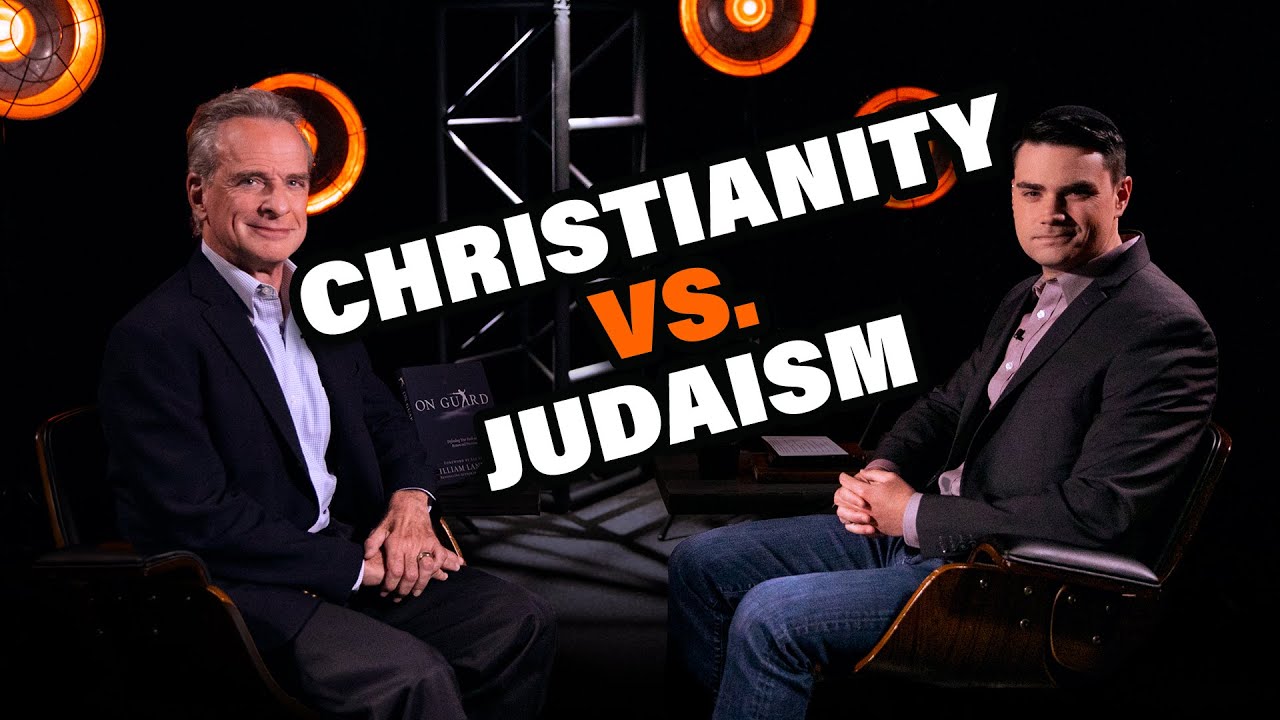
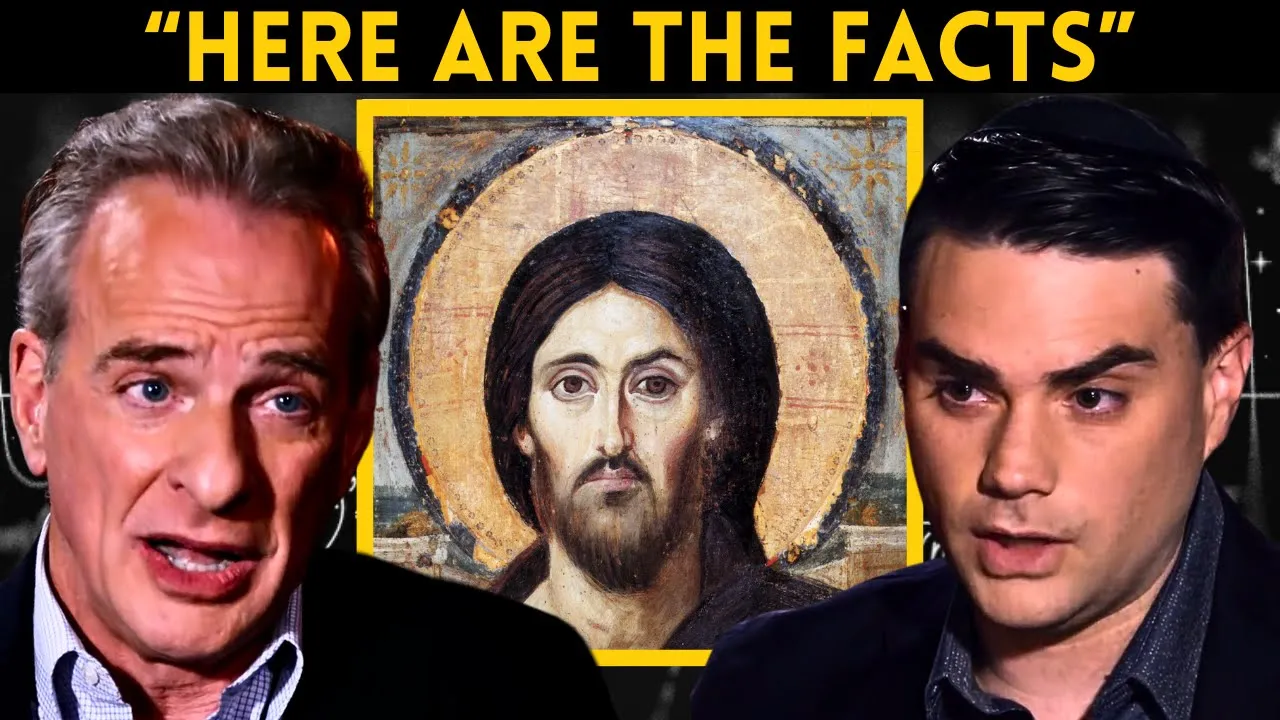
I think that the answer of both the Hebrew Bible and the New Testament can be put into one word the clip you're about to watch is a fascinating conversation between William Lang Craig and Ben chap they're discussing Christianity they're discussing Judaism they're discussing some of the differences between the two and in this particular clip that I'm about to play it gets really interesting because it gets down to the idea of atonement I want to point something out so check it out let's dive in here it is the arguments that we've discussed already narrow down the
field of the world religions to basically the great monotheistic faiths Judaism Christianity and Islam or perhaps deism the question as to which of these is true I think STS or falls upon the person of Jesus of Nazareth who Do You Think Jesus of Nazareth was Jesus claimed to be the decisive self-revelation of God and I believe that we have good reasons to believe that those claims were true and that therefore the god revealed by Jesus of Nazareth exists okay so let's let's get into that so what are what are what is the proof that Jesus
was who he says he is in in the gospels well first we need to establish who he thought he was when you look at the religio historical context uh of the life and Ministry of Jesus I think you can show that among the historically authentic words of Jesus were claimed that he thought he was the Jewish Messiah that he believed himself to be the Son of God in a unique sense that set him apart from Jewish Kings and Prophets and finally that he thought that he was the son of man predicted by the Prophet Daniel
to whom God would give all Dominion power and authority so he had this radical self- understanding of of being Messiah Son of God and the son of man and at the trial scene before the Sanhedrin in Mark 15 all three of these titles come to a head when the high priest asks him are you the Messiah the Son of the blessed one that is the Son of God and Jesus says I am and then virtually quoting from Daniel and you will see the son of man coming on the clouds of heaven and seated at the
right hand of the power and at that point the high priest rips his robes and says you have heard the blasphemy what more witnesses do we need and Mark says they all condemned him as worthy of death and that enabled them since they didn't have the ability to carry out capital punishment to deliver him over to the Roman authorities by slandering him as a pretender to be king of the Jews and therefore a a a political figure who could be tried for treason and Sedition and crucified so when it comes to the resurrection why is
resurrection proof of divinity so Lazarus is is resurrected that was why I wanted to emphasize the religio historical context before we talked about the resurrection a miracle taken in isolation is inherently ambiguous the proper interpretation of a miracle is going to be given by the religio historical context in which it occurred and the resurrection of Jesus is not just the resurrection of any old body it's the resurrection of the man who claimed to be Messiah Son of God and Son of Man and who was crucified for those allegedly Blasphemous claims if God has raised this
man from the dead then he has I think unequivocally and publicly Vindicated those allegedly Blasphemous claims so one of the counter claims to some of this is that the gospels are written significantly after Jesus Lives even the earliest gospel is written what 7 dce uh some somewhere in somewhere 40 years after after Jesus is crucified so what's to say I mean that like most historical events there is some play in the joints here so that this would be the historical argument against the exact veracity of of the Gospel Revelation what I would argue is that
underlying the inference to the resurrection of Jesus are three great independently established facts and these facts would be that after his crucifixion um and burial by a member of the Sanhedrin named Joseph of ARA the Jesus tomb was discovered empty on the first day of the week by a group of his female followers secondly would be that various individuals and groups of people then witnessed appearances of Jesus alive and finally number three would be that the original disciples suddenly and sincerely came to believe that God had raised Jesus from the dead despite having every predisposition
to the contrary that the fact of the discovery of the empty tomb is attested by at least six independent sources in the New Testament some of which are extraordinarily early no scholar denies that individuals and groups saw postmortem appearances of Jesus the only question is whether you should or could dismiss them as hallucinatory and again nobody denies that the original disciples suddenly and sincerely came to believe that God had raised Jesus from the dead so these three facts are pretty firmly established and the only question is then how do you best explain them and down
through history attempts have been made to explain these facts without recourse to the resurrection like The Conspiracy Theory the apparent death Theory uh the hallucination Theory and so forth and I would argue that none of these naturalistic theories meets the criteria for being the best historical explanation of the facts none of them is as good an explanation as the one that the original disciples gave that God raised Jesus from the dead and if that's right then I think we have Good Grounds indeed are almost compelled to revise our typical understanding of who the Messiah was
supposed to be so let's talk for a second about sort of the necessity for judeo-christian Revelation because and here I'm going to merge the two in terms of the idea of God personally speaking to people and giving them the morality of the Old Testament and which largely is reflected in the New Testament the New Testament is part of the Old Testament according to Christians anyway it reflects the the the chief morality of the Old Testament it doesn't supplant it entirely the Old Testament doesn't become nothing just because the New Testament comes around so that's why
I'm now moving back toward the kind of theological question which is what's the purpose of the Revelation meaning could we would it be sufficient to work within the framework of the first half of our conversation with regard to sort of rational pushes not toward Revelation and and the presence of God in human form in Christianity or the presence of God on top of a mountain in Judaism would a god of reason alone be sufficient or do you need to have for what purpose do you need to have a God who is speaking directly to people
at Sinai or speaking through Jesus in Christianity I think that the answer of both the Hebrew Bible and the New Testament can be put into one word atonement what is needed is atonement for sin and in the levitical sacrifices in the Tabernacle and later in the temple you had a sacrificial system whereby atonement was made for sin through the sacrifice of various animals and Jesus himself and the authors of the New Testament think of Jesus as being the ultimate sacrificial offering to God to make atonement once and for all for the sins of mankind so
that in his sacrificial death on the cross he fulfills all of these um Jewish antecedants or foreshadowing of a decisive atonement for sin that will reconcile us to God and bring forgiveness and and pardon and cleansing so you've deated a bevy of of atheists and agnostics on on a variety of topics which was the debate that you felt was most challenging for you so do you notice how right here when it gets to the Crux of the matter the atonement itself there's a just a Dodge it's like let's talk about the next topic let's talk
about have you ever you know let's go on to talking about the debate rather than actually engaging with that idea of atonement and I do think that that's rather telling in terms of um Ben's willingness to address that unique feature of what Jesus did on the cross the atonement for the sins of the world that's that's actually what's at stake here that's actually the claim Behold the Lamb of God who takes away the sins of the world this of course hearkens back to Genesis 3:15 where it says I will put imy between you and the
woman and between your Offspring and her Offspring he shall bruise your head you shall bruise his heel this is a prophecy of the Cross going all the way back to the time of the Fall it's all there it's all littered throughout the Old Testament but you can just see the the hesitancy of engaging with that idea of atonement and what it means it's not just aor we're talking about one one time once for all Christ died so that all might live he who has the son has life he does not have the son does not
have life the only way to the father is through the son he's the way the truth and the life um if if it's really true that God himself put on flesh and and walked amongst us that the word became flesh um and then he lived the perfect life that we couldn't live died the death that we deserved to die defeated death in his resurrection and offers us through that life Everlasting that's that's the best possible news that exists for Humanity in light of the kind of people that we that we really are in light of
the wars that we've committed the personal tra uh tragedies that we have all undertaken in our lives the inclinations that we have toward addiction toward depression toward anxiety if you really look at the state of man if you really look at Human Nature this is the best possible news force that our creator has found a way to solve our deepest problem which is our Fess and has offered that solution in himself on the cross for us giving us the possibility of being with him in Eternal Joy forever that's the that is what the atonement is
about and so it is a little bit frustrating to see Ben just kind of Dodge it and go on the to the debate thing all that being said I hope you guys enjoyed this video if you did then stick around there's going to be a lot more here at daily dose of wisdom where we're going to be looking at specific Clips giving a little commentary and uh and I hope you guys enjoy so have a good day [Music] bye