May 14, 1948, in Tel Aviv David Ben-Gurion proclaims the creation of the State of Israel. In accordance with the resolution United Nations, we proclaim the foundation of the Jewish State in the land of Israel. The Jewish people finally have a country.
Three years after the fall of Nazism and the massacre of 6 million of them, Jews can settle on the land of their ancestors. For Arabs who live on this same land of Palestine, that day is that of the Nakba, the catastrophe. Fleeing the fights or chased out by the Zionist army, more than 700,000 Arabs leave the country.
They think that they only leave for a while. However, these refugees will soon to become a people in exile who searches by all means to return to the country which he calls Palestine and others call Israel. War.
Clandestine army. Terrorism. Popular revolt.
And repression. Suicide attack. And retaliation, and sometimes all the same a hope for peace.
The fight for this land claimed by two peoples has continued unabated for 60 years. A Palestinian teacher became a hijacker. A student from Cairo promoted to guerrilla commander.
A child from Gaza who grew up in a refugee camp. But also the son of a pioneer of Israel, army reservist. And a young director from Tel Aviv, plunged despite himself into the heart of the Intifada.
Using photos and home movies, this is how five destinies radically different went through a tragedy of which we do not see the end. 1949 These are the borders of Israel. More than 700,000 Palestinians took refuge in neighboring countries.
In Liban, in Syria and in two parts of the old Palestine which remained Arab. The West Bank annexed by Jordan and the Gaza Strip under Egyptian control. Refugees are massed at the borders.
They left in a hurry and they wait to go home. 1967. Eighteen years later, the refugees are still there.
Concrete constructions have little by little replaced the makeshift tents, but the hope of a return in Palestine is still going strong. Leila Khaled is a young 23-year-old teacher. She's a rebel, great admirer of Che Guevara.
In her diary she writes. The Zionists drove us from our homeland. They live in my town because they are Jews and that they possess strength.
But one day we the survivors of the desert, we will have this power and we will take back Palestine. Leila Khaled lived on the Mediterranean coast in Haifa, in the beautiful areas of the city. At the creation of Israel, his family fled the fighting and took refuge in Lebanon.
Here she is with her brothers and sisters in front of the house. It's the smallest. She is four years old.
It was just before he left. Since then, she has been preparing for her return. - I was doing embroidery on a canvas I did it all the time to hang it in our house in Haifa.
It was an illusion, but I was convinced that we were going to liberate Palestine. - In the 60s, Palestine by Leila Khaled has already changed. Israel is a country in full swing development, where we live in the West.
A new generation is born, who has neither known nor Nazism nor the exodus. On the beaches of Tel Aviv or Eilat, we are far from concerns of the young Palestinian woman. However, in this spring of 1967, Leïla Khaled has reason to believe it.
In Arab capitals, the crowd is white hot. Here in Egypt, the demonstrators shout death to the Jews. President Gamal Abdel Nasser calls for the destruction of Israel.
He is supported by his Soviet ally and by the Arab world who doesn't want this new neighbor. The war of reconquest seems imminent. To the south, Egypt brings his border troops.
In the west, the Jordanian army is on alert. To the north is Syria who is preparing for war. On Arab radios, Jews are warned in Hebrew.
Disaster will befall you. Israel will take everyone speed. On June 5, 1967, at 7:45 a.
m. , Israeli Air Force takes off towards Cairo. The pilots were not informed of their mission until the last moment.
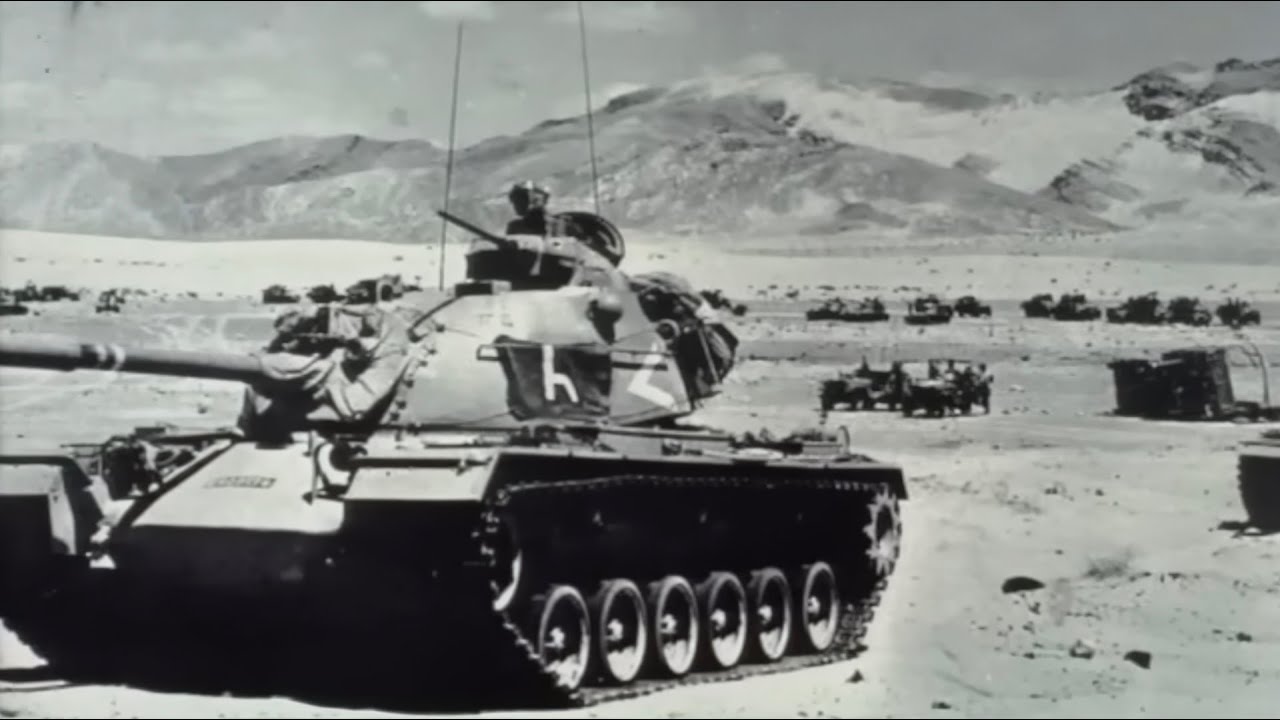
In a few minutes, the planes are in Egypt The Israelis attacked first. The Egyptian air force is destroyed. On the ground, Israeli tanks press the enemy troops on all borders Among the chariots, there is that of Commander Uri Hurvitz of the 45th Brigade.
Uri is the son of a pioneer of Israel. His father fled Russia at the beginning of the century to escape anti-Semitic massacres. With a group of Zionists, he founded one of all first kibbutz in the country Kfar Giladi, near the Lebanese border.
Tents, a first farm, a second, then a whole village on a lost hill. Uri was born here. He grew up at the same time as the kibbutz.
This piece of land is his whole life. He is proud of what his parents built it. For him, this war is a question of survival.
- We were defending our house. We have no other place where to go in the world, no other. What would be passed if they had won They would have all of us exterminated, and we knew that.
- Israeli troops don't just defend. They conquer new territories. To the south, they invade Sinai and this little strip of land called Gaza where are installed several Palestinian refugee camps.
Among them is the Rafah camp. Refugees are far from the mode of modern and western life in Tel Aviv. They live in another era.
There is no water in the houses. Nor electricity. A few blocks from the main road lives little Abdel Salam Shehadeh, 5 and a half years, with his brothers and sisters.
His father experienced the exodus of 1948. He lived a little further north, in a village that now belongs to the Israelis. That morning Abdel Salam is sleeping when the first Israeli tanks enter the Rafah camp.
- I was woken up suddenly. There were people everywhere. We heard the Jews entered the city.
It's the panic. Nobody really knows what's going on. On the main street, I see lots of corpses.
For us, after 67, everything was going to change. - In Jerusalem too, everything will change. The Israelis are invading the Arab part of the holy city.
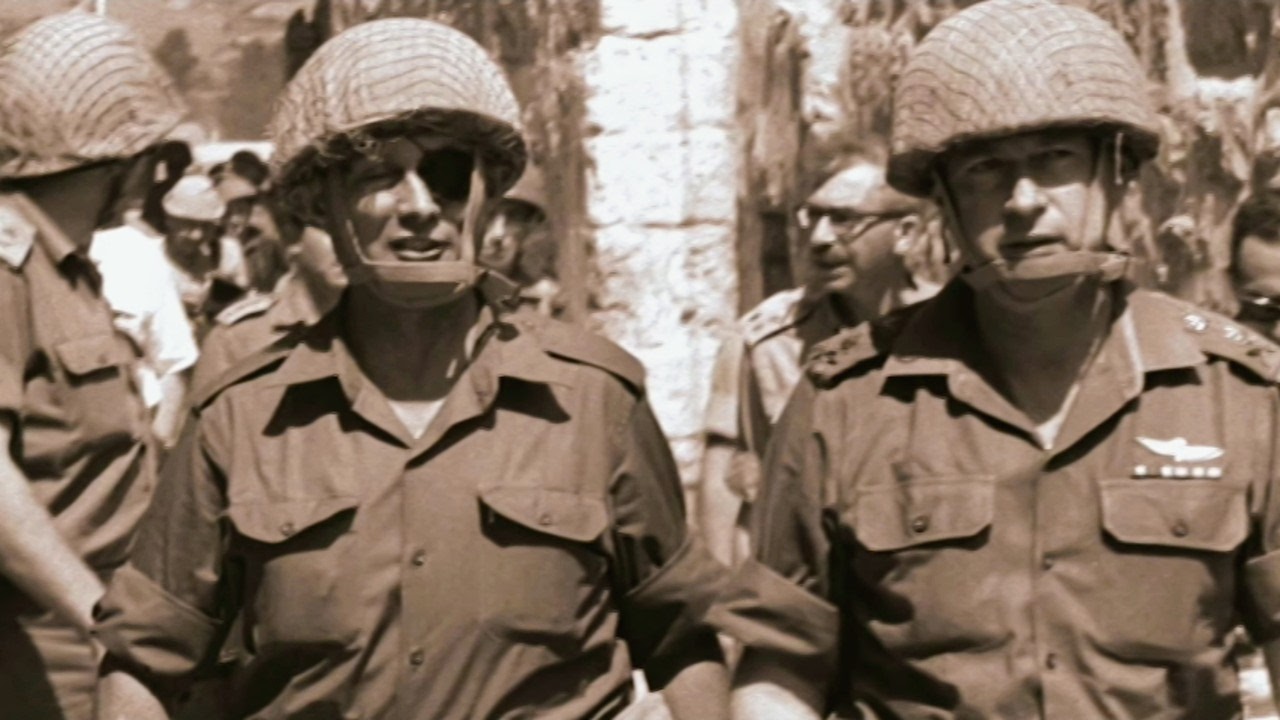
A dream that they could not achieve in 1948 during the War of Independence. After 2,000 years of exile, the Jews are again masters of the Temple Mount, the first holiest site in Judaism. The Minister of Defense, Moshe Dayan, the man with the headband and the victorious general Yitzhak Rabin are at the foot of the Western Wall.
The news spreads like wildfire. - I was in radio contact with my boss and a guy that I knew was in Jerusalem. He called all units and he told us: “We conquered Jerusalem.
” I was there, sitting in my tank. It did something to me when I heard that the Western Wall had been taken. Even today, I feel unexplainable things.
- Yitzhak Rabin, the general victorious becomes a national hero. In a few years, it will even be the head of the Israeli government. His triumph is absolute.
- The Israeli soldier is an excellent soldier. He has the will to win. He knows why he's fighting.
He has the courage to fight and training to fight. - In just six days, the Egyptian armies Jordanian and Syrian forces are defeated. These images of Arab rout go around the world.
Not only was Israel not destroyed, but the Jewish state multiplies its surface area by four. Soldiers of the Hebrew State planted their flag in Sinai, in Gaza, in the West Bank, in East Jerusalem and the Golan. In 1967, the world's outlook changed.
Israel is no longer the small Hebrew state besieged, heir of the Holocaust. Thus, in Paris, General de Gaulle launches this polemical definition of the Jewish people. - A people of elites self-confident and dominant.
- The tone is set. Israel is no longer a victim. It has become a military power.
In neighboring countries, the Arab defeat is a surprise. Salah al Tamari is Palestinian, born in Bethlehem. When the war begins, he studied in Cairo.
He does not participate protests against Israel because he is revising for his exams, but he listens to Egyptian radio which announces great Arab victories, until the day he discovers the truth. - I remember, I was coming back from university. When I arrived at my building, there was a neighbor who listened to English radio he was the minister of Israeli Defense Moshe Dayan who made a press conference in Jerusalem.
That caught my attention. I stopped to listen and he said We got there and we have no intention of leaving. I realized that everything what we heard on Arabic radio was false.
The Israelis occupied the West Bank, the Israelis occupied Sinai and Arab countries had lost the war. I could no longer stand on my legs. I collapsed on the stairs.
I was demoralized. Completely destroyed. - From then on Salah al Tamari has certainty.
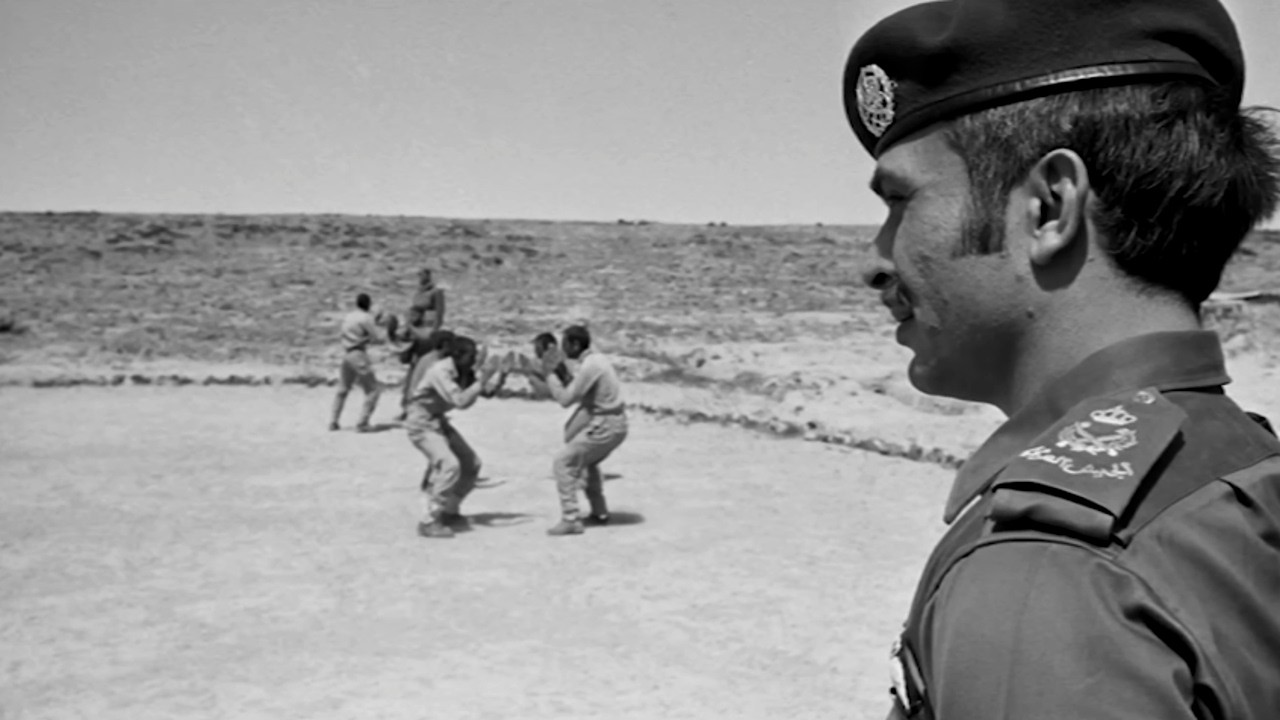
To fight Israel, the Palestinians will not be able to rely only on themselves, but they lack an army and a leader. A training camp in Jordan. For several years now, a clandestine organization trains fighters, Fatah.
Its leader is called Yasser Arafat. He's an engineer. He was born in Egypt, but his father is from Gaza and his mother from Jerusalem.
Arafat never had confidence in Arab countries. He wants to create an independent Palestinian army. He's still just a stranger who lives hidden in a cave with a few fighters.
Everything will change after the battle of Karameh. Karameh is a camp refugees in Jordan, a few kilometers from the border. Yasser Arafat maintains its headquarters there.
From here, the fighters launch their guerrilla operations towards Israel. Among them, there is Salah al Tamari, the former student from Cairo. - At the time, there wasn't really chain of command.
We were a small group. There was in particular Arafat. Every day we waited our turn to cross the border and participate to an operation in occupied territory, which I have done several times.
- March 18, 68, an Israeli school bus explodes on a mine planted by Fatah. There are about thirty injured children and deaths. For Israel, it's unbearable.
The retaliations are massive. An army of 6,500 soldiers must destroy Karameh and these 300 fedayins. Against all odds, the Palestinians hold their position.
Al Tamari is in charge of the resistance. - What is important in Karameh it's that we, young guys, we decided to fight. The objective was obviously not to destroy the Israeli army, but to prove that we were real fighters, ready to die for their country.
We knew that each death would be replaced by hundreds and perhaps thousands of volunteers. This is indeed what happened. - After 15 hours of confrontation, Israeli armored vehicles enter Karameh.
The Palestinians are decimated. Half were killed. The others are prisoners or on the run.
For the first time since the Six Day War, Palestinians resisted Israel. Hebrew soldiers are wounded, there are even deaths. The military defeat becomes a psychological victory for the Palestinians.
In the eyes of the Arab world, the leader of the fighters is a hero. Yasser Arafat comes out of hiding. He gives his first interviews to the international press.
- We will establish our own Palestinian state democratic and independent. A state in which, everyone, all citizens, Christians, Jews, Muslims, will all live equal in fraternity. - He takes the head of the PLO, the Organization for the liberation of Palestine, which brings together all the wrestling movements.
At 40, with his dark glasses and his keffiyeh, he now embodies Palestinian resistance. Meanwhile Leila Khaled, the young Palestinian teacher, trains in a military camp. She is not in Yasser Arafat's Fatah.
She joined the PFLP, a more radical branch of guerrilla warfare. She is waiting for her first mission. In 69, she was finally summoned what we ask of him is quite extraordinary.
- My boss asked me, are you ready to die? I said of course yes. He told me, that's not the question.
Are you ready to go to prison? Of course, there are many of my comrades, of my brothers and sisters in Israeli prisons. He told me, that's not the point either.
Are you ready to hijack a plane? I laughed. It was all new to me all this terminology.
I was joking and he asked me why are you laughing? I explained to him that I imagined myself running with a plane on the back and everyone was chasing me. I didn't know what that meant.
He said to me, are you ready? I answered him that I was ready for anything. I asked him am I going to go to Palestine?
He replied, we'll see. - August 29, 1969. A TWA Los Angeles flight Tel Aviv makes a stopover in Rome.
Leila Khaled boarded with an accomplice. Among the passengers, there should be Yitzhak Rabin, the victorious general of the Six Day War. - It was necessary to do something for the world the question arises.
Who are these Palestinians? It was clear that if we hijacked a plane with a personality like Rabin on board, Israel could not ignore it. They would be obliged to exchange it for prisoners.
Unfortunately Rabin changed planes in Rome. - After takeoff, the two pirates burst into the cockpit. The flight that was supposed to land in Tel Aviv is diverted to Syria.
It flies over Israel. For the first time, Leïla Khaled sees Haifa again, the town of his childhood. - I asked the pilot to get off.
He descended. Military planes Israelis surrounded us. I said on the radio, we are the Front People of Free Palestine.
Repeat. The control tower guy said Popular Front Palestine. I said, I don't understand you, say it clearly.
He repeated it clearly, three times. For me, it was a victory. It was the first time in our lives that we heard in another language someone say free and Arab Palestine.
- A few minutes later, the plane lands in Syria. The passengers are evacuated. The hijackers cause the device to explode.
A spectacular gesture to challenge public opinion. Leïla Khaled makes headlines, but she's not going to stop there. - By hijacking this plane, we wanted to tell these people that there is a war here.
This is the reason for our action here in the Middle East. To tell them, don't come here. - And you intend to continue the fight for your cause?
- Yes. - In the north of Israel, reservist Uri Hurvitz must leave again his kibbutz of Kfar-Guiladi. This time, it's not to join your tank.
The government recruited him to enhance security on board planes. Uri imposes new controls at airports and armed men on the flights from the Israeli company El Al. Measures that will change everything.
September 6, 70, Amsterdam airport. The El Al flight heading from New York will take off. Among the passengers, no one noticed Leila Khaled and his accomplice Patrick Arguello, a South American activist.
Despite security measures, they got on board armed with pistols and grenades. Leila went unnoticed. She had three operations cosmetic surgery so as not to be recognized.
What she doesn't know, that's what's on board several armed men. - What happened, is that the Israelis started to shoot the minute we got up. People were asked to remain calm.
I ran to the cockpit. Patrick was behind me, it was shooting everywhere. - When the plane lands in London, Patrick Arguello is dead.
Leila Khaled is immediately imprisoned, but not for long. A few thousand kilometers away three other planes were hijacked by pirates from Leïla Khaled's group. They landed at an abandoned airport in the hands of the Palestinians in Zarqa, Jordan.
This is an unprecedented operation. Four hundred American passengers, English and Swiss are held hostage. The fedayeen want to exchange them against prisoners and Leila Khaled is part of the conditions.
- Our demands and our conditions are very clear. And we won't come back above, whatever happens. These conditions are the Liberation by comrade Leïla Khaled and the return of the martyr's body and their evacuation to a safe place in exchange for British hostages.
- In Israel, the Prime Minister Golda Meir demands the greatest firmness. She doesn't want the English free Leïla Khaled. - What are these people going to do when will they be released?
This young woman will she come home to the convent ? Is she going to get married? and raise your children?
Is she going to go back to teaching? She announces it herself. She's going to start again.
At least try to start again. I don't know with which plane this time. - After six days of negotiation, the hostages are released.
They are still all surprised by their adventure. Most had never heard about Palestine. In exchange, the hijackers obtain the release of prisoners.
Once again, in front of cameras around the world, they blow up planes. Leila Khaled is extradited to Egypt where bad news awaits him. The Egyptians cry the death of their president Gamal Abdel Nasser.
The man who claimed destroy Israel in 1967. Leila lost one of her heroes, but other events even more serious occurred in a neighboring country. Plane explosion in Zarqa caused fury of King Hussein of Jordan.
For some time now, the king no longer supports these Palestinians who believe themselves in his country as at home. Their militia controls entire neighborhoods of the capital Amman. Some of their leaders even call openly to overthrow the king.
Hussein knows he is in danger. The explosion of the planes is the pretext he was waiting for. On September 17, he launched his troops to attack refugee camps.
Thousands of deaths, a carnage of which there are almost no images and that the Palestinians will call Black September. Once again, Salah al Tamari is at the heart of the fighting. - It was more painful that Karameh and the Six Day War When we fight against Israelis expect everything.
They occupied our land, they are our enemies. This is Jordan, they are our brothers. We are part of the same people, of the same nation, of the same culture.
Unfortunately it happened and we paid a high price. - A new exodus begins. Palestinian fighters and their families are driven out of the country.
They flee Jordan towards Lebanon. This is where Yasser Arafat and his troops now intend to lead the fight. The head of the PLO will be able to count on the support of Karameh's commander.
Salah al Tamari accompanies him to Beirut. Leïla Khaled also goes to Lebanon. She takes care of the education in training camps.
These two diversions made her a star, but the time of hostage taking that end well is over. September 1972, Munich Olympic Games. Something is happening in the Israeli pavilion.
On the balcony, hooded men. A Palestinian commando took the Israeli delegation hostage. It's called Black September in memory of the Jordanian massacre.
It's a global event. Never the Palestinians have not been so publicized. The operation ends in tragedy.
The German police attack. The hostage takers performed the eleven athletes before being shot or arrested. Bloody terrorism is only just beginning.
It's in this climate who was born Yariv Horowitz in Tel Aviv, Israel. His mother is a pacifist, left-wing activist. His father is rather liberal and yet, even if at home, Yariv hears about happiness and peace between peoples, the general atmosphere of the country is heavy.
- When we were children we were very afraid of the Arabs because of terrorist attacks on TV and in the newspapers. Many stories were rumors about what the Arabs were doing It's like that that we grew up here. In fear.
- At the beginning of the 70s, terrorism is not the only threat. Little Yariv has other reasons to be afraid. October 6, 73, it is 2 p.
m. when the sound the alarm sirens in Israel. We are in the middle of the Yom Kippur fast, the Jewish festival of Great Atonement.
- One of my first memories, these are the sirens of Yom Kippur in 73. I was two years old. I remember it because from the shock of my mother running with the pram.
I do not know if I remember it or if she told me about it, but it's somewhere in my memories - This time, it's a new war. Egypt and Syria attack. Arab neighbors want to recover lost territories during the Six Day War.
In Gaza, in the Rafah refugee camp, very close to the old Egyptian border, little Abdel Salam has grown up. He is now 11 years old. He goes to school established by the United Nations.
That day he listened his favorite show on the radio. - The radio started to broadcast the national anthems. We understood what was happening something abnormal.
We learned that the Egyptians had invaded Sinai. I remember the mayor who asked us to go up to the roof to check if the bullets were Egyptian or Israeli. - The Israelis are caught off guard.
Six years after the triumph of the Six Day War, the country is threatened. Reservist Uri Hurvitz, the man from the kibbutz went on a mission abroad. When he hears the news, he rushes onto the first plane.
- When the Yom Kippur War broke out, I was in Canada. I immediately returned to Israel. There is no other country in the world, neither in France nor in Italy, nor even in the United States, where people come back to fight.
Young people, everywhere, as I did, letting go of everything. - The Yom Kippur War is not just one further conflict between Jews and Arabs. It's a global crisis, because Arab countries have a new weapon, oil.
They refuse to sell their production to the friends of Israel. In America, in Europe, the price of gasoline is soaring. The oil shock will shake up the global economy for years.
After 15 days combat and heavy losses, Israel still won the war, but the country has shown its fragility. Making peace becomes a necessity. His main opponent is ready.
On November 19, 1977, the unthinkable happens. Anwar el-Sadat, the Egyptian president goes to Jerusalem Never an Arab leader had not come to the Jewish State. Uri Hurvitz is at the foot of the device.
He who is so proud to be Israeli, he is impressed by the composure of the Egyptian president. - When he got out of the plane, he greeted everyone, he shook hands, said hello. Then he went to see General Motta Gur.
Sadat told him, you didn't think I was going to come? Here I am, and we replied, welcome! It took a lot of courage to come.
He did it. Several years later, Sadat will pay for it with his life. He will be murdered by a radical Islamist, but for now it is a triumph in the Israeli parliament.
- Let's decide one thing together. We have to get there. Eye to eye between us and you.
We must continue so that even an old lady like me, live long enough to see the day when. . .
- It's true that I've always said that. - You always treated me old lady Mr President. - All smiles, he jokes with former Prime Minister Golda Meir.
Finally, Mr President, from from a grandmother to a grandfather. . .
Let me give you this little gift for your new baby girl. And I thank you for the gift you gave me. [Arab spoken audio] - At the same time, 200 kilometers away, in Lebanon, Yasser Arafat harangues his troops.
For his own, it is not good news. An Arab country makes a pact with the enemy and the fate of the Palestinians takes a back seat. - It was a dark day for all of us.
Because It was the first time that someone was raping our pact against Israel. Here is a people who occupies our country, who expelled us by force. Nevertheless, an Arab leader will negotiate with them, at our cost.
- A year later, Egypt and Israel sign peace at Camp David in the United States. In exchange, the troops Israelis evacuate Sinai that they occupy since the Six Day War. For the first time, the Jewish state is at peace with a neighbor.
In the refugee camps, Nothing has changed. Here in Lebanon, we are in the third generation. The Palestinians arrived in 48 had children, grandchildren who have no nationality.
They are just refugees. From their birth, we teach them that they are not at home and that one day they are going to return to Palestine. [Arab spoken audio] - Palestine.
The return. Jihad. - They know everything about Jerusalem.
From Palestinian history and its symbols. Refugees are supervised and trained by PLO troops. Since his exile from Jordan, Yasser Arafat made Lebanon its new headquarters.
He feels at home here. He built up a real army which multiplies the attacks in the north of Israel. The reaction of the Jewish state won't be long.
In 1982 Israel prepares to an intervention in Lebanon, called Peace in Galilee. Yariv is now 11 years old. He is proud to see his big brother going to the front.
- I was proud to the idea that my brother go serve my country and defend it. He was leaving to help us survive, him too was happy to leave. When he came back, that was another story.
- Beirut, the capital of Lebanon. The Israelis besiege the city. Operation Peace in Galilee turned into war.
Originally, the troops were only to advance only 40 kilometers to secure the border, but the Israeli generals want to put an end to the PLO. They pushed as far as Beirut. Weeks of street battles, face-to-face among civilians, in the streets of the capital.
After 70 days of fighting, the Palestinians are crushed. Fighters are evacuated from Beirut thanks to international intervention, and in particular that of a French contingent. This time Salah al Tamari will not leave, he is taken prisoner.
He will be released a year later during an exchange against Israeli soldiers. As for Leïla Khaled, she is in one of the trucks driving towards the port. She is pregnant and she just got married.
- It was very hard for us. In the truck leaving for the port, I was crying the whole time. Because I felt that it was a new exodus far from our homeland.
- After Jordan, Lebanon, the Palestinians return to the road of exile. Yasser Arafat sets sail for Tunisia with 4,000 fighters. Their family stays there and a new drama awaits them.
A few days after the departure of the combatants, in the camps refugees from Sabra and Chatila, hundreds of women and Palestinian children are massacred. The men of a Christian militia came to avenge the assassination of their leader, the new Lebanese president. Carnage!
The Israeli army was there. She let it happen. In Israel, 400,000 people scandalized take to the streets.
This is the biggest event of the country's history. Yariv is in the crowd with his parents. - It was gigantic.
There were a lot of people. There was a lot of anger, and people were ashamed. I think they wanted to show the world that they were not responsible for that and they were against this war operation in Lebanon.
- Israelis are confused. They can't stand the idea that their army could have made a mistake. They believed themselves to be victims.
They find themselves aggressors and they will soon discover that the revolt is brewing at their doorstep. The Gaza Strip in 1987. Little Abdel Salam became a computer scientist.
He just turned 26 and he married his neighbor. Life in Gaza reminds us that of Arab cities from Jordan or Egypt with one difference. It is a territory occupied since the Six Day War 20 years ago.
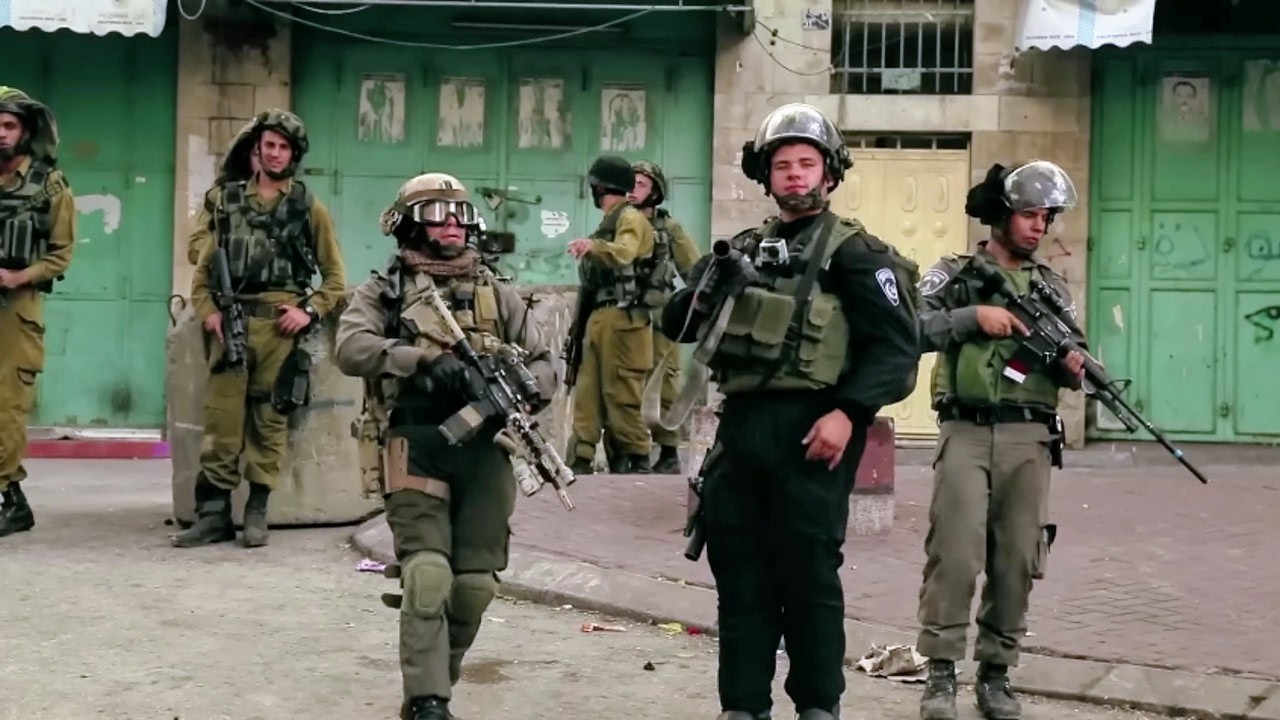
The patrols of Israeli soldiers are daily. Abdel Salam can no longer stand them. - We have lived in this camp forever we see patrols all the time.
It's like a wall between you and your life, you and your freedom. These soldiers are an obstacle to your hopes, to your dreams, and you can't leave. - On December 8, 1987, everything changed.
Residents take to the streets throw stones on Israeli soldiers. A trivial accident car started it all. This is the start of the Intifada.
An Arabic word meaning uprising. Abdel Salam has a camera. He films and sometimes, like the others, he throws stones.
- It's the first time that people picked up stones to throw them away. I did it too. I put my camera down and I threw stones, at least five or six.
It had become obvious. We had to throw stones. The reason is very simple.
It's to tell them What are you doing here ? Your language is different. You have a uniform difficult to accept.
You behave badly towards me. You close the door. You close the window.
No more busy. The message is very clear. Faced with stone throwers, Yitzhak Rabin, the overall winner of 1967.
He is Minister of Defense. Like the others, Rabin is taken by surprise. He is convinced that it is a revolt with no future.
He chooses firmness. He recommends to his soldiers to be more aggressive. He even expressly asks them to beat the stone throwers when they are caught in the act.
Far from the tumult, in Tel Aviv, Yariv Horowitz has become a teenager. He takes advantage of his last moments of tranquility. At 18, like any Israeli citizen, he must do his three years of military service.
In the midst of the Intifada, he was sent in the occupied territories. As it is part of the army cinema, propaganda films are ordered from him. - One day they sent me with the paratroopers to make a film.
to boost the morale of the troops. They were at the end of their military service it must have made them a memory of the last days. It was meant to be a very happy and very funny film.
- The interviews are going to get out of hand. In front of him, the soldiers confess. They say they are disoriented by this funny war that they become bullies.
- They told me what they were doing. They were frustrated with chasing children who threw stones at them without catching them. How they caught them even before they threw stones.
- We take to the street. We see a group of 5 teenagers drinking tea and quietly playing backgammon. We pass, we overturn their table and we start hitting them.
We knew that as soon as we passed, they would have called us fags and Israeli bastards. That they would throw stones at us. So we typed them first because afterwards we wouldn't have caught up with them.
- When I showed the film to my bosses, they were shocked. Because no one imagined that. From our point of view, the Israeli army was the most moral of all.
Morality was its basis. We are Jews. We survived the Holocaust, we must be very moral.
When I came home, they discovered reality. Kids aged 18-19, and I too was 19 years old, who had completely lost their minds. - Yariv's film is an electric shock which goes back to the top of the State.
The Israeli parliament forbidden to the same soldier to stay more than three months in occupied territory, but every day of Intifada, the gap between Arabs and Jews deepens a little more. September 13, 1993, in Washington, the White House. After six years of stone war, finally an immense hope.
Yasser Arafat was surprised by the Intifada. To avoid being overwhelmed, he must regain the initiative. In front of him, the new Prime Minister is Yitzhak Rabin.
He understood his mistake. The Intifada is not a flash in the pan, you have to negotiate. Between them, there is Bill Clinton's America which plays a decisive role.
The first Gulf War in Iraq has left its mark. Since 91, the Americans are convinced that must be pacified this region as quickly as possible. Everything is not settled, but peace is on the way.
After months of secret negotiations in Oslo, Norway, they will sign an agreement which provides for Palestinian autonomy. Israelis commit to withdraw their troops from Gaza and the West Bank. Ultimately, these territories could become a Palestinian state.
The whole world is waiting for the event. The handshake between yesterday's mortal enemies is not self-evident. - When I was watching television, I saw the images bleeding.
I saw the blood of the martyrs, all those who died in combat. When Arafat shook Rabin's hand, I hated him at that moment. - For us, when we see the image of Yasser Arafat, it is necessarily accompanied by blood.
When we see him shake Rabin's hand, we have very mixed feelings. I remember Arafat arriving to shake Rabin's hand. This was a big question in Israel to know whether to shake his hand and the break before let Rabin hold out his hand.
He's like that and then he says to himself, come on, let's go. - The time for peace has come. We will have fought you, you, the Palestinians.
We tell you today, high and loud. Enough blood and tears. Enough !
- Some months later, thanks to the Oslo Accords, Yasser Arafat, the leader of the fighters, returns to Palestine for the first time. He makes a triumphant entry into Gaza. He will soon be the first president of the Palestinian Authority.
Abdel Salam now has four children. He became a cameraman in a press agency. It's an unforgettable day.
- Since my childhood, I saw Arafat on TV. He was our hero, the very symbol of our resistance. I believed in that day, when Arafat entered Gaza.
I felt very strong things. I made pictures of faces happy people. We tell ourselves that peace can succeed.
I'm very optimistic at this point. In the euphoria of the negotiations, a few exiles are allowed to return. Salah al-Tamari, the commander of Karameh.
For the first time since the 1967 war, he can return in his town of Bethlehem. The case of Leïla Khaled is more complicated. Israel does not want of a former terrorist.
She gets exceptional authorization to travel to the occupied territories. - As soon as I saw the Israeli flag, it was terrible for me. This is the first thing that I saw while crossing the border.
I wanted to see mine. I went there and my people received me. I would never have dreamed of such a thing.
It was as if I knew everyone, even though I didn't know anyone. - Leila Khaled goes to Gaza to participate at the Palestinian National Congress. Abdel Salam is there.
He films his interview. - Will you go to Haifa? I do not think so.
I'm not allowed to go there. - When we see a woman like Leila Khaled who hijacked a plane, and we see it there, we say to ourselves that maybe maybe this is the beginning of peace. That the Israelis will make concessions.
That the Palestinians will make concessions. That we are at the beginning of a new era. That's not what happened.
November 4, 1995, the place of the Kings of Israel in Tel Aviv is packed with people. The biggest demonstration from Sabra and Shatila. It's a rally for peace.
Side by side, the Israeli and Palestinian flag. On the podium, Prime Minister Yitzhak Rabin is moved. He didn't expect such a crowd.
Since shaking Arafat's hand, part of the Israelis accuses him of treason. - We will not only sing peace, we are going to do it too. Sing the song of peace.
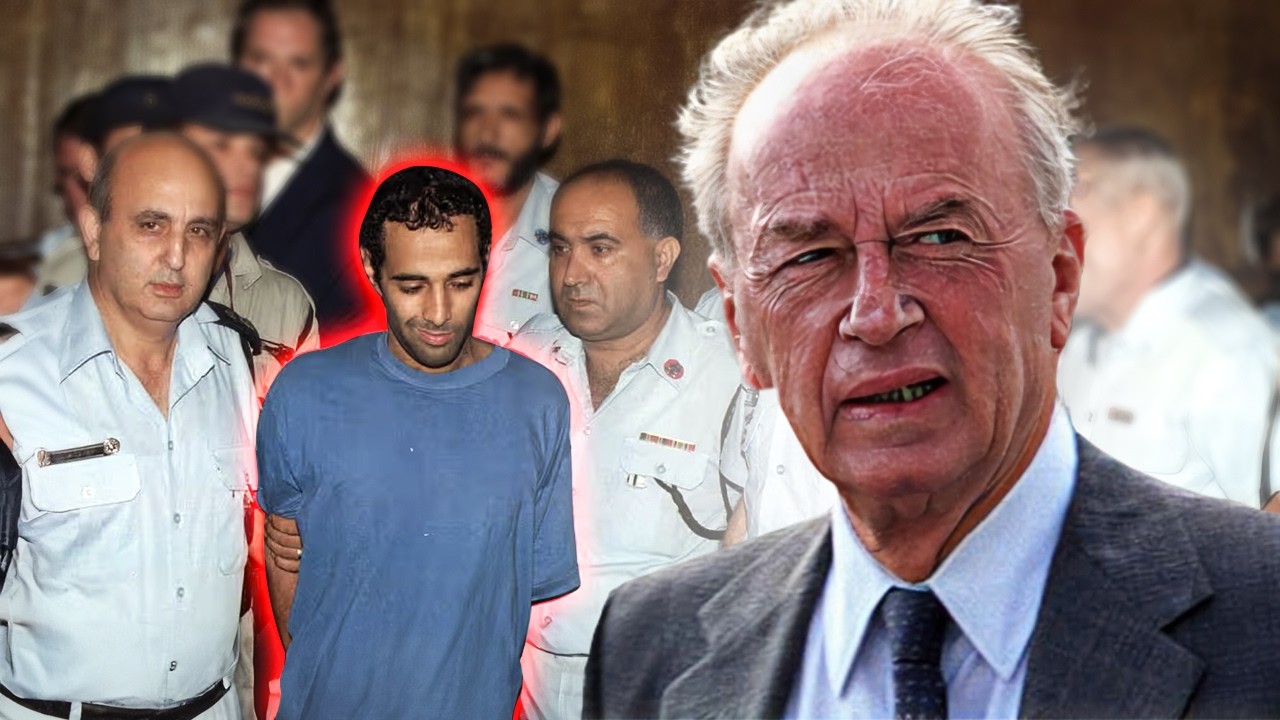
- The few words of this song will be these last words. A few seconds later, he leaves the platform. A Jewish extremist shoots him three times in the back.
His supporters are appalled. In the eyes of the world, Rabin embodied hope. Even the American president hides his distress poorly.
- Yitzhak Rabin was my partner and my friend. I admired him and I loved him very much. Because words cannot express what I feel, I will simply say goodbye my brother.
Goodbye My friend. On the kibbutz of Kfar-Guiladi, the emotion is considerable. Uri Hurvitz is 68 years old.
He is having a peaceful retirement when he hears the news. He knew the Prime Minister well. Rabin had come several times on the kibbutz to participate in ceremonies - It was horrible.
I don't know how to express my feeling on this wild animal that killed him. I was really bad, not just me, all of Israel. We lost a leader.
He was truly a great leader. - The assassination of Rabin is a hard blow for a peace process already in a bad way. These successors did not not always the same certainties.
Some like Ariel Sharon even openly declare that the Oslo Accords are the largest disaster never happened to Israel. More and more Jewish settlers settle in the occupied territories. They want to make it impossible the creation of a Palestinian state and they say it openly.
- This is our country, this is not Palestine or the Palestinian state. It's Israel. It is the Holy Land of the Jews.
I am Jewish and we have the right to live in a Jewish state, and stay wherever you want. On the Palestinian side too, the peace process has serious adversaries. Yasser Arafat is increasingly contested.
For a while now, radical Islam from Iran gains influence throughout the Middle East. Arafat is overtaken by extremist religious movements who refuse negotiation with Israel. Most important among them is Hamas.
This party has become essential by getting involved in social life and in schools. Little by little, fundamentalism settles among the Palestinians. - I remember my sister who had modern clothes, dresses, short skirts.
Now women are all the same, in black. - On both sides, tension rises. Everything is ready for a new explosion.
Fall 2000, on the Esplanade des Mosques in Jerusalem, a new Intifada begins. This one has nothing left of a spontaneous revolt. Very quickly, she turns into a real war.
Guns have replaced stones. Street fighting cause hundreds of deaths. The suicide attack is the new Palestinian weapon.
Suicide bombers who claim to be Hamas or Islamic Jihad get blown up in the streets of Jerusalem and Tel Aviv. Everytime, the same panic scenes and the same images of carnage. Yariv Horowitz, the young Israeli who filmed the Intifada became a director.
He lives in the neighborhood fashionable in Tel Aviv. He is afraid to leave his house. We were afraid all the time.
It was twice a week, three times per week. We never knew. There was an attack two minutes from here.
It was everywhere. It was depressing. Really depressing.
With each attack, Israel responds with violence. Entire neighborhoods are bombed in the occupied territories. When Israel launches an operation reprisals on the Rafah camp, Abdel Salam is filming.
He sees his childhood neighborhood disappear before his eyes. Here he is in a t-shirt orange with his camera. That day, he narrowly escapes death.
- The Israelis destroyed everything. I couldn't even anymore reach my neighborhood. All my friends, my primary school destroyed.
School is terrible. We have lots of memories. We can't find anything anymore.
It's like my story is dead because someone came and killed my dream. It was like that in Rafah. I couldn't believe it.
- Yasser Arafat, the old Palestinian leader, is nothing more than a shadow. Hamas does not recognize its authority Israelis do not don't want to talk to him anymore. He is ill.
At the end of October 2004, it is evacuated to France to be hospitalized. Al Tamari, the commander of Karameh, remembers their last dinner. - I had dinner with him a day before let him leave for Paris.
It was Ramadan. I was the only one to share this meal with him. He was really very weak, and when he left, I knew I would never see him again.
Arafat never lacked courage. He followed through with his ideas and if our movement of resistance survived, it's thanks to him personally. It was someone who could make peace with the Israelis.
With the death of Arafat, the Palestinians have lost their leader. Disappointed with the process of peace and by Fatah, they turn massively towards Hamas which wins the elections. For Europe and America, Hamas in power is unacceptable, even after a democratic victory.
They cut their subsidies to Palestine. The situation is getting worse. Fatah and Hamas get into a war fratricide between Palestinians.
It's mostly in Gaza that the world's attention is focused on. In 2005 Israel get rid of this territory. Army withdraws from Gaza for the first time since 67.
Even the Jewish settlers furious must leave. They are forced to abandon their home. Their protection is too expensive.
Israel no longer wants Gaza. Palestinians celebrate the departure of the Hebrew soldiers. However, these images are illusory, because Israel remains in control from all borders and therefore the region's economy.
In 2007, when Hamas takes power. Israel imposes a total blockade of the territory. The Gaza Strip is nothing more than a huge prison.
Since then, every week, Hamas sends rockets to Israel and Israel responds with air raids on Gaza. On December 27, 2008, the planes of the Jewish state bombs Gaza. After a six-month truce, the conflict starts again more violent than ever.
This time it is a large-scale operation, a new war. Israel wants to end it definitely with rocket fire and with Hamas. Hebrew chariots invest the Gaza Strip like in 1967.
In 60 years of violence, peace has not made much progress. Like this wall built by the Hebrew State. A wall of more than 700 kilometers which will soon wind around the entire West Bank, sometimes crossing villages.
A security barrier to protect themselves from suicide attacks, say the Israelis. A wall of shame to make life impossible, say the Palestinians. Today Uri Hurvitz is 82 years old.
The pioneer's son who fought all the wars still has the same confidence in his country. He is faithful to his kibbutz of Kfar-Guiladi. Whatever happens, he intends to end his life there.
At 37 Yariv Horowitz no longer the little Israeli who was afraid of attacks. He is a prominent director in Tel Aviv. He returned to the soldiers which he had filmed during the Intifada.
He made a film about it the dismay of a generation. Salah al Tamari is 65 years old. The Cairo Student became commander in Karameh is now governor of Bethlehem, the city where he was born.
A city disfigured by the wall. Abdel Salam Shehadeh spent his 46 years in Gaza. The little boy who saw the tanks arrive in 1967 became boss of a press agency.
He lives cut off from the world by the Israeli blockade. As for Leïla Khaled, she lives in Jordan. The young teacher Palestinian refugee become a hijacker is now 64 years old.
She still lives in hope to return to Haifa one day, the town of his childhood.