Throughout the Cold War, US government agencies stockpiled info on UFOs. Not surprisingly, so did our counterparts behind the Iron Curtain. But since the fall of the Soviet Union in 1991, many allegations have come out about the once-secret KGB UFO files, including this next story, which might be the strangest one yet.
[Tony Harris]<i> In 2011, a mysterious YouTube user,</i> <i> named Ivan0135,</i> <i> uploads, what he claims, is leaked classified footage</i> <i> from the KGB,</i> <i> shot between 1942 and 1969. </i> <i> The first video, posted on April 13th,</i> <i> starts with a KGB logo</i> <i> and censored text above and below. </i> <i>You can hear the audio clicking of an old film projector.
</i> <i> Remember that. </i> <i> Next, we see a house</i> <i> and a mysterious flying saucer-shaped object</i> <i> hovering behind it. </i> <i> Switching to an aerial view,</i> <i> a saucer-shaped UFO is seen,</i> <i> first from a distance,</i> <i> and then zoomed in.
</i> <i> But the most shocking footage is yet to come. </i> <i> Next, we're shown what looks like</i> <i> an alien autopsy being performed. </i> <i> Just weeks after the first video,</i> <i> a second, even more stunning video is released.
</i> <i> It purports to put us face-to-face</i> <i> with an actual live alien. </i> <i> Notice how it blinks it's huge, expressive eyes</i> <i> and it moves its enormous round head and slim arms. </i> <i> As the camera pans from the bottom</i> <i> to the top of an alien's body,</i> <i> it's obvious it fits the descriptions</i> <i> of the infamous Grays,</i> <i> the alien culprit blamed in almost three-quarters</i> <i> of abduction reports.
</i> <i> Science writer and spaceflight historian</i> <i> Amy Tietel says the footage was first uploaded</i> <i> to a YouTube channel</i> <i> created the same day the first video was shared. </i> This video led to a lot of discussion online, with people wondering if this footage was indeed real and, if so, what did that mean? One theory is that this is real video footage of the aliens who landed in the Soviet Union in the 1940s.
[Harris]<i> Teitel notes that some believe</i> <i>the footage may have been faked</i> <i> as part of elaborate Cold War Soviet PSYOP,</i> <i> designed to instill fear and paranoia</i> <i> in the United States. </i> <i> Would putting captured aliens on display</i> <i> strike panic in the West? </i> [Teitel] The idea was this footage was designed to scare the United States into believing that the Soviets had this alien technology.
There's even a theory that the Roswell incident of 1947 was actually staged by Stalin, just to create this fear and doubt within the United States. [Harris]<i> Or could it possibly be real? </i> <i> Teitel says given more recent events,</i> <i> maybe aliens visiting Russia isn't so far-fetched after all.
</i> There's a long history of alien encounters within the Soviet Union. The most notable event was in 1977 in Petrozavodsk. <i> A number of eyewitnesses reported seeing</i> <i> an amethyst-colored jellyfish floating in the sky.
</i> <i> The Petrozavodsk incident led to a meeting</i> <i> of the Soviet Ministry of Defense in Moscow,</i> <i> which, in turn, led to the creation</i> <i> of two new departments,</i> <i> designed especially to look into UFO phenomena. </i> They operated without interruption until 1990. The official Soviet UFO investigators never released any definitive proof of alien contact.
Could this be it? Our experts are here to get to the<i> pravda. </i> That means "the truth".
[Harris]<i> We begin our analysis</i> <i> with our aviation and military expert, Tim McMillan. </i> In the first portion of the video, the flying saucer-shaped object certainly has some characteristics that are consistent with a blimp. <i> It appears kind of football-shaped.
</i> <i> We have the darker bottom with the lighter top,</i> <i> which is sunlight reflecting on it. </i> But in terms of exotic maneuvers, you don't see any. And so, could this be a balloon?
Could this be a blimp? Absolutely. [Harris]<i> Next, we ask professor of anatomy and anthropology</i> <i> Dr Jeffrey Meldrum</i> <i> to examine the figures seen in the footage.
</i> I don't think that we're looking at real aliens. I think it's much more likely costumed children. <i> This impression stems from the body proportions</i> <i> as well as the movements.
</i> <i> The child has a fairly distinctive way of moving. </i> <i> The biomechanics of their body movements</i> <i> are dictated by their smaller mass</i> <i> and lack of maturity of body control. </i> The same can be said for the movements, I think, <i> -seen here.
</i> -[projector clicking] [Harris]<i> Finally, we take the footage</i> <i> to our forensic video analyst Michael Primeau. </i> <i> He immediately notes that the timecode on the videos</i> <i> was embedded digitally after the fact. </i> Devices like these projectors didn't have timecode.
What's peculiar is the way is the way that the timecode is pulsing at one point in the video. . .
and how at other points in the video, there is no timecode displayed. Doesn't make any sense. [Harris]<i> And here's the key discovery.
</i> <i> Primeau says that the film damage we see here</i> <i> is identical to a film damage effect</i> <i> available in some popular video editing software. </i> <i> And finally,</i> <i> remember the sound of that projector click? </i> <i> Primeau says that's an important clue too.
</i> One of the things I detected in the tonality of the projector clicking sound. . .
The tone or the pitch of that sound changes, which is an indication that the speed of the video was changed when it was being played back. So, that prompted me to measure a sample group of pictures. And the sample produced a result of 47 frames per second.
Much higher than any kind of film photography should have been digitized at, because the standard for film was only 24 frames per second back then. Our verdict? This is likely a hoax.
But we can't prove who made it or why. Perhaps it's an individual prankster. Or perhaps it's someone working for Mr Putin to spread Russian disinformation.
Either way, comrade, you didn't fool us this time. [Harris]<i> August, 2018. Bering Sea, Russia.
</i> <i> Two local residents take a leisurely stroll on the beach</i> <i> when they discover something hideous and enormous. </i> <i> They pull out their phones and record this. </i> [woman speaks in native language] [woman] [Harris]<i> A mysterious sea creature</i> <i> washed up on the eastern coast of Russia.
</i> Now, let's look at this thing. The enormous beast looks like it has a tail. It's white and it looks like it's covered with some kind of fur hanging from the carcass.
It doesn't appear to have a prominent face or eyes. It's about 20 feet long and, according to the witnesses, it smelled horrid. [woman] [Harris]<i> Field research Ken Gerhard</i> <i> says Russian legend speaks of water spirits,</i> <i> like the vodyanoy,</i> <i> a slimy, bearded creature covered in scales</i> <i> that can pull people and animals underwater,</i> <i> break dams, drown crops and wash away mills.
</i> <i> This creature vaguely fits the description,</i> <i> but the vodyanoy was traditionally found</i> <i> in rivers and lakes, not the sea. </i> <i> So Gerhard points to another theory. </i> [Ken Gerhard]<i> A story that surfaced on the Internet</i> <i> talks about Organism 46-B.
</i> And, according to the accounts, there was a Russian scientific expedition that was exploring under thousands of feet of ice in Siberia when they encountered this giant, intelligent octopus-like creature that attacked their team, killing three of their members. Now whatever you may think of this story, it's certainly not beyond the realm of possibility that there are giant, unknown creatures that live at very great depths under the ice. <i> For example, the colossal squid.
</i> <i> The largest invertebrate on Earth. </i> [Harris]<i> The colossal squid,</i> <i> which can weigh over 1,000 pounds,</i> <i> was first discovered in 1925,</i> <i> living beneath the icy waters of Antarctica. </i> <i> And Gerhard suggests one final theory.
</i> <i> Perhaps this is not an aquatic creature at all. </i> <i> But possibly a long-lost remnant</i> <i> of the Ice Age. </i> [Gerhard]<i> This thing could be the remains</i> <i> of some ancient, prehistoric, Pleistocene, megafaunal animal,</i> <i> something like a woolly mammoth,</i> <i> frozen in the permafrost for thousands of years.
</i> A trend of rising temperatures has led to long-extinct creatures being unearthed. And it's casting new light on prehistoric eras. In 2018, a team in Siberia unearthed mummified lion cubs that date back to the end of the Pleistocene epoch.
That's right. In case you didn't know, Russia used to have lions. Let's see what our experts can unearth about this creature.
[Harris]<i> Biologist Shea Steingass</i> <i> throws doubt on the idea that this could be</i> <i>the vodyanoy, since it is known to have limbs,</i> <i> which are out of place in the ocean. </i> [Shea Steingass]<i> It's said to have</i> <i> have kind of a humanoid shape to it</i> <i> with, possibly, even legs. </i> And that, to me, doesn't make sense.
'Cause the ocean, especially the Antarctic Ocean, is very cold. And water tends to actually suck body heat from you faster than air, which is why humans can become hypothermic, even in really warm water. [Harris]<i> So, instead,</i> <i> could it be some large, predatory creature</i> <i> from beneath the frozen caps,</i> <i> like Organism 46-B?
</i> Organism 46-B, that was purportedly brought up from a scientific ice core expedition. . .
This is very unlikely because when you core ice for composition, the holes that are drilled are only an inch or two in diameter and we really just don't have the technology to drag up a giant sea creature from thousands of feet under the sea ice. So I would say that 46-B is probably just a myth. [Harris]<i> Biologist Floyd Hayes</i> <i> takes an icy plunge into the prehistoric animal theory.
</i> This looks a lot like a hairy creature. <i> And it could potentially be a mammoth. </i> <i> Mammoths have melted out from permafrost</i> <i> in different parts of the world.
</i> [Harris]<i> But after further observation,</i> <i> Hayes realizes the fuzzy exterior of this creature</i> <i> might not actually be hair at all. </i> <i> Hayes says this rotting corpse is the perfect example</i> o<i> f something called a globster. Say what?
</i> [Hayes]<i> A globster is a large organic mass</i> <i> that washes up on the beach of an ocean or river or lake. </i> Globsters have often been identified as giant octopuses, and squids, but, usually, they wind up being the blubber of a whale. <i> It doesn't resemble anything that is living.
</i> <i> That's because it is the carcass of an animal</i> <i> that is decomposing. </i> <i> The decomposing blubber of a whale</i> <i>has a fine, shredded appearance similar to this. </i> <i> I'm sure that's what it is.
</i> Our verdict? We're sold on Dr Hayes's assessment that this is the globster of a whale carcass, whose rotting blubber actually creates the appearance of hair. You know what they say.
. . "The rising tide lifts all boats"?
And, well, apparently other creatures too. We'll keep you posted on what else washes ashore. [Harris]<i> July, 2018.
</i> <i> Rostov-on-don, Russia. </i> <i> A large, bearded man is filmed kneeling down</i> <i> and crossing himself,</i> <i> surrounded by a pile of bricks and kettlebells. </i> <i> As the video continues,</i> <i> a second man takes an 18mm steel rod</i> <i> and holds it to the kneeling man's neck.
</i> <i> -Then. . .
</i> -[man grunts] <i> . . .
the bearded man appears to bend the rod</i> <i> using only his neck. </i> <i>He stands and triumphantly bows to the crowd's applause. </i> [applause] <i> Author Alexis Brooks says it looks like the man</i> <i> has pulled off an incredible feat.
</i> Of all of the body parts that we. . .
could use to do something as mind-boggling as bending a metal bar, the neck is probably one of the most fragile. [Harris]<i> Brooks says his skills</i> <i> evoke an ancient martial arts tradition from east Asia. </i> [Brooks]<i> Shaolin monks spend a lifetime</i> <i> honing their skills at doing superhuman feats</i> <i> that seem beyond imagination.
</i> <i> In one case, the Shaolin monks have a spear between them. </i> <i> They were able to bend it into a U-shape</i> <i> without any sign of pain whatsoever. </i> But, clearly, physics-defying.
[Harris]<i> Brooks believes that</i> <i> for these Buddhist practitioners,</i> <i> it's really about mind over matter. </i> [Brooks]<i> It's about physical discipline,</i> <i> but it's also about the ability to harness energy,</i> <i> or what they call "chi. "</i> <i> This is a field that exists all around us</i> <i> and it's a field that can be harnessed</i> <i> to be able to do some of these inexplicable feats.
</i> [Harris]<i> It's thought that</i> <i> martial artists develop their ability over time</i> <i> thought progressive injury and resistance,</i> <i> just as bodybuilders develop muscle. </i> [man grunts] [Harris]<i> So, is this Russian man harnessing chi</i> <i> to bend this bar to his will? </i> It's actually not the first time someone has tried to bend a metal bar with their neck.
A circus strong man showed off his skill with a steel rod in 1961. But he used the back of his neck, not the trachea, and did most of the actual bending after taking the bar off his neck. So how did this Russian athlete pull off this feat without choking?
Let's ask the experts. [Harris]<i> Forensic video expert Michael Primeau</i> <i> first analyzes the video to see if it could be fake. </i> [Primeau] When the audio channel was analyzed, we found there were fragments of the audio that were preserved.
One grunt from that event. [man grunts] [Primeau] But the next one in time was not. So we know that this audio information was changed.
But, during a macro block analysis, no evidence of CGI was detected with the bar itself. [Harris]<i> So could this man actually have</i> <i> superhuman neck strength? </i> <i> Theoretical physicist Dr Michio Kaku</i> <i> suggests it's possible to build up your neck muscles,</i> <i> but says that still might not be enough.
</i> You might be able to train your neck to do much better than the average person. <i> But under no circumstance could a human being</i> <i> withstand the force of an iron rod</i> <i> bent around their neck. </i> That's due to the cross-sectional area of the muscle.
That's what gives you the strength. <i> But as far as the muscle tissue itself</i> <i> and the bone,</i> <i> pretty much identical for most humans. </i> [Harris]<i> Kaku says the neck is one of the weakest</i> <i> and most vulnerable parts of the body</i> <i> because it's largely unprotected.
</i> [man groans] [Harris]<i> Could there be more to this? </i> The key is the rod itself. <i> Most materials have a critical point</i> <i> at which buckling takes place.
</i> <i> The rod has been pre-weakened,</i> <i> perhaps by heat,</i> <i> by acid chemicals or simply by being bent. </i> And they got it to the point where an ordinary person like this could make the whole thing buckle. [Harris]<i> Adding heat, chemicals or stress to metal</i> <i> can change the physical</i> <i> and sometimes chemical properties of the material</i> <i> to increase its conductibility and reduce its hardness,</i> <i> making it easier to bend.
</i> <i> Kaku says there's one more key element</i> <i> that makes this whole trick work. </i> The assistant is very important, 'cause he knows exactly how much pressure to apply. .
. and exactly where to bend it. <i> 'Cause if he bends it in the wrong place,</i> <i> then you could really damage his vocal chords.
</i> The verdict? This is more like a magic trick using a weakened metal bar than a true feat of strength. However, the Russian bodybuilder has clearly trained for this performance and can likely pull it off much easier than most.
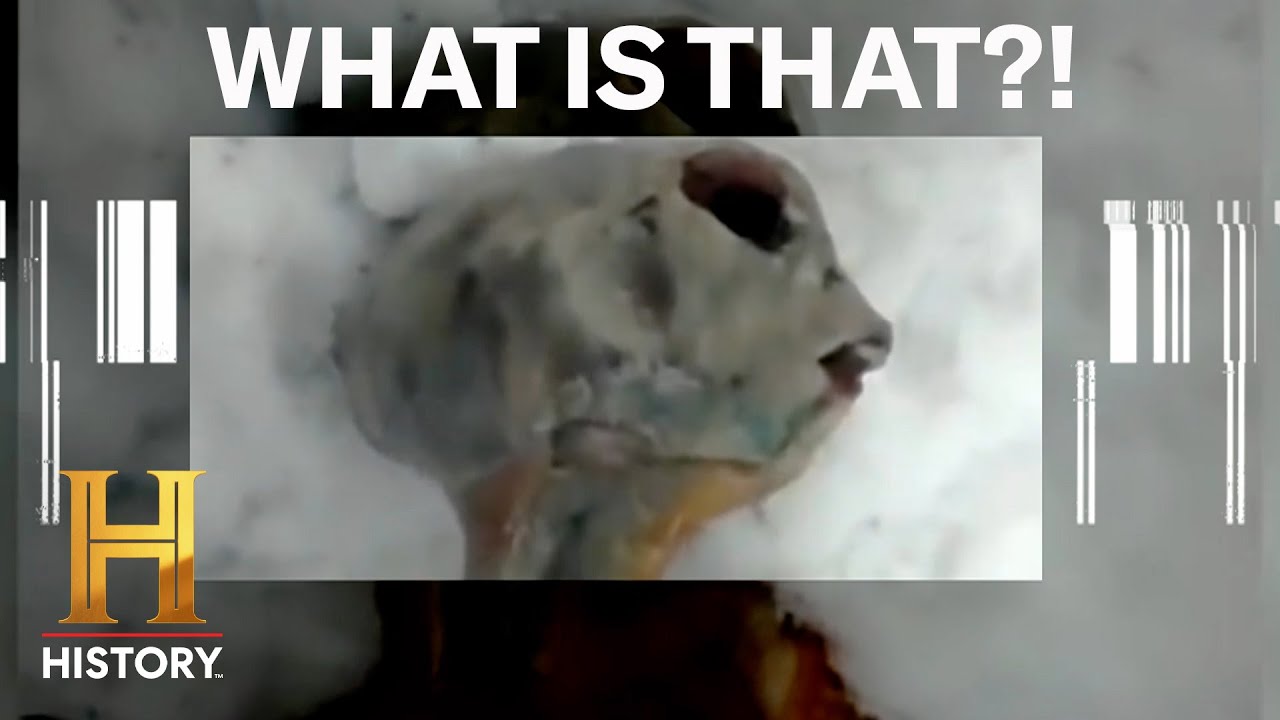
As for your neck, it's better to just use it to keep your head on straight. <i> It's 2011 in a small village in Russia. </i> <i> A local farmer reports that</i> <i> his home is shaken by a large explosion nearby.
</i> <i> While looking for the source, the farmer stumbles upon this. </i> <i> Some remains that look nothing like the usual local wildlife. </i> <i> Take a good look.
</i> <i>The creature has a strange head</i> <i> and an even stranger torso and limbs. </i> <i> And the state it's in is even more puzzling. </i> <i> It appears petrified.
</i> <i> The way this finding is displayed in the video</i> <i> is also quite intriguing. </i> What's very interesting to me is that they are drying some corn at the same time and I wouldn't think you'd want to put something alien next to a food resource. [Harris]<i> According to the source who gave us this video,</i> <i> the cause of the explosion was never found.
</i> <i> But residents of the town were more frightened by</i> <i> what this creature could portend for their village. </i> <i> Journalist Erin McCarthy says</i> <i> local legends could explain why. </i> In Slavic folklore, there's Baba Yaga, <i>a witch who lives in the woods,</i> <i> in a shack that has chicken legs</i> <i> and chicken feet.
</i> <i> She also steals and eats children. </i> [Harris]<i> Baba Yaga has become the equivalent</i> <i> to the boogeyman for kids in this region. </i> <i> Some locals may have believed this creature</i> <i> was her handiwork, but McCarthy says</i> <i>there could be another slightly less creepy explanation.
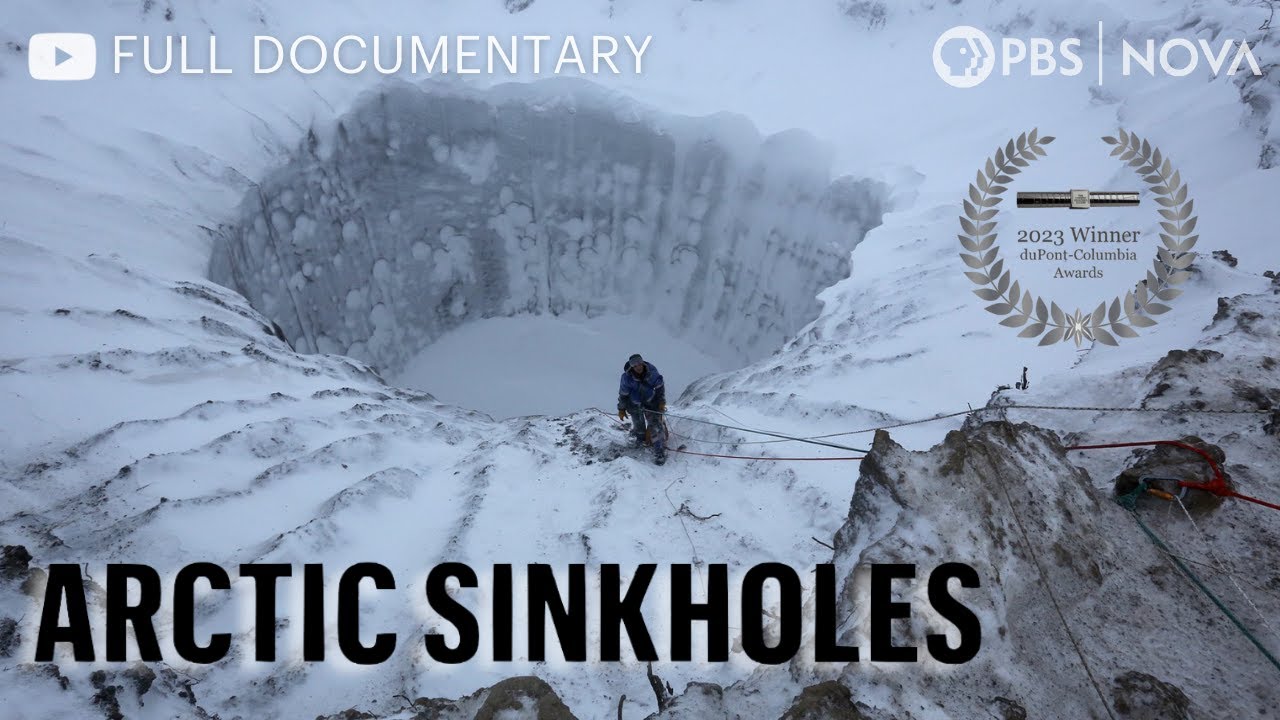
</i> Permafrost is melting in Russia. <i> And with that melting,</i> <i> all kinds of extinct creatures are popping up,</i> <i> like mammoths and rhinos. </i> So, potentially, this creature is something that's extinct that we just don't know about yet.
Now, there are some conditions on Earth that could instantly mummify a living creature. Like the super alkaline waters of Lake Natron in Tanzania. But there's no evidence something like that currently exists in Russia.
So before we determine if this video shows an undiscovered dinosaur or even a child-eating witch, our experts will dig deeper. <i> First, video forensic analyst Mick West</i> <i> examines whether this specimen could be some kind of hoax. </i> I think the only way you could have done that is to have modeled it from life.
<i> That means that you actually had the real thing</i> <i> to start off with. </i> <i> I think the simplest explanation</i> <i> is that what we're seeing is what we're getting. </i> This is, in fact, a dead animal that has been partially or fully mummified.
[Harris]<i> If this is indeed some kind of animal,</i> <i> what kind of animal? </i> Just in terms of the morphology, something about it's face looks quite bird-like to me. It looks like it could have part of the beak that had formed off or not been preserved in this mummification process.
<i> But it's got a really big eye socket. </i> <i> Birds tend to have quite small eyes. </i> <i> So, to me, that would kind of rule out a bird.
</i> [Harris]<i> That x's out it being one of Baba Yaga's chickens. </i> <i> Biologist Floyd Hayes is thinking mammal. </i> [Hayes]<i> OK.
Right here it looks like</i> <i> there may be some teeth in the jaws. </i> To me, the skull looks more like a mammal. <i> It does look like there may be a wing.
</i> <i> It could, potentially, be a fruit bat. </i> <i> There are some large species of fruit bats</i> <i> called flying foxes. </i> [Harris]<i> Furman sees some merit in the bat theory.
</i> They also do have that similar large nose that we can see in this fossil. <i> In terms of their skeleton, they have a long neck as well. </i> <i> And going right to the end of what looks like</i> <i> it could have been wings,</i> <i> they have what looks like it was a claw or a hand.
</i> [Harris]<i> So it kind of looks like a large fruit bat,</i> <i> but here's the problem. </i> They don't live up in Russia, though. They're more characteristic of the tropical islands in the Western Pacific Ocean and Indian Ocean and in Southeastern Asia.
[Harris]<i> Floyd says until this family comes forward</i> <i> with the specimen, we can't be certain what it is. </i> The process of mummifications take a long period of time. It's possible that this is an extinct species of animal that formerly lived in Russia, that is no longer there today.
So, I know we're going out on a limb here, but, for now, we're gonna say this is an unidentified extinct animal. Of course, it would take proper scientific examination to know for sure, but with the Arctic warming two times faster than the global average, we may see more strange creatures thawing out from the permafrost soon. And we'll do our best to identify them.