Hi my name is Madeline Puckette, I'm the co-founder of winefolly. com, where we learn by drinking. Today I want to show you how to taste wine.
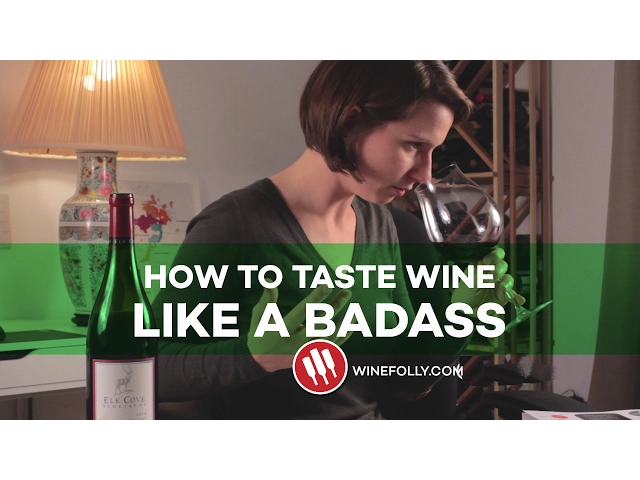
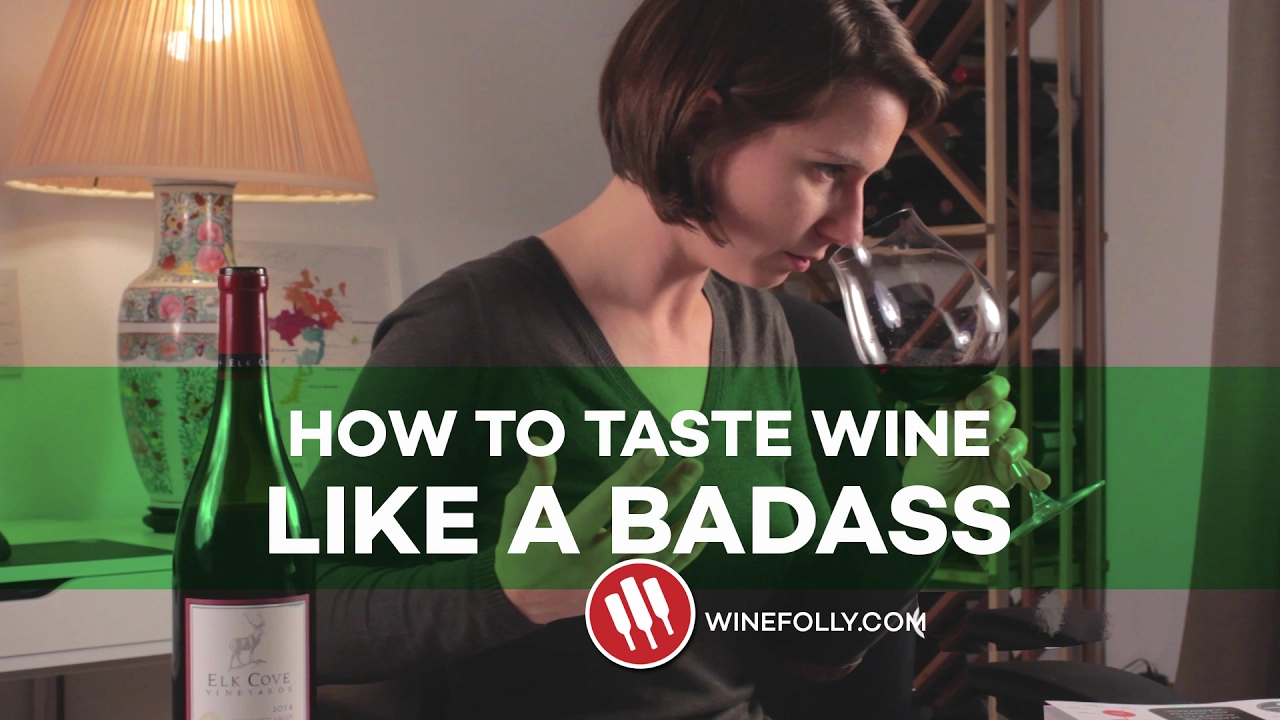
I hope you have a glass of wine, so you can taste with me. I'm tasting an Oregon Pinot Noir by Elk Cove. This is the 2014 vintage, good vintage in Oregon, man awesome and I want to show you how to taste wine.
This method will make you better at assessing quality in wine and it will also make you better at blind tasting. So there's no reason not to learn it and not to do it every single time you pick up a new glass of wine to taste. Okay, so let's get started there's basically four steps to tasting You look at the wine, you smell the wine, you taste the wine, and you think about the wine.
You can think about the wine and during the other three steps. In fact that's part of the deal, but at the end we'll make some conclusions we'll actually you know insert our opinion. Look.
Three things I want to do, look at the hue of the wine, the intensity of that color, and then assess sort of the viscosity of that wine by looking at the legs. Okay so I'm going to look at the color. We have this really cool poster I made, you can check it out, it's called the color of wine chart and it shows you all the colors in wine.
I took a poster and I chopped it into pieces so it's easier for me to use and so I'm basically just going to put this down here and look at my glass of wine over it. I'm looking at it and I would say, you know it's funny and I was gonna say it's pale Ruby but it's almost pale pale purple sort of like ruby purple. Alright we've done color, we've done hue, and we've done intensity.
Done! Okay moving along. Assessing the legs, now people say that wine has good legs.
What does that mean? Well legs is kind of a gross way of talking about the Gibbs-Marangoni effect. This is a phenomenon when you swirl the wine the alcohol and other liquids in the wine touch the side of the glass, the alcohol evaporates into the glass, this is what you smell when you're smelling the wine.
You're smelling alcohol, aroma compounds, those types of things and then causes the remaining liquid to sort of pool up and make these neat little tears in the glass. Oh they are forming on my glass already, awesome. Okay, so I'm looking at these tears forming and I'm seeing them form it's a little bit little bit medium.
Medium maybe, a little bit medium or slightly more than medium, medium alcohol is about 13. 5%. I'm already thinking about the alcohol level just by looking at this wine.
How cool is that. Next thing you want to assess is the viscosity. How fast is that wine moving down the side of the glass?
Mine's pretty fast. This is alcohol level, but it's also sweetness. Really sweet wines kind of look like syrup on the side of your glass.
Now you know. All right so we're looking at that, we're done, we're done with looking. All right now we can smell.
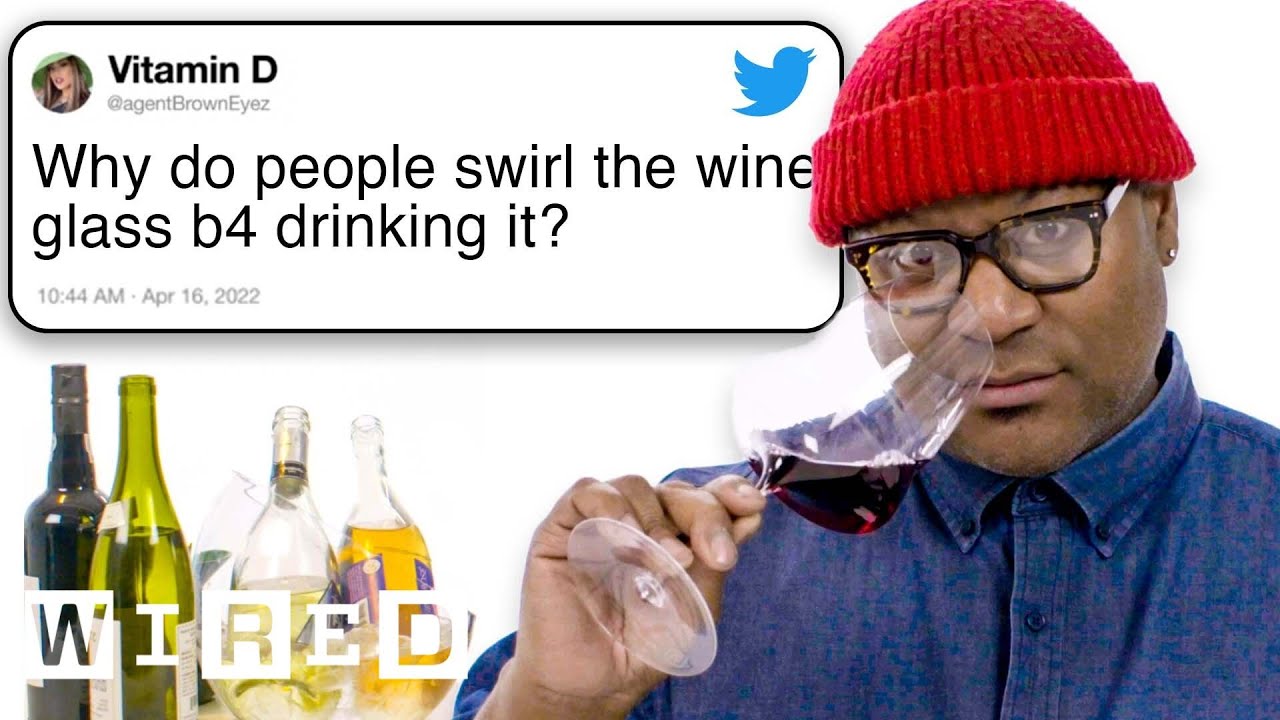
Smelling wine, my goal smelling wine, any wine no matter how complex or simple it is is to get three fruits and three other flavors. Well we're gonna swirl it, just release the aroma compounds into the glass and then give it a whiff. How far you are from the glass really affects your ability to smell the wine.
If you have an awesome huge French nose like me, you don't need to be that close to get a lot of smells. Also, different wines have different levels of intensity, this is something to note. My wine it's a little warmer, so it's really, because I'm sitting into these hot lights.
So I'm really smelling it really well, so it's high intensity. So three fruits I get sweet cherries, actually maybe more like tart cherries, sweet strawberries, like ooh sweet creamy strawberries, almost like a plum, a plum note, raspberry, raspberries. Okay so I take it back no plum, so raspberry, tart cherry, sweet strawberries these are all red fruits so I'm thinking to myself okay I got a pinot noir from Oregon and I'm getting red fruit flavors.
Interesting, okay let's sniff for some other smells you know those little pastille candies, those rose pastille candies? This smells like a rose pastille candy to me. So I'm getting roses and a little maybe a touch of anise just a slight touch of fennel, almost fennel.
I get almost like this note of vanilla, like a vanilla cupcake. Okay so there's my three others vanilla cupcake, roses, and fennel. BAM!
Okay, so we've done a good smell do I smell any earth in this wine? Not really, no I don't smell a lot of Earth in this wine. Do I smell oak?
You know yeah I got a little bit of that vanilla, vanilla cupcake smell, maybe there's a little bit of oak on this wine. And yeah I happen to know this guy's got about ten months of neutral oak in it. So yeah maybe there's just a little touch of oak coming through.
Okay so now we can taste this wine. All right, when you taste get a big chunk of that wine in your mouth really swish it around, swallow, feel the alcohol in the back of your throat, then you're going to want to breathe in and breathe out. Breathe in through your mouth and out through your nose.
That gets your retro nasal olfaction working. Retro nasal is your nose actually working in the back of your throat. So we're going to try to get our retro going.
[Swishing] Swallow, feel the alcohol. Breathe in, breathe out through my nose. I get some additional smells that I didn't notice in the first assessment of the wine.
More like dried leaves, interesting dried leaves. Okay we've done some sort of smell and taste assessment and. .
. Ash this is not the time. So when you're tasting you're not going to really focus on flavors so much you're going to think about the structural parts of this wine.
How it feels, how the texture of it on your palate. The first thing I think about is - is this wine sweet? Or is it dry?
And this wine, my wine is dry! Okay and now I want to know how acidic is this wine? How tart tasting is this wine?
When I put this wine on my palate, you know I could take, like my mouth started watering. Mm-hmm. Like tartness, like.
. . You see that?
I won't do that again, that's gross, but yeah I can gleek, like I my mouth is watering. So I would say this is like put a little higher than medium, it's like medium plus. Plus a little so there we go.
We know this dry wine. It's got medium plus acidity. Tannin, where is the tannin on this wine?
Tannin is that feeling you know, you put a wine in your mouth and then all of a sudden your your lips stick to your teeth. [Audible noise, no defined words] It's like crazy. You're like oh my god it's astringent feeling.
I like to think of it kinda like sandpaper you know? Like fine grit sandpaper or like coarse. Like, grrrrrr.
Taking a lot of wood off, all right. So think about that texture, you know feel that. Feel your tongue on the roof of your mouth and feel how that texture feels.
That's your sandpaper level. That's your tannin level. This wine, very very faint, very light, I can barely taste, I can barely feel the texture of that tannin at all.
I would say it's it's more like medium minus. It's a little less than medium. All right alcohol.
Take a sip, swallow, and feel it. Feel the burn. You know people say "oh my wine is hot" they got a high alcohol wine.
My wine, it's about average. It's like thirteen five (13. 5%) is about average.
I'd say it might be a little to meh thirteen seven (13. 7%). See what it says it is.
Thirteen five (13. 5%) it says. Hmmm, I wonder if I agree with that.
It could be, I think it's a little higher than thirteen five (13. 5%). PS, labeling laws, I think you can be within a point, either direction.
So a whole percent, FYI just you know. Okay! So, now we've assessed the alcohol.
All right now I'm thinking about all of these things. So that overall assessment of the wine. How bold is this wine?
Is this a big bold wine? Does it fill my palate with it with flavor? Or is it a very light delicate wine?
This is a pinot noir, you know it almost tastes the same intensity is like a oak - Chardonnay. So I'm going to say it's a little light. In fact it's pretty light for red wine in general.
Pinot Noir = light red wine. There you go. And when I think about these four components are they balanced with each other?
You know I can taste this alcohol level but, it's balanced out with the acidity which is really cool, and it creates this this even layer. The sweetness, it's a dry wine but I don't get a whole lot of tannin, so interesting. So it's a lower tannin wine.
So I'd say yeah it's pretty in balance. Maybe the tannins are a little bit low but honestly with Pinot Noir that's pretty normal. So I've had assessment of this sort of quality level in my mind.
Were there any flavors that I didn't like about this wine? Not really. And when I breathe in and out the dried leaf thing was a little bit funky.
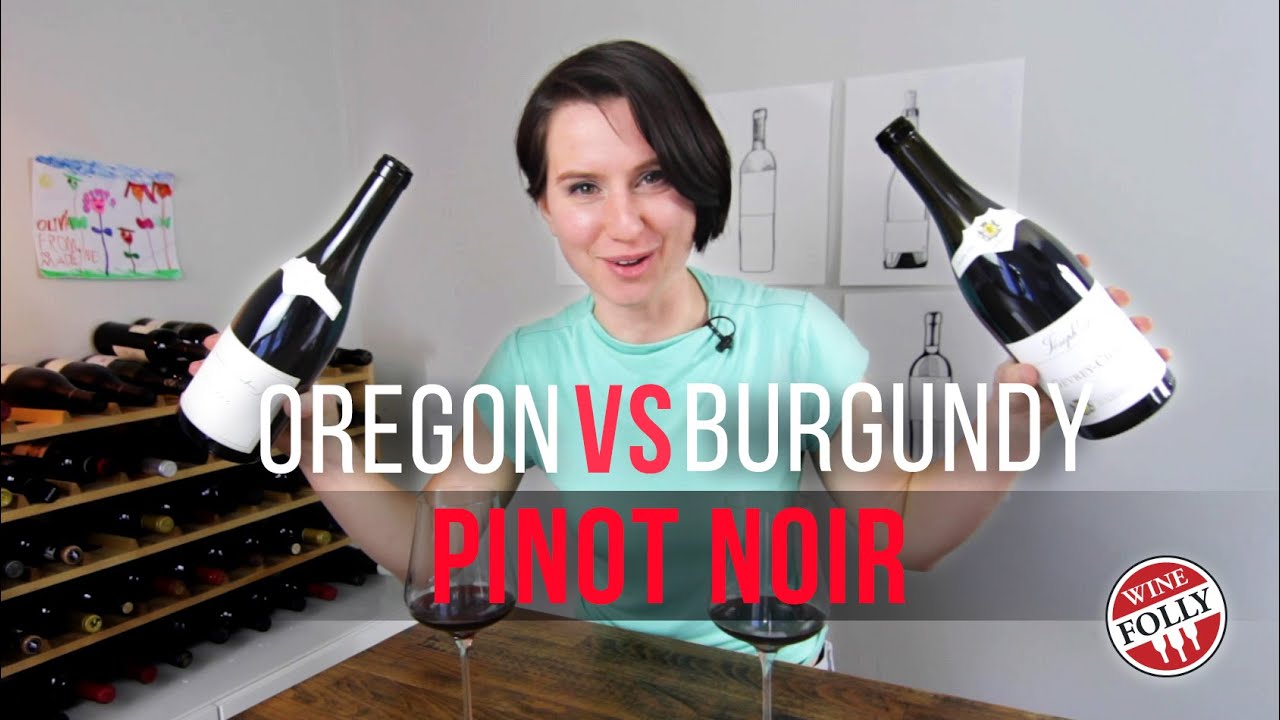
And overall I thought this wine was interesting and you know it wasn't extremely complex but you know I would drink the crap out of it. So there I'm starting to formulate my opinion about the wine at the end. I sort of developed this profile of Oregon Pinot Noir based on elk Cove.
The more Oregon Pinot Noir I taste, the more refined my understanding will be of this region and that's sort of how we taste wine and how we get better fast. So if you do this every time you taste a wine, a new wine you will learn very quickly how to assess wine and how to identify quality. And if you need some help, we have that color chart online, but we also have this sweet book called Wine Folly and I can actually just go over to the Pinot Noir page.
I could see, there it is, and there's a whole lot of flavors in here. You can even see cherry, raspberry, strawberry, plums. These are all sort of associated flavors with Pinot Noir and that's how you can learn.
And yeah if you do it every time you'll get awesome at wine. So do it! Ahhhhh!
Yeah I could drink that. Not bad. All right.