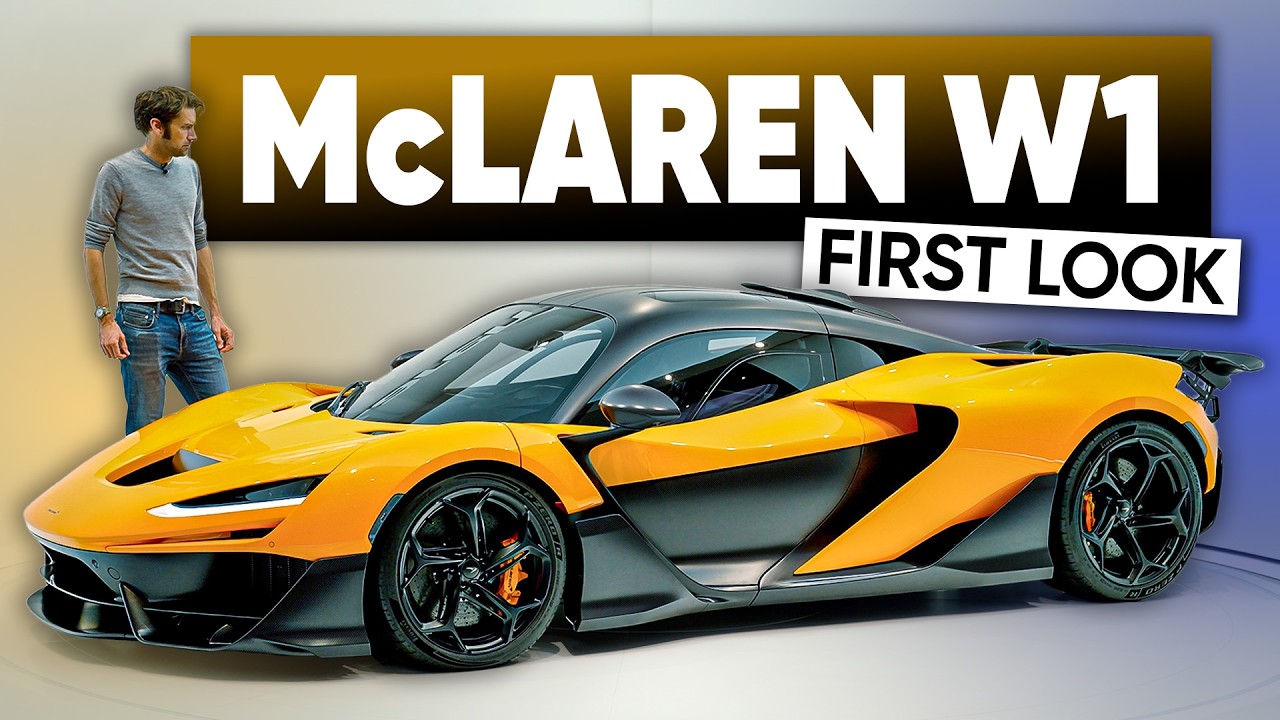
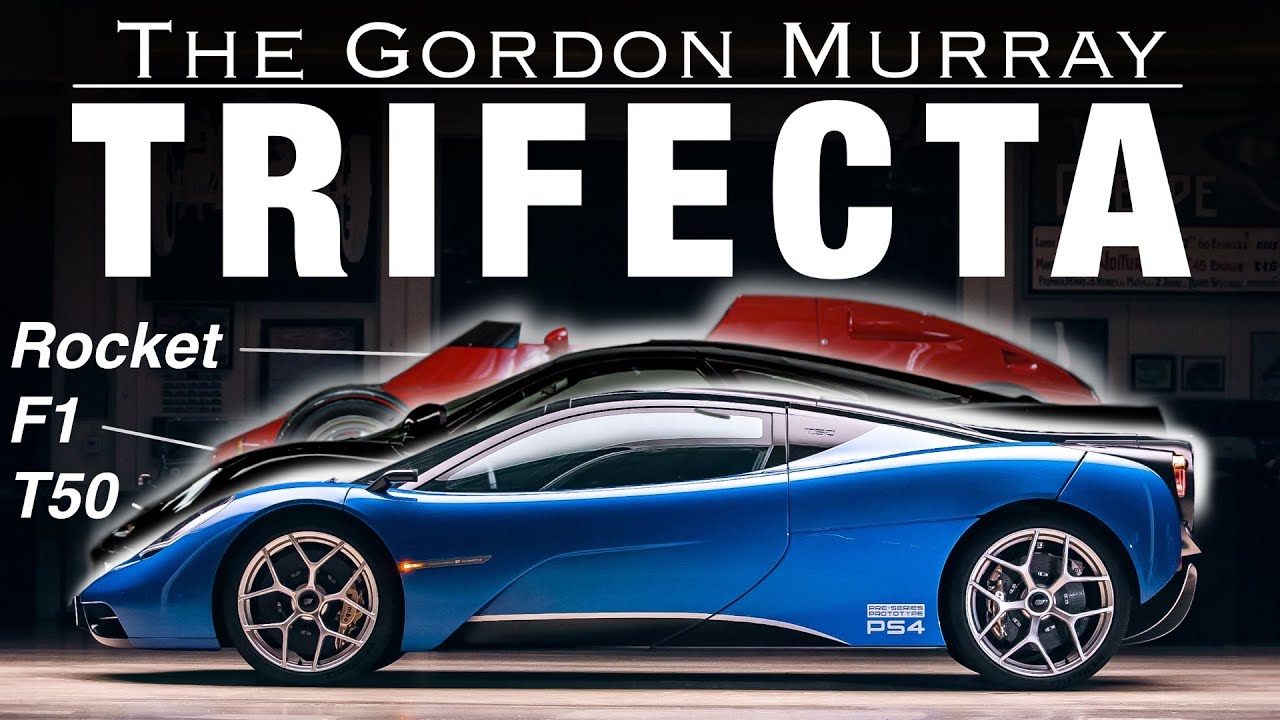
first there was the McLaren F1 the goat the OG hypercar then came the legend that is the P1 arguably the most exciting of the Holy Trinity and now now we have the W1 what's the story here then yes it's the successor to the F1 and P1 the basics are as follows 399 will be built each 2 million including taxes but minus whatever personalization you get MSO to do it's a 1258 horsepower hybrid that's faster around a track than a center faster in a straight line than the speed tail has almost exactly twice the horsepower of the F1 and like the P1 has a race mode that drops the ride height and extends the rear wing and handily it's turned up at almost exactly the same time as the Ferrari f80 reckon there's been some phone calls between Marinello and woking based on the fact that mcclaren's CEO used to work there maybe anyway it is a very complicated car so we are going to go through it section by section starting with yeah how it looks because it's not beautiful is it the P1 was all sinuous curves and starts this is a bit more disjointed it's like it's been designed in sections the design doesn't particularly shout McLaren to me either and nor does it shout 2 million quids worth but it's hardly like Ferrari's new f80 is a looker either yet last time round both the LaFerrari and P1 were gorgeous you could blame Arrow but the valkyrie is a sensational looking thing orbe it more radical and compromised than either of these so here's the thing you need to see it in person because when I first saw pictures of it I just thought all the surfaces looked flat but now you're starting to get a sense of the shape this is a much softer curve than I thought it's more akin to the P1 and I don't get these McLaren headlight shapes yet but I suspect it will come when they do future models this is probably W1 is probably going to lead for other cars to follow I like the little Port holes here where you can see the inboard push rods in there and then you get to the proper head scratchy bit because look at all of this stuff going on through here obviously air is meant to come in through here and then get channeled in various ways there's a weird Arrow profile bit which is obviously designed to Channel The Air down and back past these really quite voluptuous sides it's much more shapely when you stand up close than you think it is from further away but the complexity of what's going on down the side of this car before you get to this bit now McLaren say this is based on this year's Formula 1 car shape to me that is the bit that says Center more than anything else and in pictures I had never even noticed this separate it's like UFO hovering over the roof doubtless it does some very clever stuff with the air channeling it down over this quite Big Slab of back deck like the Ferrari there is no rear visibility and just sort of a bit of a glimpse down into the engine what do we think of the name though W1 stands for winning and I suppose Lando is at the moment so that's all right but it's not the most emotive it doesn't resonate like P1 and F1 did but then you look through the alphabet and you think oh actually they must have really struggled because M1 is a BMW name S1 is Audi A1 is an Audi and also a piece of paper R1 is Yamaha they didn't really have many options open to them in case you're wondering McLaren also traded marked U1 and H1 maybe we'll see one of them appear in another decade in the meantime let's discuss the hidden underneath the carbon body panels is a brand new monoco called the Aeros cell essentially this is the core of all the W's aerodynamics by raising the occupant's legs 80 mm McLaren can use the underbody to do more with the airf flow it also incorporates a fixed seat the lightest solution possible and with no seat Runners that means the Aeros cell is more compact shortening the wheelbase it's only a fraction longer than the p1s is the W1 really that much of a step forward the old P1 could do 6 Mi of electric only driving the W1 just 1. 6 mil and it still uses a 4 L twin turbo V8 and twin clutch gearbox it doesn't really seem to be moving the game on but wait the V8 is brand new from the ground up as is the gearbox which now has eight speeds rather than seven and no reverse that's done by the electric motor which itself delivers 342 horsepower while the V8 contributes another 915 bringing the total to 1258 75 horsepower more than the Ferrari and yet the Ferrari is faster it claims 2. 15 seconds to 62 against 2.
7 for the W1 that's because the Ferrari is four-wheel drive fast off the line while the McLaren is rear wheeel drive lighter it's 125 kg less than the f80 which means once up and running it's just as fast it might be slower to 62 but by 125 it is level pegging both hit that in 5. 8 seconds Ferrari makes no claims above that but the McLaren goes on to hit 186 mph in under 12. 7 seconds it revs to 9,200 the highest revving McLaren ever and has a dry weight of 1399 kilos with fluids that'll be around, 1530 kilos and still gives the W1 an 822 BHP per ton power to weight ratio you will need a yesco attack to go much faster it is a hybrid but it's for power not range the 1.
4 kwh battery is a small tube tucked into the bottom of the chassis recharged only via spare engine power the motor sits not on the main drive shaft but drives through the shaft on the even Gears of the gearbox it's compact light and has nothing in common with the arura the entire system battery motor and all ancillaries weighs 100 kilos yet as we said earlier it develops over 340 horsepower right you get the picture it's a complicated car so let's get someone in for a deep dive this is Deputy Chief technology officer Chris Harrison we've inclined the engine 2° which allows us to start the diffuser pretty much in line with where we're where we're standing now and that allows us to accelerate the air underneath the car so that the air actually leaves at the rear of the car twice the speed of when it enters so it enters there at like 100 mph and exits at 200 mph tce the velocity really and that's just from the using because you've got a very effective diffuser that pulls the through absolutely yeah and then as we build out from that you can see that the functional forms and around the car are fundamentally there to allow us to maximize and extract the most from the ground effect we need to manage the air for multiple reasons down the side of the car one of them as you said is fundamentally for the ground effect is to provide the ceiling down the uh down the underside of the car where we have to evacuate the air from that high pressure wheel well and we effectively create two vortices down one down each side of the car that allows to seal the under body so I didn't I didn't realize this is what a vortices does so you actually want those little spirals of air running down the side because that creates a boundary level layer for the air to stay inside of absolutely yeah absolutely right so and you so you use those instead of having little barge boards underneath the car yes to Def to to aim it you you engineer these vortices to glue the air absolutely into place and then further forward we've got there's a little arrow flap there is it why have you got an arrow flap there CU obviously you've got your your evacuating hot hot air from there but you've also got a flap built into it yeah as we said it's also helping us managing U managing air up and over the car but then also this hatch is where we have um service access and this is where you'd access the AC charger for charging charging so CU you can keep it I suppose on trickle you want it for on trickle charge and that's also so that's the charge port for the battery isn't it yeah for Char tiny little battery adding much weight is it 1. 4 Kow hours yeah exact exactly that so again we optimize everything for weight yeah so it gives us the performance that we need and yeah so you you did you look at using super capacitors or anything instead of just a small battery pack uh no we were very clear about working forward on our hybrid uh hybrid l AG so building on technology we've already deployed you know from1 and and the and the speed tail yeah um and this is a huge step change on for instance it's 40% lighter than the um than the hybrid system that we had in in the P1 yeah and that battery pack said that all all you've got to do is get charged back into it very fast and out of it very fast cuz you're driving up 340 wat horsepower electric motor from a tiny little battery pack yes so you're sort of blowing all the power out in one good acceleration run and then you need to use the engine to recharge it I guess cuz you haven't got regen braking have you yes so we do all the um regeneration via the overs speed uh on on the motor right I've opened the door up because I wanted to show you just how cutaway it is around that Aeros cell tub and also if you start looking down there too close you'll realize this is a show car it's not a finished car this car doesn't go on sale for another 18 months or so at least but look look we've got the suspension components here this is the lower Wishbone and Chris has got me up right there uh very clearly 3D printed not Mach abely no absolutely and you can see fully the beautiful forms that we're able to take and the opportunities that we can exploit by using 3D printing is we can create a homogeneous form that enables us to incorporate not just the loads that these components need to see but also the aerodynamic form as well this this element up here in none of the pictures I had I noticed this sort of little batwing job on top what's it I'm assuming it's gluing the air to the back deck yeah so we call this we call this the flow diverter and effectively its role is as you say is it ensures that we get the air glued to the back of the car to allow the active longtail to to function so we need to feed the active longtail with clean air yeah um this also helps Channel a if you can imagine the car is sideways and we've got air entering acting sideways this allows us then to Channel The Air down further onto the onto the spoil right um why is it not carbon cuz it you can see carbon surfac is here but not there so we actually integrate the antenna uh within this and for yeah for transmission purposes you can't have it in carbon can't have it in car oh I see okay wow um and then you've got an awful lot of stuff going on we should get the rear wing active shouldn't we so there's four Motors isn't there that run yes there an they're driven by electric motors which is a first so previous McLarens have been hydraulically um operated and you'll see as the wing extends rearwards into race mode the wing in itself can ex that's Road mode now this is Road mode and then we can deploy the wing 300 mil rearwards for race mode which isn't road legal just just like P1 correct as soon as you've sent the wing out the back correct isn't isn't legal and then we have up to 292 de of adjustment in the the of attack of the wi CU at the I mean it's weird isn't it I mean I don't understand eror at the best of times but you look at that wing and you go well hang on that looks like it should be giving you lift rather than down Force why is it not up at an angle so if you think about the ground effects concept so we're using the under body of the card to generate the down Force MH what the wing is actually doing by extending rearwards is effectively increasing the length of the diffuser so the overall active area of the diffuser so the angle of that diffuser coming up sort of meets the back of the spoiler and so you've just got a virtual diffuser yes out the back so in the purest possible terms it's a long tail and yeah absolutely and there's a weird thing here as well I've noticed there's like a cut out through the arm of the upright there what's what's going on there yeah so that's basically when we're when we're cornering if we get any pressure build up um on the inside of the wing this effectively allows us to relieve that pressure and also make sure that we keep the wing functioning as we need to oh really and so 13.