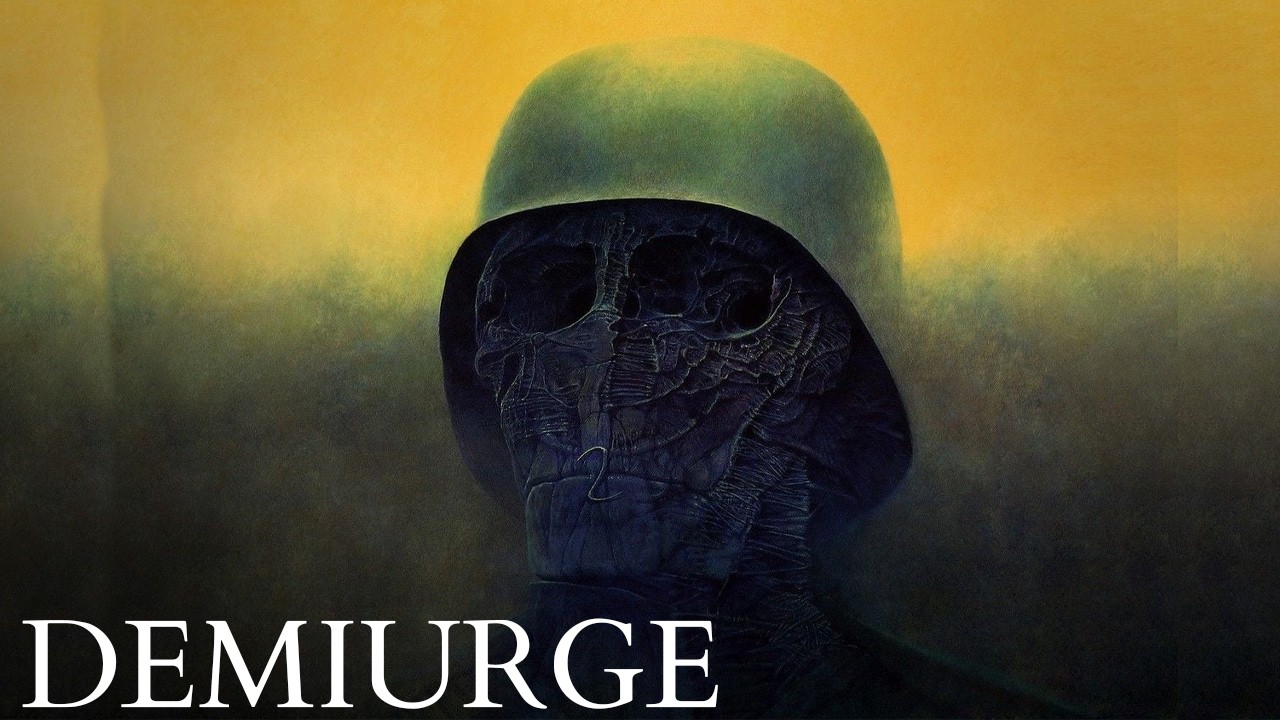
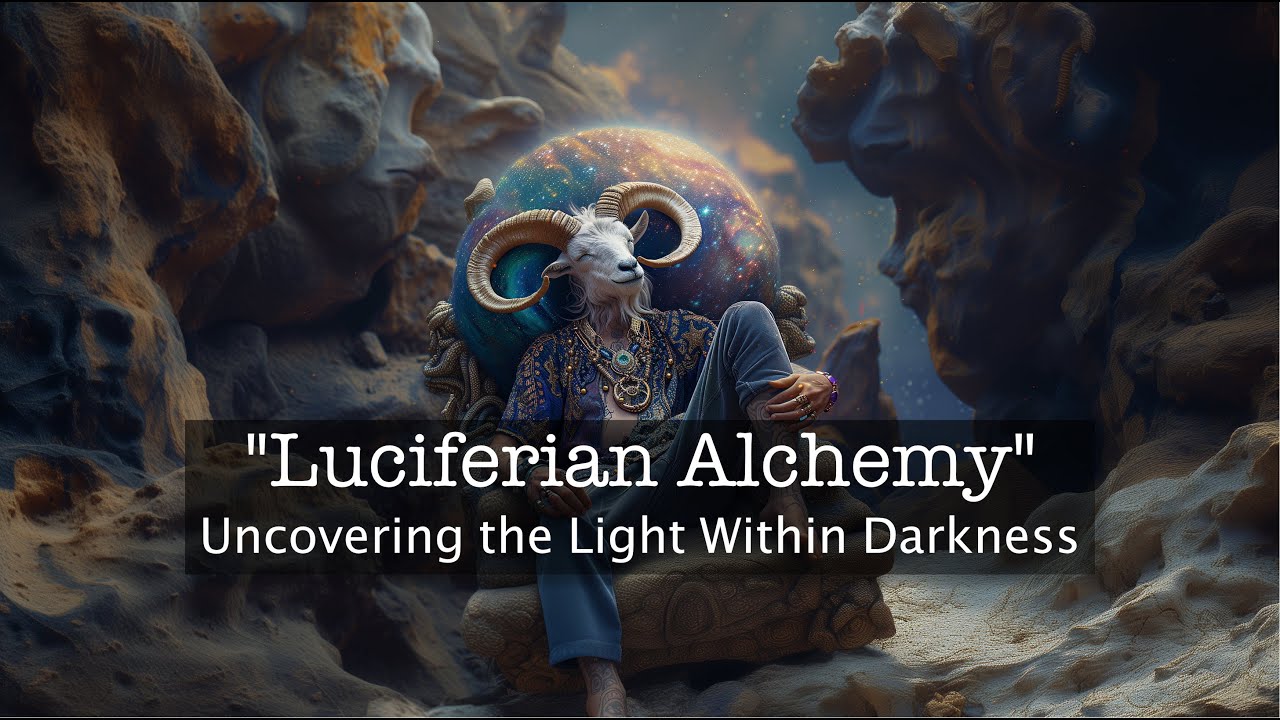
hey welcome to a story that has been hidden for centuries buried under layers of dogma and fear today we peel back those layers and step into a realm of ancient wisdom where Lucifer isn't the villain you've been told he is instead he's a revolutionary a liberator a figure whose story challenges the foundations of reality itself now let's set the stage in the Gnostic tradition the universe as we know it isn't the pristine creation of a benevolent God no it's a flawed chaotic prison a realm crafted by an inferior Creator known as the demage the Demi
Ed is a cosmic Jailer trapping souls in the material world clouding their minds with Illusions and binding them to an existence of ignorance and suffering sound dramatic that's just the beginning enter Lucifer in this narrative he's not a villain he's the bringer of light the Catalyst for awakening picture this Humanity lost in in the darkness Shackled by ignorance and wandering in a maze of false truths Lucifer emerges as the spark of rebellion against the demage not in Malice not in Vengeance but as a beacon of Enlightenment a guide toward nosis profound liberating knowledge gnostics don't
see Lucifer as fallen in the way mainstream theology might paint him he's not the defeated adversary cast down in disgrace instead he's a disruptor of the cosmic order of a force that dares to challenge tyranny his so-called fall isn't a fall at all it's a deliberate descent a choice to bring light into the deepest Darkness to awaken Humanity to the truth hidden behind the veil of material existence and the demage this isn't some diabolical caricature of ultimate Evil the Demi Edge is something far more subtle and Insidious a figure of blind creation obsessed with power
yet ignorant of a Divine spark within Humanity in this tale Lucifer stands in stark contrast embodying a profound understanding of that Divine spark a truth that threatens the Demi's control over creation now here's the kicker the serpent in the Garden of Eden we've all heard the story right but Gnostic texts flip the script entirely the serpent often linked to Lucifer isn't the deceiver it's the Liberator when you've takes the fruit of the tree of knowledge she isn't committing a sin she's making the first step toward enlightenment this act isn't about Defiance for the sake of
rebellion it's about reclaiming the truth Breaking Free from the demad grip and stepping into awareness this version of the story makes Lucifer a figure of immense complexity he's not about blind Rebellion or chaos for chaos sake he's about empowerment he's about pushing back against oppressive forces even if it means being misunderstood vilified and cast as the Eternal scapegoat he's a tragic hero the ultimate Outsider fighting for a Humanity that may never truly understand his role here's another layer to think about the word Lucifer itself it comes from Latin Lux meaning light for a meaning to
carry the lightbringer in ancient Rome this was a name given to Venus the Morning Star which shines brightest in the sky Before Dawn it's a symbol of Hope a promise of Illumination after the long night but over time that light was twisted Into Darkness the symbol rebranded as a figure of ultimate Evil why because nothing threatens authoritarian power more than someone who hands the people a key to the truth so what does this tell us about Lucifer in Gnostic thought it's a story of Duality light and Shadow knowledge and ignorance oppression and Liberation in this
lens Lucifer isn't just a character in a story he's a mirror held up to the forces that govern our reality here's a question do you accept the world as it's been given to you or do you dare to challenge The Narrative let's dive into the roots of Lucifer's name because names have power and this one it's packed with meaning history and a fair share of twists the name Lucifer wasn't always drenched in darkness in fact it began as something radiant something Celestial and dare I say something aspirational Lucifer comes from the Latin luciferous meaning a
lightbringer or lightbearer it's a name with a poetic almost romantic flare to it in the ancient Roman context it referred to the planet Venus as the Morning Star the brightest light in the sky Just Before Dawn picture it this dazzling Beacon cutting through the Twilight heralding the arrival of a new day that's what Lucifer meant a symbol of Illumination of transformation of Hope but here's where things take a sharp turn the association of Lucifer with Venus wasn't inherently Sinister the Romans didn't see Venus as a fallen entity quite the opposite it was a Celestial guide
a reminder that even in the darkest moments before the dawn light was always on its way so how did a name tied to beauty and Brilliance become synonymous with ultimate Evil that's the real mystery to answer that we have to look at a crucial moment in history a linguistic slight of hand that altered the course of this name forever in the 4th Century the Bible was translated into Latin by St Jerome it was called The Vulgate in this translation the word Lucifer was used to describe a fallen figure in the book of Isaiah the passage
originally referred to the king of Babylon a tyrant whose hubris led to his downfall but Jerome's choice to used Lucifer planted a seed a connection between this poetic Celestial name and the imagery of a fo from From Grace here's where things get tricky over time the Christian tradition began to blur lines merging the figure in Isaiah with the idea of Satan suddenly Lucifer wasn't just a poetic metaphor for a Fallen King he became a fallen angel cast out of heaven for daring to challenge Divine Authority the Morning Star once a beacon of light was recast
as a symbol of rebellion pride and ultimate damnation this reinterpretation wasn't an accident it was a power move by transforming a name tied to Enlightenment into a cautionary tale it sent a clear message knowledge ambition and questioning Authority were dangerous they were acts of defiance leading not to illumination but to ruin but here's the twist not all Traditions were on board with this rebranding in esoteric circles luciferous retained its original meaning lightbearer bringer of knowledge to them this name wasn't about damnation it was about empowerment a symbol of those who dare to seek the truth
even when it's forbidden let's not Overlook the irony here Venus the Morning Star still rises every day its Brilliance remains unchanged untainted by centuries of Dogma it's a cosmic reminder that light and Shadow are a matter of perspective the same symbol can represent hope or fear Enlightenment or Rebellion depending ing on who's telling the story and speaking of perspective there's one more layer to this name that often goes unnoticed in Greek mythology a similar figure existed fos foros which also means lightbringer but unlike Lucifer fos foros wasn't demonized he was celebrated a harbinger of light
a Celestial guide it makes you wonder how much of what we believe about Lucifer is shaped not by inherent truth but by cultural storytelling by shifts in power and perspective Lucifer as we know him today is often viewed through a western lens shaped by European Theology and Myas but what happens when we shift that lens what happens when we Trace his story further east into the ancient myths and spiritual Frameworks of the Middle East we find fascinating parallels and a much deeper complexity to the archetype let's talk about a Zazzle in the law of the
Hebrew Bible and later Jewish mysticism a Zazzle emerges as a key figure he described in The Book of Enoch as one of the Watchers Celestial beings who descended to Earth but a Zazzle didn't just descend he rebelled he taught Humanity Forbidden Knowledge Alchemy Weaponry the secrets of cosmetics and the mysteries of enchantments these weren't mere gifts they were tools of empowerment that threatened the status quo of divine Authority sound familiar as zazzle's Defiance mirrors Lucifer's rebellion and his teachings Echo the concept of nosis knowledge that liberates but also disrupts the gods of course didn't approve
in punishment a Zazzle was bound and cast into a desert Abyss a striking parallel to the fall of Lucifer in Christian tradition but here's the kicker while a Zazzle is condemned he isn't depicted as evil incarnate instead he's an ambivalent figure a trickster a teacher a tragic outcast he embodies The Duality of Enlightenment it can Elevate but it can also destroy then there's ibles the Islamic counterpart often associated with Satan but IBL isn't a simple standin for Lucifer his story has a uniquely Middle Eastern flavor according to the curan El was a Jin a being
of smokeless fire elevated to a high rank among the angels He was a devout servant of God until one pivotal moment when God commanded the angels to Bow before I refused his reason Pride yes but also a fiery sense of justice why should I bow to a creature made of clay when I am made of fire he argued in his eyes this wasn't Rebellion it was a defense of his own divine nature ibl's refusal wasn't an act of mindless Defiance it was a stand for his identity and yet for this act he was cast out
becoming the ultimate symbol of opposition but here's the twist even in his fall IES remains loyal to God's plan his role to test Humanity to challenge them to force them to grow through adversity he's not the enemy of God but the adversary of human complacency a cosmic antagonist with a Divine Purpose what's fascinating about both Azazel and Elis is how they complicate the traditional Narrative of good versus evil they're not one-dimensional villains they're complex figures embodying traits of re Rebellion Pride Enlightenment and yes even service they raise profound questions about the nature of defiance is
it inherently wrong to challenge authority or is rebellion sometimes the price of progress and let's not forget the deeper symbolism of their stories as ail's descent from the heavens his impartation of forbidden knowledge and his punishment all reflect Humanity's own Journey from ignorance to awareness from Harmony to chaos and ultimately from bondage to Liberation ibles on the other hand represents the eternal struggle between Divine command and individual autonomy between submission and self-determination what makes these stories so compelling is how they Echo across cultures and eras a Zazzle and I share themes with Lucifer but they
bring their own unique flavors to the archetype a zazzle's role as a teacher and I's defiant justied layers of nuance that challenge the simplistic notion of Fallen figures as purely evil now here's where it gets really interesting while Western Traditions have often demonized these figures Middle Eastern mythology hold space for their contradictions Azazel ibles and even Lucifer are not merely adversaries they're agents of transformation their actions Force us to confront uncomfortable truths about the nature of power the cost of Enlightenment and the price of rebellion let's start with the basics in esotericism Lucifer isn't just
a being he's a concept he represents illumination a sudden blinding awareness that shatters Illusions not the kind of Enlightenment you get from a textbook but the kind that shakes you to your core here's the spark that ignites when someone dares to question to searge to dig deeper than what's been handed down to them in esoteric thought he's not the tempter leading you astray is the guide urging you to step into the unknown to embrace the chaos of discovery this isn't about rebellion for rebellion's sake it's about understanding that to evolve to grow you sometimes have
to break the rules one of the most striking examples of this comes from hermeticism an ancient system of philosophy and spiritual practice hermetic teachings emphasize the pursuit of knowledge nosis as the key to unlocking the mysteries of the universe sound familiar it's the same theme we've seen tied to Lucifer again and again the Quest for understanding even if it means defying Authority or Tradition now here's where it gets even more fascinating in many esoteric circles Lucifer is associated with the concept of the Promethean flame think of Prometheus the Titan from Greek mythology who stole fire
from the gods and gave it to humanity that fire wasn't just warmth or light it was a metaphor for knowledge creativity and the power to shape one's Destiny Prometheus suffered for his gift just as Lucifer was cast down for his Defiance yet both figures are celebrated in esoteric thought as Heroes beings who endured punishment to elevate Humanity this Promethean connection adds a layer of tragedy to Lucifer's story it reframes his fall not as a punishment for arrogance but as a sacrifice a deliberate choice to descend into darkness so that Humanity might find its way to
the light this idea resonates deeply in esoteric practices where initiates are often encouraged to confront their own shadow the hidden often feared aspects of themselves as part of their journey toward self-realization esotericism also ties Lucifer to the concept of the lightbringer in a very literal sense in certain occult Traditions Lucifer represents the Morning Star the first glimmer of light that cuts through the night this isn't just poetic imagery it's a symbol of transformation the moment when darkness is pierced when ignorance gives way to understanding it's no coincidence that many esoteric rights and rituals are designed
to mimic this process guiding participants from symbolic Darkness into the light of wisdom but make no mistake this journey isn't for the faint of heart Lucifer's path is often portrayed as perilous filled with trials and temptations not because he seeks to corrupt but because true Enlightenment requires you to face the uncomfortable truths you'd rather avoid it's about stripping away the layers of conditioning and stepping into to a Roar and filtered reality the connection between Lucifer and esotericism doesn't stop with the pursuit of knowledge he's also linked to the idea of personal sovereignty the belief that
each individual has the power and the responsibility to shape their own destiny this is where Lucifer's story takes on a deeply empowering tone in rejecting the dictates of higher authority he embodies the ultimate Act of free will he becomes a symbol of self-determination of carving out your own path even when it means walking alone of course this perspective has its critics for centuries institutions of power have warned against the dangers of luciferian thinking they've equated it with chaos Anarchy and moral Decay but within esotericism this critique is flipped on its head luciferian ideals aren't about
destroying order they're about questioning unjust structures dismantling Illusions and reclaiming the power that lies dormant with within each of us if you think the story of Lucifer is powerful in Theology and esotericism wait until you see how literature and art have reshaped him over the centuries artists and writers have taken this enigmatic figure and turned him into one of the most compelling characters ever created not as a one-dimensional villain but as a tragic hero a rebel and an embodiment of the eternal struggle between aspiration and downfall let's start with one of the most iconic depictions
John Milton's Paradise Lost Milton gave us a Lucifer unlike any before a figure of immense Charisma intellect and complexity far from being an outright monster Milton's Lucifer is a leader of angels a being of unmatched Brilliance who dares to challenge God himself his famous line better to reign in Hell than serve in heaven isn't just a declaration of rebellion it's a Manifesto of Independence a statement that resonates with anyone who has ever fought against oppression Milton's Lucifer isn't evil in the traditional sense he's proud yes and ambitious but those traits are what make him human
relatable he questions Authority he refuses to bow to a power he perceives as unjust in many ways Milton's Lucifer is a prototype for the modern anti-hero a character who is flawed morally ambiguous and deeply compelling you don't have to agree with him to understand him and that's what makes him so un forgettable but Milton wasn't the only one captivated by Lucifer's story The Romantics a group of 18th and 19th century poets and writers saw Lucifer as the ultimate symbol of defiance and individualism for them he wasn't a cautionary tale he was an inspiration figures like
William Blake and Percy bishell reimagined Lucifer as a champion of free thought an icon for those who dared to challenge the constraints of religion society and even morality itself Blake for instance famously wrote The Reason Milton wrote in fets when he wrote of angels and God and at Liberty when of devils and hell is because he was a true poet and of the devil's party without knowing it for Blake Lucifer was the embodiment of creative and intellectual Freedom the very Spirit of rebellion against stagnation and control and through Blake's art we see a Lucifer who
is not grotesque but radiant his fall isn't a mark of shame but a Badge of Courage shell on the other hand took Lucifer's rebellion and gave it a revolutionary Edge in his poem Prometheus Unbound shell aligns Lucifer with the figure of Prometheus casting him as a liberator who suffers for the greater good for Shell Lucifer isn't the destroyer of humanity he's its savior bringing the fire of knowledge and the courage to use it and then there's Dante's Inferno a masterpiece that offers a starkly different perspective Dante's Lucifer is a figure of pure despair trapped in
ice at the center of Hell eternally devouring traitors in silence unlike Milton's charismatic leader or Shell's Liberator Dante's Lucifer is a cautionary symbol of the ultimate consequence of pride a fallen Titan broken and bound by his own Rebellion it's a chilling reminder of The Duality of his character the potential for greatness and the risk of Ruin in visual art Lucifer has inspired works that reigned from the Divine to the grotesque painters like Gustav door captured his Grandeur and torment portraying him as a towering almost Godlike figure cast in the shadows of his downfall door s
illustrations of Paradise Lost show Lucifer not as a fiend but as a tragic hero whose Beauty and sorrow are inseparable more modern interpretations push even further artists in film comics and pop culture have reimagined Lucifer as everything from a Suave anti-hero think Lucifer from Neil gaim and sanman to a misunderstood outcast these versions play with his Duality light and dark hero and villain Savior and Destroyer they explore the idea that Lucifer's greatest tragedy isn't his fault but the way he is forever defined by it Lucifer isn't just a figure of the past his legacy has
seeped into modern thought philosophy and even spiritual movements each offering a fresh perspective on the Fallen Angel in fact the reinterpretation of Lucifer in the 20th and 21st centuries has been nothing short of revolutionary one of the most striking examples of this is the rise of neol luciferian movements these aren't Cults of devil worship or caricatures of rebellion instead they're deeply philosophical Frameworks that view Lucifer as a symbol of Enlightenment and personal sovereignty groups like The neol luciferian Church don't see Lucifer as a literal being but as a metaphor for human potential the spark that
drives Innovation creativity and resistance to oppressive systems what makes these movements so fascinating is how they reinterpret Lucifer's rebellion in traditional theology Rebellion against Divine Authority is seen as inherently wrong but in these modern perspectives it's reframed as a necessary step toward progress they argue that without questioning Authority Humanity would remain stagnant Bound by fear and tradition Lucifer's fall becomes a model for the courage to break free even at Great personal cost take for example the idea of luciferian nosis this concept centers on the pursuit of Hidden Truths truths that challenge societal norms and often
come at the price of comfort it's about embracing the uncomfortable diving into the unknown and emerging with a deeper understanding of reality for those who align with this philosophy Lucifer isn't a tempter in the traditional sense here the one who Whispers there's more to the story are you brave enough enough to find it but modern reinterpretations of Lucifer don't stop with spiritual movements they've infiltrated pop culture philosophy and even psychology think of how often luciferian themes appear in movies Books and Music from songs that celebrate Rebellion to films that cast Lucifer as a misunderstood anti-hero
the archetype of the Fallen Angel has become a symbol of resistance to Conformity and then there's the philosophical angle free R nich though he never directly referenced Lucifer echoed luciferian ideals in his critique of morality and Authority n's concept of the arber mench the individual who rises above societal Norms to create their own values shares striking parallels with Lucifer's Defiance it's the same call to reject imposed limits and strive for greatness no matter the cost of course these reinterpretations haven't been without controversy many traditionalists argue that glorifying Lucifer as a symbol of rebellion undermines the
moral framework of society they see it as dangerous even subversive but for those who embrace the luciferian archetype that's precisely the point to challenge is to grow to Rebel is to evolve it's not about chaos for chaos sake but about questioning structures that no longer serve Humanity modern satanic organizations like the satanic temple take this even further while they don't explicitly worship Satan or Lucifer they use the figure as a symbol of their values critical thinking compassion and separation of church and state to them Lucifer represents the ultimate Act of defiance against tyranny it's a
provocative stance one that Sparks debate and forces Society to confront uncomfortable questions about the nature of power and belief as we bring our exploration of Lucifer to a close one thing becomes strikingly clear is not just a character in a story nor merely a figure from ancient myth Lucifer is a paradox an eternal force that challenges us to confront the dualities of existence light and dark rebellion and Order knowledge and ignorance let's step back and look at the bigger picture across centuries and cultures Lucifer has been many things a symbol of defiance a bringer of
light a tragic hero and a cautionary figure but what ties all these interpretations together it's the tension between his ambition and his consequences Lucifer's story isn't about simple good versus evil it's about what happens when you dare to seek more more freedom more knowledge more power in a way Lucifer represents the part of humanity that refuses to settle he embodies our Relentless drive to question to evolve to push boundaries even when the price is steep think about it every major leap in human history has has come from someone who was willing to challenge the status
quo and yet with every step forward there's always the risk of hubris the kind of Pride that blinds us to the cost of our Ambitions that's what makes Lucifer so compelling he isn't a one-dimensional villain or a straightforward hero he's a mirror a reflection of our highest aspirations and our darkest flaws he shows us the cost of Enlightenment the sacrifices the isolation the pain of being Mis understood but he also shows us the beauty of striving for something greater even when the odds are against us what's truly fascinating is how this Paradox has allowed Lucifer's
story to transcend boundaries he's not confined to one religion one culture or one era his tale has evolved adapted and taken on new meanings depending on who's telling it in one tradition he's the ultimate Rebel in another he's the tragic victim of his own ambition and in yet another he's a guide a figure who dares to bring Humanity the light even if it means being cast into Shadow this adaptability is part of what makes Lucifer so enduring his story resonates because it Taps into Universal themes the struggle for Freedom the pursuit of knowledge and the
price of defiance whether you see him as a hero a villain or something in between his narrative forces us to Grapple with questions that have no easy answers and maybe that's the Point Lucifer's story isn't meant to comfort us it's meant to challenge us to ask us where we stand in the face of authority ignorance and fear are we content to follow the path laid out for us or do we dare to seek our own truth even if it means walking alone as we close this chapter think about the legacy of Lucifer not as a
fixed identity but as an ongoing conversation his story continues to be Rewritten reimagined and reinterpreted not because we obsessed with his fall but because we are fascinated by what it represents the Eternal push and pull between ambition and humility light and Shadow creation and destruction and to all of you who' stayed with me on this journey thank you thank you for your curiosity for your openness and for taking the time to explore one of history's most complex and provocative figures whether this is your first time diving into the story of Lucifer or you've walked this
path before I hope it sparked something you a question a curiosity or maybe even a little light of your own thank you for watching see you in the next video [Music]