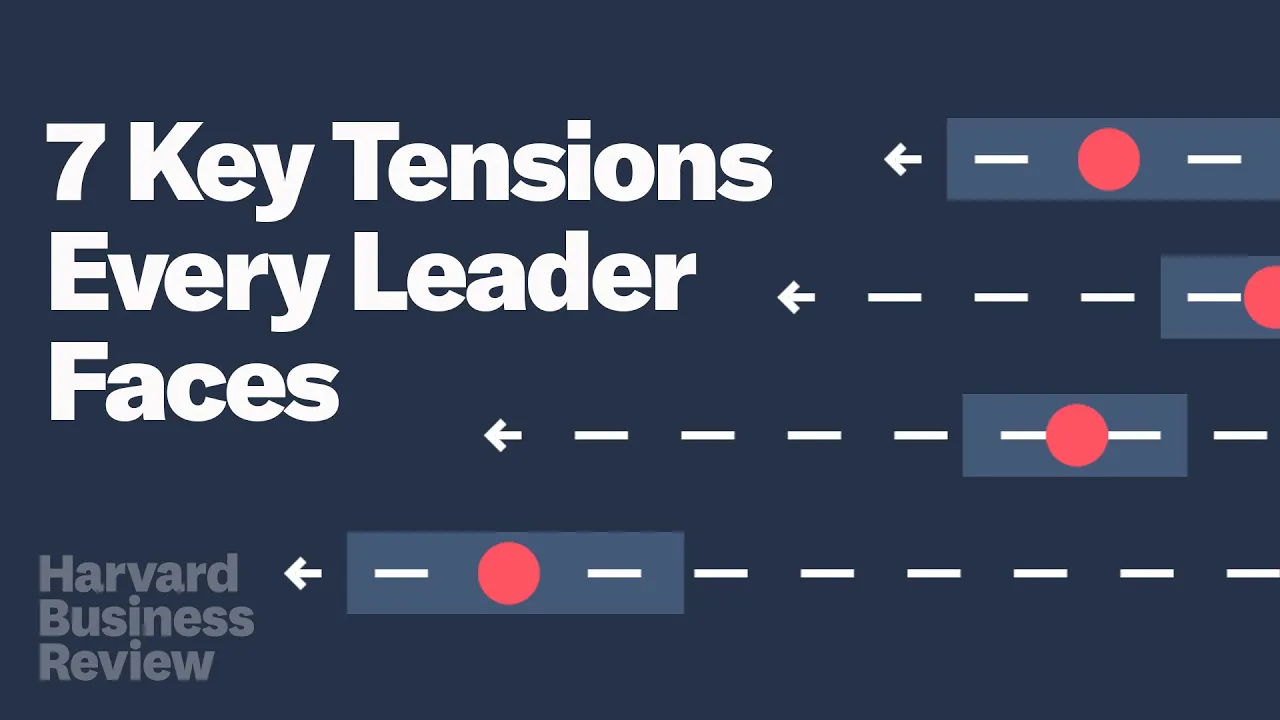
originally my goal as a researcher was to figure out what are the competencies that leaders in this new world really need to be successful and our research identified seven competencies being a PO share a Visionary being an adapter being an accelerator an analyst a prospector being a great listener that said as we work more and more with leaders in this vuka disrupted world we see that the best ones they still Dabble and they still have one foot in that more traditional leadership space that more traditional leadership style sometimes they are more command and control they're
tellers they're power holders yes these new worlds or these emerging traits are important but sometimes we still need to be traditional and that's where these seven tensions were born I call them the seven tensions of the digital age it's a tension between the traditional and the emerging world power holder is somebody who holds power in a way that provides reassurance and security so when there's a lot changing when people are feeling maybe insecure or unstable a power holder really holds that Authority in a way that creates security power sharer is somebody who shares power in
a way that helps to develop others um they also see poers sharing as a way to free up their time for more strategic Pursuit so what can I what can I take off the table so I can really focus on what I need to focus on or what I'm good at tactician is somebody who is much more short-term focused what are the next steps and can they break down that vision for how it's relevant for the different roles in the organization the different levels Visionary is somebody who sees the big picture are able to create
a vision that inspires but on top of that they can influence and persuade people to adopt that Vision W Consin is somebody who has a very clear North Star they say this is the non-negotiables they're clear on their messaging and that messaging is quite stable and an adapter is somebody that understands that changes constant and sees adapting their message when new information becomes available as a strength rather than a weakness a perfectionist is somebody who really is detail oriented ensures that a perfect finished product is delivered and an accelerator is somebody who sacrifices Perfection for
Speed says that you know we can satisfy sometimes good is good enough we need to move at speed so an intuitionist is someone who makes decisions from the gut and an analyst is somebody who brings in data and evidence to make their decisions so minor is someone who goes deep really wants to understand a specific technology a specific part of the market Etc and a prospector is someone who goes more broad understanding and is hyper aware of the opportunities and the the threats in the environment around them a teller is much more somebody who gives
Direction they have the answer maybe they're the expert and so it is their responsibility as well to give the answer a listener is somebody who listens to understand they're curious they have a learning mindset so they're they're learners a good leader is never standing fully on one side of that tension or fully on the other maybe at a moment when they're speaking or when they're in a meeting they are but then when they leave that context they need to think okay is this still the right style that I need and that requires a lot of
emotional intelligence I would never tell a leader aim for a great balance in all seven I think that's too much pick out the three or four that they think are really important for them to be able to move between and to focus on those if you rely on one side exclusively the downsides of that of that side are going to become apparent so let's take the first tension we talk about the listener and the teller if I'm only a teller right what are the downsides of being a teller well other people feel disengaged other people
don't feel their voices heard your the expertise you bring in is going to be very very narrowly focused on on on your expertise the same with being a listener if you're only a listener and you never speak what are the downsides of being a listener well you probably don't have your voice heard you probably don't get to have a lot of say in the direction you might indeed need to be a great listener and in that situation you might also need to be able to hold power um meaning I listen to the people around me
and I'm giving a clear frame I'm giving them feedback so maybe being a little bit of a teller I'm giving them feedback and I'm also creating that psychological safety where they can come back to me uh if they have if they have questions so I'm being a I'm being a listener but I'm also being a powerholder in that in that situation I have questions I ask what is the situation what's going on so what do I sense in the environment around me what's going on it might be a context question right I need to accelerate
because the world is changing rapidly so I need to accelerate it might be a situational question and it can also be an emotional intelligent question what am I sensing from the people around me the people around me actually are feeling I sense that they need to say something and I should shut up or I'm sensing that they're frustrated because I've shared all this power but maybe they're not ready for it I need to hold a little bit of power I've certainly seen leaders who aren't able to do that they have a message that is very
clear it is well thought out it's smart and yet the people below them are just not buying it there's no change being made there's no behavioral shift and yet the message stays the same and they're just not able to grasp that yeah I've done all the work I've listened I've created a good strategy but for some reason it's just not working what do I need to do differently how do I need to adapt and that questioning I think is what what leaders need as well one of the people that stands out for me is Angela
Ren she was the former CEO of Burberry and the head of retail at Apple and for me she balanced a listener and tell her beautifully because she said I'm not a digital person the world is changing I know that my future our future customer at Burber is going to be Millennials I don't really get them I need to listen to them what are they looking for how do they want to shop how do they think about fashion and she was an incredibly curious person and yet she also said these are some things that are non-negotiables
this is the the history of Burber these are the things that we want to hold on to and so this is a frame this is a non-negotiable for us I'm here to to help you I'm here to support you and I also want to learn from you and I want to listen to the people that are at the bottom of the hierarchy the the next generation of leaders in this company so that I can bring this company to success another leader that I admire is Matias dner he was the the head of the German Media
Company Axel Springer he was the perfect balance on minor and prospector because advertising media one of the most disrupted spaces when he came into the picture about 15 20 years ago really saying okay I need to understand how this industry is changing how our readers and our our our our customers want to digest media differently so very much a process ector he took his top team to Silicon Valley they stayed six 6 months there he took the next levels down with him and he said we're going to live like startups I know you are in
your comfort zone of executive life we're going to take you there you're going to fly economy class you're going to share rooms in kind of a a not so nice hotel so that you really feel like the the world that we're trying to adapt to the startup world and that was his his prospecting part of the leadership but then saying okay there are a few areas where we already have competency there's some that we don't we're going to sell those those off where we have competency we're going to dive into this and we're going to
invest and we're going to be miners here so he was great at toggling between this prospector and minor I see normally when leaders are on one side so they have a sweet spot on one side and their range is very short very very very focused one of two things are happening either a lack of skill right so they're very much tacticians they don't really know how to be Visionaries they don't know how to create a vision they don't know how to influence people or they're very much power shares they don't really know how to hold
power but more likely I see they know how but there's a fear that keeps them from going there let us say that they are an absolute po share what is Their Fear Their Fear is the downside to being becoming a power holder being seen as authoritarian being maybe too assertive being too aggressive pushing down the voice of the people that work for them that's their fear and so exploring oh are all power holders this why do you have that view um give me some examples of power holders that you think do in a way that
helps the team kind of working through and understanding where those fears come from can release them to feel more emboldened to explore that range same thing when I see I'm the the Visionary versus tactician sometimes people are afraid to go onto the Visionary side CU they're like oh that's so fluffy and and I don't know what what exactly that would entail and you know I'm not a very good Storyteller I'm not very inspiring so they're kind of afraid also of of going there and failing and kind of exploring that that Visionary side of them and
saying saying okay what does a vision look like what do you think would be inspiring for your team why why do you think vision is sometimes fluffy how can we create a vision that's not fluffy challenging their fears or their their misconceptions about what these other sides of the tensions might look like in a negative way many leaders come into my classroom utterly terrified of this world they don't want to say it yes the world is changing there's no doubt about that and yes all of their expertise might not be so relevant anymore and can
they still be effective leaders if they share power and if they listen even with these younger Generations that might have the technical answers and might want to have their voice heard sometimes they're also looking for that leader to give them guidance and to provide security and to shelter them from the politics that are going above so that they can do their job and those are very traditional uh qualities and so I think it does give some comfort to leaders