okay folks welcome back this is the fourth installment of month two of the ict mentorship we'll be specifically talking about why losing on trades won't affect your profitability what trading with fear of taking losses actually does to your trading while staying concerned about taking a loss promotes fear-based decision-making equity that is managed by traders that cannot take a loss can't profit long-term losing is inevitable fear-based decision-making keeps focus on the adverse finally fear-based decision-making fosters trade paralysis or inability to execute efficiently now why profits are achievable despite taking reasonable losses the professional equity manager understands
that losses are costs of doing business using sound equity management and high probability setups yield handsome percent returns trading scenarios that encourage potential three to one reward ratios provide initial foundation and finally defining trade setups that frame five to one reward to risk or more efficiently cover losses okay folks we're going to give a brief overview on framing a trade just for the context of this discussion looking at this sample size of data as it relates to price action we'll be referring to a specific concept note as market setup and framing the risk to reward
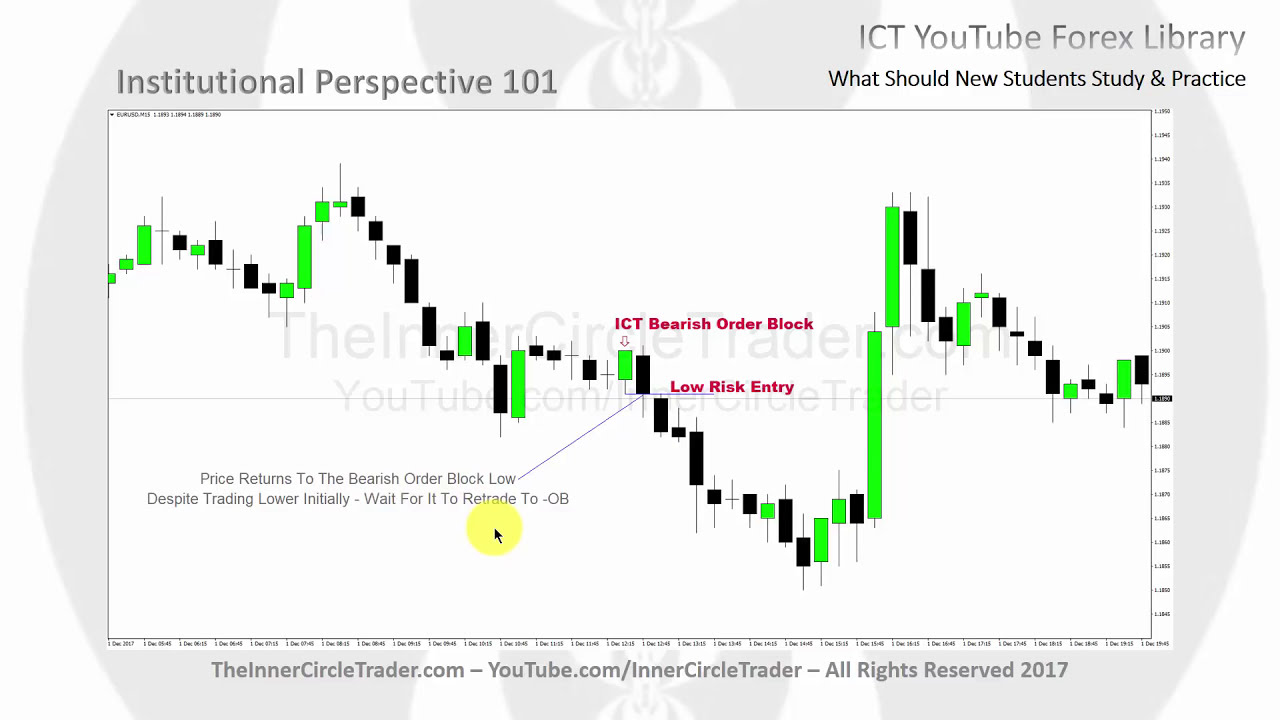
multiples obviously we're going to use a standard in my repertoire the bullish order block as we see here the market returns to a previous institutional area of buying noted by the down candle prior to the previous rally higher by noting the down candle or the bullish order block high to open price defines the fair value gap or most probable support now specifically inside of that retracement into the order block there's a mean threshold and a hypothetical long entry on the secondary bullish order block what i'm going to refer to is this down candle here the
middle of that candle we're going to be using that as a mean threshold in other words we don't want to see that violated on the closing basis now using 20 pips as the trade stop loss easily frames reward multiples of three to one reward the risk and five to one reward the risk or even higher nearly an old high 20 pips above it gives us a nice objective above where price would be retreating to now having a simple trade idea based on the things that we taught in september on what to focus on or what
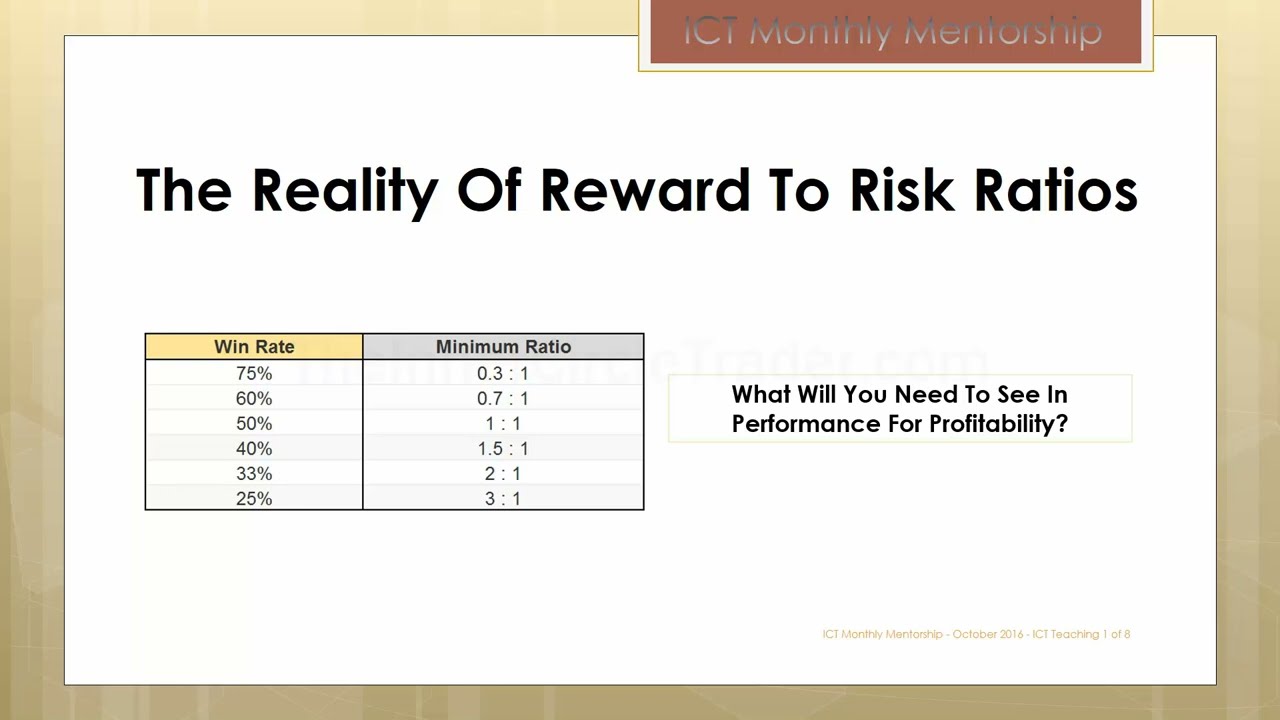
you should be focusing on right now in price action let's take a look at some things regarding those setups and how we can frame good reward multiples how we can frame the ideas and justify why taking losing trades doesn't really or shouldn't have that much of a impact on your long-term profitability going to assume that we're using a hypothetical account size of five thousand dollars and we're going to start with a low accuracy rate of 30 percent that means that you're losing 70 percent of the time we'll be looking for trades that are reward to
risk ratio of three to one that means we're hoping to make or willing to hold on to a trade to pay out three dollars gained for every one dollar that we risk we're risking on each trade one percent of our five thousand dollar account because we're risking uh one percent and we're looking for a yield of three to one reward to risk our average wind wind trade it should be 150 and our average loss should be 50 or 1 we'll be focusing on a sample set of 10 trades and we're going to say that 30
of those 10 trades are winners and obviously 70 percent would be losing trades out of those ten trades we are assuming that three wins in ten trades and seven losses in ten trades the average profit again is 150 and the average loss again is 50 the subtotal for the three wins at an average profit of 150 would bring us to a 450 winning basis on the three trades out of 10 that were winners and the subtotal for the losses would equate to 350 or 7 times 50 of an average loss even in this low accuracy
rate with a multiple of three to one you still can marginally eke out a net positive profit it's not much and to look at that it doesn't seem like anyone would would be terribly excited about that but if you were doing 10 trades over the course of a month and you netted two percent return i can tell you that is an absolutely amazing return for managed funds so if you're not going to be trading your own capital or if you're aspiring to be a trader that manages other people's money so again two percent while that's
not terribly impressive on the grand scheme of things two percent compounded over the course of a calendar year two percent per month that it's an astronomical return for managed funds let's assume for a moment now we're going to start focusing on reward to risk multiples of five to one that means we're trying to make five dollars for every one dollar that we risk and we're keeping the same sample set of looking at 10 trades and we're still looking at the accuracy rate of 30 percent the only thing that's changed now is we're framing trades that
have a multiple of five to one reward risk suddenly our three winning trades out of 10 sample set the average profit becomes 250 or 3 wins at 250 average brings us a subtotal of 750 the 7 losses in the sample set of 10 trades average loss is 50 that still leaves us at a sub total of three hundred and fifty dollars seven hundred fifty dollars minus three hundred fifty dollars gives us a net profit of four hundred dollars or a eight percent return now again if we're looking at 10 trades over the course of one
calendar month to see results like this with a very very low accuracy rate of 30 percent still brings us an 8 return that's a wonderful return for a monthly rate now we're going to take a look at having a low accuracy rate of thirty percent with the reward to risk multiple of five to one and now we're going to be risking two percent of our account so now the average win jumps to five hundred dollars and the average loss jumps to one hundred dollars again keeping accuracy at a low thirty percent accuracy that means we're
losing 70 of our trades out of a sample set of 10 trades over the course of a calendar month three wins at two percent risk per trade multiple of five to one range three i'm sorry reward the risk our average profit jumps to five hundred dollars if our three winning trades at five hundred dollars average profit gives us a subtotal of fifteen hundred dollars are seven losing trades at an average loss of one hundred dollars or two percent of our equity the subtotal would obviously be at 700 now the average loss in average profit would
increase as the equity increases or drops but for these examples we're looking at the sample size of data and a sample set of 10 trades so the details are you know being shown here with a very hypothetical basis but with subtotal on three wins of 1500 and this seven losses subtotal of 700 that would give us a net gain of 750 or 15 return again crazy returns with just a very low accuracy now think about this for a moment when you first got into trading you were wanting to get 90 accuracy or 100 accuracy or
98 accuracy you can still make ridiculous returns with having very low accuracy okay you don't need high accuracy you need the framing of the reward to risk multiples in your favor and we didn't really go crazy with our rescue that we're only doing two percent maximum portrayed all right so now we're going to look at an accuracy increase to 40 nothing's changed outside the previous example here so now we're going to say 40 of a sample set of 10 trades four of the 10 trades or winning trades average profit per trade still at five hundred
dollars our four trades at five hundred dollars average profit brings us a subtotal of two thousand dollars our six losing trades out of the ten average losses still remains at a hundred dollars per loss six of them would give us a subtotal of six hundred dollars that would give us a net profit of fourteen hundred dollars which would be again that's a twenty eight percent return with just a ten percent increase in accuracy a factor of two percent per risk and reward the risk ratio again framing on a model of five to one now we're
going to look at an increase in our accuracy to say we've been trading for a while we know our trading model a little bit more intimately we know what we're trading we know how to frame our trades we've learned patience uh we've been able to stick to our rules and our parameters about our reward to risk framing we know how to reduce our risk while we're in a trade and our accuracy increases by default we're going to say we jump to a 50 50 basis in other words half our trades are winners and half our
trades are losers on a sample set of 10 trades the average win stays at 500 the average loss stays at 100 dollars five wins at an average profit of five hundred dollars brings us to a sub total of twenty five hundred dollars while five losses of the ten simple set trades average loss is a hundred dollars or a subtotal of five hundred dollars so twenty five hundred dollars minus five hundred dollars loss on five losing trades gives us a net profit of two thousand dollars or a forty percent return on ten trades the factor of
just increasing a fifty fifty hit rate will reward the risk five to one with a risk per trade two percent the only thing we're doing is framing our trade around a little bit more success in other words our ability to read price action look how fast our multiples jump up and we haven't increased the number of trades we haven't increased the risk per trade either accuracy rate of fifty percent our reward to risk model stays at five to one but we're going to lower our risk per trade to one percent that means the average win
drops back down to 250 per win and the average loss is down to 50 dollars per win our hit rate we're going to say is 50 50 still that means five winning trades out of ten average profit is twenty two hundred fifty dollars and five wins at two hundred fifty dollars brings us a subtotal of twelve hundred and fifty dollars and in five losing trades out of the sample set of ten trades average loss being one percent of the five thousand dollar account or fifty dollars in this case five losing trades with an average loss
of fifty dollars gives us a subtotal of twenty two hundred fifty dollars so twelve hundred and fifty dollars of the five wins minus the subtotal of 250 on the five losing trades gives us a net profit of one thousand dollars now i want you to take a look at this for a minute okay think about this for a minute you only have to be right half time or another way of saying it is you can afford to be wrong half the time you're looking for trades that pan out five to one and you're risking one
percent of your account now think back to the moment when you first started learning about trading and you felt that you had to put big risk on we're not talking about two percent which is the industry standard here we're talking about one percent one percent makes millionaires if you look at the one percent risk per trade and the accuracy rate of only 50 percent this by itself is exactly what everyone would dream of as a rate of return 20 per month if you could get 10 trades per month half of them be wrong but framed
all of them on five to one reward risk with one percent risk only your rate of return is 20 percent with only one percent at risk this is optimal trading goals this is exactly what you should be aspiring to do you're not trading a lot you're not demanding a high rate of success or accuracy you're not pushing the limits on your risk you're keeping it at a low you're doing half the industry standard in terms of uh risk for per trade usually it's two percent maximum okay well we're doing one percent let me ask you
a question what if you were to drop that risk per trade down to a half a percent would you be upset with 10 return per month my question would be why would you be upset with that now imagine if we were to consider what was two percent per month with thirty percent accuracy one percent risk per trade with three to one rewards risk model on our first example that's exactly what large funds look to do for their clients over the calendar year they're looking for one to two percent per month and if they can compound
that over the course of a year they can give their investors a 20 25 to 28 return on the year and believe me there are millions and millions of dollars sitting out there that would love for someone to be able to do that for them so you don't need to have these astronomical rates of return per month to manage other people's money believe me they would go crazy if you give them one percent one and a half percent two percent per month and you only need to do three to one reward risk to do that
with one percent if you do one percent here and you have a 50 chance of being accurate and you frame your trades around five to one look how easy it is to get into a really end yield for the month 20 percent you don't have to trade every single month if you're managing your money or other people's money see this is an optimal goal because it gives you the cushion to do basically half the year of trading there are some months in the year that you don't really want to be trading so if you can
do a multiple of five to one and yield really handsome results and i'm not saying that everyone's going to get 20 returns or higher every single month but this should be a good trading goal for you to frame your trades around we're expecting only half your trades to be accurate framing on five to one rewards the risk keeping your risk low one percent by doing this it gives you the optimal objectives it gives you low hanging fruit it doesn't force performance and it gives you an opportunity to relax and actually enjoy the process of trading
there is no fear that's justified in taking losses they are all part of this business it's all part of the game it's all part of your job as an equity manager you're going to weather losses you're going to so you're going to assume losing trades that's all cost of doing business no one goes through their career without taking losses you're going to have lots of them if you trade for a long time if you had a column of all your wins and all your losses your losses are going to be very very long in the
list but it does not dampen or does not remove the profitability factor that's still available to traders that know how to frame their trades with good multiples of reward to risk keeping risk managed and defined and thinking about how they're going to trade with these parameters if we use the example we've shown in the beginning of this video with a 20 pip stop all you have to do is take well what's one percent of 5 000 it's 50 so if you have 25 stop you divide that by 50 dollars and it'll give you your dollar
per pip leverage and that's what you would use for your trade and that would give you all of these numbers that you see here now again we can only speak in terms of hypothetical but it's a rule or general uh principle that you're going to build on as a trader highlighting the fact that you don't need high accuracy i did not show 60 accuracy i didn't show 70 accuracy i didn't show 80 or 90. none of that's necessary but as time goes on and you grow in your proficiency and you're in your understanding about price
action and you as the trader by default your accuracy rate will increase and you'll never demand or need for it to be higher than 50 50. so until the next discussion and next teaching i wish you good luck and good trading