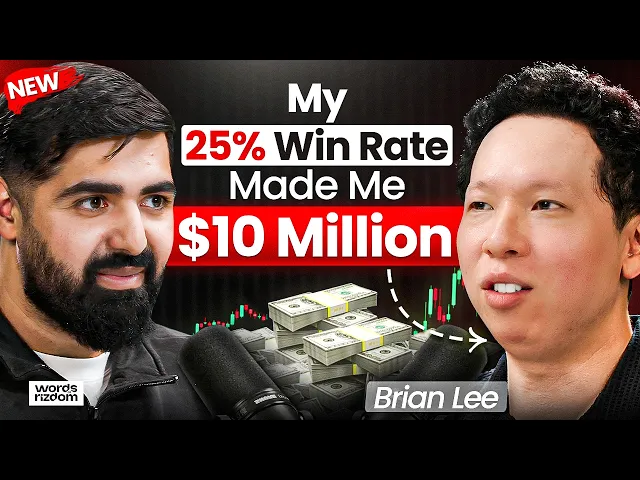
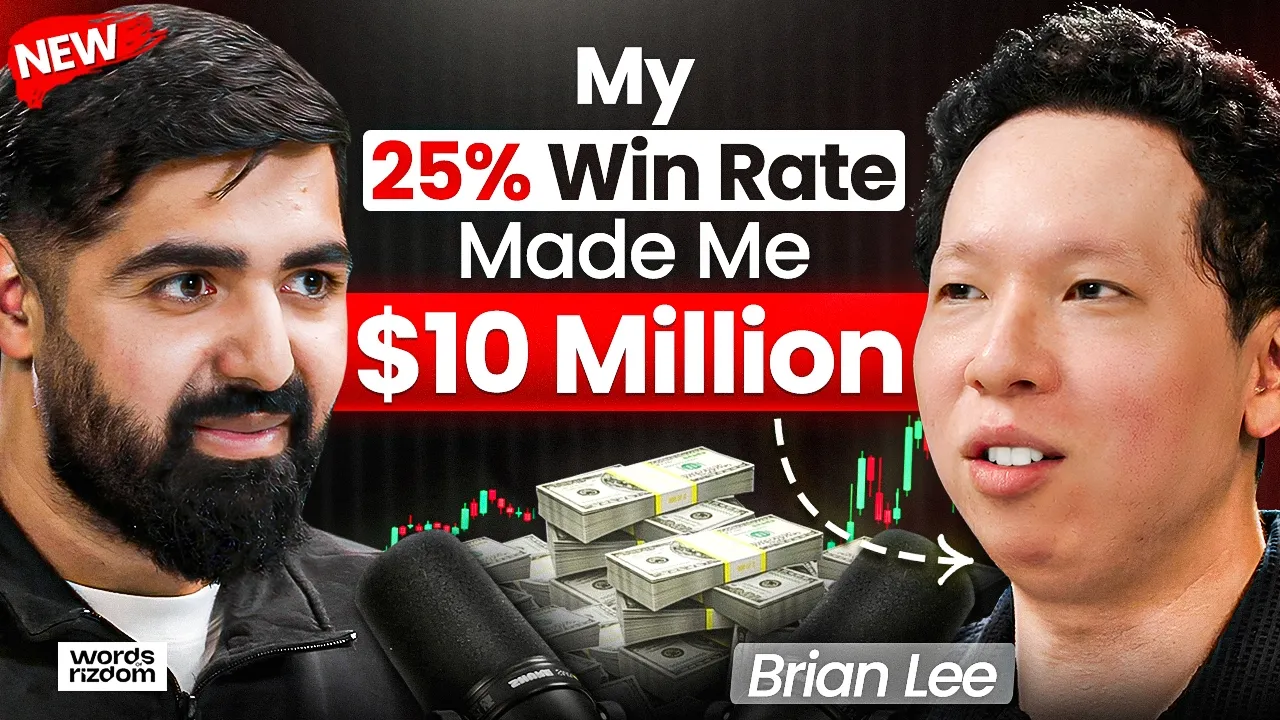
This trader started out with $30,000 and has now crossed over eight figures in trading profits. >> Trading is not an Olympic sport. Like I've heard people say you have to be so focused and have the perfect routine and things like that. I was like, you know, you're just pressing a button to get in and out. There are challenges with that psychologically, but execution wise, it's not that difficult. I don't even Think that win rate is that important for me. The real secret sauce is this professional gamer turned trader took only $5,000 and has traded it
to over $10 million. His secret is that he uses a high reward to risk profile. You have to be prepared for very fast revolutions because people get frustrated, they give up or they get too cocky and they get caught out. When you understand the psychology of like who's get who's playing this game, you can understand Why cycles move so quickly. There are some things I think are just absolute [ __ ] or like maybe 1% of people can do it. A lot of the price action is noise. People read into the price action way too
much in my opinion. If you consider yourself a fairly discretionary trader, I feel like you could at least at least three to 5x your result by adding some sort of Introducing Brian Lee. Brian Lee is a systematic trader who literally only uses data to make Decisions within the markets. I've hired a lot of different coaches throughout the years I've been trading and at the end of the day, I realized psychology is kind of like the last person if you want to get those small bits of edge. You know, that's the most misunderstood concept is just
compounding and controlling that draw down. And that leads me into another thing that's really like I've been wrong about actually. One thing I've been super Wrong about and under and underrated a lot. And I think it's because no one talks about it is starting out with only $50 of risk to now trading eight figures. Learn exactly how he did it and more on this special episode of Words of Wisdom. Welcome everyone back to Words of Wisdom, the number one trading podcast in the world and the fastest growing thanks to all of you and our incredible
guests. We're here for our last podcast In San Francisco, and we saved the best till last. I think that's right to say. Uh, but this trader started out with $30,000 and has now crossed over eight figures in trading profits. He was an esports professional and then turned trader, which is absolutely incredible. You probably know who it is already. It's the one and only Brian Lee. >> Hey, thanks for having me. >> My absolute pleasure. Thank you for Being here, man. Thank you for taking the time out. And uh I want to get straight into it.
As I just mentioned, going from esports gaming, right, to then becoming a trader. >> Yeah. >> So, my question really is, cuz I know I I used to game. I know a lot of people who game and maybe not a professional level, but do you think a lot of gamers should look into trading? >> I I think so. U but I don't think it's Because of the way people think. I think people always say like, "Oh, you have very good reaction speed or you're good at hockeys or things like that." I don't think that is
that big of a deal. Uh what it really comes down to is just any anything um sort of athletic. I guess it's you call Eth, right? >> Yeah. >> But uh at the end of the day, it comes down to the mentality. like someone who understands how to grind it out, learn From mistakes and also like working in team environments as well is really helpful. Um, say for example on my team I was the leader so I led like four other players and that gave me a lot of like individual leadership and discipline since I
had to kind of be a role model for people and um at the end of the day I think that trading is a lot better to be honest because when you're on a team you realize very quickly like everyone has their own Issues like >> this guy that guy you know their discipline might be here there the motivation And for me it was very frustrating at times. So when it came to trading it was very liberating because like you're the only teammate that you have in reality and you're responsible for your own results. So like
for me it's I think it's a very good thing if someone's very competitive and especially with themsel And they have a good mentality for growth and things like that. >> It's very interesting to What was your game of choice? >> It was called Dota 2. >> It's similar to League of Legends. Yeah. Yeah. It's basically a five versus five game on the computer and it's been around for a very long time. >> Yeah. Do you still game to this day? >> I do, but I don't play DOE anymore. >> Really? >> No. Um, but no,
I loved what you mentioned there in terms of that almost not self accountability, but it's more that independence that comes with trading versus that environment you're in before. But then seeing the overlaps has been great. You mentioned just before we started that you have, you know, friends or people you know that have also made that transition. Yeah, there there are several traders who were former professional gamers who've Reached out. Um, after I started finding a little bit of success in trading, I kind of like posted an update on my uh gaming Twitter and I was
like, "Hey, this is what I've been up to and I think a lot of people, you know, they were wondering first of all cuz I just dropped off the face of the earth." But um, they saw that as like, "Hey, that's that's pretty cool and I I want to learn." And so they've reached out and I gave them like some advice. So, for Example, uh people have said, "Hey, I want to go into poker." >> And I was like, "I don't know if you want to go into poker." Because that seems really hard number one.
Number two, a lot of poker players come to trading is what I found. >> Yeah. Yeah. >> Um because of the similarities and maybe some people feel like, "Hey, it's kind of soft or things like that." But, um I feel like trading is a lot easier to get Into and well worth the time. So even if you're kind of like if you reach for the stars as a trader and you kind of fall to a mediocre level, you're still going to be really good. Whereas like if you're a mediocre or like competent poker player, it's
still very topheavy, you know? So I feel like that's also a big grind. So I have a couple of friends who got into it and they've done really well. >> What was it about trading? How did you Come across trading then from being in that world to to making that transition? What was what was that story like? >> Well, I was really very realistic about the career. I was like, at some point I'm going to not be an esports gamer anymore. And I was like, I'm making money, but I don't have any natural skill sets.
I don't I didn't go to university. And um I was like, eventually I'm going to get into investing because I felt that was my way Out of gaming in general. So I came across trading uh when my when I kind of retired from my career, I didn't have enough to be like, hey, I can just invest. So I was like, I need to actually start making income. And that's where I found a lot of different trading content that told me about day trading. And I was like, "Okay, I'm going to do this because I can
still work at from home and I still have the same kind of schedule. It's very, you know, you have A lot of autonomy." And so I was like, "Okay, this is what I'm going to do." >> And where did you start then? Was it straight into the small cap world or was there something else before that? Yeah, I got into the small cap world through Sykes. >> Uh, you know, those just very heavily marketed kind of stuff and he was doing OTCs and small caps and I just kind of went down that rabbit hole and
eventually found myself on to Twitter And just found a lot of really good traders there that I could like talk to and spread my uh knowledge like through their teaching. >> That's great to hear. That's great to hear. It's so interesting about the small cap world because from you know the podcast especially over the last 12 months I've had the the pleasure of having so many yeah uh small cap traders on who have done really phenomenally well and it seems to just be a really Reoccurring theme that that particular asset classes where you see a
lot of traders take a smaller sum to as we said eight figures but even seven figures and some even nine figures. What is it about the small cap your asset class that's allowing traders to scale at such such a pace? >> It's the volatility number one. Number two, it's the efficiency with their capital. Like I have I talk to younger traders sometimes and they're trading a Lot of larger cap names and I'm saying like you can't put as much size into this trade or you can't execute it with more advanced strategies like pyramiding would be
one for example adding to winners because of the buying power limitations no matter how much buying power you're actually getting. So they have to find more efficient ways like maybe options or things like that. But if they trade just straight up equities, it's very inefficient. Um you might only Be able to trade one or two names whereas on a small cap side you could have a basket of stocks. So then you're managing them all and because of that you have more opportunities. But overall really it's just there is a lot of edge in small caps.
And I think that that's going to become more more wellknown especially with the new market wizards book. a lot of traders in there. I think the theme they said is basically small small cap. So, Uh you know that's going to get blown wide open, but I think it's been basically an open secret for a long time. Like I don't think people have really hit it, but now it's more popular than ever and you're kind of seeing people coming out of that space and just naturally there's quite a bit of edge there. Hey guys, before we
get into this incredible episode, I want to say a massive thank you for all of your support so far on both Words of Wisdom And Chart Fanatics. We have grown immensely and are still the fastest growing channels in the trading industry. Now, a way to get back to every single one of you. If you want profitable strategies completely for free, go to chartfanatics.com. The links in the description, put your email in, and every single week, we will send you a free PDF with a profitable strategy of the guests that we host, as well as on
the website. You can go straight there And you can go through the library of strategies completely for free. Just input your email. On top of that, we launched a Chart fanatics free Discord community that has already over 10,000 members of traders across the world. We have our live traders from Chart Fanatics Live in there. I'm documenting every single one of my trades in there. And we have exclusive discounts, massive giveaways, and so much more just to give back to every single one of you. Let's Not forget updates on every episode and things that we are
bringing to this industry that's going to change it forever. But for now, the links for that are in the description. Let's get into this episode. >> Would you say it's been more beneficial the more participants there has been? >> No, really. Well, I think that in general, sort of, yes, but not in the way that you would naturally think. So, before 2018, the market was very thin. >> Like back then, if someone made like $10,000, it was like, well, it's a really good win. But whereas now, that's like a smaller sum. >> Gotcha. And that's
because after COVID a lot of participants came in a lot of people got the bug for trading that boosted the volume like 10x every everything is 10x so the expectations are 10x as well. Um that's the good thing but the bad thing is that now there's more competition and the same Like shorting edge for example and that because of that I have to think about game theory a lot like I have to think about what this person is doing what that person is doing what kind of strategies are dominant or falling out of favor or
like rotating in different cycles and I also have to consider how strategies might actually end up dying. So say for example uh pyramiding is a very effective strategy like adding to winners and lowering your stops and That's kind of beencome very difficult because of the amount of participants you know if one person or 10 people stop out of the trade it can really push these stocks they're not like large gaps they move when traders with size actually cover or short positions so you really have to understand other players now um I still think that it's
very difficult at the end of the day like even even though you see so many success stories, there's a survivorship bias. Uh There are a lot of traders who really flunk out. I get messages all the time, people saying like, "Hey, I blew up or I'm starting over again." And that's because it's a very high risk, high reward niche. >> How do you compare the pressures of your performance in the esports realm versus now the pressures of, as you say, this is a very high reward, high-risk environment? You know, how do you handle that on
a sort of day-to-day basis? I I Think it's easier. I the way I view it is um I was like this, you know, trading is not an Olympic sport. Like I've heard people say that you have to be so focused and have the perfect routine and things like that. And I was like, you know, you're just pressing a button to get in and out. And at the end of the day, there are challenges with that psychologically, but execution wise, it's not that difficult. Another thing is that um I'm a pretty systematic type Of person. So,
I like to think about my uh my strategy ahead of time and just execute it like black very black and white. And so, that eliminates a lot of the guesswork where I feel like if you're kind of very discretionary, you're going to have a really hard time because the emotions are just constantly going through your mind. That's something that I never really dealt with very well. Like, if you throw me into another type of market and you just say, "Hey, just I'll give you like a ton of money, ton of buying patterns, do whatever you
want. Scalp around." like I I'm still going to make a lot of mistakes. Um I stick to what I'm good at and I systematize it. I just follow my strategy and that's really what it comes down to. Like in in in gaming, you have a audience, you know, it's almost like a sport, you know. You know, when um big athletes make mistakes in like one game, they go from like, >> you know, they go from zero to zero. >> Yeah. >> And people make fun of them, clown them on Twitter. It's the same thing in
esports. So you get a lot of heat, >> they like kick you off the team, replace that guy, you know, in trading, no one really cares, you know, it's just yourself. So you could take a lot more heat without experiencing any like anxiety or anything. >> What was it like first coming into Trading? Because at the systematic side of things, was that your go-to from the very get-go or did you start more discretionary and kind of build that thesis over time? >> I started discretionary. I I added systems because I realized like this game's kind
of rigged against you in terms of you're constantly feeling different emotions all the time. You know, it's it's trying to bait you. If you want to go long, you're going to buy The top. If you want to short, you're going to short the bottom. It's like I just know that uh those decisions can be, you know, made more perfect by having like thinking of the strategy ahead of time and then just coming to the market executing it. So like with my strategy um I can look back at like hundreds of trades and see exactly I
would trade it and find the result of that. Whereas when people trade discretionary like if Things go wrong they they can't really tell why if it was them the market you know is a strategy falling out of favor whatever it is it can be very confusing whereas with a system it's very consistent so you can be like hey this is just kind of a down month for example in uh October I started a month with a 10% win rate is like the lowest one I ever had >> I usually have about 25 30% win rate
so when I see it go to 10% I don't freak Out I just say like okay the market is kind of a little bit different right now and that's okay. I mean I'm just executing my system. I would say everybody has systems in the trading whether they acknowledge it or not. Everyone can benefit from systems. Everyone's P&L like if if you consider yourself a purely discretionary trader I feel like you could at least at least three to 5x your result by adding some sort of system whether it just captures One >> part of your trade.
Say for example like okay you don't have to do a full complete package we can say my exiting is very weak I always get in very good entries but I will scout my exit or else I'll get out too early by systematizing the exit you know like a very popular strategy people do with the swing trading they'll trail some moving average right it's a very black and white situation but in some cases they Those moving averages can keep them in trades for months right >> or weeks versus days and so that kind of element is
very important to add to your trading, especially if like you have issues with executing that part of your trade. The same thing can go for entry or just uh stop-loss management. So, it's like I would say just pick one thing that's a weakness in your game and instead of saying like I'm going to psychology my way out of it, like think Of a system, a black and white way to execute that that you can follow and that makes a lot of sense. Like I've hired a lot of different coaches throughout the the years I've been
trading and consulted a lot of different um you know experts with performance and it's like at the end of the day I realized psychology is kind of like the last percent if you want to get those small bits of edge but systems are they're very powerful like I've traded Through exhaustion I've traded through like grief I like my when my dad passed away I was still able to trade really really And uh I can trade, you know, in a lot of different conditions because at the end of the day, what I think doesn't really matter.
It's just can I push the button? I can think of I'm I'm a monkey pushing the button. Can I do that? And if I don't, I measure myself against that. It's a lot easier to process and Like you can tell where the gap is in your performance. So you can have a losing day and just be like, I performed as well as I could. The result doesn't really matter because that's what it was designed to do. and just move on to the next. >> So when you hit of traders who are purely discretionary, do you
think that really they're limiting themselves to their actual potential? >> I I would say so. And also I think that A lot of people are very na naturally good at certain things and you know very extreme example I know people who are mentored by like nine figure traders best of the best traders and those traders have a hard time conveying their discretionary mind to another person. So, I've seen people suffer or at least not be able to even get to a percentage of that, you know, and you would think, oh, if I had this guy
over my shoulder Or I I had access to this guy, you know, I should there's no way I can't make it. Um, so I think that thinking in systems actually allows you to transfer knowledge in a way that discretion can't. So like yeah they can achieve outlier results in their own way but you know I believe that like you need to be able to replicate something in order for it to be robust and so for me I think about can I teach somebody who doesn't really know how to trade how To do this like can
I trade can I teach my wife how to trade can I teach my brother and I am teaching my brother how to trade he's younger he's 10 years younger than me and he had no idea of how to trade and he can execute better than a lot of traders I see on Twitter because he understands the system >> and yeah like of course you can say oh if you're giving him a system you're helping with the system then of course he's going to have a good result but why Can you not then have a trader
who's very successful transfer their knowledge efficiently like I have a very high success rate in terms of when I help somebody because the knowledge transfer is very systematic and easy to understand because at the end of the day like a lot of times people's frustrations with helping other people is that it's so nuanced and there's so many things going on and they can't possibly capture all of it. So you can Only say so much in that period of time. Whereas if you transfer knowledge in terms of a system, people in their own time can put
in the work like you can you can give them a framework and say okay now go test that in the last year or go test that in the last three months. So they can come back with hundreds of hours of input with while you're gone and come to their own conclusions. So that's why I think it's very important to at least start Thinking about how systems can impact others when you're designing your own strategy. I love that and I think it's uh super interesting because I did have my our first systematic trader um on the
podcast only about a month ago and one of the lines that he said was essentially through systematic trading you could be profitable from day one. >> That's true >> right because of the nature of that data. Not to say that you know anyone Who's a systematic trader will do that because I'm sure like getting used to executing effectively and to that system is a different challenge. But the essence of that message is true as you say because you've you're you're working off pure data right and I data regardless of the individual doesn't change right the
only thing that I imagine would change is based on the edge if the edge starts to erode and you have to move on to then you have to Collect another sample size right what was that like for you though developing your data sets was it a case where you were able to take them from elsewhere did you develop them yourself and what was that process like was it manual collection or were you able to automate the collection of data? >> So I I would consider myself a hybrid. So as much as I say systematic, I
don't uh identify with the way that people portray themselves online. Got fully Automated. >> Uh there is I definitely think there's a combination at the highest level for discretion too, >> but at the end of the day like you still need a framework. So the way that I do it is instead of gathering data, I'm looking more for just compiling as much information as I can for myself, like how I perceive it. So when I look at when I look at the trading world from day one, I'm looking at charts, right? >> I'm not looking
at open, high, low, close, previous, close, gap, percentage, everything like this. That data is incomprehensible for me when I started. There was a lot of people who were just like Excel pushers. They're like f download all the data, find whatever information you can from all those numbers. You know, I just saw all I saw was thousands thousands of data points and I just had no idea how to interpret that because I'm more of a visual Person. So what I do is each day I figure out what stocks I'm trading. Mhm. >> So that starts with
a scanner and then from that point, you know, everything's filtered out and I say from this time period of a day to this time period is my sample set and I record every single one of them as a screenshot and I'll record intraday, daily chart, high time frames and then I'll then go back and work on the pattern recognition. Of course like pattern recognition is not Systematic. So how do I make it systematic? I use indicators or I use black and white conditions. So I'll give you an example of black and white condition. Uh a
technical black and white condition might be what's considered a bar break. >> You know stock goes up the low of the prior bar would be the break if we ever pierce that. So that's a very black and white condition. You can look at a thousand charts and identify the first Time there's a bar break. Now like you can also apply that towards indicators. So you can create signals and I know a lot of people especially when I was learning how to trade they would say oh indicators are lagging they're delayed it's this and that but
I think they don't understand the the power of it. The power is that you can actually go back. So for example if I know all the trades I would have taken and I can say I have an idea I can throw the indicator Up or I can throw the black and white condition up and better yet I can code it. So you can say hey now you can say hey Chad GBT make this appear in my thinker swim or my uh trading view whatever you want to do whenever this condition occurs and make it very
obvious and by doing that you can just flip through charts one by one by one until you have an accurate model of like how does this actually perform. So for some people they might feel better if They combine data. So they might say, "Okay, this is a yes, so I'm going to give us a one or this is a no. I'm going give us a zero." And they can figure out win rates and things like that. But for me, when I see literally thousands and thousands of charts, I know it works. And not only that,
but I don't even think that win rate is that important. Uh like I have a very low win rate between 20 and 35% if it's a great month. And so if I'm profitable, win Rate is not really that big of a contributor. Um and therefore like you don't you only need your indicators to work for a certain amount of period of time. They have to serve a purpose. So what the purpose is they need to serve is um they need to give you a high expected value when you enter or they need to balance win
rate with that lowered expected value. And with indicators and with black and white conditions, you can tune those knobs. Like I I say this or I've said this before, we can all trade the same stocks. This is uh very recently there was BY and DD was a big short opportunity. >> Mh. >> And I love trading days like this like GameStop, AMC, all all those stocks because everyone seemingly or many many people from all different types of strategies and niches are coming together in one arena. And whether I Lose or not, I want to participate
because it's like feels like history. M >> but what I really like about that is you can see how other people put this trade together in their own way and measure per performance because we all trade the same thing. What I was trying to say after that on Twitter was saying hey we can all trade the same thing but get wildly different results. We can even have the same system and get different results. What are the levers That someone pulls that someone doesn't? So for me, I'm focused on the execution strategy more than the actual
edge. For me, if as long as the edge has a probable win rate and expected value, that's all that matters. And liquidity. But for me, the real secret sauce is the execution strategy. Like how do you layer into that position? How do you build into that position? Do you take small losses? When do you add your size? How do you manage the trade once it's On? What are your conditions for exiting the trade? Like all those things matter way more than the actual pattern because if somebody let's say comes into that trade and makes one
okay let's say they risk 100k and they make 100k they make one to one to me that's not very impressive because I feel that if we're given the same opportunity and it's just a matter of scale so say for example if I'm able to make I think on that trade I made uh like 23 to1 or something like This >> when you can create that condition for yourself. It's a matter of scale that that opportunity had unlimited liquidity. So let's say for example that happens in five years from now or 10 years from now. If
your size grows, you know, if you compound your size to that occasion, it doesn't matter if you started that trade with like $100 risk or if now you have that $100,000 risk like that trader is going to have a Superior performance just on the basis of using R, which is what I like to do. I like to measure things by the risk-to-reward, not the P&L. And so, I really love those days. That was a great great trading day for a lot of people. But, you know, I think it's a interesting way to look at it
when everyone's trading the same thing. >> Let's take a break for a minute there, guys, cuz I want to tell you about our incredible sponsor, Alpha Prime, the First of its kind in the industry. Now, evaluation firms have been in the industry for the last few years and done absolutely phenomenal in terms of its impact for traders. As you can see here through Alpha Capital and Futures, so many payouts to so many traders across the world. But now for the first time, there is an incredible route for traders to become professionals and to trade live
capital and that's through Alpha Prime. So let me quickly tell you how it Works. You can just buy a challenge on Alpha Capital, Alpha Futures, doesn't matter which one. So Alpha Capital, you have phase one, phase 2, phase three challenges. On Alpha Futures, you have standard and advanced plans. whichever one purchase a challenge, show consistency, build your track record, and then you can be invited to Alpha Prime. Alpha Prime, you will get access to live capital. You will get access to risk management and resources at a Professional level. You will have a salary as a
trader and access to trade on live trading floors starting here in London. This is the first of its kind where a evaluation firm is finding talented traders and then backing them with live capital and creating a route to professional trading. I am very proud to be sponsored by Alpha Prime. The links for both will be in the description below. Alpha Capital and Alpha Futures. Use the code RZ for 20% Off all challenges. Link is in the description below. Now, let's get back to the episode. Especially in the small cap world, you see that a lot
more in terms of that that I wouldn't even say if community the arena as you said that I love that that uh terminology cuz you again thanks to the podcast I've come into contact with a lot of small cap traders and I saw them all you know all talking about it posting it you know prof some profiting from it well I just Had Kyle Williams on a couple days ago he was breaking down the trade um and he was sharing how he >> got in a bit too early to begin with and and you know
how that cost him and things like this and you know it was super interesting to see that side of things but then to hear as well the low the low win rate thing was very interesting when you mentioned that early on cuz I was thinking okay we've achieved you know seven into eight Figures with such a low win rate which people would never believe I imagine or would be really shocked to hear about >> but then it made more then I was going to ask how does that >> how does that look but then the
well it's risk-to-reward right the being able to get those high reward to risk plays I always get it the wrong way around. Naturally, I always say high risk to reward, but it's not because then that would be the wrong way around, right? But high reward to risk, but 23 to1, is that like >> an outlier in terms of uh you know what you averely see in terms of your risk-to-reward plays? Um you do you have like an average risk-to-reward that you normally will see? >> Yeah, totally outlier. But of course, like when these trades collapse,
they really collapse. I mean, it's not it's not that they're just doing a normal fade. They're going red. This one, I Think, went minus 30%. So, not only do you have a gap up that was over 100%, but you also have the 30% downside extra. So, that extra bit is what really pushes over the edge. Uh, for me, my average risk is about anywhere from 5 to 71 win rate, you know, 20% to 35%. And yeah, I mean the strategy itself for executing is kind of like a layered approach. So I learned from one of
my really good friends Jeff. He talks about Execution strategy which not a lot of people talk about. And basically if you use uh partial stops on your way to your invalidation point, you can achieve a superior risk reward because like let's say for example you put on a trade where you just have one stop point, >> right? Let's say you enter here, like you buy here, here's your stop point. It needs to go that distance to make one to one. >> Mhm. >> Um and in fact, like if you lose and you trade the strategy
100 times, you you lose, you're always going to lose one risk and maybe you'll make a multiple of that risk, but your average risk is always going to be one. >> Mhm. >> If you add staggered stops, for him, he uses three. I I recommend just using two very easy uh to start with. then halfway to your wrist, you're always cutting off some position. So your average loss Actually goes dips beneath one >> because if you have some one minus one RS and you have some.5 Rs, you're probably going to land something like 75 average
loss. And that also depends on your win rate too because if you um if you win a lot more, you might not even see those minus ones as often as those fives. So what that does is that actually gives you a really positive skew because exponentially when you win like let's say for example you make Three to one. >> Yep. >> Which worth 3 to1 but if your average loss is 75 that 0.25 gets multiplied additionally. So you you start getting closer to four to one and those numbers can get really really crazy over time.
Like I like to play the um I like I the way I think about it is some traders trade like like it's poker and some traders trade like it's a casino. >> Like you're the casino, you're the House. >> Um I'm more towards the house side. I find it easier to execute. So I'm thinking of what are my average stats over time. >> Mhm. >> And that's why I really care about the average loss whereas somebody who says um oh this opportunity is very very good so I'm going to go extremely big size. then they
might not be caring about the risk so much or the win rate because one Trade might erase months or put them over the edge in the whole year might be that the only win they had the whole year some people so in that case you know they don't really think about it as much but I think that uh the house way is more consistent you know and it's mentally easier to kind of perform at a certain level and understand where you're going like I think the real power of the house style is that you can
simulate your expectancy Over thousand trades and you can kind of you know you can do um different kind of simulations like Monte Carlo you can figure out okay if I did this you know 100 different paths um there's a term called erodicity erod I don't know if I'm pronouncing correctly it's uh basically what it means is like the closer your strategy comes to one singular point like instead of having a huge spray Mhm. >> the more the better strategy is. Whereas Like if you have a shitty or erodicity, you're going to have like thousand results
where one of them you make a million dollars and one of them you're bankrupt. >> Yeah. >> Right. So managing the statistics are very important for me and I think about that a lot in terms of like what are my averages? What are my average wins? What are my average losses? And that strategy is extremely Powerful. It is very hard to actually explain to someone until they experience it. >> But I would highly suggest to look into that because any strategy can actually be improved by that. So say for example um normally you lose one
R and you buy in here. Well, what you can start doing is you can start risking more. So let's say for example you risk uh two R. I'll just say if you cut half at the midpoint, you're going To lose um 0.5R because at that point you'll be minus one in the whole position. >> Mhm. >> And if you come down to two and you cut the other half, you'll lose one R because it's half of two. So total you lose minus 1.5. But what if the trade works? So let's say that's the downside minus
1.5. Not much more than one. But what's the upside? So imagine like I said before you have that 1 one 2 one But now your one is effectively here because you risk double. So now this length the more it goes you're going to get multiples of your reward and or your multiples of your risk as reward. And that's something that people don't really understand. Like if people want to bet bigger they'll say oh uh okay instead of betting 50,000 bet 100,000. >> Yep. But what if instead you bet, you know, a a little bit bigger,
but you you stagger your stop? Now your ris Relationships way bigger because again, the averages matter. Doesn't it the numbers over time really dictate where you're going to be. So if you know your your data and you know your stats and you know kind of what line you're targeting, you can actually say to yourself like, "Hey, I will be profitable no matter what with the stat line." like it's an inevitability. And when you're dealing with that kind of mentality, you makes you more Anti-fragile. You're not really freaking out any trades. And every trade is a
little bit less important compared to just trading out the sequence. And you know, again, I'm not super heavy on the data and I'm not algorithmic by any means. I still use discretion in some of my trading just for like managing things or making decisions for when to enter. in some cases, but most of the time I'm systematic and the execution framework of like Having partial stops is part of that. So that's again that's how like I can go into a BY and D trade and pull out more from it because those staggered stops actually affects
the riskreward significantly versus just one in terms of the staggered stops. Is it a case where through the data you're able to identify that if price was to get to this level or this far into the stop level, it's more than likely going to go hit the overall stop level. So then it Allows you to then to make that decision of staggering it, coding it sooner. So do you then reflect that on data first to then know which trades you should be doing that with or is it just every trade has that same rule set?
>> I like it on everything right now. I'm I'm I'm obsessed with this. Uh I used to be heavy heavy pyramiding. >> Mhm. >> Uh back back in the day was way more successful. >> Yeah. >> Um I could get those eight or 10 to one trades sometimes, but it's so hard to execute. Uh with the partial stops actually can get very similar reward metrics. Like I said, I get like five to seven and it's so much less stressful. And the reason why is because it's more natural. um when you pyramid into a trade, you're
actually moving your stop, but fundamentally that doesn't mean like you were wrong when you stopped out. >> Yeah. >> Whereas if you do the partial stops, you actually define at what point is this trade actually over? So with that partial strategy, you actually can make a lot of different interesting and nuance decisions. So say for example, this is my invalidation point. I know I'm wrong right here. So that's where you put your ultimate stop. And then the the partial stop is where you're not necessarily wrong. You're just managing Risk. The invalidation point should have a
much higher win rate. So when it comes down to your your staggered stop, you cut it out of a form of risk management, but you can make a decision to get back in for a superior expected value at that point as well. And you can actually or you can wait. So what I like to do is um if my if my stop gets invalidated, my first one, I'll just wait a minute. So, I'll say, okay, is it going to blow Through my actual risk or am I able to get a read? So, this is where
part discretion comes in. Do I know, does it look like it's going to break my stop and that's it? I'll take a smaller loss or does it look like I just got wicked out real quickly or it's going to rebound and give me another opportunity to enter that trade for a better position overall? And if that's the case, then you know, say for example, it hits my stop. Sorry, I'm going to do the Long example. and it hits my stop, it starts consolidating instead of just ripping down. The moment it starts kind of curling up
and giving me that structure, I might reenter the trade. And that's how you can start utilizing this uh fixed point of invalidation. And every trade can have that like you can be very very safe. You don't want to put it at the um obvious levels, but like you yourself should know, hey, on this particular strategy, if it hits This level, I'm pretty much wrong until it sets up a new edge or new uh new setup in general, right? So, having that invalidation is super super important. And what I find is a lot of traders they
they don't think about where their invalidation is because they want to either maximize a move like I used to with the pyramiding or maybe they do but like they just do it very simplistically. They put the lump sum on and like I said it it's not impressive If you enter here risk this. It has to go that much to make one. It's like >> it's it's very basic and I feel like you can really enhance your strategy just from adding these kind of little systems. Would you say a large part of some of the large
P&Ls you see online comes from just dynamically sizing, right? So identifying so Beyond Meat for example, a lot of people would just identify that as an A+ and they would size up. Uh the Interesting thing is they may size up, take a loss or two because one thing I've noticed in the small cow build is a lot of people will take a number of losses before they get the actual winning trade. A lot of the time it won't be shared in detail, not because of any malicious reason necessarily, but it will be it'll be shared
of like, oh, I mismanaged. I could have done better, but I ended up coming away with, I don't know, $200,000, let's say. >> But they could have had 400,000, but they lost two trades that they sized up on because it's an A+ setup. Mhm. >> Um, >> so what I'm getting at is for you using this methodology, do you still dynamically size or is it something where you have a fixed sort of R multiple that you'll go with, but the size element sorts itself out through this dynamic uh sort of stop-loss if you will, like
this Uh scaling out of the position if necessary. >> I Yeah, that that would f to me for like the poker mindset. I have all the cards are there. the the ace. Yeah, >> ace. I the way I view it is a little bit similar but different. So from them for them it would be from the outset this is a epic opportunity. >> Yep. >> I'm going to size more. For me I view it more like okay so if if you get dealt Two cards you don't really have that much certainty. I'm going to be
very small. >> The more cards that come out the more I can increase my position size without actually increasing the risk on the trade. Like I can move my stop with it with it. I can risk a little bit more, but like the win rate scales with that. So, as the trades develop, that's usually when I put my size on versus trying to guess it or trying to get Ahead of it. Gotcha. >> So, my losses usually in the front side are very small. Uh whereas like when the trade's working, it's going to be much
bigger. Um I use a fixed percentage multiple because for me, I understand how much draw down I want to take. >> Mh. because I understand something that people don't really think about which is a geometric loss. So what that is is basically when you're compounding your account the way that I would. So let's Say for example you risk 1% of your account per trade, you can know that you're going to have a you know you can you can simulate okay in 100 trades I'll double my account or I'll triple my account based on your win
rate and stuff like that. So for me knowing that that's a the likely possibility like if I just risk this amount I'm not concerned about the future. What I'm concerned about is a draw down. I cannot afford to take a big loss. So geometric loss is basically when you take a small loss like let's say 10%. 11% will get you back to break even. >> The more you go down that line the more exponential it gets the more unforgiving it gets. For example, at 30% it starts getting closer to 40 or 50% and then at
50% becomes 100%. >> Yeah. >> And further down that line, it becomes crippling. And so For me, I view my trading P&L and and journeys more predestined. And so I'm not really worried about individually maximizing any singular opportunity unless it's a liquidity thing. Like one thing I mentioned about BYD is like for a lot of traders, this isn't for you. You know, uh it had one of the biggest single one minute candle bars I've ever seen at the open. It was like 20 something million. You could size that whatever you want. You know, those kind
Of opportunities are for traders who need that liquidity where they can't trade dayto day or they can't find opportunities to deploy that risk dayto day. So for them, it's A+. Mhm. >> But let's say for example your account you're risking 100 bucks. It makes no difference for you. Even if you said I'm going to size up 10x, you could probably size up 10x on any trade that has similar expected value or better throughout the year. Almost every week There's something similar to that literally. So people really misunderstand like these opportunities what it means. It means
something for someone who needs that liquidity. It doesn't mean so much for someone building their account. for someone building their account. The worst thing that can happen is ah I think this is A+ I'm going to lose 25% of my account right now. How am I going to make that back? If the next A+ setup doesn't come, It's going to be a long arduous process to get there. >> Mentally very taxing. You're always going to be thinking about that trade. >> Mh. >> Whereas for me it's like okay literally on BYD I was like if
I lose I don't really care because it's not that big of a deal. And you know overall the main thing you want to think about is the draw down. Uh that's literally the account killer. You Can make millions and millions of dollars but if one day you take that fat loss 50 70% it's going to take you a long time to undo that. And uh people get caught off a lot of times too with taxes. You know they take a big loss end of the year taxes come through. They're like wait a second I can't
because they might lose let's say in January but record P&L in December. And I know that because that's happened to me before where I took a fat loss at the beginning Of the year. >> Yeah. >> But I blew up one time way back when I was very new, 2018. >> I blew up my whole account um in January and I I didn't have like all these like tax things set up. So I couldn't write off very much of that. Totally crippling. But that's besides the point. Uh basically the single biggest threat to any trader
of all sizes is is taking a geometric Loss. Especially when you're compounding. If you're not compounding and you say, "Oh, this day I deployed this risk ABCD." That's fine. But compounding your your risk is always growing day by day by day. You're always pushing new limits or you're sizing up and down based on your P&L. And so if you trust the process of compounding, you will you will reach your goals. Like there will come a point where a trader Risking a 100 bucks will be risking something they dream of. They'll be risking 10,000 bucks per
trade as a single singular trade, right? And with that kind of P&L, you can easily make seven figures a year. Uh more than that for sure. And you know that's the most misunderstood concept is just compounding and controlling that draw down. And that leads me into another thing that's really that I've been wrong about Actually. So one thing I've been super wrong about and under and underrated a lot and I think it's because no one talks about it is how do you then control those draw downs if they're so important. So for me, I always
believe if you compound, you're naturally sizing down. It kind of takes care of itself. And that's true to an extent, but I think that any trading strategy is going to fall out of favor at some point, at least temporarily. And Because of that, you might experience a string of losses that you can't really simulate. >> Um, throughout my career, literally every year, every couple months, there's always some month where everything goes wrong for a couple days, two weeks. And if you're sizing down, sure, you're reducing the exposure, but I find that like you're still taking
a lot of heat. And if and you can still negatively compound if you just keep losing it day After day. Um I find that people also misunderstand it from the other side who do do it. So they'll say, "Oh, I'm on a losing streak. I'm just going to size down like 50, 100, 75% right now." And they do that purely out of emotion. Mhm. >> They don't understand how that actually affects their curve because like let's say the next day is a big winner or the next two days is a big winner but they're sized
down. They're not really recovering the draw down. >> Yeah. >> So people find all different kinds of ways to kind of skirt that and they try to figure out how they can just that's why like betting big works because in a way you kind of force your way through this problem. like it's it's not very well thought out in sense of like how you're going to recover it. Uh whereas like for me there are different kind of strategies that my friend brought up to me. Um and a lot of Market wizards of the of old
would have mentioned as well as a putting some kind of factor on your draw down as a way like as a way to systematize or to trigger a system that will protect you. So, say for example, my friend has a strategy where he has a 20 SMA on his P&L. When his P&L goes underneath that 20 SMA, he's going to start sizing down until the theoretical P&L would have gone over the SMA. And that way, he Knows he can be risk on or risk off there. Actually this August there was a period almost almost almost
all month it was pretty bad a couple weeks where in small caps at least just non-stop losing >> and uh me and my friend me and my other friend we were we were just like oh this is so annoying I'm losing every day these are some big losses compared to you know for compared to in our careers are big Losses um but our friend one day kind of at towards the end of the month. He was like, "Hey, I'm actually down like 2% of my cap or something like that, something very small." Or like, "What
are you doing?" He's like, "Well, it's been risk off. I've just been risk off this whole time and never triggered." And that's where we started thinking, hey, this is actually really, really important because when the market starts heating up again, he's going to start from this Very minute draw down, very small draw down, whereas we have much more, you know, of a cliff to to climb. And so, uh, that's one type of system for me. I think that's a little slow. Uh, in small caps, it's very fast rotations. I most think about cycles. It could
be one day everything's great and the next day everything's terrible. So you have to be prepared for very fast revolutions. And that's also part of game 32 knowing other participants Because people get frustrated they give up or they get too cocky and they get caught out. So when you understand the psychology of like who's get who's playing this game, you can understand why cycles move so quickly. And because of that, I personally try to design a better system. Like I can't necessarily prescribe a system to everybody, but what I can suggest is how I kind
of came to this realization as well. So, You know, AI can make you better and smarter or can or you can be pretty dumb using AI. Like, it's only going to it's very people are going to do very well with it if they know how to use it. and people who don't know how to use it kind of fall behind. >> Yeah. Uh, one exercise you can do is you can take your trading results for the past couple of months just day by day what's my what was my uh R or my P&L and feed
it to a GPT or something like This and say hey can we analyze ways that we can decrease this draw down or how can we combat this draw down what are some systems that we can employ so you might have certain ideas about okay if I take a big loss I might size down or if I if if a green day occurs after a big loss, I might size back up. Pitch those ideas and it'll give you feedback. Okay, if you did that, this is what your P&L would be. Like, tell it how much you're
risking. Tell it um what your Goals are. So, for me, I said, I don't want to go past this 30% draw down because at that point becomes too ridiculous and and I really don't want to deal with that. So it'll start pitching different strategies to you and you can further refine that and come up with your own system like okay after this day I size down and this is the condition for me to put size back on. And what I realized is if I had done that throughout my career I would be so Much further
along because those numbers are really illuminating. Like you can literally tell it to spit out all the all the data. What's the max draw down? What is the account? you know what did you start with etc and compare all different kind of systems and all all it comes down to is you just executing that live you know so for me uh one system I kind of work I'm working on right now is um if I have an outlier day I'll take half of it out and I'll just put it into A reserve so instead of
sizing up to the next day I'm just going to use only 50% of the P&L um to compound that And by doing that, I'm not sizing up into a potential risk factor cuz, you know, a lot of people, they experience big wins or they have confidence and they lose it all. >> Yeah. >> Right. And so I I I either wire that money or I just put it off to the side and then I have a condition to Reintroduce that capital into my trading account. And what I found was at least on simulation and just
even just eyeballing it, you know, you can't trust everything you see, but eyeballing that as well on my results is pretty black and white. I mean, if you have, let's say, 3 months and you have a system, you can actually check it by hand. But the idea, you can get it from AI, for example, or just submit, you want it to give you an idea of like what to Actually pursue because there's so many options. Mhm. >> Um, and by doing that, I saw that I could actually literally double my result. And it doesn't affect
you that often. I I had maybe one trigger where I was risk off for a couple days. And it was very interesting to see that. And I'm like looking now I'm looking back at all the months that were terrible over the years. I have like eight years of data. Look at all the months that were terrible. like if I did this system just based on P&L, how would that affect my trading? It's just it's mind-blowing. So, it's like those kind of systems I think are super underrated. No one talks about them pretty much. And uh
you know, that's that's the way to start thinking about it. So, I guess one uh one more example I just want to give is that like like I said, a 20 SMA might be too long. I just do a fiveday Rolling sum. So let's say I make five R today. I'll add that to the last 4 days. And if that number comes out over a negative threshold, like -10, then the next day I'll be I'll be sized way down. And then once there's a green day over a certain threshold, I'll add the size back on.
And therefore, like there are so many things I'm doing uh to manage my money outside and manage my risk outside actual trading >> that's optimizing the result even Further to like an insane degree. I mean if you literally if you just trade your account, you compound it, you might get a better result, but you're going to see that your draw downs are extremely huge. like you might have 30 50% draw downs and yeah your system can recoup that but I would much rather have the smaller draw downs a slightly worse win ease of execution and
uh get kind of more or less to the same point because at the end of the day in terms of simulations Like the perfect result is just it's just that it's perfect it's it's robotic it's like you're going to make so many mistakes as a human and the emotions and people underwrite that as well. But I think that uh if traders apply this kind of money management technique to their P&L, they might actually get a huge boost. And you can verify that yourself. Don't know where the market's going next? Stop worrying about your trading. Just
get informed on exactly what's happening in the markets and what to expect. From forex to futures to stocks to crypto, be on top of it all. That's why tens of thousands of traders are subscribed to Market Journal, a free newsletter that allows traders to keep up to date with the markets every single week. Remember, an informed trader is a profitable trader. It doesn't matter if Trump tweets, AI stocks are pumping, or if Bitcoin drops out of the sky, Market Journal has you covered. Join for free today using the link in the description below. Let's take
a break for a minute there, guys, cuz I want to tell you about our sponsor, Trade Zela. Tradezella is the number one trading tool for all traders. Doesn't matter whether you're a crypto trader, a futures trader, or a forex trader. Whatever trader you are, all you do is connect your trading platform directly with Tradzella. It automates and makes Your trading journaling so easy. If you want to be a profitable trader, you need trading edge. And that is exactly what Tradesella does. It allows you to identify edge, maintain your edge, and optimize your edge by automating
your trade journaling, in-depth analytics, back testing, bar replay, and so much more. Now, W gets you 20% off your yearly subscription with Tradeller. So, use W for 20% off your yearly subscription or RZ 10 for 10% off your Monthly subscription. The link is in the description below. Now, let's get back to this episode. I guess one question that really stands out off the back of that cuz it's so statistical based and you're really working on overall long-term distributions of the uh edge and and playable playing out over time to give you that result. Is there
have you looked to automate the system and sort of remove that discretion or do you really feel that The discretion element does provide a lot of edge to the overall performance too? I think it adds a lot. It's the way I think about it is uh if I want to retire it might be able to pull 80 80% out of it but as a competitive person I want to get that 100% out of it. Mhm. >> Like my goal is to trade perfectly. I find it satisfying to trade perfectly. It's motivating to trade as well
as you can or to improve this way. And you do Get extra P&L out of it. I mean, it's like it could it can be automated, that's for sure, but you're going to have definitely worse results. And for me, that divide is not >> interesting yet until I feel like it's I don't want to pursue this anymore and do something else. Is that a reality you think that will happen? >> Oh yeah, for sure. Yeah. Uh I have a Couple programming buddies who we already started working on things, but at the end of the day,
I still think that the joy of trading comes from the performance aspect. Like I >> I don't know. I I think that for a lot of people there's a dream of the algos and things like that but a lot of things can go wrong that they don't really anticipate and even as someone who who is very Systematic in general I can code my rules but let's say for example like today um my P&L would probably be zero I would not take any trades but because I understand nuance I can take trades and apply my same
system but accelerate it by some degree or make decision like this and a robot would not do that. >> So instead of pulling zero, I pull out 10. And another reason is that because uh my belief with trading at least in small caps is that you need to have a Very holistic approach. It's not just pure technicals. If it was pure technicals, for sure you could automate 100%. But there's a fundamental aspect to it. A lot of times there's news and a lot of times there's a cyclical element to it. >> Yep. So, I combine
all of those pieces of information to understand what's the best decision. And so, I I say 80%, but I feel like it's probably even worse than that, you know. It's probably >> 60%. You know, and for me, uh 60% is like a is like failing, you know. I I want it all. So that's the interesting thing that was going to lead me to my next question is you know what's the reality of you know even with the statistical data and understanding all these different distributions and outcomes that are possible and what the desired outcome should
be when you know what's the reality of uh Executing effectively consistently. Do you still have days where you execute pure poorly, make mistakes, maybe get emotional at times and and uh you know take some unnecessary draw down that shouldn't be there and as a competitive person as you mentioned what does that do to you psychologically in those moments is it a case where actually it can maybe lead to tilt or really debilitate your uh you know a ability to take action and see clearly for a few Days or is it something really actually that does
the opposite because of that competitive positive nature actually pushes you to dial in and focus on what happened. Yeah, it's definitely that that you know sometimes it it gets kind of stale when like you know we've all experienced that as traders if you have a green day or a couple green days like you get complacent or you don't have as much to look at. I mean yeah you can praise you can say oh I did this well Let's continue doing that but at the end of the day your your notes are going to be very
small. um whenever I lose I always find the most growth and so in a way I kind of look forward to losing but in terms of tilt the biggest things that I don't really tilt uh much at all from any big loss state because I I understand what it means >> and I understand that I can improve it. The way that I would think about it is if you ever make any mistake, you should Always come up with a solution by the end of a day. And sometimes the solutions are more inspiring than like the
result of the P&L because let's say for example, you make a crucial change, the ramifications to the future is super inspiring. You're like, "Oh, if I do this from now on, it's going to echo into the future." It's like, "Wow, you know, this is going to be a huge change or I've I've upleveled." And so I kind of look forward to the adversity. The Biggest thing is just like how can I curb it as much as possible with what I have. So for example, uh back in the day when I blew up my account like
I mentioned, the biggest issue is I didn't have a max loss on my account. >> Mhm. >> And I didn't know about it because no one was talking about it back then. >> Mhm. >> Um I only came to find out afterwards by seeking the answers for what hap just Happened. you know, you take a big loss and sometimes you say, "Oh, I got screwed or like I actually don't know what I could do differently." When you think systematically, you start looking for solutions like what is going to get me the result in a very
black and white way or like what can push me in the right direction automatically. And so by setting a max loss, you automatically guarantee at least from the broker aspect that you stop trading or you stop Adding fuel to the fire. Like you can still backhold a position and not sell it, sure. But the biggest reason why people blow up in general is they add to losers >> and they compound the loss and then that loss becomes that huge geometric loss. Um cuz a blowup is not 100%. It could be 50 or 70% of your
account, you know. So people's a lot of times uh especially when I'm trading and I'm feeling myself get on tilt, I always tell myself Something that's always been true for my whole career is uh it's never as bad as you think it is. I I just repeat that to myself. It's not as bad as you think it is. In the moment, it feels terrible. But when you look back at like sometimes you take a you have a big loss and you plug it into your calendar and it's like it barely dented the P&L of the
month or yeah, it's a big loss but it didn't it's not insurmountable, you know, like you feel like it's still possible to Recover. The times you get really screwed is when you actually fight that in the moment. And so I always think of like, okay, if I'm going to make that mistake, what's the first thing that I can do to curve that? So that' be like max loss. And secondly, I start think of like what if I email the broker and tell them to take it off, right? So I say so I develop a relationship
with the broker and I say, hey, absolutely do not let me do this. Or I I'll say ask me to like Tell me to wait like 5 minutes or tell me to to confirm like 100% I want to do this. And those little points of friction are really what it's about in terms of systematizing behavior. Cuz in terms of like atomic habits, that book, one of the most important concepts is making the thing that the undesirable outcome harder than it is to make the correct outcome that you want to achieve. So when you add multiple
points of friction, like some people they have Programs where it just locks them out or they'll I've seen people give their risk controls to like their their spouse or to a partner, you know, any little thing that you can do. It's not just one layer. You want to add as many layers as possible. So it's you have a max amount of redundancy to the point where like it's so hard and you just anticipate, okay, I'm going to break this rule and then I'm going to break this rule. So how do I think ahead of myself?
and it Works like that >> makes a big difference. So, uh that's one thing but also just understanding the numbers too. I think a lot of pain and for traders comes down to the understanding like if things are affecting you and you don't understand why you're just going to you're going to tilt. But whenever you take any kind of loss or any kind of kind of setback or something BS happens to you whatever it is if you try to understand like at Least have an idea of why it happened go back and analyze it and
if not having idea at least have an idea of what how you will react to it differently and make sure that it's something that will happen consistently. So you can't you don't want to just say oh okay next time I won't add to a loser. That's not that's never going to happen >> right? So you have to think like if this happens again then I'll react like this and how can I Guarantee that and just keep going down that line >> and people have you have to become obsessive about that if you want to protect
your capital. One thing you mentioned a few times is, you know, being able to one take what friends are doing or what they've thought about or being able to be collaborative in sort of the thinking process. How important has that been in this development uh over the years and the development of Your trade management, risk management uh and everything we've just discussed? Has that been quite a beneficial and almost a necessary part of it or is it something that's helpful and you've really done a lot of it independently? The way the way I look at
trading is there are certain things that are just fundamentally true or as close to true as possible. Like there there are just fundamentals in trading. For example, position sizing, you know, managing your Risk, draw down control, uh even just to down to the execution strategy like how do I place my stop, you know, all that stuff. So when I think about trading, there's there's always ideas that stand out to me as like this is true. And when I when I think something is true, I optimize the [ __ ] out of it. So, I'll just
keep going down the rabbit hole as deep as I can and coming to my own conclusion by like doing a lot of deep research on it and a lot of analysis on It and checking how it would affect me. And furthermore, from that point, I started thinking about, okay, it can't just work for me. It has to work for other people. So, I think about like how would I convey this to someone else? Like, if I if I explained it to someone, would they understand? would they be able to execute it the moment after I
explain it? And by thinking in in those kind of loops, I really solidify my thought process because what you Realize when you get really obsessed with just systems in general is you might have optimal results that are extremely hard to execute or like middle of the road results that are easy to execute. And I always lean towards easy to execute because I don't want to be like I don't want to be lucky. I don't want to be outlier. I want it to be so easy to do that if I do better than it then I'm
overperforming >> and that's usually the case. So I always Think about that I always think about just you know I'll give you an example. So back in the day when I started trading and I still believe this is the most important thing is learning how to position size. I I've gone back and forth with people about this, but I think when you come into trading, you need to learn how to position size first and foremost before anything. Because yeah, you can have Edge, but if you don't position size properly, you're going to just blow out
or you're going to take a big loss unnecessarily. When I started trading, I didn't know how to position size. Just 100 shares, 10 shares, or 100 100 bucks in, whatever it is. And you get a lot of really random results. But once I learned how to calculate the risk, that changed everything. So for equities, you know, you get your entry Point and you find your risks point and you find the risk per share. So let's say you enter at a dollar uh long and your your stop loss at 90 cents, 10 cents difference and then
you want to risk 100 bucks, divide that by 10 cents, just thousand shares. Uh that formula to me was like gold. like just something so fundamentally true uh that because of that I was able to pivot off of that and just create a lot of different ideas About position sizing properly and how to actually you know risk the exact amount of money that I want to and how that affects my account later down the line and how you know all those little ramifications and the thing is that people sometimes they don't think about that and
they just think about oh this feels like a good amount of money I'll give you a good example there's a guy who became a nine figure trader and while his account was in the millions he Was risking $10,000 a trade and I was reflecting on this with him and I was like you know at that account size you know that's not even 1% or that's not even 2% and had you risked appropriately to your account size you probably would hit nine figures li log sooner you know and he was uh Well, I picked 10,000 because
it just felt right. Like it felt like not too little, not too much, and I just went with that. And it's like Even the best traders missed those opportunities. So what I'm saying is that trader had he understood position sizing fundamentally could have compounded his account at an extreme degree to an extreme degree. And so people make those kind of mistakes at all all levels. Um, but as long as you understand exactly what it means, you can create so many frameworks around this. So, I rarely find a really new novel idea. Um, but when I
do, I just Sink my teeth into it really hard. Yeah. For people out there who have been listening and are currently discretionary mainly. >> Mhm. you know, what would be the best thing to do straight away? You know, like off the bat, step one, where should they begin in terms of trying to system systematize and get more systematic and collecting that data points? Where should that process begin and what should that look like for them? >> Yeah, this is super underrated. You want to learn to to to create a confirmation for yourself like what is
the point that I could add size go to full size. What is the point that I should put weight behind my trading? You can achieve this through the use of indicators actually or black and white conditions like I said like bar breaks. What you have to understand is on the lower time frames which a lot of people focus on, you're going to get a ton of Noise. You're going to lose. you're going to win in 20% time. But the deeper you take something, even the most generic indicator, like literally can come straight out the box.
No, nothing changed. What you do is you shift it up a time frame. So let's say for example, you normally trade on one minute, put the signal on five minutes, let's say. For day trading, five minutes is pretty reasonable. For swing traders, might need to be a bit bigger because The time frames are a little little different. But if you take that indicator or condition and you bring it to a 5minut, you're going to start realizing it's going to cut out a bunch of different false signals and you can start getting an idea of the
win rate. So apply this to your edge, whatever edge you have. Take an a black and white condition like an indicator, move it to higher time frames, 3, 5, 10, 15, 30, whatever you Want to do. start understanding the relationship between the signal to you know okay I'll give you an example so let's say you have you like to trade discretionarily you know how to pick tops you know how to pick bottoms those points in time are so uncertain that it's very hard to actually put weight behind it >> so what I would do is
I would split Those trades up where I'm going to position size those much smaller or I'm going to scale into that trade a lot slower until I get a confirmation on a higher time frame. So by using an indicator on a higher time frame, you can actually go and back test that and see, hey, this has a 60% win rate or 50% win rate literally to my invalidation point. And if you know that, that's enough confidence to put on your size. Sometimes people don't realize that uh indicators could push them into full size in these
very like serendipitous moments where they themselves don't view the opportunity as worth size at that moment because the indicators they don't they're not thinking and feeling like us. They're just doing what they do. So there'll be there'll be times where I'm shorting a stock and it's in a very tight range and I normally would never Be full size, but it's like get full size now and I'll do it because I have confidence and this relationship I I think needs to be explored. Like I I can't hype it enough personally, but um if you really take
it to heart, it's a golden nugget. If you go apply that to different time frames and start seeing the win rate and see how much noise gets filtered out, it could have a big difference. Like I have a I have a I have a student that came to me with that exact same thing. He's like, "Yeah, I'm very discretionary and I don't necessarily believe in systems, but I'm really annoyed by how much I'm getting chopped up and how much I'm kind of not really meeting my goals." And I was like, okay, let's just apply one
simple indicator for confirmation. So for him, same thing. He gets in whenever he gets in small size. But by adding confirmation, he's been Sizing at the appropriate moment, reducing his average losses, picking his timing a lot better. And he sent me an update. He's like, his pen is way higher and parabolic basically. And he's like, "Wow, you know, I never considered doing that. Like this is a huge change for my trading because now I find myself not guessing or being more patient for the timing wise. I feel like I'm in more control. And not only
that, but by incorporating again incorporating Systems of some sort like this even to just one aspect of your trade. You can go and back test that like when the week is over, Saturday, Sunday, go on go study for 20 hours. Like you can literally get enough confidence in that weekend or even that that night to bring it live the next day because you as a trader should know, oh, these are all the trades I take. This is my edge. Now, let me see how this applies. And then you might separate that by setup For some
people. Um, and you want to know, you want to know one thing, what this one kind of mostly golden rule. The higher time frame you go, the higher win rate you'll have, but the lower expected value slashreward. So the reason why we wouldn't have some 90% win rate, which you could have, is because you're going to get like 0.2 riskreward, you know, if you have to wait 15 30 minutes for every signal, the stock might already move in your favor Already. So by combining confirmation and then even having you know second order thinking like let's
say on five minute I have this x win rate and I can go full size what about at 10 15 that I can add into my trade now like those win rates themselves might have a very high win rate low EV but still adding value to your trade. So you know like that's why I said it's like for me the poker is more of like how many the cards unfolding. Mhm. >> So on the the higher the time frame goes, the more certainty that I can have in terms of probability wise and that it also
can be backed up as well. So you can see, hey, if the signal probably has a 60% win rate, I can probably add 50% of my size here or I can move my stop here. This win rate is probably 75%. And well, nothing's ever 100%. It's like you've seen enough of the trade and you've built your position over time that you never commit all that size all At once. So like the trade is never going to get to that point until the trade's developed past the point where you've got enough information. So I would say
that that would be the number one thing that you can do to really enhance your trading. And in terms of uh your stock selection like your scans, is there particular criteria that you need to have to to trade? >> For me, um I so I look for stocks that Are making big moves like big gaps and I'm trading them as mean version. Mhm. >> So I guess the difference is that long traders have to kind of scan the market for things that look really nice or it looks like they're setting up because they have to
they kind of have to guess momentum's coming in. >> Yeah. But for short sellers and universe you kind it kind of comes to you like I didn't have to watch BY and D for a month. I just saw it one day. Right. So When you see that kind of opportunity pop up it's mostly based on extension. Like extension alone is not enough. Again, you have to combine those factors. So, I scan for those big moving stocks like let's say 50 100% gap up and then I go and do the analysis. So, I do so I
call the four pillars that I I do the technical components. I'll mark up the chart and then I'll I'll look at the daily chart and I'll see my technical levels and only that but also my system. So, that counts as well. And then I'll look up the fundamentals. I'll say like is there any kind of overhead or is there any reason why I should not be short this and then I'll analyze the news like is this news really impactful like is this catalyst worthy of a big move you know like sometimes companies get bought out
sometimes they make deals with big companies that makes a big difference whereas sometimes the news doesn't really matter or it's like a Sell the news kind of thing and then other and then on top of that I think about what is the cycle like what's the current psychology of all the traders right now uh it's in small caps it's the some somewhat small world so you can really understand like who's doing what and people are somewhat public to their own detriment. >> Mhm. >> It's true. Yeah. >> So because I'm watching so I watch it.
I Know like oh this guy's had a really bad month so he's going to feel like [ __ ] and this guy's a very good month and I know what he does. So I can literally see their footprint on the stocks I'm trading and they're very thin. So when traders make moves, you can see them literally if you're paying attention, you know, like what's the driving force. So that's another thing I was saying. You have to understand the like understanding is also knowing your Opponents. So throughout the years, literally from a game perspective, knowing there's
more participants, people are getting more size over time. I've had to widen my stops, change some strategies like not aggressively pyramiding, really sticking true to my invalidation point, but also still trying to within th that those limitations trying to make the best of it. That's why things I'm talking about like the partial stops can be Gamechanging. Like I've only I literally never heard anyone talk about that in a systematic way. Like people chip off their trade because it's not looking right, you know? Yeah. But so many times you you'll hear them say, "Oh, I [
__ ] this trade up. I should have had the size on. I just got off for no reason. I've undersized." Or, you know, all these different excuses, right? But again, like systematizing having a framework that allows you to actually Predetermine like why why you're even doing that, you know? It has nothing to do with >> anything other than for me a lot of the price action is noise. Uh people read into the price action way too much in my opinion. Like yes, you can find inflection points with tape and level two and things like that
for sure, but sometimes it might just be a short-term inflection point. Like I'm looking for the big move. I'm looking for the the Actual turning spot. You don't need any of that. Like I can trade with that level two because all I needed to see is the chart. the chart and and my system can help me determine like this is the right time to strike independent of any variable. And so like I think people real they might be wasting time kind of learning that because I think yeah there are going to be people that are
very good at it but again like when I started trading Similar to the data collection where I looked at it people were saying it and it didn't resonate with me when I asked people how to retape because it was such a big thing is like they're like oh just stare at the screen for 20 20 days record everything look at it till your eyes bleed. I'm like why? And to me it makes sense now that like the way that I do things cuz if I if my brother wanted to learn trading I said okay record
the screen And just stare at it for 20 hours like I don't think that would actually benefit him. whereas again like he could probably trade out of the box you know and uh of course like there's limitations psychologically or experience- wise but you know it's just there are some things I think are just absolute [ __ ] or like maybe 1% of people can do it and again like by thinking in terms of ease of execution thinking about can my wife do it can my Brother do it can my family member do it my friend
do it that's literally how you solidify an idea to where it's like very very robust >> in terms of that uh selection though the market cap or or floats are these elements that come into it or is it more so that that gapper and that mean reversion element is the main focus it it does play a part you that's why we trade small caps >> so I'm not going to obviously I'm not Going to avoid like mid and large caps all the time but I know for a fact that there are different types of trades
a lot of times they are running on legit catalyst like very good earnings very good deals or developments in company, whereas small caps are kind of playing their own game. I'm sure you've heard. >> Yeah. >> Yeah. It's uh it's pretty funny, you know. It's very very funny. So, if anyone looks into it, you know, you'll Find that it's a lot of [ __ ] >> Yeah. >> And so, that's why you primarily stick to that. But also, again, the capital efficiency, um it's easier to trade with smaller accounts and grow compound. And I think
that's a really big advantage. But yeah, like I don't necessarily not scan for those things, but when I see it, I'm already kind of on edge. >> Yeah. Like I have to see it has to look So good that I have I can't ignore it. >> Yeah. >> From a technical standpoint, you mentioned uh what are key things you look for from a technical aspect when you're looking at identifying your trades. >> I'm looking for stocks that are very clean. Like I I I hate congestion. I hate where it's trading up one day, down one
day, consolidating a ton. you know, that's better for long traders because The positioning is all over and there are certain patterns like breakouts that are just better when there's more people involved. I'm looking for clean charts where I can like map out, you know, hey, we're bouncing into a level back from a couple months ago, extremely high volume there. Um or I know back then what happened to that stock like on that particular day the stock literally closed red or had a huge amount of dilution applied to it. Like those are The kind of clues
that I'm looking for where it's more predictable. Um in terms of small caps it's like one part of the edge. I mean there's a there's a lot of different edges but there's technical and then there's fundamental. The technical lines up with the fundamentals in some way. So say for example, you know there's overhead in terms of dilution. If the stock is trading Millions of shares every every other day, you you can't know where the supply is or if it's been issued. But when the charts are clean and you say, "Oh, this this type of dilution
was issued like a month ago and it traded no volume for the past year, the odds are substantially higher now." It's not guaranteed, but you can make those connections. So, it's much easier when the charts are clean. You only see pops here and there. Or if you do see pops, It's like they're they're relative relatively isolated, relatively high volume and overhead. Like as a short seller means, you never really want to see a huge cluster of volume underneath. And you don't want to see um things that long traders love like you don't want to see
huge breakout areas on on volume. You don't want to see big gaps to fill. You don't want to see like history of going absolutely nuts you Know or you know all those things play a factor. So technically wise is very simple. Intraday I'm looking for structure. Structure means like the stock doesn't just collapse. Like to me, if a stock just collapses, I can't meaningfully build a position. Like I might put on a starter, but like for me to put on full size, I'm getting very low uh expected value for these entries. I'm looking for Stocks
that actually make a make a shove and they're holding up and kind of stairstepping. Therefore, like every entry I take, I can put on more size. There's more liquidity. Uh there's better expected value. And so that's the intraday part. But the daily part is literally just is this chart clean? Can I map out like different pivots from those days that I'll potentially run into, you know, like so basically I'll just draw a line Like okay this day closed this level this day this was the high and I'll mark those certain um colors and then so
when my intraday chart runs into it I'll know like oh that's from this day this is a super high volume day. If it breaks past that you know it's going to be a very explosive move. I got to get out of the way or I know people are going to expect this to break out but I don't think it's really going to so I might short against That breakout or I know people are going to profit take at that spot. So it's a lot of like looking at the past to determine like what is the
actual um kind of they call agenda. >> Mhm. >> Because a lot a lot of these stocks are manipulated straight up. Y >> so >> usually there's something going on behind the scenes and you get an idea of it the more you see it >> it becomes very obvious >> in terms of the the back testing side and collecting the data is there any particular programs uh because that's going to be a question no doubt people are going to be asking me why didn't you ask this um but is there any particular programs that you
uh utilize or prefer to be able to collect that data >> so I so whatever charting platform you have is good I personally recommend the think are slim if you're if you can I Know foreign you can't but trading view is just as good and the reason why is because both of them have very robust like scripting and indicator sets so number one that's very easy because when you let's say you apply an idea and you check all your charts it's just going to be there automatically and it might take you literally half a second
to say oh this worked this didn't work this didn't work and you and you can go thousands of charts very simply u and also Screenshot. Then also one one more thing I want to mention is sometimes there's a little spray and prey. Like you can you don't have to test just one idea. You could test five ideas as long as you can keep track of it and test five ideas on one stock and go back 100 stocks. Like you you're going to be able to determine, oh, this one was good, this one's better than that
one, >> blah blah blah. >> Is this something that you automate or Is it a manual process? Yes, I do that manually because if you create a new like condition first of all I put into code so like I can see it visually and then I then I go back. So it's very fast in that way. Uh but the second thing I do is uh what I would do is I'd have I I use strate scanner trade ideas um I don't know if any other ones do this but this is what I do. You can
go back historically and check. So let's say you make a change to Your parameters like the price or with market cap whatever you can go back and look oh on this specific day at this specific time what would I have seen and so if I ever make changes like that I can go and check that too >> and put that on a list but realistically what you should do is especially if you're trying to learn trading in general is uh just trade like it's it's easier to get experience but what I would do is just
Record it every day. Like screenshot, intraday, high time frame, daily chart. You don't have to know what any of that means or why or what. You don't even have to have a system on it. Just need a record of that was the chart I was looking at this day. Put in a folder and literally you can just, you know, I just go left arrow key, just go backwards, check it all, and I'll just flip between them and just kind of like flash cards like, okay, this one, this one, this One. And sometimes I'll have systems
applied already. So I can have pattern recognition already. I can say okay I'm looking at the specific thing or you could have a specific very easy black and white context where it's like it's so black and white that you don't need to actually physically check. You can say or I mean you don't have to check with your own charting. You can just look at screenshots. Like say for example what if I bought at the open Every time or what if I covered at the first 30 minutes. Like you can check that in every chart super
fast. I mean you I know people who do algorithmic trading and they do the back testing with the data. The thing is they still have to look at the individual charts to verify like the sample set's good. Sometimes you pick up a lot of trash too. And not only that, but again I'm a firm believer that yeah the edge is very important. You must have it. But The execution is where the the sauce is. That's where that's what separates traders. how they extract value out of that stock because you again you can have like a
one to one 50% win rate or something like that and just go sideways >> but you're winning all the time but someone can come in with a 30% win rate and make 3 4x you know and make a lot more money than you. So it's like we're if we're trading the same thing you also have to recognize like the system Actually matters quite a bit. Thanks Houston matters a lot. >> I love the Brian. I'm sure there's so much more we could uh dive into. The time has flown by. I know this is like a
master class into systematic and statistical analysis and and going into the data and I hope a lot of people take it on board. Well, everyone at home, drop a comment of your biggest takeaway from this episode. I know there was a, as I said, a masterass, a deep dive, but Links for Brian will be in the description below. So, make sure you check those out. Hit like, hit subscribe. Other episodes are on screen right now. So check them out as well. And until next time, take care.