[Music] There's a certain kind of strength that doesn't look like strength at all. It's quiet. It's subtle.
It hides behind small smiles and polite laughter. It's the kind of strength you see in someone who says, "I'm fine. " Even when their eyes are tired, their soul is heavy, and their heart feels like it's barely holding together.
You've probably met someone like that. Maybe you are someone like that. They're the ones who show up, who help others, who keep the world running while their own world feels like it's slowly falling apart.
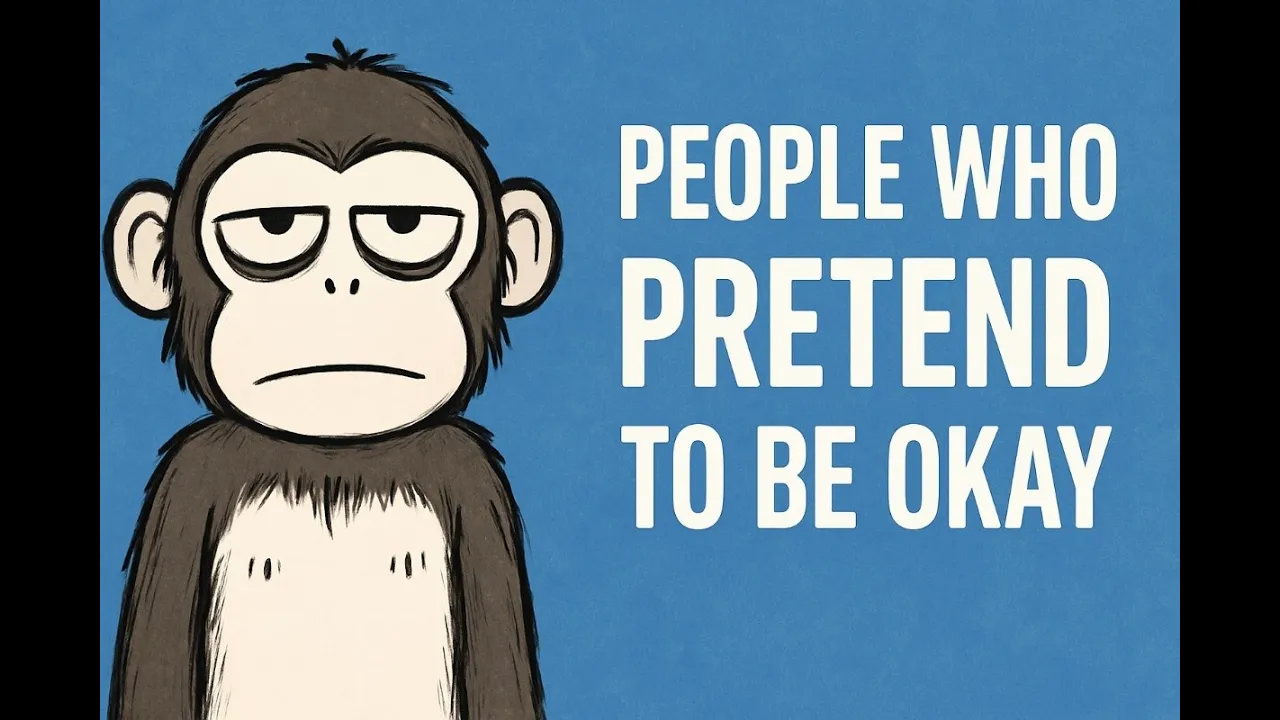
They never want to be a burden. So, they learn how to wear a mask that looks convincing enough to pass. A mask that says everything's okay, even when it's not.
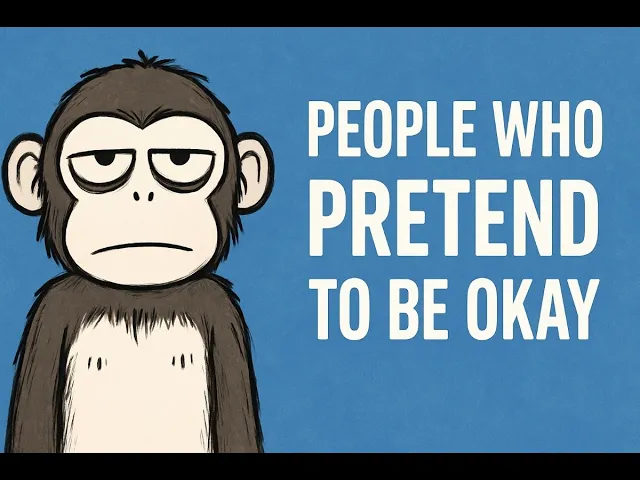
Psychologically, it's a fascinating and heartbreaking phenomenon. People who pretend to be okay aren't liars in the usual sense. They're protectors.
They're defending themselves from vulnerability. [Music] It starts early. Usually somewhere in childhood they learned that showing emotion came with consequences.
Maybe when they cried, no one came. Maybe when they reached out for help, someone told them to toughen up. Maybe they were punished for expressing pain or told that other people had it worse, so their feelings didn't matter.
So, they learned to adapt. They learned that silence was safer than truth. That composure was more acceptable than collapse.
And that pretending to be okay was the only way to keep relationships, jobs, reputations, and sometimes even their own sense of identity intact. It's strange, isn't it? We praise people for being strong when they hide their pain.
But we rarely stop to ask what that kind of strength costs. Because every time someone swallows their emotions, they're not just hiding sadness. They're suppressing truth.
They're fragmenting themselves to fit into the world's narrow definition of what it means to be fine. The psychology behind it is called emotional suppression, and it's one of the most common coping mechanisms among adults. Studies show that people who habitually suppress their emotions often do so because they associate vulnerability with weakness.
But the paradox is that the more they suppress, the less connected they feel to others and even to themselves. It's a silent loop, one that feeds on fear. Fear of judgment, fear of rejection, fear of what might happen if the mask slips, even for a moment.
And so they keep smiling. They keep posting happy photos, giving cheerful answers, showing up to work, cracking jokes. They play the part so well that even they begin to believe it sometimes.
But deep down there's a quiet exhaustion. Not the kind that sleep can fix, but the kind that comes from pretending to be someone you're not for too long. There's an internal dissonance that grows inside people who pretend to be okay.
On the surface, they appear composed, calm, even graceful. But beneath that surface is a storm that never stops. Their mind becomes a battleground between who they are and who they think they need to be.
You can often recognize them in small ways. They're the ones who deflect compliments, the ones who change the subject when the conversation gets too real. The ones who laugh off pain with phrases like, "I'm just tired.
" or "It's nothing really. " Psychologists describe this as emotional masking. the act of displaying emotions that are socially acceptable while hiding those that are not.
It's a defense mechanism that often develops in people who grew up in environments where emotional expression wasn't safe or welcome. Over time, masking becomes habitual. It becomes identity.
And once that happens, they don't even realize they're pretending anymore. It becomes who they are. But what's remarkable and often misunderstood is that these people aren't weak.
They're survivors. Every time they smile through pain, they're using the only emotional tools they've ever known to survive a world that doesn't always make space for raw honesty. They've learned to regulate the external world by controlling their internal one.
If they can stay calm, maybe the world will stay calm, too. If they can appear fine, maybe things won't fall apart. But suppression always comes at a cost.
It might not show immediately, but over time the body and mind begin to rebel. Emotional suppression is linked to higher stress levels, lower immune function, and even symptoms of anxiety and depression. Because the truth is, emotions don't disappear when ignored.
They wait. They wait for quiet moments, for sleepless nights, for the drive home after a long day. They wait until the noise dies down and the mask slips, even for a second.
and then everything that's been buried comes rushing back. It's not uncommon for people who pretend to be okay to experience what psychologists call emotional fatigue. A chronic sense of tiredness that comes not from doing too much but from feeling too little.
It's what happens when your emotional energy goes toward maintenance, maintaining appearances, maintaining composure, maintaining distance from the parts of yourself that hurt too much to face. But here's something important and hopeful. Pretending to be okay isn't a life sentence.
It's a defense mechanism, yes, but one that can be unlearned. And it starts with something terrifyingly simple. Honesty.
Not the kind of honesty that involves confessing everything to everyone, but the quiet kind. The kind that happens when you finally admit to yourself that you're tired, that something's missing, that you're not okay, and that's okay. This small act of truth is powerful because it interrupts the cycle.
It stops the emotional masking from defining who you are. Because the moment you allow yourself to feel what you've been avoiding, something shifts. Your body relaxes.
Your mind quiets. You begin to reconnect with the parts of yourself you buried to survive. There's a quote from psychologist Carl Jung that says, "What you resist persists.
It's a reminder that denying pain doesn't erase it. It only pushes it deeper into the subconscious where it begins to shape your behavior without you realizing it. That's why people who pretend to be okay often have difficulty connecting deeply with others.
They crave intimacy but fear it at the same time because intimacy requires vulnerability and vulnerability means removing the mask. They might attract relationships where they play the caretaker, the one who listens, who fixes, who supports, but struggles to let anyone do the same for them. It's safer that way.
As long as they're helping others, they don't have to face their own hidden wounds. And yet, deep down, they want to be seen. Truly seen.
Not for their composure or strength, but for their humanity. The soft, scared, imperfect parts they hide so carefully. It's ironic, isn't it?
The people who seem the strongest are often the ones who most need gentleness. The ones who never ask for help are the ones who most need it. And the ones who pretend to be okay are often carrying the heaviest burdens, the kind no one can see.
But the world rarely rewards vulnerability. We live in a culture that celebrates hustle over healing, strength over softness, image over authenticity. We tell people to stay positive, to keep going, to never give up.
But we rarely tell them it's okay to stop, to breathe, to admit that they're tired. So people keep going until they can't. And when they finally break down, everyone is shocked.
They say things like, "I had no idea they were struggling. " Of course not, because the world only sees what you show it. But here's the truth that many people don't realize.
Pretending to be okay doesn't make you stronger. It makes you invisible. And invisibility is a kind of quiet suffering because how can anyone help you if they don't know you need help?
How can anyone understand you if they only ever meet your mask? There's a quiet bravery in being honest about not being okay. It doesn't mean collapsing into despair or announcing your pain to the world.
It means being real enough with yourself to stop fighting your own emotions. Because pretending to be okay is exhausting, but being human is liberating. Being real means you no longer have to perform.
You no longer have to wear armor every morning. You can just exist in all your contradictions, your imperfections, your beauty, and your pain. And that's the real strength.
Not the strength to keep pretending, but the strength to stop. Still, the transition is never easy. When someone has spent years pretending, being real feels dangerous.
It feels like walking out into the cold without a coat. But little by little, honesty becomes warmth. It becomes safety.
It becomes home. And maybe that's the real journey. Not toward perfection or endless positivity, but toward peace.
Peace that comes from knowing that it's okay to not have it all together. That being honest doesn't make you weak. It makes you free.
Because when you finally stop pretending to be okay, you don't just find yourself again. You allow others to find you too. And that connection, that honesty, that shared humanity, that's where healing begins.
When someone pretends to be okay for too long, they begin to live between two realities. The one they show to the world and the one they silently endure inside. At first, this separation feels manageable.
It's like running two tabs in your mind. One for survival, one for truth. But over time, those two versions start drifting further apart.
and eventually you can't tell which one is real anymore. This is what psychologists often call emotional dissonance. The tension that arises when your external behavior doesn't match your internal state.
It's the mental equivalent of smiling while your heart is breaking. And the longer you live this way, the more numb you become. Not because you don't feel, but because feeling becomes too complicated.
There's a strange comfort in pretending. It gives you a sense of control. When life feels unpredictable, your mask becomes your shield.
You can walk through chaos without revealing your fear. You can talk about nothing while hiding everything. But there's a cost.
A cost that builds silently over time. Pretending to be okay might protect you in the moment, but it disconnects you from your emotional compass. You stop trusting your own feelings.
You start secondguessing your pain. You begin to think that if no one else sees it, maybe it isn't real. And that's where the danger lies.
Because when emotions are ignored long enough, they don't vanish. They evolve. They transform into irritability, burnout, apathy, or even physical symptoms.
The human body doesn't know how to lie. It always tells the truth. Even when your words don't.
Sometimes it shows up as chronic exhaustion. Sometimes as headaches, muscle tension, or random moments of sadness you can't explain. It's your body saying, "Please stop pretending.
" Many people who carry this invisible weight start to feel detached from joy. Things that once brought them happiness start to feel muted, like music playing underwater. It's not that they don't care.
It's that their emotional bandwidth has been drained from holding up the mask for too long. And yet, when you look at them from the outside, they appear functional, maybe even successful. They're the dependable ones, the reliable ones, the ones who always have it together.
But behind that calm exterior is often someone who's quietly collapsing in slow motion. One of the hardest truths about this pattern is that people who pretend to be okay are often praised for it. They're admired for their strength, for their consistency, for their ability to keep going no matter what.
But few realize that what looks like resilience might actually be suppression in disguise. And this brings up an uncomfortable question. Why do so many of us find it easier to pretend than to be honest?
The answer lies in something called social conditioning. From a young age, most of us are taught which emotions are acceptable and which are not. We're rewarded for being calm, polite, and positive.
And we're often dismissed, shamed, or ignored when we express sadness, anger, or fear. So, we adapt. We learn that love and acceptance often come with conditions, and we start curating ourselves to meet them.
Over time, this becomes automatic. We enter adulthood already fluent in emotional disguise. But here's what most people don't realize.
Every mask we wear distances us from connection, not just with others, but with ourselves. Connection requires truth, and truth requires risk. But when we've been hurt before, that risk feels too high.
So we choose the illusion of safety instead. We choose to smile through pain because at least it's predictable. We choose to say, "I'm fine.
" because it avoids confrontation. We choose to suppress rather than express because we've learned that silence hurts less than rejection. But in doing so, we slowly erase ourselves.
There's a quote that says, "You can't heal what you hide. " And that's the paradox. The more we hide, the more lost we become.
Healing doesn't begin when you feel ready. It begins when you stop pretending. When you stop performing emotional stability just to make others comfortable.
It starts when you give yourself permission to feel even if no one else understands it. Because here's the truth. Pretending may protect your image, but authenticity protects your soul.
When you allow yourself to say, "I'm not okay right now. " Something beautiful happens. You open the door for compassion both from others and from yourself.
It doesn't make you weak. It makes you human. Psychologically, admitting your feelings is an act of integration.
It reconnects the divided parts of your identity, the performer and the person, the mask and the truth. And this integration restores a sense of wholeness that pretending always steals. One of the most liberating things a person can realize is that honesty and strength are not opposites.
They're the same thing expressed differently. The courage it takes to smile through pain is admirable. But the courage it takes to admit pain, that's transformation.
Sometimes healing doesn't start with grand gestures. It starts with small honesty. Like answering, "How are you?
" with, "I've been struggling a bit lately, but I'm trying. " Like allowing yourself to cry without apologizing for it. Like taking a break, not because you've earned it, but because you need it.
And sometimes it's as simple as not faking a smile when you don't have one to give. There's something deeply healing about being real, even when that reality is messy. Because when you stop performing, you create space for life to actually reach you.
You allow joy to feel real again, not staged. You allow sadness to move through you, not trap you. You allow people to love you, not your mask.
That's when connection starts to rebuild itself. And here's the irony. When you stop pretending to be okay, the right people don't run away.
They come closer. Because authenticity has gravity. It pulls in people who can meet you where you are, not where you pretend to be.
Many people fear that revealing their pain will drive others away, but in reality, it often does the opposite. Vulnerability creates trust. It says, "I'm human, too.
" And in that shared humanity, walls begin to fall. But of course, not everyone will understand. Some people are uncomfortable with emotions because they've been taught to suppress their own.
That's okay. You're not responsible for their comfort. You're responsible for your truth.
Healing is rarely loud. It's quiet, subtle. It happens in small moments when you finally allow yourself to breathe without performing.
It's when you stop rushing to feel silence. When you stop needing to explain your sadness. When you stop trying to impress the world with how fine you are because you realize something profound.
The people who matter don't need your perfection. They need your presence. And presence comes from being real.
There's an interesting thing that happens when people finally drop the mask. They start to rediscover parts of themselves they forgot existed. Suddenly, small things feel meaningful again.
Morning light, laughter, art, quiet. Life starts to regain color. Not because everything is fixed, but because it's finally honest.
And honesty, even when it hurts, is freeing. You begin to see that being okay isn't the goal. Being whole is being at peace with your own contradictions.
That's the goal. It takes time. It takes patience.
But little by little, pretending fades, and in its place grows something much stronger. Selfrust. You start trusting that your emotions won't destroy you, that your sadness won't swallow you whole, that your truth, no matter how heavy, deserves to exist.
And the more you trust yourself, the less you need to pretend. That's when life changes. You stop living for appearances and start living for alignment.
You stop chasing external validation and start valuing internal peace. You stop performing happiness and start feeling it quietly, genuinely, deeply. And maybe that's what all of this was leading to.
Not perfection, not endless positivity, but peace. Peace that doesn't depend on pretending. peace that allows room for sadness, joy, confusion, and clarity all at once.
Because being human was never about being fine all the time. It was about learning to hold the full spectrum of emotions without shame. The truth is, the most beautiful people you'll ever meet are the ones who have stopped pretending.
They're the ones who have walked through darkness and no longer fear it. They've made peace with their imperfections. And that peace radiates in a way that's hard to describe but impossible to miss.
They've stopped chasing the illusion of okay and started living in the reality of enough. So if you're someone who's been pretending to be okay, maybe this is your quiet reminder. You don't have to anymore.
You don't have to keep carrying the world on your shoulders just to prove you're strong. You don't have to smile just to make others comfortable. You don't have to hide the parts of you that feel too tender to show.
You are allowed to be honest. You are allowed to be messy. You are allowed to be real because real is what heals.
And the moment you start living as your whole self, not the filtered version, not the perfect image, you'll begin to attract the kind of peace that pretending could never give. So maybe the goal was never to be okay at all. Maybe the goal was to learn that even in your not okayesseness, you are still worthy of love, of rest, of belonging.
Because pretending might protect you from pain, but it also protects you from joy. And life is too short to live behind a mask. You don't need to be okay to be whole.
You just need to be honest. Because the moment you stop pretending, you don't just survive. You start to live.