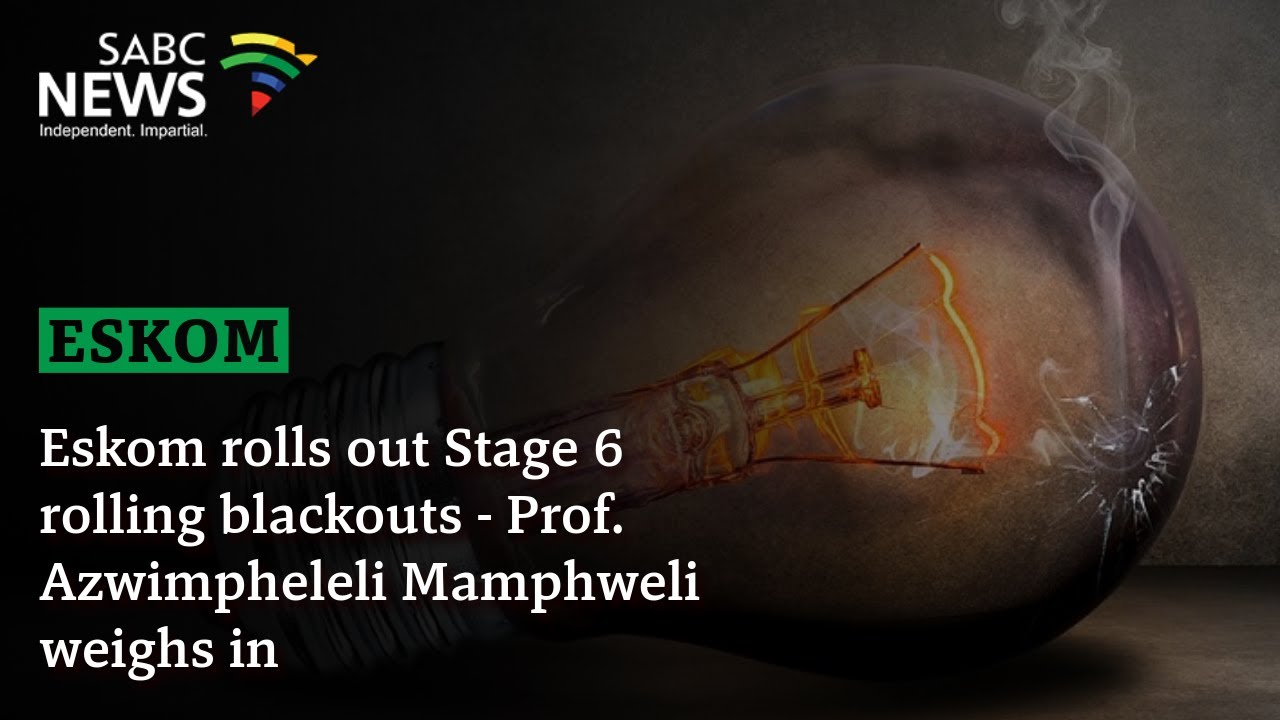
let's get some reaction now as load shedding escalates to Stage six until further notice energy expert Mr Chris yelland joins us now Chris great to have you with us a very good afternoon to so what do you say to The Minister's briefing earlier and please provide more clarity on the reasons that were actually provided for this current massive load shading I mean we grappling with we are being told that 10 generating units were actually lost overnight and that we are told uh it's because of winter maintenance I mean talk to us about this yeah look
I think um the CEO of esom Dan marani and the head of generation uh and the minister uh you know took us through uh you know the kind of problems they were experiencing and uh to give a big picture uh you know when this load shedding started it started many years ago but uh when the generation recovery plan started esam's plan was to focus on some of the major power stations and even within those power stations the focus was on the generators themselves and the boilers and the equipment Associated directly with that particular generation unit
or units at the power station so there has been some progress on that front uh and we've seen the the the positive impacts on that with the reduction of load shedding during 2024 um but uh now it does seem that the focus needs to shift somewhat to other priority areas the Lesser priority areas and uh this includes um you know other power stations that are perhaps not as big or you know lesser Power Station older power stations but also to what is referred to as the balance of plant uh these are common plants for the
whole power station in other words you have each generator unit as a self-contained unit but then you have a set of common plant uh also known as auxilary plant uh which provides various services like uh water and oil and air uh and and these kind of services that are common to all the generator units and they haven't put the kind of focus there that they feel they should and that's where now uh the problems are being experienced uh it's to do with the electrical and Protection Systems uh of the plant which ultimately affect the whole
power station so at at majuba you know they had a problem on one of the Transformers that Transformer seems to be feeding a whole lot of common uh auxiliaries for the whole power station and the loss of that Transformer due to overloading uh during starting up of a big motor caused uh you know a loss of services to all the other generator units at the same Power Station causing in fact the whole Power Station went down five units went down and one unit was already down so that left you know all six units at mauba
went down virtually simultaneously um you know yesterday afternoon uh at about 5:30 uh and and that really then caused problems at another Power Station uh called mupi Power Station where a particular turbine and Generator unit tripped on under frequency as a direct result of the shutdown of majuba power station so there can be these cascading effects uh that caused multiple units to shut down uh not only in one power station but even at a power station you hundreds of kilometers away aren't these able to be mitigated then Chris I mean Also let's talk about the
current the effects that it's going to have now as we understand the hospitals as well as water pumping stations will actually not be Exempted yeah look of course these issues can and should and must be dealt with uh I think it's just a case that the priority has been elsewhere up to now and now that these crocodiles are surfacing in the water uh they have to be attended to as well I suppose it's normal when you in a crisis situation to try and prioritize you know where one's first efforts should be and what should be
followup efforts because it's virtually impossible to deal with everything simultaneously you just don't have the resources uh necessarily to do that so one has to do this step by step prioritize one of the most urgent areas but certainly these issues of the balance of plant are you know are coming now you know as the next hurdle uh so what I'm really trying to say is the battle is not won yet progress has been made in this battle uh there have been notable successes but the battle is not over uh and there's more to be done
and in fact the battle is never over one has to work on these things and do the right thing all the time continuously it's not a case of doing something right and when you've done it right for a few years then you then you can sit back and relax no you actually have to do maintenance proper maintenance and uh you know and preventative maintenance on a continuous basis all the time um yes the impact on the customer the impact on essential Services as we've heard from city power is uh going to going to make itself
felt a very negative impact on hospitals and emergency services but I do hope and expect that the worst will be over during the course of the week to come uh that doesn't mean to say the battle is won but the immediate issues of the trip out of something like 10 units simultaneously AC cross the country uh that I think they will start returning them to service and the majority of the current issue should be over sometime during the course of next week you know Chris should we brace for more though I mean the recent sentiments
from the minister of electricity was that we're actually looking at eradicating load shading by the year 2029 back from that of course that energy plan that was touted to be for 50 right with that complete electrification even in those rural areas meaning that even the necessary infrastructure would also have been built and erected in those areas but it certainly sounded like everything was well on track but did we celebrate too soon or we're being misled somehow look I think we have a habit of uh you know when load sheding goes away for a while we
think the problem is over but of course the work continues the battle is not one yet and in fact the work has to continue forever you have to do the right thing all the time as I said uh so I think we should uh be careful not to celebrate uh you know too soon uh I think we do need to get to the stage where uh load shedding is really abnormal it is truly abnormal and a very very very rare event indeed other countries have successfully managed to do this other developing countries have successfully managed
there is no reason why South Africa should have stage six load shedding as we experienced uh today and uh last night and probably going into the early part of next week there is no reason why we should accept this or put up with it and consider it to be normal uh it can be dealt with but one has to work on it all the time a very quick one Quest I mean we're out of time recently of course the president made of course sentiments towards load reduction and recently the minister of electricity as well I
mean this term keeps coming up but we know that of course load reduction has drawn quite a lot of sharp criticism as it seems of course to be presented as the Lesser evil so to speak yet the effects are pretty much the same in fact load uh load reduction is actually drawing more criticism as it seems to be generated uh towards the poor community so how do we get out of this conundrum then and strike that fine balance yeah look there's a lot of jargon out there uh I mean the word load shedding is in
common use there's another term called load Calment in which customers are not actually cut to zero power uh but have to operate with reduced power this is generally applied to uh process Industries petrochemical Industries mining Industries Etc which cannot face a complete loss of power for various safety and process reasons and then we have um a load reduction which is very much a euphemism it is also cutting power but cutting it during certain times of the day when the system is overloaded at a local or Regional level in other words it's not done nationally as
load shedding is done uh it's done at a local level towards communities and parts of the network that are being overloaded for one reason or another and I I must tell you I don't think we should just focus on theft of electricity of course that is a cause of overloading uh but there's also poor planning rapid urbanization uh lack of investment uh in into distribution networks especially networks where there is a growth in population which could be caused by many reasons including just normal urbanization including uh you know uh immigration from neighboring countries uh you
know moving into certain areas and overloading the system so there are many causes of so-called load reduction one of them is De of electricity Chris thank you so much for your input as always Mr Chris yelland is an energy expert on the current stage six rolling blackouts in the country