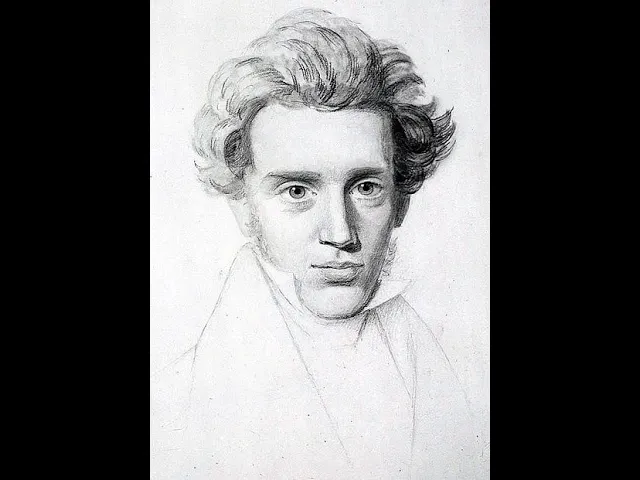
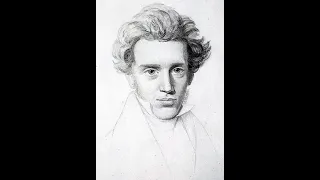
okay class so today we'll be talking about Curie Arts book either or and I gave you excerpts of that that you read for today so I'll begin by giving you some background in terms of where this book fits into your yard's philosophy as a whole and then we'll focus for this lesson on Volume one of that book which is on what he calls the aesthetic way of life life of enjoyment so let's take it back to where we left things off at the end of the last lesson on the need for passion we said that
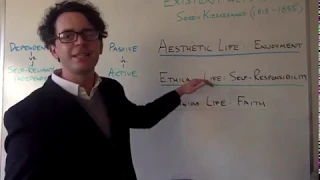
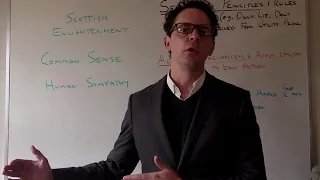
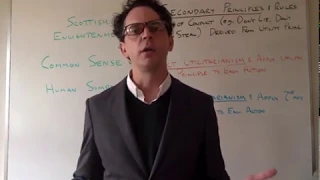
for existentialist like Kierkegaard life is meaningless unless you have some sort of guiding passion but it leaves open the question what passion is sufficient to give life meaning well any passion do does it matter which passion you have in which passion structures your life Kierkegaard worked out a kind of schema of different ways of life according to what passion you had in life and that's what I have on the board here he thinks some people live a life in which enjoyment or pleasure is their highest passion and he calls that the aesthetic life this comes
from the Greek word for experience these days aesthetics means the study of art and beauty well more broadly what he means by the aesthetic life is any life in which you're devoted to some form of pleasure or enjoyment the next life that he explores is what he calls the ethical life this is the life in which your highest passion is for your ethical duty and specifically for your self responsibility your passion is for being a good virtuous person and then he also talks about a religious life in which your highest passion is faith the book
either or just deals with these two and so those are the two that we'll be talking about today aesthetic life and the ethical life given the schema three different ways of life hopefully some metals are ringing in your mind where we seem as before it seems very similar to what Aristotle sets out as his schema of different ways of life when he talks about the life of enjoyment the political or military life which he calls the life of moral virtue or the contemplative life of intellectual virtue right instead of the contempo of life we have
the religious life and there's a slight change in that instead of the life of political or military life here we're talking more broadly about the life of any sort of ethical devotion and duty and self responsibility but other than that it's it's similar in its scheme one great difference though is that as we saw with Aristotle he thought you could give objective rational arguments for which way of life that's best fits all human beings Kierkegaard taking it back to what he takes to me the proper Socratic way of doing philosophy thinks there is no way
of giving people some sort of theoretical answer to what way of life is best you simply have to live these ways of life and experience them of the first person and then see which passion really does need to a meaningful good life and in his writings what he does is he adopts different points of view of people living these three different ways of life and then he presents those points of view each from that first-person perspective using as we talked about last time different pseudonyms different kind of names of authors and so what cure I
thought he's not using a fake name for his own thoughts the way he understood this was he's putting himself inside a character that he's created and he's writing from that character's perspective and he's presenting their take on their way of life from their first-person perspective and then he leaves it open to the reader to see which way of life is best but it's not exactly the case that he he leaves as a totally open-ended question he thinks that it's it helps to see these characters grapple with the problems that they face in life and it
makes it specifically it helps to see these different authors or pseudonyms talk about what he calls despair he says some ways of life encounter a despair in which there's a failure of that way of life by its own standards so whatever it is your highest passion or whatever is you most will leave it in if for some reason there's an internal contradiction such that you can live up to those highest standards right and there's something wrong with those standards themselves then there's an that see failure of a way of life but cure I thought there's
no way Oh expressing that in a purely rational theory but there is a way of in a kind of literary form of showing people living these different ways of life and showing them falling into this state of despair where they feel that they have failed according to their own standards to live up to a meaningful life for Keurig our despair was the worst thing that can happen to you to live a life and then realize wait that my entire way of life is a failure on the other hand he said hidden within this great failure
in disaster is the possibility of change and he thought that how come despair you can have what he calls a leak in which you realize that this way of life that you're living is a failure you need to abandon it entirely and move on to a different way of life and so in terms of what we'll be talking about today between the static and the ethical way of life Tara thinks although there's not a rational theoretical way I've explained why one is worse than the other perhaps you could show kind of in a literary form
by exploring them in the first person that this way of life leads to a kind of despair in which you give up on it and instead you abandon it and make it sort of leap to the ethical way of life Kierkegaard's most famous in terms of this concept of a leap for talking about a leap of faith in which you leap into the religious way of life and in contrast to a lot of theologians really history of theology Karen thought once again there is no rational way of explaining to somebody why a life of faith
is better than any other way of life but he thought that it is possible when people live a certain way of life and reach a point of despair it is possible that they're kind of pushed out of that way of life by its own failure and they might take a leap of faith into the religious life so as I said either/or just deals with these two and so those are the two that we'll focus on today and for the first lesson we'll just talk about the aesthetic life either/or is presented by a neutral editor that
doesn't mean it's some guy who claims to have found this book in a hidden compartment of his desk and he has this elaborate scheme of how he came about this desk randomly and how he randomly found these two papers papers by a young man living the length of enjoyment we only know that young man by the name a and then the second volume of either-or is written by a slightly older man who at first we simply know of as B and later on we know that he's a judge and that his name is William and
so he's now known as George William but the way that either-or is presented is the first volume presents this way of life the second volume presents this way of life and you're supposed to as a reader make your own decision as to which way of life is better and it's the title either or okay so let's jump into the reading the first part of the reading it those first couple pages which deal with the this young man and a presenting his experiences trying to live the life of enjoyment and and as you notice the main
theme that he points out is boredom right and in the longest of those passages he talks about how he says you know these days you're supposed to adopt a principle okay fine my principle is everybody's born and not only does he make that a kind of sociological observation but he even tries to read it into the heart of existence he reads it into the Genesis story right he says you know boredom is the root of all evil God was bored and so he created Adam Adam was bored so they created Eve Adam and Eve were
then bored together so they created their children and he says this continued until eventually people had that idea of building a tower as high as heaven and says this is incredibly boring idea and he says this shows you how boredom once it enters the world kind of takes over everything what are we to make of this first of all you can see that a is kind of joking around he loves to be witty he loves to be entertaining and we'll come back to that last thing we'll talk about today is his role as a poet
his role as somebody who is trying to spread his wit and entertain others with his witty remarks and so is he serious about Gordo yeah it's clearly something that plagues him and he wants to kind of present it in a witty entertaining way hence his theory that that boredom is the root of all evil and we see at the end of that longest passage that his plan for what to do with boredom he says he says you know these days people have this idea that we should get some money and pay off the national debt
boring what should we do instead we should borrow that same amount of money and just have endless entertainment races let us celebrate the Millennium with fun and games just as there's currently boxes everywhere for contributions of money he's talking about poor boxes where you would give to the poor he says instead there should be bulls everywhere filled with money everything would be free the theater would be free prostitutes would be free rides your park would be free funerals would be free ones funeral eulogy would be free I say free for money's always available everything is
green away so this is his plan just live it up borrow money just live it up everything should be free right and he compares this to the the room and bread and circuses the Roman patricians would not only give away free free bread but the circuses refer to the to the games they would have gladiatorial combat and things like that as a way of entertaining the masses right and this is the way the Roman patricians essentially held the masses in check and a great idea why don't we do this now why don't we bend enough
to have just endless public entertain but he also builds into it at least hints as to what the problem is he says no one will be allowed to own any property an exception should be made only for me I shall set aside for myself one hundred dollars a day deposited in a London back partly because they cannot manage on less partly because I'm the one who provided the idea and finally because no one knows if I will not be able to think of new idea when the 15 million is exhausted right so hopefully you kind
of already foreseen that this is a problem endlessly borrow and wanting just to entertain people how long is that gonna last seems like eventually the money's gonna run out and what that right and a is plan as well I'm gonna have some money stored away just for myself I'm gonna make an exception of myself right because I can't last on anything more than $100 a day and moreover is my idea and I might not have another idea this already shows you again this is not a serious plan for a right he's playing around with the
idea of boredom and enjoyment right he's kind of joking with his audience yeah should we do this I don't know he's trying to lead you into a false plan he doesn't really believe in this plan um but let's look at some of the things he says more seriously about boredom for example on that first page where he talks about some things that used to entertain him and that now he find or he talks about drinking wine he says you know originally drinking wine was exciting for me right but now I drink a little bit I
get even more bored and a lot of it I just get depressed right this is not fun for me anymore another example he uses his right horse rating right he says you know it used to be that the first opportunity I would leave aboard my horse and so much want to be riding through the forest it was awesome but he says now I ride for so long that my horse is totally exhausted and yet for me it's a it's as if we never left this is utterly boring okay so what's going on there he says
things that you find enjoyable the first time around tend to come become boring as you do them again and again and let's give some other examples let's suppose you go out to the movie theater and you see a movie and he thought was very movie right and that was a really entertaining way of spending afternoon so once you try it the same thing you go to the same movie the next day okay maybe it's still interesting maybe you notice some things you had before but probably not as interesting imagine you see that same movie on
a third day in a row probably gonna get a little bit bored what about the tenth day in a row you see nice theme it's gonna be utterly boring right what is it but I thought the movie was exciting to you what's happened something that's exciting the first instance tends to become more and more boring as you do at a Canada cat and so this is what has played a so fluorisis you know things that I used to find enjoyable I'm now bored by he proposes though at the end he hints at a kind of
solution we talked about possibility he says pleasure disappoints possibility does not and I asked about that reading questions what he means by that is what you need to keep yourself entertained our new sources of enjoyment right you can't simply be going back to the same once you need to start cultivating new forms of enjoyment and if you notice at the top of the the second page in the reading I gave you it gives you the title that whole section which is called rotation of crops what he's making allusion there to is the fact that farmers
will rotate their crops they'll have different crops were on the same land in different times and his the metaphor there for a is you need to rotate the crops that that you're trying to yield pleasure from you need to find new sources of pleasure and he thinks that somebody who is able to do that and will always sees kind of a new possibility of something new to experience that person might not get bored right elsewhere in the same section he talks about how it's not just important to have new sources of entertainment but and thereby
kind of always having something new but he says it's also important to have to always be up in your level of the intensity of that intro right such that you're not just flipping from one thing to another but that you're experiencing new things with a level of intensity that weren't that wasn't there before and he gives an example of this he talks about the emperor nero and he says you know nero maybe he began by eating on plates of silver that was boring so he threw those away and I was getting off plates of gold
that's getting bored you might have heard about Nero fiddling while Rome burns and this is the way a takes AI he says Nero was so bored that even kind of living in this luxurious life that was boring and so he comes up with an idea I know I'm gonna burn down my own city he burned down Rome so that you could see what it looked like when Troy burned but that could be entertaining right so he has this man set fire to his own city right and he's there trying to enjoy this right this is
something new it seems right but it's not intense enough so what is he to make it a little bit more exciting he plays the fiddle wallets wallets burn in a way although any points of that as a possible as a positive example you can see the problem already right it seems like this is gonna run out what is Nero to after he's burned down his own city while he's playing the fiddle but is he gonna like drink a little right and then burned down somebody else's city where does it all end and this is exactly
the problem that's plaguing a is that he's looking around forever new source of enjoyment he's trying to be a connoisseur who is experiencing things at levels of intensity and levels of of kind of stewardship in which he kind of experiences what's so special about things and yet as he's trying to find enjoyment in things that enjoyment is always receding and instead of being entertained he ends up bored right and so this seems to be the critique of these that equiv trum within right it's not an objective rational boutique the way that we saw it in
Aristotle that this life is fit only for animals and so human beings it's other capacity so it's not fitting for them this is supposed to be a kind of internal boutique if you try to live just for enjoyment a shows you will instead end up bored right and boredom is obviously the opposite of enjoyment so you can see how this life fails by its own standards your highest standard of what is good is enjoyment but instead if that elite that life needs to boredom then it is failed by its own standards right in other words
although a doesn't come to this realization the idea is a has is showing us that this is a life of despair so we get from the clearest case this is something that's being shown close at the very last little passage from that on page 2 of your reading either or an ecstatic discourse right so this is a take on what this concept of either/or means within the within the book either or both a living this life and be living this life have their own conception of what either/or means this is what it means for for
per a and I'll read parts of this Mary and you will regret it do not marry and you'll also regret it Mary or do not marry you will regret it either way whether you marry you do not marry you will regret it either way laughs or the stupidities of the world and you will regret it weep over them and you'll also regret it laughs of the stupidest Laura Lily weep over them you will regret it either way right and then skipping down hanging yourself and you'll regret it do not hang yourself and you'll also regret
it hang yourself or do not hang yourself you'll regret it either way right in the ends by saying this gentleman is the quintessence of all the wisdom life so we see here a has reached this point what most cynicism and despair right where he says it doesn't matter it seems like nothing matters right and you can think of the love story that I gave you last time and this book either/or is very much Kierkegaard reflecting on should I live the life of enjoyment and not get married or should I do the responsible ethical thing and
marry Regina and his cynical side is definitely telling him look if you married you know you're gonna regret it if you don't marry Regina you're gonna regret it so it doesn't matter right and so you can see in this moment a sense of nothing matters right and so again this is this is cured way of in a literary form showing us this despair right so he's not giving us at least here some sort of analysis or on show us objectively instead he's saying if you live a life the way a does you will eventually reach
this point of boredom and despair in which you fail by your own standards and you can't see anything as worthwhile there's one more trick though that a tries to pull to salvage some sense of meaning right even though he knows that his life is a great disappointment that he's utterly bored he says yeah but I'm a poet and this takes us back to why is he being so witty right why is he expressing himself in a way that seems to be so entertaining if he thinks life is meaningless right and that very first paragraph and
what I gave you he talks about the poet is like the victims of florists and this is a perhaps a mythical story about the tyrant Flores who he builds this huge iron bull and or bronze bull and in this and it's Hollow and what he does when he wants to to torture people is he puts them in the bull and he puts the bull over a fire right but the mouthpiece of the bull is is shaped in such a way that their screams as they're dying today as they're dying of being roosted alive their screams
come out as beautiful sounds and a says this is exactly what it is to be the poet right and clearly he's bringing himself as a poet he's saying I I'm suffering right I'm disappointed I'm bored right I don't find any mutants life but I can be witty in the way I express that and thereby entertain others right so this is his kind of last step saying yeah I I don't find myself in a state of enjoyment but at least I can present and and provoke enjoyment in others by being as witty poet from the perspective
of his friend George William B who presents the ethical way of life and we'll talk about next his analysis is look and you clearly despaired of your way of life when you have made this leap into the next Way of life into the other Goya of life why not precisely because you're still trying to latch on to some sense of enjoyment as worthwhile right and and and the judge says your real problem is not that your despair it's that you haven't fully despaired right it's that you haven't fully given off on this failed way of
life you're still latching at some slight ability to find meaning by entertaining others but the judge thinks what you really need to do is fully despair give up on this way of life entirely and that will set you up for a leap to much better way of life okay so that's the aesthetic way of life and how Kira thinks you can present this sense of despair for your reflections today what I'm simply ask you is do you agree with the premise here that the life of enjoyment necessarily leads to boredom and disappointment and thereby fails
of its own standards right or do you disagree and think that it is possible for people to live a life of enjoyment and for that to be a meaningful sustainable existence