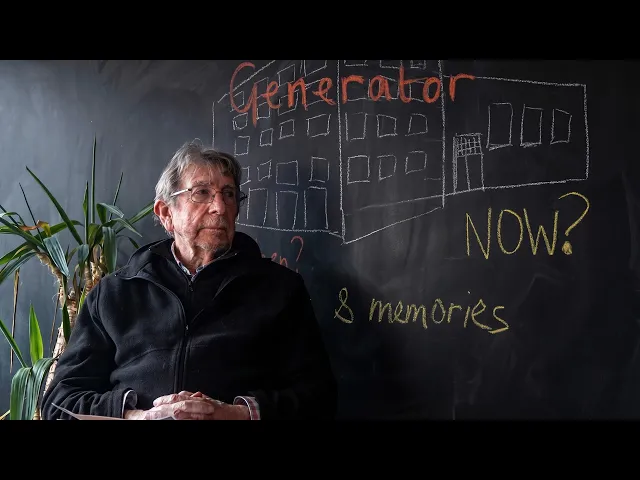
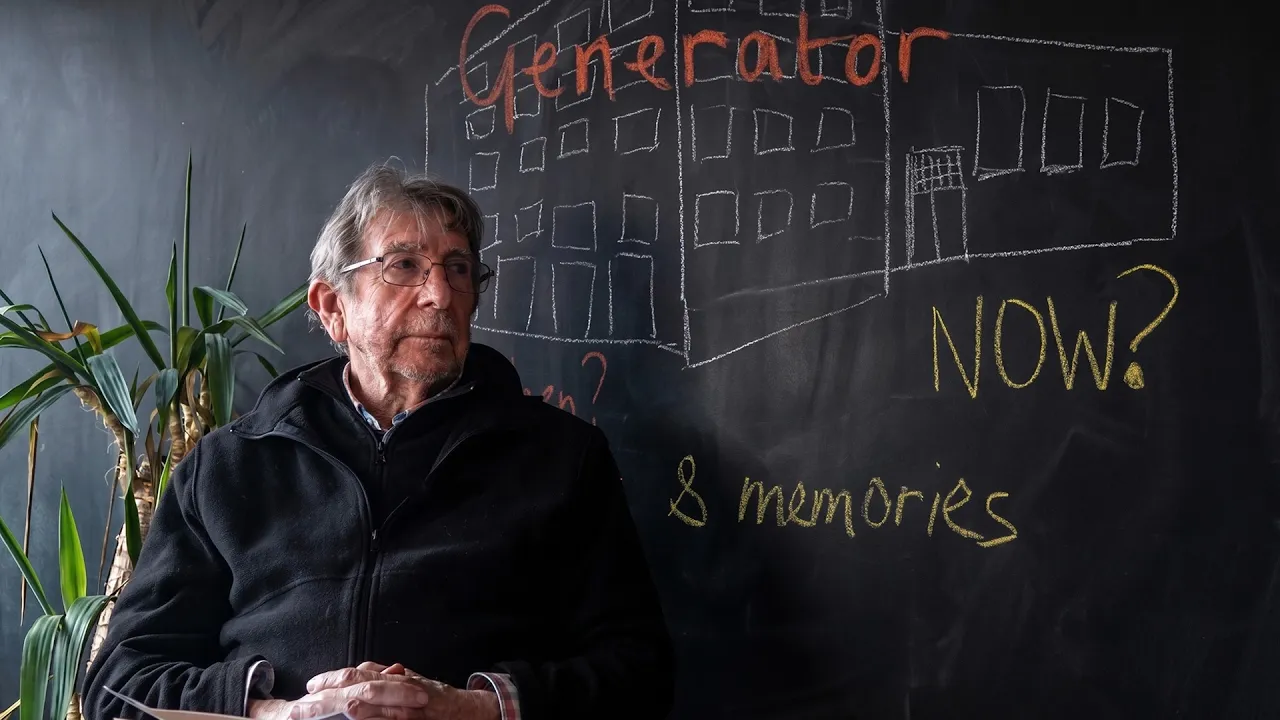
okay welcome Peter it's delightful to see you again I know you best's head of Fine Art but I know you've had a long long association with the buildings on Frederick Street so please will you tell us about that well I came to lfra in 1971 uh I was the youngest member of staff and I was given a great welcome as a kind of run to the Lisa um and in those days um all that was left of of the old College was um the what's the scoffield center on the corner of green close lane opposite
of the Griffin and what's called the garage block or we used to call Frederick Street uh all the rest had moved up um to no not all uh most of of uh the Art and Design courses had moved up to the radmore campus except fineart which was a a ramshackle fire trap soaked in lined oil and turps uh at the end of of William Street and um there were no courses um in Fric Street at that time it was mothballed and um it was used for the storage of screens that um we we erected every
year in the town hall for the degree shows of graduating students uh and there were there's always two weeks of of shows um textiles in 3D and then fine art and it used to alternate each year which went first so all the screens these were chipboard screens that were repainted white every year transported by truck down to the town hall erected and then uh there were vitrines for you know silver and jewelry and Ceramics and and that really was what was what the uh that building was used for and um there was no rinal way
at all it didn't exist when I first came to delra uh and then um green clo Lane I think then with on the site that is now saintsbury was the headquarters of East Midlands Arts as I recall and uh I think sabur swooped on the site in 1982 the building was knocked down all the lovely little specialist retail shops in Ashby Road went bust uh specialist green grosses D dairies Bakers fish mongers and so on and um then I'm trying to think what happened uh so those are th those are the um those are the
only two uh buildings that that were part of the original Town Center College founded uh as we all know in 199 by Herbert scoffield and um I think um when I first came to LOF with the foundation course was was in the main building which is now called the Barnsley building because a university likes all his buildings to have names we used to call it the main building it had three Studios on the first floor um and um I I can't remember when the foundation course that was the first course that was actually moved down
to Frederick Street the first course that was located in Frederick Street I know it was there in the what would it be the late 80s 0 my daughter did her foundation course in Frederick Street um so one of the next things Fine Art in the meantime I think exactly when late 70s I think was moved up to a new building on the radmore campus at the end of the 3D design block and it was a kind of a y-shaped building with sculpture on one side painting on the other and print making the tail with a
kind of common um lobby area in the Middle where the three areas met and there was a a bridge between painting and sculpture with a Life Studio now of course redundant because no one draws naked bodies anymore that's gone from from the Art and Design curriculum um and uh the oh um the the I think the the Frederick Street building was originally called the garage block correct and I think it dates to 1935 and I think that those wonderful kind of wooden Bays on the ground floor were the the ENT entry points for um cars
to be driven in to go over maintenance pits where mechanic auto mechanics were were trained in in keeping with uh Scofield's belief in vocational education learning by doing yeah uh and um we at some point again I can't remember exactly when we I think for probably for financial reasons the uh we stopped using the town hall when the town hall was used for degree shows it was great and I think it was an expression of you know that old wonderful historic relationship between Civic um you know town cities burs and their art school and and
you know the families the Ms and dads used to love to come to the town hall for the degree show and uh the uh the mayor used to turn up I I showed many mayors around the town hall and around Frederick Street I know every link of the chain the story behind every link the chain there and uh so we had to find we had to find somewhere else to uh put to have the degree show and in the end it was decided that we'd use we use Frederick's Stree and in order to do that
we I think the the the timing of the foundation Academic Year had to change so it started earlier and finished earlier so that the building was available for um the installation of the Fine Art degree show can I stop you at that yes point because thinking about an exhibition in the generation hores that means that were the motors there were they removed in your time how' that go no no the the the diesel engines yeah which um as as you know were obtained from World War I German uots Yeah by by scoffield had gone what
was what remained were the what we called the mercury vapor rectifiers because the the diesel um engines from the uots were were used by Scofield to train electrical engineers uh and and um the the diesel engines generated direct current I'm told I'm not very technical uh and um so the all the buildings of lra college were lit from from electricity generated from these engines and he he he produced more electricity than could be used in the college buildings and he sold the Surplus into the natural grid which was run on something called alternating current and
to convert the current to from DC to AC uh required these mercury vapor rectifiers which were like they were shaped like light bulbs there were glass they were about six high and there was God knows how much mercury in the bottom part of them that was what was there they had to be removed um there was cabling all the way around along the tops of the walls down the side of the walls uh there was some panels which um were control panels I I mean I have a very recollection of one of my colleagues who
she'll be written name was pulling a lever and the building started to hum so that switched it off again so uh the mercury vapor rectifiers were very very gently uh removed to a basement area Cellar at the sort of town hall end of of the of that building uh very gingerly uh we have very grandiose ideas rather naive grandiose ideas that um that metene area on at the far end of the could could become a kind of Cafe Bar and we would install the Mercury rap it rectifies as a kind of historic topical feature behind
the bar well that was all ridiculous really so and then we were left with with this with this kind of rather scruffy old building which had a very uneven floor there were concrete raised concrete sections and there were broken tiles and all the rest of it so we put in a system of joists fairly sturdy joists over which we laid 8x4 sheets of of heavy chipboard you know absolute maximum density chipboard um which we then painted with with very hardwearing Battleship Gray paint uh and um that floor was capable of of of supporting some quite
heavy sculptures that students had made and installed the the exhibition so that was it so so you know there were no Foundation students we were in the building we converted the generator Gallery everybody worked really hard uh to do it and you know all fine art staff worked very hard so um for years for several years sculpture had the ground floor of that building including what is now the cafe the OAC and um painting and and and print making had the floors above and that was that was how it was done I I have no
clear recollection of where the other faculties exhibited there were I think they didn't they didn't use it was just fine art I think that used that building um and um there was I have some stories about events that happened uh our exhibitions there go on well we I mean one one of um one of the the the key factors in the history of lbr is that um it was one of the last surviving monot Technics and um L surviving monot Technic art schools single a single discipline in college uh there were a couple of others
there was Winchester and there was Norwich as as as um we were talking earlier and um the polytechnics were formed from the merger mostly of of colleges of Technology colleges of education and um colleges of bar and these were the Poes and um the Poes like the like the monot Technics were were not given uh their own degree awarding powers and there was a national organization called the cnaa which stands for the council for National academic Awards and all degrees in all subjects in po Technics and in art schools uh were awarded by the council
for National academic Awards um and um I can't remember this sort of brown Cape thing wasn't very attractive and um so so institutions graded the final year students but to you know for for their ones firsts or their two ones or their two tws also known as Desmond as you will all remember or third class degrees and um the uh the internal grading of students work was validated by external examiners uh who worked in a sense on behalf of the cnaa they they they said yeah you know this these these are just I remember many
many long long meetings down in Frederick Street down in in in in the generator gallery and and in in the garage block with uh the staff of painting sculpture and print making arguing the toss and sculpture people saying well painting wants to give that P of rubbish at first don't we want a first and they they they wanted it to work on a kind of a quot assistant that painting had more students and then sculpturing them print making that you could work out the number of First on the ratio with students in the area and
I used to say you know I used to share the meetings and say and I'll take you all out to dinner but we've got to get this rough and we'll be here till midnight if if necessary and we had some we had some amazing EX interal examiners um Paul Huxley of the Royal Academy um a really interesting painter called Mike Upton who was a diabetic uh who used to go into psycho glycemic shock at the end of every morning that he examined and I I was shown by my doctor I had to practice on an
orange how to inject insulin I we sent people out to buy chocolate and absolutely crazy signs but that was that was how it worked that was how it worked and then what happened was that um whichever government it was decided that uh the polytechnics should become the new universities so it was only the old un what what we call the old universities the chartered universities including lufra which got his Charter in 1966 that had degree awarding power but then the new universities the old poly Technics the new universities were given degree awarding Powers but the
monotechnics were left out in the cold we were considered to be too small too narrow in subject breadth to to have degree awarding Powers so we had to fish around to find a partner to to take the place of the CA and we were surrounded uh by Predators very predatory institutions the most patry of which was what was then Lester Polytechnic and uh it had a director whose expansionist Ambitions of Napoleonic wanted to go everywhere and um I think he was great for for for for Leicester he did great things for for Leicester and is
now it's now a really good strong University um and um there was this you ask a question about was there resistance there was some there was resistance to the idea I mean there was um there was a kind of a uh a pro-independence movement if you like uh and the students were were stirred I'm not sure by whom I think by many of us actually and I I have a I have a memory of a meeting in the office of the principal who was there Keith Smith he'd been the previous head of silver jewy and
then the head of threedimensional design we were locked in his office some meeting to do with debating the future of the college and the students had blocked all the lights into his office out by placards with the word Independence written on it and every single placard Independence was spelled wrongly with an a not an e but we didn't do very good love it and um so so um the the the board of gardeners were also obviously very much involved in in debating the future of um lcad as it was still then and the College of
Art and Design and question yes and it was yeah still an independent College there still people didn't want it absorbed or over didn't want to become of anything else yeah um I think I think the university were not very predatory actually I think that I think the university were clever and said we'll buy our time and we'll get it in the end which which they did I think and and um I think that the Board of Governors was chaired by Andrew Fairburn former Director of Education for Leicester and I have enormous respect for him because
um he he had the best interest of the college at heart uh he was quite a difficult person but he he really he looked after La for College of Art and Design and he protected it um from you know all these circling Predators which included Derby and um other places and so in the end I think I think partly to spite Lester we decided to go with Nottingham Trent University for the validation of of the degree courses and the award of their degrees and there was was a shortlived but I think friendly and fruitful relationship
with with um with mingham Trent we certainly got we got an an illustration course uh validated by Nottingham Trent uh they there had been um when when Foundation moved from from the radmore campus to Frederick Street graphic design course came into into those Studios vacated Studios then we got illustration then they merged to become the School of Visual communication um and then they they they went down to Frederick Street and Foundation went back to ragall so it was a bit of a kind of merry go around really and um so that was that was sort
of history of the courses and then I think your earlier speaker did a btech course there I just I I can't remember all all that but um anyway the uh in in the end I mean it Independence was not not a viable option it was not a viable option and um we got into discussions with lbr University um in 1996 uh it there there was a complete uh change over in the senior management team of lfra College of Art and Design the principal left the vice principal left some of the other senior managers left some
of the admin people left and um so uh Terry carer became the the the the last principal yeah and I became the last vice principal and yeah we worked for two years um 1996 to 1998 to negotiate the merger with the university and it was it was a terrific period it was it was a great period and um you know uh we also something else we did in that two-year period was to um get 23 out of 24 in the the qaa the quality assurance agency review of lcad and design programs and that absolutely gobsmack
the university I think CU we outscored some of the University departments that respect so they were they were amazed I think and delighted by the fact that we before the before we became officially part of the University we got that score yeah for the quality of our programs yeah you see I I have a memory of Frederick Street with L usad lub University School of Art and Design lcad on the side of the building and so you must have continued in the building then yes we did after I mean the the the actual merge I
me stopped being it stopped being elcad and became lcad in 1998 right that that was the year so we we the negotiations took two years and then we were in and um before that I think we'd actually taken the university had take we' taken the university on as a validating body as you know and so our students started getting Lu degrees um actually before um elcab became part of of the university and um I have a memory of uh because in for 20 odd years when I was first at laa there was no degree there
was no degree ceremony the degree show the degree exhibition was the grand finale of of the students kind of academic career at lbr and didn't they didn't U put robes on and morar boards and all the rest of it that didn't happen until um I think 80s late 80s into the 90s and then and then we started uh uh having we we were attacked on to I don't know school education School of the art people getting degrees in other subjects in the University so we would and our our students kind of shuffled up with their
kind of uh Eden Ravens Croft gowns over that paint stain jeans and Doc Martins to to get their degree absolutely yeah and I remember I remember we had to go to process and and and I can't remember which um maybe it was David Wallace who was then um Chancellor of the University he was I think he was awarding the degrees and I remember being with someone from the University whispering to me he said I don't think Chancellor ever pressed so much pierced flesh in his life and and uh so our students were getting L Lu
degrees by then it was no longer Lut it would be because I mean partly because the art school was going and it became L University which yeah it is to this day yeah it was a big deal actually becoming lapr University I think it was a when you think it's started with scoffield in these in all these multiple buildings in the center of town and now we've got an International University this extraordinary story and although I mean in a sense that the luer never never went Polytechnic it jumped the gun and and what scoffield initiated
became the university got his Charter took on education that that became that they mer and it left us kind of and the technical college slightly out in the c um on on the other side of what was then by then they put in EP now way they actually so so the campus the the campus was was divided now on on either side with bits on either side of EP now way um but I mean it didn't stop there were very strong connections between the college and the university um Student Union was was was accessible to
art students I remember um a man who was a who was a a historian running responsible for running a program of poets and Residence at lra which the art art students were very keen on attending and and they were you know writing poetry and reading poetry uh the demographic helped of course because the art school was about 80% female and the University was 80% male so that that's yeah because of the sport and everything engineering and Sport right exactly so there were you know there were always good connections um despite the fact that we were
not part of uh the university and um I I think we talked about these mercury vapor rectifiers one year one was being moved if I can't remember for what reason and it broke this thing broke and the the the Mercury Spilled Out And it contaminated the the space it contaminated in fact the the generator Gallery space as well as the basement space in which it was house well we at that point the art school didn't have um a health and safety officer we not one had not yet been appointed so we had to consult the
health and safety officer of L protect next door they had one and by a weird chance his name was Richard hazard and he came down and and and uh he called in he we had to call in you know environmental pollution people uh to decontaminate just you know scoop out the Mercury um and and they all they wore hazmat suits white look like Spacemen and they had kind of machines with the needle going off the dial and so I mean it was that was a strucking story and then and then after when by the time
it was agreed that we would go into the University or yeah they said we want we want the Mercury Vaper rectifiers for the University so that was the last bore of them and we took them up we took the mercury vapor rectifiers up on a flat trailer towed by the college Mini Bus if there had been an accident the whole of Ashby Road would have been contaminated but where they are now I couldn't tell you whe what what the university did with them I couldn't tell sense it yeah no yeah yeah and one story do
you want a story about the exhibitions definitely go right there was um one year we were uh when we were exhibiting in um Frederick Street Building there was a student who was somewhere between painting and sculpture who was it was an ecarrior and um she wanted to to to build a sort of perspect bridge over a landfill site which she was going to install and we did have a health and safety officer by then and the health and safety offic said no you can't and and it was you were supposed as a visitor to walk
across this bridge it wasn't an option you had to go from one space to another across this Landfield site and health and safety also said no that's that's against all health and safety but um she was allowed to show to construct her installation in um the the foyer area of um the the the Bradmore building the radmore fin art building which she did but she was very unhappy about not being able to show with her contemporaries her friends what down in in in in the generator gallery that was where it was she wanted it to
be in the generator Gallery space so she got in touch with the news of the world and um complained to a journalist that that her work had been censored and um I got a phone call as by then I I was head of Fine Art I got a phone call from News of the World saying we've had a complaint from one of your students that our works been censored from the the degree exhibition I said no nobody's Works been censored at all we showing the work of every single graduating student I said why don't you
come up and have a look so this journalist came up and I was sitting in uh the the office on the first floor of of of the garage block was I was on duty kind of you know invigilating the exhibitions this chat turned up and um and I thought I I had a suspicion that he'd been found by a print making student who had whose exhibition consisted of very explicit photographs of her piercings body piercings they were very explicit pH and we said this this exhibition can be in on the top floor I think it
was of of the building but but we'll put a health warning outside um the but is fine so and I I just thought you know she's been in touch just this this student who will be forever name is has has contacted the news of the world to complain and he was amazed this said he oh there doesn't appear to be any censorship here does there and and and you have to sensor you're going have to the headline appeared in the following uh Sunday's news of the world and the headline was cunning Stunt by art girl
but that all this happens all this happened and um oh so um I that that that was it the um the the the arts school became part of the university and and the I left left in I left my position as Vice PR as I were left my position as vice principal in 1998 because you know there was no place for a vice principal of a university department so I became kind of so director of programs or something something like that for two years to sort of help settle the the programs in and the rest
of it um and um and then that was it that was the end of my my career so I'd seen it go from um alcad to luad and um it was it was a long long time and you from head of painting through to being a vice principal well I before I was had of painting I was I was Art historian I taught art I taught our history to start with and then switched from the seminar room to the studio and and uh yeah and and um just new incredibly interesting bunch of people an incredibly
interesting students pass through yeah I heard from Terry kaver actually um but haven't heard from him for a while and hoping you're you're in touch with him still just saying oh goodness Splendid Splendid work and so pleased that yeah I mean touch with all right cuz I'm with him again yeah about about I see him two months or so oh really oh brilliant If he if he would come that would just be Splendid yeah and talk to talk to us I'll email him yeah please do I'll email him and um yeah I'm sure he love
he's got more stories because he's got stories about you know life beyond I mean my my my story then 2000 his stories go go way beyond that yeah but on the other hand I mean our big big thing obviously is the generator is there more you want to say about the generator and the building itself that that you think might be of value to us well I think I I mean I'm I'm absolutely delighted that that um you've managed to raise the money necessary to convert it to what it should be I mean that's it's
what interests me actually there's um is that it's a recycled industrial building exactly you know and um I know of I know of one slightly similar um building and that is in nabon in the south of France near the Mediterranean and there's there was a building that it it was it was fa shortlived as as a a really good Gallery space that um was called lasb which is the French for vacuum cleaner and it was an industrial building it was recycled from a building that was used to recycle Industrial waste into an art gallery and
it was it was concrete and glass and uh so I think you know the generator and is in the same league as lasp yeah yeah and generated wonderful things gener told again things yeah but so I think the fact that you managed to raise the money to do all the work necessary to all the remedial work necessary is is spectacular is absolutely spectacular good and um yeah I think everyone's waiting with baited breath for it to open as an art center yeah inde but it just it was just it just lay empty for so many
years before it began to be used for teaching purposes again I think I think that when the in the in the 30s when auto mechanics were being trained on the ground floor art students were being trained on the floor floors above I think that's where the art studios were it's mostly textiles and Engineering in the middle floors but the very top floor was the one that was for teacher training and so on and that was also because that was the period of Barnsley and um bransley yes and Peter Peter Peter Val Peter Val yes who
were those 1930 yes Furniture people and the furniture that the students produced was abely beautiful I know well they are th those um cotwell designers yeah are very well represented in in the kind of arts and crafts exhibition in Leicester Museum absolutely yes yes there's a specific reference isn't that to bar that's right that's right yeah I mean but for years and years you then we all called it the main building it wasn't I'm not sure when it was retitled as the Bon Street building but uh yeah but it it's uh it's a strange and
a long and strange story really from 199 to I'm I'm not very good at maass however many years it is to where we are now and um you know I look now at the staff list and everyone's got phds it's uh amazing and yeah and uh I I saw the the exhibitions last year and was well impressed with the exhibitions um and I mean one thing I didn't mention was that after the y-shaped Fine Art building was installed um that was essentially Wasteland at the end of yeah at the end I think there was a
boiler boiler block then next but the space next to it was pretty Barren and then later um an extension two-story extension was put onto the Fine Art building uh which included this common space that was used as a gallery space and and the upper the upper siding of the Fine Art buildings it's corrugated matal and it it used to be said that you can break into fine art with a tin opener that big go that's a yeah right unless there's anything you are we anything more what would anything you would like to ask just not
topical though would you like to share anything about the relationship between Frederick Street and the Griff agent on a topical well I think I think that um there there was a in a sense a strong because because the the Frederick Street building was was not um used as a teaching space during the years the housian years of the gripin um there was a relationship between um mostly Fine Art um and I think it I mean I think that that relationship between Fine Art and the Griffin must date back to when the Fine Art building was
at the end of Frederick at the end of William Street because it was it was the closest the closest Watering Hole to um the the old fire truck building but I I think it continued it continued um that relationship continued after fine AR moved up to the radmore campus and and so it was it was popular um with with star I mean I some I've been in there once or twice since and it's unrecognizable you know it's a funny place but it was a a strange old strange old place then with I think this there's
a kind of sports TV now where there used to be a dark board and see in the in the 80s uh the late 80s it was many a tutorial was held in the griffi and not by me but lots of you know there was just constantly artists in there talking and talking to tutors in a very passionate way about the work yes the oh yeah it was a very Lively I mean it was a conversation with say very Lively Public House way and it just was just a custom driveway literally wasn't it it was it
was yes so no I mean that could I think it watering holes favored by staff and students of the P thatal College of Art design move around another pub near the Paris church I think remember I I remember what it's called but that that became quite popular for a while uh yeah I mean it's always been U sort of um art schools outside the art school as a word yeah yeah and the other question was is there is there anybody like notable that you know studied in that building be only trapped any that students that
have been in that building that have gone on to do interesting things um well yeah I mean there there are few few I mean the students I remember going going going way back when um I remember uh a student called called Peter Griffin who who became quite well known as a painter he went he went on he was a you just find out painter and um he he was he was a professional yorman he spoke with a professional yoria accent and um he he and some other a lot of the Fine Arts students back in
the early 70s came from up North came from up North most of the textiles J Who girls came from down south and that was sort of very strange geographical divide in in in in the the the population student population and uh the northern the male Northern students um established a rugby league team because rugby league is a northern game and they play R league and Peter who whose nickname was spider his name was spider he he was a key player in this in this art school rugby league team and he broke broke a leg in
his uh um while playing rugby league in his final year as a student and he'd applied for the Royal College of Art so he hobbled down to the Royal College of Art on his crutches and his plaster was interviewed by Peter defrancia who was then the Rector as a College of Art yeah who he told that Peter def Fran he was a fairly well-known communist and I think spider told him that he knew nothing about working class life but his dad had been down the mine and so yeah so Peter I think became quite well
known um a guy called Rob hudleston he was uh teaching in taxes he was he was a painter uh I um yeah there's there a student from many years later who came out to work for me when I worked in in in the United Arab Emirates is now quite successful artist so yeah there have been there have been quite a few quite a few of this sculptors yeah there've been a few a few sculptors but um fact yeah that's but it was conventional anyway wasn't it that uh people who worked and taught in art colleges
had also um carried on as practical as artists in their own knowledge and that was normal wasn't it yes yeah yeah yeah I mean that there it back back in the in the 70s um especially in the time well I think the there was a a government commission a government inquiry which is conducted by Sir William kstream and Sir Johnson summerson and they produced a report called the C stream summerson report which argued for um the conversion of the old ncad or n National diploma in Art and Design ndad ndad National diploma in Art and
Design um to be converted into into ba degree and um the what the the the the old uh a ndad courses were highly vocational that they they were based very much on on on practice there was very little um academic input in terms of history or Theory and that came in through the Coldstream Summers some recommendations and I was fortunate enough to have been trained or educated as both a practitioner and historian and that was why I I was able to get a job because I had experience on both sides but um but and certainly
but what carried on from the old um ndad days was that the staff the teaching staff uh had a day for what was called Studio practice they had a studio practice day now was called Research into research so and they did say they they and and I had um I had a a wonderful book from a well-known P wellknown to your late husband employ work with your late husband uh who now lives in in in suffk and and is an amazingly strong continuing painer he never stopped never stopped and uh so he he he typifies
to me the idea of the the artist who who just used that day to to not teaching to maximum effect yeah I've got a question Pete right I think the last time I interviewed you you talked about the generator in the same conversation as the tapate and the gim I'm just wondering how important could the generator be as an art center for the local area and possibly even the national area well I think I I said I think I think that um so many of our museums are recycled uh buildings from the recycle for repurpose
buildings uh I think I think the generator um has has the capacity to to be a historic building I mean it's part of um and and and um as you may know there's a a couple of researchers one from the University of Brighton one from the University of Westminster who were doing the survey of of the art schools of the country the history of art schools of the country in terms of the buildings that they were housed in and the programs that they offered and lfra I mean they're doing it region by region and lfra
certainly I think figures quite highly um in in their survey of the East Midlands region because of the history of of the of the buildings and the programs so I hope that you know maximum Advantage can be taken of of the building and and certainly I mean the from what I understand it's going to be a multi-purpose building performing arts digal arts everything everything so I mean I think it's so and I'm sure that um I'm I'm sure that uh you know the public the East Midland's public will just fall into it it's going to
be an amazing asset to the East Midlands region can't wait when's it going to open it's it's looking like awesome at the minute this Autumn yeah that that soon um yeah well I would uh love to be involved in uh you will some kind of exhibition that celebrates the history of the people who've worked there or studied there it would be I think it would be yeah it would make a terrific uh exhibition yes it would yeah yes cuz I think we have enormous pride in in our history and also also pride in in what
we're going to be doing there as well I just think it's amazing that uh that the that building has as much of a future as it's had a past I I think that's that's terrific yeah indeed and certainly that I mean the the OAC you know Cafe I mean it's it's it's the trendiest coffee shop in town I love it it's absolutely amazing I make the feel very old whenever I go in there for it with very young people no well actually to my amazement it attracts people from across the board we thought the students
would take it over but really they don't you've got young moms in there you've got older people in there we hold meetings in there but I notice other PE other groups hold meetings in there as well it's fabulous and uh I think the only thing I could say I would recommend is that the reference to Elon Musk is removed from the lift oh now there's a thought I think you're absolutely right yes yes someone might glow the lift up well it would be very easy to to disable That Neon tubing wouldn't it we will say
we will say Peter said right thank you thank you so much thanks for having me as they say are in Telly no it's been an absolute joy to see you and to speak to you thank you very much