Have you ever wondered why a certain person seems to occupy your thoughts almost as if they were meant to be there? Carl Jung believed this phenomenon is not mere coincidence, but may hold profound spiritual meaning. It could be a sign, a whisper from the universe inviting you to embark on a journey of self-discovery.
These persistent thoughts often feel intense and consuming, yet they serve a deeper purpose, calling your attention to parts of yourself waiting to be revealed. Jung proposed that such experiences stem from the unconscious mind, urging us to explore the connection we feel with this person, whether it exists in reality or within our imagination. These relationships or attractions act as mirrors, reflecting hidden aspects of our psyche and presenting opportunities for growth, healing, and understanding.
To uncover the meaning behind these thoughts, Jung's insights provide valuable guidance. Through his ideas of projection, we see how we attribute our unrecognized qualities to others. The anima and animus reveal how our inner feminine and masculine energies influence our connections.
Platonic love and idealization show how we place our aspirations onto others, and synchronicity reminds us of the meaningful coincidences that align our inner and outer worlds. Each concept offers a key to understanding why someone might hold such a powerful presence in our minds. These recurring thoughts are not distractions, but spiritual messages; they invite you to turn inward, explore the deeper layers of your being, and embrace the journey toward wholeness and authentic self-realization.
In Jungian psychology, one of the key principles that illuminates why we can't stop thinking about someone is the concept of projection. This idea suggests that our minds often cast our inner qualities, whether known or hidden, onto the people we encounter. When someone draws our focus intensely, it may not truly be about who they are, but rather what they reveal about the deeper aspects of our inner being.
Think about the moments when you find yourself captivated by someone's presence. What is it about them that sparks such fascination? It's rarely just their external traits; instead, it is often a reflection of something within you—an unspoken desire, a dormant strength, or an unresolved aspect of your identity.
Through this lens, the person becomes a symbolic mirror, reflecting back the parts of your soul that are calling for attention and integration. For example, if you are drawn to someone's self-assurance and effortless charm, it might feel as though they possess qualities you lack but deeply crave. Jung would suggest that this person is acting as a mirror, highlighting attributes within you that are yearning to be acknowledged and nurtured.
These admired traits are not entirely external; they represent your own latent potential waiting to be claimed. This process, known as positive projection, encourages you to see others as guides, leading you toward untapped parts of yourself rather than simply being an infatuation or an obsession. Such persistent thoughts can serve as a spiritual tool; they invite you to explore your psyche more deeply, uncover hidden dimensions, and embark on a transformative journey of self-realization.
The people who capture your attention are often the catalysts for your own growth, urging you to reconnect with the truth of who you are. Projection doesn't always show us the idealized aspects of ourselves. At times, it reveals the hidden, uncomfortable parts of our psyche—what Jung referred to as the shadow.
These are the traits we suppress or deny because they don't align with the image we wish to hold of ourselves. When someone irritates, frustrates, or even repels us, it can be a sign that they are reflecting aspects of our shadow. According to Jung, this is known as negative projection—a process where we externalize the qualities we find undesirable within ourselves and assign them to others.
Imagine encountering someone whose behavior consistently bothers you; perhaps their arrogance, impulsiveness, or lack of empathy strikes a nerve. While it's easy to assume the issue lies solely with them, Jungian psychology invites us to look inward. These strong reactions may indicate that this person is mirroring qualities within us that we've suppressed or disowned.
By acknowledging these hidden traits, we can begin the process of healing and integrating our shadow, transforming it from a source of discomfort into a wellspring of self-awareness and personal growth. Another profound lens through which we can view persistent thoughts about someone is Jung's concept of the anima and animus. These archetypes represent the feminine principle within men (anima) and the masculine principle within women (animus).
Jung proposed that every individual carries these opposite gender qualities within their unconscious, influencing how they perceive the world and form connections with others. When we feel a powerful resonance with someone, it's often because they embody traits that align with our inner anima or animus. This connection can feel overwhelming because it awakens dormant parts of our psyche.
For men, the anima encompasses qualities like emotional sensitivity, intuition, and creativity—the nurturing feminine energies that may not have been fully developed. When a man encounters a woman, or even an idea of a woman, who embodies these traits, he may feel an almost mystical attraction. It is as though she holds the key to unlocking a part of his soul that has been longing for expression.
Similarly, for women, the animus reflects the masculine energies of logic, strength, and assertiveness. When a woman encounters someone who resonates with these qualities, she may feel deeply drawn to them as they awaken the unclaimed aspects of her inner self. These encounters with the anima or animus can feel like meeting a soulmate or finding a missing piece of ourselves, yet they are ultimately invitations to connect with and integrate these archetypal energies within our own being, leading us toward wholeness and self-realization.
Both the shadow and the anima/animus remind us that our relationships and thoughts about others are deeply intertwined with our inner world, whether positive or negative. These connections serve as profound spiritual teachers, guiding us toward greater self-awareness, balance, and integration. Jung cautioned that the intense feelings we experience toward someone are often projections of our inner anima or animus, not a reflection of the actual person before us.
For men, the anima, the inner feminine, represents qualities such as sensitivity, intuition, and creativity; for women, the animus symbolizes strength, decisiveness, and logic, the masculine traits that bring balance to emotional and intuitive tendencies. When a woman encounters a man who exudes confidence, intellectual depth, or decisiveness, she may feel an almost magnetic pull, as though he embodies something she deeply needs. Yet, just as men project their anima onto women, women project their animus onto men, seeing in them the traits they long to cultivate within themselves.
Jung emphasized that the key to overcoming this dynamic lies in integration. By recognizing and developing these inner qualities, we move closer to achieving inner harmony and balance. This process allows us to reclaim the energy we unconsciously invest in others and channel it into becoming whole within ourselves.
The attraction we feel toward another person, driven by the anima or animus, is not merely a romantic impulse but a spiritual invitation to uncover and embrace these neglected aspects of our own psyche. Instead of seeking completeness in someone else, we are guided to find it within ourselves. Another dimension of our fixation on someone can be found in the realm of platonic love and idealization.
According to Jung, platonic love is a deeply spiritual connection, transcending physical attraction to embody a higher, symbolic meaning. In such relationships, the other person becomes a vessel through which we channel our highest aspirations, dreams, and ideals. They are elevated to a pedestal, representing something divine—a reflection of the qualities and potential we carry within ourselves.
This idealization can be both inspiring and limiting. On one hand, it provides us with a vision of what we can strive for, motivating us to pursue our highest self. On the other hand, it risks detaching us from reality, as we may project our fantasies onto the other person, seeing them not as they are, but as we wish them to be.
The danger lies in disappointment when the person inevitably reveals their humanity, falling short of the idealized image we created. Often, this disillusionment is a reminder that the qualities we admired were not truly theirs but reflections of our own untapped potential. Both the anima-animus dynamic and the idealization of platonic love highlight the profound role others play in our journey towards self-realization.
These intense feelings, whether born of projection or idealization, serve as mirrors to our inner world. They guide us to explore the depths of our own psyche, helping us to uncover the dormant qualities and aspirations that lead us toward wholeness. In this way, our relationships and attractions become sacred teachers, encouraging us to grow not by clinging to others, but by turning inward to find balance, completeness, and peace within ourselves.
Jung highlighted the transformative power of recognizing when we idealize others. This recognition is not about diminishing the value of the people we admire, but about reclaiming the ideals they represent as our own. When we integrate these qualities into our lives, we stop projecting perfection onto others and start embodying the very attributes we seek.
This shift leads to greater self-reliance and spiritual maturity, enabling us to honor our aspirations without detaching from the truth of those around us. One of Jung's more mystical insights, deeply tied to our thoughts about others, is the concept of synchronicity. This refers to the experience of meaningful coincidences that seem too connected to be purely random.
Have you ever thought about someone only to unexpectedly encounter them or receive a message from them shortly after? Jung proposed that such moments are not mere accidents but manifestations of a hidden interconnected order between our inner world and external reality. Synchronicity suggests that the universe is not a collection of isolated events but a web of interconnected experiences where the inner and outer realms meet.
These moments, seemingly small, carry profound significance; they serve as reminders that we are not separate from the world around us but deeply woven into its fabric. When these occurrences happen, they invite us to pause, reflect, and consider their meaning. Perhaps they are signaling alignment with our life's path or urging us to pay closer attention to the energies shaping our journey.
Jung believed synchronicity was a bridge between the psychological and the spiritual, a phenomenon that shows how our thoughts and emotions ripple outward into the greater field of existence. These coincidences, when noticed, offer guidance, insight, and a renewed sense of connection to a larger whole. They remind us that the people we think about, the events we encounter, and the relationships we build are part of a grander design—a cosmic dance that supports our evolution toward wholeness.
In these moments, synchronicity becomes a spiritual teacher, urging us to trust the flow of life and recognize that our inner desires and reflections are mirrored by the universe. By tuning into these signs, we gain a deeper awareness of our interconnectedness, finding meaning in what might otherwise seem random. These experiences not only affirm our place within the divine order but also inspire us to navigate life with openness, curiosity, and trust in the journey unfolding before us.
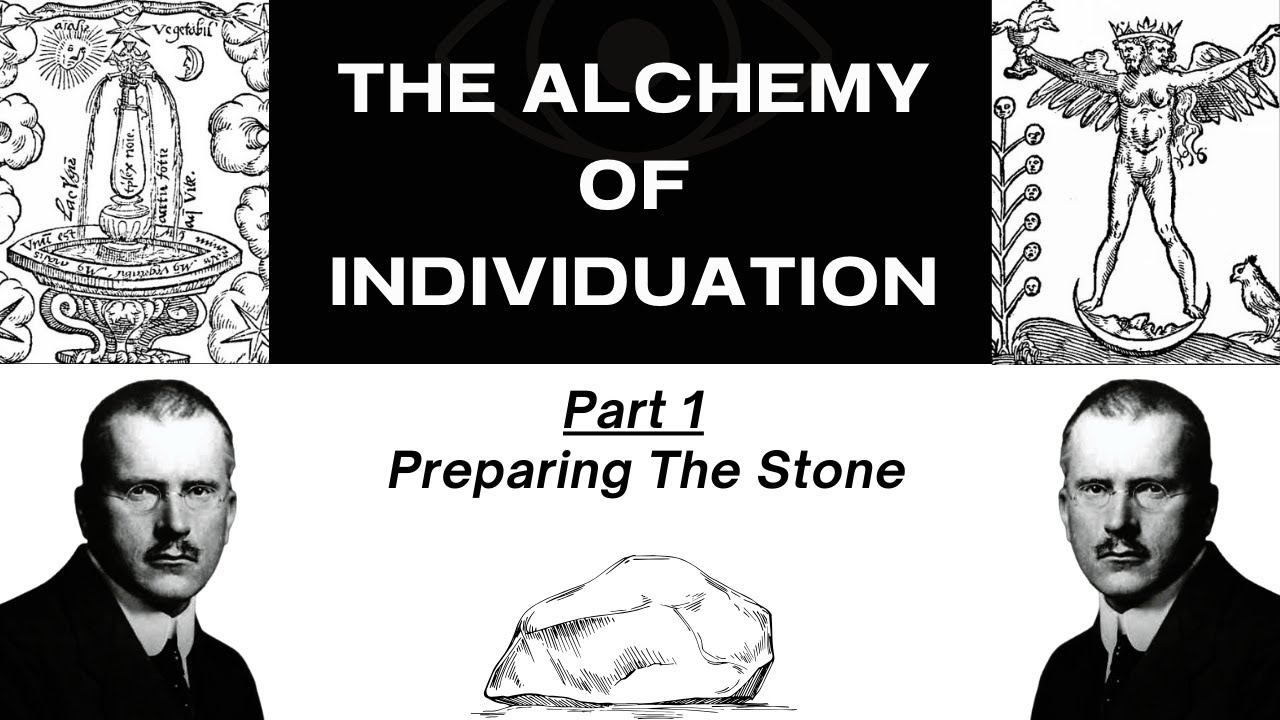
Finally, we arrive at the concept of individuation, which Jung considered the ultimate goal of human existence. Individuation is the sacred process of integrating all aspects of ourselves—our conscious mind, unconscious desires, anima, animus, shadow, and projections—into a complete and authentic whole. This journey is deeply transformative and spiritual, as it requires us to face and embrace every part of who we are, both the celebrated and the hidden.
The people we can't stop thinking about often serve as pivotal guides on this path; they act as mirrors. Reflecting the qualities we need to confront the strengths we have yet to develop and the challenges we must overcome, these individuals—whether they inspire us or provoke us—reveal unacknowledged parts of our inner world, pushing us toward deeper self-awareness and growth. In this light, the person occupying your thoughts might be playing an essential role in your individuation; they may be bringing to the surface qualities or desires you've suppressed, or they could be encouraging you to explore parts of your identity you've yet to embrace.
Individuation is not about striving to become a better version of yourself; it is about uncovering and embodying your truest, most authentic self—a self that harmonizes both light and shadow. From this perspective, the experience of obsessively thinking about someone transcends mere emotion; it transforms into a spiritual journey—one where the person becomes a catalyst for self-discovery. They are a teacher, guiding you to uncover hidden truths, foster inner growth, and cultivate greater self-acceptance.
By viewing these persistent thoughts through Jung's lens, you can begin to see them as tools for profound reflection and transformation. Each thought becomes an invitation to explore your inner depths, integrate the fragmented parts of your being, and align with your higher self. In this process, you open the door to spiritual fulfillment, finding harmony not only within yourself but also in your connection to the greater universe.