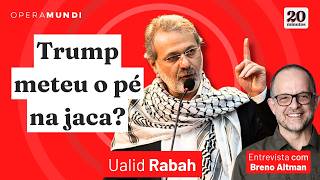
Good morning! Today is March, the fifteenth of twenty-six. My name is Breno Altman and another episode of the program Vinte Minutos is starting.
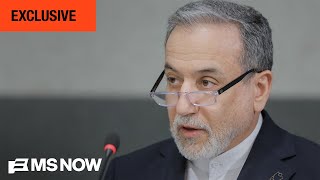
Mohamed Marandi is one of the most well-known intellectuals and Iranian political analysts. Professor of English Literature and Studies on Orientalism at the University of Tehran, Marandi became widely known for his frequent participation in international media, in which he presents the strongly critical perspective of Western Western policy about the Middle East. Over the last decade, Marandi also acted as an analyst and advisor integrated into Iranian diplomatic circles, including during negotiations related to the nuclear agreement.
In the midst of the current war involving the United States, Israel and Iran, his analyzes offer an important window to understand how Teheran interprets the origins of the conflict and the perspectives for the ongoing war. This interview will be live, but in English, for our audience to be able to participate and send questions through the Super Chat. After its exhibition, it will be subtitled in Portuguese so that more people can watch it with tranquility.
Stay with us, let's get started! Good morning, Mr Marendi. Thank you very much for accepting our invitation.
It's an honor to have you on our program. Thank you very much for inviting me. It's an honor being on your program.
How do you regard the strategic objectives, targets of the United States and Israel in launching military operations against Iran at this moment? I think the Israeli regime and the Zionists in general, that their situation in the United States is weakening because young Americans have come to deeply dislike the Zionist regime. And polls show that very clearly.
Their supporters are now basically much older people and those closer to the MAGA base. So they feel that time is not on their side, especially after the genocide in Gaza has made people across the region and across the globe despise them. I think they feel that they need to attack more and more countries as soon as possible before the momentum disappears.
And I think the Epstein files release or the partial release of the Epstein files in the United States has made things a lot worse for them. In addition to that, I think that Trump is also feeling a lot of heat from the Zionists because first of all, they are his major donors. And second of all, And this is of course speculation, but it is quite possible that he, they have evidence of wrongdoing in the Epstein files, the Israelis, and they are using that as leverage.
So I think it's a combination of things, but ultimately this is a vicious assault. on a sovereign nation that has never launched a war against any other country in the last three hundred years. And this is the third time that the United States is attacking Iran.
During the war when Saddam Hussein, with US support, attacked Iran, the Americans got involved and fought and attacked Iran in the last months of the war. And then, of course, as we all know, eight, nine months ago, The United States and the Israeli regime launched a blitzkrieg attack on Iran as we were negotiating. So this is the third time that the United States does this to Iran.
But this is the most vicious one so far because of the type of airstrikes that are being carried out on cities day and night. How has Iranian society reacted to the US and Israeli attacks, which occurred only a few weeks after the January protests in Iran? By the way, what's your assessment about this protest?
Is it true that the Iranian government killed more than forty thousand people, as is told by many Western voices? No. number is completely fabricated.
In general, anything that comes from Western media about Iran should be taken with a grain of salt, as they say in English. But I would say with many kilos of salt. The riots, the very violent riots that we had in early January, they were instigated by the United States.
and the Israeli regime, three thousand one hundred and eighteen people died and all of them have their IDs declared, all of them have their addresses declared. It is clear as day how many people died. Among them were three hundred police officers or security officials and many hundreds were people who were the terrorists who had weapons and who were killing people.
And the rest were people who were killed by the terrorists because they wanted to maximize death and destruction. The objective was to give the United States and the Israeli regime an excuse to bomb Iran. And this is evident.
There is much evidence about this. First of all, The U. S.
Treasury Secretary said that the United States conspired to crash the currency to cause protests. The protests after the crash of the currency were small and there was no violence. But after two days, we saw these very violent rioters come in.
The former head of the CIA, Pompeo, said that the Mossad was on the ground in Iran. Israeli television, Channel Fourteen, said that the Mossad was involved and they brought in weapons, the weapons that killed hundreds of police officers. I have tweeted the documents.
If people go to my Twitter account, they can see the documents of where the Israelis said this. They said this themselves. Pompeo later in an interview on Channel, I don't remember if it's thirteen or fifteen of Israel, said that the CIA was on the ground as well.
And of course, Channel Fourteen News, which said the weapons were brought into Iran by foreign intelligence agencies, that channel, Channel Fourteen of Israel, is close to Netanyahu. And finally, Mossad itself put out a Persian language statement saying that they were on the ground in Iran. So for them to claim that these were just peaceful protesters is Western media being obedient to power.
But after the riots, the deadly riots on January the eighth and ninth, where these people destroyed hundreds of schools, hundreds of places of worship, hundreds of Ambulances and fire engines or fire trucks. Why would they destroy fire trucks? Why would they destroy ambulances?
Because they wanted the casualties to go up. There's a lot of evidence of this. And again, people can go to my Twitter account.
After these two days, people went to the streets on January the twelfth across the country against the rioters and against the foreign influence. and against the foreign intervention. And those people who protested in support of the state and state institutions and the constitution were in the many millions, but Western media was silent about it.
And weeks later on the anniversary of the revolution on February the eleventh, we even had bigger demonstrations in support of the state and against terrorism and against the United States and Israel. But all of that aside, during the last two weeks, people have been on the streets every day across the country in support of the armed forces, in support of the government, and in condemnation of the United States and the Israeli regime. And they were bombed.
The Israelis and the Americans used missiles to bomb the people on the streets. And I have just yesterday and today posted video I posted videos showing them bombing the large crowds of people. And in one case, a young lady was murdered by these American and Israeli bombers.
Mr Marendi, how are the political and separatist groups accused of having acted violently during the January riots behaving now, including left-wing groups that supported the Islamic revolution in nineteen seventy nine and afterwards they passed it to opposition? How are these groups acting right now after these US attacks against Iran? We have many political factions in Iran.
As you know, the current president is from one political faction. The previous president was from another political faction. And the president before that was from yet another political faction.
And the president before that was from a different political faction. So we have many political parties, many political orientations. many much diversity but the body politics of iran are not supportive of western intervention and are not supportive of violence those groups that you may be alluding to that are supposedly left-wing are not left-wing they are in they are funded by the united states government if you mean the terrorist organizations that are based in Europe or that are based in the United States and that carry out terrorist attacks in Iran, they're funded by the United States.
They are closely intertwined, whether it is the Mujahideen-e-Khalq or whether it is the Qomole or whether it is the Monarchists or whether it is other such terror groups like the Jaysh al-Adl group, which is a something is similar to ISIS in many ways, all of these are funded by Western intelligence agencies. But overwhelmingly, Iranians are united against . But of course, in Iran, we have many different parties.
We have many differences. but those differences exist within the broader constitution and in opposition to Western intervention. Many Western intellectuals portray Iran as a theocracy imposed by the nineteen seventy-nine revolution after it was alleged betrayed by Islamic groups.
Do you agree with this interpretation? No, I don't even quite understand what they mean often when they say theocracy. Iran is an Islamic Republic.
And of course, religion is embedded in the constitution. However, our president is a heart surgeon. Our speaker of parliament is a professor at the University of Tehran, my university.
The head of the supreme national security council the chair of the supreme national security council dr larijani he is a another professor at the university of tehran he is actually a professor in western philosophy and if you go and look at parliament overwhelmingly the parliamentarians are not religious scholars they're people they're engineers they're uh Doctors, they have degrees at ordinary university. A handful of them are religious figures. Or, for example, if you look at the cabinet, the government cabinet, you do not see religious figures.
The president runs it. His first vice president is another professor at Sharif University, which is our president. Let's say the equivalent of a technical, it is a technical university or equivalent of, let's say, MIT or Tsinghua in Beijing.
So these Western narratives about Iran are basically created to demonize the country. Religion is a part of our tradition, but if anyone travels to Iran, it is an ordinary society like any other. The reason why they hate Iran has nothing to do with what the president looks like.
It has to do with the fact that Iran is independent and that Iran supports countries that are under pressure from the West, whether it's Cuba, whether it's Venezuela, whether it was the resistance in South Africa against apartheid, or whether it is Palestine. But what angers them the most is Iran's opposition to ethnosupremacism, apartheid, ethnic cleansing, and genocide in Palestine. That is what they do not tolerate.
Otherwise, the United States tolerates family dictatorships across our region. But Iran, which has elections for all layers of governance, is antagonized. that antagonism is because of Iran's policy of supporting the entities that are under the pressure of empire.
Despite the death of important Iranian political and military leaders, including Supreme Leader Ali Khamenei, does the Iranian state continue to function normally? Yes, without a doubt. Ayatollah Khamenei was martyred on day one.
And he, by the way, refused to leave his office. They asked to move him to a safer place, but he said that many Iranians do not have a place to go to, and I will not leave because they cannot leave. After he was murdered, in accordance with the constitution, we had three people ran the country until a new leader was chosen.
and then now of course we have a new leader but during this period the armed forces as i'm sure you've seen has been striking the israeli regime in retaliation day and night and it has been striking u. s assets in the persian gulf region day and night and ordinary people despite the airstrikes despite the murder of many children at school ordinary people have no problem purchasing food or going to supermarkets and buying what they need. So what has changed in society is the fact that they are targeting cities.
On day one, as I hope all of you know, they murdered one hundred and sixty eight little girls at a school with their with two dozen or so teachers and school staff almost two hundred people they did that on the very first day and because of that the government has shut down all schools and universities and to protect the children and they've also asked people who do not have work important work to do in tehran to leave the city if they can to prevent too many people from being killed because the americans and israelis bomb schools they bomb hospitals they they they have bombed the red crescent society which is a sister organization to the to the red cross they struck its main building plus affiliated buildings they've bombed uh the iranian national tv and radio they bombed many many thousands of apartments and often they carry out double tap attacks in one of my friends was witness to one of these they bombed a square in tehran killing many people then when the first volunteers went to have they bombed the second They bombed it for a second time to kill the people who were helping. They've been doing this many times in the last two weeks across the country. They have been using double tap attacks so that more people, more innocent people can be murdered.
And of course, I have one personal experience. A very good, a very close friend of mine, his brother-in-law has a business where and he was sending goods from one city to another. He hired two trucks to take those goods.
The Americans bombed them and killed the two drivers. They were taking ordinary products for people. So the United States and the Israelis, because they failed to defeat the Iranian military, because they failed to stop Iranian missiles and drones, they're taking their revenge on women and children.
Do you believe that Washington and Tel Aviv underestimated Iran's capacity for retaliation? Yes, I have no doubt about that. And I think a lot of it has to do with Orientalism and racism and hubris.
They assumed that since they are Western and we are non-Western, that we would easily collapse in the face of their power And they completely underestimated the situation in Iran. They completely underestimated the steadfastness of Iranian men and women. And they completely underestimated the capabilities and heroism of the Iranian armed forces.
That is without a doubt, because as your audience most probably knows, Trump himself had said on day one that we are winning and it will be over very quickly. And since then, I think it's been ten times at least since he declared victory. But it has not gone to plan.
We do not want this war. I want to remind your audience, we did not start this war. Iran has not started any war since the revolution.
In fact, Iran has not started any war in the last three hundred years. But the United States and the Israeli regime have attacked Iran. And for Iran, this war is an existential war.
And it is a combined war. It is a combined force. The Americans are, of course, the bulk of the strength.
And the Israelis have their own weapons, which, of course, have been given to them by the Americans. Israel is a very weak and vulnerable and small country. The only reason why it has any strength is because the United States helps it and the Europeans help it.
And they help them carry out genocide and war and attacks. But for this, they've also used, the Americans have used bases across the Persian Gulf. And that is why Iran is striking the Persian Gulf.
Because these Arab family dictatorships in the Persian Gulf have assisted the Americans in carrying out death and destruction against the Iranian people. But even though the Iranians are the victim, they continue to be restrained. Iran is not destroying tankers or destroying oil and gas facilities in the Persian Gulf, even though these countries have been helping the Americans carry out war against the Iranian people.
How do you assess the military balance in this conflict? Does Iran possess the means to sustain a prolonged confrontation? Yes, Iran is planning for a very long war.
And it is planning to continue fighting until after the US midterm elections in November. And some say that it could take longer than that. Iran has been, you have to remember that Iran has been preparing itself for an eventual US attack for well over two decades.
After the United States invaded Afghanistan in two thousand and two and then invaded Iraq in two thousand and three. And of course, they called Iran the axis of evil and Bush and Obama kept saying Iran of towards about Iran that all options are on the table. Since two thousand and two and two thousand and three, Iran has been preparing its military defenses and offensive capabilities or put for a potential war with the United States.
So Iran has many underground missile bases and drone bases, and the drones and missiles are Iranian made. They're Iranian technology. So the missiles that you see strike the Israeli regime or strike American assets in the Persian Gulf or the drones that strike them, they're all Iranian made.
In fact, most of the missiles and drones that the Iranians are using right now are the very old missiles and drones. They're still not using the new ones. They are saving the newer and better technology for later.
Iran has lots of drones and lots of missiles, and they are deep underground, and their factories to produce drones and missiles are deep underground. And that is what is making the Americans so angry. That is why they're bombing cities, because they're frustrated about the fact that they cannot stop the production and the usage of drones and missiles, so they take their revenge on ordinary people.
Does Iran have the economic conditions to sustain a longer war? Well, that is a question that exists for the United States. Because with the rise in the price of oil, because of this crisis that they and the Zionists have created, Trump, Netanyahu, and the Zionists, the price of oil and gas continues to go up.
And consumers across the world, and including in the United States, are facing greater difficulty. And this, in my opinion, if Trump and Netanyahu continue this war for much longer, it will create a global economic crisis. So first and foremost, this question should be addressed to Trump.
But Trump, the problem with him is that he is very much bound to the Zionists. In the case of the Iranians, without a doubt, that war is difficult. War kills people.
And they've killed many Iranians. As I said, they killed one hundred and sixty eight little girls on day one, just in one attack. But the people in Iran recognize that we are the victim, that we did not start this war, that we did not slaughter these children.
And so they are showing great resilience. Hopefully, this war will not last very long, but Iran is prepared for a very long war. So since it is an existential war for Iran, even though it is a war of choice for Trump, he is doing it for the Zionists.
But since it is an existential war for Iran, ordinary Iranians recognize that they have to be strong and to have patience. In your view, is the war expanding into a broader regional conflict? Yes, I think that the war has been expanding.
We see the resistance in Iraq, the neighbor of Iran. The resistance is fighting the Americans and American proxies now. And Yemen has also said that they will enter the war.
And also, since US assets and planes and weapons and missiles are being used and fired and flown over neighboring countries, this conflict has spread to these countries too. Kuwait, the United Arab Emirates, Saudi Arabia, Bahrain, and Qatar. These are, except for Saudi Arabia, very tiny countries.
But they all have big American bases, and they are all allowing the United States to use their airspace. They're allowing them to use their bases. And they're allowing them to use areas outside their bases.
And therefore, Iran is retaliating and striking those U. S. assets.
So the whole region is getting more increasingly involved. And of course, it is quite possible that it could grow even larger in the not so distant future. What role are Iran's regional allies, often described as the axis of resistance, like Hezbollah and the Houthis, what role are these allies playing in this current phase of the conflict?
From the Iranian perspective, how closely linked are the struggles in Gaza, Lebanon and Iran itself? Well, the axis of resistance was created to support the Palestinian people. and to prevent Israeli aggression.
Remember, just recently, the US ambassador to the Israeli regime said that if the Israeli regime takes the entire region of the Middle East, that it's not a problem. This is the real policy of the United States and the West, to allow the Israeli regime to expand this racist regime is also allowed to carry out genocide because the ambassador also said that this is the most moral army in the world his definition of morality means genocide is fine as long as israelis do it so the axis of resistance was created to block this genocidal and racist regime And now the axis of resistance is cooperating with one another. Hezbollah, of course, there is fighting between Lebanon and Israel as we speak.
Hezbollah is fighting against the Zionist regime. And Sadrullah or Yemen, they have said that they will soon enter the war. The resistance in Iraq is now striking American assets and targets in Iraq.
So all of them are cooperating with one another as they've been cooperating with each other since the genocide in Gaza began. Is the coordination between Hezbollah and the Iranian government? Yes, they've always been very close and very friendly and they are allies.
Hezbollah makes its own decisions. Iran makes its own decisions. Ansarullah or the Yemenis or what the West likes to call the Houthis, they make their own decisions.
But they all recognize that this war is a conspiracy against the entire region. This is a war where the Israeli regime, the racist Israeli regime, wants to dominate the entire region. And therefore, it is an existential threat to the entire region.
And the fact that Turkey and Jordan and Egypt and the oil and gas-rich family dictatorships in the Persian Gulf do nothing is because their governments are bound to the West. They are in the American camp. But Yemen, the resistance in Iraq and Lebanon, like Iran, they're independent.
And they are willing to make sacrifices to stop the genocide in Gaza. So they're allies, they're independent, but they all recognize that this is an existential threat to the people of the region, what the American regime and what the Israeli regime are doing. Many analysts argue that the United States seeks to defeat Iran in order to weaken China and Russia.
Should this war be seen as part of a broader global confrontation? Yes, no doubt. No doubt.
What the United States is doing in Latin America as well is also, I think, a part of this broader agenda. the United States and the Western empire are on the decline and they see countries across the global South growing. And as they grow, they become more independent and assertive, whether it's in Latin America or in Africa or in Asia, it doesn't make a difference to the United States.
So they seek to, reimpose their power and authority that they had in the past. And that is why they attacked Venezuela. That is why they're strangling the people of Cuba.
And that is why they're waging war against the Iranian people. They want to also weaken, as a result, the Chinese. Because if the Americans have control and the Zionists have control of the oil in the Persian Gulf region through their domination, then that makes China much more vulnerable.
And of course, it makes Russia more vulnerable if the United States controls the south of Russia. So this is, of course, there is also a broader agenda here as well, a global agenda. How have Russia and China reacted so far?
And what limits shape the support for Iran? The Russians and the Chinese are cooperating with Iran, and the relationship with these two countries is very good. We have very strong economic relations.
We have strong military relations, and we have strong intelligence relations, and we have strong political relations. So the relationship between these three countries is very good. What has been the reaction of the Arab world, particularly the Gulf monarchies, to the conflict?
The streets across the Arab world, all indications show that ordinary people support Iran. And you can see that from their responses on YouTube and sometimes on the streets. and their responses to, let's say, videos on YouTube by Al Jazeera or Al Arabiya, which are Saudi and Qatari.
The governments, of course, are more or less bound to the United States. Arab countries are controlled by the United States. And the only independent countries, they were destroyed by the United States, meaning Libya and Syria.
But on the streets, People support the resistance. And especially since the previous war, where the Israeli regime and the Americans launched against Iran eight, nine months ago, Iran's popularity and the popularity of the axis of resistance has been growing. And during this war, it has grown even further.
What would be, Mr Miranda, a realistic diplomatic path toward the escalation of the conflict? Iran will demand compensation and Iran will demand that the facts on the ground change so that the United States will never be able to attack Iran again. We will not accept a situation where the American simply and the Israeli regime simply goes back and rearms itself and attacks Iran again.
So Iran will expect these Arab family dictatorships in the Persian Gulf. to prevent their territory from being used against Iran. And the compensation will probably have to come from these countries that allowed the United States to strike.
But in addition to that, the Iranians have expectations that the genocide in Lebanon and in Gaza will also be halted. Do you believe the international system, especially institutions such as the United Nations, has any real capacity to contain the escalation of this war? No, the United States has destroyed international law, even though they created the international law system that we have, which benefits themselves more than anyone else.
They created all of these international bodies in order to maintain their own hegemony and domination. But now they do not even have any respect for the institutions that they themselves created. very useless, and basically under the influence of the United States and its Western allies.
And it does not profit and help the global majority. So the Americans have destroyed international law. They've imposed the law of the jungle.
And that is why countries across the global south have to rethink Their policies do because the United States has shown that it is willing to murder leaders. It is willing to murder children. It is willing to invade countries.
It is willing to kidnap leaders. It is willing to strangle societies to get its way. And that is why countries across the global majority, they have to find new partners, become less reliant on the United States.
strengthen their defenses. And I think civil society should also have a role. People should start boycotting U.
S. goods or goods that are associated with the United States and its allies, its European allies. They should buy more indigenous products or they should buy products from countries from the global south.
Everyone has to play their part. But the Global South has to be less dependent on the West and has to be more protective of itself, countries across the Global South, in order to prevent it from doing what it has done to Cuba, Venezuela, and what it is in Syria, in Libya, in Iraq, in Afghanistan, and what it is trying to do against Iran, but failing. How has the Palestinian question been affected by the war?
How the Palestinian question is linked to this war, Mr Mehrendi? Well, it depends on the outcome. The fact that the Israelis and the American regime failed during the Twelve Day War eight, nine months ago, that weakened the United States and Israel.
And the reason why the United States has mobilized all of its assets across the world to fight Iran is to change the balance and to reinforce U. S. domination.
But so far that has failed. The failure of the United States and the Israeli regime is across the global majority. And of course, the people of Palestine who've been massacred and slaughtered for over seven decades now, since nineteen forty eight.
They, too, like the rest of the global majority, benefit from U. S. failure and Israeli regime failure.
A curiosity, Mr Mirandi, if you allow me, how did a respected professor of literature become a renowned geopolitical analyst and moreover an advisor in nuclear negotiations? Well, I am not a renowned geopolitical analyst. I'm just a teacher at the University of Tehran.
Those who say I'm a renowned analyst, they're being very, very kind to me. I do not consider myself to be that significant at all. And the reason why I have, and at the nuclear negotiations, I was a media advisor.
I did not agree to be anything more than a media advisor. I am involved because since my youth, I have witnessed the nature of empire and how the U S empire crushes people during when Saddam Hussein invaded Iran, he did it with Western support and the West gave him chemical weapons to use against Iranians. And I survived two chemical attacks.
So I have firsthand experience about how the United States, the Germans, the Europeans are willing to do anything. to maintain their supremacy. And I have always advocated for the Palestinian people, the Southern Africans.
When I was a young person, I was very young, but I was a young activist against apartheid. And of course, I've always, I've traveled repeatedly to Venezuela and to Cuba to give my support and to give my voice to support the people of these two countries. So I feel that as I'm more of an activist, I am not an expert.
I'm not a great geopolitical analyst. I'm an activist who feels that I have a responsibility as a human being to do what is right, even though it may be dangerous, but it is my responsibility and god willing i will continue to do that professor mirandi we have just ten minutes i know you have another uh questions to solve today but i have we have we have received many questions from our audience i have chosen just three uh in order to respect your time uh the first one is for a bike cavalcanti Professor Mehrendi, is there any Iranian economic project involving Afghanistan as a land route to China, oil or gas pipeline? Not a gas pipeline, but there are discussions of how to use Afghanistan to help strengthen the Belt and Road Initiative.
So there's talk of one route from Pakistan to Iran, to China, which to develop. There's talk of Central Asia from Iran through Turkmenistan and other Central Asian countries to China. And of course there's Afghanistan too.
But because of the problems in Afghanistan, the extreme poverty that exists there, and because of the conflict between Afghanistan and Pakistan right now, This is slow, but Iran does trade with Afghanistan, and hopefully in the years ahead, things will get better in that country. By Giovanni Dietrich. Professor Mirandi, how is life in Tehran?
And have the air defenses been destroyed? We stand with the people of Iran. Stay strong.
Thank you. They do bomb Tehran. Sometimes they carpet bomb it.
They bomb very crowded neighborhoods and kill innocent people. Sometimes it's in the morning. Sometimes it's in the evening.
Sometimes it's in the middle of the night. You never know. There are air defenses.
The Iranian air defenses have been very successful against drones. And drones have been used a lot, but they have been downed in many numbers. And that has caused a big problem for the Americans and the Israeli regime.
But with regards to air defenses, the United States has brought literally its entire capability to attack Iran. And of course, the Israelis are there too. So the Iranian air defenses are not nearly enough, but they do.
. . their work.
They still function. Iran has their defenses, but they're still capable of striking. But Iran's responses are what are more important.
Iran's offensive capabilities are very enormous, and that has counterbalanced the aggressive assaults with their air force. So the best response that the Iranians are giving is a strong offense. By Tiago Bambini.
Good morning, Breno. I would like to know if questions are appropriate, whether the IRGC considers the possibility of the Zionist entity using nuclear weapons in Iran. I think the very fact that your good viewer asked that question shows how immoral and criminal the regime is.
No sane person on this planet would ever contemplate using nuclear weapons. But the fact that so many people are asking this about the Israeli regime and the Trump regime simply indicates how abnormal, immoral, and inhumane these regimes are, both in Washington and in Tel Aviv. I cannot say for certain what happens in the days and weeks ahead, but without a doubt, if anyone uses nuclear weapons, the world will turn against it in a different way.
But also, it would cause all countries to start seeking nuclear weapons. And in today's world where we have AI and technology is moving forward so fast, developing nuclear weapons would be much easier than in the past. So if the United States and the Israeli regime move in that direction, they will be encouraging everyone else, including Iran, to develop nuclear weapons.
By Rinaldo Freitas. Good morning, everyone. Breno, could I ask how he assess the current relationship between Brazil and Iran and what he expects from the Brazilian government at this time?
Well, my hope is that people across Latin America, and of course Brazil in particular, a country which I visited once, a very beautiful country with very friendly people, my expectation is that the government distance itself from the Israeli regime and countries across Latin America to move to break off ties with this brutal regime and to move away from the United States to strengthen ties among other countries in Latin America and across the Global South so that the United States would be marginalized. But my hope is also that activists will demonstrate, but also they will push for boycotts. And I hope government agencies to purchase less from aggressive regimes and do business more with countries across the Global South, which that would, I believe, strengthen Brazil in the long run as well.
Professor, I have another curiosity. Who is your favorite English language writer? I don't know.
I don't know. I can't think of anyone in particular that I like. But when I was young, I was deeply influenced by a French novel written by Victor Hugo, Le Miserable.
And that, I don't know if it's my favorite novel, but it had a deep influence on me. And in English? There are many novels that I've read in English.
It's difficult for me to say. Anything that I say would be misleading. Don't you have a preferred writer in English?
Not really. There are many, both British novelists that I've always liked and there are American novelists that I've always liked. I know very little about Canadian and Australian literature.
I know some African literature, but I can't think of a favorite. There are many, many good writers. I should hopefully.
. . I'm an old man now, but if I had the opportunity, I would learn Portuguese and Spanish and learn a bit more about the novels in your part of the world.
Because the world of tomorrow is a world where the global South becomes stronger and the West no longer dominates. And hopefully in the coming years, we will have many young scholars in Iran who study Brazilian literature and you could ask them which Brazilian novelists they like the most. And which Iranian writer could you suggest to a Brazilian like me to read a first Iranian novel?
Again, that would be very difficult because they are very diverse. What I would suggest you to do is that there is an old book that's actually not a novel. But it's written by two people who worked in the White House about Iran.
And they are not Iranian. They worked in the White House. In other words, they were in the center of power.
It is called, and I don't think it's been translated into Portuguese. And the book is around eight, nine years old. But it was a very good book.
It was called Going to Tehran. And it was written by Flint and Hillary Leverett. Flint is Catholic, Hillary is Jewish.
And both of them worked in the White House. They wrote a very just and fair book. I don't agree with everything in it, but it is a very good book.
If people could find that book and translate it into Portuguese and also Spanish, I think it would be very useful for young people to see that Western propaganda on Iran is nonsense. And the biggest evidence, That what the West says about Iran, the biggest, best evidence to show, to put forward, to show that Western propaganda about Iran is complete nonsense, is the fact that the West supports genocide in Gaza and Iran opposes genocide in Gaza. The West supports ethno-supremacism and Zionism.
Iran says everyone in Palestine, Jew, Christian, Muslim, must be treated equally. Iran is the bad guy. Iran is demonized.
And the West considers themselves to be the supporters of human rights. They kill women and children. They kill young Iranian girls.
They hunt. And Western media is not outraged. And the US government tries to pretend that it wasn't their fault.
Yet they speak about women and human rights. Don't believe anything that you see from the Western media. And hopefully in future, Latin America and Iran will develop closer ties and more people, more young people from Latin America will visit Iran and they'll see the truth is very different from what the West is telling them.
A last question from our audience by Mina Mini What Network. Does Professor Mavrandi think there is a Pax Judaica proposing all of that, like somehow destroying our axioms and all the necessary things? His personal perception and the overall perception of the Iranian regular people, please.
Thanks. If I understood the question correctly, I think we have to make a sharp distinction between Zionism and Judaism. Today, many, many young Jews are opposed to the Zionist regime.
In Iran, we have Jews. We have synagogues. We have kosher restaurants.
But the Jews in Iran are opposed to Zionism. Many Christians are now moving away from Zionism. So Zionism is something that we should separate from Christianity and Judaism.
Just like ISIS and Al-Qaeda have nothing to do with Islam. They are creations of Western intelligence agencies. What we need to have is a world where all human beings are equally human.
And that is something that we all with all our energy and resources. By the way, Professor Mehrendi, I am an anti-Zionist Jew. So you are a living example of what I have been saying, and hopefully if you can visit Iran, I'll take you to visit our synagogues, and I'll take you to a restaurant to have kosher lunch or dinner.
Thank you very much for your invitation. Professor Mehrendi, I'd like to thank you very much for your time and for this very, very important conversation. Thank you very much for having me.
It's a great honor. And I thank all for having the patience to listen to me. Thank you very much, Professor Mehrendi.
I also thank everyone who watched this program, especially those who were able to make financial contributions to our website and to the Opera Mundi channel on YouTube. Without you, our work would not be possible and would not make sense. A big hug to all of you.