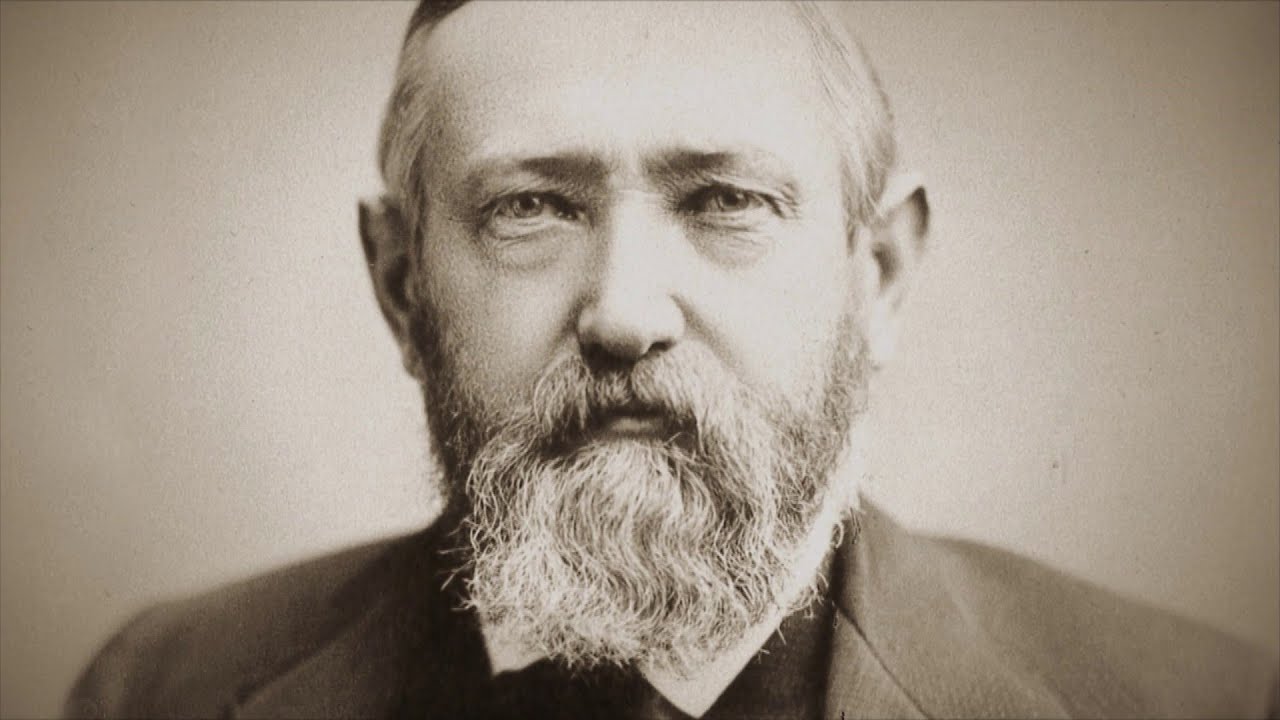
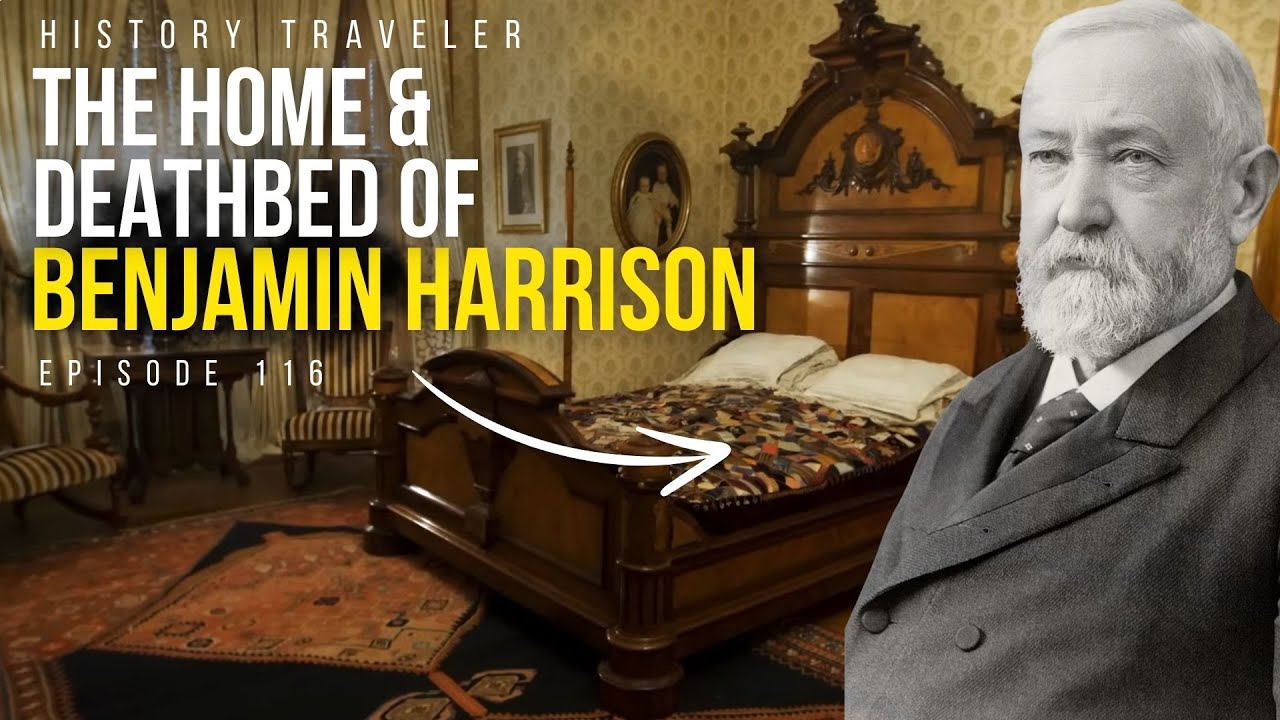
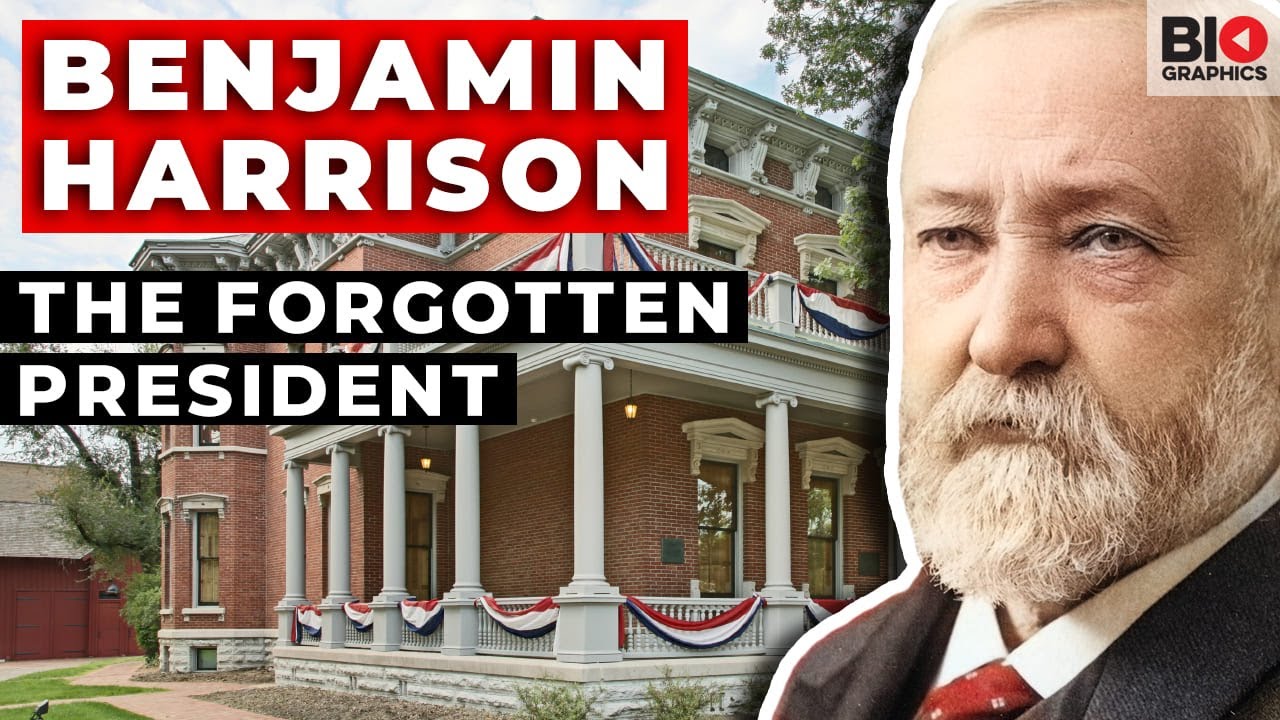
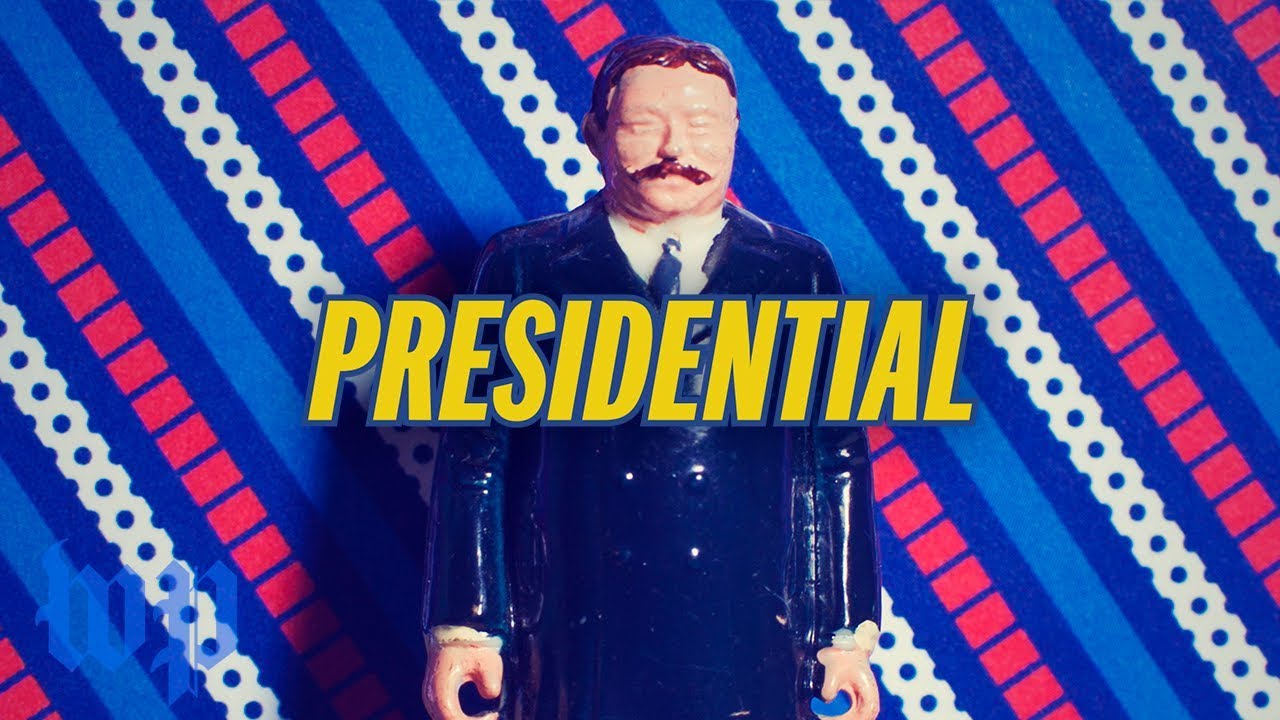
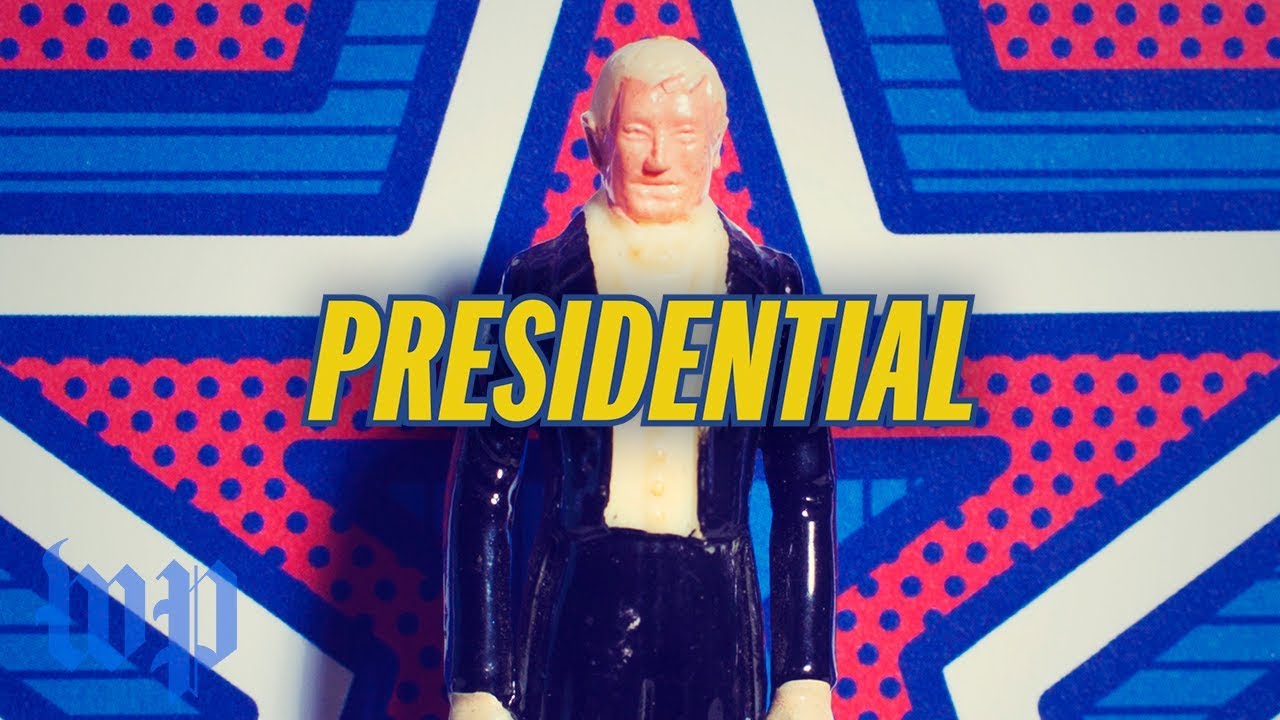
It's that time in the American presidency when we have reached the age of recordings, and our subject this week, Benjamin Harrison, is the first president whose voice we can hear. It sounds like this: not very clear at all, but it's a start. This was recorded on an Edison wax cylinder sometime around Harrison's first year in office in 1889.
Also in this year, the Coca-Cola Company was created, and the first jukebox went into use in San Francisco. It's the end of the 19th century, and technology and industrialization are reshaping America. Amid all this excitement and the many benefits of innovation, there are also new fears and questions emerging among citizens that presidents have to address about who might be left behind in this process and what in our country might be getting destroyed.
I'm Lillian Cunningham with The Washington Post, and this is the 23rd episode of Presidential [Music]. Another sign of presidential infamy [Music] [Applause]. Benjamin Harrison was born in Indiana in 1833.
He was one of 13 children, and he served as president from 1889 until 1893, right smack in the middle of Grover Cleveland's two terms. The history books today barely even mention Benjamin Harrison, though, and when they do, the write-ups are usually not too praising. There is one history book I came across that wrote that Harrison would probably have been better liked and better remembered today if he'd at least died a month into office, like his grandfather, the ninth president, William Henry Harrison, did.
So, the challenge I set for myself for this episode was to find at least a couple of the overlooked ways that Benjamin Harrison did leave an imprint on our country and on the presidency. Personally, I ended up most fascinated by the role that he played in land and wildlife conservation. We'll get to that a bit later in the episode, but first, I decided that the best way to neutralize the assumption that Harrison was just a bore would be to invite a huge Harrison enthusiast to come along with me when I talked with the historian Michelle Crowell at the Library of Congress.
That enthusiast who came along with me is The Washington Post opinion columnist Alexandra Petri, who you may remember from our episode about William Henry Harrison and his campaign song, "The Great Comotion. " That William Henry Harrison episode was just kind of a teaser for Alex because her real love is Benjamin Harrison. "Good, basically my week because I like cold," my grandparents said.
"By the way, guess what I'm getting to see on Friday? It's Benjamin Harrison's papers! " And they're like, "You're kidding me!
We got to tell your aunt. " So we had this family discussion, and they're all rooting for this. Do you want to tell a little bit of just backstory on how you and your family are such big Benjamin Harrison fans?
"Well, basically, I think every state has one president that leaves a legacy, and it's totally different for each state. You know, like Wisconsin, but Indiana has Benjamin Harrison, or as he likes to be called, General Harrison, because he wasn't all about being the president. And so, in Indianapolis, one of the many sites is the Benjamin Harrison House, which is full of such delights as his electrical wiring.
You can see his cane, and you can see his grandfather clock. He's sort of a local hero, and since half my family on my mom's side are all proud Hoosiers, Benjamin Harrison is also something that they are proud of. So I've heard a lot more than I think you would expect at your average family Thanksgiving about Benjamin Harrison's presidential accomplishments.
It turns out he did a lot, including establishing national parks and passing the Land Trust Acts. " So, I've asked Michelle this basic question for all of the presidents, and maybe I'll just ask you both in the same room: what do you think it would be like to go on a blind date with Benjamin Harrison? "Well, shaking his hand was described as like holding a dead fish wrapped in brown paper, so I'm not expecting much out of this date, to be honest.
As a young man, his only vices were cigars and cucumbers, which sounds like when you list them together it implies something that I don't think it was meant to imply at the time. They're a really bad combo, but I think like his father wrote him being like, 'I hope you're not eating more of those cucumbers,' because this was back before they had burpless cucumbers, and they assumed that your body was basically going to explode if you consumed cucumbers incorrectly. So given that those are his two hobbies, I'm just not sure the date is going anywhere too exciting.
" "Anything to add, Michelle? " "I actually have been thinking about this, and Harrison strikes me as someone who would fit that stereotype of the kind of person you'd want to bring home to your parents. He was industrious, hard-working, came from a distinguished family, was a lawyer, and he doesn't have many vices.
He didn't drink, and when he was a young man he didn't dance. He was very religious, very focused on duty, public service, and helping his family out. To some degree, if those are qualities that make him a good, sturdy blind date, then he would be great to go out on a date with.
Personally, he wouldn’t be my first choice, but he is very impressive for your parents. You'd bring him home, and you’d say, ‘This man served in the Civil War; he quit his job in the government to serve in the Civil War; and his grandfather was a president and a war hero. ’” A lot of the descriptions I've read, though, he did really come off as a stiff.
I mean, that seems to be the description people give of him; it's a description that comes out quite frequently and is used as a political tool by his rivals. Another one of the political rivals says he is narrow, unresponsive, and oh so cold. The town is full of grumblers; nobody appears to like him, though, of course, many tolerate him for what he can provide.
Then he says something, and somebody else refers to him and says it's like talking to a hitching post to speak with him again—political rivals, so you have to take that with a grain of salt. But that's his reputation: that he's cold, unresponsive, and sort of on the boring side. Other people will point out that with his family, he’s incredibly loving.
He does have dear friends; he can be a different person. Politically and socially, he's not one of these hail-fellow-well-met types; he's not a backslapper, he's not that kind of politician. But when you get him within a family circle or with people he’s comfortable with, he generates a lot of respect, friendship, and love from those people.
I recall one thing about Harrison later on: apparently, he loved kids and dogs. The tag line there is that dogs would follow him home because they sensed he was a dog lover. There were a couple of stories from back in Indianapolis where he'd be going to the law office, and he would be kind to some stray dog or give it a nice look or something, and the dog would try to follow him into the office.
He was a hitching post, I guess, with the fire hydrant of the 19th century. He got along very well with children and animals. Um, maybe just to back up for one second, you want to give a bit of a portrait of his early life and how privileged he grew up, especially compared to some of these other presidents we've had, born in log cabins teaching themselves to read and write.
Harrison did come from a distinguished family, but actually, his own circumstances were portrayed later as "kid glove aristocrat," which makes you think that he grew up in a mansion surrounded by luxuries, which actually he wasn't. His father was a farmer; he was the son of William Henry Harrison, who was also a farmer. So he grew up in not luxurious circumstances, but enough that he was educated as a boy.
He went off to college and read law; that's actually what most of his career was as a lawyer, and that was where he was going to make most of his income. Interestingly enough, though, even though he's a successful lawyer throughout his career, he always feels strapped for cash. So you get a sense of somebody who comes from a good background but never feels that he's getting ahead financially.
Do you get the sense with Harrison that so much of what's driving his decisions is just a sense of duty and holding up the family name and the sort of expectations that have been placed on him? I do. You get the sense from some of the things he writes that public service is driving him—to do good in the world, to some degree, to uphold a family legacy as well.
It's both a boon to him, because of course people know who the Harrisons are, particularly William Henry Harrison, and everywhere he goes, it’s the "Tippecanoe and Tyler Too" song, or they're bringing out something. But then again, it’s sort of a challenge for him, because if you want to be your own person and not just be known as the grandson of the president, then it’s hard to mark your own territory and stand out on your own. It's like when my grandfather was the president, so I guess my options are to be president and hope I do as good a job, or just find a totally different way.
Well, he is kind of touchy about his name, for one thing. Some people thought he was William Henry Harrison, and some thought he was Benjamin Franklin Harrison. He doesn’t have a middle name, but he wrote to someone—people who published the Indianapolis Journal—and kept being addressed as the Honorable B.
F. Harrison. He asked them to please correct the address; he didn't like having it appear that his nearest neighbors and friends were so unfamiliar with his name.
Then he says at a political rally, claiming credit for the fame or good deeds of those who preceded him, that it reminded him a good deal of the remark relative to that very useful vegetable, the potato—the best part of which lies underground. So, you know, he did have the opportunity to try to take on the family name front and center; he made a joke about it and then compared it to the best potatoes underground, just like that useful vegetable of the potato. They called him a stick-in-the-mud, stacking up their campaign songs.
I mean, the best campaign song of all time is, of course, “Tippecanoe and Tyler Too,” but Benjamin Harrison's was just “What's the Matter with Harrison? He's Alright. ” It’s sort of a.
. . Letdown: Benjamin Harrison gets the Republican presidential nomination in 1888, and many at the time think that Harrison got the nomination because he has this family reputation that they can leverage during the campaign.
The political cartoons of the time really zero in on this idea that Harrison is just dwarfed by the family legacy. Of course, the twentieth century has wonderful editorial cartoons and political cartoons, but the nineteenth century—boy, they have some really, really good ones, and they're somewhat vicious too. So when you think politics today is vicious in terms of personal attacks and cartooning, it really has nothing on the previous centuries.
In most of the editorial cartoons that you see, Benjamin Harrison has got this gigantic fur hat on, and it's often used by the Democrats as a way of saying he's not big enough to fill his grandfather's hat. Harrison himself was only about five foot six, so he was on the shorter side of our presidents. He's always portrayed as this tiny little guy with a gigantic hat that's almost swallowing him, and that's the image that repeats over and over again in these political cartoons—this teeny little guy who's not quite measuring up to the family ancestry.
But Benjamin Harrison manages to win the election, and he bumps Grover Cleveland from the White House. Though some of the campaign tactics and the coverage may have been nasty, this was still a time when the two candidates themselves mostly stayed out of the fray. One thing that strikes me about both of them is that they were just very decent individuals.
Apparently, in 1889, when they were going up to Harrison's inauguration, it was bad weather, and Cleveland stood there with an umbrella over Harrison's head. I don't see a lot of political animosity between the two of them; they were both men who saw that they were doing their duty. Neither one of them had a burning passion to be President.
What does it tell us about the country at the time and what Americans wanted in a president? What were they going through? There’s Cleveland and then Harrison and then Cleveland again.
The thing to remember is that with Cleveland and Harrison—not so much with Cleveland's second administration, but at least in 1884 and 1888—the margins by which these men won were very, very small. In fact, in the 1888 election, Cleveland actually won the popular vote, but Harrison won the electoral college. This is a time period where parties are fairly evenly balanced in terms of how many voters they tend to get, and it tends to be a couple of swing states that, if you lose New York, okay, then you've lost the presidency.
We're getting third parties in here as well, so there's the rise of the Populists. Yes, we’re starting to see farmers’ alliances and more labor unions, so it’s not just Republicans and Democrats necessarily. You've got other parties that are challenging the agenda or bringing up issues that hadn't been there before.
This is also a time period when we’re not seeing incredibly strong presidents to be honest. Garfield didn’t have much of a chance because he was only there for a few months really, but Arthur's not an activist president, and Cleveland is not an activist president. So you don’t get people who are really taking the reins of the presidency and running with it in the way that we see with Theodore Roosevelt—he runs down the block!
He’s a very energetic man and believes in a different kind of leadership. With Harrison, we do see a bit more of an active presidency than we have been lately. Right?
I mean, maybe just a hint, at least, of a precursor to what we’ll see with Teddy. So what’s your sense of what Harrison thought presidential leadership should look like? Well, I mean, he was part of the Republican Party that agreed with more government intervention and activism.
When you look at the 54th Congress, it accomplishes quite a lot, and he signs those bills. Unlike his predecessor Grover Cleveland, who vetoed a lot of things that he didn’t agree with—considered them fiscally irresponsible—Harrison is clearly going along with the pension acts, for example, and the Sherman Antitrust Act, and some of these other things. So I think that he probably felt that his role was a more active one.
You know, he had been in the Senate, so he understood the legislative process. James Blaine, the Secretary of State, was also ill for a lot of his tenure, and so Harrison was very active in foreign affairs. I think he was maybe more of a model of what we think about the president doing.
Now, whether he was successful at that or not, he didn’t make much headway with Congress on African American civil rights, but he did deliver an annual message where he was like, "So what are you doing about Voting Rights? " It seems like people say to leave it to the local communities, and they’re not doing a lot of movement. He says, "If it is said that these communities must work out this problem for themselves, we have a right to ask whether they are at work upon it.
Do they suggest any solutions? When and under what conditions is the black man to have a free ballot? When is he, in fact, to have those full civil rights which have so long been his in law?
" I earnestly invoke the attention of Congress to the consideration of such measures within its well-defined reach. Constitutional powers, as will secure to all our people a free exercise of the right of suffrage and every other civil right under the Constitution and laws of the United States. So, he was doing his best.
Well, and again, as you said, he doesn't make a lot of headway because when you're looking at the grander context of this time period, race relations are just getting worse and worse, particularly for African Americans. They're losing civil rights that they'd gained after the Civil War. The racial violence just continues to escalate, and so for African Americans, you know, the situation has not been improving as the century wore on.
But Harrison was in favor of trying to give education to African Americans and give them the right to vote and, you know, the right to participate. Partially, you remember, he’s a Civil War veteran too, so he’s seen what the racial situation was like and the effects of slavery. He was somebody for whom that made an impression on him, and the only way for African Americans to be able to advance and progress in the United States was to have education and be able to participate, and that was increasingly being denied to them.
One notable thing Harrison does is he includes Frederick Douglass, who at the time is by far the nation’s most prominent Black leader. He includes him in his administration by appointing Douglass as the minister to Haiti. In terms of monetary issues, Harrison supports a bill for a very high tax on imported goods, and he also supports the Silver Purchase Act, which would basically have the government buy up silver out west and start basing part of the U.
S. currency on silver. We're going to talk more about some of these monetary issues in the McKinley episode because this is seen, in part, as what triggers the financial panic of 1893.
There are also a couple of things Harrison does that start to lay a foundation for what we'll see really come to fruition in Teddy Roosevelt’s administration. One of those things is that Harrison signs into law the Sherman Antitrust Act, which is essentially what creates a precedent and a platform for the trust-busting that we'll see in the early 20th century under TR. Another thing that's been mostly associated with Teddy but that we do see some seeds of, actually here in the Harrison administration, is support for the West and for conservation.
Harrison admits six western states into the Union during his presidency: North and South Dakota, Montana, Washington, Idaho, and Wyoming. More states than have been admitted under any other president other than George Washington. On top of that, Harrison signs the Forest Reserve Act, which turns 13 million acres of land into reserves, and these are what then become what we now know as the national forests.
He also authorized the creation of our second, third, and fourth national parks, one of which was Yosemite. To top it all off, we’re going to now explore in some depth another very interesting conservation story that comes out of Harrison’s time in office. I'm joined in the studio by Will Guard Shore, who leads government work on wildlife issues for the World Wildlife Fund.
It's great to have you here. Well, it's great to be here, Miss Raskin. So, you're here because Benjamin Harrison got into an interesting international dispute during his administration that involved fur seals in the Bering Sea.
I want to ask you sort of the details of what happened. As I understand it, there were fur seals in this water between Russia and Alaska, and Benjamin Harrison wants to protect these seals because they're being overfished, and he's worried about their extinction. And he gets into sort of a fight with Great Britain and Canada over whether there should be fishing of these seals allowed in the open seas.
That’s accurate? Yeah, it’s one of the interesting sort of after-effects, I guess, of the purchase of Alaska from Russia in the mid-eighteen hundreds, where the U. S.
got jurisdiction not just over the landmass of Alaska, but all those islands in the Bering Sea, including a group of islands called the Pribilof Islands, which are home to 50% of the breeding fur seal colonies in the Bering Sea region and were responsible for something like 80 percent of the production of fur seal skins—an industry that was ramping up over the course of the 19th century. And so you had the U. S.
with these onshore colonies, rookeries of fur seals; Russia had some as well, those smaller; and then you had Great Britain and Canada, which of course at the time weren't entirely independent and didn’t have any entrenched fur seal colonies. But most of the fur seal industry was in London, and they were trying to harvest seals in the open water. The U.
S. fought back against this, saying we have jurisdiction over these waters as well as these islands, not just the three-mile limit offshore, which was recognized, but out into the open seas. Part of the reason that they pushed hard on this was that they recognized that the open sea hunting of the seals was having a negative impact on the population.
And do you have a sense of why Harrison cared? Well, I think, you know, as was the case with a lot of early conservation efforts, it was a commercial interest, right? You were talking about an industry.
The Americans recognized that this was a resource that they were managing, and because of, you know, the sort of tragedy of the commons, others were coming and harvesting, leading to an overall decline. And in the end, you know, everyone was going to lose. Out, and because the U.
S. was managing these rookeries where most of the harvesting was happening, they're the ones who had the conservation kind of spark. But it was, in large part, inspired by the fact that they were losing revenue.
Right? But you wanted a sustainable population so that they could keep a sustainable economy, even if they weren't using those words at the time. They recognized a need for an international agreement to manage this population, and it's interesting because Harrison was ultimately unsuccessful in getting that in place.
Right? There was an international arbitration. So, what happened?
Right? And so it sort of got thrown into the international arena. You had, at that point, three or four countries involved, depending on how you define Canada at the time.
So, it went to an international arbitration panel of other countries, and they ultimately decided in favor of Great Britain, saying the open water sealing could continue. They did extend the protection from like three miles to sixty miles off of the islands, but that wasn't sufficient because the seals were foraging much further. From the 1880s to the 1890s, you see a precipitous decline in the seal populations.
It was then, in the first part of the twentieth century, initially under the Roosevelt administration, where they negotiated a convention called the Northern Pacific Fur Seal Convention, which was then signed and ratified under the Taft administration. The convention they ended up ratifying in 1911 was really probably the first treaty on wildlife conservation, when you think about it. So, that derives from the Harrison administration's initial efforts to say we need to either unilaterally or multilaterally solve this problem.
It took twenty years to get the outcome he was looking for, but in the end, it worked. It was an interesting innovation in international law that was developing at the time. Do you know, is he the first president we've seen, or we've had, who made an effort to protect a particular species?
As far as I can tell, yes. It really was specifically targeted towards this one species. The only earlier example I can find is sort of a negative example in that there was legislation passed a decade earlier under the Grant administration to try and protect the American bison, but Grant pocket vetoed it because his military advisors saw, you know, extirpating the bison as a military strategy against the Native American tribes that they were fighting in the West.
So, he didn't sign it, and ultimately that law did not pass into effect. The only example I can find prior is not so great, but as far as actively trying to conserve a species, even if there's a commercial component to it, yeah, it is Benjamin Harrison, I think. Then you see afterwards, under the McKinley administration, you get the Lacey Act in 1900, which was to prevent the illegal trade of wildlife that had been poached in other states initially, and then ultimately in other countries.
That law, the Lacey Act, which has been amended several times since, is the most important and powerful law we have on the books now to combat wildlife trafficking, which of course has become a huge issue with elephant and rhino poaching, and which the current administration has really focused on. From that point on, you see the passage of, in 1966, the Fur Seal Act. Obviously, within a decade, you've got the Endangered Species Act, and you've got the Marine Mammal Protection Act in the early '70s, which sort of overtakes these previous agreements and becomes the regime protecting mammals like fur seals.
President Nixon, you know, and President Johnson, President Reagan, signed into law the African Elephant Conservation Act. George H. W.
Bush put in effect the first unilateral ban on the importation of ivory into the United States when you had the poaching crisis of elephants in the '80s. Then you see laws on tigers, great apes, marine turtles signed in the '90s and 2000s, and then President Obama has recently put forward an executive order to combat wildlife trafficking. Just last week, the Fish and Wildlife Service, under this current administration, put out a near-total ban on commerce in ivory in the U.
S. What's interesting is that it was the Secretary of State under the Roosevelt administration who negotiated this treaty on the fur seals—it became a foreign policy priority. Right now, Secretary Kerry is in China talking to the Chinese as part of the strategic and economic dialogue on how to curtail ivory trafficking.
You can sort of trace all of these efforts around international negotiations to protect species back to these initial efforts, kind of using international law for wildlife conservation that came out of the Harrison administration. What's so fascinating to me is to sort of see this moment where the purview of responsibility for a president seems to shift in this direction, where that becomes part of what a president would think of as his presidential responsibility: to protect and conserve. So, I wanted to ask you what this might tell us about how attitudes were changing in the country at the time toward conservation.
Obviously, this is a time where industrialization is picking up, and a lot of, you know, some of the activism that's starting is coming in response to the rise of industrialization, right, and technology, where you see the impact that the popular human population can have on nature in a much more extreme fashion. Right? I think the rise of, you know, locomotives and the kinds of weaponry you see, and where folks are saying, "All right, we can really wipe out a species, especially if we put our minds to it.
" And what are the. . .
Sort of follow-on impacts of that, and in this case, because there was that sense of a way, but this is also of commercial value: both species—and we can't manufacture more. We're reliant on a healthy population. Like that first sort of donning of, in order for us to have sustainable economies, we need to actually take a conservation mindset in terms of species management.
You know, and how we harvest. The seas, in this case, are not boundless. It is around this time that there are also machines, all of a sudden, who can make the process of turning an animal skin and fur into clothing a lot faster.
They can sell these items more cheaply than they ever have before, process them at a greater volume than ever before. You see an industry start bringing up in the U. S.
I think initially it was in St. Louis, and I think that up in South Carolina, but it was sort of a monopoly company around turning these verbal off-island harvested fur seals into furs, and that persisted through something like the 1970s. But yeah, I mean, it's interesting how industrialization and technology help drive how quickly you can wipe out a species, right?
Yeah, I did see that around this time too, right at the end of the 19th century, the Audubon Society was starting to form because of women in Boston who were sort of trying to build efforts to discourage other women from buying hats that had bird feathers in them, right? So, it does seem like there are some sort of grassroots efforts beginning around the moral component. When you look at, if you think of conservation more broadly in John Muir and all that movement around the national parks, I mean, it's all coming out of that same period.
And the West, obviously, the fact that more people—and this is another byproduct of technology, right? The trains that get built in the middle part of the 19th century get more people out there, and they see how beautiful their country is. For some people, they think, "Oh, that's great!
I can exploit that. " And others think, "I need to protect that because how amazing is this planet? " So, that conservation movement writ large—not just wildlife, but national parks and forests and all that—really starts ramping up right around this time.
Usually, we look to Teddy Roosevelt as one of the first presidents who made really significant strides, but a lot of it seems to have been set in motion at least under Harrison. It puts Teddy in a different light because then it's not just force of personality that he's bringing these issues to the people and convincing everyone to care about them, but if they've been put out there and debated, and the ground is already laid, then he becomes a bit of a product of the movement versus sort of the originator of this idea. He gets to ride the foundation that's been built a bit, and that's a fascinating way to kind of look at him.
Now, as you already know from last week's double Grover Cleveland spoiler episode, Harrison does not win a second term. After four years, he is out; Cleveland comes back in to take over the presidency. But one thing we haven't talked about yet in this episode is Harrison's marriage, and this is relevant because his wife, Caroline Scott, dies two weeks before what might have been Harrison's reelection.
She dies of tuberculosis. Almost this entire quite large scrapbook are various telegrams and letters that are being sent to the family because of her death. For example, you know the first one is from Queen Victoria, and poor Queen Victoria—she has to keep sending these things.
She's had to send telegrams to the widow Mary Lincoln and Lucretia Garfield, and now the president's wife has died. This is just one of the culminating tragedies of Harrison's official political family because, unfortunately, they kept meeting with disaster. People kept dying.
The Secretary of the Navy had a terrible tragedy in that his house was consumed by a fire, and his wife and his daughter were killed. The Secretary Blaine, if I'm remembering correctly, Secretary of State, had two of his children die within a couple of months of one another. So, it’s been a rather unlucky administration for people in the Harrison administration, and of course with him, it just continues to go.
So yes, unfortunately, Harrison loses his wife close to almost 40 years, because they had been married very young. He tells people, when they send condolences, both for the loss of his wife and for the loss of the presidency—because he doesn't win, he doesn't win in '92—he says, "You know, I've scarcely even thought about the presidency. I feel like I've been in a prison here anyway.
I'm not really suited to public office; I don't have that correct temperament. And for me, the loss of the presidency is nothing compared with the loss of my wife. " He writes to one of his cousins, I think it is, and says, you know, in March of 1893, when they've gotten back to Indianapolis, "This was supposed to be such a happy time if we had had an unbroken household, and now everything reminds me of my loss.
" So, you know, this is something he really did; he really did love his wife very deeply. But then he also had a close relationship with his wife's niece, Mary Dimmick, and you can guess where this is going. Harrison eventually ends up marrying the niece—or, well, technically she's a first cousin of his wife.
She's a lot younger, so they kind of refer to her as a niece. I know you're probably thinking, "Are you kidding? You're not going to talk more about Harrison marrying this young relative?
" But yeah, you know, Google it. I'd rather end this episode with a couple other details, like the fact that Harrison had two opossums in the White House named Mr Protection and Mr Reciprocity. He also had a goat named Old Whiskers, which he once chased down Pennsylvania Avenue after it escaped.
Now, another interesting little detail that relates to the conservation efforts is that Harrison went to visit Yosemite three times, which was quite a trip in those days. And, of course, what would a presidential podcast episode ending be without a poignant quote from him? Maybe one like, "No other people have a government more worthy of their respect and love," or a land so magnificent in extent.
Here's a bonus quote: "Great lives never go out; they go on. " Many thanks to everyone who appeared in the episode this week: Alexandra Petrie of The Washington Post, Michelle Kroll of the Library of Congress, and Will Gardiner of the World Wildlife Fund. Original music for the podcast is by Dave Westnure, and you can find us on Twitter and Instagram at presidential_wp.
I actually haven't mentioned it before, but we do have a newsletter where we throw in some details about the episode each week, and you can sign up for it if you're interested by going to WashingtonPost. com/leadership and looking for the newsletter sign-up. All right!
Well, next week we'll be talking about the election of William McKinley with Karl Rove, and we will also be discussing McKinley's assassination and the rise of the modern Secret Service. Thanks for listening, and we're in the second half of Presidential. When you're looking at 19th-century collections, do you find a lot of pressed vegetation?
You find a lot of hair—there's hair everywhere!