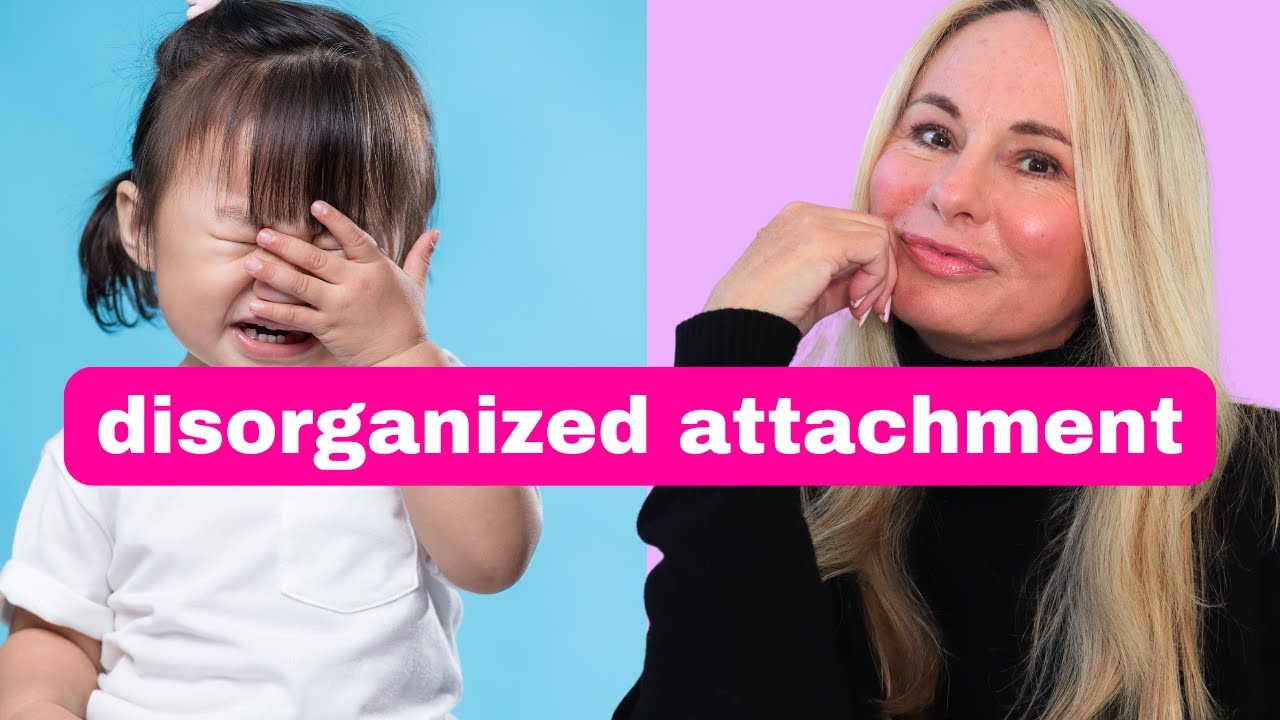
[Music] hey guys this is in response to the request i've had for a video specifically talking about disorganized attachment now i've talked a lot about it in regard to borderline childhoods although a disorganized attachment style is certainly not the only reason why a person may have bpd there can be genetic and hereditary roots unresolved trauma and trauma it's really a complicated dynamic but when we think about disorganized attachment i often use this example when we think about what experience a child might have with a parent especially an untreated borderline parent who may often be dealing
with their disorder their own unresolved trauma dissociation difficulty and you know regulating emotions with identity and relationships in general so in this video though we're just going to talk about what the classic disorganized attachment experience looks like now really quickly i'm dr kim sage i'm a licensed clinical psychologist and i hope you'll consider subscribing and clicking the bell and that way you'll get notified when i post new videos now let me just say that if you want to watch more videos on attachment you can check out these videos here but remembering that attachment is generally
the way that we engage with our primary caregivers and sort of the map or template that sets up sort of for you know what love looks like what security looks like can i rely on people can i not am i more independent am i not am i safe am i not it goes into all of those issues which i also discussed before but the hallmark of disorganized attachment is different from our other three styles which are secure insecure avoidant or insecure dismissing and insecure anxious now we can often see within disorganized attachment this sort of
range of insecurity to um from from the avoidant end to the anxious end and sort of all over the map but in the early research there were initially a cannot classify group of babies that were found to be displaying these sort of chaotic attachment patterns and even within that dynamic there there can be some organization within the disorganization but initially they were you know unclassified and so when you read a lot of books like wired for love and dating for love a lot of the classic self-help books for non-therapy individuals non-therapist individuals i should say
we don't often hear about disorganized attachment and i think it's a shame because as i keep saying i truly believe that there is such a wide population both men and women who have struggled and struggle with disorders like borderline who often remain undiagnosed and because the their deep need to be in relationship can sometimes and often mean that the love can be good but can also be really bad and really hurtful and it's confusing and i keep trying to find a word to describe the children of borderlines and narcissists and those who have more extreme
disorders as they really affect our ability to be in relationship with our caregivers because as children we often believe that if you don't see value in me as a parent or you can't meet my needs even if it's because you have depression and you're just not able to be present for me or you're an unresolved trauma i will often internalize that as being about me so not only does it affect the actual caregiving interactions but how i internalize and come to believe you know what love looks like what relationships look like how i see myself
and my value in the world and as i keep saying the core of so many of these issues is our sense of being worthless and not lovable which really is i think the biggest problem with how these difficult childhoods affect our adult lives so disorganized attachment is really a situation where we have a parent who often is struggling with being responsive they're often unresponsive as a result of their own unresolved trauma their own you know difficulty in navigating consistency of self and other in terms of the world and as a result of that a parent
who is often frightened and frightening and so there's really a parent who is struggling with their own stability at times and you can imagine that if you are a parent who has your own unresolved trauma or difficulty or some sort of genetic you know brain um uh change or response to the way you sort of came out of the womb that certain things are gonna make life harder especially parenting given that parenting i as i keep saying i really believe is one of the hardest things you'll ever do and it's hard when kids are little
because you're taking care of them right you're like a caretaker but once you start actually parenting you can also be deeply triggered and transported into your own childhood and though i do believe that one of the best ways to heal your broken childhood if you want to be a parent is by being a different parent and the kind of parent not perfectly but the one you'd wish you'd had but all that being said no matter what it's highly triggering and so for parents who are struggling with disorders or mental health issues or unresolved trauma or
brain difficulties it's going to make showing up consistently and managing life difficult so when we think about disorganized attachment we're talking about the caregiver creating an attachment situation that creates disorganization in children and so what does that look like let's talk about what it looks like from a disorganized mothering style what does the research say and i'm going to use this book i use a lot for my attachment research it is the brown and elliott book attachment disturbances in adults and if you are not a clinician i will say you might find this book to
be a little too much but you might visit the attachmentproject.com as they have created a website that really integrates the more clinical part and research part into material that you might find interesting and helpful so this presentation though we'll just talk about what disorganized mothering looks like now as i said one of the biggest issues is this contradiction in attachment behaviors and so we have attachment that has no real organization or goal to it it is chaotic and so there's this direct disorganization of the attachment system meaning that what i did yesterday to get needs
met today by you might not be the same whereas when we look at like anxious and avoiding we tend to get into patterns right i know that my caregiver let's say who's avoidant doesn't like it when i'm super needy and emotional so i'll play next to them with my toys to be close to them but not necessarily reach out for them i might learn to sort of become more autonomous or i know that with an anxious attachment caregiver certain things are going to activate their anxiety and so as a child i sort of learn over
time to modulate my responses with this organized attachment it's all over the board and not only that but there's a oftentimes a an unresponsiveness the child is not their needs are not met because the parent is often struggling to meet their own needs as i was saying because of unresolved trauma or loss or because of their own dissociation their own difficulties and things like that so the research shows that oftentimes as a result the children of these parents often had prolonged separations from the caregiver meaning that the caregiver was either not physically there or or
emotionally or or mentally there and oftentimes because if you think about if you have a disorder in an extreme way you may actually leave the home you may become fearful and take off you may have to pass on caregiving to other caregivers these babies have mothers typically who have more difficulty with alcoholism and depression and the mothers often have a pattern of both as i said before being frightened and frightening so these oftentimes they're terrified and scared and or rageful and scary we often see disorganized attachment moms having difficulty with like i said anger so
they can often be really loud and really aggressive and really dangerous you know mentally physically and emotionally at other times the parent is confused and tentative and not sure what to do and frightened maybe being triggered by their own you know traumas or dissociations that make them scared or terrified but the biggest problem with this with this disorganized attachment is that the source of safety which is supposed to be our attachment figure is also the source of fear and i just discussed that in this video but this is a real dilemma what do you do
when the person is supposed to keep you safe you also have to protect yourself from and it's often referred to in the literature as fear without solution you're terrified you're afraid you have to defend and respond but there's no real solution for that and so this push pull is what i discussed in this dissociation video that can create difficulty for kids because they're trying to hold these two parts of their needs and their caregivers and they are literally diametrically opposed right if you can't keep if you're supposed to keep me safe but also you're the
person that hurts me on some level i'm really struggling uh on many psychological and physical and really physical levels as well about what to do about that so there's always this moving toward and away from in terms of the caregiving and the responsiveness and it was found that maternal dissociation was much higher for those caregivers who struggle with disorganized attachment behaviors and these unresolved states of mind and and problems often create this dissociation like i just talked about right so you can imagine if you're trying to navigate all of that and then try to also
parent a needy child that can be really overwhelming so as a result the parent is often so into their own status in terms of managing themselves or states i guess is a better word that they are not able to attune or attune very well or consistently and remember attunement is about i see you i feel you i get you i can be present and validate you and give you what you need and so a caregiver that struggles with attunement is going to have a significant impact upon a child's sense of internalizing their well-being and who
they are and their place in the world now it also says that moms with disorganized attachment have more intrusive and negative communications with their child and so a lot more negative interactions and intrusion meaning getting into their psychic or physical space or emotional space so not really good boundaries there oftentimes they can be aggressive and hostile and sometimes act helpless and confused towards their own infants and that often happens in um and anxious attachment where the child becomes the parent's caregiver or is overly involved in the caregiver's state of mind that's also very common with
disorganized attachment that's where your parent is like you know making you their best friend and telling you too much about their life and asking you for solutions and help i've seen a lot of cases where parents were asking you know their 11 12 year old children well what should i do about this situation or dad or the divorce or my job i mean it's just too much of a burden for kids and i will keep saying it but it is not healthy for you to call your child your best friend it is too much of
a burden even if you have no mental health issues you need to know that on some level that is a massive burden for a child who can who needs you to be mother now when you grow up and you want to be best friends and you talk about everything there's probably some stuff there but that's way healthier you're choosing as adults assuming you're both generally healthy mentally right but to grow up always feeling as if you are responsible for your caregiver especially if your caregiver was unstable unresponsive disorganized and or just generally not able to
access their adult selves that places the burden on you to be the adult well before you are emotionally ready or able to do so and at the at the later stages of life when your parents are elderly and they're maybe declining and you're becoming more and more the adult that's very different than being the adult at you know 10 11 12 14 years old so it says that these parental failures result in a child's inability to maintain closeness safety comfort security and connection to the caregiver because the caregiver makes sense can't provide those things and
so these babies often have a greater negative emotional arousal and so they're often struggling with their own capacity for self-regulation right how do i meet my own needs when my caregiver can't meet their own needs there's not a lot of self soothing in a healthy weight learned and so the babies are often left in this helpless chronic state of frustration themselves and that creates more negative affect states because if you think about it you know nothing's worse when you have a screaming child a screaming crying baby and a parent you can't handle it which let's
be honest we've all felt at times but if that happens again and again and again you're both left in states of helplessness except for the adult technically has more resources but a baby or child has is really none we also can see inhibited play for kids of these kind of moms i'm saying moms but it can be whoever the main primary source is and that sometimes we can see aggressiveness and explosiveness and helplessness in the children themselves too right because they really are out of control there's no one to contain them the idea of the
tumor is we actually contain and hold i can hold it i got it i got you i can hold your emotion i can hold your physical self and your needs but when your caregiver can't do that you're going to be feeling chaotic as a child as well and so that can really manifest in marked difficulty with developing a sense of self and self-regulation which as you grow into an adult if you have a caregiver who struggled like that that's why i talk a lot about on this channel you're going to have a lot of your
own issues oftentimes with mental health issues which can manifest in cptsd and you know not only chronic mental health issues but physical health issues and relationship issues and certainly a sense of self and worthiness that can be hard that can be hard to manage so the bottom line is that this concept of the source of safety was also the source of fear the idea of the unresponsiveness and frightened and frightening states and their really internalization of of not being responded to and not being attuned to and not being held and contained psychologically physically and emotionally
has really significant impacts on our adult lives and so let's say there's a genetic predisposition for borderline yourself right then you have a borderline parent who struggles especially untreated with this idea of disorganized attachment it's much more likely you're going to struggle at a minimum with your own self-regulation and sense of self like i'm saying and relationships and things like that and so i think that oftentimes we don't realize though that these parents who are struggling with whatever the disorder is are doing their best it's just not enough at times for kids and so that's
been my goal on this channel to help people understand that it wasn't their fault that there is often a reason for their parents struggle not necessarily to make it okay because oftentimes they're still in difficult relationships but to begin to separate the fact that the caregiver had these issues and it doesn't have a reflection upon my value and to know that you are worthy of the work and the healing so i hope this was helpful please feel free to post your thoughts and questions or what you want down below and i'm going to make a
video on this but i'm going to be asking for your help i want to create a course a full-on course specifically for children of borderlines separately and children of narcissists separately and other disorders because i truly believe that it is a very unseen population and i have been getting the most incredible emails and requests for therapy but because i can't see patients outside of state of california and because i really think that it would be incredible to have a resource i'm curious to hear what you might want in a course if you were going to
buy a course that had a lot of things covered as a result of a childhood like this what would it be i'm thinking it would include a lot of things i've discussed plus a lot more on understanding yourself the parent and tools tools kind of like i'm discussing a bit in the shame journal but much more targeted towards all the areas of borderline but i'm really curious for example if you were going to do a course to help work on those issues what would they be and what components would it have and things like that
knowing that it can't be therapy but it will be very therapy research and psychology related and targeted towards you as the you know young adult and adult child so please feel free to share your thoughts i want to start building the course if i can find the time you probably noticed i'm struggling at times to get videos out on time because i am blessed to work full-time and it is frankly a lot but i would like to create a situation where i can see a few less patients and spend more time building free youtube videos
and also more in-depth courses but i'm very curious to see what you think and what your thoughts are so i can create stuff that you guys would find helpful so thanks for watching please stay safe and well and i'll see you next time [Music]