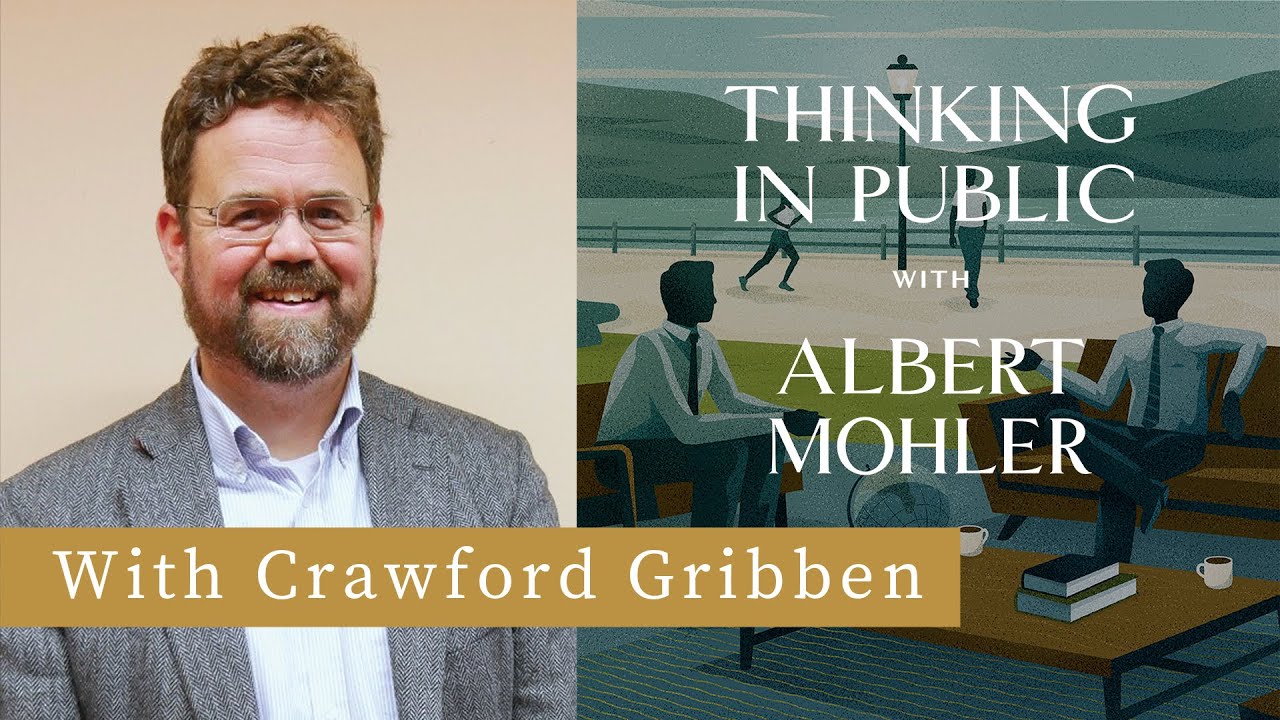
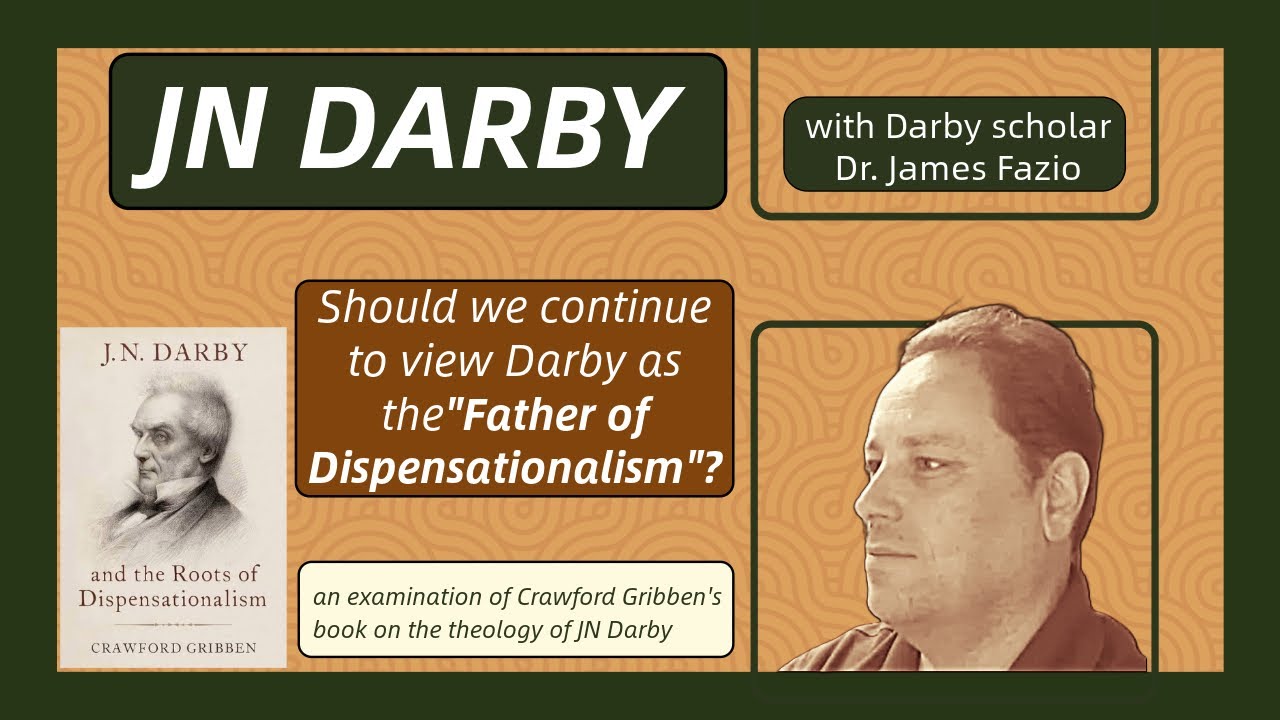
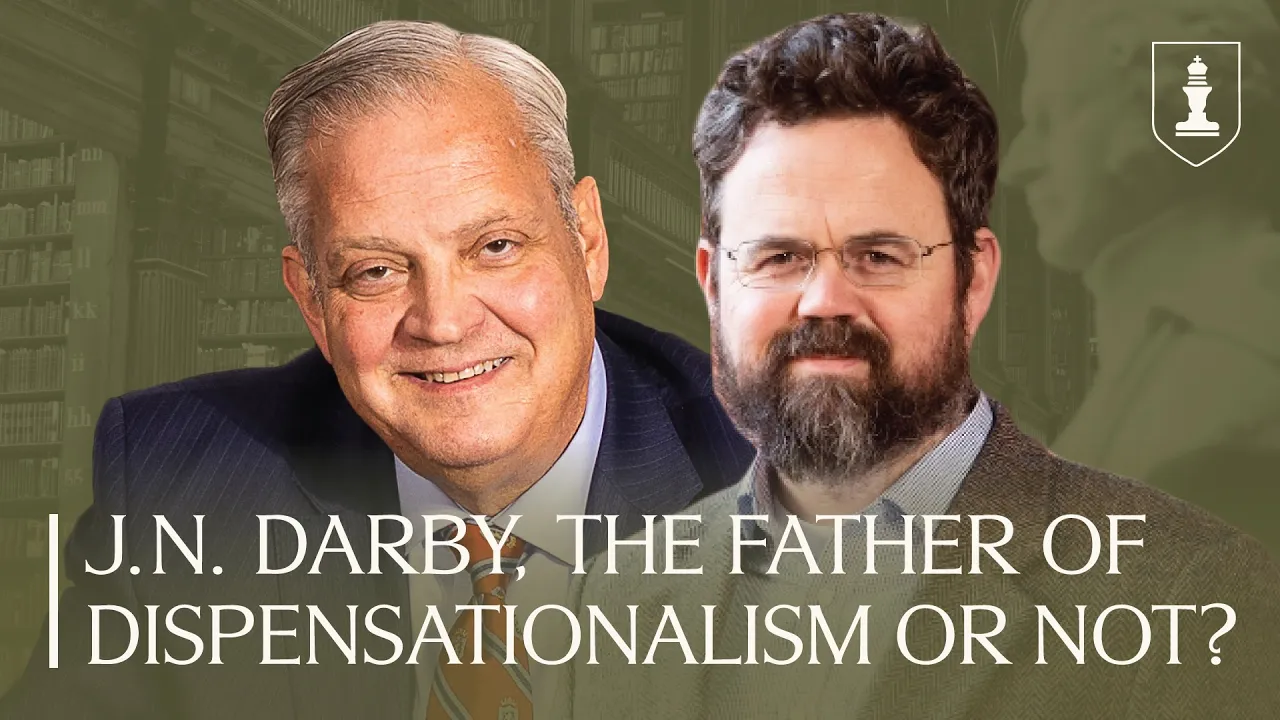
[Music] this is thinking in public a program dedicated to intelligent conversation about Frontline theological and cultural issues with the people who are shaping them I'm Albert mull your host and president of the Southern Baptist Theological Seminary in Louisville Kentucky Crawford griman is Professor of history at Queens University in Belfast in Ireland prior to his tenure at Queens University Professor griman taught at the University of Manchester and at Trinity College in Dublin his research is focused on puritanism and early modern political theology which has led to the publication of nearly 20 books and dozens of academic
articles throughout his career I really enjoyed my previous conversation with Professor griin about his book the rise and fall of Christian Ireland you should listen to that too but today's conversation is About his most recent book Jay and Derby and the roots of dispensationalism Crawford gribbon welcome to thinking in public thank you it's great to be here and appreciate your interest in this book oh I am interested in this book and uh I think other people will be very interested in this book but I'm first of all very interested in an audacious claim you make
and and uh I I I recognize you're making it in part that it's the argument Of others that uh that Jay and Darby actually ranks with Martin Luther and John Calvin and John Wesley in the Shapers of Western Christianity and I want you to talk about why that might be said well that quot really belongs to Don ainson a Canadian Irish historian who made that claim in a sequence of books he's published over the last maybe 5 to8 years on the historical background to Darby and to the breth movement of which he was a part
so ainon argues that Darby is up there with as you said Luther Calvin John Wesley um probably is the fourth most important Protestant Theologian there has been and his argument which I think is a reasonable one if you take the historiographical consensus at its face value is that Darby designs the end times system that comes to dominate a global community of half a billion evangelicals now one of the things I want to do in my book is both um bounce off that claim and also Critique it to a certain extent because actually I'm not sure
he is as influential as the people selling my book might like to hope that he is yes well uh you know the most amazing thing is is that as much as I thought I knew the era uh the issues and the individuals including Jay and Darby uh your book plows a lot of new ground and it does so at least in part because of your H your research uh over a long period of time including in materials That the average scholar doesn't have uh or hasn't in the past until Queens University there in Belfast is
going to make them available uh but this is going to open a door of conversation one of the things I want to talk about later in our conversation is just how much traction Darby ISM has among say angelical Christians today as compared to 100 years ago but set the stage for us uh about his importance and then I want to walk us through some of the the The facts of the man and the story so if you're going to make the argument that he's that important you go ahead and make it well the standard narrative
is that Darby is the father of dispensational premillennialism which is um among other things um a way of reading scripture in its entirety but specifically of thinking about the end of the world and this is a narrative that has grown in popularity really through the 20th century thanks to the Proliferation of books like the scoffield reference Bible published in 1909 which is the bestselling book that Oxford University press has ever sold they don't have a record of how many copies they have sold but it's certainly in the tens of millions H so the scoffield reference
Bible has popularized this dispensational narrative it's been taken up in popular culture um in The Simpsons in Sonic Youth A grunge band you know in lots of HBO series The Leftovers things like that in the Left Behind series perhaps most famously of all which just sold I think almost 80 million copies or thereabouts and arguably it's affected the foreign po policy of every American Administration really since the election of Jimmy Carter in the mid 1970s so in terms of shaping the way that Protestant Christians think about the end of the world in terms of presenting
those Christians as voters with a foreign policy agenda I I think this dispensational narrative has really had extraordinary influence however I'm not entirely convinced that Darby should be held responsible for it but that's another matter well that's a part of our conversation too I have to say just in terms of the history um I might date what I would see the influence of dispensationalism in American politics and American public Life by the way Congratulations on being the first guest on thinking in public to mention a grunge band but nonetheless I'm glad you recognized them yeah
well I no I I don't but I recognize the word Grudge band but U the reference to PO popular culture helps here I I think by the way that the influence of a dispensationalist understanding and the apocalypticism that I I think a lot of people would kind of underline as the main issue I think that appears earlier in American Politics uh with almost immediately after World War II with the uh the Cold War shaping up uh between uh the west and and the Soviet block and I'm not sure it continues now that's just an interesting
debatable point and it'll be fun to talk about but in any event there's a before and after I think most American evangelicals really don't have a good idea of the before and after there was a time when no evangelicals were talking this way and then there was A time when millions of evangelicals believed uh in in what became known as dispensationalism and and we're taught as you say by the scoffield reference Bible uh just to take one example how to read scripture and of course there are lingering uh effects of that but then you went
on to say you're not sure Darby is responsible for it well let's bracket that and let me just ask you why are we talking about Jay and Darby a far more fascinating human being that I think uh Most evangelicals are aware he's an extraordinary individual no matter what we might want to make of his ongoing significance or his legacy there's no doubt but that he was an extraordinary individual he was born in 1800 died in 1882 so he's living his life mostly in the Victorian era he's also living through the peak expansion I suppose of
the British Empire so he's living through you know a really extraordinary period of time the world is opening up Transportation is opening up Railway networks are expanding across North America shipping down to the antipodes and so forth so you know he he he really has a new kind of world to explore um Darby grows up H in an anglo-irish family that's got some really interesting connections his mother and vaugh came from an American family that had very close relationships with Benjamin Franklin and a number of other founding fathers um the the vau family Had significant
slaveholding interests in the Caribbean Darby's father had made a huge amount of money by supplying victuals to the Royal Navy in fact his uncle had commanded HMS bapon uh under Nelson and that may be how Darby got his middle name John Nelson Darby the connection to the Navy is is very important um he graduated from Trinity College Dublin in 1819 with a gold medal in Classics which really speaks his Proficiency in languages and Translation H initially he he had a brief fory in a legal career then decided to become a priest in the Church of
Ireland and I use the word priest quite deliberately there because in this stage of his life Darby had quite high views of church liturgy and so on and really in that early phase of his life dallied um with the claims of Roman Catholicism as did one of his brothers in fact there recently turned up an auction in England a copy of the decree Of the Council of Trent signed by both John Nelson Darby and his elder brother William Darby and that speaks to their shared interest in the claims of Catholicism at that time um but
very briefly he he he has an accident with a horse he ends up as a convinced Evangelical uh and that sets him on a career initially of missionary Endeavor in french- speaking Europe but then later crossing the Atlantic going down to New Zealand Australia preaching in Languages including English obviously Irish French German Italian Dutch also Maui when he got to New Zealand uh translating the Bible into English German and French engaging quite seriously in text critical questions um EX extensively reading if if you look at the contents of his Library there's material in there about
the history of Indo-European language the history of Hinduism um fascinated by science um curious about the Book of Enoch uh and And wrapping all of this intellectual interest up in a writing career that Daniel hmel reckons includes about um 9 million words or or thereabouts a really vast Corpus uh of of writing so a a a a perennial fascinating Victorian scholar but there's a guy that starts out as a part of the Protestant ascendancy um so he's he's in an elite minority in a fairly hostile environment um his father inherits a castle and and and
so he's definitely a Part of that establishment he continues that establishment life in terms of studying at the temple that that is in what would be law school he emerges as a a man trained in the law he does practice that for a while I would argue that it it's evident he continues the structures of legal thought uh throughout the the rest of his life but then he has this experience I I understand more directly honestly his conversion from Anglo Catholicism to to An Evangelical understanding I I I I'm missing a piece as to how
he decides to leave the bar the law and go into the Anglican Ministry and the specifically the Church of Ireland Ministry how did that happen well we really don't know it's one of the the phases of his life where there's very little documentary record to testify to any kind of interior motivation um we we know that he felt very unsettled about the prospect of Defending iniquity so he has A very scrupulous moral conscience even at this time you know even for a lawyer he cares about truth H so you know he's he's worried about that
and and I suppose that the the culture within his family the fact that several of his brothers had become and even his brother-in-law had become very significant lawyers the fact that another brother who might have had a bigger impact on him at this point was already on route to becoming one of the Leading high churchmen in Ireland I think that that maybe give him a sense of moral purpose but I think we are guessing a little bit at that stage in Darby's life because really he doesn't tell us too much about it you know it's
also clear that uh at this point as uh something of an Anglo Catholic he doesn't believe that Luther and Calvin are actually a part of Christ Church yeah he become he become a calvinist yeah so he he he writes later On as he looks back in this period that um he was scrupulous in the observance of weekly fast he fasted twice a week he would consult his clergyman before coming to the Lord's table to participate in the Eucharist and famously he says that he held Lutheran Calvin to be outside the covenanted mercies of God so
they might be saved they might not be saved saved but there was nothing really in Scripture that would indicate one way or another how Those kinds of Protestants might relate to God's grace but he but nevertheless he has this writing accent he he he busts his knee he convalesces in the sister's house for about three months reading his Bible very very earnestly and just emerges butterfly like out of this cocoon as a really energetic really high calvinist and now later on in one of his discourses he reflects in this and he he admits he just
doesn't know why he became a calvinist in this way But except that it made sense of his own experience why had so many of his friends been left as high churchmen and he had not and he said only The Sovereign electing grace of God could really explain that kind of experience you know uh using the language of the Victorian era uh sometimes it's difficult to know exactly what someone means but you can read Darby's words as if he believed he was converted to faith in Christ in that crisis right yeah There's a big debate among
Darby biographers really about what that crisis means Darby himself doesn't use the language of conversion when he refers back to that period he talks about it as perhaps coming to assurance that he belongs to Christ but certainly it marks a very significant moment in his spiritual history before that as an Anglican clergyman he had been faithful Pious sacrificial um earnestly pursuing holiness among the very poor people in County wicko where he was placed but he said later on again retrospectively looking back in this period he said he really had no business working with him as
a pastor because he had no real assurance that Christ had accepted him himself so he's depending I think very much on a on the kind of expectations or assumptions that Anglo Catholics would have been developing during that period so we need to set the table another way if you go back to the 19th Century you have someone who had been a high Church um a high Church priest of the Church of Ireland which was in this sense a sister Church to the Church of England he uh he's on the Anglo Catholic Wing he now has
this crisis experience so he left the law for the ministry now he's going to leave the church of Ireland but for what in other words what it's going to be some form of non-conformity but where in the world is He going to go at this point so this is exactly the question that his own Rector asks him a man called Robert Dy who'd go on to become a bishop in the Church of Ireland and he asked Darby in the late 1820s now you're leaving the church of Ireland are you going to become a denter and
Darby says absolutely not he's leaving the church of Ireland not to become a presbyterian or a congregationalist or even one of the the roving Independents that were Anglican in theology if not quite in their commitments during this period he's leaving the church of Ireland for the church and his his rationale for leaving the church of Ireland is that it's both insufficiently Protestant and it's insufficiently Catholic it's not comprehensive enough to embrace all of the children of God and it's not Protestant enough to fully articulate or clearly articulate the gospel so he's leaving something not for
nothing he's Leaving something for everything yeah that that's uh a perplexity to me because I'm old enough to have met Jay and Darby in this sense and uh so it's uh it gets very close the American church historian winth Hudson said there's a certain Evangelical logic that leads to a church under every man's hat and and so at some point I you know even in reading your your fascinating book I thought you know it's it's an amazing thing that J and Derby is being talked About today because he could very easily have become just a
quack uh you know a tiny footnote in some kind of church history but that that's how it's that's not where it stays so so explain his story he you know becoming more or less Catholic simultaneously after being converted and receiving assurance and leaving the church of Ireland okay now what well he he falls in with a group of very Earnest young evangelicals in Dublin some of them from a Catholic Background some from congregational background none of them I think Baptists which is an interesting part of this story but anyway he he falls in with these
very Pious young men and they are the young Restless reformed Evangelical leaders of of their day um often they come from very privileged backgrounds they've all had the benefit of an excellent education so they are literally full time studying their Greek Testament sometimes their Hebrew Bible H Enjoying Fellowship together and wondering what they are witnessing so remember this is all happening at the end of 1820s a tumultuous time in Ireland we've got the long pressure for full Catholic participation in government finally coming to head 1829 uh Catholic emancipation means that finally Catholics can take their
place as members of parliament in Westminster and that is shattering for people like Darby who come from this as you put it Elite social class fully Anglican in character that's been used to dominating the life of Ireland for the last 150 years suddenly that world is coming to a crashing conclusion so as this Democratic expansion continues um through into the 1832 Reform Act Darby believes that he living through a revolution and he's right he really is um witnessing extraordinary political changes and these individuals are worried deeply deeply worried about what These constitutional changes mean and
they come to the conclusion um that as the as they see the church slipping away from its commitments and as they see government slipping away from its Divine obligations they can only understand their moment really as um almost an Annex to the French Revolution it's it's the triph of atheism over Christianity and they do see this in very starkly apocalyptic terms so they meet together they meet together for the Lord's Supper For Bible study H and gradually they find themselves in contact with other individuals or small groups you see the world in broadly similar ways
and these individuals tend to be very strongly calvinist they tend to be very strongly premillennial they're not yet distinctively what we might call dispensational but they're moving in that kind of Direction they begin to form networks some of those networks are associated with the University of Oxford In the early 1830s Darby goes to Oxford makes some very important connections there with very well-placed high Calvinists in the university community um that leads to one of his earliest Publications and that earliest publication is his defense of the calvinistic character of the English Reformation against the claims of
certain well-placed um ecclesiastics within the English church so that's that's really the kind of M in which Stby is moving at this time it's it's emphatically calvinist robustly Evangelical it's also exploring the possibility that the Holy Spirit has begun to give gifts again to the church this is also the age of course of Edward Irving and the beginnings of that charismatic um culture that that develops in the fringes of Evangelical protestantism in 19th century England so so Darby and his peers are working through the claims of of these radical Restorationists and and beginning to ask
themselves fundamental questions what's the nature of the church um what is the ministry of the holy spirit in this age what is true about catholicity H and also where are things going well there had to be a huge question given the social change of the 19th century and that's of course as you've indicated kind of exaggerated in his Irish context but he's in the larger angl British context as well you Mentioned Oxford it it's just difficult for me at this point it's just hard for me to see where he fits within kind of the spectrum
of institutional Christianity because uh even in the 19th century in Britain or in the the the British influence system it's it's hard to emerge just as an individual with a following you've got to have some kind of movement so how do we get from Darby to Darby ISM well there are some interesting Individ movements there are there are individuals within established denominations like for example um I'm going to forget his name now um Robert Hawker so there's individuals within established denominations like Robert Hawker uh a very prominent high high calvinist in pouth a minister of
the Church of England and he is developing around himself in that area a very distinctive following making very distinctive Sterological claims now outside of the denominations there's people like Edward Irving who I mentioned before there's also individuals like Thomas Kelly or John Walker who are two reasonably prominent um Irish evangelicals who leave the church of Ireland to develop followings of their own so there's lots of individuals presiding over these small networks what I think Darby's able to do in the 1830s is begin to move among these networks and begin to pull Elements of them together
so there's a sociological story here as well as a theological story and he's connecting existing networks um Darby's letters refer to him visiting small communities small congregations or assemblies that sprung up almost spontaneously across Britain and Ireland and one of his jobs 1930s is to is to connect these groups and to give them a shared identity and so as as he's speaking as he's moving around some of these groups remain very Small others like the congregation that meets in Plymouth in the southwest of England grow to become really quite significant sizes the assembly in Plymouth
comes to number about 1 thousand individuals which is why Darby's movement is often described as the Plymouth Brethren that's the nickname that that they're often given H in that period And since that's kind of where I wanted to head the conversation as to the Brethren So we we finally have something we can kind of put on the church history map a group we can follow over time and uh so so how exactly does J and Darby come to be associated with the Brethren and uh it's not wrong to call them the Plymouth Brethren yeah so
he gets to Oxford 1830 meets up with a number of very Earnest young Oxford academics and one of those a man called Benjamin Wills Newton who's a fellow of an Oxford College it gets really taken by Darby really Charmed by Darby who's about seven years older than him but he puts him in touch with this this little group that's meeting in in Plymouth and so Darby heads down there and begins to see that in this group in Plymouth uh there are a number of features which are very much the kinds of features that have excited
him about the other group that he's come from H in the circular around Trinity College Dublin back in Ireland so Darby gets to Plymouth and he's really transfixed by What he sees there the Christians in Plymouth are incredibly sacrificial in fact um at one point in the early 1840s the church in Plymouth holds a 3-day sale 3-day auction to sell off the luxury items that people had dropped into the collection box jewelry watches you name it in fact in Plymouth one of the key features of those who are part of this denomination was that although
they were often extremely wealthy by personal background their houses were Marked by very significant um decoration culture they had no carpets and no curtains they would literally sell everything they felt was UN absolutely not absolutely necessary to support the poor or or or to begin to support the the missionary movement that the Brethren were beginning to um engineer so the Brethren then Plymouth Brethren as they're called um begin to connect these groups H they begin a print culture they begin to issue journals These journals um allow certain kinds of core ideas to be um explained
um circulated Advanced developed in the early journals we can see these ideas developing and evolving in some really interesting ways but the early bre movements they take on a very distinctive character they are anti-clerical so there is no distinctive clerical cas no there's no um no official pastors although that they do have pastors but they don't have a Significant status um there's a number of examples for example of um particular Baptist Churches coming on mass into uh the Brethren movement like the particular Baptist Church in Deon led by George Müller for example that comes as
a congregation into the Brethren movement Müller Remains the principal preacher but he's no longer got a significant status within that as it comes into the Brethren movement so they're they are anti-clerical they're Also anti-conformers they don't accept and don't require any kind of confession of Faith to join there's no Creed to join the brethren in 1830s all you need to do is affirm a belief in the Trinity and that's it um and and those two features then allow for the construction of a a culture of debate discussion study reflection which allows any gifted brother to
begin to put forward ideas and as these um ideas are put forward And as Darby and other leaders begin to amalgamate these ideas into an informal system um the Brethren begin to take on some really significant features they while they might welcome individuals from all kinds of backgrounds they are committedly calvinistic they are committedly Catholic in their thinking about the church they want to EMB all Christians they are in a sense charismatic they're leaky charismatics they don't want a fixed liturgy they Want to meet very very informally allowing the spirit to guide them in the
way that they should respond to scripture and they are absolutely catastrophic they really do believe the end is upon them there's no point building institutions there's no time for any kind of work of that nature and and so they they simply press on with the most immediate obligations they have so Calvin Catholic Charismatic catastrophic I Think those are the four big features of Brethren um writing in this period now in each of these each of these areas their thinking does begin to change and that I think is one of the most interesting features of the
movement as it begins to develop to what degree is Jay and Derby involved in that change well that the answer to that question involves an explanation of how he gradually becomes the preeminent Voice he only really becomes the preeminent voice among Brethren after the late 1840s until the late 1840s he has one voice among many and the Brethren movement through the 1830s 1840s is a broad Church it really is a broad Church um in the early phase of the Brethren movement there are no voices arguing for a pre-tribulation Rapture the idea that becomes distinctive of
Darby's later Ministry um they are all committedly Premillennial but there are any number of ways of thinking about how the events of the end times might work as a sequence so there's lots of debates then but the most significant debate of all I think in the late 1840s is a debate about christology Benjamin Wills Newton this really extraordinarily gifted preacher in the Plymouth congregation had been promoting certain kinds of christological heresy perhaps by accident and because he was happy to Retract those when pushed um to do so but the question of to deal with Benjamin
will Newton's erent christology raised a bigger question about how this network of congregations should have discipline should their discipline be Collective or should each congregation be regarded as an independent unit and really it was that question the question of church discipline that split the Brethren movement in two in the late 1840s between the open Brethren who were Always much more interested in facing towards evangelicalism generally and whose congregations were always in independent and on the other side of the coin the exclusive Brethren who were really much more interested in Collective decision- making on disciplinary questions
and who looked increasingly to Darby as their principal theorist now there's other important differences that the question of discipline threw up for example the Question of baptism the open Brethren were almost entirely believer Baptist the exclusive Brethren were almost exclusively if you can excuse the pun household Baptist they wanted to baptize the children even the baby of believers who are in Fellowship but fundamentally it's a question of discipline and Darby um really defends Orthodox christological categories presses for Collective decision- making the movement as a whole has got to take A stand against Benjamin Wills Newton
and his christology and when the movement doesn't do that he takes about maybe maybe a third or a half of the congregations into his own network which is bounded it's it's got it's it's borders H and within that movement he very quickly Rises to really quite significant kinds of influence well you're talking to an historical Theologian here so I've I've got to say so in other words so much for Anti-realism well yes Darby doesn't write a Creed doesn't promote a Creed of all of the Creeds his favorite is the athian he frequently refer refers to
the 39 articles so for example when he's defending the idea of election to Salvation he'll refer to the 39 articles as offering the best statement of divine um election so yes they're not they're not credle no they're well they're ad HW it's it's what I would call ad hoc creedalism that you you mentioned the Word boundaries if you got boundaries then there is some way of establishing those boundaries and so you have uh groups that say no we're not credle um but when they have to be they all of a sudden are are and then
they're not again until they have to be again right well I I think the dispute of the late 1840s indicates the problem of of only requiring of your adherence of belief in the Trinity you know where do you go from that so also how do you define the Trinity well indeed use the athasian Creed as Darby did um now later on in his life in the 70s Darby did write a statement of his beliefs which reads very much like a confession of Faith it's certainly a personal confession of Faith the remarkable thing about that docu
when he comes to write it is that it's almost entirely in biblical language and it doesn't refer ever to words like dispensation or Rapture so there might be a question as to how Useful that kind of text actually is well when I began reading your book I thought you know J and Darby is shrouded in more mystery than I uh than I thought after reading your book a lot of mystery Still Remains uh he is something of a black box in terms of how he gets from one place to another let let me ask you
about the brethren for a moment so you mentioned the open Brethren and the exclusive Brethren where are those two groups Today that's a really difficult question to answer so the open Brethren might number around five million yeah um there's there's an annual report that that documents their strength numerical strength in different countries so doing very well in places like Africa not doing so well in places like the UK or North America in North America they have a a college a May College which is an excellent College liberal arts college Um the brethren in the UK
have produced some very significant Scholars FF Bruce being perhaps the most most eminent um but even even within the last 10 or 15 years the professors of Hebrew Bible or Old Testament at Oxford Cambridge Liverpool Manchester and Sheffield universities either were Brethren or had been Brethren at one point in their career so the open Brethren have really prod a scholarly um impulse um in in in many of their adherence but the Difficulty with numbering the people H is that the open Brethren always bleed into evangelicalism generally yeah right so someone like George verer who was
in a leader of operation mobilization for example had a significant Brethren career but it's not often thought of as Brethren someone like Jim Elliot the Ecuadorian missionary Mar is not often thought of as being Brethren but was and in fact four of the five Martyrs had been commended by Breen assemblies who Were killed that day so it's difficult to number them because they they do operate in this space that's a little bit Lial the exclusive Brethren are much easier to to denominate uh because they operate within relatively closed networks and there's the largest of those
networks is a group called The Plymouth breth and Christian Church it's got a very distinctive culture uh which um listeners can find out about if they Want to Google their name and then there's another quite a large number of smaller groups coming down to spe even to isolated individuals and these are groups are individuals who've left that main branch of the exclusive Brethren at different points in time and and their circumstances are sometimes challenging um but of course there are many um very sweet Christians in both sides of that divide so we have Darby as
the head of what can be called Darby ites but the Dispensationalism is itself H how does that now arrive so Darby gets to North America 1860s mid 1860s arrives during the Civil War um until that point his missionary efforts had really been concentrated in French speaking Europe but he gets across the Atlantic really he's following some of his french-speaking converts into you know the Midwest Plains into Upper Canada and so forth and he's there really to look after them But he's also beginning to realize when he hits Boston Philadelphia New York there's quite a lot
of people out here who are committedly premillennial who have often separated from the denominations who've gone a long way to adopting some of the key distinctives of Brethren thinking about church the future and so on the only problem is they believe in conditional immortality and they've got a weird association with William Miller and so he begins fishing Around among these burnout Adventists but as he does so he finds himself making some really unexpected converts from their ranks but also converts among for example of Presbyterian clergy including James Brooks um in St Louis or St Louis
I forget how you pronounce it Missouri and and you know he preaches in Brooks's Pulpit Brooks uses Darby's Bible translation H obviously he's a very high estimation of Brooks he's also bumping into people like DL Moody and Darby and DL Moody have a very very uneasy relationship Darby the Mystic who's given to real Biblical contemplation Moody the great doer the great achiever in terms of of mission uh missions Outreach and so forth and the two men meet and really don't get on one of the reasons they don't get on is because Moody will not accept
Darby's very strong emphasis that the will is not free and they have a famous dispute About this and and Moody loves some brethren writing he really appreciates the writing of a man called CH Macintosh an Irish Brethren writer um whose Works circulated widely in North America principally because they had never been copyrighted back in Britain and Ireland which meant that American Evangelical Publishers could take massive liberties with circulating this paying nothing to to to to the author so all of these pirated copies dispensationalism America Begins to circulate through pirated copies of Brethren works so as
as Darby is is meeting Moody falling out with moody moody is nevertheless cherry-picking some of Darby's key ideas not about the church which he's not interested in but about eschatology and of course he's doing that in the aftermath of the Civil War as the kind of post-millennial vibe that had driven both northern and southern War efforts Really comes to a catastrophic conclusion and doesn't seem plausible anymore so moody and others are looking for a different kind of way of thinking about the future which Darby gives to them it's pessimistic it's talking about decline in aftermath
of the Civil War all of those themes make absolute sense apocalypse absolutely it is the American apocalypse more soldiers die in that conflict and in every other American conflict combined it's an extraordinary Loss of life so Darby picks up in this his ideas begin to circulate in cherry-picked form scoffield however has his own prote a man who really looks up to him and he's a Confederate War veteran a man called CI schoolfield also a lawyer interestingly by training um but but Moody mentors him puts him into a church schoolfield then begins to generate a little
bit of energy around developing a a an annotated Bible that would offer a simplified radically Simplified but quite different version of dispensational thinking than the version that Darby had offered his American listeners and it's that version of dispensationalism in the scoffield reference Bible in 1909 that really sets the agenda for the movement that's going to follow now really interesting point in this respect in the 1920s Philip Mao the American Theologian and social commentator is one of the first people to use the term Dispensationalism Darby never uses it he never describes himself as a dispensationalist never
describes his teaching as dispensationalism but Mao does but he uses the word not to describe Darby but to describe Scofield's teaching which he says is different from Darby's teaching in significant ways so it's School Fields teaching is called dispensationalism not Darby the irony of course is the word becomes so expansive that it begins to Encompass the teaching of both men well I was raised in an Evangelical Baptist context Southern Baptist context in which uh it was not dispensationalist but dispensationalism was all around and in a very friendly sense so we were still reading dispensationalist books
and aware of dispensationalist authors and the scoffield reference Bible in particular but I still recall as a teenager being told that this is not Darby ISM and you know so these these were older dispensationalists but they clearly were drawing lines and and so the the Bible Conference movement that primarily brought dispensationalism down to my part of the country which was very much rooted in Chicago so I'm I'm in Florida but there there these folks fromo from Chicago who are they established conference CER they H these giant dispensationalist meetings and so I'm as a teenager surrounded
by the fact That they're factions in other words I don't I just think of this as one thing but clearly they did not see it as one thing and of course later they'd be divided over different additions of the scoffield reference Bible Well I think what's really remarkable about this is that Darby is in some ways an anti- dispensationalist so the idea of dividing Redemptive history into seven stages predates the 19th century it's There in 18 arguably it's even in the 1th century and Darby understands that some of hisli writing he speaks about this idea
of dividing Redemptive history into seven stages he doesn't teach that he doesn't believe that in fact he he he doesn't want to call these stages dispensations either he argues there's basically three great ages the Jewish age the Christian age and the millennial age that follows he argues yes there are dispensations And his thinking about dispensations changes and involves through the years but his mature conclusion is there's only three dispensations prophets priests and Kings these dispensations are only active between the flood and the cross and they are only offered to Israel so the irony is that
it's not Darby but is reformed critics who describe the present age as a dispensation the other curiosity of all Of this is that historians tend to say that Darby invented the idea of the secret Rapture he never claimed to to have invented the idea of secret Rapture in fact the exclusive Brethren knew who invented the doctrine of the secret Rapture was Thomas twey an Irish Brethren author and one of the reasons we know that is because William Kelly who edited JN Darby's Works wrote a pamphlet called The Rapture where did it come from and he
tells us that Darby Told him it was Thomas twey so the two great things we all think we know about Darby he's the father of dispensationalism he invented the secret Rapture it turns out in fact neither of those are true yeah which also goes back to where we began and yet somehow it is argued that he ranks with John Calvin and Martin Luther and John Wesley and yet I I have to say I I at the beginning and in the middle of the end of your book was not At all convinced of that um because
it's it's it's just not institutionally held together it's it's not cohesive uh are there any Darby yits today there are yeah they're small in Number the irony is here in Ireland where all began there there's very few there might be a smaller number or or a larger number maybe uh in Britain or in the continent um in North America I think again they're pretty small um of course we're speaking here about Darby ites not Dispensationalists no I'm making that distinction remember the dispensationalists were telling me they're not Darby ites and so you know I'm as
a teenager trying to figure out well then where are these Darby ites you know and you've kind of answered that I you you to F few yeah well I that would be a privilege um on the other hand on the other side dispensationalism becomes the theme of The Bible Conference movement in the United States Dispensationalism through the scoffield reference Bible it's just mainstreamed into popular evangelicalism and even people who are not specialists in the dispensations or in a dispensational hermeneutic they really operate out of a dispensational worldview and world picture um so is that largely
due to the scoffield reference Bible itself well of course the prophecy movement the prophecy conference movement begins before the scoffield Bible is is Published isn't it um Darby sees the first of those conferences begin to be convened in the late 1870s and he's really disappointed by it all because it represents the very opposite of what he wants to achieve his conviction is that a proper understanding of our apocalyptic moment would lead people out out of the denominations instead of that he sees at Niagara and the events that come before Niagara leading Baptist congregationalist Presbyterians very
Comfortable in their denominational worlds and quite excited about this new way of arranging end times events that's not what he wants he wants people to withdraw he wants to see people become a little bit like him because that's really the only way to give expression to the church in its Catholic nature Catholicism for Darby is really really important he hates the way that Protestant denominations divide up the body of Christ he sees it as Unnecessary um even at the same time calling for greater discipline among Brethren you know looking at this you certainly must be
intellectually curious as an historian as to what happened to all this I mean in the 19 century is gaining steam in the 20th century the first half of the 20th century it becomes more or less dominant in popular American Evangelical Christianity still persists of course but it's hard to find in any organized form the way that I Think Darby and the the 20th century dispensationalists would have expected yes I mean where we find it it's in popular culture it's in memes I think um more than anywhere else I mentioned earlier on the HBO series The
Leftovers which is basically a secular rewriting of something like Left Behind which was of course tremendously successful um on its own terms but that's a generation ago in other words I I I as a as a theologian I have to say In the United States right now looking at American Christianity it's hard to come up with I guess one of the big questions of my life is the transition from when I was young and dispensationalism was so strong to the present day when it does not appear to be anything like what it was even in
some of the institutions and groups where it had been the the established Orthodoxy yeah I mean obviously Dallas Theological Seminary has changed its orientation to some extent over the last 30 years or so there are smaller groups like um the group associate with Southern California Seminary I think would holds a classical dispensational model and there's other institutions of that of that type um I I don't know that world really well enough to comment on their size or demographic or influence um but you know I think we can we can see dispensational types of thinking in
um the the the the Popularization of premillennialism I think in some parts of the New calvinist Movement so-called over the last 20 years there's some significant exponents John MacArthur obviously John Piper um yourself um and and others um the the new covenant theology that we talked a lot about 20 years ago maybe less so nowadays maybe it's become more um per perous uh now the new covenant theology is in some respects quite like Darby's theology you know if you think about his Structure of Redemptive history the Jewish age the Christian age and the Millennium you
know there might be quite a lot of um theologians commentators who would assume that kind of basic division without necessarily having all of the the diagrams and the apparatus that surrounds it so if we peel back a little bit away from the very Scholastic form of dispensationalism Might associate with Clarence Larin or Lewis Berry chaffer um or even the kind of lured pop Culture dispensationalism of um how Lindsay or people of that ilk I think that the Vibes are there um I maybe don't pay enough attention to say to know exactly the level of influence
they might have though so I did a thinking in public and uh had a great conversation with Daniel hmel about his book on the rise and fall of dispensationalism and uh I I heard from dispensationalists and as a matter of fact uh on YouTube there's there's an Entire panel of many dispensationalist theologians responding to uh the program I did uh I am a decided premillennialists and and I see them as friends and so it it was interesting but you know you know Daniel Hummel's arguing for the rise and the fall of dispensationalism and these these
brothers are quite intent to let it be known that it had not Fallen um but we are in a different age and you know there are different questions and and I Mean I don't mean age dispensation we we we are in a different moment in conversationally and you know so one of the things I want to ask just little little questions that have big impact like how did ax University press come to publish the scoffield reference Bible Well interesting question um the answer to that I think can be found in some detail back in Don
aon's last book The American apocalypse and in that book He explains how Oxford University press's publisher a man called H frud was himself an exclusive Breen yeah it was himself exclusive Brethren and also a bit of an entrepreneur on his own right so in the early 1900s he was working with two study Bibles two annotated Bibles simultaneously one was the Thompson Chain reference oh yes and one one was the annotated Bible put together by CI scoffield and he was trying to work out the very complicated Question which one of these should be published by Oxford
University press and which one should he Henry frud publish independently and privately and he made the decision Oxford University press should publish scoffield and he privately would publish Thompson the Thompson Chain reference Bible so there are a number of um key facilitators who make the the the scoffield project and Upp project there's Henry froud the publisher there are also financiers who Who provide scoffield with the time and and opportunity to travel to study and so forth put it together but there's a there's a curious backstory as to how all of this fits together what's really
funny though about Henry fr's activity in supporting scoffield and his anti- Darby dispensational Bible is that George morish and other exclusive Brethren Publishers during the same period are continuing to publish their own definitions of Dispensationalism the moish Bible dictionary which appeared about 1903 I think just a few years before scoffield has an entry on the dispensations and it's a standard work for exclusives through this period and that entry in dispensation says there are three there's a Jewish dispensation a Christian dispensation and the dispensation of the Millennium and that is the Darby Legacy scoffield is a
different kind of tradition picking Off in the same period ironically with support sometimes from the same people yeah that's very interesting you know uh when I was 16 years old my father and I went to a bookstore and bought and we each bought a Thompson Chain reference Bible beautiful leather we had our names put on the front in gold and it was just a fatherson thing and uh my father was a wonderful Fai f a Bible teacher and uh he's now with the Lord and it's it's just very very sweet to me I have those
Two Bibles beside my reading here um so the Thompson Chain reference Bible is the one that I used as a teenager and I really didn't know until you just explained exactly how that came to be uh U differentiated in in one man between that and the scoffield reference Bible I had Bible teachers who told me I wasn't reading the Bible if I didn't read the scoffield reference Bible so uh I want to ask you another question with deeper theological importance the Relationship between the church and Israel in time and in eternity where does that characteristically
dispensational understanding emerge and who exactly held it that's a tricky question because the difference between the church and Israel is maintained as early as the 17th century so if you want to be really radical about it you could look at someone like John Owen great 17th century English Puritan Theologian and In his commentary in Hebrews he has an extensive discussion of the promises of future restoration to the land given to the nation of Israel and his position is very simple all of those promises are going to be fulfilled the Jewish people will be returned to
the promised land in Palestine they will be converted to to Christ but they will no longer be after that version Jewish now through the 18th century particular Baptists like John Gil and others take exactly the same View that that the the Jewish people have promises distinct promises given to them H those promises will be fulfilled but when those promises are fulfilled both in restoration to the land and in conversion to Christ they will no longer be Jewish I think Darby's late 1820s Evangelical conversion if we're going to put it in those terms that three Monon
of reflection uh on biblical prophecy and other themes in scripture he comes To cut the guardian KN in a much more radical way and the problem has always been in Christian tradition how do we reconcile the Apparently Earthly Promises of and Earthly expectations of the Old Testament with the Apparently Heavenly Promises of the New Testament and Darby simply says we don't need to reconcile them two sets of promises to do two different kinds of people and so I think Darby and other early Brethren really set those passages um they Release them from that burden of
interpretation because they then are able to say with Owen with Gil with others in the 17th and 18th century yes the Jewish people will be restored to the promised land they will be converted to Christ but they will remain Jewish their liturgy will be Jewish as they enter into the millennial age perhaps Beyond they will retain their Jewish identity and character so that means the Temple's going to be rebuilt that means There will be sacrifices the meaning of those sacrifices was debated by Brethren would they be genuinely sacrifices of atonement or would they be Memorial
um that point was a point of dispute um they generally agreed that the the temple they read about in Ezekiel would be reconstructed that its curtain would no longer be torn open it would be a closed curtain in fact Ezekiel says two doors instead of a curtain um Darby argues in several of His writings that in the millennial period the Jewish people will revert to calling God uh by the Covenant name of of Yahweh or Jehovah as he puts it in his translation so the this the great step forward if you like that reform theologians
understand Christianity to represent really doesn't exist for the ethnically Jewish people who will have all their promises fulfilled but will remain eternally distinct from this other group of people um described in The new in the New Testament yeah I think most Christians just don't pause to understand what a colossal Chasm uh on a giant question related to the gospel itself is then represented in the distance between classical dispensationalism and classical Protestant theology uh that that that's an enormous Chasm one final question I want to ask you why Ireland and and uh because I enjoy this
question I think you've done so much Good work in your entire academic career uh kind of making very clear Ireland is far more uh a part of the story a far more important part of the story than most American evangelicals recognize well in the year 1800 there was an MP in the Irish Parliament called Francis dos who came to the conclusion that when Jesus came back he would return to Ireland where else would Armageddon have I didn't know we were I didn't know we were going there okay so There you are I mean I think
the argument is irrefutable yeah well I mean when you look at it you look at the fact you had the Scottish president Presbyterians come into Ireland uh to avoid repression you had the the anglicans and the Irish ascendancy uh but you had just an incredible cauldron of theological development among Protestants uh in Ireland and so that their their theological weight far exceeds their numbers yeah I mean you Use the metaphor their cauldron we might also use pressure cooker as a metaphor because the way that that 10% of the population who belong to the Church of
Ireland really control the 90% who sit underneath them and so you've got this really obscure mix of theologies and politics all happening together bubbling away and you know in 1798 that bubbling produces the Society of United Irishmen which combines a 100,000 Presbyterians in armed Rebellion Against the British State trying to establish a French Revolution style Republic 20 years later the very same kind contexts are producing an arch enemy of Republican revolutionary activity JN Darby who is this High Tory who believes that democracy is a fundamental evil but nevertheless creates a theological system which evolves into
the system which has enormous political repercussions perhaps even to the present day I think indeed To the present day so the book we've been discussing is JN Darby in the roots of dispensationalism and uh you know I'm very glad to have had the conversation with you over your book the rise and fall of Christian Ireland so uh what are we going to talk about next well um my my current project with a couple of colleagues Martin count at Union theological college and a southern graduate Zachary McCully um who's who's At College of William and Mary
just taken up a new position there wonderful news um the three of us are working on an addition of John owens's unpublished sermons there's about 70 of them um at extent about a quarter of a million words Zach found about eight entirely unknown sermons up at Yale um and we're really excited about it we think it will help us understand John Owen and late 17th century puritanism in some quite surprising ways so hopefully some of Your listeners might be interested in that well you mentioned John Owen I guarantee you a lot of our listeners will
be very interested I have to tell you a John Owen story very quickly um I had a very major Evangelical figure from Mainline protestantism in my house about 30 years ago and uh it was Donald blush who was uh with with the uh the old enr tradition and uh he had been giving a Lecture he was staying in our home with his wife and he said that he needed if possible to have access to the seminary's library he thought we probably had a set of John Owen and I said I'm sure we do but if
you need it tonight I'm glad for you to use mine and he said no no no I mean the the the the British John Owen you know and I said I have his a complete set well he didn't believe me until I took him down there and showed him and it's The banner of Truth you know set and here was this major figure who had no idea that there were people who had kept John Owen in print he was very happy very heartwarming but he just didn't know that there was this entire world of scholarship
and of print culture and so I assure you as I assured the late Dr BL on that night there's still a lot of interest in John Owen so I I will personally look forward to seeing that great thank you very much gribben yeah Thank you for joining me for thinking in public thank you very much for having me if you enjoyed today's episode of thinking in public you'll find more than 200 of these conversations at Albert mower.com under the tab thinking in public for more information on the Southern Baptist Theological Seminary go to sbts.edu for
information on Boyce College go to Boyce college.com thank you for joining me for thinking in public until next time keep thinking [Music]