More than being a ghost town, this is a depopulated area with clear signs of human life. One of the major current issues in the Spanish territory. Wow!
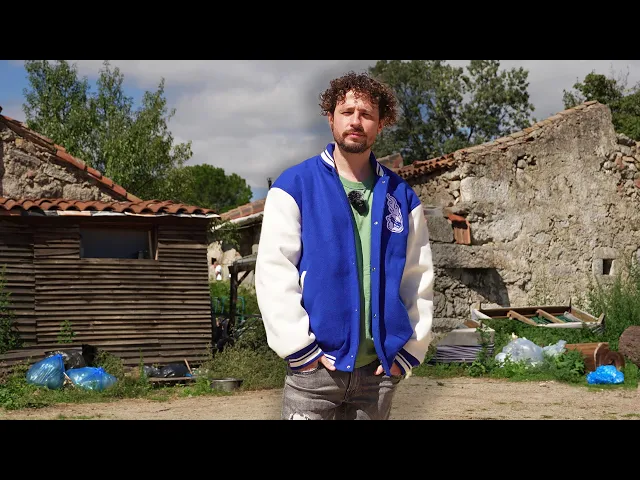
I didn't expect to come across something so profound and interesting. [Music] An "Okupas" town We find ourselves in Madrid, Spain, and today we've left the big city to visit the depopulated area of Navalquejido. Let's see, this is incredibly interesting.
I had read online that this was a fantastic ghost town, completely abandoned, no one in sight, and I came with the intention of making a video, like the ones we've done before on the channel, documenting how nature takes over architecture, how the planet slowly reclaims what's rightfully its own. But we were surprised to find out that as a depopulated area, it no longer qualifies as one. Nowadays, the former ghost town is inhabited by the so-called "Okupas," a topic that has been quite complex and somewhat controversial for many years, in the Spanish community Similar to what happens in many parts of the world, they are also known as invaders, or trespassers; these are people who occupy, as their name suggests, abandoned spaces.
demanding their basic right to housing, At least, this was the initial ideology of the movement, although over time, it has become quite corrupted, complicated, and highly controversial. Quite a sensible theme. So, perhaps that's the direction this video will take.
We will venture through the town, capture its essence, and see what it looks like today. Maybe we can even talk to some of the current locals. We'll also delve into the history of the town, which is quite fascinating.
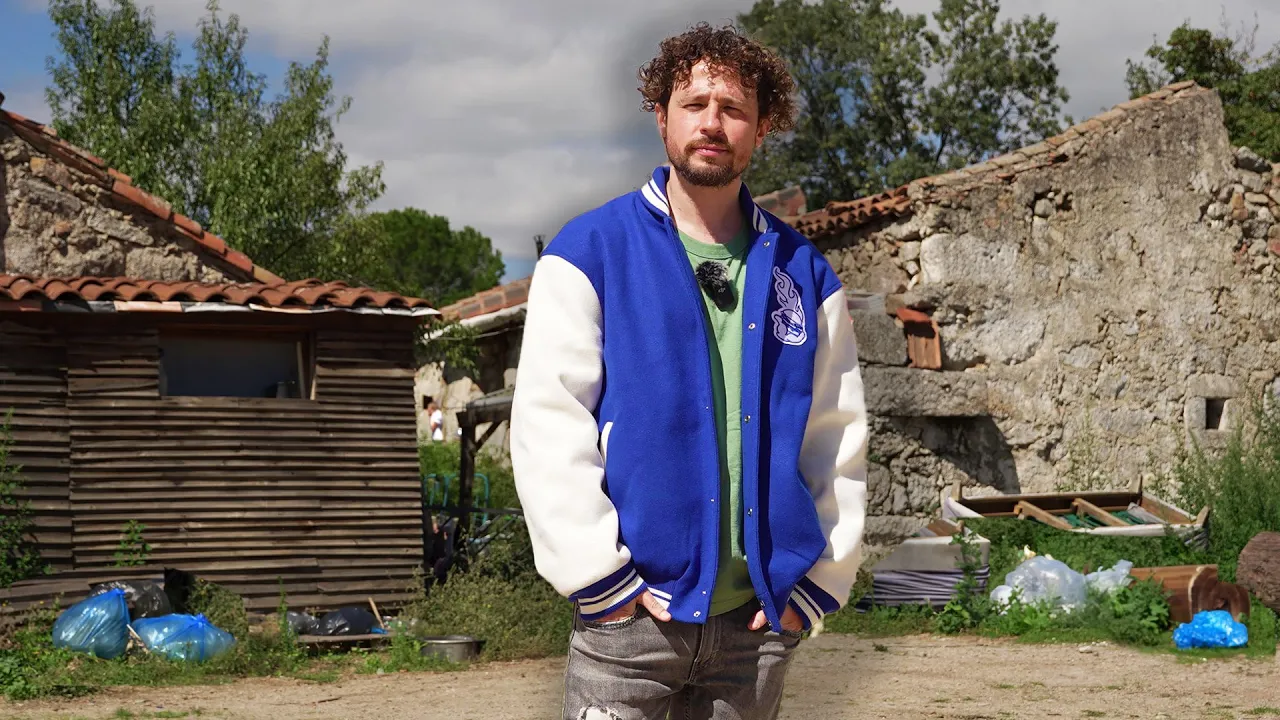
So, let's get this adventure started, and see what we discover in the former depopulated area of Navalquejido. Let's go! [Music] Wow, walking around here feels somewhat surreal because, yes, the houses appear to be in a state of decay, with weathered wood and quite broken bricks.
But it's clear that there is life in the area. It's very green, people have their crops, their little plants, and their laundry hanging out to dry. We just saw one with even a little pool and a sun lounger for enjoying the autumn sun.
Clearly, the days of the Ghost Town are in the past. While it's not a large community, you venture into open spaces, you come across many trucks. Some of the residents tell us that people live in these, what do you call them, motorhome?
Trailers? Some people live. Some of them live in the houses and structures we're seeing, but many live here, and they generate electricity using generators, because, as we've been learning.
The locals are very friendly and chatty, but, of course, they don't like to be recorded for obvious reasons. They also mention that despite having electrical installations and cables running around, theoretically, they can't have access to them. Likewise, there's no running water.
That seems worth mentioning because it speaks to what life must be like here. There's no paid water service with bills. Similarly, let's see for example, you can't get an internet service or certain conveniences.
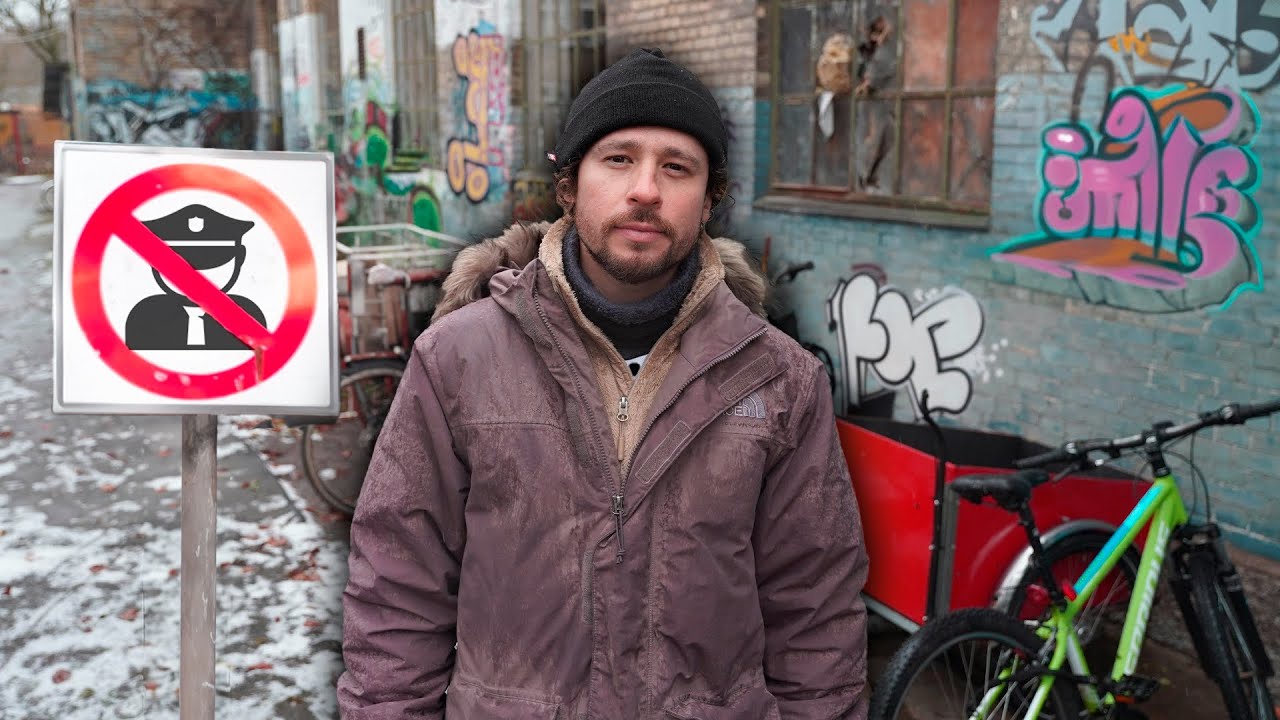
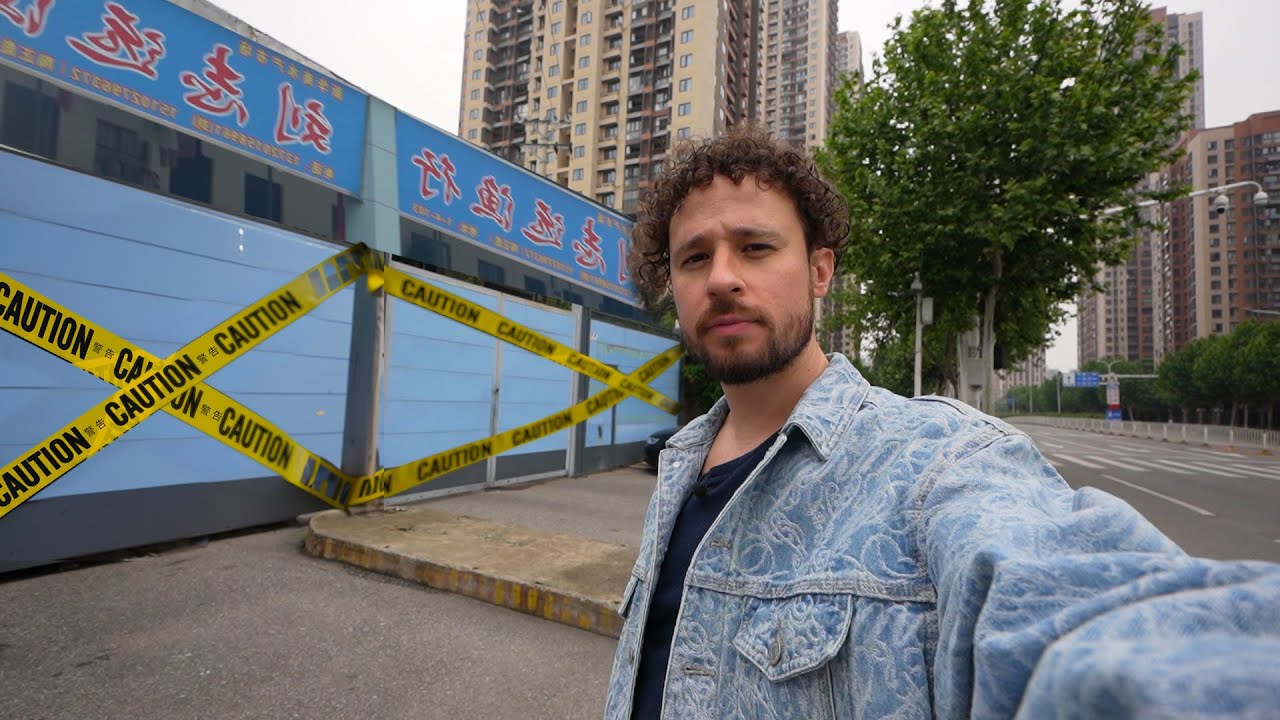
So, it's living in the rural, completely rural, depopulated side of Spain, adapting to a completely different lifestyle. The place we're in right now is the former Church of the town, which you can see is closed off with gates and even sealed with police tape. In theory, we had to bend the rules a bit to record here, but I don't think anyone minds; the nearest police station must be more than half an hour away from here.
Because, yes, it's a symbol of how this town has become a bit of a no man's land today. People from Madrid, for example, tell us that this church, this site, was well-known around here when I was younger; they used to have bonfires, raves, and wild parties here. Because, you see, you can walk around here, and you won't encounter anyone trying to enforce the law.
It's a bit like the Wild West. And the craziest thing is that towns like Navalquejigo, like the one we're exploring today, nowadays in Spain, it is estimated that there are more than 3000, 3000 towns with this appearance. This is a result of what's known as the rural exodus, which I want to tell you a bit more about.
The rural exodus refers to the movement of people from rural areas to large cities, driven by the search for better economic opportunities, improved education, and so on. Essentially, it's moving from a small village to a much larger community because you no longer saw hope in your hometown. The rural exodus in Spain peaked in the late 1980s and early 1990s, around the time it is estimated that this town, Navalquejigo, was abandoned.
Let me briefly tell you the history of this place. It's said that the first foundations of this community date back to around the 3rd century BC, so it's very, very old. Over the centuries, many things happened, and it reached its peak around the 1700s when the population numbered in the hundreds.
However, in the early 1900s, the town started to decline. Locals demanded the construction of a school, saying, "Hey, we have enough residents, we deserve a school for our children. " Authorities, though, reportedly told them no, that taxes and other issues would take priority, and they should continue transporting their children to schools in other communities.
That's when people began to move away. Eventually, in the 1980s, they all decided to leave for good, It is narrated that there was still one man, a lone inhabitant in 1989, who became a local celebrity. Eventually, he passed away.
It remained a ghost town for about eight years, as it is estimated that around 1997, the first squatters, or "okupas," arrived. This explains why there are nearly 3,000 towns in these conditions, as I mentioned earlier. This is where the ideology of these people, this movement, stems from.
It's a proper movement with a logo and all. In fact, they write "okupa" with a "K" like "Kilo. " Their ideology's basic principle is this: if there are so many unused homes in the country, why not inhabit them?
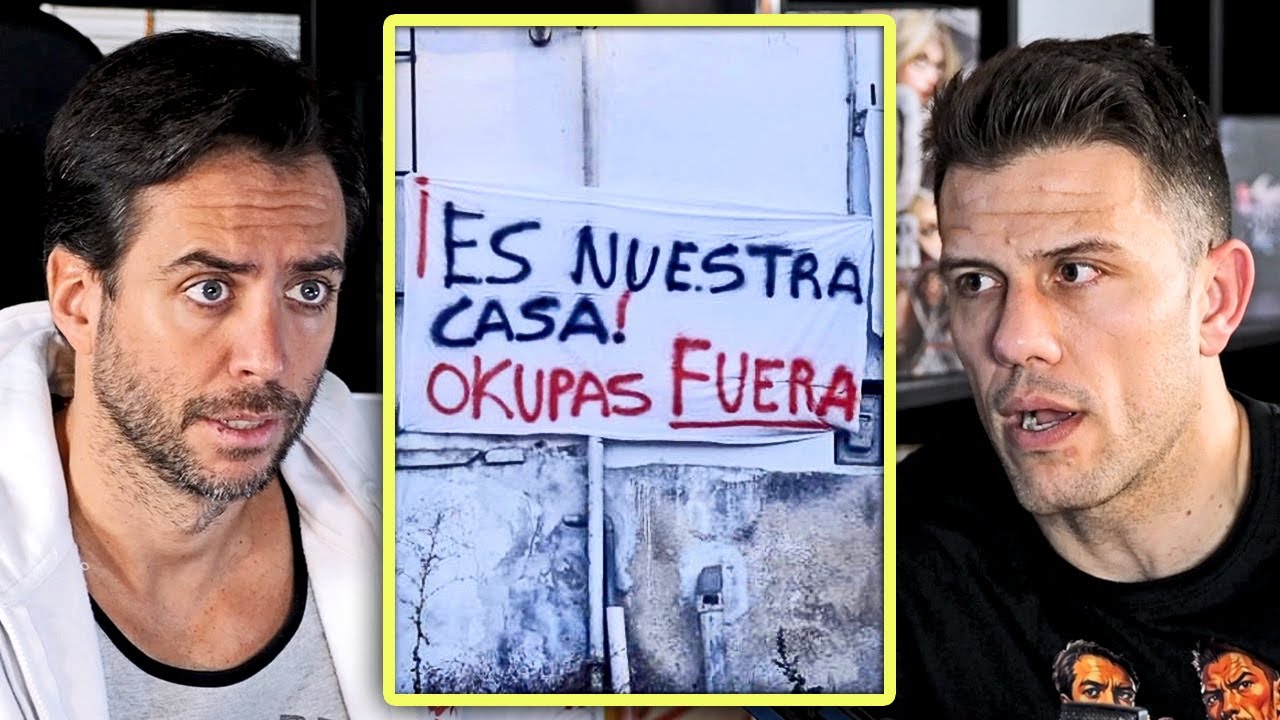
Why not try to preserve them and thus claim this basic right to housing? The major issue today is that this topic has expanded and become complicated to the point where properties that aren't necessarily abandoned are being occupied. Many people express fear about leaving their homes for a month, two, or three, because they're concerned someone might move in.
On top of that, there's a lot of talk about the law protecting squatters too much in the name of the right to housing. If a family occupies your home while you were away on vacation for, let's say, two or three months, you might not be able to evict them later. If there are children involved, it makes things even more complicated.
It has even reached the level where it's reported that there are professional Okupas who invade properties and then rent them to other families at an affordable price, enabling them to accumulate multiple properties and generate significant income essentially from occupying properties. Here's something that blew my mind: in Spain, nowadays, it's a matter, the existence of companies known as "desocupas," which translates to "people who vacate your home. " So, basically is to hire these tall and strong individuals to ideally intimidate people, without resorting to violence, out of your house or property.
These services can cost thousands of euros but are considered cheaper when you factor in the legal process, time, and the payments for services, rents, and mortgages, which could amount to much, much more. [Music] Yes, it's clear that the locals are very friendly until you bring out the camera. Just a little while ago, a colleague was chatting with us about his crops; he's been living here for fourteen years.
When we asked him if we could record him for the video, he literally said, "I'm fed up with videos. " So, completely understandable. He explained that legally, don't know what it means, but we couldn't record towards people's homes.
You see, we were all friendly and relaxed, but as soon as the camera was put away, the good attitude returned. [Music] Behind me, you can see an evident medium-sized community, perhaps about 20 people living there. We tried to approach, but they immediately told us, "No, not here.
" Obviously, they don't appreciate cameras given everything that's been happening. There was even a black dog that appeared a bit aggressive, not as friendly as the others we've seen. So, it's better not to push the issue.
But I do want to clarify what we were discussing earlier, right? About people who break into various properties and profit from this, and how it has become quite corrupted. This doesn't represent 100% the principles of the Okupa movement.
I want to be very specific about this because, as I mentioned, it's an extremely sensitive topic. In the beginning, it should focus solely on abandoned, unused properties. As we were discussing earlier, they are properties that neither the authorities, nor the citizens, nor anyone else will give a real use.
So, the logic behind it is like, if it's abandoned and genuinely not affecting anyone, then, sure, let it serve as a home for a few dozen or a few hundred people. But, yes, the problem arises when some people get smarter, take advantage of the law that protects them, and start occupying properties that aren't truly abandoned, have a high use and commercial value, So yes, that's when everything becomes corrupted, and that's when the movement's principles and ideology break down. But initially, and I want to clarify this, it's not entirely like that.
The more we talk to the locals, the more questions arise. For example, what happens with healthcare systems in communities like this? What about tax payments?
What happens with many issues? Because let's see, while a town like this did become depopulated at some point, there are many more rural communities that, over time, are losing inhabitants. Only elderly people continue to live there, and eventually, they will pass away.
The new generations want to live in established cities. So, this circumstance is only going to increase with time, and it's mind-boggling to think about what the future holds. Some measures have been implemented, not only here but also in other European countries.
For instance, Italy faces a similar issue, and they are starting to offer properties at very good prices to take advantage of the remote work boom. You don't necessarily have to be in the city; you can work from a remote community. So, that's one of the measures being taken, but.
. . will it be successful?
I don't know. What will the future of all this be? Pfff!
It's incredibly complex. [Music] Well, there you have it, a glimpse into the depopulated-yet-populated town of Navalquejigo, just one of around 3,000 areas in Spain currently facing these circumstances. It's a social issue that reflects a debate that may never see a final solution and will continue to divide opinions.
What do you think? I read you in the comments below, would you like to add any additional information about similar situations in your regions or countries. See you, as always, in a few days with a new video.
Goodbye.