If you're fasting to burn belly fat, you've probably been told that protein ruins everything. That the moment you eat, insulin spikes, fat burning stops, and autophagy shuts down. But a new high protein study shows something shocking.
You can eat 100 grams of protein, keep autophagy running, and burn belly fat without fasting. We have been told for years that our metabolism is like a light switch. You can either have the switch off fasting and cleaning or on eating and growing.
We were told you cannot do both. But what if the light switch theory is wrong? What if the body is not binary?
What if you could flip the switch to grow without turning off the switch to clean? A groundbreaking new study published in Cell Reports has just shattered this old dogma. It suggests that everything we thought we knew about the relationship between protein and autophagy is incomplete.
It reveals that you can actually consume massive amounts of protein up to 100 g in a single sitting without stopping the cellular cleanup process. This changes everything for how we approach diet, belly fat, and muscle preservation. To understand this paradox, we first need to understand the old logic.
It goes like this. Autophagy is a catabolic process. It happens when nutrients are scarce.
When you're starving, your body looks around for trash, old proteins, damaged organels, scinsesscent cells, and recycles them for energy. The trigger for this is a drop in mtor mamalian target of rapamy. Conversely, when you eat protein, especially leucine rich proteins, you spike mTor to build muscle.
Since mTor inhibits autophagy, the logic was simple. Protein kills autophagy. But the new data tells a different story.
The study looked at human subjects consuming different amounts of protein post exercise. They compared 25 g versus a massive 100 g. Conventional wisdom said the body could only use about 30 g at a time and the rest would be wasted or turned into sugar.
We were told that the cup of muscle synthesis overflows after 30 g. The results were shocking. First, the group eating 100 g of protein continued to synthesize muscle for hours longer than the low protein group.
There was no upper limit to absorption. This makes perfect evolutionary sense if you stop to think about it. Our ancestors did not have Tupperware.
They did not have protein shakes every 3 hours. If a tribe killed a mammoth or a buffalo, they had to feast. They might eat three, four, or 5 lbs of meat in a single sitting and then not eat again for 2 days.
If the human body wasted everything above 30 g, we would have died out as a species, we evolved to handle the feast. This logic, looking at evolution rather than just textbooks, is the core philosophy here at Chill Fit Mode. We cut through the confusing noise to find what actually works for human biology.
If you want to build a body that is resilient, not fragile, and you want science without the stress, make sure you are subscribed to the channel. Join the tribe and let's get back to the physiology. But here is the part that matters for your longevity and fat loss.
When they measured the molecular markers of autophagy in these subjects, the 100 g of protein did not shut down the autophagy signal. How is this possible? How can you eat a mammoth and still fast at the cellular level?
The answer lies in understanding that your body has different security sensors for different nutrients. We often conflate all food into one signal, but the body distinguishes between carbohydrates and proteins very differently. Carbohydrates are the loudest signal.
When you eat sugar or starch, you spike glucose, which spikes insulin. Insulin is the master switch. It screams at every cell in your body.
Energy is here. Stop cleaning. Start storing.
Insulin is a systemic shut off valve for autophagy. Protein, however, is a quieter signal. It triggers amino acid sensors, specifically one called cestrin 2.
While protein does raise insulin slightly, it does not flood the system like carbohydrates do. In the absence of high carbs, the protein signal is specific to repair, not necessarily to energy storage. This leads to the muscle sponge effect.
This is the critical mechanism the study highlighted. When you're in a fasted state or post-workout, your muscles are chemically starving. They're hyper sensitive.
When you consume that 100 g of protein, your muscles act like a dry sponge dropped in a bucket of water. They aggressively soak up the amino acids from the bloodstream to repair the damage. Because the muscles absorb the amino acids so rapidly, the systemic levels of nutrients in the rest of the body like in your liver or fat tissue remain relatively low.
This means that while your muscles are growing and abolism, your liver and fat cells might still perceive a low energy state, allowing them to continue autophagy. you have effectively compartmentalized your metabolism. Your building in one location and cleaning in another.
This dual state is amplified by the leucine threshold. Leucine is the primary amino acid that triggers muscle growth. As we age or if we become insulin resistant, our bodies develop anabolic resistance.
This means our muscles become deaf to the signal of protein. Eating 20 or 30 gram is no longer enough to turn on the machinery. You need a hammer.
You need a high dose. This study validates the idea that hitting a high protein threshold like 50, 70, or even 100 g is necessary to punch through that resistance. And because the body is so desperate for these amino acids, it prioritizes structural repair over shutting down the autophagy systems.
However, there is a critical catch and this is where most people get stuck. This phenomenon, the ability to eat protein and keep autophagy running was observed in lean, healthy individuals. When we look at the data for individuals who are overweight or obese, the story changes tragically.
This brings us to the concept of autophagic dysfunction. In mouse models and human studies involving obesity, we see something strange. The genetic markers for autophagy are actually elevated in obese individuals.
On paper, it looks like their bodies are trying to clean up. But when scientists look at the autophagic flux, the actual rate of successful recycling, it is flat. Nothing is happening.
Think of it like a car engine in the winter. In a lean body, you turn the key and the engine starts immediately. In an obese body, you're turning the key and the starter is cranking.
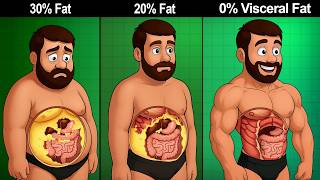
Click, click, click, but the engine never turns over. The body is screaming for autophagy because there is so much inflammation and damaged tissue largely driven by visceral fat. But the machinery is jammed.
This creates a vicious cycle. You carry excess belly fat because your metabolism is broken and you cannot fix the metabolism because the cleaning mechanism autophagy is clogged by the fat. So is this discouraging?
It shouldn't be. It is a road map. It tells us exactly what to do.
If you are currently overweight, your number one priority is not agonizing over whether 20 gram of protein will break your fast. Your priority is to strip off the visceral fat so your autophagy engine can actually start working again. Ironically, the best way to do this is not by starving yourself of protein, but by increasing it.
We must consider the thermic effect of food. Protein is biologically expensive. It costs the body nearly 30% of the calories in the protein just to digest and assimilate it.
If you eat 1,000 calories of protein, your body only nets about 700. If you eat 1,000 calories of fat or sugar, your body nets almost all of it. By increasing your protein intake drastically, you are increasing your metabolic rate.
You are burning calories. Just by digesting dinner. Here's the protocol based on this new science.
If you are fasting to burn belly fat, how you break your fast matters more than how long you fast. The old advice was to break a fast gently with bone broth or fat to stay in ketosis. The new science suggests that if you want to maximize the autophagy muscle dual state, you should break your fast with a high bolus of very lean protein.
We are talking about chicken breast, white fish, egg whites or a high quality whey isolate. Why lean? Because while protein might not shut down autophagy in this context, adding a massive amount of carbohydrates or fats alongside the protein might provide too much energy too quickly, signaling the body that the famine is totally over.
By consuming lean protein, you provide the amino acids needed to protect your muscle tissue, which raises your metabolic rate without flooding the system with excess energy that stops the cleanup process. For the lean individual, this is a superpower. You can train hard, fast for 16 hours, and then sit down to a massive protein meal knowing you aren't ruining your longevity benefits.
You are becoming a hybrid machine for the individual with weight to lose. This removes the fear. You do not need to starve to get the benefits of cellular repair.
In fact, by eating 100 g of protein, you trigger satiety hormones like PYY and GLP1 that prevent you from overeating junk food. Later, you protect the muscle mass that drives your metabolism. You lose the weight and as the weight drops your internal autophagy starter begins to repair itself.
One day you turn the key and the engine roars to life. This study liberates us from the fear of food. It tells us that biology is resilient.
It tells us that the body wants to repair itself. And if we provide the right building blocks, protein, in the right context after stress or fasting, we don't have to choose between looking good today and living a long time tomorrow. We can do both.
So the next time you finish a workout or end a fast, don't be afraid of the shaker cup or the steak. Your body is smart enough to build and clean at the same time. You just have to give it the signal.