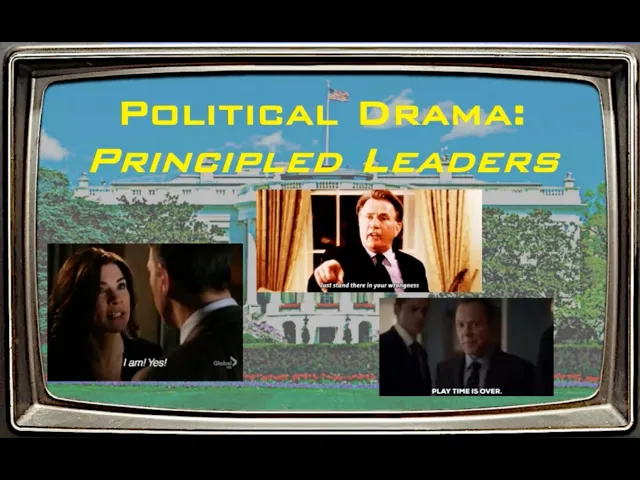
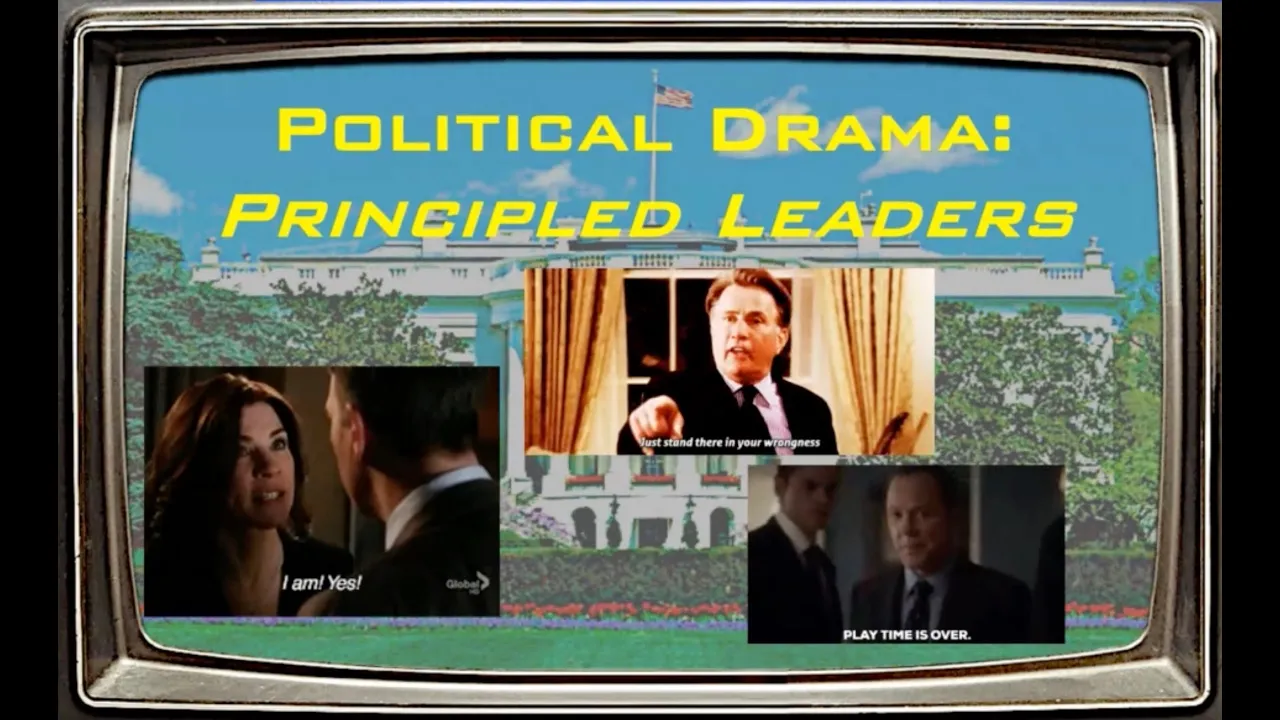
welcome back we now turn to looking at political dramas and we look first at those involving what we might consider principal need uh principal leaders so first thing in this regard is we have to ask ourselves what makes for a political drama well as Trion notes a political drama is a serialized narrative that is it tells a story over a single episode or a multiple number of episodes but it's a fictionalized narrative about things that are going on in politics but it is serialized so it's not meant to immediately respond to something that's going on
uh it does try to bring in a storyline from further back but it also seeks to carry that say over a single episode there's usually something then a multiple number of episodes and then possibly over two or three seasons now in this regard political dramas matter because they shape perceptions of political culture they speak to what values people may think are important or what values the writers think are important and should be addressed in the drama itself they also give us the opportunity to understand how things are done in the system uh whether it's legislation
or how stuff gets passed and how stuff gets passed to how leadership works and individuals that run What's called the executive branch of government that is the part of the government that does the job of getting things done like political leaders of deciding what to do or bureaucrats who actually implement the stuff as seen in a show like Parks and Recreation and of course it helps us to sort of get a sense of what are some of the dilemmas that are faced by those individuals that are engaged in those political uh institutions and finally it
sort of gives us a sense of how might real world issues play out or sometimes play out differently for example as we'll talk about with the West Wing the show itself self seem to have storylines that were different than the prevailing political leadership or the prevailing uh political views that were out there and were in control of government but the show itself often dealt with similar issues but just pushed a different point of view on them or pushed a different solution to the same sorts of issues that were being played out so they can be
both a fictional representation of what happened in the real world as well as the fictional possibility of a different type of ending things that are going on in the real world as well now further to this we can also suggest that there are two different types uh of political dramas and I think Tron is correct to sort of say there's this sort of big um difference between the two not a sort a big difference but sort of a difference that does matter a difference with distinction in this regard is one there are ones about the
political process so as seen in the little GIF over there or GIF whichever you prefer of uh the show distinguished um s that distinguished designated Survivor the president in this regard is an individual trying to pass laws do things Etc and then the same person uh kefir souland again a Canadian a president now but a national security agent uh before uh was involved in National Security issues and that tends to be the secondary sort of main cluster of shows now that said we don't mean to say that those shows are exclusive of each other uh
the political process shows often deal with National Security the National Security shows often butt up against issues involving how does political process work so what is the key difference in political dramas versus a bunch of other shows well the one thing that we should also suggest here is that in the case of the sort of political process drama Etc like that there is this debate around moral legibility and this is around the values and the beliefs that we can relate to and whether or not not we think they are legitimate and correct in the way
that they're handled and whether or not we ourselves could see ourselves engaging with that same problem or that same issue similarly in this case in these shows character struggle with exactly those those sorts of issues that we might what to do about gun control what to do about abortion rights what do we do uh related to uh the treatment of prisoners of War what do we want to deal do with if some country decides they're going to launch a nuclear weapon at does or a chemical bomb attack or things of that variety so the characters
struggle with issues that we can say okay I've thought about that or I might have an interest in addressing that others suggest it's also because of the fact that these things have Shades of Gray it's not that easy to go the right answer to this is the following the right way to handle uh if somebody is a terrorist is to torture them to get information and we might also suggest that their Shades of Gray in the sense that while we identify with their struggle we may also identify with things that aren't in fact for example
factual in that regard all the research on torture political scientists psychologists Etc will show does not lead us to believe that torture itself leads to good information that is actually usable in any meaningful way um there's the odd instances where it does but mostly it does not so someone like Jack Bower in the National Security System talk about 24 Etc he always gets the answers he needs it's very rare unless somebody's trying to pull a stunt on him but then we sort of forget hey wait a second uh this is a TV show this was
going to go whever the writers wanted in real life the FBI are not interrogating people that are writers they're interrogating actual terrorists and the terrorists are not interrogating FBI people that are just writers going okay well where does the story go now they're actually people who are in the FBI for example so we want to suggest that we can identify with their struggle and so the fictionalized narrative in these sorts of political dramas gives us more legibility so we can connect and we want to watch the show want to engage with the show and consider
the different themes in them and the different political issues and ask ourselves what would I do if confronted with terrorism what would I do if confronted with nuclear attack what would I do if another country invaded this place and then we would look to the leadership and others Etc and say I would agree I would disagree I think this is wrong this is bogus Etc now further to this we can also suggest that political dramas often put on trial political culture itself often times the system of politics itself is considered fairly corrupt and therefore is
seen as the enemy of the good that the inside of Washington or for that matter shows that look at Britain and other countries as well if you watch shows like borgan or if you've seen shows about like house of cards the old version of it uh in uh in in England Etc the system is seen as generally corrupt and people trying to do the right thing in political dramas especially ones with where we have leaders who are trying to be principled in this regard that the system is the enemy of the good it tries to
make sure those people try to do the right thing are somehow negatively affected or can't accomplish what they need to do or they have to make really horrible compromises if they want to accomplish some particularly good thing for somebody they have to deal a bad hand to somebody else instead it's also the case that it shows the political culture of uh most political institutions as being self-interested that the individuals in these institutions have the wrong values by and large uh other than sort of the handful of people for example in the West Wing the main
difference between uh the inside of the West Wing and the rest of Congress Etc is that the people of the West Wing are trying to do the right thing and the rest of the institution has all the wrong value self-interested people people trying to get ahead make a buck get power uh you know they they engage in all sorts of behavior that might be morally problematic all of those sorts of things show that the culture of the political institutions and of the political culture uh of the political system Etc is what is the problem and
the political culture itself then gets called out for these sorts of values finally it also genuinely Trends to show the leader as a savior a protector or a redeemer in most of the political dramas with principal Leaders The Leader themselves are someone that we want to look to and say this person will know how to solve the problem or this person can lead us through a really bad situation so we try to portray or political dramas often portray the leader as a savior of some variety the one who will come in at the last minute
and save us is a protector who's always trying to do the right thing to keep us safe or to keep us protected or give us jobs Etc and the Redeemer even in the worst scenarios where things go wrong and horrible things have to be done whether it's a call to war or an assassination of a bad leader Etc all of those things are done by the leader in order to redeem themselves or redeem us or to redeem the values that we have we believe in these values and that person did not uh we believe in
these political sensibilities and they did not we have a political culture that values freedom for example over authoritarianism and so those things have to be enunciated repeatedly and told that we are doing this for a greater good a greater cause and we look to the leader that's provided in the fictionalized narrative in the storyline to provide those sorts of frames for us to work with now further to this we would also want to suggest that there is a thematic def we're going to focus on the romantic or idealized leader and there are also the ones
that focus on a sort of cynical and manipulative process we're going to talk to that about the tortured leaders uh in a little bit as well and then we want to also suggest that there's often an attempt to sort of link up with particular viewers values and beliefs oftentimes TV shows uh in the US in particular but also in Canada Britain and elsewhere Aline up with Urban values more liberal values or left values or Progressive values however you want to say in this regard and we also want to suggest that it may it may be
targeting certain viewers so it does that and therefore we also want to suggest that writers producers and the network themselves have views on what the political culture should be and what sort of political idea should be out there so those views also come into the way in which political TV in terms of political drama is put out there so we should be cognizant that there is somebody writing this there is somebody making character decisions and decisions about what news to put forward or sorry what uh storylines to put forward and even what news articles and
what news items to pick on to develop that so thanks very much for listening and we will catch you at the next video