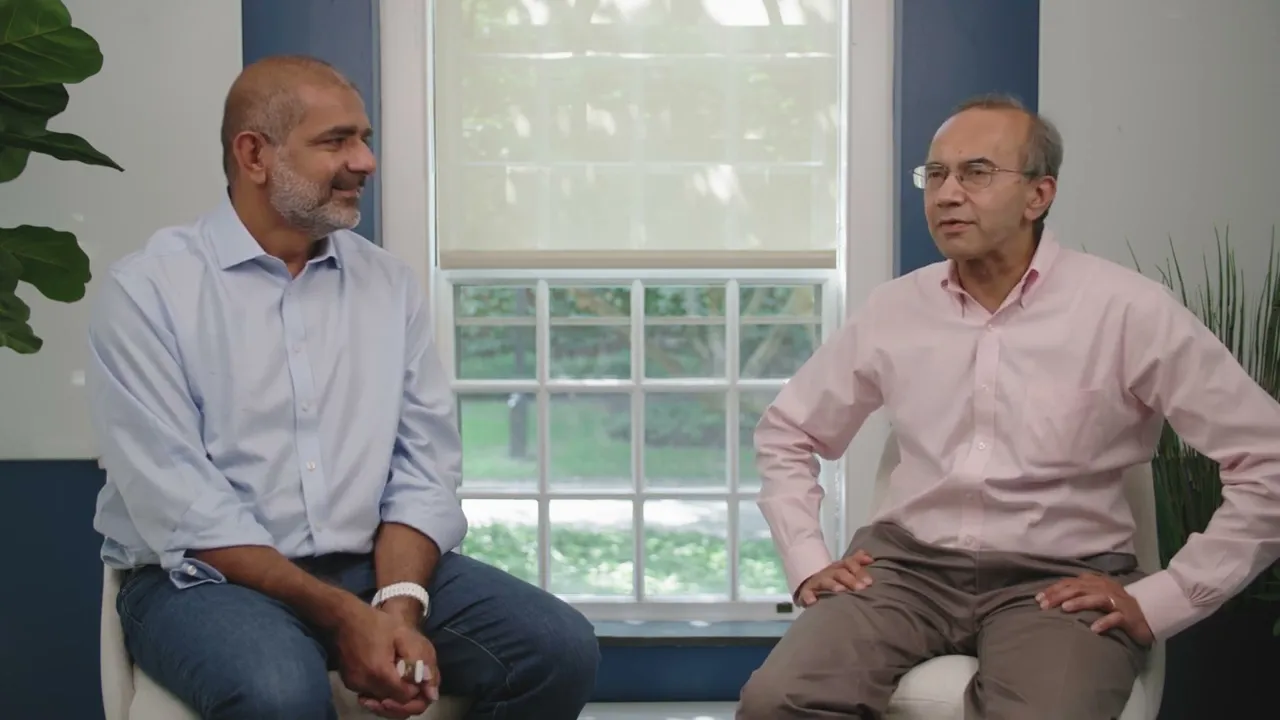
hey thin since you went to school in the last century do you know what this uh what this image is what does this image remind you it looks like an image somebody with my limited skills would produce today with your with your iPhone yes yeah because you know I'm I'm kind of little bit older my hands my cheick and who knows it's a bad image of somebody's cute baby yes yes so in fact theun this is uh the first ever digital image before I was born this before you were born 1957 this is baby kers
so he's older than you theun not that much older uh and uh and this was the first Digital Image and uh it was 176 by 176 pixels right so this this started the the Instagram generation the Tik Tok generation in many ways long time ago okay um and the why is this important because this sort of Builds on our conversation about digital images once you have a digital image right you can take it and then you can infinitely reproduce it right you can make it available to anybody and you know this revolution killed Kodak right
uh and Polaroid right because they didn't understand that it was no longer about film analog film but about digital images right and so this is this is the digital world we're living in but now let's take the digital world these digital images and apply some algorithms right so I'm showing you like a view of of baby kers right uh this old image and let's see you know what would happen if you added a neural network to it and sad of said like what what would the neural network do right well so then you take this
image right and you make it look better right they can improve upon it because it has some rules about how to improve upon it but you can also do fun things like age it right so then you have like ancient baby kers as well given you can do all these things with algorithms and Ai and so what we're going to try to understand now is that the digitization revolution that we talked about is now being U supercharged now with algorithms and artificial intelligence which is creating a whole new set of opportunities for for all of
us as well great when most people think about AI the the immediate um uh reflection and points of connections are things that that scientists call strong AI which is from science fiction autonomous robots c2p R2D2 doing their right Star Wars Star Trek all that kind of stuff and so and so so that's known as strong AI but that's still the realm of Science Fiction right uh where all the action is actually is what's known as weak AI which is what you were talking about right any activity that humans once did that computers can now do
so like make some inference like oh is this a good image or a bad image is it a cat or a dog you know that's known as weak Ai and what's so interesting is that weki is basically a combination of Statistics that's been around for a long time applied you know to to to lots of data so we talked about the fact that there's a data explosion happening with digitization right and and lots of Compu lots of lots of computers and cheap and cheap computing power right becoming available so so we AI has basically changed
the world um and um so it's statistics yes enabled by large data sets and cheap compute exactly exactly in fact the one of the first uh U cool examples of AI was do you remember a time when you had email and there's like lots of spam coming in like lots of spam was coming in and then overnight it went away the reason why it went away was because some people got smart and said I can just use a logistic regression yeah right if you're taking statistics you know logistic regression right and differentiate between good email
and bad email one and zero one and zero good email bad email I can have theun label a bunch of bad emails from me saying this is Spam this is Spam this is Spam right and know the remaining is good email and then that gives me the characteristics to then being able to predict if a new email is good or bad spam or not and that's all week AI being put into place and by the way right all of us now use weak AI so if you're using a smartphone right if you're if you're uh
watching Tik Tok videos if you're using WeChat or using uh WhatsApp right if you're on Facebook right any any kind of online platform using Netflix using any kind of online platform right we AI is powering all those things okay when you use Google when you use uh uh Microsoft is all DD you name it is all using we a today so we become consumers of it we just didn't know that was going on and what you see through is a ton of hype right a ton of hype about AI now why do you think there
is a like like you know you're a quasi Economist what what mathematicians Economist if if there's a lot of lot of activity what what do you think might be going on people are imagining and and projecting their their hopes and aspirations and worse fears onto some imagin future yeah exactly right so so one one thing that's happening is that the the demand for AI is increasing right because all of a sudden we're imagining oh you know could AI make us better teachers you know could AI make better dentists could AI make better drivers right so
we're imagining new opportunities for AI um but or new fears or new ex exactly saying would I be replaced as a huge HPS Professor by some AI bot that simulates the class that's Sor right but it might be good for us in our Aspire Mission if we had the theun bot that could teach a million a million people you have to like AB Mina won't bring me in every weekend that's right that's right do a session we could be Bots you you don't know um so so so so certainly there is uh you know like
this this view of the demand for increased but also importantly right the supply of AI has also increased in the sense of the cost the cost to innovate with AI has dropped dramatically what would take a team of a thousand people doing something can now be done with 10 people yeah right and over the last 20 years we've sort of seen this happen where both again comput has been computer power has been democratized uh access to to the algorithms through open source has happened as well and loss of data are emerging as well and that's
why we see so much uh so much hype and so you know uh you know I claim that we're sort of entering this age of AI where U much of our personal lives is being run through AI systems we just don't know we don't necessarily know it's not explicit it's it's not explicit but with the introduction of Chad GPT most recently you know it's now become a f Center of of of what we could do with it for me one of the most um insightful uh visions of AI you know came from this photo so
what is this what does this photo remind you this is a Dutch photo rembrand this is a rembrand a rembrand yeah it's a rbrand in fact this whole image was generated by an AI system okay um and when I showed this image at a conference in in Australia um this uh this older than you gentleman stood up and said oh I know what that image is that's a rembrand I've never seen this rembrand before it's a rembrand I said sir how do you know goes well I'm the curator of the Australian Portrait Gallery I see
and I did my PhD REM on rembrand so this looks like a classic early rembrand I'm like sir let's watch this video together and you tell me if you think this is the real rembrand or not so we're going to watch a video about how this because we're talking about AI how AI have generated this image this this image one of his great achievements one of rem's great achievements was to portray human emotions in a much more convincing way than artists had before him and in many ways for all time [Music] at in we believe
in the power of innovation what it can mean to people we want to bring this Innovative Spirit to our sponsorship of Dutch art and culture we knew that for this challenge we needed to teen up with experts from various fields to make this come to life we're using a lot of data to improve business life but we haven't been using data that much in a way that touches the human soul you could say that we use technology and data like rbrand used his paints and his brushes to create something [Music] new the first step was
to study the works of rembrand in order to create an extensive database We Gather the data from his collection of paintings from many different sources including 3D scans and upscale images using a deep learning algorithm because a significant percentage of rembrand paintings were portraits we analyze the demography of the faces in these paintings looking at factors like gender age and head Direction the data led us to the conclusion that the subject should be a portrit of a Caucasian male with facial hair between 30 and 40 years old in dark clothing with a collar wearing a
hat and facing to the right from there we started to extract features only with faces that were related to that specific profile and we had to create a whole painting from just data and we used uh statistical analysis and various algorithms to extract the features that make Rand [Music] rbrand we took parts of the face and we started to compare them and then based on this we're able to create a typical Rembrant eye or nose or mouth or ear after generating the features we were focusing on the face proportions we used an algorithm that can
detect over 60 points in a painting we were able to align the faces and estimate the distance between the eyes the nose and the mouth and the ears and painting is not a 2d picture it's 3D you can see the confence you can see the process and that's what makes the painting come alive a hive map is essential to make the painting a painting we incorporated the height map into the painting and printed on a 3D printer that uses a special paint based UV ink it printed many layers one on top of the other which
resulted in the height and texture of the final painting [Music] it's sometimes a magical moment to see a painting for the first time even if it's computer generated for me it is something special I would have believed if I would saw it in a museum that it would have been a a real REM rant uh just one I haven't seen before so darun what' you think pretty compelling right yeah amazing right makes you think about what you know soon we'll have like 3D Holograms computered by AI projected and we won need to be here yeah
but you know also what's interesting is like you know you at the you're on the board of directors of the of the MFA you know Museum of fin I st down but I was seven eight years seven or eight years you were on the board of directors for the Museum of Fine Arts and now art and art history is going to be mediated through AI fabulous right it's incredible right and when this when this portrait got released there were two types of examples uh reactions m one reaction was the best thing ever oh my God
how incredible how great right and you can imagine also what the other reaction was right the worst thing for arts and humanities and creative expression and that everything's been automated blah blah blah blah right right and so this quote by one of the leading art critics in the gardien said you know the digital rembrand a new way to mock art made by fools right and the point to note is that as these Technologies become more and more widespread right we're going to have this dual reaction right a set of people are going to love it
embrace it and I said people are going to resist it and push against it and even for us you remember how many of the folks out of the hard business school were against online teaching y absolutely right no way we can do the case method online on Zoom oh my God how terrible and then Co happened and then oh my God we can teach on Zoom that's the only way we could do it right and so so this this what I want to tell people is that as cool as this technology is and as cool
as the early adopters will take it there will be resistance yeah for you know I I I just want to pause you for a second because this is a I think a really important point and and we've already we've already mentioned it before but technology is not per se good or bad yeah it's just is it's like a hammer if I take a hammer and I hit a nail it's productive hopefully if I take it and I hit you on the head it's not productive so it's a little bit like that and reflecting back on
on uh so I'm huge Museum lover to my to my kids uh horror because that's how you do you dve all the museum all the museums they Papa not one for Museum so but I've seen this in museums all over including at the our local MFA which I love as an institution um is that there is such visceral fear um not necessarily coming from do I have a job and not have a job or what do people you know think about my skill sets but just coming from being relatively uninformed about what's going on yeah
and I I think there's a deep human reality there is that when something completely new happens relatively few people take the time to find out enough to then realize whether they should be happy or not happy exactly and to me that's you know we we're trying to educate leaders we're trying to educate change agents and we're aspiring with the Spire to do that for millions of young people around the world is that you have to take the time time to lean into this newness before you form an opinion off there yeah but also importantly I
think I think what you're saying is that that for for our participants this is going to be the reality like we grew up yeah we grew up in a world where calculators were banned from classrooms yes right uh and then the internet happened and all that kind of stuff happened and so we've been through these waves but all of them are born into this and you this is going to be like the oxygen I started teaching at Harvard College um two days ago in my my course on economic development and the first thing I said
was please use chat GPD freely yes in whatever you want just let us know how you're using it so that we can adapt and do it together so I think I'd like to model that kind of that kind of uh Behavior with new and for for our participants embracing this understanding it and then making a judgment and this is and by the way this is not just for technologist this is for everybody everybody everybody needs to understand and and be able to put this into place because whether you've be the Arts Humanities Health Care law
politics this is the core this is going to be the core core part of things that you need to understand