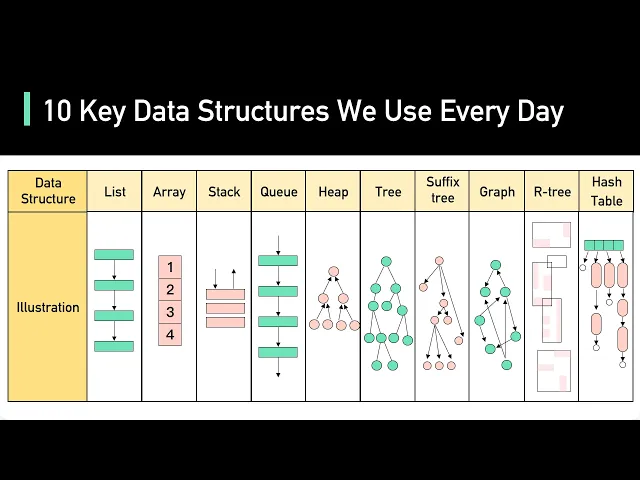
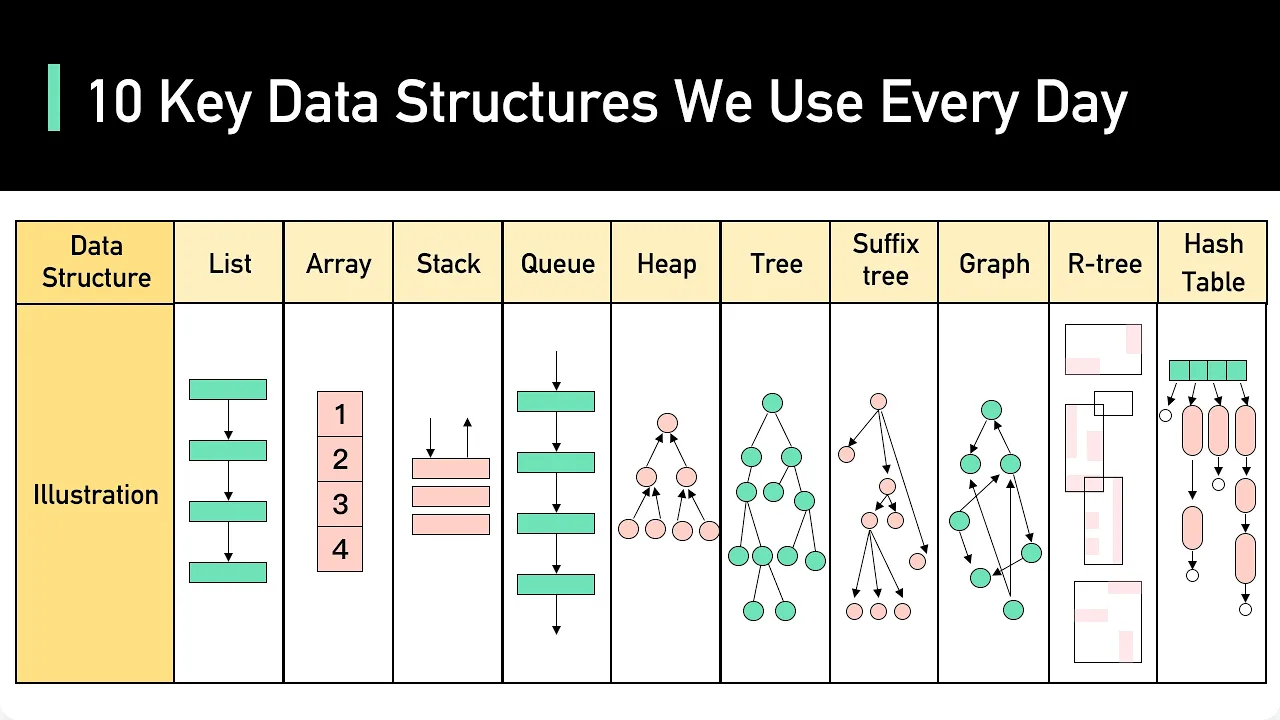
[Music] in this video we discuss a topic That's essential to every software developer data structures we use them every day and they play a critical role in building efficient systems so let's Dive Right In and take a closer look at some common examples let's start by discussing lists lists are a versatile and essential data structure in software development they are great for storing and manipulating order data they are useful in various applications like task management social media feeds and shopping carts in a task management application a list can be used to store and organized tasks
for each user task can be added removed or reordered easily and user can mark them as complete as needed lists are also useful in social media applications like Twitter where they can store and display a users feed in real time ensuring the latest content is shown in the correct order arrays are another fundamental data structure they provide a fix siiz order collection of elements they're particularly well suited for situations where the size of the collection is known or doesn't change frequently arrays are commonly used in mathematical operations storing large data sets or when there's a
need for random access to elements for example in a weather application an array could be used to store temperature readings for a specific location over a defined period this allows for easy calculations like averages and trans arrays are also widely used in image processing where each pixel's color data can be represented in a two-dimensional array it enables efficient manipulation and transform of the image next we have stacks Stacks follow the last in first out principle they are perfect for supporting undo and redo operations in text editors or maintaining browsing history in web browsers in a
text editor a stack can be used to store each change made to the text making it simple to revert to a previous state when the user triggers an undo operation qes operate on a first in first out basis they are good for managing printer jobs sending user actions in games or handling messages in chat applications in chat applications a q can be used to store incoming messages in the order they are received it ensures that they are displayed to the recipient in the correct sequence heaps on the other hand are used for task scheduling and
memory management they're especially helpful in implementing priority cues where we need to access the highest or lowest priority item efficiently trees organize data hierarchically they are useful for representing data with natural hierarchies or relationships they can be used in various applications like database indexing AI decision making or file systems in AI decision making trees like decision trees are used in machine learning for classification tasks trees are also used in database indexing where they can help speed up search insert or delete operations for example B trees and B+ trees are commonly used in relational databases to
efficiently manage and index large amounts of data hash tables for efficient data lookup insertion and deletion they use a hash function to map keys to their corresponding storage locations it enables constant time access to the store values hash tables are widely used in various applications such as search engines caching systems and programming language interpreters or compilers in search engines hash tables can be used to store and quickly retrieve index data based on keywords this provides fast and relevant search results caching systems may use hash tables to store and manage cache data it allows for Rapid
access to frequently requested resources and improves overall system performance another example is the implementation of symbol tables in programming language interpretors or compilers hash tables can be used to efficiently manage and look up variables functions and other symbols defined in the source code suffix trees are specialized for searching strings in documents this makes them perfect for text editors and search algorithms in a search engine a suffix tree can be used to efficiently locate all occurrences of a search term within a large Corpus of text graphs are all about tracking relationships and finding paths this makes
them invaluable in social networks recommendation engines and path finding algorithms in a social network a graph can be used to represent the connections between users it enables features like friend suggestions or analyzing Network Trends R trees are good at finding nearest neighbors they are crucial for mapping apps and geolocation services in a mapping application all trees can be used to store spatial data such as points of interest this enables efficient queries to find the nearest locations based on the users's current positions now let's discuss cach friendless and how it relates to various data structures including
lists arrays and other mentioned earlier in the video CPU cach is a small fast memory between the main memory and the CPU it stores recently accessed data and instructions so the CPU can access them quickly without fetching them from the slower main memory now different data structures have varying levels of cach friendliness based on how their elements are store in memory contiguous memory storage like that in arrays allow for better cach locality and fewer cach misses resulting in improved performance when an array element is accessed the Cache can prefetch and store nearby elements anticipating that
they might be accessed soon on the other hand data structures with non-contiguous memory storage like link list can experience more cach misses and reduce performance in the link list elements that story in notes scatter throughout the memory and each note contains a pointer to the next note in the sequence this makes it difficult for the CPU to predict and load the next Noe before it's needed the other data structures such as trees hash tables and graphs also have varying degrees of cash friendliness based on the implementation and use case now this disparity in Access times
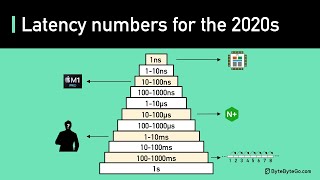
can lead to Performance issues in modern Computing particularly in situations where cash misses occur frequently we should be mindful of this when working with performance critical application and choose the appropriate data structure based on the specific requirements and constraints of the projects and there you have it these are just some of the many data structures we use every day as software developers understanding and mastering these data structures will help us build more efficient systems making us better at our craft if you like our videos you may like our system design newsletter as well it covers
topics and Trends in large scale system design trusted by 300,000 readers subscribed at blog. byby go.com