In the ocean, there's no easy escape if something's hunting you. No trees to climb, no tall grass to disappear [music] into. Out here, only the masters of camouflage survive.
Take the herring, whose dazzling sides help it blend in by reflecting its surroundings. These mini mirrors keep it safe in shallow, suns soaked waters. [music] But send it another few hundred meters down and even the fatest glint becomes a death sentence.
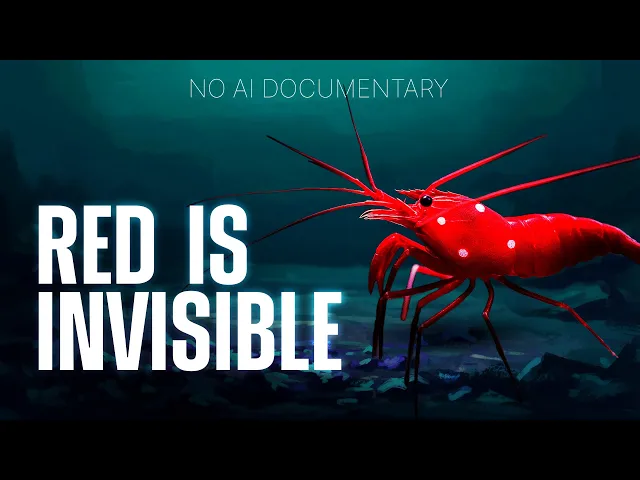
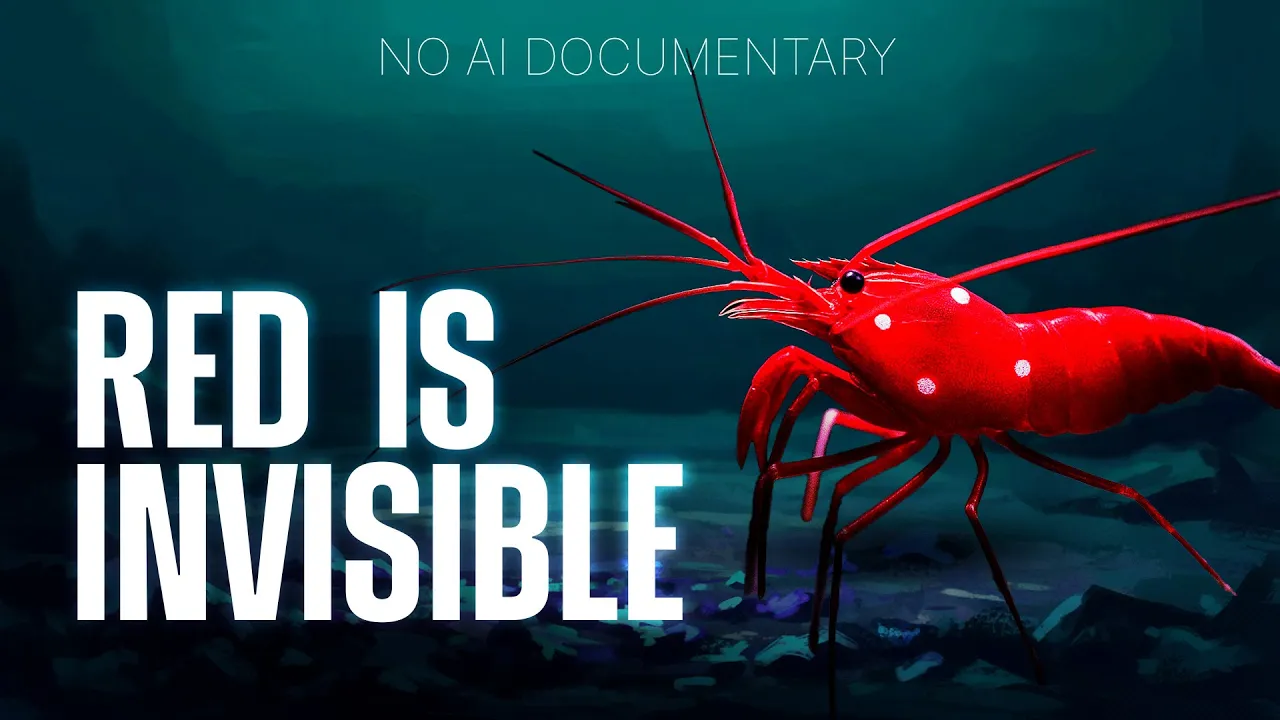
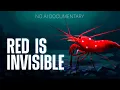
All this deep sea shrimp whose red skin makes it invisible in the deep but an easy target in sunlit waters. [music] Every layer of the ocean requires its own adaptations. And the deeper you go, the stranger it becomes.
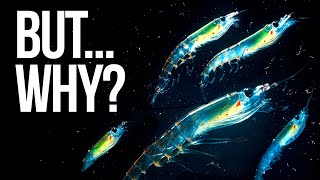
In this video, we're journeying down the four main ocean layers to showcase the unique camouflage tactics within each one, meet some elusive masters of disguise, [music] and dive into the science behind disappearing. How can an animal even become [music] transparent? Why would being red be an advantage in the deep ocean?
And does the perfect camouflage really exist? [music] We start our journey at [music] the surface where golden rays pierce through crystalclear water painting everything in shimmering turquoise patterns. The temperature is comfortable here, welcoming.
This is the sunlight zone, teeming with energy and movement, where life explodes [music] in abundance around you. But don't get too comfortable. Danger is always [music] lurking just around the corner.
Predators like the leatherback turtle patrol [music] these well-lit waters looking for their next meal. Nearby drifts a moon jelly. They come in all shapes and sizes, ranging from 5 to 40 cm in [music] diameter.
They lack strong stingers, which makes them extra vulnerable in the open ocean. If the turtle spots it, [music] the jelly doesn't stand a chance. Leatherbacks are fast and agile swimmers capable of reaching up to 35 km an hour.
The jelly, it covers a mega 7 m per hour. [music] So, the jell's only hope is to slip by the turtle undetected. And for that, [music] it relies on its transparency.
It's almost impossible to notice until you get really close. But what exactly makes [music] creatures like the moon jelly see-through? Well, it's physics.
When light hits an object, one of four things can happen. [music] It can be fully reflected, fully absorbed, pass through the object unobstructed, or be scattered in different directions. It's the reflection and absorption of light that make things visible in the first place.
So, the light passing through or being scattered are the most relevant adaptations for vanishing in well-lit waters. [music] Scattering happens when light is bounced around by small structures inside a material, things like cells, organels, or fibers. The more uneven and varied the internal makeup, the more light scatters, and the easier it is to see the creature.
So, to become transparent, it's crucial to minimize this scattering. Moon jellies are masters of this art, as are a few creatures we'll explore later. Their [music] incredibly simple anatomies make it easier to maintain a bell-shaped body.
Look closely. You won't find any lungs, blood, or a bladder. Instead, most of its body is made up of thick jelly-ike material with very few cells.
This consistent body composition minimizes light scattering and turns the jellyfish transparent. But there's still one more problem. When light hits a new material, for example, when traveling from air into water, it [music] bends slightly.
That's because the refractive index of water is different from that of air. The same happens [music] when light traveling through ocean water hits the jellyfish. If the refractive index of the jellyfish is too different from that of water, its silhouette will be visible as a ghostly outline, a dead giveaway to hungry leatherback turtles.
To solve this, the moon jelly must [music] match the refractive index of water as closely as possible. That's why [music] most creatures in the sunlight zone evolve to be largely composed of water. So when light [music] travels from the water through their body, it passes through almost without bending.
And just like that, they vanish in plain sight. But jellyfish [music] aren't the only transparent creatures in these shallow waters. This is a convict [music] surgeon fish.
They're colorful, beautiful creatures that roam the tropical shallows [music] of the Indo-Pacific. But take a look at their lavi. Their transparency is their invisibility cloak.
And it works well for a while. As they begin [music] to develop their internal organs, muscles, scales, and fins, these new body parts bring with them pigmentation. But what [music] do you notice about this coloration?
It's all clustered in one place. To remain transparent [music] for as long as possible, the surgeon fish lavi compact their organs in [music] one spot. This reduces the total area of coloration on their bodies, keeping them camouflaged and safe until adulthood.
Quite the evolutionary [music] adaptation. In the sunlight zone, camouflage is all about making light [music] your ally. Too much distortion, scattering, or bending, [music] and suddenly your outline appears for all to see.
The simpler, flatter, and more uniform the body, the easier it is to vanish. [music] Banded together like a disco ball, a dense cloud of fish moves towards you. It's a school of sardines shimmering in the light of the shallow ocean.
Below, a yellow fin tuna three times [music] their size circles impatiently. Its torpedo-shaped body is built for one thing, [music] pursuit. From down here, the sardines should be easy targets.
[music] They're silhouetted against the bright surface above. The tuna swims up and takes a single decisive strike. Nothing.
It's [music] missed every single fish. Despite several tries, it only catches a few out of thousands. It's almost as [music] though the tuna can't see what it's hunting when it gets up close.
So, what's going on here? From below, the outline of these fish is obvious. But when approaching from the side, [music] something unexpected happens which catches the tuna by surprise.
Silverfish, like sardines, have a special layer of reflective [music] cells under their scales called iridaphors. They act like little horizontal mirrors, [music] reflecting ambient light back out. So, when predators approach from the side, they don't see [music] the fish's bodies.
They just see more of the surrounding environment reflected back to them. [music] This mirroring technique is known as silvering, and it's a common camouflage technique in [music] the top layer of the ocean. And it's not exclusive to fish.
Turns out mantis shrimp lavi have a layer of iridaphors [music] behind their eyes to make them less obvious. These mirror cells are incredibly precise. [music] They're able to reflect the exact wavelengths of light present in the fish's surroundings.
Regardless of time of day, weather conditions, or how deep the fish swims, [music] fish living in the sunlight zone face a colorful, everchanging light environment. To blend in, fish must reflect a broad range of colors all at once. Just like a painter with an extensive palette can match any color, the Aritaphors can reflect almost any wavelength, making it very effective camouflage for the creatures who rely on it.
In the top sun layer of the ocean, manipulating the sun's light to make yourself invisible will keep you out of harm's way. But light doesn't last forever. [music] As we leave the sunbathed surface behind, we enter a dimmer, bluer world.
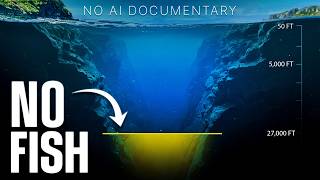
In the second layer of the ocean, the rules of hideand seek are completely different, and animals have adapted fascinating new ways to play along. As you descend past 200 m, the ocean transforms [music] around you. The warm embrace of sunlight fades and the temperature drops to between 4 and 13° C.
Oxygen is scarce. Food is scarcer. Life is slower.
Welcome to the Twilight Zone. Here, competition for survival is fierce, and staying hidden just got [music] a lot more complicated. Caught in the gradient between light and dark, the twilight zone is home to a deadly spotlight.
The faint [music] light filtering down from above turns passing animals into obvious silhouettes, making them an easy meal for [music] predators below. But it's nothing a little camouflage can't fix. Meet the hatchet fish.
A tiny thing only 8 cm [music] long. It drifts slowly through these dim waters, conserving energy and keeping a low profile. You'd never guess from looking at it, but this humble fish [music] conceals a remarkable piece of biological engineering.
Luckily, you're about to see [music] it in action. An unfriendly viper fish is roaming below, and it's a [music] little too close for comfort for our hatchet fish. Feeling threatened, it activates its camouflage.
Watch closely. Its belly [music] lights up suddenly. A brilliant blue matching the dim glow streaming down from the surface.
In seconds, the hatchet fish's [music] silhouette vanishes completely. What seemed like an easy meal [music] just moments ago turned out to be a little more complicated than the viper fish would have liked. This is counter illumination.
One of the [music] most widespread camouflage tactics in the Twilight Zone. Countless species [music] of fish, squid, and even crustaceians rely on bioluminescence to erase their own shadows [music] and stay invisible from below. Every evening, hatchet fish migrate into shallower waters to feed.
More light in the shallows calls [music] for a brighter blue to match. They turn on their bioluminescent camouflage and feast [music] all night. The arrival of dawn breaking over the horizon signals it's time for the hatchet fish to descend [music] to the depths again.
It dims its blue light as it travels down, turning from turquoise to deeper marine blue, constantly matching [music] the glow from above. Still others, like the blue lantern fish, [music] rely on a visual reference point. Even though they can't see their underbells, they do [music] have access to a specialized photofall facing their eye, which acts like a sensor.
It constantly monitors the intensity, [music] color, and angle of light filtering down from above and tells the [music] underbelly photoforce how to light up to match. But not every [music] creature can produce its own light. Some like the Hawaiian bobtail squid [music] form an unlikely partnership in exchange for protection.
Living [music] inside its photoforce are millions of light producing bacteria which coexist [music] in a delicate daily ritual. During the day, bacteria are [music] slowly expelled from the squid which spends its time buried in the sand. At night, the [music] colony regrows, ready to protect their host when it finds something to eat.
It's a win-win situation. The bacteria [music] receive food and shelter from the squid while the squid benefits from a camouflage it wouldn't be able to produce on its own. Bioluminescence [music] keeps you safe in the dimly lit twilight zone.
However, [music] as you venture into the ocean's third layer, it quickly turns from protective shield into a hunter's weapon. In the midnight [music] zone, life needs to find yet another way to obscure itself. In the first two layers of the ocean, camouflage is all about how animals interact [music] with light.
In the midnight zone, they swallow it whole. Plunging past the 1,000 m mark, you're officially in the midnight zone. A peaceful stillness surrounds you.
The water is near freezing [music] and the pressure is incomprehensible. The upper reaches of the midnight zone [music] still no light, though it is very dim. Many animals here continue to rely on weak counter illumination as a camouflage strategy.
But as you move just a little deeper, you collide head first with pure [music] darkness. Now bioluminescence doesn't hide you anymore. It's a neon signaling your location to every predator nearby.
Many predators here actually use bioluminescence [music] as a hunting strategy, like the famous angler fish. Can you see [music] it? Well, you might not spot its actual body, but that glowing bulb is part of it.
[music] And this is by design. Instead of wasting time and energy chasing down its prey, [music] the angler fish has learned to make dinner come to it. The glowing bulb isn't decoration, it's bait.
Small fish and crustaceans [music] are drawn to the light. But what they can't see are the predators vicious jaws waiting in the blackness. And just like that, it's game over.
But this tactic only works thanks to the angler fish's jet black [music] skin, which acts like a superefficient light trap, kind of like a biological black [music] hole. This combination of ultra black pigmented skin and bioluminescence as a lure is common [music] in this part of the ocean. No surprise then that these ultra black creatures [music] dominate the midnight zone.
How do they achieve this insane level of pigmentation? The secret lies in their skin cells. Inside each [music] cell are tiny factories called melanosomes.
Think of them as manufacturing plants for the world's most efficient [music] black paint. These cigar- shaped containers create, store, and transport melanin, the same chemical that gives color to human skin. The more melanin you have, the darker your skin [music] appears.
Deep sea fish take this concept to another level. While human melenoomes are scattered like islands across our skin, deep sea fish pack them so densely [music] they form a continuous layer with no gaps. The result is a superefficient light trap that works like a biological [music] black hole.
In these crushing depths, you might think we've seen every possible solution to the problem of camouflage. Surely in this realm of endless [music] night, becoming ultra black is the final answer. But evolution rarely settles for just [music] one solution.
In nature, there is resilience in diversity. So, while [music] ultra black might seem perfect, life has one more trick up its sleeve. To see it, we must descend into the ocean's final frontier, [music] a world largely unexplored and shrouded in mystery.
Welcome to the abyss. Plummeting past 4,000 m, you've officially entered the ocean's most alien realm. Even though you can't tell which way is up, you trust the journey.
You're used to the darkness by now, which presses against you like a living thing. Your fragile body struggles against the forces seemingly designed to eliminate all life. Yet, the creatures who drift along the void [music] are perfectly adapted to thrive here.
To them, this isn't a hostile place. It's [music] just home. From the Twilight Zone down into the abyss, evolution has written [music] its strangest stories, and they will completely change how you think about the color red.
On land, [music] red screams for attention. Fire trucks, stop signs, danger warnings. [music] Red means look at me.
So, how could something so vibrant [music] possibly work as camouflage in the deep sea? This majestic creature [music] is here to demonstrate. Though not native to the abyss, the bloodbelly comb jelly is a fascinating example of the power red holds in the deep sea.
This transparent jelly lives on bioluminescent prey. And as you can see, that's a big problem. Every meal lights up its stomach like a light bulb.
So nature gave it a biological lampshade [music] in the shape of a bright red stomach. The red pigment absorbs [music] the blue wavelengths emitted by its prey. They cancel each other out, turning a fatal giveaway into perfect camouflage.
The ocean absorbs all wavelengths of light one by one. Red is [music] the weakest, so it's absorbed first, followed by orange, then yellow, and so on. Red creatures only look red because they reflect red light.
Without red light, [music] they appear gray or black instead. Down in the abyss, there [music] is no light at all, except the occasional glow from a bioluminescent [music] predator. Luckily, the predator's light is blue, not white.
It doesn't contain any red wavelengths. So [music] instead of getting caught in the headlight, the red creature absorbs the blue light and appears [music] completely black. For decades, marine biologists cataloged what they thought were two completely different creatures living in the deep ocean.
The first was a small translucent fish with an elongated snout. Delicate [music] and ghostlike, the big-nose fish drifted through the mid depths between 1,500 and 2,000 m. its streamerl-like body trailing in the darkness.
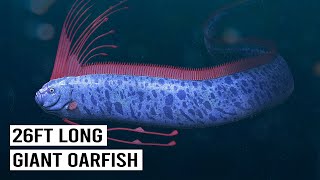
The second was the flabby whale fish, a massive red creature. It's one of the deepest dwelling fish known, reaching depths [music] of 3,500 m. Initially, there was no [music] reason to think these species were at all related until researchers noticed [music] something unusual.
All 65 specimens of big-nose fish captured [music] happened to be male. And all 500 whale fish specimens happened to be female. Finally, a [music] Japanese team DNA tested both fish for the first time in 2003 and made the discovery no one [music] would have guessed.
Despite looking completely different and inhabiting vastly different parts of the ocean, these two fish were in fact [music] the same species. To this day, they remain the most amazing examples of sexual dimmorphism ever found [music] among vertebrates. And in this case, it's the female who owns [music] the depths.
Her crimson cloak proving that red is truly the color of survival in the deep. From the sunlit surface [music] to the alien abyss, evolution has mastered every camouflage strategy imaginable. We've seen [music] how transparency, reflection, bioluminescence, and lightabsorbing pigments help creatures vanish into their world.
But not every trick [music] fits neatly into an ocean zone. Some of the most marvelous examples of camouflage transcend the layers altogether. [music] Masters of deception, their camouflage isn't about their biology, it's about their behavior.
Like a fish that pretends to be poisonous just to avoid trouble. A con artist that scams [music] its neighbors for a meal. And a shape-shifting octopus that can become nearly anything at once.
Get ready to [music] enter the wonderful world of mimicry. At every layer of the ocean, you'll find impostors. [music] These creatures go beyond blending into their environment.
Instead, they take an active role in deceiving those around them. If you ever find yourself [music] in the shallow waters off the coast of South Australia, you might spot a special type of seaweed near kelp covered rocks, swaying [music] gently with the current. It drifts through the ocean adorned with delicate [music] modeled leaves, various shades of yellow, green, and brown.
But look closely. Do you see it [music] there? Among the tangled seagrass, this is the leafy sea dragon, a creature native to South Australia's sheltered [music] bays and rocky reefs.
At first, its leafike appendages seem like a clever [music] swimming aid. In reality, they break up the animals outline. Along with its modeled coloring, this helps [music] it vanish among swaying algae and seaggrass.
Even its deliberate undulating motion matches the appearance of floating [music] vegetation perfectly, protecting it from fish, seabirds, and other larger marine hunters. Being defenseless [music] isn't the only reason animals put on imitation games. It's a great way to lure in unsuspecting prey and get a quick meal.
In this bustling [music] coral reef, this blue streak cleaner rass is an honest helper. It works tirelessly [music] to remove parasites and dead skin from larger fish who pay a visit, offering a kind of spa treatment. These clients queue up, letting the rass swim inside their mouths and gills.
If you think about it, it's a tremendous display of trust [music] from the little rass. But not all creatures are so purehearted. Lurking among the [music] dogooders are clever impostors.
The false cleaner fish and blue [music] striped fang blenny have evolved to look and act just like the cleaner rass, copying [music] its colors, shape, and even the signature dance it uses to attract bigger fish for a scrub down. See how similar they are? It's [music] uncanny.
Using this ruse, these mimics get dangerously close to the unsuspecting fish. And before they realize what's going on, the mimic strikes, snatching a bite of skin before darting [music] away. This aggressive mimicry works so well because reef fish have learned to trust the cleaner rass's appearance and behavior, making them easy targets for the impostors.
[music] While some animals use mimicry to lure in prey, others use it to [music] avoid predators. Over in the coral reefs of the Indo-Pacific Ocean, the black saddle file fish takes this to [music] an astounding level. They've evolved to imitate the highly toxic Valentine's sharp-nosed [music] puffer.
Known for their powerful venom, puffer fish are unpalatable or even deadly to most predators who have learned to avoid them. But take a look at them side by side. [music] Can you even tell them apart?
The black [music] saddle filefish has even adopted the puffer fish's swimming style with a slightly [music] awkward bobbing motion. And as if that weren't enough, filefish have been seen swimming with actual puffer fish, reinforcing the illusion. [music] This gives the firefish an immense survival advantage.
Even [music] though it's harmless, it gains protection by imitating a dangerous predator. >> [music] >> One of the ocean's most impressive con artists is the juvenile sword tail squid. Watch this young sword tail in action.
See how it curves its body and tail. [music] It holds its body vertically and drifts through the water with its arms extended. [music] Its slender body, translucent coloring, and tail filament complete the disguise.
Thanks [music] to its convincing performance, it's overlooked by predators who mistake it for a stinging siphonophore, a jellyfish-like creature with long trailing [music] tentacles most predators prefer to avoid. Watch these Caribbean reef squid [music] as they glide over the open sandy seafloor. As soon as they embark, they change from dark reddish brown to a light beige, disappearing into their [music] surroundings.
They're so well camouflaged, it's hard to keep track. Blink and you've lost them. Once settled at their new resting spot, they changed to a caramel brown that matches the patterns on [music] the sand below.
[music] Perhaps the undisputed king of camouflage is the octopus. With a showman's flare, it hops from reef to rock, showing off its incredible abilities. It's hard to wrap your head around, isn't it?
It feels surreal [music] to see it change so much, so fast. Its skin transforms in an instant. [music] Colors ripple and patterns shift.
It even creates tiny bumps on its body to mimic nearby coral. For the octopus, disguise is everything. With no shell to shield it, survival depends on the skin it wears.
In the blink of an eye, it can [music] vanish against coral to evade a shark or ripple with color to confuse the nosy eel. But hiding in plain sight isn't always to [music] avoid danger. Sometimes you're the danger.
By blending in, the octopus [music] buys time as it waits for the perfect moment to strike unsuspecting prey. Sometimes [music] its patterns signal a warning or are simply relaying a message to others nearby. [music] Whether to hide, hunt, warn, or deceive, camouflage [music] is the octopus's most versatile and impressive trick.
But how does it happen? What gives [music] octopuses such kaleidoscopic skin? The secret lies in [music] three types of skin cells, all working together in perfect coordination.
Chromataphores, lucapores, [music] and the aritaphors we talked about earlier. Chromataphores [music] are tiny sacks of colored pigment just beneath the surface of the skin. [music] They can be any color, red, brown, blue, orange.
Each one is [music] surrounded by muscle fibers arranged like spokes on a wheel. When the octopus's [music] brain sends a signal, those muscles contract, stretching the pigment sack out in all directions. Watch this happen in real time.
In milliseconds, a small dot [music] of pigment expands to cover a much larger area, instantly flooding that patch of skin with color. When the muscles [music] relax, the elastic sack snaps back like a rubber band, and the color vanishes. Under the chromataphors sit a layer of iritaphores, the same cells that give silvering fish that mirror effect.
>> [music] >> Some cuttlefish and squid have learned to control their shimmer, adjusting their iridescence over time. See how their shimmer changes from bluish to white and [music] back. How they do this is still a mystery, but the effect is mesmerizing.
The third and final layer are called lucaphors. Like aritaphors, they contain reflective guanine crystals. But unlike aritaphors where [music] they're neatly stacked, these crystals are randomly arranged throughout the lucapor.
When ambient light hits them, [music] it bounces off in all directions, creating a bright diffuse scattering that matches the main color [music] of the surrounding environment. These cells are especially important for animals that need to match bright sandy bottoms or pale coral. When the common cuttlefish glides over [music] some bleached shallow waters, it retracts its dark chromataphors and exposes these bright white cells underneath.
In seconds, [music] it transforms from a dark predator into an invisible ghost against the pale seabed. When [music] all three layers work together, you get a disguise so sophisticated [music] it seems like science fiction. To top it all off, seeopods like octopuses [music] and cuttlefish can change their texture, too.
Hiding in its skin are tiny muscular projections that [music] can rapidly morph into bumps, spikes, or ridges by inflating and deflating individual muscle fibers. Watch as this octopus settles [music] onto rough coral. Specialized muscles inflate specific pupily to perfectly mimic the bumpy surface.
Then as it glides over smooth sand, [music] those same projections flatten back into silk smooth skin. This entire orchestra [music] of changing colors and textures is controlled by the sephopods nervous system. Some of the most advanced [music] in the invertebrate world.
They can solve puzzles, use tools, [music] and turn their bodies into billboards to send signals, sometimes even two different messages at once. Lost [music] tentacles can grow back and reconnect with the wider nervous system. And they boast a highly developed visual system that allows them to process their surroundings with speed and precision.
This is useful for their camouflage since they copy their surroundings based on what they see. But you might be surprised to know that they're not the only ones with this superpower. Meet the flounder.
These guys are masters at copycat camouflage, too. Can you [music] spot it there among the rocks? It's hard to see, but its faint [music] navy outline gives it away.
Instead of changing the shape of their cells like sephopods [music] do, flounders move the pigment granules within each cell, either dispersing it to create colorful patches or concentrating it in the center to [music] minimize its appearance. Many species are able to do this. some blending into their new surroundings [music] in just a few seconds.
In flatfish, this system operates on two speeds. The nervous system triggers lightning fast changes in seconds. Perfect for instant camouflage or startling prey, but hormonal control [music] governs slower, deeper transformations that can take hours or days used for seasonal changes [music] or breeding displays.
Yet among all these masters of disguise, one seeopod stands apart. A shape shifter so elusive and extraordinary [music] we didn't even know it existed until just 30 years ago. Its camouflage abilities are so advanced they [music] seemed impossible until we finally caught it in the act.
For decades, divers and marine biologists have explored the shallow [music] waters off the coast of Indonesia. They've cataloged [music] thousands of species, mapped entire coral reefs, and documented life down to the [music] tiniest details. Yet somehow, one of the ocean's most extraordinary performers was [music] hiding in plain sight just 15 m beneath their fins.
But since the 60s, we've known about creatures like the deep sea batfish who live [music] kilome below the waves. But somehow we never spotted the master of disguise gliding just [music] 15 m under our noses. That's how good the mimic octopus is at falling [music] people.
It's a born actor and [clears throat] what a spectacular show it puts on. Amongst the coral, a mimic octopus is hunting for fish eggs. but it's wandered too far and finds [music] itself in damselish territory.
Damselfish are one of the ocean's most aggressive defenders. They're known for attacking octopuses for getting too close to their homes. As the angry damsel fish charges towards the intruder, something incredible happens.
Black and white bands flash across the octopus's skin. The six arms disappear beneath [music] its body, while two extend in opposite directions. waving hypnotically in the water.
In seconds, the octopus has transformed into a [music] venomous banded sea snake, a predator of the damsel fish. Frightened, the fish backs [music] away immediately. The mimic octopus is free to continue its hunt undisturbed.
Later, the octopus faces a new challenge. It needs to cross a vast stretch [music] of open sand. No coral, no rocks, nowhere to hide.
Out here, it's vulnerable to predices approaching from any direction. Time for another costume change. The octopus compresses its head and arms tightly against the seafloor, aligning its tentacles to form one smooth, continuous outline.
It's morphed into a flat fish, perfectly adapted for life on the sand. But there's more to the disguise than just the outfit. Watch the movement.
[music] See how the octopus glides in a wavelike rippling motion. This is the classic move of the flatfish. Studded and [music] perfectly imitated by the octopus.
It dances across the sand, calm in the knowledge that its astounding mimicry keeps it safe for the duration of the journey. Tired from all the traveling, the octopus decides to rest a while. But the ocean never [music] sleeps.
Here to interrupt its sweet dreams is a moray eel. The octopus [music] has seconds to react. One wrong move and that could be it.
To save its skin, it throws on a look it's tried dozens of times. Spreading its arms wide and evenly around its body, it creates a fan-like array of fins. Its [music] skin erupts in the distinctive warning colors of one of the reef's most feared residents, the venomous [music] lion fish.
Its spines are nasty enough that most predators know to give it its space. It keeps up the sherade with unwavering confidence. Will that be enough to keep the eel at [music] bay?
It seems luck was in its favor. The eel swims by uninterested and the octopus lives [music] to fight another day. These performances are just the beginning.
The mimic octopus [music] can impersonate over a dozen different creatures. Jellyfish, stingrays, sea an enemies, and more. But here's what makes this truly extraordinary.
[music] Each transformation is a deliberate choice. In every situation, the mimic octopus is making split-second [music] strategic decisions. What predator is approaching?
What does it fear most? How do I best impersonate that creature? Then it executes a perfect disguise in seconds.
This isn't [music] instinct. It's intelligence in action. [music] This level of deception requires serious brain power, strategic thinking, self-awareness, [music] risk assessment, learning, memory, and split-second decision-making.
It's probably the most highly evolved form of camouflage in the ocean. Octopuses are already accepted as being highly [music] intelligent animals. Yet, some researchers go even further, claiming this specific octopus might [music] have some sort of consciousness.
But what does consciousness even mean? And how would we know? Consciousness is one of those philosophical [music] concepts that's notoriously hard to describe and even more difficult to prove.
We can only observe [music] external behaviors, never internal experiences. If an octopus or any other animal seems [music] to wse in pain, we only see their reaction to pain, not the actual experience of pain. They could be acting like a conscious being, but with [music] no inner experience at all.
And there would be no way to know. This puts us and the mimic octopus in a strange predicament. No matter what it does, it will never be proof for consciousness.
We literally wouldn't be able to recognize it. Even if it smacked us in the face with [music] all eight tentacles. When the mimic octopus encounters a predator, [music] is it using free will and decision-making to choose the most effective disguise, or is it just running an incredibly sophisticated biological program on autopilot?
The precision of its mimicry suggests something more than reflexes. From watching its behavior, the mimic octopus seems to genuinely understand its [music] circumstances. Yet, frustratingly, we can never truly know.
We can only observe behaviors that hint at a mind looking back at us. In an underwater world with nowhere to hide, nature came up with a kaleidoscope of camouflage techniques to help ocean life disappear. We began our [music] journey in the sunlight zone, where transparency helped small critters vanish in plain sight, while larger creatures evolved silvering, [music] turning themselves into living mirrors that reflect their surroundings with incredible precision.
Descending into the twilight zone, [music] we watched animals shift to counterillumination to erase their shadows [music] against the dying light above. Sinking deeper into the midnight zone, we saw this tactic betray them. Here, ultra black pigments devour any signs of light like biological black holes.
And finally, in the [music] alien abyss, the choice of camouflage becomes a brilliant red cloak to cancel out the blue glow of enemy hunting lights. Some ocean masters transcend [music] the rules of any single layer. There are impostors at every level, relying on clever mimicry to blend in and survive.
From seephalopods, [music] which create dazzling displays to match their surroundings, to the crown jewel of ocean camouflage, the mimic octopus, a master shape shifter capable of imitating over a dozen animals with incredible sophistication. Talking of shape-shifting, have you noticed how many nature documentaries on YouTube are actually made by AI pretending to be something they're not, camouflaged by the YouTube algorithm? [music] Well, this documentary was created with no AI by 14 brilliant people [music] who love telling stories about the incredible natural world we all share.
But for every $1 we spend on production, YouTube pays [music] us back only 30 to 40. We launched this documentary series to fight back against thousands of cheap, [music] soulless AI documentaries being uploaded, riddled with inaccuracies and misinformation. And now [music] we need your help.
Or this series is in danger of being discontinued. For the cost of a cup of coffee, you can join our mission on Patreon [music] by investing in quality scientific storytelling from real people. And if you can't, that's okay.
Tell us what you think of AI documentaries [music] in the comments. Go start a discussion and let's get YouTube to pay attention. Thanks again and I'll see you next time.