we're about to turn a corner and talk about some things that are highly philosophical as opposed to science right we've talked about the cosmological evidence we talked about the biological evidence the evidence from neuroscience and mind and free agency but now we're going to talk about something that really hits home for me as a detective we're going to talk about the moral evidence the moral evidence I can tell you I spent a couple of years working gangs in South Central Los Angeles area and I met a lot of interesting people doing that and one of
these interesting people uh was a gangster who ended up torturing a fellow gangster because that fellow not in his gang a different click so it was another gangster across town that he ended up torturing because that gangster had kind of said some suggestive things to his sister he took offense to that when we finally took him to custody and we talked about this with him he didn't see anything wrong with what he had done as a matter of fact he suggested this was really the law of the streets that if he had done that to
his sister he would have expected that guy to come and do that to him for this guy named Jesse he really felt like this was part of a moral code that was entirely appropriate he accepted this as proper virtuous Behavior given the law of the street that he actually lived now I will tell you that even in his situation there were some people who reigned over his moral office so for example he would never do anything to break the law of his click his gangsters his fellow gangsters they had a moral code and Jesse knew
that he had to bend his knee to that moral code and even though they might have been gangsters living in our city they also knew they would get a ticket if they parked someplace on the city they should and shouldn't Park so even that gangsters they would say hey in that gang they would not break this the City municipal codes because they didn't want to have their their cars towed so there's still an overarching authority even over the gang and the gang is overarching over Jesse and in the city of Los Angeles I mean we
we have to kind of Bend our knee to several uh laws and and restrictions that are offered by the state of California so there's a overarching hierarchy of law from the state of California that's over the city of Los Angeles which is over the the gangster group that Jesse was a part of and you can see how you could extend this out and see there's a hierarchy of law there's National laws that govern all the states you some people would argue uh that there's a international laws that govern Nations I get that the question is
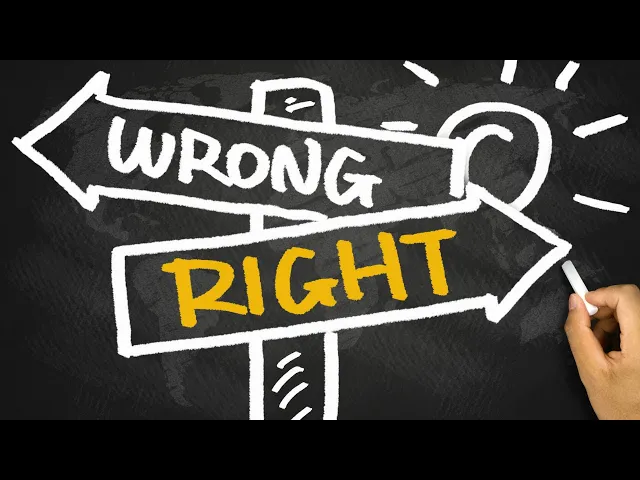
how far does this hierarchy go does it stop at some point where are moral laws grounded can these be explained by staying inside the room of the universe or is there some better explanation for the overarching moral laws look to begin with we would say that there are some objective moral truths and if you wonder what those are simply add the expression for the fun of it behind any crime so for example you might say it's okay to lie to achieve a greater end if I've got a lie in order to steal to to to
to prevent a million people from being destroyed by a terrorist if I need to steal in order to steal a code so he can't push the button to destroy a million people well I could justify this in some way but if you put the expression for the fun of it behind lying suddenly you've discovered an overarching objective moral truth claim that is true for all of us it's never okay it never has been okay to lie for the fun of it to steal for the fun of it to kill for the fun of it put
the for the fun of it on your sentence and suddenly you've discovered a number of objective Transcendent moral claims moral truths moral obligations so we know these things exist the question is how do we ground them I can tell you I was an atheist for 35 years and I think I behaved morally most of the time of course but I'm the judge of that right how do I ground my moral Behavior I might know not to hurt somebody but how do I ground it how do I how do I describe where that comes from where
that overarching objective Transcendent moral truth comes from you can behave well but not know why you're behaving well or how it's grounded so for me I at some point as a detective wanted to know well how do what do these moral truths come from are they just there's only a couple of options if I'm going to explain moral truths from inside the room of the universe that I have to use the stuff that's available to me space-time matter physics and chemistry and also the beings that emerge from space-time matter physics and chemistry perhaps all moral
laws are simply a matter of personal opinion that is one way that people try to explain moral laws by staying inside the room of the universe but if that's the case and you disagree with me on a moral issue how do we adjudicate between the two of us you have to say that you're right and I'm right even though we completely disagree on this moral claim because we could never adjudicate there's no one who stands above the individual person if all moral laws come from individuals that doesn't seem to work and we know that doesn't
work practically well perhaps it's groups of individuals that would also be inside the universe right so it's still going to come from individuals but now in large groups we obey certain rules certain laws certain predispositions moral predispositions because as a group we have decided together to obey that moral law okay but then what happens then when we have two different groups that disagree on a moral truth well how are we able to tell the the Germans in World War II that their atrocious treatment of Jews and prison camps is not okay they would say well
in our culture this was okay so if cultures decide what's okay we're okay well no he said there's a law Above the Law there's a law that's overarching above both of us and we have to obey that law well how do we explain that if it's not coming from individuals and it's not coming from groups of individuals from where else can it come now remember the important thing here is that I don't think I have any moral obligations to this Clicker I don't have any obligations to my coat you don't have moral obligations to inanimate
physical objects all moral obligations are between persons so whoever is the source of these moral laws that has to be a person you are also not morally obligated to physics but moral obligations drive us to look for the moral person that is the foundation for moral law if we can't stand inside the room to describe the source for Morality from persons or from groups of persons there does seem to be one other option that some people have gravitated toward and that is is it perhaps a product of our biology is it perhaps as as Sam
Harris would say writing about this the neuroscientists of philosopher who's also an atheist that this is simply a matter of our biology our common overarching human desire to flourish well okay so as human flourishing human well-being the overarching source of moral law I don't what do you mean by flourishing give me a survival because clearly I've seen people behave very very poorly in history as groups or as individuals it has actually aided in their survival you can behave atrociously and improve your survival chances but I think most people say well yeah but that's not human
flourishing that's there's a certain kind of survival that we would say uh as well as good as virtuous as AIDS well-being it aids you're flourishing but there's the problem if you're going to say there's a certain kind of survival you have to start with a moral notion that you haven't earned yet you have to start because remember if all moral Notions are simply aiding your survival mode it'll flourishing a certain kind of survival well now you're stealing a moral idea that is it precedes your idea of flourishing so it's kind of a cheat if you
think about it to say that it's human flourishing that drives our moral Behavior because you've got an idea in your mind about what that is and your idea is full of moral content but if moral content comes from flourishing it can't precede flourishing to describe it do you see the problem so when we try to stay inside the room of the universe to describe where objective Transcendent moral law comes from where moral truth comes from most these explanations will not get it done well none of them will get it done and none of them also
will point back to the person to whom we feel obligated if there are objective Transcendent moral laws and obligations who is the objective Transcendent moral law Giver to whom we feel obligated it can't be a what because we're not morally obligated to what's we're only morally obligated to who's the best explanation for the moral truths that we feel press upon us inside the room is a lawgiver a personal lawgiver that's outside the room and the laws we feel the obligations we feel in the room are not his creation his willy-nilly creation and they're not also
the things that he just recognizes and tells us no instead they are a reflection of his holy moral character an all-powerful God has the ability to eliminate moral imperfection and if he can do that he becomes a standard we can trust and stand on so now we've looked at our evidence right in the room we've started to develop a suspect description given all the cosmological evidence the biological evidence all the the mental evidence and now one piece of the first half of the moral evidence and what we see is we're looking for again that all-powerful
first cause it's a Timeless spaceless material that is the designer that fine-tunes the Universe authors life is responsible to the design we see in life who creates as a mind freely beings in its image that also are Minds who act freely and feel morally obligated because we have an author we have a reflection of God's holy nature in the universe that we sense even if we don't believe we sense that and we respond accordingly the best explanation once again is outside the room