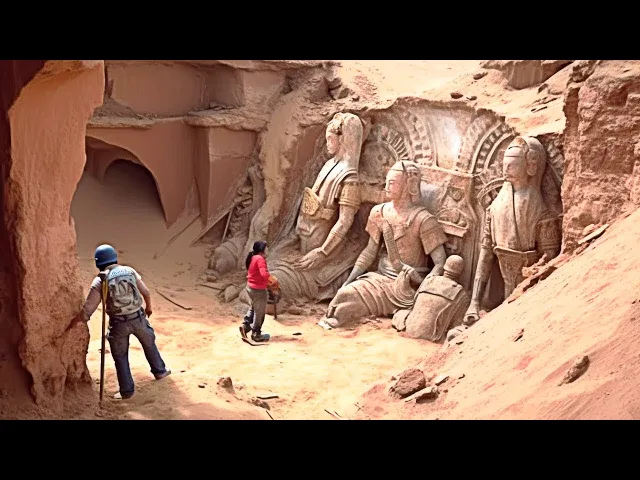
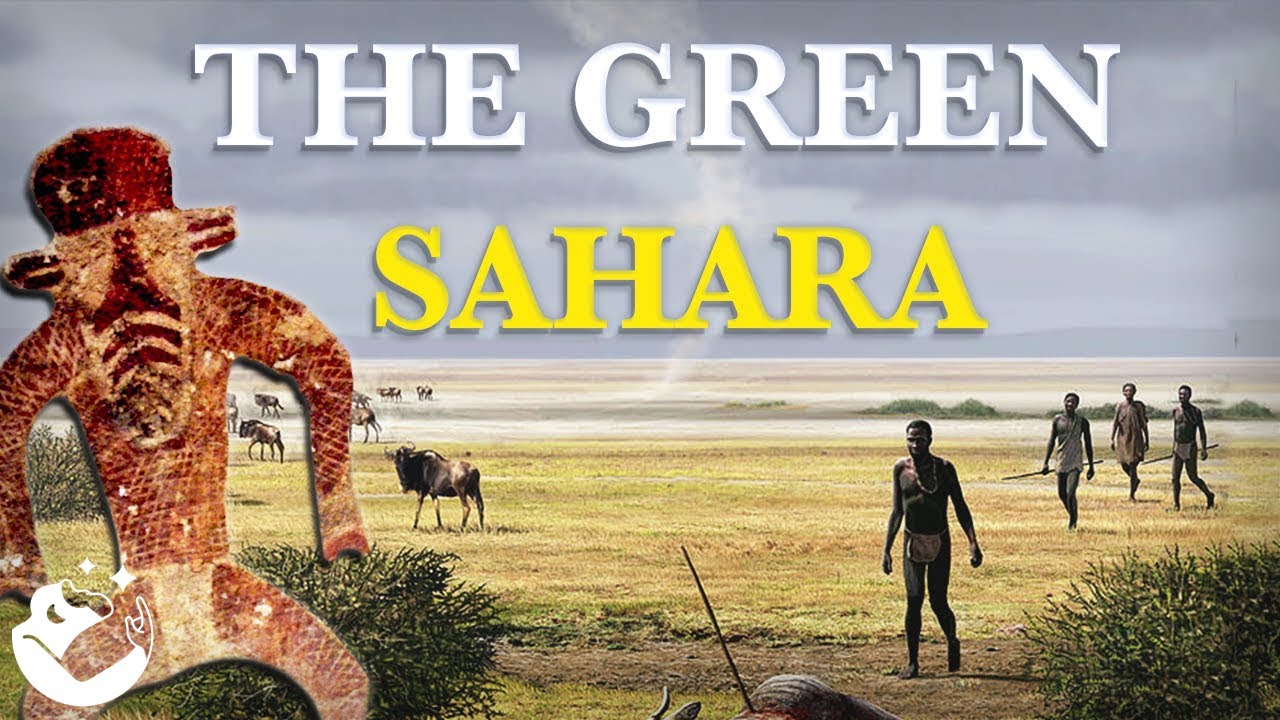
for years scientists have been trying to uncover What Lies Beneath The Sands of the Sahara this mysterious desert holds a lot of Secrets and Mysteries that scientists have always wanted to uncover and now they have succeeded thanks to researchers we now know that eleven thousand years ago the Sahara was different from what it is now if you find that surprising get ready to unravel the 15 things scientists have just discovered in the Sahara Desert number 15. Sahara is mostly Rocky often when we think of the Sahara Desert a sea of dry sand comes to mind but in reality the Sahara is made up primarily of Rocky Hamada Landscapes the endless Windswept Dunes that have been seen in pictures and movies only make up a small percentage of the Sahara Desert covering only 30 percent while the rest is 70 gravel even the sand comes from the rock over time the Rocks get broken down into smaller particles by different weathering processes like chemical processes biological processes temperature and so on that's not all the Sahara has other features which includes Stone plateaus Salt Flats arid valleys rivers mountains streams and oases that's a lot of views right there's more in the Sahara Desert than you can even imagine number 14. ancient Mega Lake even after you've learned that the Sahara is primarily made up of rocks you still can't get over the fact that it is a dry Place well this next Discovery will change your mindset about the Sahara scientists have discovered evidence of a prehistoric Mega lake under the Sands of the Sahara Desert this lake is said to have formed about 250 000 years ago when the Nile River pushed through a low channel near Wadi tushka the push resulted in a flood around the Eastern Sahara creating a lake that covered over 42 000 miles at its highest level the scientists did not intend to look for the evidence of the lake but they discovered it while studying radar data of Egypt taken by the space shuttle radar topography Mission scientists use the images of wind-blown sediments sediments produced by running water and Bedrock captured by radar under the Sands to piece together the profile of an ancient Mega Lake thanks to Egypt's extremely low precipitation scientists were able to see distinct subsurface features via radar they also discovered that the flood did not result in a single Lake but two different lakes apart from the mega Lake they discovered a second Lake that existed at a lower level of 623 above sea level and covered an area of 18 and 600 miles according to the researchers these newly discovered Lakes add to Growing evidence of numerous early and middle pleistocene Lakes across North Africa that could have supported human migration patterns number 13.
large sea creatures in case you are still wondering how big the Waters of the Sahara Desert were this next Discovery will answer your questions the Sahara Desert housed some very large sea creatures be honest how big is the biggest catfish you have ever seen this size or this size some of the biggest catfish and sea snakes that you have never seen lived in the Sahara Desert that was because the sea was 50 meters deep and once covered 3 000 square kilometers in this sea existed catfish as long as 1. 6 meters 12. 3 meters sea snakes and 1.
2 meters signo Dante which is a type of bony fish scientists came to to an assumption that during the time these creatures existed they were experiencing gigantism before now evolutionary biologists have discussed the phenomenon of Island gigantism because species that live on Islands develop large bodies compared to those that did not now it is believed that their gigantism is possible because they have more resources or because there are few Predators or maybe both number 12. dinosaur fossils talking about large creatures we are not done yet not only did the Sahara have large sea creatures but also gigantic land creatures specifically dinosaurs different types of dinosaur fossils have been discovered in the Sahara but this particular species is one of many that lived in the desert about a hundred million years ago this species is named abali soradi which some experts have said could have been up to 11 meters long and weighed up to three tons abilosauridae has been added to the list of some scary predators that have existed in the Sahara Desert that was the first time this type of dinosaur was discovered in this region and it is believed to date back to the middle little Cretaceous Era making it approximately 98 million years old number 11. Lost Civilization if the Sahara Desert was never this dry and hot it's only fair to know if people once survived here scientists have found new evidence of A Lost Civilization in an area of the Sahara in Libya from images taken by satellites via these satellites researchers have discovered over 100 fortified farms and villages with castle-like structures and several towns most dating between 1 to 500 A.
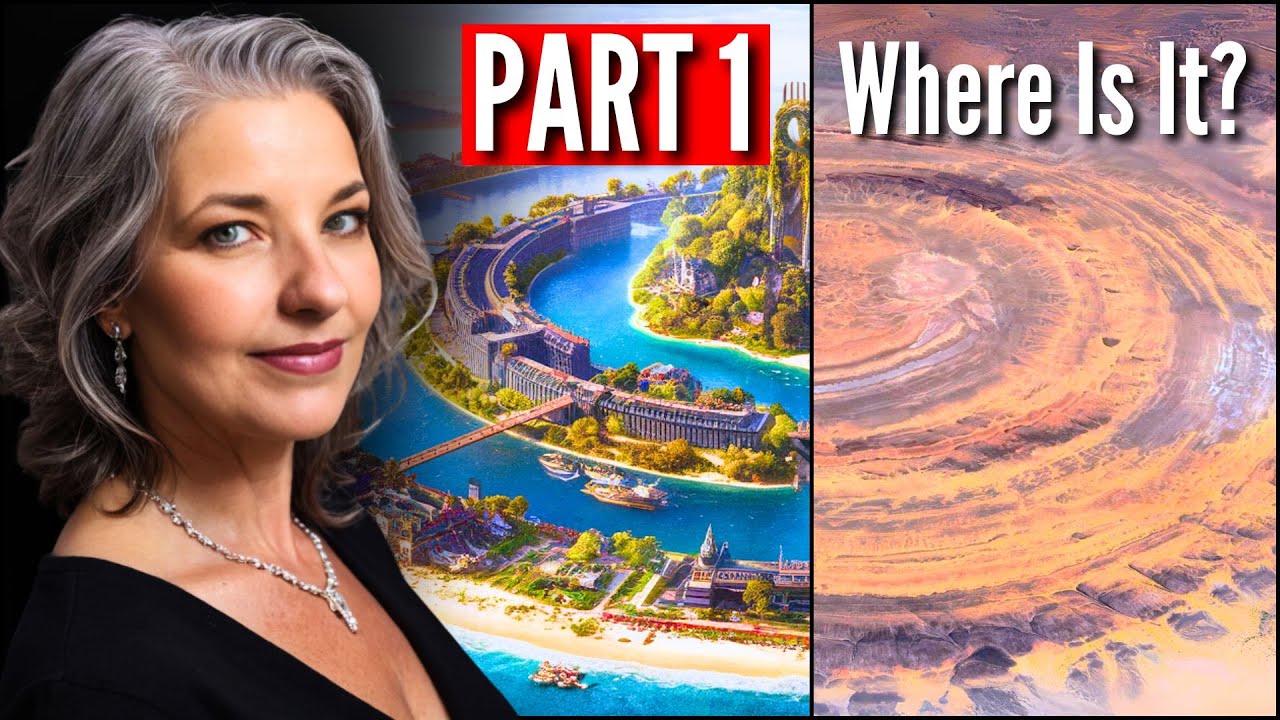
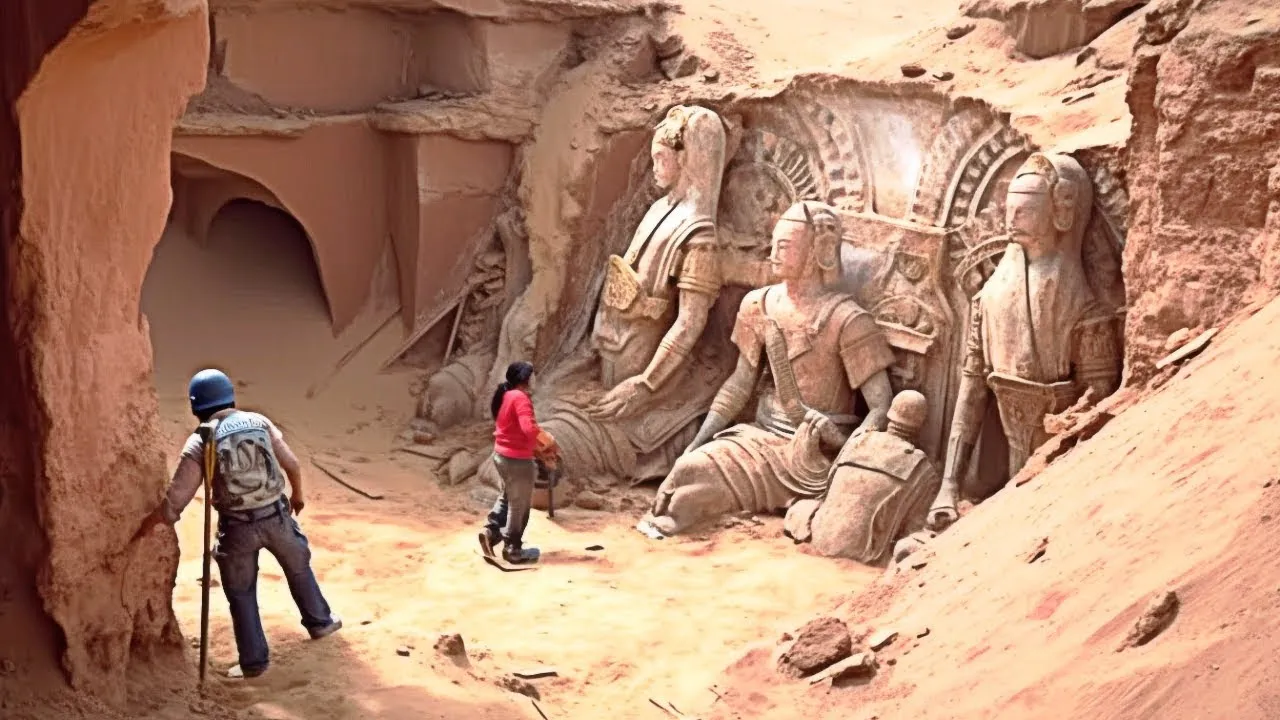
D these cities were built by a little-known ancient civilization called the garamantes whose lifestyle and culture were far more advanced and historically significant than ancient sources had suggested the discovery contradicts a view dating back to Roman accounts that the garamantes consisted of barbaric Nomads and troublemakers on the edge of the Roman Empire and just when we thought all that we do now started with us they existed to change our beliefs researchers have identified mud brick remains of the castle-like complex with walls still standing up to 13 feet high along with traces of dwellings cemeteries Associated field systems Wells and sophisticated irrigation systems now that's some serious civilization who knows what else is still yet to be uncovered number 10. green Sahara also this hot desert was once green and Alive with lakes rivers grasslands and even forests we discussed the mega Lake but where did all of this go for a long time the Sahara is used to periodic shifts between humidity and aridity these fluctuations are caused by slight wobbles in the tilt of the Earth's orbital axis this in turn controls how much the solar radiation penetrates the atmosphere since Earth's existence the sun pours more energy during the West African monsoon season and during the African humid periods much more rain comes down over North Africa when there's more rain the region gets Greener while it's the other way when there's no rain it had always been like this for decades but between 8 000 years and 4500 years ago something strange happened the shift from humid to dry happened repeatedly in some areas far more than what could be explained by the Earth's orbital procession alone the repeated transitions resulted in the Sahara Desert that we know today however researchers believe that another factor that could have caused the complete dryness is the human factor they believe that humans and their animals do more harm than go to the grasslands and plants once they move across the grasslands in other words over grazing the grasses was reducing the amount of atmospheric moisture that was to be emitted by plants which in turn produced clouds also it is believed that nomadic humans may have used fire as a Land Management tool which would have exacerbated the speed at which the desert took hold number nine people live in the Sahara talking about humans yes people still live in the Sahara Desert it's just that most of them occupy the Oasis and the highlands on the desert fringes there you can find arabic-speaking people including the Bedouin of Libya and the chamba of Algeria living in the northern Sahara on the northern and western edges of the desert are many groups of berbers the largest Berber speaking group within the Sahara is the Tuareg who number between 500 000 and 1 million people the berbers and Tuareg have cultural and religious ties to Islamic arab-speaking Northern Africa in the east in Niger and Northern Chad we have the Tata or tubu peoples whose languages and cultures are closely linked to those of sub-Saharan African groups the major economic activities of the Sahara are livestock herding and trade those who live in the desert raise camels goats and sheep and in some oases they also grow gardens and date palms the principal trade good is salt either mined or obtained from evaporated water since ancient times Salt has been been traded for grain until today the tuaregs still engage in salt trade number eight The Mirage imagine you walking through the desert under a hot sun tired with a parched throat and you suddenly spot a sparkling Lake in the distance you most likely want to jump in and drink it all up but hey don't get too excited the water will melt Into Thin Air As you move closer that's not a curse it is science and it is called a mirage mirages are natural optical illusions that mostly look like pools of water a mirage occurs as a result of a way in which light is bent through the air at different temperatures cold air is denser than warm air and therefore has a greater refractive index this means that as light passes down from cool to hot air it gets bent upwards towards the denser air and away from the ground if you are looking at it the distorted rays look like they are coming from the ground so you see a refracted image of the sky on the ground it looks just like a reflection on the surface of a pool of water this is one of the most confusing things on earth when you see it from a distance the different air air masses colliding with each other act like a mirror the desert ahead looks like a lake but it is actually a reflection of the sky above mirages are not only in the Sahara Desert they can be seen almost anywhere on sunny days you must have seen a shimmering heat Haze on the road that disappears as you approach those are mirages mirages are what you come by almost every time you visit the Sahara Desert so the next time you visit the Sahara and you see a mirage don't be disturbed number 7. singing sand dunes one of people's favorite parts of the Sahara Desert is the Dune the dunes plus the sunset make pictures look really good and that's the truth but what do you do when you suddenly hear the dunes sing [Music] now you're reminded of Marco Polo's Fantastical Tales of his travels where he writes about strange experiences in the deserts near the town of Lop in the greater Gobi region Marco Polo's Tales were so surreal that many believe that they were fabricated but the truth is a few facts that lurk in his tails and one of them is the story of singing Sans except that he made some serious assumptions he wrote about how the desert is haunted at Night by Voices of demons or Spirits looking to lure people from the road even during daylight hours Marco wrote that these Spirits are everywhere with the sounds of all kinds of musical instruments foreign indeed you will often hear sounds of different musical instruments but the source is not in any way demonic many Dunes around the world are known to sing boom and even burp for years even scientists have been looking for answers as to what the source of these sounds is while identifying various conditions important to produce the Eerie tunes about 10 years ago researchers set off a sand Avalanche and discovered that the size of the sand grains affects the tone but here's what is crazy the Sands make so many different sounds including a hum throaty booming and even burping how are these sounds coming from the same sand the answer the scientists have provided is that different kinds of seismic waves create each of these various sounds researchers measured these seismic waves by measuring the waves traveling through large Dunes with instruments called geophones and they realized that the type of wave produced distinct sounds one type of wave called a primary wave or P wave produces a booming sound these are very powerful waves and they can trap travel through the entire Dune on the other hand a type of wave called Rayleigh waves only spread across the dune's surface this movement causes burping sounds yes the sand is solid but a whole mass of tiny grains moving at the same time behaves like a liquid when the grains are together they act as a speaker that amplifies vibrations during an avalanche you may feel relieved now that you have known about this discovery but it still does not change how you feel when you experience it in person so brace up number six the Sahara Desert has an eye at least the desert has a mouth it uses to sing so an eye why not except that the eye of the Sahara is nothing like your eyes it is called the blue eye of the Sahara or the right shot structure it is a geological formation in the Sahara Desert the formation stretches across a 40 kilometer wide region in Mauritania the first time it was photographed was in the 1960s by Gemini astronauts to monitor the progress of the opening sequences later we got more pictures from the landsat satellite which provides more more information about the size height and extent of the formation initially the geologists believed that the eye of the Sahara was a blow crater that was created when an object from space struck the surface however further studies show that the prong of this eye is world-based the richat structure is a light elliptical Dome deeply eroded in 40 kilometers in diameter it has been discovered that volcanic activity from deep under the Earth's surface lifted the entire landscape around the eye millions of years ago also the regions were not deserts as they are today but instead land with abundant flowing water layered sandstone rocks were deposited by blowing winds and on the bottoms of lakes and rivers during the temperate the subsurface volcanic flow eventually pushed up the overlying layers of sandstone and other rocks after the volcanism died down wind and water erosion began to eat away at the domed layers of rock and the region began to settle down and collapse in on itself creating what looks like an eye but what exactly is the origin of this eye the earliest form of the eye began when the supercontinent Pangea began to pull apart after Pangea broke up the Atlantic ocean waters began to flow into the region as Pangea was pulling apart magma from underneath began to push upwards which formed a circle-shaped rocky Dome surrounded by layers of sandstone erosion took its toll on the igneous rocks and sandstones subsiding the Dome and leaving circular ridges behind giving the reshot structure its sunken circular shape it's time for today's subscribers pick take a look at this captivating image showcasing two individuals standing before and admiring intricately carved sculptures situated at the base of a rocky structure within a desert landscape do you think that a carved sculpture like this could be found under the eye of the Sahara what do you think these structures are drop your comments below number five Sahara Desert is growing bigger the Sahara is getting bigger and here's why scientists suggest that climate change is partly responsible for the change in its size after researching why the world's biggest hot desert is getting bigger the Sahara is currently about 10 percent larger than it was nearly a century ago and it calls for concern in a new study researchers examined rainfall data gathered across Africa Consulting records dating back to 1920 and noting how changing conditions affected regions around the boundaries of the great desert they discovered that natural climate Cycles are not the only factor causing this expansion but human-driven climate change as well while the scientists were examining seasonal cycles of temperature and rainfall across Africa of data spanning 1920-2013 their attention was quickly drawn to something they were drawn to trends of decreasing precipitation in the Sahel a semi-arid region linking the Sahara to the savannas of Sudan with this research they hope to find out how rainfall trends are connected to Sahara's expansion over time naturally as conditions of other deserts fluctuate from wetter to drier they change in size but in the case of the Sahara there has been a serious expansion number four earliest grave of the Stone Age people while scientists were hunting for dinosaur bones in the Sahara they made a shocking Discovery a huge Cemetery containing some 200 graves in those graves are remains of people who lived in the Sahara as long as 10 000 years ago when the Sahara was still very green this graveyard existed since the Stone Age and it is the largest graveyard of the time to be discovered after the discovery scientists spent an extra two years studying the area and the remains they also found pieces of pottery fish hooks stone tools harpoons carved from animal bones and other artifacts in that region two cultures are believed to have lived there the gobero and the tenerian the goberos were tall and robust and they were known as kyphians who lived in the region from about 10 000 years ago until 8 000 years ago after that era there was a drought for one thousand years before the land became green again since the area became habitable again the tenerian moved in in and lived there until about five thousand years ago unlike the gobero the tenerian were physically smaller people whose Pottery design was different from the goberos what's shocking is how these people were buried in weird ways for example an adult Canarian male was buried with his skull resting on part of a clay vessel and another adult male was buried Seated on the shell of a turtle one other burial looks even sad the grave contains a woman buried with two small children with their hands holding hers on a bed of flowers those were really strange people number three the Sahara dust feeds Amazon plants as you already know that the Sahara Desert is blessed with sand and the Amazon rainforest on the other hand is a dense green mass of humid jungle that covers Northeast South America but there's usually a reaction after strong winds sweep across the Sahara a tan Cloud rises in the air stretches between the continents and ties together the desert and the jungle it is dust and a lot of it but how much is it and what does it mean it simply means a relationship ship between the Sahara and Amazon rainforest the good news is a NASA satellite has Quantified in three dimensions how much dust makes this relationship happen not only did they measure the volume of dust but they also found out that the dust moves from the Sahara to the Amazon on an important Mission this journey of dust is an important one because it contains phosphorus which is an essential nutrient for plant proteins and growth which is something the Amazon rainforest depends on to flourish the Amazonian soils lack enough nutrients instead they are locked up in the plants themselves Fallen decomposing leaves and organic matter provide the majority of nutrients which are rapidly absorbed by plants and trees after entering the soil but nutrients like phosphorus get washed away by rainfall into streams and rivers this is why the scientists calculated the amount of phosphorus that gets transported across the ocean from the desert to the Amazon rainforest good for the Amazon the Saharan dust packs a lot of phosphorus about 22 000 tons per year which is about the same amount the Amazon loses per year according to NASA's data the wind and weather pickup on average 182 million tons of dust each year and carry it past the western edge of the Sahara this volume is the equivalent of 689 thousand 290 semi trucks filled with dust the dust then travels 1 600 miles across the Atlantic Ocean during the trip some drop to the surface or get flushed from the sky by rain but by the time they get to the Amazon at least enough to fill 104 908 semi-trucks fall on the Amazon basin the scientists also looked at the data year by year and they discovered there was an 86 percent change between the highest amount of dust transported in 2007 and the lowest in 2011.
why so much variation scientists believe it has to do with the conditions in the Sahel the long strip of semi-arid land on the southern border of the Sahara after comparing the changes in dust trans transport to a variety of climate factors the scientists found a correlation to the previous year's Sahel rainfall when Sahel rainfall increased the following Year's dust transport was lower no one knows the mechanism behind the correlation it is possible that as the vegetation increases with rainfall less soil is exposed to the wind in the Sahel or maybe because the amount of rainfall is related to the circulation of winds which are what ultimately sweep dust from both the Sahel and Sahara into the upper atmosphere where it can survive the long journey across the ocean number two meteorite older than the earth three years ago a meteorite landed in the Sahara desert but little was known about it it was discovered near Ben taku in southern Algeria which is within the ERG chech sand sea and so the meteorite was named ERG chech 002 or ec002 after the discovery site after years of examination it has been ascertained that the meteorite ages around 4.