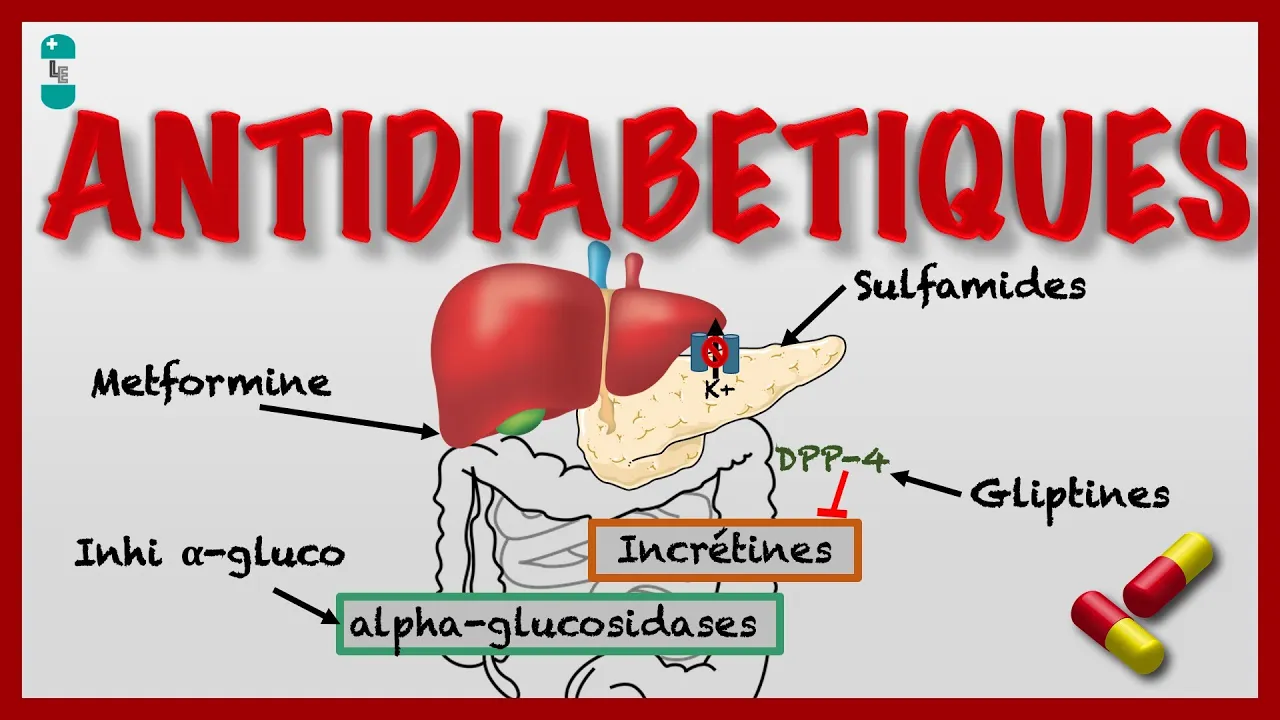
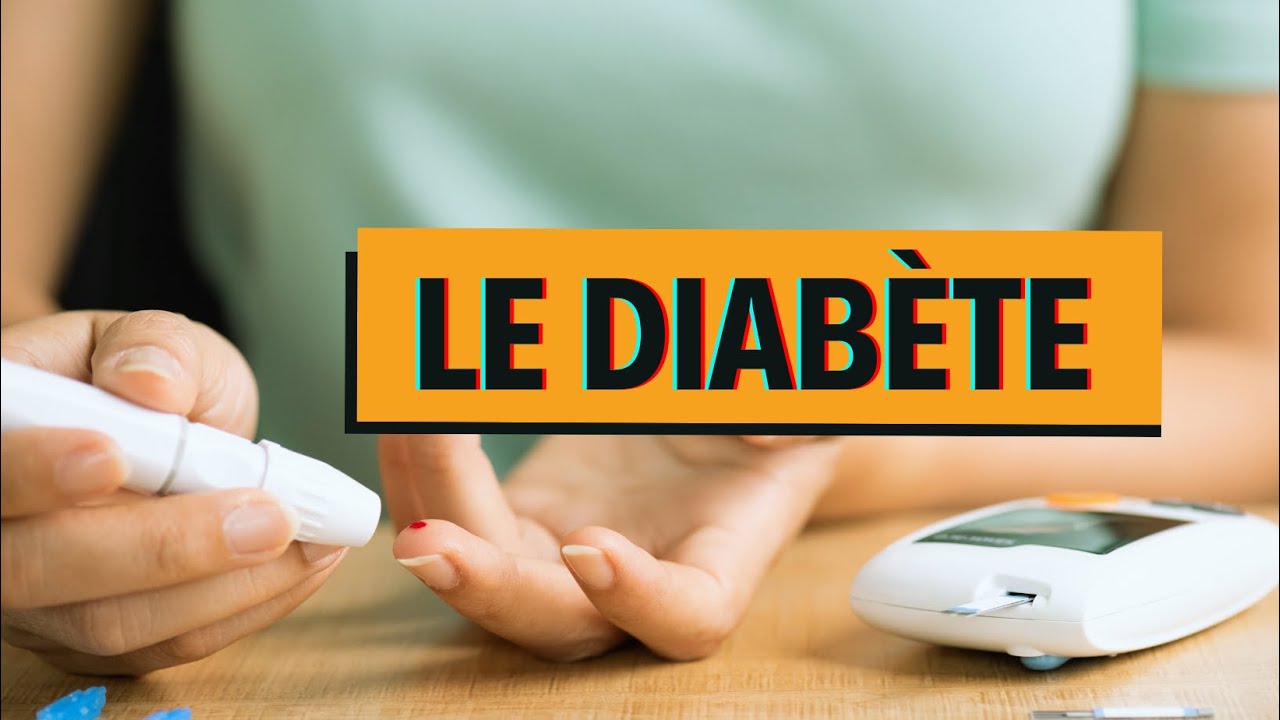
hello everyone we meet today for a new video on antidiabetics which is the subject that won the last poll don't miss the next poll that I will publish in three days as usual if it is not already done I invite you to subscribe to the channel and activate the little bell is also subscribe to my other accounts instagram twitter and facebook to understand this class you must already understand what diabetes is diabetes is a pathology with a glucose assimilation disorder that leads to a state of hyperglycemia or this blood sugar will be greater than 1. 26 grams per liter or 7 mmol / liter it should also be known that the signs of hyperglycemia are called cardinal signs and to remember them remember the term PAPA "P" is for polydipsy it means drinking a lot of water and suddenly having polyuria where we will urinate a lot the second will be for weight loss and the second has for asthenia so these are the four signs that define this hyperglycemia we are going to talk about the two types of diabetes first of all the type 1 diabetes, also called insulin- dependent diabetes, it will appear most often from a very young age and it will be caused by an autoimmune destruction of the beta cells of the islets of langerhans in the pancreas when a very large part of these cells are destroyed then appears a definitive insulin deficiency and the blood sugar becomes too high. These people must therefore limit sugar and the only treatment is the injection of insulin to compensate for this deficiency.
Then type 2 diabetes or non-insulin-dependent diabetes will rather declare itself towards adulthood due either to family history or to the persons lifestyle which leads to a state of obesity to a sedentary lifestyle and will have a diet rich in fats and sugars. This lifestyle will cause insulin hypersecretion which causes exhaustion of the pancreas and ends with insulinopenia and insulin resistance so even if we secrete insulin it no longer acts as well as before on these receptors and the pancreas has been used so much that they can no longer secrete enough insulin and then these patients will end up with potentially serious chronic hyperglycemia. Treatment will always start with an improvement in lifestyle by trying to eat healthier and then if this is not enough we can treat with oral antidiabetics more or less insulin.
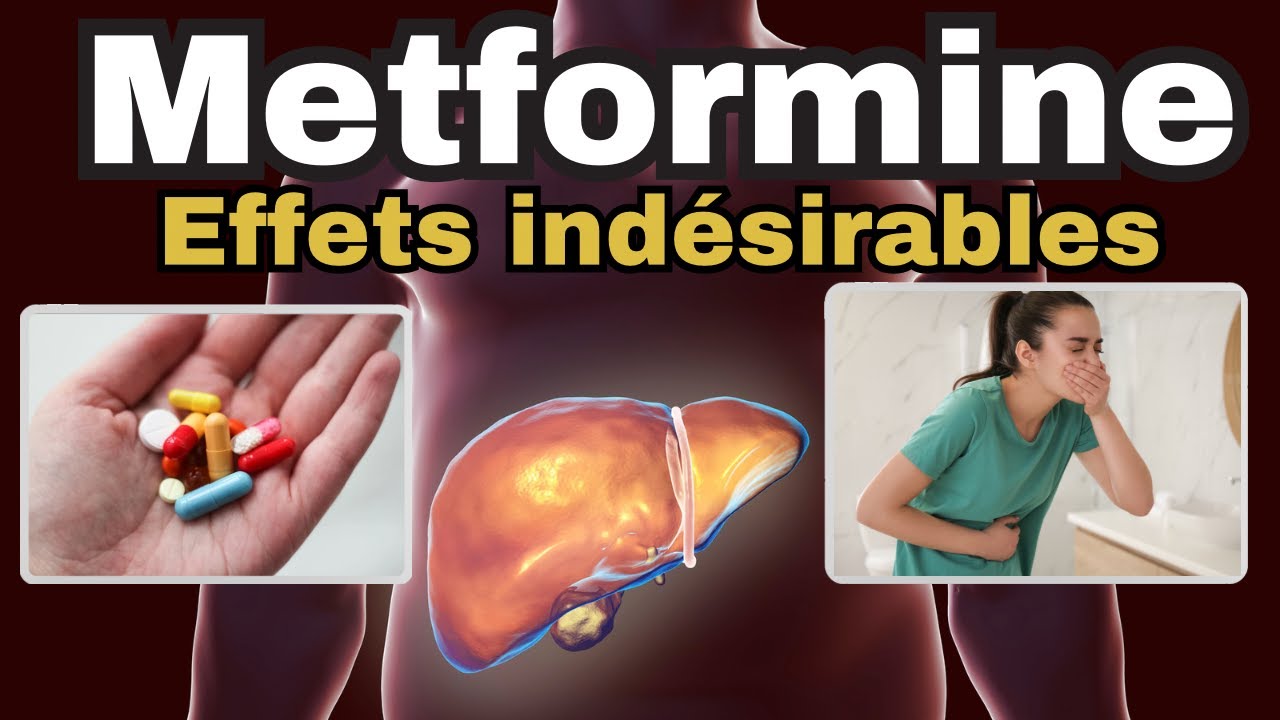
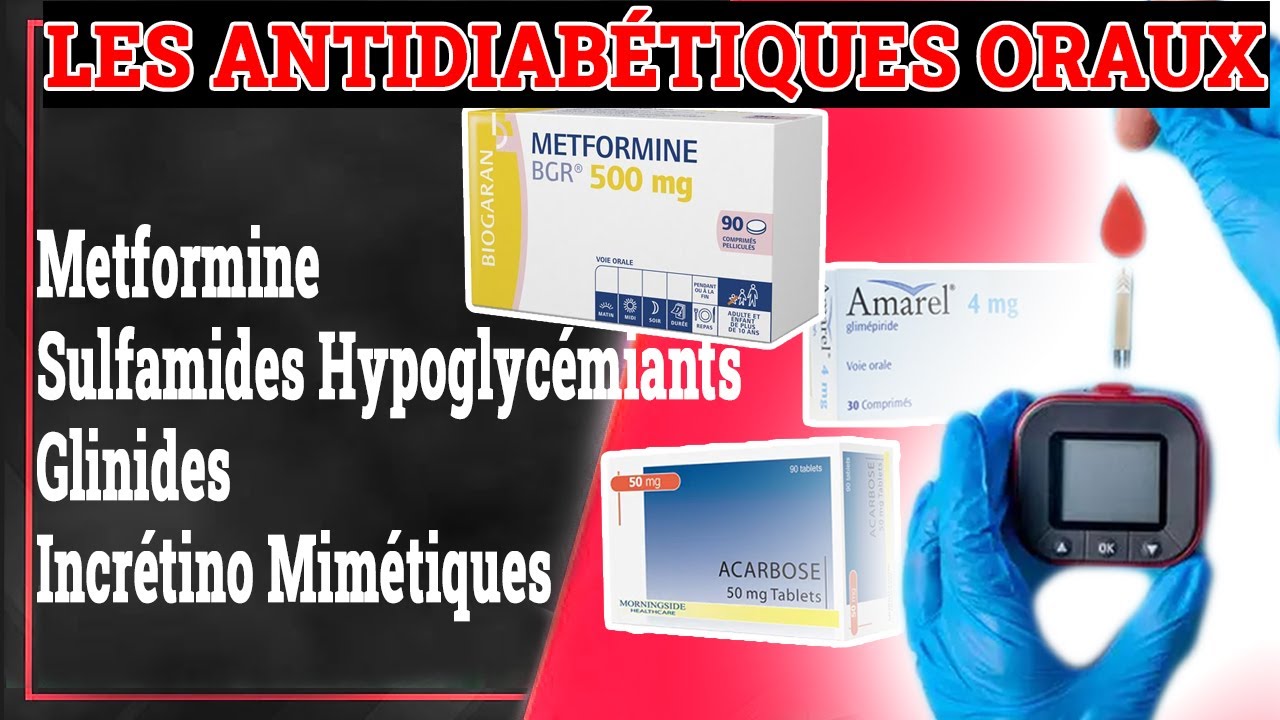
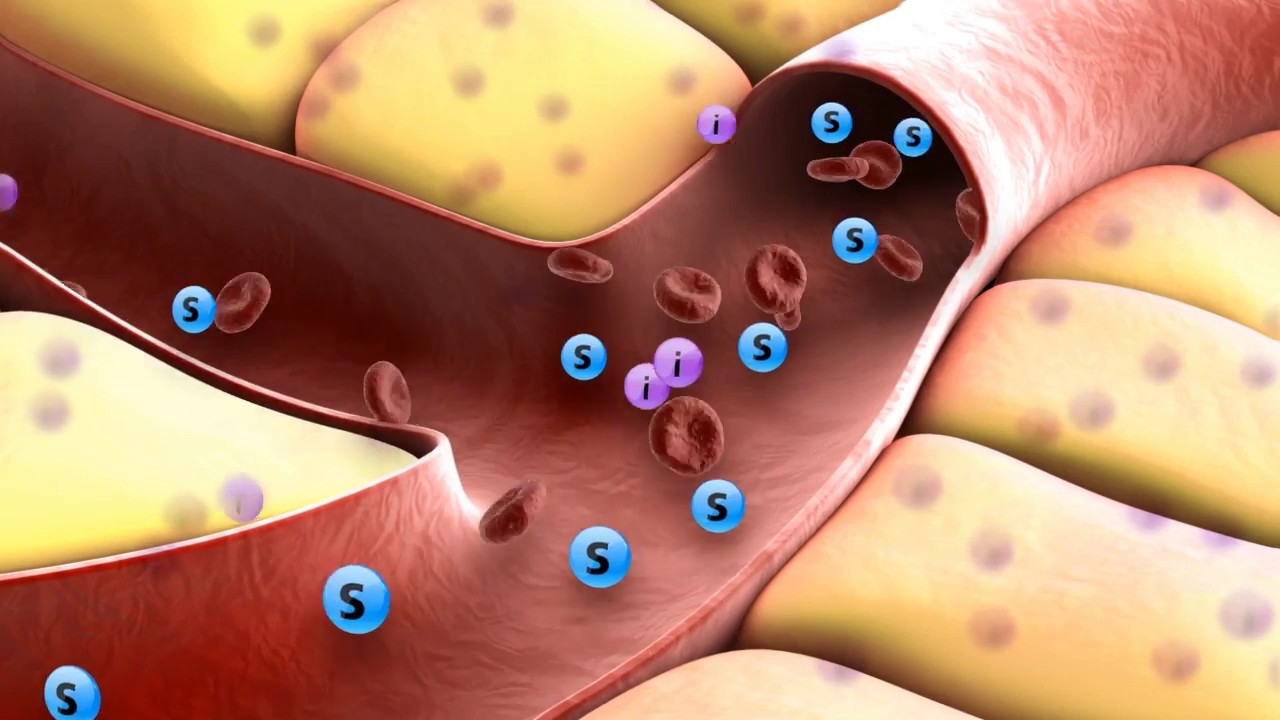
In the latter cases then what is insulin in the pancreas there are what are called islets of langerhans and in these islets there will be two types of cells alpha cells which will secrete glucagon and beta cells which will secrete insulin to remember this, remember the first name gaby with G for glucagon and A for alpha so the alpha secrete glucagon and beta and insulin so the beta cells secrete insulin then this glucagon will cause hyperglycemia and insulin will do the reverse, it will decrease blood sugar so these are really two hormones that will regulate our blood sugar let alone the main hormone is the most important c it is therefore a hypoglycaemic peptide hormone which will consist of two chains : an A chain of 21 amino acids and a B chain of 30 amino acids it is therefore a peptide hormone which is quite large and therefore cannot be absorbed by orally that's why it will always be taken by injection so how insulin does to reduce this blood sugar is good when you eat the glucose will arrive in the digestive tract then will be absorbed in the direction and that will cause a secretion of insulin which will therefore promote the absorption of this glucose by the muscle cells to be used by the hepatic cells to store it in the form of glycogen and also by the adipe cells uses so you really have to see insulin as a key that will allow glucose to enter these cells so the treatment of type 1 diabetes as said earlier is insulin injectable insulins are classified according to their speed of action we are going to have the ultra fast with insulin in sparta insulin lispro and insulin glulisine these are analogues of insulin synthesized by genetic engineering this class is very fast since it will act in 10 to 20 minutes and its action will last three to five hours then the rapid insulins are the human insulins which will act in 30 minutes and will last between seven and nine hours the intermediate class will be a little slower thanks to the addition of proteins more or less these are the iso fans human lines which will act in 1h 1h30 and its action will last 14 to 24 hours the landes insulins are also insulin analogues with insulin glargine insulin detemir and they will in F it acts in one to two hours and their action will last 24 hours finally we find the ultra slow with deyglun insulin is that they will act in two hours and their action will last forty two hours the main risk of insulin is fine obviously be the risk of hypoglycemia that is why patients must know how to use the devices to measure their capillary blood sugar it also presents as side effects at risks called pokal yemi of lipodystrophy that is why it is necessary to change the place of injection but also a risk of weight gain reactions at the injection site and visual disturbances at the start of treatment the contraindications will obviously be hypoglycemia hypersensitivity and the advantage is that they can be used in women pregnant let's now move on to oral antidiabetics there are several first of all those that will improve insulin sensitivity is metformin which stimulates the production of insulin these are hypoglycemic sulfonamides and the church which will rather act on the level of the pancreas others will rather act on the intestinal incretins with the clips sign the glp 1 analogues it should be known that the glp-1 analogues are injectables so it is the exception not to be an oral antidiabetic finally what decreases the absorption of glucose these are the inhibitors of alfa glucosides has it is very important to note that all antidiabetics are contraindicated in pregnant women alone insulin can be used let's start with the class of big one hits which consists solely of metformin which is moreover the first- line oral antidiabetic its mechanism of action is complex and very poorly known but its main action is at the level hepatic it will already increase hepatic sensitivity to insulin which will increase the use of glucose this glucose normally stored in the liver in the form of glyco gene to give back after glucose when we need to use it except that metformin will decrease hepatic gluconeogenesis so we will no longer have this formation of glucose it will also decrease aerobic glycolysis but increase anaerobic glycolysis and this will have the consequence of increasing the formation of lactate which will be responsible for the main adverse effect of lactic acidosis which is the most serious adverse effect but it is still quite rare it will also cause digestive disorders that is why it is recommended to take it during the meal the advantage is that it is not responsible for hypoglycemia and can be used in overweight people because it promotes the loss of points for contraindications it is therefore the means big one hits mnemonic that I recently published it is important not to forget to stop it 48 hours before and after going to the operating room is also to use an iodinated contrast product because there will be has a risk of lactic acidosis and also obviously anything in heart science etc the second class are the sulfonylureas like gliclazide glimepiride glibenclamide and glipizide so they all start with glee they are indicated in type 2 diabetes second intention either in dual therapy with metformin because the mechanism is complementary to metformin or in monotherapy in the event of metformin intolerance so how she sees manages it's going to be at the level of the beta cells of the pancreas or it's hypoglycemic sulfonamide you inhibit the receptor on one so as to inhibit the potassium channel the potassium will no longer be able to leave which will activate the entry of calcium into the cell and the increase in intracellular calcium will cause the secretion of insulin by the beta cell and therefore this increase in insulin secretions will lead to a decrease in blood sugar since insulin and hypoglycemic this class presents co even its name indicates a risk of hypoglycemia so care must be taken when young in the elderly and during physical exertion, which is why it is very important to teach patients to recognize the signs of hypoglycemia so these are sudden loss of energy nervousness and trembling paleness sweating headaches a woman very severe difficulty concentrating and drowsiness there is also a risk of weight gain so it should not be used in overweight people they also undergo hepatic metabolism speaking cytochrome 3 to 4 es2 es9 so there will be a lot of drug interactions to take into account the contraindications will be kidney and liver science the association with miconazole and sulfonamide allergy let's now move on to glee need, we find such a class, their pin in need, which is related to the hypoglycemic sulfonamide, which means that it has the same mechanism of action .




![The BIG Magnesium MISTAKE 50%+ People Are Making! [+4 BIG SECRETS]](https://img.youtube.com/vi/5DzSw8Ynhpo/maxresdefault.jpg)